

P0217 on 2015-2020 Ford F-150: Engine Coolant Overtemperature Causes and Fixes
On a 2015-2020 F-150 with a 2.7L EcoBoost engine, code P0217 is most often caused by a faulty Engine Coolant Temperature (ECT) sensor or its wiring, not an actual overheating event. Ford has issued multiple Technical Service Bulletins (TSBs) for this exact issue. The fix often involves replacing the sensor, its connector, or installing a TSB-specified kit to relocate the sensor to a more reliable location.
- P0217 on a 2.7L EcoBoost F-150 is very often a false alarm caused by a faulty ECT sensor or its wiring, not an actual overheating engine.
- Do not drive the vehicle with this code active. Pull over safely, as you cannot be certain if the overheat condition is real without diagnosis.
- Before replacing expensive parts like the water pump or thermostat, your first step should be to investigate the ECT sensor and its wiring, referencing the multiple Ford TSBs on this topic.
- The official Ford fix for later models involves relocating the sensor with a new heater hose assembly (per TSB 21-2168).
- This issue is so specific to this platform that it has been mentioned in class action lawsuit documentation.
What's Unique About the 2015-2020 Ford F-150

The 2015-2020 F-150, particularly with the 2.7L EcoBoost engine, is uniquely prone to false P0217 codes due to a well-documented issue with the Engine Coolant Temperature (ECT) sensor and its wiring. The original sensor is located in a hard-to-reach spot under the intake manifold where it is subject to heat and vibration. Ford has released several Technical Service Bulletins (TSBs) acknowledging that intermittent voltage drops from the sensor or its harness can trick the computer into thinking the engine is overheating when it's not. This is a critical distinction, as owners might otherwise pursue expensive and unnecessary cooling system repairs like replacing the water pump or thermostat when the sensor circuit is the real culprit.
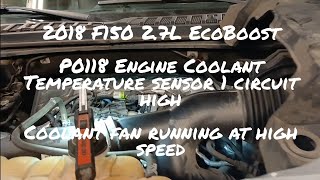
🎬 Watch: Understanding these codes and the official TSB fixDiagnostic Flowchart

Tap your situation to follow the diagnostic path that matches what you're seeing on this vehicle.
Symptoms You May Notice

- Check Engine Light or Malfunction Indicator Lamp (MIL) is on
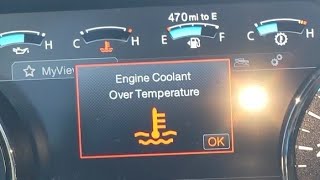
- "Engine Coolant Over Temperature" warning message on the dashboard
- Temperature gauge reading high or in the red zone (sometimes erratically)
- Engine goes into reduced power or "limp mode"
- A "rumble strip" sensation or heavy vibration as the PCM shuts down cylinders to protect the engine.
- Cooling fans running at high speed constantly, even when the engine is cold.
- Inability to start, with an over-temperature message displayed on a cold engine. 🎬 See how a faulty sensor causes sudden overheating warnings
- Steam or smoke from the engine bay (in cases of actual overheating)
- Sweet smell of coolant from the engine area (indicates a leak)
- Replacing the thermostat or water pump when the actual problem is a faulty ECT sensor sending incorrect data to the PCM. Given the known TSBs for this platform, the sensor circuit should always be the first diagnostic step for a P0217 code without physical signs of overheating.
Most Likely Causes

- Faulty Engine Coolant Temperature (ECT) Sensor or Wiring 🔴 High Probability Ford has issued multiple TSBs (SSM 47791, TSB 21-2168) for the 2.7L EcoBoost engine, citing intermittent ECT voltage drops, poorly seated connectors, and problematic wiring harnesses that cause false overheating signals. The sensor's original location under the intake manifold makes it susceptible to heat and vibration damage.
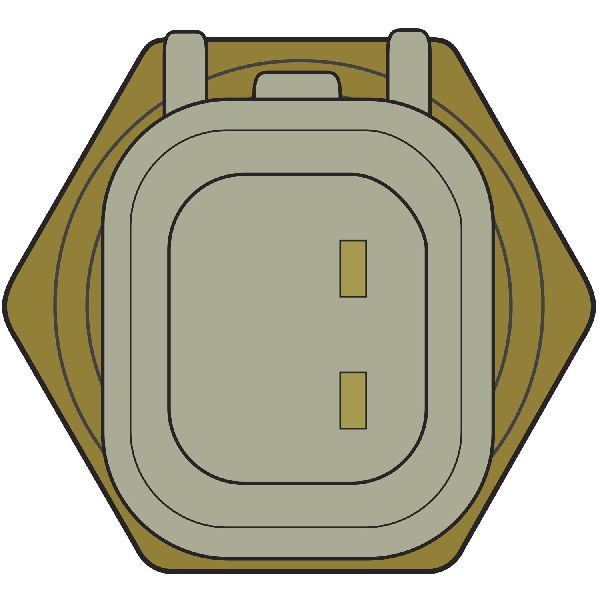
How to confirm: Use a scan tool to monitor live ECT data. If the temperature reading jumps erratically (e.g., from 190°F to 250°F and back) or reads extremely high on a cold engine, the sensor or its circuit is the likely culprit. Inspect the sensor connector (C1047) and related wiring harness for damage, corrosion, or poor pin fitment.
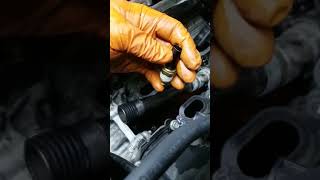
Typical fix: For 2015-2017 models, inspect and repair the wiring or replace the connector pigtail (Motorcraft WPT-1253). For 2018-2020 models, the official fix per TSB 21-2168 is to install a kit that includes a new heater hose with an integrated sensor and a jumper harness to relocate the sensor. This avoids the 8+ hour job 🎬 Watch: How to install the ECT sensor relocation kit of replacing the sensor in its original location.
Est. part cost: $25-$75 for the sensor and pigtail; $100-$200 for the TSB relocation kit. - Low Engine Coolant 🟡 Medium Probability Like many modern turbocharged engines, the 2.7L EcoBoost has a complex cooling system with numerous hoses and connections, including lines to and from the turbos, which can be potential leak points over time.
How to confirm: Visually check the coolant level in the degas bottle (coolant reservoir) when the engine is cold. If it's below the 'MIN' line, there is a leak. A cooling system pressure test can help locate non-obvious leaks.
Typical fix: Find and repair the source of the leak (e.g., cracked hose, loose clamp, leaking radiator, water pump, or turbo coolant lines) and refill the system with the correct Motorcraft coolant.
Est. part cost: $10-$500+ depending on the source of the leak. - Stuck-Closed Thermostat ⚪ Low Probability
How to confirm: After the engine has warmed up, feel the upper radiator hose. If it's not hot, the thermostat is likely stuck closed, preventing hot coolant from flowing to the radiator.
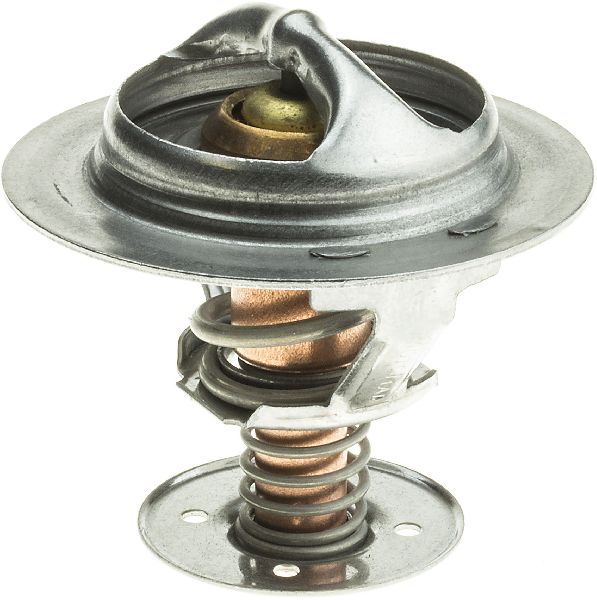
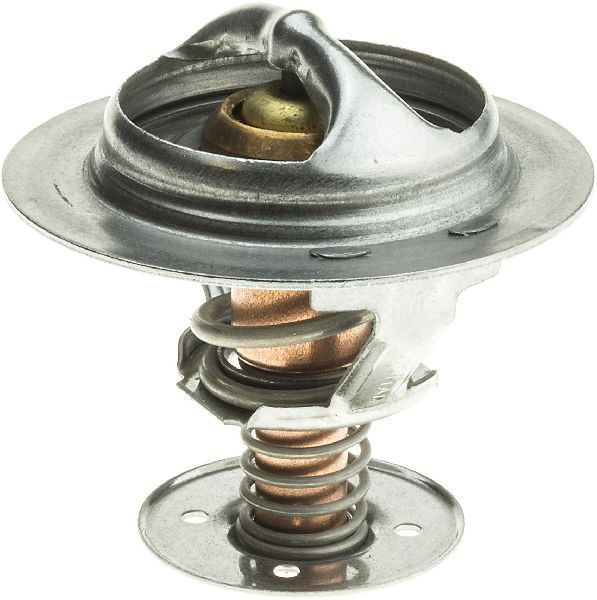
Typical fix: Replace the engine coolant thermostat and gasket. It's recommended to use an OEM Motorcraft part. This repair often requires partial removal of the water pump.
Est. part cost: $30-$60 - Failing Water Pump ⚪ Low Probability
How to confirm: Look for coolant leaks from the weep hole on the pump body or listen for grinding/whining noises from the front of the engine where the accessory belts are located. A wobbly pulley on the water pump is another sign of failure.
Typical fix: Replace the water pump. This is a more involved repair.
Est. part cost: $100-$300
Rare But Worth Checking
- Cooling Fan Malfunction: If the engine overheats primarily in stop-and-go traffic but is fine at highway speeds, the cooling fan assembly or its control module could be at fault.
- Restricted Radiator: External fins can get clogged with debris, and internal passages can be blocked by sediment, especially if incorrect coolant has been used. This reduces the radiator's ability to dissipate heat.
Diagnosis Steps
- Verify the code with a reliable OBD-II scanner.
- Check the engine coolant level in the reservoir (when the engine is cold). Top off if low and check for obvious leaks.
- Use the scanner to monitor live data from the Engine Coolant Temperature (ECT) sensor. On a cold start, it should match the ambient air temperature. Watch for erratic jumps or an immediate high reading, which points to a sensor/wiring issue.
- Carefully inspect the ECT sensor's electrical connector and wiring harness for any signs of damage, corrosion, or looseness. The original sensor is located under the intake manifold in the lifter valley area, making inspection difficult without disassembly. The TSBs point to issues with connector C1047.
- If a real overheating condition is suspected (live data shows a steady, plausible temperature rise to overheating), check for a stuck thermostat by feeling if the upper radiator hose gets hot.
- Verify the electric cooling fans are turning on when the A/C is activated or when the engine temperature rises.
- If no sensor or wiring faults are found and the engine is genuinely overheating, perform a cooling system pressure test to find any hard-to-see leaks.
Parts You'll Likely Need
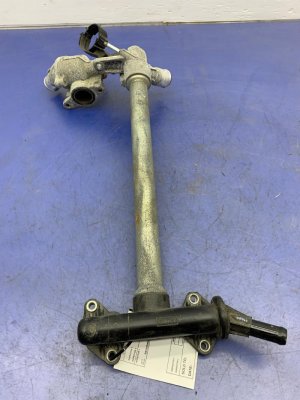
- Heater Hose and Jumper Harness Kit (per TSB 21-2168)
(OEM #ML3Z-14A411-H)— This is Ford's official updated fix for 2018-2020 models to relocate the ECT sensor to a more reliable location and improve the wiring integrity. It avoids a very labor-intensive replacement of the original sensor.
Trusted brands: Motorcraft
OEM price range: $100-$150 - Engine Coolant Temperature (ECT) Sensor
(OEM #DY-1309)— For older models or if not performing the TSB, this sensor is the most frequent cause of false P0217 codes on the 2.7L F-150.
Trusted brands: Motorcraft
OEM price range: $25-$45
Aftermarket price range: $15-$30 - ECT Sensor Connector Pigtail
(OEM #WPT-1253)— If the wiring connector itself is damaged, corroded, or has poor pin tension, replacing the pigtail is necessary. This is a common failure point noted in early TSBs.
Trusted brands: Motorcraft
OEM price range: $30-$50
Aftermarket price range: $15-$25 - Engine Coolant Thermostat
(OEM #FT4Z-8575-A (example, verify by VIN))— A potential cause if the vehicle is confirmed to be actually overheating and the radiator hoses are not getting hot.
Trusted brands: Motorcraft
OEM price range: $40-$60
Aftermarket price range: $25-$45
Related Codes That Often Appear With This One
- P0116 — Indicates a range/performance problem with the ECT sensor circuit.
- P0117 — Indicates the ECT sensor circuit is reading low (short to ground).
- P0118 — Indicates the ECT sensor circuit is reading high (open circuit).
- P1299 — Indicates the Cylinder Head Overtemperature Protection system has been activated by the PCM, often triggered by the false ECT signal.
- P0330 — A knock sensor code that is often triggered along with the ECT codes due to a shared/problematic wiring harness, as noted in TSBs.
Technical Service Bulletins (TSBs) & Recalls

- TSB 21-2168: Addresses false overheat warnings on 2018-2020 2.7L models due to ECT voltage drops, recommending sensor relocation.
- SSM 47791: Points to a poorly seated or damaged ECT sensor connector on 2017 2.7L models.
- SSM 46906: Similar to SSM 47791, but for 2015 2.7L models, highlighting ECT connector and wiring issues.
- SSM 48991: Recommends replacing both the ECT and knock sensors on 2015-2020 2.7L models to fix a range of codes including P0217.
Platform-Specific Known Issues
- TSB 21-2168: For some 2018-2020 F-150s with the 2.7L engine, Ford acknowledges that an intermittent drop in ECT voltage can cause P0217 and other related codes. The fix is to install kit ML3Z-14A411-H, which replaces a heater hose with a new design that relocates the ECT sensor and includes a jumper harness.
Mechanic-Grade Diagnostic Values
- Engine Coolant Temperature (ECT) Sensor Voltage — expected: ≈4.5 V at 0°C (32°F) to ≈0.5 V at 150°C (302°F). Failure: A static high reading (near 5V) or a reading that jumps erratically indicates a sensor or circuit fault, not a true overheat.
- Normal Engine Operating Temperature (via live data) — expected: 195–220°F (90–104°C). Failure: A reading that exceeds 260°F (127°C) for an extended period will trigger the P0217 code.
Scan Tool Commands That Help
- Ford IDS (Integrated Diagnostic System): Datalogger > ECT PID — Use to monitor and graph the Engine Coolant Temperature sensor's output in real-time. This is the primary method to spot the erratic voltage drops or sudden spikes that characterize the sensor/wiring fault on this engine, distinguishing it from a genuine, gradual overheating event.
- Ford IDS (Integrated Diagnostic System): Power Balance Test — If P1299 (Cylinder Head Overtemperature Protection) is also present, this test can help verify which cylinders the PCM has disabled. While it doesn't diagnose the cause of the overheat signal, it confirms the PCM's protective action is engaged.
Wiring & Ground Locations
- C1047 — This is a large, multi-wire inline harness connector located on the 2.7L engine. It is part of the path between the ECT sensor and the PCM.. TSB SSM 46906 and SSM 47791 specifically mention that damaged wiring between connectors C1064 and C1047 can cause this code on 2015-2019 F-150s. Inspecting this connector for corrosion, pin damage, or looseness is a key diagnostic step for earlier model years before replacing the sensor itself.
- Body/Frame Grounds — Multiple ground points exist from the body to the frame, particularly in the engine bay near the battery and on the passenger side frame rail.. Poor grounding can cause a host of electrical issues, including incorrect sensor readings. While not a primary cause listed in the TSBs for P0217, corroded or loose grounds are a known general issue on F-150s and can lead to erratic electronic behavior. Ensuring grounds are clean and tight is good practice during any electrical diagnosis.
Real Owner Repair Stories
- Ford F150 Forum user 'cihmagnum' (2019 F-150 2.7L) — Check engine light, "rumble strip" vibration, and high temperature warning.
❌ Tried (didn't work) The initial dealer repair replaced a wiring harness, but the problem returned 6 months later.
✅ What actually fixed it The dealer performed the repair outlined in TSB 21-2168, which involves relocating the ECT sensor using a new hose and jumper harness. The repair order specifically listed part number ML3Z-14A411-H. - Ford F150 Forum user (2016 F-150 2.7L) — Truck would not start on a cold morning, displaying an "Engine Coolant Overtemperature" message on the dash despite the engine being cold.
❌ Tried (didn't work) Plugging in the block heater had no effect.
✅ What actually fixed it The user correctly identified this as a sensor failure rather than a real overheat. The implied fix, though not explicitly stated in the thread, is a trip to the dealer for sensor/circuit diagnosis and replacement under warranty.
OEM Part Supersession History
N/A (Original engine harness and sensor location)→ML3Z-14A411-H— The original ECT sensor location under the intake manifold was prone to heat/vibration-related failures. This kit relocates the sensor to a more accessible and reliable location on a heater hose.
Heads up: This kit is the specified repair for 2018-2020 models. While the theory is the same, it is not officially specified for 2015-2017 models, which have a different TSB pointing towards wiring repair or pigtail replacement (WPT-1253).
Model Year Variations Within This Range
- 2015-2017: The primary documented cause per TSBs (SSM 46906, SSM 47791) is a poorly seated ECT sensor connector or damaged wiring near connector C1047. The recommended fix is to inspect/repair the wiring and, if necessary, replace the connector pigtail (WPT-1253).
- 2018-2020: The primary documented cause per TSB 21-2168 is an intermittent voltage drop from the ECT sensor. The official Ford fix is to install a relocation kit (ML3Z-14A411-H) that moves the sensor to a heater hose and provides a new jumper harness, bypassing the problematic original wiring and location. This is considered the definitive repair for these model years.
Helpful Videos

Used OEM Parts in Stock

New Aftermarket Parts Available


The information in this article is provided for general reference and educational purposes only. Vehicle specifications, procedures, and part compatibility can vary by production date, trim level, and region. Always consult your vehicle's factory service manual and verify part numbers before purchasing or performing repairs. Safety-critical components such as airbags, seat belts, and braking systems should be installed by a qualified professional.
- Ford F-150:
- 🎬 Helpful Videos
- 🛍️ Shop This Part
- What's Unique About the 2015-2020 Ford F-150
- Diagnostic Flowchart
- Symptoms You May Notice
- Most Likely Causes
- Rare But Worth Checking
- Diagnosis Steps
- Parts You'll Likely Need
- Related Codes That Often Appear With This One
- Technical Service Bulletins (TSBs) & Recalls
- Platform-Specific Known Issues
- Mechanic-Grade Diagnostic Values
- Scan Tool Commands That Help
- Wiring & Ground Locations
- Real Owner Repair Stories
- OEM Part Supersession History
- Model Year Variations Within This Range
- 🎟️ Get 5% Off