

P0217 on 2015-2020 Ford Escape: Engine Overtemperature Causes and Fixes
P0217 on a 2015-2020 Ford Escape with a 1.5L or 2.0L EcoBoost engine is a critical overheating code, most often caused by coolant leaking into the engine's cylinders due to a known engine design flaw. This is a severe issue that can require a new engine short block, a very expensive repair.
- P0217 on a 2015-2020 Ford Escape with an EcoBoost engine is a critical warning that must be addressed immediately.
- Do not continue to drive the vehicle. Pull over as soon as it is safe and turn off the engine to prevent catastrophic damage.
- The most likely cause is a serious, known issue with coolant leaking into the engine's cylinders, not a simple thermostat or radiator failure.
- Diagnosis requires a cooling system pressure test and a borescope inspection of the cylinders to confirm the root cause.
- Be prepared for a potentially very expensive repair, which often involves replacing the engine block.
What's Unique About the 2015-2020 Ford ESCAPE

The 2015-2020 Ford Escape, particularly models with the 1.5L and 2.0L EcoBoost engines, is known for a specific design flaw that causes coolant to leak directly into the cylinders. This condition, known as coolant intrusion, leads to overheating, misfires, and eventually triggers the P0217 code. Ford has issued multiple Technical Service Bulletins (TSBs) acknowledging this problem, which often requires replacing the entire engine short block or long block to resolve, making it a much more serious issue than on a typical vehicle.
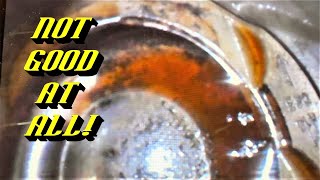
🎬 Watch: An overview of Ford's ongoing EcoBoost coolant consumption issues.Diagnostic Flowchart

Tap your situation to follow the diagnostic path that matches what you're seeing on this vehicle.
Generation note: The 2015-2020 year range covers the third generation (2013-2019) and the first year of the fourth generation (2020). The primary cause, coolant intrusion, is tied to the 1.5L and 2.0L EcoBoost engines used across these model years, making the issue relevant to both generations within this timeframe.
Symptoms You May Notice

- Temperature gauge reading in the 'Hot' or red zone.
- Illuminated engine temperature warning light.
- Reduced engine power or 'limp mode'.
- White smoke or steam coming from the exhaust tailpipe.
- Noticeable loss of engine coolant with no visible external leaks.
- Rough running engine or misfires.
- Sweet, syrupy smell of burning coolant.
- Replacing the thermostat or radiator without first checking for coolant intrusion. Given the high probability of the engine block issue on this platform, ruling it out first can save significant time and money.
Most Likely Causes


- Coolant Intrusion into Cylinders (Engine Block/Head Gasket Failure) 🔴 High Probability A known design flaw in the 1.5L and 2.0L EcoBoost engines allows coolant to seep into the cylinders between the block and cylinder head. The original block design featured open-deck 'slits' between cylinders which provided an insufficient sealing surface for the head gasket. 🎬 See why the 1.5L EcoBoost design leads to these failures. Ford has issued multiple TSBs and a customer satisfaction program for this specific issue.
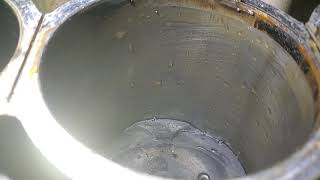
How to confirm: A mechanic will perform a cooling system pressure test to check for pressure loss. They will then use a borescope inserted into the spark plug holes to visually inspect for the presence of coolant inside the cylinders. A cylinder that has been burning coolant will often be steam-cleaned and look much cleaner than the others.
Typical fix: The official Ford procedure is to replace the engine short block (1.5L) or long block (2.0L) assembly with an updated design.
Est. part cost: $2000-$5000+ - Leaking EGR Cooler 🟡 Medium Probability As noted in TSB #SSM 48345, the EGR cooler can leak coolant internally into the intake or exhaust system, causing overheating and related symptoms. [TSB #SSM 48345]
How to confirm: Inspect the EGR system components for signs of coolant residue. A black, gooey substance in the EGR valve instead of dry soot is a strong indicator of an internal coolant leak.
Typical fix: Replace the EGR cooler assembly.
Est. part cost: $300-$700 - Failed Thermostat ⚪ Low Probability
How to confirm: Check if the lower radiator hose remains cool while the upper hose is hot after the engine has warmed up. This indicates coolant is not circulating through the radiator.
Typical fix: Replace the thermostat and gasket.
Est. part cost: $30-$80 - Failed Water Pump ⚪ Low Probability
How to confirm: Listen for grinding or whining noises from the pump area. A visual inspection may reveal coolant leaking from the pump's weep hole.
Typical fix: Replace the water pump and serpentine belt.
Est. part cost: $100-$300
Rare But Worth Checking
- Faulty Cylinder Head Temperature (CHT) Sensor: This is rare because the P0217 code is usually accompanied by physical symptoms of overheating (coolant loss, steam). However, a sensor sending false high readings can trigger the code without the engine actually being hot. This can happen if the sensor itself fails or if there's an issue with its wiring or connector.
- Restricted Radiator or Cooling Fan Malfunction: While possible, these are less common causes for this specific vehicle compared to the known engine and EGR cooler issues. A visual inspection can check for debris blocking the radiator or if the fan fails to activate when the A/C is turned on.
Diagnosis Steps
- DO NOT open the cooling system when hot. Allow the engine to cool completely.
- Check the coolant level in the reservoir. If it is low, this confirms a leak.
- Scan the PCM for all stored trouble codes. Note any misfire (P03xx) or cylinder head temp (P1285, P1299) codes.
- Perform a cooling system pressure test. If the system cannot hold pressure, there is a leak.
- If a leak is confirmed but not visible externally, remove the spark plugs.
- Use a borescope to inspect the inside of each cylinder for any shiny, clean surfaces or the presence of liquid coolant. Coolant intrusion will often steam-clean the piston top.
- If coolant is found in the cylinders, the engine requires major repair (short/long block replacement) as per Ford's TSBs.
- If no coolant is found in the cylinders, inspect the EGR system for signs of internal leaks (wet, gooey soot).
- If the above steps show no issues, proceed with standard overheating diagnostics: test the thermostat, water pump, and cooling fan operation.
Parts You'll Likely Need
- Engine Short Block Assembly (1.5L)
(OEM #DS7Z-6009-G)— This is the official Ford-recommended repair for coolant intrusion on the 1.5L EcoBoost engine.
Trusted brands: Motorcraft
OEM price range: $2500-$4000 - Engine Long Block Assembly (2.0L)
(OEM #6006 (base part number))— This is the official Ford-recommended repair for coolant intrusion on the 2.0L EcoBoost engine.
Trusted brands: Motorcraft
OEM price range: $4000-$6000 - EGR Cooler — A potential cause of overheating if it leaks internally, introducing coolant into the exhaust/intake stream. [TSB #SSM 48345]
Trusted brands: Motorcraft, Standard Motor Products
OEM price range: $400-$700
Aftermarket price range: $250-$500
Related Codes That Often Appear With This One
- P0300, P0301, P0302, P0303, P0304 — These are random and specific cylinder misfire codes, which occur when coolant intrudes into the cylinders and fouls the spark plugs, preventing proper combustion.
- P0316 — Misfire Detected on Startup (First 1000 Revolutions). This is common when coolant has pooled in a cylinder overnight.
- P1299 — Cylinder Head Overtemperature Protection Active. This code is set by the PCM when it detects excessive cylinder head temperatures, putting the engine into a protection or 'limp' mode. [TSB #TSB 22-2322, TSB #TSB 22-2229, 1]
- P1285 — Cylinder Head Overtemperature Sensed. This is another code indicating the cylinder head has exceeded its safe temperature limit. [TSB #TSB 22-2322, TSB #TSB 22-2229]
- P0401 — EGR Flow Insufficient Detected. This can be triggered if a leaking EGR cooler becomes clogged with a mixture of soot and coolant. [TSB #SSM 48345]
Technical Service Bulletins (TSBs) & Recalls
- SSM 48345: Links P0217 to a leaking EGR Cooler.
- TSB 22-2322 / TSB 22-2229: Address coolant intrusion in the cylinder on 2.0L engines, listing P0217 as a related DTC. [TSB #TSB 22-2322, TSB #TSB 22-2229, 15, 34]
- TSB 20-2100 / TSB 19-2375: Address coolant intrusion in the cylinder on 1.5L engines, listing P0217 as a related DTC.
- TSB 19-2346 / TSB 19-2208 / TSB 19-2172: Earlier versions of the TSB for the 2.0L engine coolant intrusion issue, also citing P0217.
Platform-Specific Known Issues
- A design defect in the 1.5L and 2.0L EcoBoost engines can cause coolant to leak into the cylinders, leading to overheating, misfires, and eventual engine failure. This is documented in multiple TSBs.
- Ford issued Customer Satisfaction Program 21N12 for certain 2017-2019 Escapes with the 1.5L engine, extending the warranty for this specific failure to 7 years or 84,000 miles.
- Owner complaints filed with the NHTSA confirm diagnoses of coolant intrusion requiring engine replacement after codes like P0217, P1299, and P030x appeared. [ODI #11537612, ODI #11611342]
Mechanic-Grade Diagnostic Values
- Cylinder Head Temperature (CHT) Sensor Resistance — expected: Approximately 37,000 Ohms at 68°F (20°C), decreasing as temperature rises. For example, around 2,000 Ohms near boiling point.. Failure: An open circuit (infinite resistance) or short circuit (near zero resistance) will cause an immediate fault. Readings that do not correspond to the actual head temperature will cause incorrect PCM calculations.
- Cooling System Pressure Test — expected: System should hold the specified pressure (typically 20-21 PSI for these models) for a minimum of 2 hours with minimal to no pressure drop.. Failure: A steady drop in pressure indicates a leak. If no external leak is visible, coolant intrusion into the cylinders is highly suspected.
Scan Tool Commands That Help
- Ford IDS (Integrated Diagnostic System): Powertrain > Engine > Self-Test > Retrieve Continuous Memory DTCs — This is the first step to pull all stored and pending powertrain codes, including the history of overheating events (P0217) and related misfires (P03xx) or over-temp protection codes (P1285, P1299).
- Ford IDS (Integrated Diagnostic System): Datalogger > Module: PCM > Select PIDs — Use this to monitor live data for PIDs like 'CHT' (Cylinder Head Temperature), 'ECT' (Engine Coolant Temperature - often an inferred value on these engines), and 'FAN_CTRL' (Fan Control command) to see if the PCM is commanding the fans on and what temperature it is reading.
- Ford IDS (Integrated Diagnostic System): Toolbox > Powertrain > Power Balance — This function graphically displays the contribution of each cylinder. If coolant intrusion is causing a misfire, the affected cylinder will show a significant drop in power, helping to confirm the diagnosis without pulling spark plugs initially.
Wiring & Ground Locations
- Cylinder Head Temperature (CHT) Sensor — On the 1.5L EcoBoost, the CHT sensor is located on the back of the cylinder head, in the center, behind the ignition coils. Access often requires removing the upper cowl panel assembly.. Unlike a traditional Engine Coolant Temperature (ECT) sensor that measures coolant, the CHT measures the metal temperature of the head. A failure or wiring issue with this sensor can directly cause false P0217 and P1299 codes.
- F32 (Underhood Fuse Box) — In the underhood fuse box.. This 25A fuse powers the Powertrain Control Module (PCM) relay, which is essential for the operation of all engine sensors and cooling fan controls.
- F10 (Underhood Fuse Box) — In the underhood fuse box.. This fuse (rating varies by fan size, e.g., 40A or 60A) directly powers the engine cooling fan motor. A blown fuse will disable the fan and cause overheating in low-speed traffic.
Real Owner Repair Stories
- Reddit user in r/MechanicAdvice (2018 Ford Escape 1.5L, 89,000 miles) — Coolant intrusion, likely presenting with codes P0217, P1299, and P030x.
❌ Tried (didn't work) A head gasket replacement was performed by a shop at 89k miles.
✅ What actually fixed it The coolant intrusion issue returned just 5,600 miles after the head gasket job. The shop then diagnosed an irreparable crack in the block (the known design flaw), stating the only permanent fix was a complete engine replacement, estimated at $10,000. This highlights that a simple head gasket job is not the correct fix for this specific failure mode.
OEM Part Supersession History
DS7Z-6009-G→DS7Z-6009-J— Superseded part number for the 1.5L EcoBoost short block assembly. This likely represents a revision in the manufacturing or included components, though both are intended to be the updated engine design that corrects the coolant intrusion flaw.
Heads up: Both part numbers refer to the service replacement short block for affected vehicles. Ensure the supplier provides the latest available revision.N/A - Original Engine Block→J2GZ6006E (example long block)— The original engine blocks in 2017-early 2019 models had a design flaw with slits between the cylinders. The replacement long block assemblies feature a revised block design with drilled coolant passages instead of open slits to prevent head gasket failure.
Heads up: When replacing the engine, it is critical to ensure the new long block is the updated design to permanently fix the issue.
Model Year Variations Within This Range
- 2015-Early 2019: Engines manufactured before mid-2019 (specifically, before 08-Apr-2019 for the 1.5L Escape and 16-May-2019 for the 2.0L Escape) feature the original block design with a slot between the cylinders, making them highly susceptible to the coolant intrusion failure.
- Late 2019-2020: Engines manufactured from mid-2019 onward feature a revised, solid block design with pinhole/drilled passages for coolant. This design corrects the flaw that caused the head gasket sealing issue and coolant intrusion. A vehicle from these later years is much less likely to experience this specific cause for P0217.
Helpful Videos
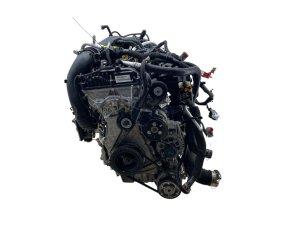
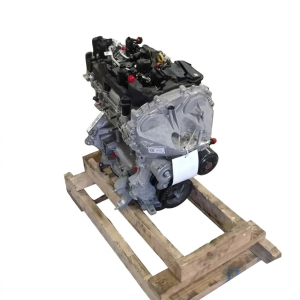
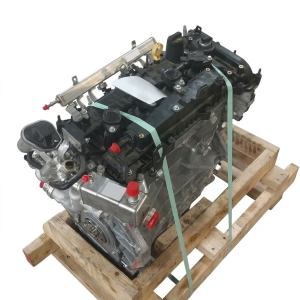
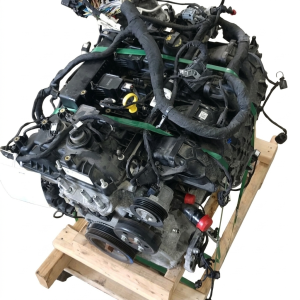
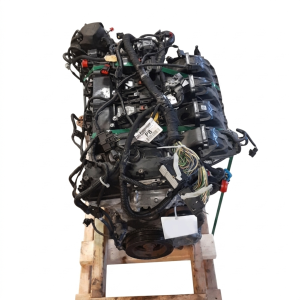
We Have This Part in Stock

The information in this article is provided for general reference and educational purposes only. Vehicle specifications, procedures, and part compatibility can vary by production date, trim level, and region. Always consult your vehicle's factory service manual and verify part numbers before purchasing or performing repairs. Safety-critical components such as airbags, seat belts, and braking systems should be installed by a qualified professional.
- Ford ESCAPE:
- 🎬 Helpful Videos
- 🛍️ Shop This Part
- What's Unique About the 2015-2020 Ford ESCAPE
- Diagnostic Flowchart
- Symptoms You May Notice
- Most Likely Causes
- Rare But Worth Checking
- Diagnosis Steps
- Parts You'll Likely Need
- Related Codes That Often Appear With This One
- Technical Service Bulletins (TSBs) & Recalls
- Platform-Specific Known Issues
- Mechanic-Grade Diagnostic Values
- Scan Tool Commands That Help
- Wiring & Ground Locations
- Real Owner Repair Stories
- OEM Part Supersession History
- Model Year Variations Within This Range
- 🎟️ Get 5% Off