

P0217 on 2011-2019 Dodge Journey 3.6L: Engine Overheating Causes and Fixes
P0217 means your engine is critically overheating. On the 3.6L Pentastar, this is most often caused by a coolant leak from the oil filter housing, a stuck thermostat, or a failed water pump. Stop driving immediately to prevent catastrophic engine damage like warped heads or a seized engine.
- P0217 is a critical code. Stop driving immediately to prevent severe engine damage.
- The most likely cause on a 3.6L Journey is a coolant leak. Thoroughly inspect the plastic oil filter housing in the engine valley, as it is a very common failure point.
- A stuck thermostat and a failed water pump are the next most probable causes of overheating.
- After any cooling system repair, the system must be carefully bled of all air using the bleeder screw on the thermostat housing to prevent a recurrence of the problem.
- When replacing the oil filter housing, consider using a higher-quality aluminum aftermarket part to prevent future leaks.
What's Unique About the 2011-2019 Dodge Journey
The 3.6L Pentastar V6, while used in millions of vehicles, has several well-documented weaknesses in its cooling system that make it prone to overheating. A primary culprit is the original equipment (OE) oil filter and cooler housing, which is made of plastic and sits in the hot valley of the engine; it's known to crack and warp over time, causing significant coolant and oil leaks. Additionally, failures of the water pump and the plastic thermostat housing are common points of failure that lead to the P0217 code on this specific engine.
Symptoms You May Notice
- Temperature gauge reading in the red or 'H' zone
- Check engine light and/or a dedicated engine temperature warning light is on
- Steam or smoke coming from the engine bay
- A 'boiling' or 'gurgling' sound from the engine
- Reduced engine power as the vehicle enters 'limp mode'
- The smell of sweet-smelling coolant from outside or inside the vehicle
- Whining or grinding noise from the front of the engine, especially the passenger side (indicates water pump failure)
- Poor or no heat from the cabin heater, as air pockets or lack of circulation prevent hot coolant from reaching the heater core
- Replacing the Engine Coolant Temperature (ECT) sensor. The sensor is usually just accurately reporting the high temperature; it is rarely the cause of the P0217 code itself.
- Replacing cooling system parts but failing to properly bleed the air out of the system afterward, leading to a recurrence of the overheating problem.
- Mistaking a coolant leak from the oil filter housing that drips off the bellhousing for a rear main seal leak.
Most Likely Causes
- Leaking Oil Filter / Cooler Housing 🔴 High Probability The original housing is made of plastic and is located in the hot 'V' of the engine between the cylinder heads. Thousands of heat cycles cause the plastic to become brittle, leading to cracks and gasket failure. Over-tightening the oil filter cap during an oil change can also crack the housing.
How to confirm: Look for coolant and/or oil pooling in the engine valley beneath the intake manifold. A pressure test will often make the leak obvious. The leak often runs down the back of the engine and drips from the transmission bellhousing area, which can be mistaken for a rear main seal leak.
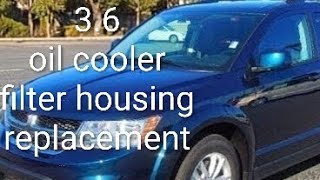
Typical fix: The upper and lower intake manifolds must be removed to access and replace the entire oil filter housing assembly. Many owners and shops opt for an upgraded aluminum aftermarket replacement part 🎬 Watch: Step-by-step guide to replacing the oil filter housing. (like Dorman 926-959) to prevent future failures.
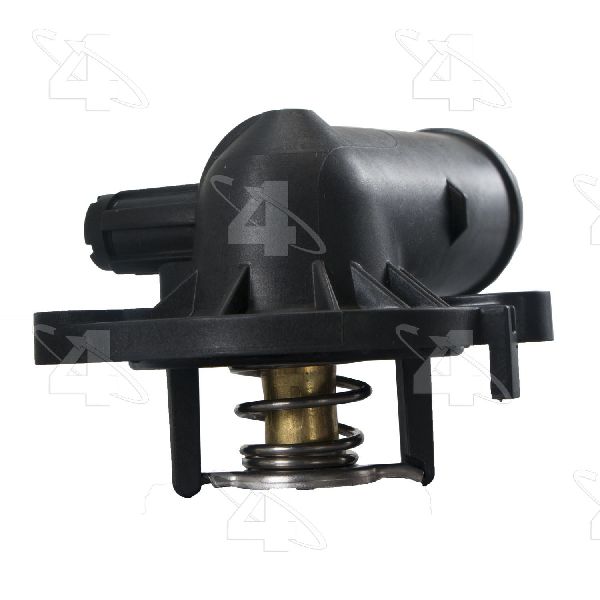
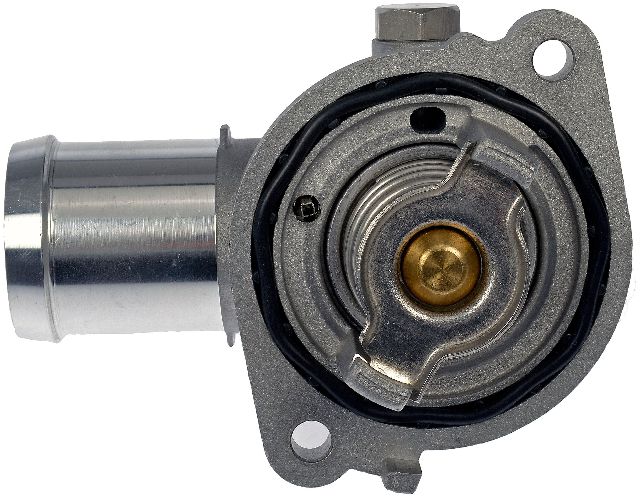
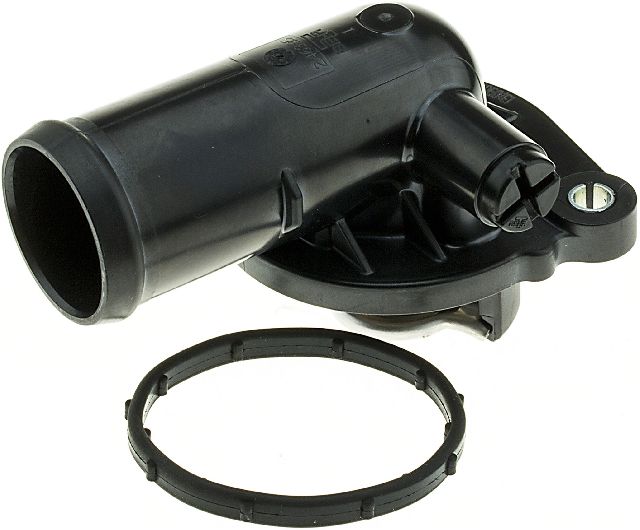
Est. part cost: $80-$250 - Failed Thermostat 🔴 High Probability The thermostat can fail by getting stuck in the closed position, which prevents coolant from circulating to the radiator. The integrated plastic housing is also a common failure point, prone to cracking and leaking.
How to confirm: After the engine has warmed up, feel the upper and lower radiator hoses. If the thermostat is working, both should be hot. If the upper hose is hot and the lower hose is cool, the thermostat is likely stuck closed.
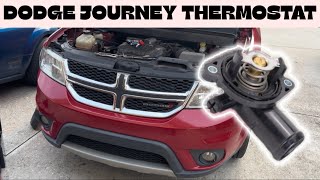
Typical fix: Replace the thermostat and its housing as an assembly. The part is relatively accessible on the front of the engine. 🎬 See this walkthrough for replacing the thermostat and housing. The OEM part has been revised multiple times, with the latest version being recommended.
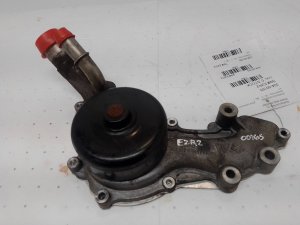
Est. part cost: $40-$90 - Failed Water Pump 🟡 Medium Probability Water pump failure is a known issue on the 3.6L Pentastar, caused by wear on the internal seals or impeller. The plastic impeller on early models (2011-2013) can sometimes separate from the shaft, causing a loss of circulation even without a visible leak.
How to confirm: Check for coolant leaks or weeping from the water pump weep hole, which is a small hole on the pump body designed to leak when the internal seal fails. You may also hear a grinding or whining noise from the pump area when the engine is running. A visual inspection is done from the passenger side wheel well. TSB S2307000002 provides specific diagnostic instructions for confirming a leak.
Typical fix: Replace the water pump. This is a moderately labor-intensive job that requires removing the serpentine belt and accessing the pump from the side of the engine.
Est. part cost: $70-$200 - Air in the Cooling System 🟡 Medium Probability This typically occurs after a cooling system repair if the system is not bled properly. The Pentastar engine is sensitive to air pockets, which can cause intermittent overheating, gurgling sounds, and lack of cabin heat.
How to confirm: If the overheating issue appeared immediately after a coolant service, air is the likely cause. You may also notice poor or no heat from the heater.
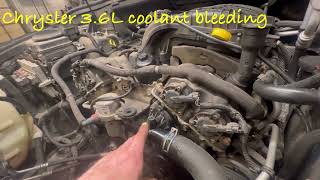
Typical fix: Properly bleed the cooling system using the bleeder screw located on the thermostat housing. Park the vehicle on an incline or use a spill-free funnel kit to help purge all air. 🎬 Watch: How to properly bleed air from the Pentastar engine.
Est. part cost: $0 - Inoperative Radiator Cooling Fan ⚪ Low Probability
How to confirm: With the engine at operating temperature (or when the A/C is turned on), observe if the cooling fan(s) are spinning. If they are not, check the fan fuses, relays, and electrical connector. A scan tool can be used to command the fan on for testing.
Typical fix: Replace the faulty fan motor, relay, or fuse. The entire fan shroud assembly may need to be replaced if the motor is integrated.
Est. part cost: $150-$350
Rare But Worth Checking
- Clogged Radiator: Debris on the external fins or internal blockage from old/improper coolant can reduce cooling efficiency. Check for bent fins or blockages from road debris.
- Leaking Head Gasket: This is a major repair. Symptoms include white smoke from the exhaust, a milky appearance in the engine oil, and persistent, unexplained coolant loss or air bubbles in the cooling system. A block tester (combustion leak tester) can confirm this. While not a primary cause of P0217, the early (2011-2013) Pentastar's left cylinder head issue could contribute to overheating problems.
Diagnosis Steps
- CRITICAL: As soon as it is safe, pull over and turn off the engine. Do not continue driving.
- Allow the engine to cool completely for several hours before opening the coolant reservoir cap.
- Once cool, check the coolant level in the reservoir. If it is low, this confirms a leak. Ensure you are using the correct Mopar OAT coolant (MS-12106).
- Visually inspect the engine bay for obvious signs of coolant leaks. Pay close attention to the oil filter housing in the engine valley, the thermostat housing, the water pump (viewed from the passenger wheel well), radiator, and all hoses.
- If no external leaks are visible, the system may have an internal leak (like a head gasket) or a circulation failure (water pump, thermostat).
- If the coolant level is full, start the engine and monitor the temperature gauge. Turn on the A/C to command the radiator fans on and confirm they are operating.
- Feel the upper and lower radiator hoses once the gauge indicates the engine is warm. If the upper is hot and the lower is cold, the thermostat is likely stuck closed.
- Listen for a whining or grinding noise from the passenger side of the engine, which would indicate a failing water pump.
- If you recently had cooling system service, bleed the system again to ensure no air is trapped.
- If a leak is suspected from the oil filter housing, a cooling system pressure test will often make the leak more apparent, showing coolant pooling in the engine 'V'.
Parts You'll Likely Need
- Oil Filter / Cooler Housing Assembly
(OEM #68105583AG (latest revision, supersedes AA-AF), 5184294AE (for early models))— This is the most common and well-documented source of coolant leaks on the 3.6L Pentastar engine due to its failure-prone plastic construction.
Trusted brands: Dorman (offers an aluminum upgrade, P/N 926-959), Mopar (OE plastic)
OEM price range: $150-$250
Aftermarket price range: $80-$180 - Thermostat and Housing Assembly
(OEM #5184651AJ (supersedes ...AF, ...AG, ...AH, ...AI))— A thermostat stuck closed is a primary cause of rapid overheating. The integrated plastic housing is often replaced with it.
Trusted brands: Mopar, Gates, Motorad
OEM price range: $60-$90
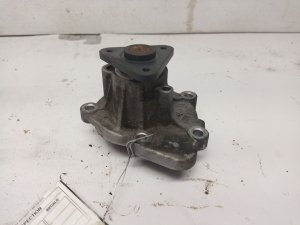
Aftermarket price range: $40-$70 - Water Pump — A known weak point on the Pentastar engine, failing due to worn bearings or seals, causing leaks or loss of circulation.
Trusted brands: Mopar, Gates
OEM price range: $70-$200
Aftermarket price range: $50-$150
Related Codes That Often Appear With This One
- P0128 — Coolant Thermostat (Coolant Temperature Below Thermostat Regulating Temperature). This code can sometimes appear if the thermostat is failing or if there are major air pockets, causing erratic temperature readings.
Technical Service Bulletins (TSBs) & Recalls
- TSB 09-002-14 Rev. B - Left Cylinder Head Failure (Early Models): Pertains to 2011-2013 models. Addresses misfire codes (P0302, P0304, P0306) caused by a manufacturing defect in the left cylinder head's valve guides/seats. The diagnostic procedure involves a cylinder leak-down test, with replacement of the head authorized if leakage exceeds 25%. This was accompanied by warranty extension X56 (10 years/150,000 miles).
- TSB S2307000002 / 9100212 - Water Pump Leak Diagnosis: Pertains to 2016-2024 vehicles with the 3.6L engine. Provides specific diagnostic instructions for technicians to confirm a water pump leak before replacing the part, to avoid unnecessary repairs when the leak may be from a nearby hose or gasket.
Platform-Specific Known Issues
- The plastic oil filter housing assembly located under the intake manifold is a notorious failure point, leading to coolant and/or oil leaks that can be difficult to pinpoint as they drip down the back of the engine.
- The cooling system requires careful bleeding after service to prevent air pockets that cause overheating and heater performance issues.
Mechanic-Grade Diagnostic Values
- Engine Coolant Temperature (ECT) Sensor Resistance — expected: Approx. 2,500Ω at 20°C (68°F), 300Ω at 80°C (176°F), 180Ω at 100°C (212°F).. Failure: Infinite resistance (open circuit), zero resistance (short circuit), or a reading that does not change as the engine warms up.
- ECT Sensor Connector Voltage (Key On, Engine Off) — expected: One pin should have a 5-volt reference from the PCM; the other is the ground return.. Failure: Absence of the 5V reference or ground points to a wiring or PCM issue, not a sensor failure.
- Thermostat Opening Temperature — expected: 203°F (95°C).. Failure: If the lower radiator hose remains cool when the engine temperature is well above 203°F, the thermostat is stuck closed.
Scan Tool Commands That Help
- wiTECH (dealer tool) or advanced bidirectional scanner (e.g., Autel, Innova): Cooling Fan Actuation / Radiator Fan Test — Use this command with the engine running to manually turn the cooling fans on. This instantly verifies if the fan motors, relays, and wiring are functional, isolating the problem to the fan control circuit (like the ECT sensor or PCM) if the fans don't run when commanded.
Wiring & Ground Locations
- G903 — On the top of the transmission housing.. This is a primary sensor ground point for the engine. A corroded or loose G903 can cause erratic readings from various sensors, including the ECT sensor, potentially leading to incorrect fan operation or temperature readings.
- ECT Sensor Connector — On the thermostat housing assembly, at the front of the engine.. This is the connection point for the sensor that reports engine temperature to the PCM. A visual inspection for corrosion, damage, or a loose connection is a critical first step before testing or replacing the sensor.
- Engine Ground Stud — Located on the engine block between the large wire harness and the vacuum pump; the main battery negative cable connects here.. This is the main ground connection for the entire engine assembly. A poor connection here can cause a wide range of electrical issues, including problems with the cooling fan operation and sensor readings.
Real Owner Repair Stories
- Reddit user in r/AskMechanics (Dodge Journey 3.6L (year not specified)) — Coolant leak, no overheating or smoke. Coolant temp was normal at 205°F. Coolant level was dropping.
❌ Tried (didn't work) Initially suspected the water pump or just the water pump gasket.
✅ What actually fixed it The leak was traced to a failing thermostat housing, which is located above the water pump.
OEM Part Supersession History
5184294AC, 5184294AD→5184294AE (for early models, approx. 2011-2013).— Revisions to address warping and leaking issues in the original plastic design.68105583AA through 68105583AF→68105583AG (for later models, approx. 2014+).— Continued design revisions by Mopar to improve the durability of the plastic oil filter housing assembly.
Heads up: The early style (5184294AE) and late style (68105583AG) housings are not directly interchangeable. Using an aftermarket aluminum housing like the Dorman 926-959 often consolidates these designs but may require using a specific oil filter cartridge noted in its instructions.
Model Year Variations Within This Range
- 2011-2013: Early production 3.6L Pentastar engines were more susceptible to water pump failure due to a plastic impeller that could separate from the shaft, causing a loss of coolant circulation without an external leak.
- 2011-2013 vs 2014-2019: The oil filter housing assembly has different part numbers for early and late models. The early design is P/N 5184294AE, while the later, updated design is P/N 68105583AG. They are not directly interchangeable.
Diagnostic Flowchart
Other Known Issues on This Vehicle
Issues unrelated to this code that are worth knowing about as an owner of this generation:
- Rocker Arm Bearing Failure ('Pentastar Tick') 🔴 High — Very common across all model years, often appearing after 50,000 miles. Causes a distinct ticking/tapping noise from the top of the engine. (Ref: No official TSB, but it is a widely documented mechanical failure and the subject of class-action lawsuits.)
- Left Cylinder Head Failure 🔴 High — Primarily affects 2011-2013 models. Caused by a manufacturing defect leading to premature valve guide and seat wear. (Ref: TSB 09-002-14 Rev. B and Extended Warranty X56 (10yr/150k miles, now expired).)
- Totally Integrated Power Module (TIPM) Failure 🟠 Medium — More common on earlier models (approx. 2009-2014). Causes bizarre, random electrical problems like the horn honking, wipers activating, or no-start conditions. (Ref: Subject of a class-action lawsuit, but no widespread recall was issued for the Journey.)
- Stretched Timing Chain 🟠 Medium — Can occur on higher-mileage vehicles, typically over 80,000-100,000 miles. Often presents with a rattling noise on startup and codes like P0016.
Used vs. New Parts: Buying Guide for This Vehicle
When a used part is the smart pick: A used part is a reasonable choice for a radiator or a cooling fan assembly, provided they are from a low-mileage, accident-free donor vehicle. These parts have fewer internal wear components compared to pumps or housings.
Donor-vehicle mileage cap: roughly under 60000 miles for the part to have meaningful remaining life.
What to inspect on the donor part:
- For a radiator, inspect fins for excessive damage or corrosion and look inside the inlet/outlet for signs of heavy scale or stop-leak additive residue.
- For a fan assembly, spin the fan blades by hand to ensure they move freely with no bearing noise or wobble. Check the electrical connector for corrosion or melted plastic.
- Verify the donor vehicle was not in a front-end collision, which could cause unseen stress fractures in plastic components.
OEM-only on this vehicle (don't cheap out):
- Engine Coolant Temperature (ECT) Sensor: While often included with housing assemblies, if buying separately, a Mopar sensor is recommended to ensure accurate temperature readings for the PCM.
Aftermarket brands forum-validated for this vehicle:
- Dorman (specifically the 926-959 aluminum oil filter housing and aluminum thermostat housing).
- Gates (for water pumps and thermostat assemblies).
- Motorad (for thermostat assemblies).
Brands owners have reported issues with on this vehicle:
- Unbranded, no-name plastic oil filter housings and thermostat housings from online marketplaces. These often use lower-grade plastic that can fail even faster than the original OEM part.
Real Owner Stories
Aggregated from forums and TSBs cited above. Mileages and costs reflect what owners reported in those sources.
2011-2013 Dodge Journey 3.6L — ~145000 miles
Symptoms: Misfire codes P0302, P0304, or P0306 caused by manufacturing defect in the left cylinder head's valve guides and seats.
What fixed it: Replacement of the left cylinder head as authorized by TSB 09-002-14 Rev. B and warranty extension X56.
Source hint: TSB 09-002-14 Rev. B - Left Cylinder Head Failure (Early Models)
2015 Dodge Journey 3.6L
Symptoms: The engine developed the infamous 'Pentastar Tick' caused by a failed rocker arm.
What fixed it: Replacement of the failed rocker arm.
Source hint: YouTube - Bad Rocker Arm 2015 Dodge Journey 3.6L
2011-2019 Dodge Journey 3.6L
Symptoms: Coolant and/or oil pooling in the engine valley beneath the intake manifold; leak running down the back of the engine.
What fixed it: Replacing the failure-prone plastic oil filter housing with an upgraded Dorman 926-959 aluminum kit.
Source hint: YouTube - Pentastar 3.6 oil filter housing/cooler replacement with Dorman 926-959 aluminum kit!
Related OBD-II Codes
Frequently Asked Questions
My 2012 Dodge Journey is overheating and misfiring; does TSB 09-002-14 Rev. B apply to me?
I see coolant dripping from my transmission bellhousing. Is my rear main seal failing?
Is there a more durable replacement for the plastic oil filter housing that keeps cracking?
Why does my Journey have no heat in the cabin after I replaced the coolant?
My 2017 Journey has a suspected water pump leak. Is there a specific diagnostic procedure?
What type of coolant should I use for my 2011-2019 Dodge Journey?
Helpful Videos

Used OEM Parts in Stock
New Aftermarket Parts Available


The information in this article is provided for general reference and educational purposes only. Vehicle specifications, procedures, and part compatibility can vary by production date, trim level, and region. Always consult your vehicle's factory service manual and verify part numbers before purchasing or performing repairs. Safety-critical components such as airbags, seat belts, and braking systems should be installed by a qualified professional.
- Dodge Journey:
- 🎬 Helpful Videos
- 🛍️ Shop This Part
- What's Unique About the 2011-2019 Dodge Journey
- Symptoms You May Notice
- Most Likely Causes
- Rare But Worth Checking
- Diagnosis Steps
- Parts You'll Likely Need
- Related Codes That Often Appear With This One
- Technical Service Bulletins (TSBs) & Recalls
- Platform-Specific Known Issues
- Mechanic-Grade Diagnostic Values
- Scan Tool Commands That Help
- Wiring & Ground Locations
- Real Owner Repair Stories
- OEM Part Supersession History
- Model Year Variations Within This Range
- Diagnostic Flowchart
- Other Known Issues on This Vehicle
- Used vs. New Parts: Buying Guide for This Vehicle
- Real Owner Stories
- 2011-2013 Dodge Journey 3.6L — ~145000 miles
- 2015 Dodge Journey 3.6L
- 2011-2019 Dodge Journey 3.6L
- Related OBD-II Codes
- Frequently Asked Questions
- 🎟️ Get 5% Off