

P0217 on 2013-2016 Dodge Dart 2.0L: Engine Overheating Causes and Fixes
P0217 means your Dodge Dart's engine is overheating. The most common causes are a coolant leak, a failed thermostat housing, or an inoperative radiator fan. Stop driving immediately to prevent severe engine damage. The thermostat housing assembly is a particularly well-documented failure point on this platform.
- P0217 is a critical code indicating your engine is overheating. Stop driving immediately.
- The most likely causes on a 2013-2016 Dart are a coolant leak, a bad thermostat assembly, or a failed radiator fan.
- Check the easy things first: coolant level (when cold) and radiator fan operation (with A/C on).
- A hot upper radiator hose combined with a cool lower hose strongly points to a thermostat that is stuck closed.
- Always use the correct OAT coolant specified for your vehicle when refilling the system to prevent future issues.
What's Unique About the 2013-2016 Dodge Dart
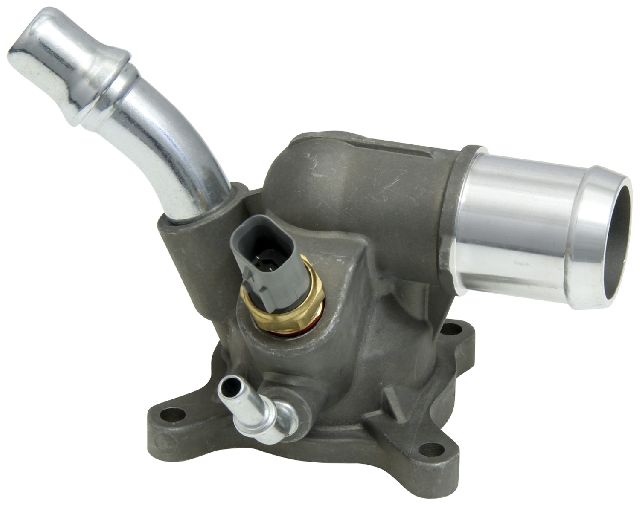
The 2013-2016 Dodge Dart, particularly with the 2.0L and 2.4L Tigershark engines, has numerous owner-reported instances of overheating. Unlike older vehicles with simple drop-in thermostats, the Dart uses an integrated thermostat and housing assembly, which is a known high-failure item. This plastic assembly can fail by having the thermostat stick closed, preventing coolant circulation. This specific part is so prone to failure that it is a common cause for both overheating (P0217) and engine-not-warming-up (P0128) codes.
Symptoms You May Notice
- Temperature gauge reading in the red or 'H' zone
- Illuminated Check Engine Light
- High engine temperature warning light on the dashboard
- Noticeable loss of engine power as the vehicle enters 'limp mode' to protect itself
- Steam or smoke coming from under the hood
- A sweet smell of burning coolant
- Loud boiling or gurgling sounds from the engine bay
- Radiator fan running constantly at high speed
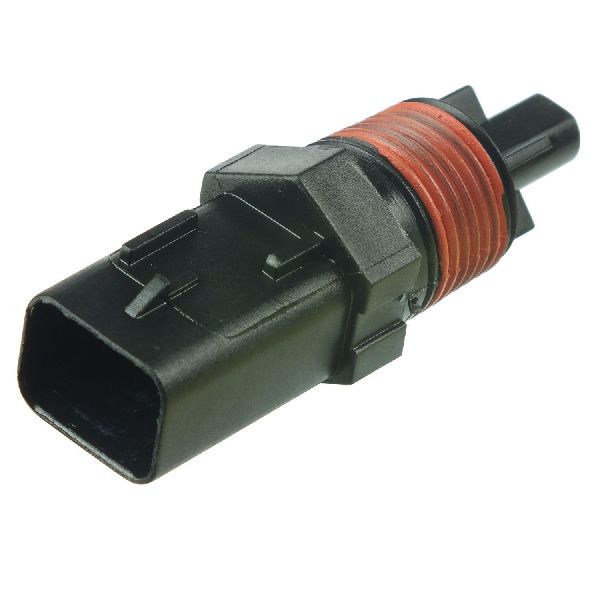
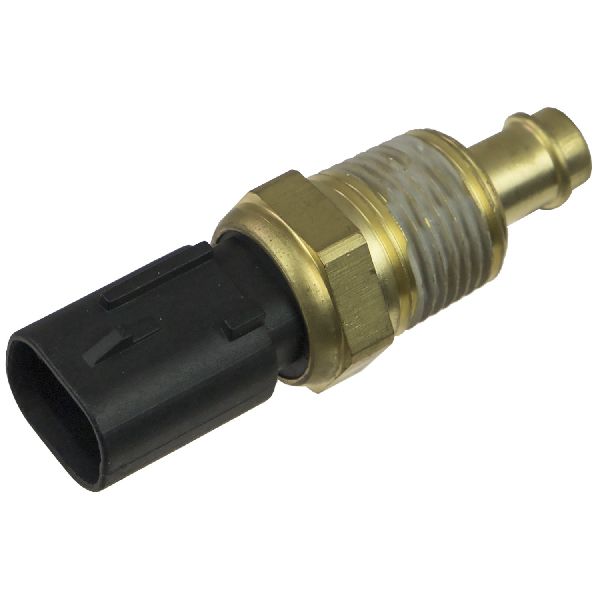
- Replacing the Engine Coolant Temperature (ECT) sensor. While a faulty sensor *can* theoretically cause a false reading (often with code P0117), P0217 almost always indicates a genuine overheat condition. The ECT sensor is usually doing its job correctly by reporting the high temperature.
Most Likely Causes
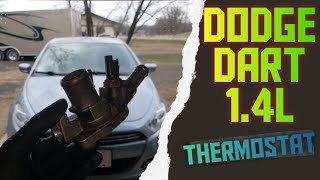
- Failed Thermostat Assembly 🔴 High Probability The integrated plastic thermostat and housing assembly is a widely reported failure point on the Dodge Dart and related vehicles with Tigershark engines. The internal thermostat mechanism can get stuck in the closed position, which completely blocks coolant from circulating to the radiator to be cooled.
How to confirm: After the engine has warmed up, carefully feel the upper and lower radiator hoses. If the upper hose is hot and the lower hose is cool or lukewarm, it's a classic sign that the thermostat is stuck closed and not allowing coolant to circulate. This is the most common failure scenario leading to P0217.
Typical fix: Replace the entire thermostat and housing assembly. It is sold as a single, integrated unit. After replacement, the system must be refilled with the correct coolant and properly bled of air using a vacuum-fill tool to prevent air pockets.
Est. part cost: $70-$150 - Low Engine Coolant Level (Coolant Leak) 🔴 High Probability Leaks can develop in any part of the cooling system, including hoses, the radiator, water pump seal, or the thermostat housing itself. Some reports mention heater hoses and quick-connect fittings as potential leak sources on the Dart. A lack of coolant is a primary reason for any engine to overheat.
How to confirm: Visually inspect the engine bay for signs of coolant leaks (typically bright orange/pink/purple residue) when the engine is cold. Check the coolant level in the overflow reservoir. A cooling system pressure test is the most effective method to pressurize the system and definitively locate hard-to-find leaks.
Typical fix: Identify the source of the leak and replace the faulty component (e.g., hose, radiator, water pump). Refill and bleed the cooling system with the correct type of coolant (Mopar OAT 10-year/150,000-mile).
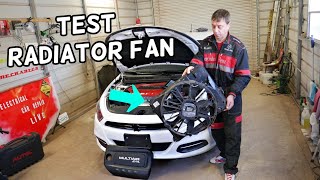
Est. part cost: $20-$300 - Inoperative Radiator Cooling Fan 🟡 Medium Probability The electric cooling fan is critical for airflow at low speeds and when stopped, especially with the A/C on. Failure can be due to a bad fan motor, a faulty fan control module, or a blown fuse/relay. If the fan doesn't activate, the engine temperature will rise rapidly in traffic.
How to confirm: With the engine warm and the A/C turned on high, the radiator fan should be running. If it is not, check the related fuses and relays in the engine bay fuse box first. If those are good, the fan motor or its integrated control module is the likely problem.
Typical fix: Replace the faulty component. This could be a simple fuse or relay, but often requires replacing the entire radiator fan assembly, which includes the motor and control module.
Est. part cost: $20-$250 - Failing Water Pump ⚪ Low Probability The water pump is responsible for circulating coolant through the engine. The internal impeller can wear out or break, or the pump can develop a leak from its shaft seal. While less common than thermostat failure, it is a potential cause of overheating.
How to confirm: Look for coolant leaks or listen for grinding/whining noises from the area of the water pump (driven by the serpentine belt). A complete failure of circulation is harder to diagnose without first ruling out the more common thermostat failure.
Typical fix: Replace the water pump. It is often recommended to replace the serpentine belt at the same time. The system must be drained, refilled, and properly bled of air.
Est. part cost: $80-$200
Rare But Worth Checking
- Blown Head Gasket: This is an uncommon but severe cause, often resulting from a previous major overheating event. It allows hot combustion gases to enter the cooling system, causing it to over-pressurize and overheat very quickly. Symptoms can include white smoke from the exhaust or a milky appearance in the engine oil. A block tester kit can be used to check for combustion gases in the coolant.
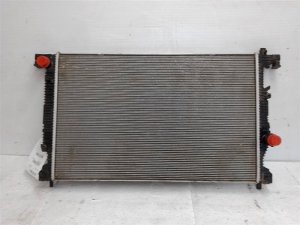
- Clogged Radiator: Internal clogging from sediment or using incorrect coolant types can restrict coolant flow. External blockage from road debris, leaves, or dirt can restrict airflow, reducing the radiator's effectiveness, especially at low speeds. This is more likely on higher-mileage vehicles.
- Air in the Cooling System: If the cooling system was recently serviced and not bled properly, trapped air pockets can prevent proper coolant circulation and cause overheating. Modern systems like the Dart's are sensitive and often require a vacuum-fill tool for a complete air bleed.
Diagnosis Steps
- DO NOT open the radiator cap when the engine is hot. Allow the vehicle to cool completely for several hours.
- Once cool, check the coolant level in the overflow reservoir. If it is low, top it off with the correct Mopar OAT coolant and inspect for obvious leaks around hoses, the radiator, and the thermostat housing.
- Scan for any other stored trouble codes that could provide more clues (e.g., P0128, P0480).
- Start the engine and monitor the temperature gauge. Turn the air conditioning on to its highest setting; this should command the radiator fan to turn on. Verify the fan is spinning.
- If the fan works and the coolant level is correct, let the engine warm up. Carefully feel the upper and lower radiator hoses. If the upper hose is very hot and the lower hose remains cool, the thermostat is almost certainly stuck closed.
- If the cause is not obvious, a cooling system pressure test is the next step to find hidden leaks.
- If no leaks are found and the thermostat and fan are working, more complex issues like a failing water pump, a clogged radiator, or air trapped in the system should be investigated.
Parts You'll Likely Need
- Thermostat Housing Assembly
(OEM #05047861AD)— This is the most common failure point on the 2.0L/2.4L Tigershark engine that directly causes overheating when it sticks closed. The OEM part has been updated to improve gasket retention.
Trusted brands: Mopar, Dorman, Gates
OEM price range: $100-$150
Aftermarket price range: $70-$120 - Radiator Cooling Fan Assembly — If the fan fails to activate due to a bad motor or control module, the engine will overheat in traffic or at low speeds. It is often replaced as a complete assembly.
Trusted brands: Mopar, TYC, Four Seasons
OEM price range: $250-$400
Aftermarket price range: $120-$250 - Engine Coolant
(OEM #68163848AB (Concentrate), 68163849AB (50/50 Mix))— Required for refilling the system after any repair. The Dodge Dart requires a specific OAT (Organic Acid Technology) coolant to prevent corrosion and system damage. Using the wrong type can lead to radiator clogging.
Trusted brands: Mopar 10 Year/150k Mile OAT, Valvoline Zerex G40
OEM price range: $25-$40
Related Codes That Often Appear With This One
- P0128 — P0128 (Coolant Temperature Below Thermostat Regulating Temperature) is often a precursor to P0217. It indicates the thermostat is stuck open or opening too soon. A failing thermostat can behave erratically, sometimes sticking open (P0128) and other times sticking closed (P0217).
- P0480 — P0480 (Fan 1 Control Circuit Malfunction) points directly to a problem with the radiator cooling fan's electrical circuit, such as a bad relay or wiring, which would prevent the fan from turning on and lead to overheating.
Technical Service Bulletins (TSBs) & Recalls
- TSB 18-034-14 REV. A: While not for P0217, this TSB addresses a related component, the oil pressure sensor (code P0520), which is another common sensor failure on the Dart.
- TSB 02-004-15: Addresses squeaking/creaking from strut mounts, an unrelated but common Dart issue.
Platform-Specific Known Issues
- Thermostat Housing Failures: The integrated thermostat housing is a well-documented weak point. Owners on forums like dodge-dart.org frequently report replacing this unit to solve both P0217 (overheating) and P0128 (underheating) codes.
- Cooling System Air Pockets: The Tigershark cooling system is known to be difficult to bleed completely after a repair. Trapped air can cause erratic temperature readings and overheating. Professional mechanics and the factory service manual recommend using a vacuum-fill tool (like a UView Airlift) to ensure no air is trapped.
Mechanic-Grade Diagnostic Values
- Engine Coolant Temperature (ECT) Sensor Resistance — expected: Approximately 2000-3000 Ω at 20°C (68°F) and 200-300 Ω at 90°C (194°F).. Failure: Resistance values that are significantly outside this range, or an open/short circuit, indicate a faulty sensor.
- Engine Coolant Temperature (ECT) Sensor Voltage (cold engine) — expected: 2.0V to 3.0V on the signal wire with the key on, engine off, after sitting overnight.. Failure: A voltage reading significantly higher or lower suggests a sensor or wiring issue.
- Engine Coolant Temperature (ECT) Sensor Voltage (warm engine) — expected: Approximately 0.5V when the engine is at full operating temperature (around 90°C / 194°F).. Failure: Voltage that does not decrease smoothly as the engine warms, or stays high, points to a problem.
- Scan Tool Live Data: ECT Reading — expected: Should show a smooth temperature increase from ambient to a normal operating temperature of at least 82°C (180°F).. Failure: Erratic jumps, no change in temperature, or a reading that doesn't plausibly match ambient temperature on a cold engine points to a sensor or wiring fault.
Scan Tool Commands That Help
- wiTECH (Chrysler/Dodge/Jeep OEM Tool): Cooling Fan Actuation Test — This bidirectional control allows a technician to command the radiator fan ON and OFF directly from the scan tool. It is the definitive way to test the fan motor, relay, and control circuit, bypassing the ECT sensor and PCM logic. If the fan runs with the scan tool but not when the engine is hot, the problem lies in the sensor or PCM, not the fan itself.
- wiTECH (Chrysler/Dodge/Jeep OEM Tool): All DTCs / Vehicle Scan Report — The wiTECH tool's topology view shows all vehicle modules and their status. This is crucial for identifying communication issues or DTCs in other modules (like the BCM or instrument cluster) that might be related to the cooling system warnings or fan operation.
- wiTECH (Chrysler/Dodge/Jeep OEM Tool): PCM Reprogramming/Flash — For some 2016 models, a PCM software update was released to recalibrate the oil temperature gauge, which some customers misinterpreted as an engine overheating condition. While not a direct fix for a P0217, checking for and applying the latest PCM software is a critical step to rule out software-related issues.
Wiring & Ground Locations
- G108 — On the 2.0L engine, this ground is located on the right side of the engine compartment on the front wheel well cover.. This is a primary engine compartment ground. A loose or corroded G108 could potentially affect the proper grounding of various engine sensors and modules, including the PCM or radiator fan module, leading to erratic behavior.
- Radiator Fan Control Module — Located on the left side of the radiator fan assembly itself.. This module directly controls the fan's operation. Its location on the fan shroud makes it susceptible to vibration and heat. A failure here will prevent the fan from running, causing P0217 in low-speed driving.
- Powertrain Control Module (PCM) — On non-turbo engines (like the 2.0L), the PCM is located at the left front of the engine compartment.. The PCM receives the ECT sensor signal and commands the fan. All wiring for these components ultimately leads back to this module. Checking for corrosion or damage at the PCM connectors is a key diagnostic step.
Real Owner Repair Stories
- Reddit user in r/dodgedart (2013-2016 Dodge Dart 2.0L SXT (specific year not stated, but symptoms match platform)) — Temperature gauge fluctuating up and down, especially at idle. The fan kicks on frequently to cool the engine down, but the temperature is unstable.
❌ Tried (didn't work) Initial diagnosis was uncertain, owner was considering having a shop look at it.
✅ What actually fixed it Another user with a 2.4L GT reported identical symptoms (temp jumping between 195°F and 230°F) and confirmed it was a failing thermostat. The consensus in the thread was that the thermostat housing assembly was the cause and a difficult part to access for DIY repair.
OEM Part Supersession History
5047263AB, 5047263AC, 5047772AB, 5047861AA, 5047861AB, 5047861AC→05047861AD (current as of late 2023/early 2024)— The latest part number, 05047861AD, is described as having an improved gasket retention system with reinforced ribs to hold the gasket in place, addressing a known failure point of the seal being displaced.
Heads up: All previous part numbers are replaced by 05047861AD. When purchasing, ensure you are getting the latest 'AD' revision or newer.
Model Year Variations Within This Range
- 2016 (specific build dates): A PCM software update (TSB 18-076-15) was released for some 2016 Darts (built between July and October 2015) with the 2.4L engine to recalibrate the oil temperature gauge to avoid a misperception of engine overheating. While for the 2.4L, it shows that software plays a role in how temperature is displayed to the driver.
Diagnostic Flowchart
Other Known Issues on This Vehicle
Issues unrelated to this code that are worth knowing about as an owner of this generation:
- Excessive Oil Consumption (2.4L Engine) 🔴 High — Widespread issue primarily affecting the 2.4L Tigershark MultiAir engine. Can start at any mileage. Some owners report adding a quart of oil every 1,000-2,000 miles. The 2.0L is less affected. (Ref: Chrysler extended warranty coverage for this issue for some vehicles, but no universal recall was issued. Diagnosis involves a dealer-led oil consumption test.)
- Shifter Cable Bushing Failure / Rollaway Risk 🔴 High — Affects 2013-2016 models with automatic transmissions. The shifter cable bushing can degrade, causing the cable to detach from the transmission, preventing the vehicle from being shifted into Park. (Ref: Recall 19V-293 and a subsequent recall (Chrysler A0C) were issued because the initial fix was insufficient. This can lead to a vehicle rollaway risk.)
- Faulty MultiAir Actuator Brick (1.4L & 2.4L Engines) 🟠 Medium — The MultiAir system, which controls intake valves via oil pressure, can fail. This is often attributed to infrequent oil changes or using the incorrect oil viscosity, leading to clogged solenoids within the 'brick'. The 2.0L engine does not have this system and is considered more reliable by some owners.
- ABS/Traction Control Fault (C121C) 🟠 Medium — Owners may experience the ABS and traction control lights illuminating, sometimes putting the car in limp mode. This is often accompanied by code C121C (Torque Request Signal Denied). The root cause is frequently another engine or sensor issue (like a faulty cam sensor) that the PCM prioritizes, causing it to deny requests from the ABS module.
- Uconnect System Glitches 🟡 Low — The Uconnect infotainment system, particularly in early models, is prone to freezing, lagging, or other glitches. Software updates from the dealer or performing a hard reset (disconnecting the battery) can sometimes resolve these issues. (Ref: Several software updates were released by FCA to address glitches.)
Used vs. New Parts: Buying Guide for This Vehicle
When a used part is the smart pick: For this specific P0217 repair, buying used parts is generally not recommended for the primary failure components. However, a used radiator fan assembly from a low-mileage, front-end collision vehicle could be a cost-effective option if the fan motor is confirmed to be the failure point.
Donor-vehicle mileage cap: roughly under 60000 miles for the part to have meaningful remaining life.
What to inspect on the donor part:
- For a fan assembly, check for cracks in the shroud.
- Spin the fan blades by hand; they should move freely with no grinding or excessive resistance.
- Inspect the electrical connector for corrosion or damage.
- Avoid parts from vehicles that show signs of being poorly maintained or having sat for a long time.
OEM-only on this vehicle (don't cheap out):
- Thermostat Housing Assembly: Given the high failure rate of the original plastic design and the subsequent OEM revisions, using a new Mopar part (specifically the latest revision 05047861AD) is critical. Aftermarket versions may not have the improved gasket design, and a used part is likely to fail again.
- Engine Coolant Temperature (ECT) Sensor: This is a low-cost, critical sensor. The risk of a used sensor being out of calibration or failing shortly after installation is not worth the minor cost savings.
Aftermarket brands forum-validated for this vehicle:
- Dorman (for Thermostat Housing): Often provides redesigned parts that address OEM weaknesses. Some owners may opt for their aluminum housing upgrades available for similar Chrysler engines, though direct fitment for the Dart 2.0L should be confirmed.
- Gates (for Thermostat Housing): A well-regarded name in cooling system components.
Brands owners have reported issues with on this vehicle:
- No-name or unbranded thermostat assemblies from online marketplaces. These often use inferior plastic and seals, leading to premature failure and repeat repairs.
Real Owner Stories
Aggregated from forums and TSBs cited above. Mileages and costs reflect what owners reported in those sources.
2013-2016 Dodge Dart 2.0L Tigershark
Symptoms: The temperature gauge spiked suddenly.
What fixed it: Replacing the integrated plastic thermostat assembly (part #05047861AD).
Source hint: dodge-dart.org forum citation
2013-2016 Dodge Dart 2.0L Tigershark
Symptoms: Engine temperatures reaching 244°F while the vehicle was at an idle.
What fixed it: Checking for corroded radiator fins and ensuring the system was properly vacuum-filled to remove air pockets.
Source hint: dodge-dart.org thread titled 'Overheating!'
Related OBD-II Codes
Frequently Asked Questions
Is there a specific part number I should look for when replacing the thermostat on my Dodge Dart?
My Dart is overheating at idle, reaching temperatures as high as 244°F. What should I check besides the thermostat?
Does TSB 18-034-14 REV. A relate to my P0217 overheating issue?
Why is it recommended to use a vacuum-fill tool like a UView Airlift on the 2.0L Tigershark?
What type of coolant should I use for my 2013-2016 Dodge Dart after a repair?
Helpful Videos
Used OEM Parts in Stock
New Aftermarket Parts Available


The information in this article is provided for general reference and educational purposes only. Vehicle specifications, procedures, and part compatibility can vary by production date, trim level, and region. Always consult your vehicle's factory service manual and verify part numbers before purchasing or performing repairs. Safety-critical components such as airbags, seat belts, and braking systems should be installed by a qualified professional.
- Dodge Dart:
- 🎬 Helpful Videos
- 🛍️ Shop This Part
- What's Unique About the 2013-2016 Dodge Dart
- Symptoms You May Notice
- Most Likely Causes
- Rare But Worth Checking
- Diagnosis Steps
- Parts You'll Likely Need
- Related Codes That Often Appear With This One
- Technical Service Bulletins (TSBs) & Recalls
- Platform-Specific Known Issues
- Mechanic-Grade Diagnostic Values
- Scan Tool Commands That Help
- Wiring & Ground Locations
- Real Owner Repair Stories
- OEM Part Supersession History
- Model Year Variations Within This Range
- Diagnostic Flowchart
- Other Known Issues on This Vehicle
- Used vs. New Parts: Buying Guide for This Vehicle
- Real Owner Stories
- 2013-2016 Dodge Dart 2.0L Tigershark
- 2013-2016 Dodge Dart 2.0L Tigershark
- Related OBD-II Codes
- Frequently Asked Questions
- 🎟️ Get 5% Off