

P0206 on 2004-2009 Cadillac SRX 3.6L: Injector Circuit Malfunction Causes and Fixes
P0206 on a 2004-2009 SRX indicates an electrical fault in the cylinder 6 fuel injector circuit. The most common causes are a failed fuel injector or a wiring issue, with GM TSBs suggesting wiring harness chafing is a notable concern. Cylinder 6 is on the driver's side, closest to the firewall, making access somewhat difficult and labor-intensive.
- P0206 is an electrical circuit code for the cylinder 6 fuel injector, not a mechanical or ignition problem.
- The most common fix is replacing the fuel injector for cylinder 6, but always test before replacing parts.
- A simple 'injector swap' with an adjacent cylinder is the most definitive, low-cost way to confirm a bad injector.
- Thoroughly inspect the wiring harness for damage, as this is a known issue on this GM V6 engine, per TSB PIP4924D.
- Driving with this code can lead to costly catalytic converter damage, so prompt repair is recommended.
What's Unique About the 2004-2009 Cadillac SRX
The 2004-2009 Cadillac SRX uses the 3.6L LY7 V6 engine, which was part of GM's High Feature V6 family. On this platform, cylinder 6 is located on the driver's side (Bank 2) at the rear of the engine, closest to the firewall. While not as difficult to access as in transversely mounted engines, it can still be challenging. GM has issued several versions of a Technical Service Bulletin (TSB #PIP4924) for injector circuit codes on this engine family, pointing to the wiring harness chafing against the intake plenum, valve cover bolts, or cylinder head as a potential cause. This makes a visual inspection of the harness particularly important before replacing parts.
Symptoms You May Notice
- Check Engine Light is on
- Rough or shaking idle
- Engine misfires, often felt as a consistent shudder
- Reduced engine power and poor acceleration
- Decreased fuel economy
- Strong fuel smell from the exhaust
- Engine may enter a 'limp mode' with restricted speed.
- Replacing the spark plug or ignition coil for cylinder 6. While these parts can cause a misfire code (P0306), they will not cause an injector circuit code like P0206, which is specifically an electrical fault detected by the ECM's driver monitor.
Most Likely Causes
- Failed Cylinder 6 Fuel Injector 🔴 High Probability Fuel injectors are wear-and-tear components. Internal coil windings can fail over time, creating an open or short circuit that triggers the P0206 code.
How to confirm: Swap the fuel injector from cylinder 6 with another cylinder (e.g., cylinder 4 on the same bank). Clear the codes and run the engine. If the code changes to P0204, the injector is faulty. You can also test the injector's resistance with a multimeter; for the LY7 engine, it should typically be between 11-14 ohms. A reading of 0 or infinity (OL) indicates failure.
Typical fix: Replace the faulty fuel injector. It's often recommended to replace all injectors on the same bank (Bank 2: cylinders 2, 4, 6) if the vehicle has high mileage to ensure balanced fuel delivery and because the labor to access them is significant.
Est. part cost: $50-$150 - Damaged Wiring or Connector 🟡 Medium Probability GM has issued TSB #PIP4924 (with revisions like C and D) for the 3.6L engine family, specifically citing that the injector wiring harness can rub against the intake plenum, valve cover bolts, or cylinder head, causing wires to chafe and create an open or short circuit. This is a well-documented failure mode.
How to confirm: Visually inspect the wiring harness leading to the cylinder 6 injector for any signs of melting, chafing, or broken wires. Pay close attention to where the harness bends or makes contact with the engine. Check the electrical connector for corrosion, damage, or loose pins. A 'noid light' can be used to verify if the ECM is sending a pulse signal to the connector; a steady flashing light is normal, while no light or a solid light indicates a problem in the wiring or ECM.
Typical fix: Repair the damaged section of the wiring harness or replace the connector pigtail. Ensure the harness is properly routed and secured away from sharp edges or hot surfaces to prevent recurrence.
Est. part cost: $15-$50
Rare But Worth Checking
- Faulty Powertrain Control Module (PCM): This is the least likely cause. The internal driver for the cylinder 6 injector can fail. This should only be considered after the injector and wiring have been thoroughly tested and proven to be good. One documented case on a 2005 SRX with the 3.6L engine showed the ECM was the culprit, as it failed to provide the ground pulse for the injector.
Diagnosis Steps
- Scan for trouble codes and confirm P0206 is present. Note any other codes, like P0306. 🎬 Watch: Common causes and fixes for the P0306 misfire code
- Locate cylinder 6. On the LY7 3.6L V6, the cylinders are numbered 1-3-5 on the passenger side (Bank 1, front to back) and 2-4-6 on the driver's side (Bank 2, front to back). Cylinder 6 is at the rear, near the firewall on the driver's side.
- Inspect the wiring harness and electrical connector for the cylinder 6 injector. Look for visible damage, melting, or corrosion. Pay special attention to chafe points mentioned in TSB PIP4924D, such as where the harness contacts the intake manifold or valve cover.
- Use a noid light to test the injector connector. With the engine running, the light should flash steadily, indicating the ECM is sending a signal. If it doesn't flash, the problem is in the wiring or the ECM. If it stays on solid, the control wire is likely shorted to ground.
- If the noid light flashes, the next step is to test the injector itself. Turn off the engine and disconnect the injector.
- Measure the injector's resistance using a multimeter. Compare the reading to a known-good injector on another cylinder. A reading between 11-14 ohms is expected for this engine type. A reading of 0 ohms or infinite ohms (OL) indicates a failed injector.
- For a definitive test, swap the cylinder 6 injector with the injector from cylinder 4 (an easier-to-access cylinder on the same bank). Clear the codes and start the engine. If the code changes to P0204, the injector is bad and needs to be replaced. If P0206 returns, the problem is in the wiring harness or the ECM.
- If the injector and signal are good, perform a continuity test on the wiring harness between the injector connector and the ECM to find any open or short circuits. The service manual provides specific pinouts for this test.
Parts You'll Likely Need
- Fuel Injector
(OEM #ACDelco 217-3445 (GM 12638530))— This is the most common component to fail, causing an internal open or short in the injector's coil. The ACDelco part is the original equipment replacement.
Trusted brands: ACDelco, Bosch, Delphi, Standard Motor Products
OEM price range: $100-$180
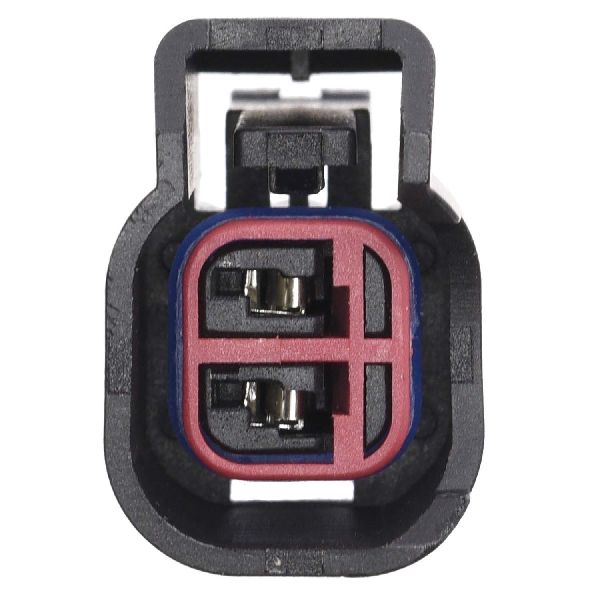
Aftermarket price range: $50-$120 - Fuel Injector Connector Pigtail — The plastic connector and its locking tab can become brittle and break from heat cycles. The terminals can also corrode or loosen, leading to a poor connection that sets the P0206 code.
Trusted brands: ACDelco, Dorman
OEM price range: $25-$45
Aftermarket price range: $15-$30
Related Codes That Often Appear With This One
- P0306 — P0306 means 'Cylinder 6 Misfire Detected.' Since the P0206 fault prevents the injector from delivering fuel, it directly causes a misfire in that cylinder. These two codes almost always appear together. 🎬 See this breakdown of what the P0306 code means
- P0300 — If the wiring issue is intermittent or the fuel delivery is erratic, the ECM may log a P0300 'Random/Multiple Cylinder Misfire' code in addition to the specific cylinder fault.
- P0200 — P0200 stands for 'Injector Circuit Malfunction'. This more general code may appear alongside P0206 if the wiring issue affects a common power or ground source for the injectors.
Technical Service Bulletins (TSBs) & Recalls
- PIP4924D: This is a crucial TSB for multiple GM vehicles with the 3.6L V6. It directs technicians to inspect the fuel injector wiring harness for chafing against the intake plenum, valve cover bolts, or cylinder head when diagnosing codes P0201-P0206. This bulletin confirms that a wiring fault is a known and common issue.
Mechanic-Grade Diagnostic Values
- Fuel Injector Coil Resistance — expected: 11-14 ohms. Failure: A reading near 0 ohms indicates a short, while an infinite (OL) reading indicates an open circuit.
- Injector Circuit Voltage (Key On, Engine Off) — expected: 12V (Battery Voltage) on the power supply wire (Pink/Black) at the injector connector.. Failure: Low or no voltage indicates an issue with the power feed from the underhood fuse block.
- Injector Pulse Width (Scan Tool, Warm Idle) — expected: 2.0 - 4.0 milliseconds (ms). Failure: A value of 0 ms for cylinder 6 indicates the ECM has disabled the injector due to the fault.
Scan Tool Commands That Help
- GM Tech 2 / GDS2: Injector Balance Test — This bidirectional test allows a technician to command each injector to fire individually while monitoring fuel pressure. For P0206, you can command the #6 injector; if there is no corresponding drop in fuel pressure, it confirms the injector is not firing. This helps differentiate a clogged injector from an electrical fault if other tests are inconclusive.
- GM Tech 2 / GDS2: Cylinder Power Balance — This test sequentially disables each cylinder and measures the RPM drop. When cylinder 6 is disabled, there should be little to no change in RPM, as it was already not contributing due to the P0206 fault. This confirms the misfire is currently active on cylinder 6.
Wiring & Ground Locations
- Injector Power Splice — In the engine harness, where the main power wire splits to feed injectors 2, 4, and 6.. A failure at this splice could cause P0202, P0204, and P0206 to appear simultaneously. If only P0206 is present, the fault is downstream from this splice.
- G109 — Top right rear of the engine block.. This is a primary engine block ground. While not directly for the injector circuit itself, a poor engine ground can cause erratic behavior in all engine sensors and actuators, including the ECM's ability to properly control the injectors.
- G112 — On the left side of the engine block.. This is another critical engine ground point. Verifying it is clean and tight is a crucial step when diagnosing any unusual electrical issues on the LY7 engine.
- ECM Connector C2 — The Engine Control Module is located at the top front of the engine. C2 is one of the main connectors.. The control wire (ground pulse) for the cylinder 6 injector runs from this connector to the injector. A continuity test between the appropriate pin at this connector and the injector plug is the definitive way to test the control wire integrity.
Real Owner Repair Stories
- YouTube video by 'sd-hvac-auto' (2005 Cadillac SRX 3.6L V6) — Check Engine Light with codes P0202 and P0302 (Cylinder 2 Injector Circuit and Misfire). The user notes the process is identical for other cylinders like P0206.
❌ Tried (didn't work) Swapped fuel injectors between cylinders; the fault remained on cylinder 2., Visually inspected the wiring harness under the intake manifold., Performed an ohm test on the harness from the main connector (C106) to the injector plugs, which tested good.
✅ What actually fixed it The ECM was faulty. The technician confirmed the injector and wiring were good, leaving the ECM's internal driver circuit as the only remaining possibility. The fix was to replace the ECM.
OEM Part Supersession History
GM 12571159→GM 12638530 (ACDelco 217-3445)— Part has been updated or revised by the manufacturer over time for improved performance or manufacturing efficiency.
Model Year Variations Within This Range
- 2007-2009: Starting in the 2007 model year, the LY7 engine was updated with a new, quieter timing chain design and dual-spray fuel injectors developed with Bosch for better fuel atomization. While the diagnostic process for P0206 remains the same, the injectors are a slightly different design than the earliest 2004-2006 models.
Diagnostic Flowchart
Other Known Issues on This Vehicle
Issues unrelated to this code that are worth knowing about as an owner of this generation:
- Premature Timing Chain Stretch 🔴 High — Very common, especially on 2007-2009 models. Often occurs between 70,000 and 120,000 miles. Exacerbated by extended oil change intervals. (Ref: Special Coverage Adjustment #11340 covered this for 10 years/120,000 miles. Related TSBs include #12-06-01-009F.)
- Water Leaks from Sunroof Drains 🟠 Medium — Common issue where the front drain tubes shrink or disconnect from the firewall grommet, causing water to leak onto the front floorboards. (Ref: No TSB, but widely documented in owner forums and DIY repair videos.)
- Power Steering Pump Whine/Failure 🟠 Medium — Whining noises, especially when turning, are a common complaint. Can be caused by low fluid, air in the system, or a failing pump.
- Catalytic Converter Failure 🔴 High — Often a consequential failure resulting from other issues like misfires or oil consumption. Codes P0420/P0430 are common. (Ref: TSB #PIP5232C addresses premature failures.)
- Water Intrusion into Headlights 🟡 Low — Faulty headlight seals can allow moisture to enter the housing, leading to condensation, bulb failure, and poor illumination.
Used vs. New Parts: Buying Guide for This Vehicle
When a used part is the smart pick: A used wiring harness from a junkyard can be a cost-effective solution if a specific connector is damaged and a pigtail is unavailable, or if a large section of the harness is chafed. A used ECM can also be an option, but it MUST be reprogrammed (flashed) with the vehicle's VIN and software.
Donor-vehicle mileage cap: roughly under 120000 miles for the part to have meaningful remaining life.
What to inspect on the donor part:
- For wiring harnesses, inspect for any signs of prior repairs, brittle insulation, or oil saturation. Ensure all connector locking tabs are intact.
- For an ECM, check for any signs of water intrusion or physical damage to the case or pins.
- Avoid parts from vehicles that show signs of a major collision or fire in the engine bay.
OEM-only on this vehicle (don't cheap out):
- Engine Control Module (ECM): While a used one can be reprogrammed, using a new, correctly programmed OEM module is the most reliable fix and avoids potential compatibility issues.
Aftermarket brands forum-validated for this vehicle:
- Bosch (often the OEM supplier)
- Delphi
- Standard Motor Products (SMP)
Brands owners have reported issues with on this vehicle:
- Unnamed, no-brand injectors from online marketplaces. Forum discussions frequently warn against ultra-cheap injectors that often fail prematurely or have inconsistent flow rates, causing performance issues.
Real Owner Stories
Aggregated from forums and TSBs cited above. Mileages and costs reflect what owners reported in those sources.
2005 Cadillac SRX 3.6L
Symptoms: Vehicle had codes P0206 and P0306 with a misfire on cylinder 6. A test light showed 12 volts of power at the injector connector but no pulsing ground signal from the computer.
What fixed it: The ECM was not grounding the injector. The ECM was replaced and reprogrammed, and the injector was also replaced as a precaution in case it had caused the ECM to fail.
Source hint: youtube_comment from Cesar Chavez
Related OBD-II Codes
Frequently Asked Questions
Where is cylinder 6 located on my 2004-2009 SRX's 3.6L V6 engine?
Is there a known wiring problem that causes the P0206 code on this Cadillac?
My mechanic suggested replacing all three injectors on Bank 2. Is this necessary for just a P0206 code?
How can I test if the fuel injector is bad myself?
I have a P0306 code along with P0206. Are they related?
Does this P0206 injector issue affect other GM vehicles?
Helpful Videos
Used OEM Parts in Stock

New Aftermarket Parts Available



The information in this article is provided for general reference and educational purposes only. Vehicle specifications, procedures, and part compatibility can vary by production date, trim level, and region. Always consult your vehicle's factory service manual and verify part numbers before purchasing or performing repairs. Safety-critical components such as airbags, seat belts, and braking systems should be installed by a qualified professional.
- Cadillac SRX:
- 🎬 Helpful Videos
- 🛍️ Shop This Part
- What's Unique About the 2004-2009 Cadillac SRX
- Symptoms You May Notice
- Most Likely Causes
- Rare But Worth Checking
- Diagnosis Steps
- Parts You'll Likely Need
- Related Codes That Often Appear With This One
- Technical Service Bulletins (TSBs) & Recalls
- Mechanic-Grade Diagnostic Values
- Scan Tool Commands That Help
- Wiring & Ground Locations
- Real Owner Repair Stories
- OEM Part Supersession History
- Model Year Variations Within This Range
- Diagnostic Flowchart
- Other Known Issues on This Vehicle
- Used vs. New Parts: Buying Guide for This Vehicle
- Real Owner Stories
- 2005 Cadillac SRX 3.6L
- Related OBD-II Codes
- Frequently Asked Questions
- 🎟️ Get 5% Off