

P0205 on 2007-2015 Lincoln MKX: Injector Circuit Malfunction Causes and Fixes
This code indicates an electrical problem with the fuel injector in cylinder #5. The most common fix is replacing the faulty fuel injector. Expect to pay around $40-$60 for an OEM Motorcraft part and about 1-2 hours of labor if done professionally.
- P0205 on a Lincoln MKX means there is an electrical fault with the fuel injector for cylinder 5.
- Cylinder 5 is the middle cylinder on the front bank, closest to the radiator, making it easy to access.
- The most likely cause is a bad fuel injector. The best way to confirm this is to swap it with an adjacent injector and see if the code moves.
- Ensure you buy the correct injector for your engine: 2007-2010 models use the 3.5L V6, while 2011-2015 models use the 3.7L V6.
- Avoid driving the vehicle, as the resulting misfire can damage your expensive catalytic converter.
What's Unique About the 2007-2015 Lincoln MKX
The Lincoln MKX from this era uses the reliable Ford Cyclone V6 engine (3.5L or 3.7L), which it shares with the Ford Edge. While generally robust, injector circuit codes like P0205 are not uncommon. The key to diagnosis on this transverse-mounted V6 is knowing that cylinder #5 is the middle cylinder on the front bank (closest to the radiator), making it relatively easy to access compared to the rear cylinders against the firewall. Most reported issues point to a straightforward component failure 🎬 Watch: How to fix injector circuit codes on a Lincoln MKX (the injector itself) rather than systemic wiring problems, though chafed wires are a possibility.
Generation note: The 2007-2015 year range covers the first generation of the Lincoln MKX, but includes two different engines: - 2007-2010 models use the 3.5L V6 engine. - 2011-2015 models use the updated 3.7L V6 engine. While the engines are from the same family, they use different fuel injectors. The diagnostic process is identical, but you must use the correct part for your specific engine.
Symptoms You May Notice
- Check Engine Light is on
- Rough, shaking, or vibrating idle
- Engine misfire, which may feel like a stumble or hesitation
- Poor or sluggish acceleration
- Reduced fuel economy
- In some cases, the vehicle may enter 'limp mode', limiting engine power and speed.
- Replacing the spark plug or ignition coil for cylinder 5. While these parts can cause a misfire (P0305), they will not cause an injector circuit code like P0205.
- Assuming the injector is bad without testing. P0205 is an electrical circuit code, and the fault could be in the wiring or connector, not the injector itself. Skipping the injector swap test can lead to buying unnecessary parts.
Most Likely Causes
- Faulty Cylinder 5 Fuel Injector 🔴 High Probability The internal electronic coil of the injector can fail over time, creating an open or short circuit that the PCM detects. This failure can sometimes be intermittent and temperature-dependent, working only when the engine is warm.
How to confirm: Swap the fuel injector from cylinder #5 with an adjacent one (e.g., cylinder #4). Clear the codes and drive the vehicle. If the code changes to P0204, the injector is confirmed to be the faulty part. Alternatively, measure the resistance across the injector's two pins with a multimeter; a typical reading is 11-14 ohms. A reading of infinity (open) or near-zero (short) indicates a bad injector.
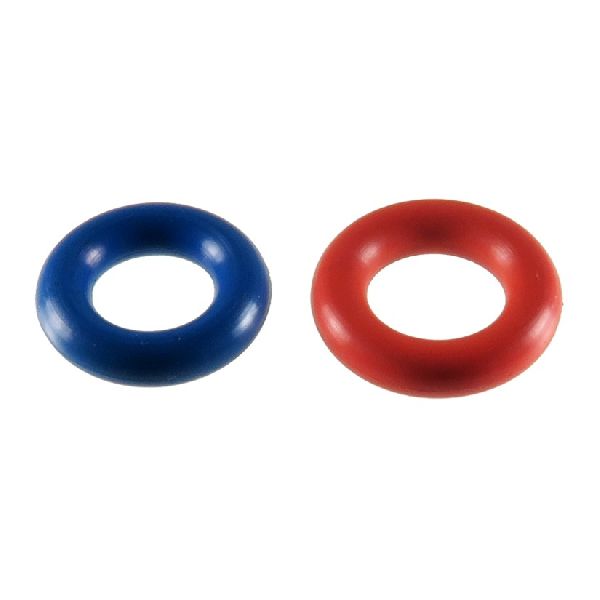
Typical fix: Replace the failed fuel injector. It is often recommended to replace the O-rings on adjacent injectors at the same time.
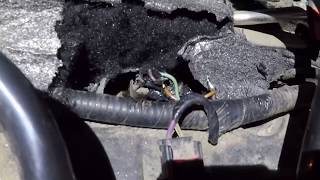
Est. part cost: $40 - $60 for one OEM injector. - Damaged Wiring or Loose Connector 🟡 Medium Probability The wiring harness connector at the injector can become brittle from heat cycles, or the wires themselves can chafe or break, causing an intermittent or constant open/short circuit. Rodent damage is also a common cause of wiring faults.
How to confirm: Visually inspect the wiring harness and connector for cylinder #5 for any signs of damage, corrosion, or loose pins. Use a noid light plugged into the injector connector; it should flash when the engine is cranked. If the noid light does not flash or stays on continuously, the problem is in the wiring or PCM.
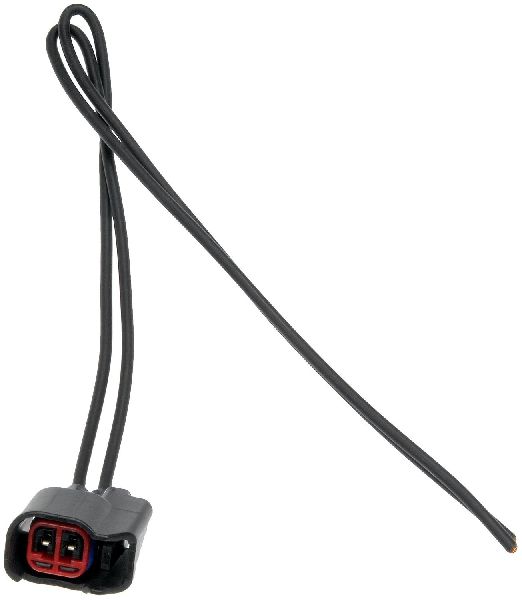
Typical fix: Repair the damaged section of the wire or replace the connector pigtail.
Est. part cost: $10 - $30 for a new connector pigtail.
Rare But Worth Checking
- Faulty Powertrain Control Module (PCM): This is very rare. The internal driver circuit for the #5 injector can fail. This should only be considered after the injector and wiring have been definitively ruled out as the cause. A non-flashing noid light on a circuit with confirmed good wiring would point to the PCM.
Diagnosis Steps
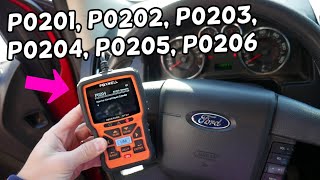
- Confirm the code P0205 is present using an OBD-II scanner. Check for any other codes, such as P0305.
- Turn the engine off. Locate cylinder #5, which is the middle cylinder on the engine bank closer to the radiator.
- Inspect the electrical connector and wiring going to the #5 fuel injector. Look for any obvious signs of damage, corrosion, chafing, or loose connections.
- Disconnect the injector and plug a 'noid light' into the harness connector. Crank the engine. The light should flash steadily. If it does not flash, the problem is in the wiring or the PCM. If it does flash, the control circuit is working, and the injector itself is the likely culprit.
- (Injector Swap Test - Most Definitive): If the noid light flashes, swap the cylinder #5 injector with the injector from cylinder #4 (the one next to it). Clear the codes with the scanner and start the engine. Let it run for a few minutes.
- Re-scan for codes. If the code has moved and is now P0204 ('Injector Circuit Malfunction - Cylinder 4'), the fuel injector you moved is faulty and must be replaced.
- If the code remains P0205 after the swap, the problem is in the wiring harness or PCM, not the injector.
- (Resistance Test): As an alternative to the swap test, use a multimeter to measure the resistance of the injector. A typical injector should read between 11-14 ohms. A reading of infinity (open) or zero (short) indicates a bad injector.
- If the injector tests good but the noid light doesn't flash, test the wiring between the PCM and the injector connector for continuity and shorts to ground or power.
Parts You'll Likely Need
- Fuel Injector (3.5L Engine)
(OEM #7T4Z-9F593-B)— This is the most common failure point for a P0205 code on 2007-2010 models. The internal coil fails, causing an electrical circuit fault.
Trusted brands: Motorcraft (CM5132), Bosch (0280158091)
OEM price range: $50-$60
Aftermarket price range: $25-$45 - Fuel Injector (3.7L Engine)
(OEM #BR3Z-9F593-B)— This is the most common failure point for a P0205 code on 2011-2015 models. The internal coil fails, causing an electrical circuit fault.
Trusted brands: Motorcraft (CM-5188), Bosch (0280158191)
OEM price range: $40-$55
Aftermarket price range: $25-$40
Related Codes That Often Appear With This One
- P0305 — P0305 means 'Cylinder 5 Misfire Detected'. Since the P0205 code indicates a problem with fuel delivery to cylinder 5, a misfire is the direct result.
- P0200 — P0200 means 'Injector Circuit/Open'. This is a more general code that may appear alongside the specific cylinder code if the fault is intermittent or affects the entire injector system.
Platform-Specific Known Issues
- Intermittent Injector Failure When Cold: On the 3.7L V6 (and likely the 3.5L), there are documented cases where a failing injector tests perfectly fine with a multimeter when the engine is warm. However, after the engine cools down completely, the injector's internal coil shows an open circuit (infinite resistance). Applying gentle heat from a heat gun can make the injector temporarily work again, confirming a temperature-sensitive internal fault. This was demonstrated on a 2011 Lincoln MKS 🎬 See a mechanic diagnose an open injector circuit on this engine with a P0205 code.
Mechanic-Grade Diagnostic Values
- Fuel Injector Coil Resistance — expected: 11 - 16 Ohms for a high-impedance injector, which is standard for this vehicle.. Failure: A reading of infinity (OL) indicates an open coil, while a near-zero reading indicates a shorted coil. Any reading significantly outside the 11-16 Ohm range suggests a faulty injector.
- Injector Connector Voltage (Power Feed) — expected: Approximately 12 Volts (battery voltage) with Key On, Engine Off (KOEO).. Failure: A reading significantly lower than 12V or 0V indicates a problem with the power supply wire from the PCM relay or a blown fuse.
- Injector Connector Voltage (PCM Driver Wire) — expected: With the injector disconnected and KOEO, both wires at the connector should show battery voltage. When cranking, a noid light or oscilloscope should show the PCM pulling this wire to ground in pulses.. Failure: If one wire is 0V at KOEO, it may indicate a short to ground in the harness or a failed PCM driver. If the noid light is steady on, the driver is shorted to ground. If it doesn't light at all, there is an open in the driver circuit or the PCM is not commanding it to fire.
Scan Tool Commands That Help
- Ford IDS (Integrated Diagnostic System) or compatible high-end scanner (e.g., Snap-on): Power Balance Test — This active test allows a technician to individually disable each fuel injector while the engine is running and observe the corresponding drop in RPMs for each cylinder. If disabling cylinder #5 causes no change in engine speed, it confirms that cylinder is not contributing, strongly pointing to a fault in that injector's circuit or the injector itself. It's a powerful way to confirm the location of the misfire without swapping any parts.
Wiring & Ground Locations
- Cylinder 5 Injector Wiring — At the fuel injector connector for the middle cylinder on the front bank (near the radiator).. The two wires for the injector are critical. For the 3.7L V6, the power feed wire is typically a Green/Violet wire, which is common to all injectors on that bank. The control (ground pulse) wire from the PCM is a Brown/Green wire specific to cylinder 5. Testing for power on the Green/Violet wire and a ground pulse on the Brown/Green wire is essential for diagnosing the circuit.
- Engine Block to Chassis Ground — Typically a braided ground strap connecting the engine block or cylinder head to the vehicle's frame rail or firewall.. While the PCM provides the switched ground for the injector, all electrical components rely on a solid main ground path back to the battery. A corroded or loose main engine ground can introduce electrical noise and voltage drops, potentially causing erratic behavior in sensitive components like injector drivers, though it would likely cause multiple, more widespread issues than just a single injector code.
Real Owner Repair Stories
- Ford Edge Forum (2012 Ford Edge 3.5L V6) — Check engine light on with codes P0205 and P0305 (Cylinder 5 misfire).
❌ Tried (didn't work) The owner first suspected an ignition issue but correctly identified the P0205 as a fuel circuit problem.
✅ What actually fixed it The owner replaced the fuel injector for cylinder #5. After clearing the codes, the check engine light did not return and the misfire was resolved. This is a classic case of the most common cause being the actual cause.
Diagnostic Flowchart
Other Known Issues on This Vehicle
Issues unrelated to this code that are worth knowing about as an owner of this generation:
- Internal Water Pump Failure 🔴 High — Common after 80,000-120,000 miles. A major design flaw where the pump is located inside the engine and driven by the timing chain. Failure leaks coolant directly into the engine oil, leading to catastrophic engine damage if not caught immediately. (Ref: No recall, but a known industry-wide issue. Some forum users note a revised part with a weep hole was introduced around 2014 to provide an external leak path as a warning.)
- Power Transfer Unit (PTU) Failure (AWD Models) 🔴 High — Can occur at any mileage, but more common after 60,000 miles. The PTU is located next to the hot exhaust, which cooks the 'lifetime' gear oil, causing it to break down and leading to bearing/gear failure. (Ref: TSB 19-2017 addresses a fluid leak from the right-side seal, but not the overheating design flaw itself. The most common symptom is a strong burning gear oil smell. The only prevention is proactively changing the fluid every 30,000 miles.)
- Electronic Throttle Body Failure 🟠 Medium — Widespread issue, typically occurring between 20,000 and 100,000 miles. Causes the vehicle to suddenly enter 'limp mode' with the wrench light on, resulting in a dangerous loss of power. Cleaning the throttle body does not fix this electronic failure; replacement is required. (Ref: Ford issued Customer Satisfaction Program 13N03, which extended the warranty, but this program has since expired for all affected vehicles.)
Used vs. New Parts: Buying Guide for This Vehicle
When a used part is the smart pick: A used fuel injector can be a cost-effective option if sourced from a reputable salvage yard that provides the donor vehicle's mileage and a short-term warranty. It makes the most sense when trying to minimize repair costs on an older, higher-mileage vehicle, but it carries inherent risks.
Donor-vehicle mileage cap: roughly under 80000 miles for the part to have meaningful remaining life.
What to inspect on the donor part:
- Ask for the mileage of the donor vehicle; lower is always better.
- Inspect the injector for physical damage, cracks in the plastic connector, and heavy corrosion.
- Check that the pintle cap (the plastic tip) is intact and not cracked or missing.
- Ensure the O-rings are present, though it is highly recommended to replace them with new ones before installation regardless of their condition.
- If possible, ask if the injectors have been cleaned or flow-tested. Many professional recyclers perform this service.
OEM-only on this vehicle (don't cheap out):
- Powertrain Control Module (PCM) - Due to the need for vehicle-specific programming (VIN matching), a new or professionally reprogrammed OEM unit is the only reliable option.
Aftermarket brands forum-validated for this vehicle:
- Bosch: Often the original equipment manufacturer for Ford and other brands, providing equivalent quality to OEM parts.
- Delphi: A well-regarded OEM supplier with a strong reputation for quality fuel system components.
- Standard Motor Products (SMP): A trusted aftermarket brand that offers reliable alternatives.
Brands owners have reported issues with on this vehicle:
- Unnamed or 'white-box' injectors from online marketplaces should be avoided. These often have inconsistent flow rates and poor build quality, leading to performance issues or premature failure.
Real Owner Stories
Aggregated from forums and TSBs cited above. Mileages and costs reflect what owners reported in those sources.
2011 Lincoln MKS 3.7L V6
Symptoms: The vehicle had an intermittent P0205 code. The mechanic discovered the injector would only fail and show an open circuit when the engine was cold, but would test as good and function normally once it was warmed up.
What fixed it: The issue was confirmed to be a temperature-sensitive internal fault within the fuel injector itself, which was diagnosed by applying gentle heat to make it temporarily work again. The permanent fix is to replace the faulty injector.
Source hint: mechanic_video, fsteddie98 - 2011 MKS 3.7L Bad fuel injector P0205
Related OBD-II Codes
Frequently Asked Questions
Where is cylinder #5 located on my 2007-2015 Lincoln MKX?
My P0205 code only appears when the engine is cold. Is this a known issue?
What is the correct resistance for a fuel injector on my MKX?
How can I be sure it's the injector and not the wiring before buying parts?
I'm replacing the #5 fuel injector. Should I do anything else at the same time?
Does this P0205 information also apply to a Ford Edge or Mazda CX-9?
Helpful Videos
Used OEM Parts in Stock


New Aftermarket Parts Available



The information in this article is provided for general reference and educational purposes only. Vehicle specifications, procedures, and part compatibility can vary by production date, trim level, and region. Always consult your vehicle's factory service manual and verify part numbers before purchasing or performing repairs. Safety-critical components such as airbags, seat belts, and braking systems should be installed by a qualified professional.
- Lincoln MKX:
- 🎬 Helpful Videos
- 🛍️ Shop This Part
- What's Unique About the 2007-2015 Lincoln MKX
- Symptoms You May Notice
- Most Likely Causes
- Rare But Worth Checking
- Diagnosis Steps
- Parts You'll Likely Need
- Related Codes That Often Appear With This One
- Platform-Specific Known Issues
- Mechanic-Grade Diagnostic Values
- Scan Tool Commands That Help
- Wiring & Ground Locations
- Real Owner Repair Stories
- Diagnostic Flowchart
- Other Known Issues on This Vehicle
- Used vs. New Parts: Buying Guide for This Vehicle
- Real Owner Stories
- 2011 Lincoln MKS 3.7L V6
- Related OBD-II Codes
- Frequently Asked Questions
- 🎟️ Get 5% Off