

P0205 on 2012-2017 Hyundai Azera 3.3L V6: Injector Circuit Malfunction Causes and Fixes
P0205 on a Hyundai Azera 3.3L GDi indicates an electrical fault in the cylinder 5 fuel injector circuit. The most common cause is a failed fuel injector, followed by a wiring issue. Due to the complexity of accessing the GDi injectors under the intake manifold, professional repair is recommended, and mechanics often suggest replacing all six injectors at once.
- P0205 points directly to an electrical issue in the cylinder 5 injector circuit, not a spark or compression problem.
- The most likely cause is a failed fuel injector, but wiring should always be checked.
- This is a difficult DIY repair due to the GDi system and the location of the injectors under the intake manifold; professional service is strongly advised.
- Cylinder 5 is the middle cylinder on the engine bank closer to the firewall.
- Due to the high labor cost, consider replacing all six injectors and cleaning the intake valves at the same time for long-term reliability.
What's Unique About the 2012-2017 Hyundai Azera
The 2012-2017 Azera uses a Gasoline Direct Injection (GDi) fuel system. Unlike traditional port injection where fuel washes over the intake valves, GDi injectors are located directly in the combustion chamber and operate under extremely high pressure, typically from 25 to 150 bar (360 to 2175 PSI). They are buried under the upper and lower intake manifolds, making access significantly more difficult and labor-intensive than on non-GDi engines. While the Lambda V6 is generally considered reliable, when a GDi injector fails, mechanics often recommend replacing all six at once as a preventative measure, as they are difficult to access and the labor cost is the dominant factor in the repair. Some Lambda II GDI engines have been noted for engine failures, leading to class-action lawsuits, though these are often related to oil consumption and internal component failure rather than injector circuits.
Symptoms You May Notice
- Check Engine Light is on (may be flashing in severe misfire conditions)
- Rough or shaking idle
- Engine misfiring, sometimes felt as a shudder or popping sound
- Poor acceleration and loss of power
- Reduced fuel economy
- Strong fuel odor from the engine bay or exhaust
- Replacing the spark plug or ignition coil for cylinder 5. While these parts can cause a misfire (P0305), they will not cause a P0205 circuit code. The P0205 code is specifically for the fuel injector's electrical circuit, which is the root cause of the misfire.
Most Likely Causes
- Failed Cylinder 5 Fuel Injector 🔴 High Probability GDi injectors operate in a harsh environment of high heat and pressure, leading to eventual electronic failure or becoming stuck open/closed. While the Lambda engine is generally reliable, injector failure is a known repair on this platform.
How to confirm: Check the resistance of the injector with a multimeter. It should be between 13.8 and 15.2 Ohms at 68°F (20°C). The most definitive test is to swap the cylinder 5 injector with another (e.g., cylinder 3). If the code changes to P0203, the injector is confirmed bad.
Typical fix: Replace the faulty fuel injector. It is highly recommended to replace all six GDi injectors at the same time, along with their seals and the one-time use high-pressure fuel tube, due to the high labor cost to access them.
Est. part cost: $50-$520 per injector - Wiring Harness or Connector Damage 🟡 Medium Probability The wiring harness, especially for the rear bank, is exposed to significant heat and vibration. Over time, insulation can become brittle and crack, or pins in the connector can corrode or loosen, causing an open or short in the circuit.
How to confirm: Visually inspect the wiring and connector for cylinder 5 for any signs of damage, melting, or corrosion. Use a noid light to confirm the PCM is sending a pulse signal to the connector. If there is no pulse, check for continuity and shorts between the PCM and the injector connector. A continuity test from the PCM pin to the injector terminal should show less than 0.5 Ω.
Typical fix: Repair the broken or shorted wire. If the connector is damaged, replace the connector pigtail.
Est. part cost: $15-$50
Rare But Worth Checking
- Faulty Powertrain Control Module (PCM): This is the least likely cause. The internal driver circuit for the injector can fail. This should only be considered after the injector and wiring have been definitively ruled out as the cause.
Diagnosis Steps
- Read the trouble codes with an OBD-II scanner. Note if any other codes, like P0305, are present.
- Locate cylinder 5. On the 3.3L V6, the rear bank (firewall side) contains cylinders 1, 3, and 5, from right to left (passenger to driver side). Cylinder 5 is the middle cylinder on the rear bank.
- Visually inspect the wiring harness and electrical connector going to the cylinder 5 fuel injector. Look for any obvious signs of damage, corrosion, or loose connections. This can be difficult due to the intake manifold.
- If accessible, disconnect the injector and use a multimeter to measure its internal resistance. Compare the reading to the specification (13.8-15.2 Ohms). If it's out of spec or shows an open circuit (OL), the injector is bad.
- Use a 'noid light' plugged into the injector connector to verify the PCM is sending a pulse signal while the engine is cranked. A flashing light indicates the PCM and wiring are likely okay.
- If a noid light isn't available, check for power at the connector. One wire should have battery voltage with the key on. The other wire is the ground, which is pulsed by the PCM.
- If the injector resistance is good but a noid light shows no pulse, perform a continuity test on the wiring between the injector connector and the PCM to check for opens or shorts.
- If access is granted by removing the intake manifold, swapping the suspect injector with one from another cylinder is the most definitive test. If the code follows the injector (e.g., changes to P0201 after swapping with cylinder 1), the injector is faulty. If the P0205 code returns, the problem is in the wiring or PCM.
Parts You'll Likely Need
- GDi Fuel Injector
(OEM #35310-3C550, superseded by 35310-3C560)— This is the most common point of failure for a P0205 code. It's recommended to replace all six due to the labor involved.
Trusted brands: Hyundai (OEM), Bosch, Standard Motor Products, GB Remanufacturing
OEM price range: $370-$520 per injector
Aftermarket price range: $45-$240 per injector - Fuel Injector Seal Kit
(OEM #Part of injector assembly, or available in aftermarket kits.)— GDi injectors use special Teflon seals and O-rings that must be replaced whenever an injector is removed and reinstalled to prevent high-pressure fuel leaks and compression loss.
Trusted brands: Hyundai (OEM), Mahle, Fel-Pro
OEM price range: $15-$25 per injector
Aftermarket price range: $10-$20 per injector - Intake Manifold Gasket Set — The upper and lower intake manifolds must be removed to access the fuel injectors. The gaskets are single-use and must be replaced to prevent vacuum leaks.
Trusted brands: Hyundai (OEM), Fel-Pro, Mahle
OEM price range: $40-$60
Aftermarket price range: $20-$40 - High-Pressure Fuel Pipe — The metal fuel pipe connecting the high-pressure fuel pump to the fuel rail is a one-time use part per manufacturer service procedures and must be replaced if removed.
Trusted brands: Hyundai (OEM)
OEM price range: $30-$50
Related Codes That Often Appear With This One
- P0305 — P0305 means 'Cylinder 5 Misfire Detected'. Since the P0205 code indicates a fault in the injector circuit, cylinder 5 is not receiving the correct amount of fuel, which directly causes it to misfire. P0205 is the cause, and P0305 is the effect.
- P0300 — P0300 means 'Random/Multiple Cylinder Misfire Detected'. If the injector is stuck open and dumping fuel, it can affect the overall air-fuel ratio and cause misfires on other cylinders as the PCM tries to compensate.
Technical Service Bulletins (TSBs) & Recalls
- TSB 25-EM-008H: While not for P0205 specifically, this TSB for the 3.3L Lambda II GDI in the Santa Fe details engine inspection and replacement procedures, and lists special tools like the 'Fuel Injector Combustion Seal Installer' (09353-2B000) required for this job.
Platform-Specific Known Issues
- Accessing the fuel injectors requires the complete removal of the upper and lower intake manifolds, which is a labor-intensive process.
- It is common to find significant carbon buildup on the intake valves when the manifold is removed. It is highly recommended to have the valves cleaned (e.g., via walnut blasting) while they are accessible.
- A Reddit user with a Kia Sorento with the same engine was quoted $1200 by a dealer to replace a single injector, and a total of $3374 by an independent shop to replace all six injectors, coils, and plugs, highlighting the high cost of the repair.
Mechanic-Grade Diagnostic Values
- Fuel Injector Coil Resistance — expected: 13.8 - 15.2 Ω at 20°C (68°F). Failure: A reading of infinity (OL) indicates an open circuit. A reading significantly outside the specified range indicates a faulty injector coil.
- Injector Circuit Continuity (PCM to Injector) — expected: < 0.5 Ω. Failure: A high resistance or open circuit (OL) reading indicates a break in the wiring harness.
- Injector Power Supply (Key On, Engine Off) — expected: Battery Voltage (~12V). Failure: Low or no voltage indicates a problem with the power supply circuit, potentially a fuse or relay.
- Injector Control Signal (Using Noid Light) — expected: A steady, flashing light while cranking the engine.. Failure: No light, or a light that stays on continuously, points to a problem in the wiring or the PCM's driver circuit.
- High-Pressure Fuel System (GDI) — expected: Typically ranges from 25 to 150 bar (approx. 360 to 2175 PSI) depending on engine load and speed.. Failure: While not a direct test for P0205, erratic high-pressure readings can indicate a major leak from a stuck-open injector, which may accompany a circuit fault.
Scan Tool Commands That Help
- Hyundai GDS or advanced bidirectional scanner (e.g., Autel, Foxwell): Injector Active Test / Actuator Test — This function allows a technician to command a specific injector to fire with the engine off. By listening for the injector's 'click' or using a mechanic's stethoscope, one can verify if the injector is mechanically responding to the PCM's command, helping to isolate an electrical vs. mechanical failure. This is useful after confirming the wiring is intact.
- Hyundai GDS or advanced bidirectional scanner: Fuel Pump Control — In a diagnostic video for a similar 3.3L GDI engine, a technician manipulated the high-pressure fuel pump with a scan tool, which temporarily changed the engine's running behavior. While not a direct P0205 test, it can be used to observe the fuel system's response and how it affects misfires when an injector issue is suspected.
Wiring & Ground Locations
- Engine Ground Points (General) — Key engine grounds are typically located on the engine block, cylinder head, and from the block to the chassis. For the Azera, specific ground points are designated in wiring diagrams (e.g., GE01, GE02, GE07). A primary ground cable runs from the battery's negative terminal to the chassis or engine block.. The PCM and its driver circuits rely on a clean, low-resistance ground path to accurately control the injectors. A corroded or loose engine ground can introduce electrical noise or voltage drops, potentially causing the PCM to misinterpret the injector circuit's status and set a P0205 code.
- PCM/ECM Location — On the 2013 Azera, the PCM is located in the engine compartment on the left rear side.. Knowing the PCM's location is critical for performing continuity tests on the wiring harness between the module and the fuel injector connector to check for opens or shorts.
- Injector #5 Control Wire — This wire runs from a specific pin on the PCM connector directly to the connector for the cylinder 5 fuel injector. An exact pin number would require the specific 3.3L GDI engine wiring diagram for the model year.. This is the ground-side control wire that the PCM pulses to fire the injector. All electrical tests for the control circuit (continuity, short to ground, short to power) are performed on this wire.
Real Owner Repair Stories
- YouTube - TS Mobile Mechanic (2018 Hyundai Santa Fe 3.3L GDI V6 (same engine family)) — Rough idle, strong smell of raw fuel, check engine light with misfire codes for cylinder 4.
❌ Tried (didn't work) The issue was intermittent. Manipulating the high-pressure fuel pump via a scan tool temporarily smoothed out the idle, but the problem returned.
✅ What actually fixed it The technician diagnosed a faulty fuel injector. Due to the labor-intensive nature of the job (requiring intake manifold removal), all six fuel injectors were replaced at once, along with the required seals and the single-use high-pressure fuel pipe. This permanently resolved the misfire and rich condition.
OEM Part Supersession History
35310-3C550→35310-3C560— Standard part revision by the manufacturer, likely for improved reliability or a minor design change.
Heads up: The parts are generally listed as interchangeable, with 35310-3C560 being the current replacement for 35310-3C550. No major incompatibility issues are noted, but it is always best practice to use the latest revision for all injectors if replacing a set.
Model Year Variations Within This Range
- 2014-2017: The fuel injector part number was superseded from 35310-3C550 to 35310-3C560 around May 2014. While likely cross-compatible, vehicles built after this date will have the newer part number from the factory. This does not significantly change the diagnosis but is important to note when ordering parts.
Diagnostic Flowchart
Other Known Issues on This Vehicle
Issues unrelated to this code that are worth knowing about as an owner of this generation:
- Engine Bearing Failure / Seizure 🔴 High — Significant enough to prompt class-action lawsuits and a warranty extension (TXX8) to 15 years/150,000 miles for some models like the Santa Fe. Failures can occur suddenly, sometimes before 80,000 miles. (Ref: Hyundai Warranty Extension TXX8 (Campaign 966) for Santa Fe; Recall 162 for crankshaft issues on some 2017 models.)
- GDI Intake Valve Carbon Buildup 🟠 Medium — A common issue inherent to GDI engines, as fuel does not wash over the intake valves. Buildup can become significant by 60,000-80,000 miles, causing performance loss. Dealerships recommend cleaning services every 30,000 miles.
- ABS Module Internal Short 🔴 High — Subject of a major recall. The ABS module can leak brake fluid internally, causing an electrical short that can lead to an engine compartment fire, even when the vehicle is parked. (Ref: NHTSA Campaign Number: 20V520000 (Hyundai Recall 195))
- Steering Column Coupler Failure 🟡 Low — A very common issue causing a clicking or clunking noise when turning the steering wheel. While a recall existed for other Hyundai models with the same problem, the Azera was often not included. The part is inexpensive, but labor can be several hundred dollars.
Used vs. New Parts: Buying Guide for This Vehicle
When a used part is the smart pick: For this repair, using used parts is generally not recommended for the core components. A used wiring harness pigtail from a junkyard can be a smart choice if only the connector is damaged, as it provides an OEM-quality connector for splicing. Used intake manifold components or brackets could also be considered if they were damaged during disassembly.
Donor-vehicle mileage cap: roughly under 80000 miles for the part to have meaningful remaining life.
What to inspect on the donor part:
- For a wiring pigtail, inspect for any brittleness, cracking in the insulation, or corrosion on the pins.
- Ensure the locking tab on the connector is intact and functional.
- Verify the donor vehicle was not in a front-end collision that could have stressed the engine harness.
OEM-only on this vehicle (don't cheap out):
- High-Pressure Fuel Pipe: This is a one-time-use, torque-to-yield part designed to be replaced upon removal to ensure a safe, high-pressure seal. Never reuse this part.
- Fuel Injector Seals: The Teflon combustion seals and rubber O-rings are critical for preventing fuel and compression leaks. They are single-use and must be new. Aftermarket kits from reputable brands like Mahle or Fel-Pro are acceptable, but OEM is safest.
Aftermarket brands forum-validated for this vehicle:
- Bosch (Often the OEM supplier)
- Standard Motor Products (SMP)
- Fel-Pro (For gaskets and seals)
- Mahle (For gaskets and seals)
Brands owners have reported issues with on this vehicle:
- Unnamed/unbranded injectors from online marketplaces should be avoided. Forum discussions and mechanic reviews frequently warn against cheap, no-name GDI injectors due to high failure rates, inconsistent flow rates, and poor-quality seals, which can lead to catastrophic engine damage.
Real Owner Stories
Aggregated from forums and TSBs cited above. Mileages and costs reflect what owners reported in those sources.
2017 Kia Sorento 3.3L V6 (Platform Mate)
Symptoms: Cylinder #5 injector issue; engine misfiring.
What fixed it: Replacement of all six injectors, coils, and plugs.
Cost: $1200-$3374
Source hint: Reddit - r/Hyundai: A thread discussing a 2017 Kia Sorento 3.3L V6 with a #5 injector issue
Related OBD-II Codes
Frequently Asked Questions
Where is cylinder 5 located on my 2012-2017 Hyundai Azera 3.3L V6?
What is the correct resistance for a new fuel injector on the 3.3L Lambda II GDi engine?
Does TSB 25-EM-008H apply to my P0205 injector issue?
Why is the labor cost so high to fix a single injector on this vehicle?
Should I replace all six injectors if only the cylinder 5 injector is failing?
Are there any other maintenance items I should perform while the intake manifold is off for the P0205 repair?
Used OEM Parts in Stock

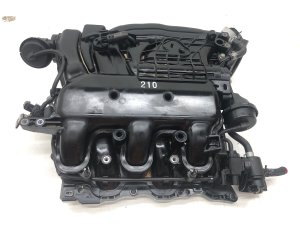
New Aftermarket Parts Available

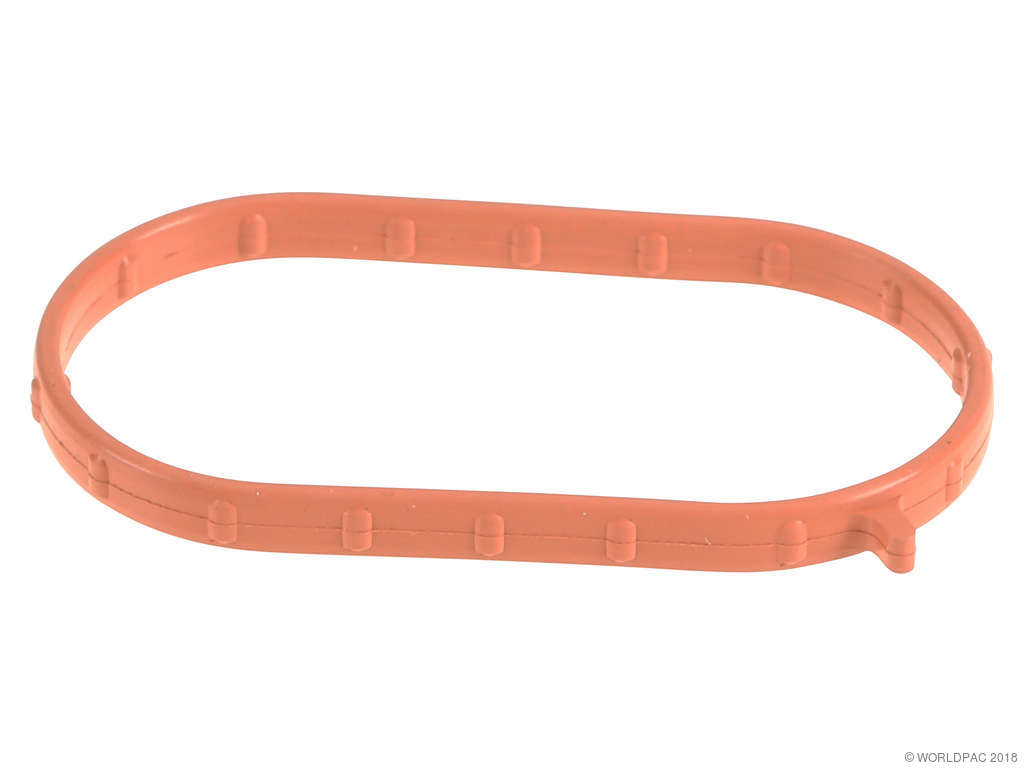
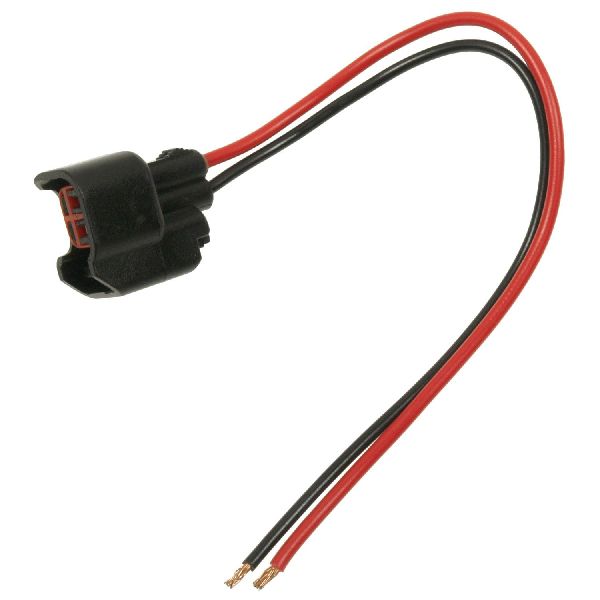
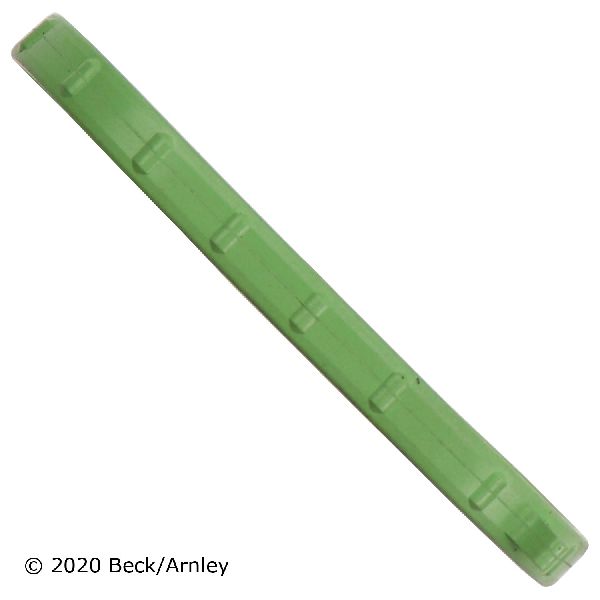

The information in this article is provided for general reference and educational purposes only. Vehicle specifications, procedures, and part compatibility can vary by production date, trim level, and region. Always consult your vehicle's factory service manual and verify part numbers before purchasing or performing repairs. Safety-critical components such as airbags, seat belts, and braking systems should be installed by a qualified professional.
- Hyundai Azera:
- 🛍️ Shop This Part
- What's Unique About the 2012-2017 Hyundai Azera
- Symptoms You May Notice
- Most Likely Causes
- Rare But Worth Checking
- Diagnosis Steps
- Parts You'll Likely Need
- Related Codes That Often Appear With This One
- Technical Service Bulletins (TSBs) & Recalls
- Platform-Specific Known Issues
- Mechanic-Grade Diagnostic Values
- Scan Tool Commands That Help
- Wiring & Ground Locations
- Real Owner Repair Stories
- OEM Part Supersession History
- Model Year Variations Within This Range
- Diagnostic Flowchart
- Other Known Issues on This Vehicle
- Used vs. New Parts: Buying Guide for This Vehicle
- Real Owner Stories
- 2017 Kia Sorento 3.3L V6 (Platform Mate)
- Related OBD-II Codes
- Frequently Asked Questions
- 🎟️ Get 5% Off