

P0204 on 2017-2022 Jeep Compass 2.4L: Injector Circuit Malfunction Causes and Fixes
P0204 indicates an electrical fault in the cylinder 4 fuel injector circuit. The most common causes are a faulty fuel injector or a damaged wiring connector. However, on the 2.4L MultiAir engine, always check the engine oil level first, as low oil can cause identical misfire symptoms and is a very common issue with this engine.
- P0204 on a 2017-2022 Jeep Compass points to an electrical fault with the cylinder 4 fuel injector.
- BEFORE starting any repairs, check the engine oil level. The 2.4L MultiAir engine can consume oil, and a low level can cause symptoms that mimic a bad injector.
- The most common fixes are replacing the cylinder 4 fuel injector or repairing its wiring connector.
- Cylinder 4 is the one closest to the transmission, on the driver's side of the engine.
- Ignoring this code can lead to a damaged catalytic converter and poses a safety risk due to potential stalling.
What's Unique About the 2017-2022 Jeep Compass
The 2.4L MultiAir "Tigershark" engine in the Jeep Compass has a unique electro-hydraulic valvetrain controlled by oil pressure. This engine family is widely known for excessive oil consumption, which can lead to low oil levels. If the engine oil is low, it can starve the MultiAir system, causing misfires, rough running, and stalling—symptoms nearly identical to a bad fuel injector. Therefore, before assuming an injector has failed, the first and most critical step is to check the engine oil level and condition.
Symptoms You May Notice
- Check Engine Light is on
- Rough or shaky engine idle
- Engine misfires, which may feel like stumbling or hesitation during acceleration
- Noticeable loss of engine power
- Reduced fuel economy
- Difficulty starting the engine
- Strong smell of raw gasoline from the exhaust or engine bay
- Replacing the fuel injector without first checking the engine oil level. On the 2.4L MultiAir, low oil is a frequent cause of symptoms that mimic a bad injector.
- Replacing spark plugs or ignition coils. While these can cause a misfire (P0304), they do not cause an injector circuit code (P0204). The P0204 code is specifically for an electrical fault in the injector circuit.
Most Likely Causes
- Faulty Cylinder 4 Fuel Injector 🔴 High Probability Injectors are a common failure point on many modern engines. The internal coil windings can develop high resistance or an open circuit, especially when hot.
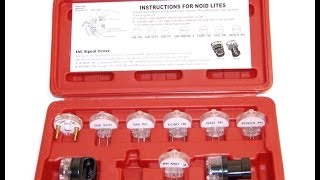
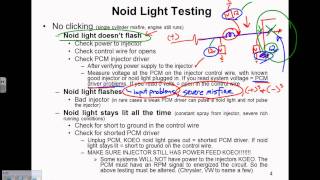
How to confirm: Use a multimeter to test the resistance of the injector; a new OEM injector should read around 11.8-12.0 ohms when cold. A wider acceptable range is 11.0 to 16.0 ohms. Compare the reading to an adjacent injector (e.g., cylinder 3); they should be very close. A significant difference (more than 1-2 ohms) or an open circuit (OL) reading indicates a bad injector. You can also use a 'noid light' to confirm the PCM is sending a signal to the injector connector. If the light flashes but the injector doesn't operate (click), the injector is likely bad.
Typical fix: Replace the faulty fuel injector. It is often recommended to replace all four injectors at the same time, or to purchase a complete fuel rail assembly which includes all four.
Est. part cost: $50-$150 for a single aftermarket injector, or $250-$400 for an OEM fuel rail assembly. - Damaged Wiring or Loose Connector 🟡 Medium Probability The wiring harness in the engine bay is exposed to heat and vibration, which can cause wires to fray or connectors to become loose or corroded over time. The injector connectors have a red locking tab that must be fully engaged.
How to confirm: Visually inspect the wiring harness and the connector for cylinder 4's injector. Look for any signs of damage, corrosion, or loose pins. Ensure the connector is fully seated and the red locking tab is engaged. A wiggle test on the harness while the engine is running may induce the misfire, confirming a wiring issue.
Typical fix: Repair the damaged section of wire or replace the injector pigtail connector. A used OEM injector wiring harness can sometimes be found for a reasonable price.
Est. part cost: $15-$30 for a new connector pigtail. A used harness may cost $50-$100. - Low Engine Oil Level 🟡 Medium Probability The 2.4L MultiAir engine is known for consuming oil, with some vehicles burning over a quart between changes. FCA has issued warranty extensions (XB1) and TSBs (like 09-003-23) related to this issue. Low oil pressure starves the MultiAir valve actuation system, causing misfires that are often misdiagnosed as a fuel injector problem.
How to confirm: Check the engine oil level using the dipstick when the engine is cold. If it is low, top it off to the proper level with the correct spec oil (0W-20 Synthetic) and see if the symptoms improve or disappear.
Typical fix: Top off the engine oil to the correct level. Monitor oil consumption regularly. If consumption is excessive, consult a dealer about the XB1 warranty extension which may cover an oil consumption test and potential engine replacement.
Est. part cost: $10-$20 for a quart of the correct specification oil.
Rare But Worth Checking
- Powertrain Control Module (PCM) Failure: While rare, the driver circuit within the PCM that controls the injector can fail. This is usually the last thing to check after ruling out the injector and wiring. Some 2018 models were subject to a recall (NHTSA 18V-524) for a faulty PCM that could cause stalling, which could present with injector codes.
Diagnosis Steps
- Check the engine oil level. Top off if low and re-evaluate symptoms. This is a critical first step for the 2.4L MultiAir engine.
- Scan the vehicle for any other stored trouble codes. Note if P0304 (Cylinder 4 Misfire) is also present, which is expected.
- Locate cylinder 4. On the transversely mounted 2.4L engine, cylinder 1 is on the passenger side (belt side), and cylinder 4 is on the driver's side (transmission side).
- Inspect the wiring and connector for the cylinder 4 fuel injector. Look for any visible damage, corrosion, or loose connections. Ensure the red locking tab is secure.
- Perform an injector swap. Swap the cylinder 4 injector with an adjacent one (e.g., cylinder 3). Clear the codes and run the engine. If the code changes to P0203, the injector is confirmed to be faulty and needs to be replaced. This is the most definitive DIY test.
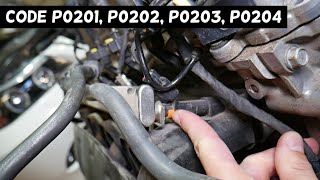
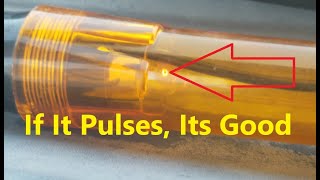
- If the code does not change after the swap, test the electrical signal. Use a 'noid light' on the cylinder 4 connector. The light should flash consistently when the engine is cranked or running, indicating the PCM is sending a signal. 🎬 Watch: How to professionally test injector circuits with a noid light. If there is no flash, the problem is in the wiring or the PCM.
- If a noid light is not available, measure the resistance of the injector itself. Disconnect it and measure across its two pins with a multimeter. A good injector will read around 11.8-12.0 ohms when cold. An 'OL' or infinite reading means the injector is open and bad. A reading significantly different from the other injectors also indicates a fault.
- If the wiring and injector test good, the issue may be a rare failure of the Powertrain Control Module (PCM).
Parts You'll Likely Need
- Fuel Injector
(OEM #04627890AB)— This is the most common component to fail in the circuit, causing the P0204 code.
Trusted brands: Mopar, Bosch, Delphi
OEM price range: $100-$180
Aftermarket price range: $50-$120 - Fuel Rail Assembly
(OEM #4627120AD)— For a more comprehensive repair, replacing the entire fuel rail with all four injectors is a common strategy to ensure reliability, as other injectors may be near the end of their service life. This is often more cost-effective than buying four individual OEM injectors.
Trusted brands: Mopar
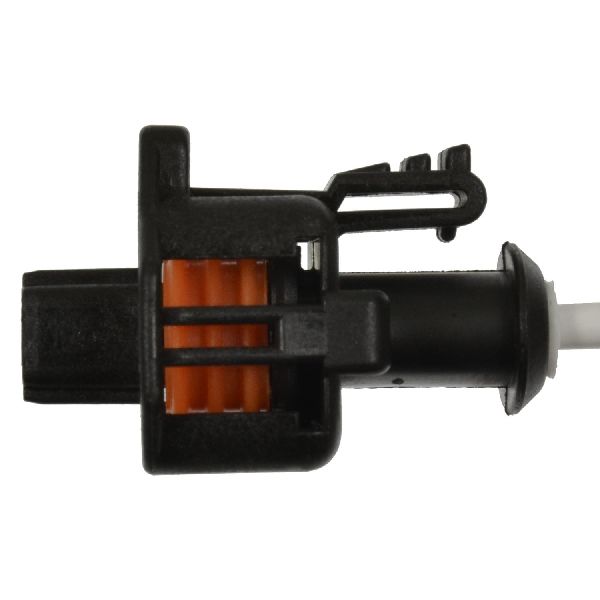
OEM price range: $250-$400 - Injector Connector Pigtail — If the connector or its locking tab is broken, or if the wires are corroded at the connector, replacing the pigtail is necessary.
Trusted brands: Mopar, Dorman
OEM price range: $25-$40
Aftermarket price range: $15-$30
Related Codes That Often Appear With This One
- P0304 — P0304 is a misfire code for cylinder 4. Since P0204 indicates a problem with the fuel injector circuit for that same cylinder, the lack of proper fueling will directly cause a misfire. These codes almost always appear together.
- P0300 — This indicates a random or multiple cylinder misfire. While P0204 is specific to cylinder 4, a severe issue, an intermittent fault, or low oil pressure affecting the MultiAir system can contribute to general engine instability that the PCM flags as a random misfire.
Technical Service Bulletins (TSBs) & Recalls
- NHTSA TSB 18-033-18 / GM Bulletin 18-NA-033: While a GM bulletin, it describes a universal issue where broken tabs from an oil filter can fall into the housing and hold a drain check valve open, causing low oil pressure. This is relevant to any vehicle, including the Compass, as it can lead to oil pressure-related misfires.
- NHTSA TSB 09-003-23 / Warranty Extension XB1: Addresses excessive oil consumption on the 2.4L MultiAir engine, which can cause symptoms identical to P0204.
- TSB Bulletin #S2208000019: A manufacturer service bulletin for the fuel system notes that a Check Engine Lamp with DTC P0204 (Fuel Injector 4 Circuit Open) may occur.
Platform-Specific Known Issues
- The 2.4L MultiAir engine is known for high oil consumption. Low oil levels can cause the MultiAir valvetrain system to malfunction, producing symptoms like misfires and rough idle that are easily mistaken for a fuel injector fault. FCA has a warranty extension (XB1) for this issue on certain model years.
- A recall was issued for some 2018 Jeep Compass models (NHTSA ID 18V-524) for a faulty Powertrain Control Module (PCM) that could cause the engine to stall.
- Debris from a disintegrating or improperly installed oil filter can clog oil passages, including the oil filter housing drain check valve, leading to low oil pressure and MultiAir system problems that mimic injector faults.
Mechanic-Grade Diagnostic Values
- Fuel Injector Resistance (Cold) — expected: 11.8 - 12.0 Ohms (ideal OEM); 11.0 - 16.0 Ohms (acceptable range).. Failure: A reading of OL (Open Loop), infinite resistance, or a value that is more than 1-2 ohms different from other injectors on the engine.
- Injector Control Circuit Voltage (at PCM) — expected: Near battery voltage with key on, engine off. The PCM pulls this voltage to near 0V to activate the injector.. Failure: No voltage, or voltage that does not pulse when the engine is cranking, points to a wiring or PCM driver issue.
- Injector Control Wire at PCM Connector C2 — expected: Pin 11, Brown/Light Green (BN/BG) wire, should show a pulsing ground signal when testing with a scope or noid light during engine cranking.. Failure: A steady signal, or no signal at all, from Pin 11 indicates a faulty PCM driver, assuming the wiring to the injector is intact.
Scan Tool Commands That Help
- High-End Scan Tool (e.g., Witech, Autel, iCARZONE): Injector Activation Test / Bidirectional Control — Use this function after confirming the wiring connector is secure. It allows you to command the PCM to fire only the cylinder 4 injector. If you can hear the injector click when activated, it confirms the PCM driver and wiring are functional, pointing to a clogged or mechanically stuck injector. If it doesn't click, the issue is the injector itself or the wiring/PCM.
Wiring & Ground Locations
- PCM Connector C2, Pin 11 — On the Powertrain Control Module (PCM), which is typically located in the engine bay near the firewall or fender.. This is the specific pin on the PCM that provides the ground-side control for the cylinder 4 fuel injector. Testing for a signal here can definitively isolate the problem to either the PCM itself or the wiring/injector downstream. The wire color is Brown/Light Green (BN/BG).
Real Owner Repair Stories
- YouTube channel South Main Auto Repair (Jeep Wrangler with P0204 (diagnosis principles are identical)) — Misfire and P0204 code, particularly once the engine warmed up.
❌ Tried (didn't work) Initial resistance check when the engine was cold showed the injector was only slightly out of spec (13.4 ohms vs 11.8 on others), which could be misleading.
✅ What actually fixed it The fuel injector had an intermittent failure. It tested close to spec when cold but developed high resistance and eventually an open circuit when hot. Replacing the single faulty fuel injector resolved the code and misfire. - YouTube channel 'donyboy73' (Jeep/Chrysler vehicle) — Persistent P0204 code after injector and wiring were ruled out.
❌ Tried (didn't work) Replacing the fuel injector., Testing the wiring harness for continuity.
✅ What actually fixed it The injector driver chip inside the Powertrain Control Module (PCM) had failed. The technician opened a donor PCM from a junkyard, de-soldered the corresponding injector driver chip, and soldered it onto the vehicle's original PCM board. This fixed the issue without needing to reprogram a new PCM.
OEM Part Supersession History
04627890AA→04627890AB— Standard part revision by the manufacturer, likely for improved reliability or a minor design change.
Heads up: The parts are interchangeable; 04627890AB is the correct current replacement for 04627890AA.
Model Year Variations Within This Range
- 2017-2022: Within this range, the 2.4L MultiAir engine and its fuel system remained fundamentally the same. A facelift in 2022 updated styling and interior tech but did not change the powertrain components relevant to a P0204 code. The engine was replaced by a 2.0L Turbo for the 2023 model year.
Diagnostic Flowchart
Used vs. New Parts: Buying Guide for This Vehicle
When a used part is the smart pick: A used wiring harness from a junkyard is a smart, cost-effective choice if your original harness has physical damage like a broken connector or melted wires. A complete used fuel rail with all four injectors can also be a good value, but the injectors themselves carry some risk.
Donor-vehicle mileage cap: roughly under 80000 miles for the part to have meaningful remaining life.
What to inspect on the donor part:
- For a wiring harness, ensure connectors are not cracked, locking tabs are intact, and there are no signs of corrosion on the pins.
- For a fuel rail/injectors, check the plastic bodies of the injectors for any cracks or signs of heat damage.
- Verify the part number on the donor part matches your original or its superseded number.
- Ask for the donor vehicle's VIN to check for any accident history that could have damaged engine components.
OEM-only on this vehicle (don't cheap out):
- While not strictly required, using an OEM (Mopar) or original equipment supplier (e.g., Bosch, Delphi) fuel injector is highly recommended for reliability. Cheap, unbranded aftermarket injectors are a common source of premature failure and performance issues.
Aftermarket brands forum-validated for this vehicle:
- Dorman (for connector pigtails)
- Bosch (for fuel injectors)
- Delphi (for fuel injectors)
Brands owners have reported issues with on this vehicle:
- Unbranded, low-cost injector sets from online marketplaces are often poorly manufactured and should be avoided.
Real Owner Stories
Aggregated from forums and TSBs cited above. Mileages and costs reflect what owners reported in those sources.
2018 Jeep Cherokee 2.4L MultiAir
Symptoms: The engine was stalling in traffic when the oil level got low.
What fixed it: Topping off the engine oil resolved the immediate stalling symptom, though the underlying issue is excessive oil consumption which requires regular monitoring.
Source hint: r/Jeep - Reddit thread on 2018 Cherokee Oil Consumption
Related OBD-II Codes
Frequently Asked Questions
My 2.4L Compass is burning a lot of oil. Could this be related to my P0204 code?
Where is cylinder 4 located on my 2019 Jeep Compass?
Is there a recall for my 2018 Compass that could cause stalling or engine issues?
What is the correct resistance for a fuel injector on this engine?
Should I replace just the one bad injector or all four?
Can a bad oil change cause a P0204 code on this Jeep?
Helpful Videos
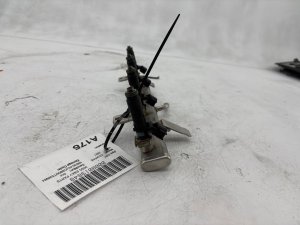
Used OEM Parts in Stock

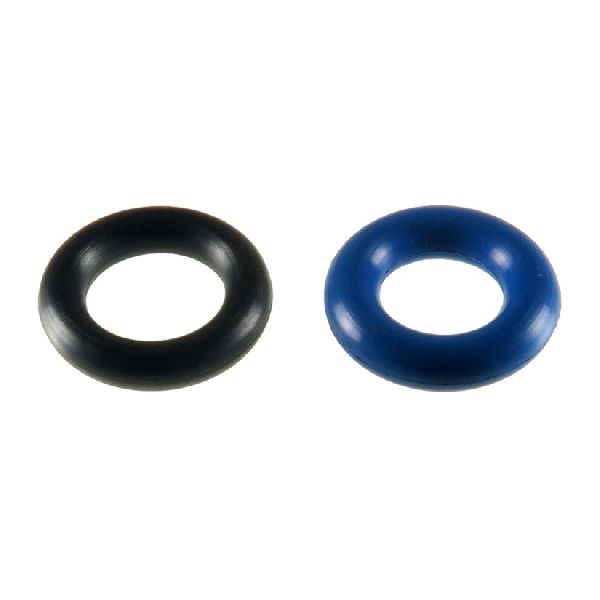
New Aftermarket Parts Available


The information in this article is provided for general reference and educational purposes only. Vehicle specifications, procedures, and part compatibility can vary by production date, trim level, and region. Always consult your vehicle's factory service manual and verify part numbers before purchasing or performing repairs. Safety-critical components such as airbags, seat belts, and braking systems should be installed by a qualified professional.
- Jeep Compass:
- 🎬 Helpful Videos
- 🛍️ Shop This Part
- What's Unique About the 2017-2022 Jeep Compass
- Symptoms You May Notice
- Most Likely Causes
- Rare But Worth Checking
- Diagnosis Steps
- Parts You'll Likely Need
- Related Codes That Often Appear With This One
- Technical Service Bulletins (TSBs) & Recalls
- Platform-Specific Known Issues
- Mechanic-Grade Diagnostic Values
- Scan Tool Commands That Help
- Wiring & Ground Locations
- Real Owner Repair Stories
- OEM Part Supersession History
- Model Year Variations Within This Range
- Diagnostic Flowchart
- Used vs. New Parts: Buying Guide for This Vehicle
- Real Owner Stories
- 2018 Jeep Cherokee 2.4L MultiAir
- Related OBD-II Codes
- Frequently Asked Questions
- 🎟️ Get 5% Off