

P0204 on 2007-2012 Hyundai Santa Fe 2.2L CRDi: Injector Circuit Malfunction Causes and Fixes
This code indicates an electrical fault with the cylinder 4 fuel injector. On the 2.2L CRDi diesel engine, this is most often a failed injector, but wiring should be checked first for looseness or damage. A new genuine Bosch injector costs around $250-$450, and professional installation is recommended as the new injector must be coded to the vehicle's computer using a diagnostic tool for proper engine function.
- P0204 on your Santa Fe 2.2L CRDi means there's an electrical problem with the cylinder 4 fuel injector.
- The most likely cause is a failed fuel injector, which can be confirmed by swapping it with another cylinder and seeing if the code follows.
- Always check the wiring and connector at the injector first for a simple fix like a loose plug.
- This is not a simple DIY replacement. The high-pressure diesel system requires care, and a new injector must be electronically coded to the vehicle's computer.
What's Unique About the 2007-2012 Hyundai Santa Fe
The D4EB engine is a high-pressure Common Rail Direct Injection (CRDi) diesel, operating at up to 1600 bar (over 23,000 PSI). While P0204 is an electrical fault, the Bosch-made piezoelectric injectors are a common failure point. Poor or contaminated diesel can contribute to premature failure. Unlike many gasoline engines, replacing a CRDi injector requires a diagnostic tool to code the new injector's specific multi-digit calibration data (IMA code) to the ECM for proper engine operation and fuel delivery.
Symptoms You May Notice
- Check Engine Light is on
- Rough, shaking idle
- Engine misfire that can be felt while driving
- Hesitation or stumbling during acceleration
- Significant loss of engine power
- Increased diesel fuel consumption
- Difficulty starting the engine
- Engine stalling unexpectedly
- Replacing spark plugs or ignition coils. This is a diesel engine and does not have these parts. The equivalent would be replacing glow plugs, which are for starting aid and would not cause a P0204 code.
- Replacing the fuel filter. While a clogged fuel filter can cause performance issues and other codes (like P0089), it would not cause a specific electrical circuit fault for a single injector.
Most Likely Causes
- Faulty Cylinder 4 Fuel Injector 🔴 High Probability The internal electronic solenoid of the high-pressure CRDi injector is a common failure point. Wear and tear, internal corrosion from poor fuel quality, or simply high mileage can lead to an internal open or short circuit.
How to confirm: Swap the cylinder 4 injector with an injector from another cylinder (e.g., cylinder 3). Clear the codes and run the engine. If the code changes to P0203 (Injector Circuit Malfunction - Cylinder 3), the injector is confirmed to be faulty. Alternatively, check the resistance of the injector. A known good D4EB injector should have a resistance between 0.215 and 0.255 Ohms. A reading of 'OL' (Open Loop) or significantly outside this range indicates a failed injector.
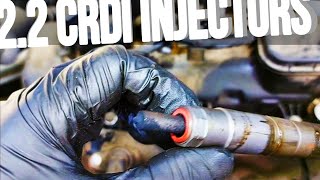
Typical fix: Replace the faulty fuel injector. 🎬 Watch this walkthrough on how to remove CRDi injectors. The new injector must be coded to the ECM using a compatible scan tool by inputting its unique calibration code.
Est. part cost: $250-$450 - Damaged Wiring or Loose Connector 🟡 Medium Probability Engine vibrations and heat can cause the wiring harness leading to the injector to become brittle, or the connector itself can become loose, corroded, or not fully seated. The locking tab on the connector can be fragile and fail to secure the connection properly.
How to confirm: Visually inspect the wiring harness for any signs of chafing, melting, or breaks. Unplug the connector from the injector and check for corrosion or bent pins. Ensure it clicks securely back into place. A 'noid light' can be used to verify if an electrical pulse is reaching the connector; the light should flash when the engine is cranked.
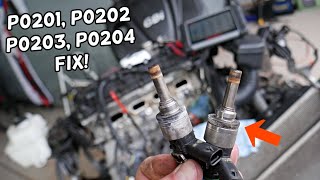
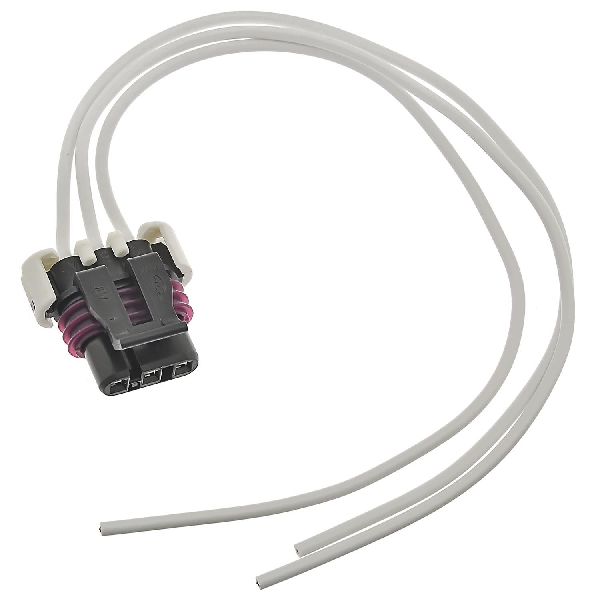
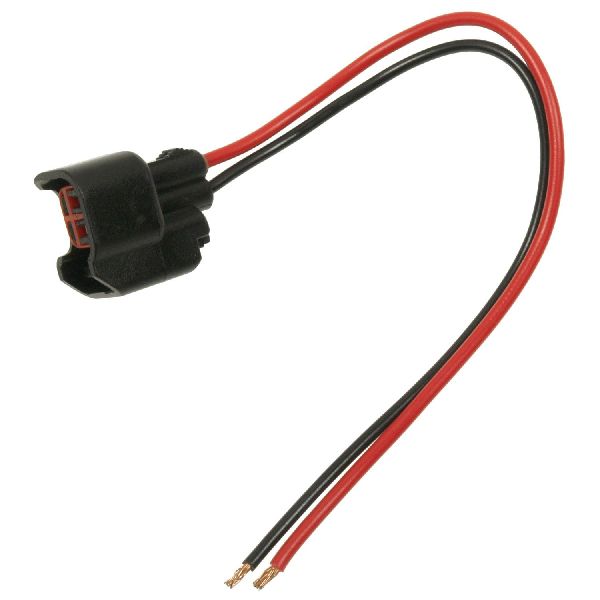
Typical fix: Repair the damaged section of wire or replace the injector connector pigtail. Ensure the connector is fully seated and the locking clip is engaged. 🎬 Watch: How to diagnose injector codes and check connections.
Est. part cost: $15-$40 - Faulty Engine Control Module (ECM) ⚪ Low Probability While rare, the internal driver circuit within the ECM that controls the injector can fail. This is an uncommon cause.
How to confirm: This should only be considered after the injector and wiring have been definitively ruled out. If a noid light shows no pulse at the connector and the wiring has perfect continuity back to the ECM, the ECM's internal injector driver may have failed. Some diagnostic forums mention rare cases of ECM failure causing injector codes on these vehicles.
Typical fix: The ECM must be sent to a specialist for repair or be replaced and programmed by a dealer or qualified shop.
Est. part cost: $600-$1200
Diagnosis Steps
- Read the fault codes with an OBD-II scanner to confirm P0204 and check for any other codes.
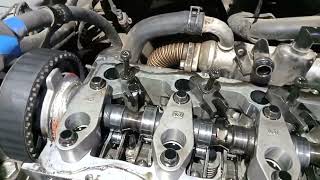
- Locate cylinder 4 on the D4EB engine. It is the cylinder closest to the transmission/flywheel side of the engine (the firing order is 1-3-4-2). 🎬 See how to remove the valve cover and injectors.
- Visually inspect the electrical connector and wiring going to the cylinder 4 fuel injector. Look for any obvious damage, looseness, or corrosion. Wiggle the connector to see if it is loose.
- If the visual inspection is clear, perform an injector swap test. Swap the cylinder 4 injector with the cylinder 3 injector. Clear the codes, start the vehicle, and see if the fault code changes to P0203. If it does, the injector is bad. If P0204 returns, the problem is in the wiring or ECM.
- To test the circuit, disconnect the injector and plug a 'noid light' into the harness connector. Crank the engine. The light should flash, indicating the ECM is sending a signal. If it does not flash or stays on constantly, there is a problem with the wiring or the ECM.
- If a noid light isn't available, use a multimeter to check the resistance of the injector itself. Disconnect the injector and measure across its two pins. A good injector should read between 0.215 and 0.255 Ω. Compare the reading to a known-good injector on the same engine. A reading of OL (open) or one that is significantly different confirms a faulty injector.
- If the injector tests good but the noid light doesn't flash, check the continuity of the two wires from the injector connector back to the ECM connector to rule out a wire break. Pin 74 on the ECM connector corresponds to the cylinder #4 injector control output on some Hyundai models.
- If the injector and wiring are confirmed to be good, the fault likely lies with the ECM's internal driver circuit, which requires professional repair or replacement.
Parts You'll Likely Need
- Common Rail Diesel Fuel Injector
(OEM #33800-27800)— This is the most common cause of a P0204 code on this engine, due to internal electrical failure of the injector's solenoid.
Trusted brands: Bosch (OEM), Mobis
OEM price range: $350-$450
Aftermarket price range: $250-$350
Related Codes That Often Appear With This One
- P0304 — P0304 means 'Cylinder 4 Misfire Detected'. Since the P0204 fault prevents the injector from delivering fuel, a misfire in that cylinder is an immediate and direct consequence.
Platform-Specific Known Issues
- Injector Coding Required: Unlike many gasoline vehicles, when a new CRDi injector is installed on the D4EB engine, its unique calibration code (a multi-digit alphanumeric string printed on the injector body, called an IMA code) must be programmed into the Engine Control Module (ECM) using a capable diagnostic scan tool like the Hyundai GDS. Failure to do so will result in improper fuel delivery, rough running, and potential long-term engine issues.
- Real World Repair Story: A YouTube video by 'World Mechanics' documented a P0204 code on a similar Hyundai/Kia engine. The issue was traced to a connector that was not fully seated and locked. After taking the intake manifold off to gain access, they discovered the loose connection, secured it properly, cleared the codes, and the problem was resolved, highlighting the importance of checking simple connections first.
Mechanic-Grade Diagnostic Values
- Injector Resistance — expected: 0.215 - 0.255 Ω (at 20-70°C). Failure: A reading of 'OL' (Open Loop) or significantly outside this range.
- Injector Operating Voltage (Solenoid Actuation) — expected: ~80V (pulsed). Failure: No voltage pulse detected by the ECM.
- Injector Operating Current (Peak) — expected: 18 ± 0.5 A. Failure: Current draw outside of this specification indicates a fault in the injector coil or driver circuit.
- Injector Operating Current (Hold) — expected: 12 ± 0.5 A. Failure: Incorrect hold current suggests an internal injector or ECM driver issue.
- Fuel Rail Pressure Sensor Voltage (Key On, Engine Off) — expected: ~0.5V. Failure: Significantly different voltage may indicate a sensor or wiring issue, though not a direct cause of P0204.
Scan Tool Commands That Help
- Hyundai GDS (Global Diagnostic System): Actuation Test -> Injector Disable — To individually disable each injector while the engine is running to confirm which cylinder is not contributing. Disabling cylinder 4 should produce no change in engine idle if P0204 is active.
- Hyundai GDS (or compatible high-level scanner): Software Management -> Injector ID Written / Injector Coding — This function is mandatory after replacing a fuel injector. The unique multi-digit IMA code from the new injector body must be entered for the specific cylinder to ensure the ECM can control it correctly.
- Hyundai GDS: DTC Analysis — To retrieve fault codes and access related diagnostic procedures and TSBs directly within the OEM tool.
Wiring & Ground Locations
- ECM Connector Pin 74 — At the main Engine Control Module (ECM) harness connector.. This is the specific control output pin for the cylinder #4 injector on some Hyundai models. A continuity test should be performed from this pin to the corresponding wire at the injector connector to rule out a broken wire.
- Engine Harness Grounds — Typically bolted to the cylinder head, engine block, or chassis near the strut tower. Specific locations vary slightly by year.. A loose or corroded main engine ground can cause a variety of intermittent electrical issues, including injector circuit faults. While less common than a direct wiring break, it should be checked and cleaned as part of a thorough diagnosis.
- Injector #4 Connector — Plugged directly into the top of the fuel injector for the cylinder closest to the transmission.. This is the most common point of failure for wiring issues. The plastic locking clip can become brittle and break, leading to a loose connection that causes an intermittent or constant open circuit.
Real Owner Repair Stories
- YouTube channel 'Auto Repair Guys' (Land Rover Discovery (demonstrating a universal P0204 fix)) — Check Engine Light on, rough running, misfire.
❌ Tried (didn't work) Initial scan showed P0204 'Injector Circuit Open Cylinder 4'.
✅ What actually fixed it The wiring connector on the #4 injector was not fully seated and the metal retaining clip was missing/loose, causing a poor connection. After removing the intake manifold for access, they found the loose plug, secured it properly with a new clip, cleared the code, and the misfire was resolved.
OEM Part Supersession History
Bosch 0445110253→Bosch 0445110254— Standard product lifecycle update, likely incorporating minor internal improvements.
Heads up: The parts are generally interchangeable for the D4EB engine, but it is always best practice to replace injectors as a matched set or ensure the IMA code is correctly programmed.
Model Year Variations Within This Range
- 2006-2009: The earlier D4EB engines in the Santa Fe (CM) were rated at 153-155 hp. Later versions in the 2010-2012 facelift model had revisions for improved power and emissions, but the fundamental Bosch CRDi injector design and P0204 diagnostic process remain the same.
Diagnostic Flowchart
Other Known Issues on This Vehicle
Issues unrelated to this code that are worth knowing about as an owner of this generation:
- Sticking/Failing VGT Turbo Actuator 🔴 High — Common issue, especially on vehicles with high mileage or frequent short trips. Can cause P0234 overboost code and limp mode.
- Dual-Mass Flywheel (DMF) Failure (Manual Transmission) 🔴 High — More common on earlier 2006-2009 models. Symptoms include rattling/banging noises from the bellhousing, clutch pedal vibration, and difficulty shifting.
- Oil Starvation due to Clogged Oil Pump Strainer 🔴 High — Can occur if oil change intervals are extended or low-quality oil is used, leading to sludge buildup. This can cause catastrophic failure of components like the turbocharger.
- Faulty Fuel Level Sensor 🟡 Low — A widely reported issue on 2007-2009 models where the fuel gauge reads empty or inaccurately, even with a full tank.
- AWD Coupler Failure 🟠 Medium — Can occur at higher mileage, causing a binding or jerking sensation from the rear of the vehicle during sharp, low-speed turns.
Used vs. New Parts: Buying Guide for This Vehicle
When a used part is the smart pick: For a CRDi injector on this engine, buying used is almost never a smart choice. The risk of receiving a worn, clogged, or failing injector is extremely high. The only potential exception is for non-critical related parts like a wiring harness pigtail or connector clip from a junkyard.
Donor-vehicle mileage cap: roughly under 50000 miles for the part to have meaningful remaining life.
What to inspect on the donor part:
- For a wiring pigtail, ensure the plastic is not brittle and the locking tab is intact.
- Never buy a used injector that has been sitting out exposed to air and moisture; it should be sealed.
- Ask for the IMA code from the injector body to ensure it's legible for programming.
OEM-only on this vehicle (don't cheap out):
- Common Rail Fuel Injector: Due to the high pressures, precise calibration, and mandatory ECU coding, only a new, genuine Bosch injector is recommended. Remanufactured units can be a gamble, and cheap unbranded knock-offs often fail quickly or cannot be coded correctly.
Aftermarket brands forum-validated for this vehicle:
- Bosch (OEM supplier)
Brands owners have reported issues with on this vehicle:
- Unbranded, no-name injectors from online marketplaces like eBay or Amazon. These often use the same part number but lack the quality control, correct internal components, and may have fake or non-programmable IMA codes.
Real Owner Stories
Aggregated from forums and TSBs cited above. Mileages and costs reflect what owners reported in those sources.
2011 Hyundai Santa Fe 2.2L Diesel
Symptoms: Non-start condition involving complex fuel system diagnostics and issues with ECU-related injector activation.
What fixed it: Diagnostics focused on achieving specified fuel pressure during cranking to allow the injectors to fire.
Source hint: SimplyDiag Network thread titled 'Santa Fe non-starter'
2007-2012 Hyundai Santa Fe 2.2L CRDi
Symptoms: P0204 code triggered; owner was advised to check for an 'OL' (Open Loop) resistance reading across the injector terminals.
What fixed it: Testing the injector resistance and checking connector tightness.
Source hint: Reddit r/MechanicAdvice thread 'Code P0204 injector circuit open but no'
Hyundai/Kia D4EB Engine
Symptoms: P0204 code present; the issue was traced to a connector that was not fully seated and locked.
What fixed it: The intake manifold was removed to gain access, the loose connection was secured properly, and codes were cleared.
Source hint: YouTube video by 'World Mechanics' documented in Vehicle Specific Issues
Related OBD-II Codes
Frequently Asked Questions
Where is cylinder 4 located on the 2.2L D4EB engine?
Can I just swap the injector on my Santa Fe CRDi, or does it need programming?
What is the correct resistance for a 2007-2012 Santa Fe 2.2L fuel injector?
Is there a specific wiring pin I should check for the P0204 code?
Could my Santa Fe's P0204 code be caused by a loose connector instead of a bad injector?
Helpful Videos
Used OEM Parts in Stock

New Aftermarket Parts Available


The information in this article is provided for general reference and educational purposes only. Vehicle specifications, procedures, and part compatibility can vary by production date, trim level, and region. Always consult your vehicle's factory service manual and verify part numbers before purchasing or performing repairs. Safety-critical components such as airbags, seat belts, and braking systems should be installed by a qualified professional.
- Hyundai Santa Fe:
- 🎬 Helpful Videos
- 🛍️ Shop This Part
- What's Unique About the 2007-2012 Hyundai Santa Fe
- Symptoms You May Notice
- Most Likely Causes
- Diagnosis Steps
- Parts You'll Likely Need
- Related Codes That Often Appear With This One
- Platform-Specific Known Issues
- Mechanic-Grade Diagnostic Values
- Scan Tool Commands That Help
- Wiring & Ground Locations
- Real Owner Repair Stories
- OEM Part Supersession History
- Model Year Variations Within This Range
- Diagnostic Flowchart
- Other Known Issues on This Vehicle
- Used vs. New Parts: Buying Guide for This Vehicle
- Real Owner Stories
- 2011 Hyundai Santa Fe 2.2L Diesel
- 2007-2012 Hyundai Santa Fe 2.2L CRDi
- Hyundai/Kia D4EB Engine
- Related OBD-II Codes
- Frequently Asked Questions
- 🎟️ Get 5% Off