

P0204 on 2011-2019 Dodge Journey 3.6L: Injector Circuit Malfunction Causes and Fixes
P0204 on a 3.6L Dodge Journey most often means the fuel injector for cylinder #4 has failed electrically. The fix is to replace the injector, which requires removing the upper intake manifold. Expect to pay around $150 for an OEM injector and 2-3 hours of labor. Before replacing, confirm by swapping the injector with another cylinder (e.g., cylinder 2) and checking if the code changes to P0202.
- P0204 on your Dodge Journey means there's an electrical problem with the cylinder 4 fuel injector circuit.
- The most likely culprit is a failed fuel injector, followed by a wiring issue.
- Cylinder 4 is the middle cylinder on the driver's side of the engine.
- A definitive DIY test is to swap the cylinder 4 injector with another one (like cylinder 2) and see if the trouble code follows the injector.
- Due to the significant labor required to remove the intake manifold, it is highly recommended to replace all six injectors at the same time to avoid future repairs.
What's Unique About the 2011-2019 Dodge Journey
On the 3.6L Pentastar V6, the fuel injectors are located underneath the upper intake manifold, making access more difficult than on many other engines. Cylinder #4 is on the front bank of cylinders (the one closer to the radiator), which is slightly easier to access than the rear bank. However, due to the labor involved in removing the intake, many mechanics and experienced owners recommend replacing all three injectors on that bank, or even all six, as a preventative measure. While early (2011-2013) Pentastar engines are known for a cylinder head issue that causes misfires on cylinders 2, 4, and 6, that problem typically sets a P0304 code due to a loss of compression, not an electrical P0204 code. A P0204 code is a strong indicator of an electrical fault, not the mechanical head defect.
Symptoms You May Notice
- Check Engine Light is on
- Flashing Check Engine Light during acceleration or higher speeds
- Rough, unstable idle
- Engine misfire, which may feel like a shake or stumble
- Hesitation or lack of power during acceleration
- Poor fuel economy
- Engine stalling
- Replacing the spark plug or ignition coil. While these can cause a misfire (P0304), they will not cause an injector circuit code (P0204). The P0204 code is specifically for an electrical fault in the injector circuit.
- Confusing the P0204 electrical code with the well-known 2011-2013 Pentastar cylinder head mechanical defect. The head defect causes compression loss and a P0304 code, not an injector circuit code.
Most Likely Causes
- Failed Fuel Injector (Cylinder 4) 🔴 High Probability The fuel injectors are subjected to constant heat cycles and vibration, and the internal coil windings can fail over time, creating an open or high-resistance circuit. While generally reliable, this is the most common failure point for a P020x code on the Pentastar engine.
How to confirm: Swap the cylinder 4 injector with another cylinder (like cylinder 2 on the same bank). If the code changes to P0202, the injector is faulty. Alternatively, use a multimeter to test the injector's resistance. A healthy Pentastar injector should read between 12-16 ohms. A reading of infinity (OL), zero, or significantly outside this range confirms a failed injector.
Typical fix: Replace the fuel injector. It is highly recommended to replace all injectors on the same bank or all six at once due to the labor involved in removing the intake manifold. Always replace the upper and lower intake manifold gaskets at the same time.
Est. part cost: $150-$225 for a single OEM injector. - Wiring Harness or Connector Issue 🟡 Medium Probability The engine wiring harness can be susceptible to damage from heat and vibration, leading to chafed wires, loose pins in the connector, or melting if it comes into contact with hot exhaust components. The plastic locking tab on the connector can also become brittle and break.
How to confirm: Visually inspect the wiring going to the cylinder 4 injector for any signs of damage, melting, or corrosion. Use a 'noid light' plugged into the injector connector; it should flash when the engine is cranked. If the noid light does not flash, there is a problem with the wiring or the PCM. Wiggle the harness while the engine is running to see if it induces a misfire, indicating an intermittent connection.
Typical fix: Repair the damaged section of wire or replace the injector connector pigtail. Ensure the harness is properly secured away from heat sources.
Est. part cost: $15-$40 for a pigtail connector.
Rare But Worth Checking
- Failed Powertrain Control Module (PCM): This is the least likely cause. The PCM contains driver circuits for each injector, and one can fail internally. This should only be considered after definitively ruling out the injector and wiring as the cause. A noid light test that shows no flashing signal from the PCM is a key indicator, but the wiring must be confirmed good between the PCM and the injector connector first.
Diagnosis Steps
- Verify the P0204 code is present using an OBD-II scanner. Note any other codes, especially P0304.
- Locate cylinder #4. On the 3.6L Pentastar in a FWD Journey, the cylinders are numbered 1-3-5 on the rear (firewall side) bank and 2-4-6 on the front (radiator side) bank, from passenger to driver side. Cylinder #4 is the middle cylinder on the front bank, near the radiator.
- Visually inspect the wiring harness and connector for cylinder #4. Look for obvious signs of damage, melting, corrosion, or loose connections. Ensure the connector is fully seated and the locking tab is engaged.
- Disconnect the injector connector and test for a signal using a noid light. The light should flash steadily while cranking the engine. If it does not flash, the problem is in the wiring or the PCM. If it does flash, the wiring and PCM driver are likely okay and the injector is the prime suspect.
- If the noid light test passes, test the fuel injector itself. Using a multimeter set to ohms, measure the resistance across the two pins on the injector. A good injector should read between 12-16 ohms. An open circuit (OL) or short (0 ohms) confirms a bad injector.
- For a definitive test, swap the cylinder 4 injector with the cylinder 2 injector (the easiest one to access on the same bank). Clear the codes and run the engine. If the code returns as P0202, you have confirmed the injector is the problem. If P0204 returns, the issue is in the wiring or PCM.
- If the injector and wiring are confirmed to be good (injector swaps don't move the code, noid light doesn't flash), the problem may be the injector driver in the PCM. This would require professional diagnosis, including checking for continuity on the ground control wire between the PCM connector and the injector connector.
Parts You'll Likely Need
- Fuel Injector
(OEM #5184085AD)— This is the most common cause of a P0204 code, resulting from an internal electrical failure of the injector's coil.
Trusted brands: Mopar, Bosch, Standard Motor Products
OEM price range: $150-$225
Aftermarket price range: $50-$120 - Upper and Lower Intake Manifold Gaskets — These must be replaced whenever the intake manifold is removed to access the fuel injectors to prevent vacuum leaks. Many injector or gasket kits include these.
Trusted brands: Mopar, Fel-Pro, Mahle
OEM price range: $40-$60
Aftermarket price range: $20-$40
Related Codes That Often Appear With This One
- P0304 — P0304 means "Cylinder 4 Misfire Detected." Since the P0204 code indicates a problem with the fuel supply to cylinder 4, it directly causes a misfire in that cylinder. Seeing these two codes together is extremely common and strongly points to the cylinder 4 injector circuit.
- P0300 — If the misfire is severe or intermittent, the PCM might also log a P0300 for "Random/Multiple Cylinder Misfire Detected." This can happen if the dead cylinder disrupts the engine's rotational speed enough to confuse the crankshaft position sensor.
Technical Service Bulletins (TSBs) & Recalls
- TSB 09-002-14 REV. B: While not for P0204, this is the key TSB for the infamous 2011-2013 left cylinder head issue that causes misfire codes P0302, P0304, and P0306. It's important context for any work on the left bank of these early engines.
- Warranty Extension X56 (D-14-12): This was the customer-facing warranty extension for the left cylinder head issue, covering repairs for 10 years or 150,000 miles. It has since expired.
Platform-Specific Known Issues
- 2011-2013 Cylinder Head Defect: Early 3.6L Pentastar engines had a known issue with the left cylinder head that could cause misfires on cylinders 2, 4, and 6. This was due to valve seat issues causing a loss of compression and would set a P0304 code, not P0204. Chrysler issued an extended warranty (X56) for 10 years/150,000 miles, but this has now expired for all vehicles. While your vehicle may be affected, a P0204 code points to an electrical issue first.
Mechanic-Grade Diagnostic Values
- Fuel Injector Coil Resistance — expected: 12.0 to 14.5 Ohms at room temperature. Some sources state 11-15 Ohms is an acceptable range.. Failure: A reading of infinity (OL) indicates an open circuit, near zero indicates a short, and a reading significantly outside the expected range (e.g., double the normal value) indicates an internal fault.
- Injector Connector Voltage (Key On, Engine Off) — expected: ~12 Volts (Battery Voltage). Failure: No voltage indicates a problem with the power supply wire (common to all injectors) from the ASD (Auto Shutdown) relay or a fuse.
- Injector Control Wire (Lab Scope) — expected: A square wave pattern showing battery voltage when the injector is off, dropping to near zero when the PCM grounds the circuit to fire it, followed by a sharp inductive kick (voltage spike) when the ground is released.. Failure: No pattern or a flat line indicates a lack of signal from the PCM or a break in the control wire. A missing inductive kick can also point to a faulty injector coil.
Scan Tool Commands That Help
- Chrysler wiTECH or equivalent professional scanner: Fuel Injector Kill / Cylinder Power Balance Test — This bidirectional command allows a technician to manually disable one injector at a time while the engine is running. When cylinder 4's injector is 'killed', if there is no change in the engine's idle quality, it confirms that cylinder was not contributing in the first place, strongly supporting the P0204 fault. If disabling another cylinder (e.g., cylinder 2) causes a significant drop in RPM but disabling cylinder 4 does not, it isolates the problem to the cylinder 4 fuel/spark system.
Wiring & Ground Locations
- Injector Power Source — All fuel injectors receive common power from the Auto Shutdown (ASD) relay, which is typically located in the underhood fuse box (Power Distribution Center).. While a failure here would likely cause codes for multiple injectors (e.g., P0200), a poor connection or intermittent relay could theoretically manifest as a single injector code initially.
- Injector Control Wire — This is a dedicated wire running from a specific pin on the PCM connector directly to pin 2 of the cylinder 4 fuel injector connector.. This wire is the most likely location for a wiring-related fault. A continuity test from the PCM connector to the injector connector is necessary if the injector itself tests good but a noid light shows no signal.
- G903 / Engine Ground — On the 3.6L engine, a primary engine ground stud is located on the top of the transmission housing. Another is located on the engine block between the main harness and the vacuum pump.. A poor main engine ground can cause a host of bizarre electrical issues. While it would not typically cause a single injector code, verifying this ground is clean and tight is a fundamental step in diagnosing any engine electrical fault.
Real Owner Repair Stories
- Reddit user on r/MechanicAdvice (2010 Ford Escape V6 (similar P0204/P0304 issue)) — Intermittent misfire on cylinder 4 with a flashing check engine light, accompanied by codes P0304 and P0204.
❌ Tried (didn't work) Replacing the fuel injector for cylinder 4. The problem returned shortly after.
✅ What actually fixed it An automotive technician found an exposed section of wire in the injector harness that was causing an electrical short. Repairing the damaged wire resolved the issue permanently. - YouTube video from 'ProMasters Only' (2016 Ram Promaster 2500 3.6L (same engine family)) — Intermittent P0204, P0304, and P0300 codes with a misfire.
❌ Tried (didn't work) Initial diagnosis pointed towards multiple potential causes.
✅ What actually fixed it The mechanic tested the resistance of the cylinder 4 injector and found it was double the normal reading. Replacing the single faulty fuel injector resolved all codes and the misfire.
OEM Part Supersession History
5184085AC, RL184085AC→5184085AD— Standard part revision and update by the manufacturer.
Heads up: The parts are interchangeable. 5184085AD is the current recommended replacement for the earlier part numbers.
Model Year Variations Within This Range
- 2011-2019: The 3.6L Pentastar V6 and its core components, including the fuel injection system, remained largely consistent throughout its use in the Dodge Journey. A major facelift for the Journey occurred in 2011, which included the introduction of the Pentastar engine, but no significant changes affecting this specific fault code occurred between 2011 and 2019.
Diagnostic Flowchart
Other Known Issues on This Vehicle
Issues unrelated to this code that are worth knowing about as an owner of this generation:
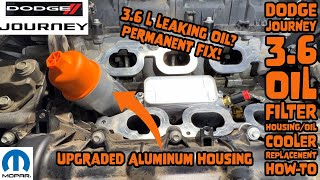
- Cracked Oil Filter / Cooler Housing 🔴 High — Extremely common across all 3.6L Pentastar applications, often after 60,000-100,000 miles. The plastic housing cracks from heat cycles, causing major oil and/or coolant leaks into the engine valley.
- Rocker Arm Bearing Failure ('Pentastar Tick') 🔴 High — Common across all model years, but especially noted in earlier engines. Needle bearings in the rocker arms fail, causing a distinct ticking/tapping noise. If ignored, it can destroy the camshafts, requiring a much more expensive repair.
- Left Cylinder Head Defect (2011-2013 Models) 🔴 High — Affected a significant percentage of 2011-2013 engines. Caused misfires on cylinders 2, 4, and 6 due to premature valve seat wear. (Ref: TSB 09-002-14 REV. B / Warranty Extension X56)
- Cooling System Failures (Water Pump/Thermostat) 🟠 Medium — Water pumps and thermostat housings are common failure points that can lead to overheating.
- Uconnect Infotainment System Glitches 🟡 Low — Widespread owner complaints of the Uconnect system freezing, failing to pair with Bluetooth, or becoming unresponsive. Sometimes temporarily fixed by disconnecting the battery.
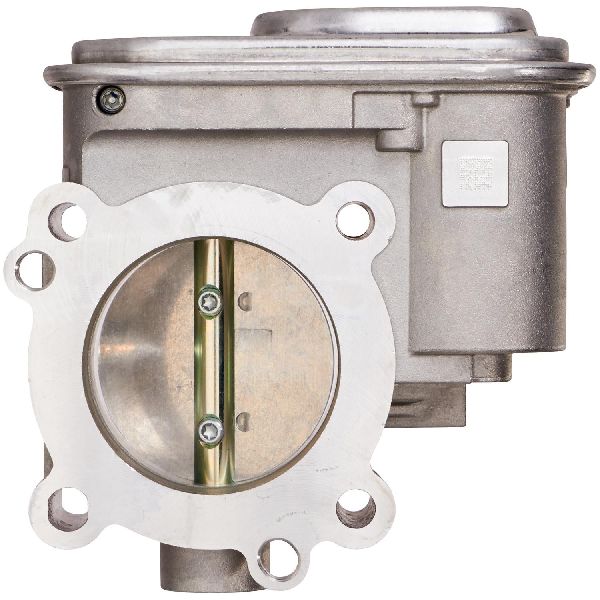
- Electronic Throttle Body Failure 🟠 Medium — A known failure point that can cause stalling, rough idle, and an electronic throttle control (lightning bolt) warning light on the dash.
Used vs. New Parts: Buying Guide for This Vehicle
When a used part is the smart pick: A used wiring harness pigtail or a complete engine wiring harness from a low-mileage donor vehicle can be a cost-effective solution if the issue is confirmed to be wiring damage. Buying a single used fuel injector is generally not recommended due to the high labor cost of access; the risk of installing a part with unknown history outweighs the savings.
Donor-vehicle mileage cap: roughly under 75000 miles for the part to have meaningful remaining life.
What to inspect on the donor part:
- For a wiring harness, inspect for any signs of brittleness, cracking in the plastic conduit, or previous repairs (splices, electrical tape).
- Ensure all connector locking tabs are intact and not broken.
- Check the vehicle history of the donor car to avoid parts from flood or fire-damaged vehicles.
OEM-only on this vehicle (don't cheap out):
- Powertrain Control Module (PCM) - Aftermarket or used PCMs often have programming and compatibility issues. A new or remanufactured OEM unit is the safest choice.
Aftermarket brands forum-validated for this vehicle:
- Bosch (often the OEM supplier)
- Standard Motor Products (SMP)
- NTK
Brands owners have reported issues with on this vehicle:
- Unbranded, no-name injector sets sold on marketplaces are a significant gamble. Their flow rates may not be correctly matched to the OEM specifications, potentially causing performance issues even if they resolve the electrical code.
Real Owner Stories
Aggregated from forums and TSBs cited above. Mileages and costs reflect what owners reported in those sources.
2015 Jeep Grand Cherokee 3.6L Pentastar V6
Symptoms: Check Engine Light (CEL) was flashing and the vehicle had a P0204 and P0304 code present.
What fixed it: The community identified the cause as a bad fuel injector or wiring; swapping the injector is the recommended confirmation step.
Source hint: Reddit - r/mechanic
2011-2013 Dodge Journey 3.6L Pentastar V6 — ~100000 miles
Symptoms: Misfires specifically on cylinders 2, 4, or 6 due to valve seat issues causing loss of compression.
What fixed it: Replacement of the left cylinder head under TSB 09-002-14 REV. B / Warranty Extension X56.
Source hint: TSB 09-002-14 REV. B / Warranty Extension X56 (D-14-12)
Related OBD-II Codes
Frequently Asked Questions
Where is cylinder #4 located on my 2011-2019 Dodge Journey 3.6L?
Does the 2011-2013 cylinder head TSB 09-002-14 REV. B apply to my P0204 code?
Can I still get the X56 Warranty Extension for my 2012 Journey's cylinder head issue?
What is the correct resistance for a replacement fuel injector on the Pentastar 3.6L?
Why is it recommended to replace all injectors or gaskets when fixing a P0204?
Could a 'noid light' help me diagnose my Dodge Journey's P0204 code?
Helpful Videos

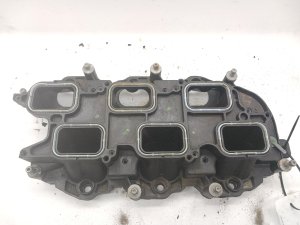
Used OEM Parts in Stock


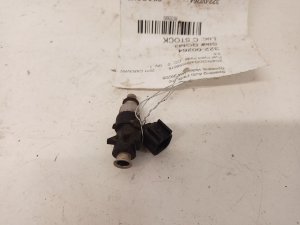


New Aftermarket Parts Available


The information in this article is provided for general reference and educational purposes only. Vehicle specifications, procedures, and part compatibility can vary by production date, trim level, and region. Always consult your vehicle's factory service manual and verify part numbers before purchasing or performing repairs. Safety-critical components such as airbags, seat belts, and braking systems should be installed by a qualified professional.
- Dodge Journey:
- 🎬 Helpful Videos
- 🛍️ Shop This Part
- What's Unique About the 2011-2019 Dodge Journey
- Symptoms You May Notice
- Most Likely Causes
- Rare But Worth Checking
- Diagnosis Steps
- Parts You'll Likely Need
- Related Codes That Often Appear With This One
- Technical Service Bulletins (TSBs) & Recalls
- Platform-Specific Known Issues
- Mechanic-Grade Diagnostic Values
- Scan Tool Commands That Help
- Wiring & Ground Locations
- Real Owner Repair Stories
- OEM Part Supersession History
- Model Year Variations Within This Range
- Diagnostic Flowchart
- Other Known Issues on This Vehicle
- Used vs. New Parts: Buying Guide for This Vehicle
- Real Owner Stories
- 2015 Jeep Grand Cherokee 3.6L Pentastar V6
- 2011-2013 Dodge Journey 3.6L Pentastar V6 — ~100000 miles
- Related OBD-II Codes
- Frequently Asked Questions
- 🎟️ Get 5% Off