

P0204 on 2011-2023 Chrysler 300 3.6L: Injector Circuit Malfunction Causes and Fixes
P0204 on a Chrysler 300 3.6L almost always means the cylinder 4 fuel injector has failed or its wiring is damaged. The most common fix is replacing the fuel injector, which requires removing the intake manifold. Expect to pay $40-$90 for a single aftermarket injector. While you're there, consider replacing all six injectors and the mandatory intake gaskets.
- P0204 is an electrical circuit code for the cylinder 4 injector, not a clogged injector.
- The most likely cause is a failed fuel injector, followed by a wiring/connector issue.
- A 'noid light' is a simple tool that can quickly determine if the wiring or the injector is the problem.
- Accessing the injector requires removing the intake manifold, so new gaskets are mandatory for the repair.
What's Unique About the 2011-2023 Chrysler 300
On the 3.6L Pentastar V6, cylinder 4 is the middle cylinder on the driver's side bank. Accessing it requires removing the upper intake manifold, making the job more involved than on some other engines. While the injectors are generally reliable, they can fail internally. It's important not to confuse this electrical code (P0204) with the well-known mechanical cylinder head issue on early (2011-2013) Pentastar engines, which also causes misfires on the left bank (including cylinder 4) but sets P030x codes (like P0304) without the P0204 electrical fault code.
Generation note: The 2011-2023 Chrysler 300 is a single generation (LD), but the 3.6L Pentastar engine received a significant upgrade for the 2016 model year, including a higher compression ratio and two-stage variable valve lift (VVL). While the fundamental causes of P0204 remain the same, ensure you are purchasing the correct parts for your specific model year. Later model year injectors (2018+) feature an 8-hole design for better atomization and are a direct-fit, cheaper upgrade for older models.
Symptoms You May Notice
- Check Engine Light is on (may be flashing)
- Rough, unstable idle
- Engine misfire (may feel like a shake or stumble)
- Noticeable loss of power and poor acceleration
- Reduced fuel economy
- Smell of unburnt gasoline from the exhaust
- Replacing the spark plug or ignition coil for cylinder 4. While these parts can cause a P0304 misfire code, they will not cause a P0204 electrical circuit code. The presence of P0204 specifically points to the fuel injector circuit.
- Confusing the 'Pentastar Tick' from failing rocker arms with an injector problem. While rocker arm failure is a known issue, it causes mechanical noise and misfires (P030x), not an electrical injector circuit code like P0204.
Most Likely Causes
- Failed Cylinder 4 Fuel Injector 🔴 High Probability The internal coil winding of the injector can fail over time, creating an open or high-resistance circuit that the PCM detects. This is the most common failure mode for this code on the Pentastar engine. Failures can be intermittent, often occurring only when the engine is hot.
How to confirm: Test the injector's resistance with a multimeter; it should be between 12 and 14 ohms. 🎬 Watch: How to test Pentastar fuel injectors with a multimeter. A bad injector may read very high (like 25+ ohms or 63 ohms) or show an open circuit ('OL'). The most definitive test is to swap the cylinder 4 injector with another cylinder (like #2). Clear the codes and drive. If the code changes to P0202, the injector is faulty.
Typical fix: Replace the fuel injector. 🎬 See this walkthrough for replacing injectors on the 3.6L V6. Due to the labor involved in removing the intake manifold, many mechanics and experienced DIYers recommend replacing all six injectors at once, especially on vehicles with over 100,000 miles.
Est. part cost: $40-$90 for one aftermarket injector, $200-$400 for a set of six. - Damaged Wiring or Connector 🟡 Medium Probability The wiring harness near the injector can become brittle from heat cycles, and the locking tab on the connector can break, leading to a poor connection. In some cases, the harness can chafe against a head bolt stud or other engine components, causing a short or open circuit. On older Chrysler models, the injector sub-harness connector near the ignition coil was a known failure point where insulation would shrink and cause shorts.
How to confirm: Visually inspect the wiring and connector for cylinder 4 for any signs of melting, chafing, or corrosion. Perform a 'wiggle test' on the connector with the engine running to see if it affects the idle. Use a 'noid light' on the injector connector; a steady flashing light with the engine running means the wiring and PCM are good. No flash or a constantly lit light points to a wiring or PCM issue.
Typical fix: Repair the damaged section of wire or replace the injector pigtail connector. Ensure the repair is sealed against moisture. A common pigtail part is the 'Multi Purpose Electrical Connector (S824)'. A known Mopar pigtail part number for similar applications is 68089937AA.
Est. part cost: $10-$25 for a new pigtail connector.
Rare But Worth Checking
- Powertrain Control Module (PCM) Failure: This is extremely rare. The PCM's internal driver for the injector can fail, but this should be the last resort after all other possibilities (injector, wiring) have been exhaustively tested and ruled out. A short in the injector wiring can damage the driver circuit inside the PCM, which may require replacing both the wiring and the PCM.
Diagnosis Steps
- Scan the vehicle for codes. Confirm P0204 is present. Note any other codes, such as P0304, which is expected.
- Locate cylinder 4. On the longitudinally mounted 3.6L V6, it is the middle cylinder on the driver's side bank (left side of the engine).
- Visually inspect the wiring harness and electrical connector for cylinder 4. Look for obvious signs of damage, melting, or a loose connection. Wiggle the connector with the engine running to see if the misfire changes.
- Perform a 'noid light' test. Disconnect the injector and plug a noid light into the harness connector. Crank or start the engine. A steady, flashing light indicates the PCM and wiring are functioning correctly, pointing to a failed injector. 🎬 Watch: How to perform an easy noid light test. No flash or a constantly lit light points to a wiring or PCM issue.
- If the noid light test passes, test the fuel injector. Disconnect the injector and measure its resistance with a multimeter set to ohms. A good injector will read between 12-14 ohms. A reading of 'OL' (open) or near zero (shorted) means the injector is bad.
- As a final confirmation, swap the cylinder 4 injector with an adjacent one on the same bank (e.g., cylinder 2). Clear the codes, drive the vehicle, and re-scan. If the code has moved to P0202, you have definitively confirmed a bad injector.
- If the noid light test fails, you must inspect the wiring continuity from the injector connector back to the PCM. The injector control wire for cylinder 4 is circuit K14, located at pin 11 of the PCM's C2 connector. The wire is typically Brown/Light Green.
- When re-installing the intake manifold, be sure to use new gaskets and torque the bolts to the correct specification (Upper: 9 Nm / 80 in-lbs; Lower: 11 Nm / 97 in-lbs) to prevent vacuum leaks.
Parts You'll Likely Need
- Fuel Injector
(OEM #5184085AD)— This is the most common cause of a P0204 code due to internal coil failure. The OEM part supersedes previous numbers like 5184085AC and RL184085AC.
Trusted brands: Mopar, Bosch (often the OEM manufacturer), Standard Motor Products (SMP)
OEM price range: $80-$130
Aftermarket price range: $40-$90 - Upper and Lower Intake Manifold Gaskets
(OEM #Mopar Upper: 5184562AC, Mopar Lower: 5184331AC)— These must be replaced whenever the intake manifold is removed to access the fuel injectors to prevent vacuum leaks. Aftermarket kits often bundle both.
Trusted brands: Fel-Pro (Kit # MS97204), Mahle, Mopar
OEM price range: $30-$50
Aftermarket price range: $20-$40 - Fuel Injector Pigtail Connector
(OEM #68089937AA)— Needed if the original connector's locking tab is broken or if the wiring is damaged near the connector. Often sold as a universal or multi-purpose connector.
Trusted brands: Dorman, Standard Motor Products, Mopar
OEM price range: $15-$30
Aftermarket price range: $10-$25
Related Codes That Often Appear With This One
- P0304 — This means 'Cylinder 4 Misfire Detected.' Since the P0204 fault prevents the injector from delivering fuel, the cylinder cannot fire properly, resulting in a misfire. This code is almost always present with P0204.
- P0300 — This means 'Random/Multiple Cylinder Misfire.' An intermittent electrical issue with the #4 injector can sometimes be initially registered as a random misfire before the PCM isolates the fault to a specific cylinder.
Technical Service Bulletins (TSBs) & Recalls
- TSB 09-002-14 Rev. B: Addresses MIL illumination for misfire codes P0300, P0302, P0304, or P0306 on 2011-2013 models due to a cylinder head issue. While not directly for P0204, it's relevant for any misfire on cylinder 4 on these years.
- TSB Bulletin #18-014-14: Specifically addresses MIL illumination for P0204 (Fuel Injector 4 Circuit/Open) on related Chrysler platforms, involving selectively erasing and reprogramming the Powertrain Control Module (PCM) with new software.
- TSB Bulletin #1810216: Notes that P0204 may occur alongside other codes like P0606 or P0108, and the customer may notice drivability issues such as an upshift clunk or bump.
Platform-Specific Known Issues
- Early models (2011-2013) are susceptible to a left cylinder head failure that causes misfires on cylinders 2, 4, and 6. While this is a separate mechanical issue (typically setting P030x codes only), it was the subject of TSB 09-002-14 Rev. B and an extended warranty. It's important context for owners of these model years who experience any misfire on the left bank.
Mechanic-Grade Diagnostic Values
- Fuel Injector Coil Resistance — expected: 12 to 14 Ohms. Failure: A reading of 'O.L.' (Open Line), near zero (short), or a significantly higher value like 25+ Ohms. A reading of 63 Ohms has been observed on a failed injector.
- Injector Control Circuit Current Draw (Amperage) — expected: Approx. 785-800 milliamps (0.8A) on a good injector.. Failure: A significantly different amperage reading or an irregular waveform shape compared to other injectors when viewed on an oscilloscope. This test is for advanced diagnosis.
- Injector Connector Power (Key On, Engine Off) — expected: Battery Voltage (12V+) on the power supply pin.. Failure: Low or no voltage indicates a problem with the power supply wire or the ASD (Auto Shutdown) relay.
Scan Tool Commands That Help
- wiTECH (OEM FCA Scan Tool) or high-end bidirectional scanner: Fuel Injector Kill / Actuation Test — This command allows a technician to individually disable (kill) a specific fuel injector with the engine running. If disabling cylinder 4 causes no change in how the engine runs, it confirms that cylinder was already not contributing. Conversely, an actuation test can 'click' the injector with the engine off to confirm the circuit and injector coil are working.
- wiTECH (OEM FCA Scan Tool): ASD Relay Actuation — During wiring diagnostics, a technician can command the Auto Shutdown (ASD) relay on without the engine running. This forces power to the injector's common supply wire, making it easier to test for voltage at the injector connector and isolate a power-side fault from a ground-side (driver) fault.
Wiring & Ground Locations
- PCM Connector C2, Pin 11 — The Powertrain Control Module (PCM) is located in the engine bay. C2 is one of the main connectors on the module.. Pin 11 on the C2 connector is the specific driver circuit for the cylinder 4 injector (Circuit K14). The wire color is typically Brown with a Light Green stripe. Testing for continuity between this pin and the injector connector is the final step in diagnosing a wiring fault.
- G300 / G301 — On the LD platform (Chrysler 300), grounds G300 and G301 are located below the driver's side (left) B-pillar.. While not directly for the injector circuit, poor body or engine grounds can cause a host of electrical issues and unpredictable behavior from modules like the PCM. Ensuring main engine and body grounds are clean and tight is a good practice when chasing intermittent electrical faults.
- Injector Harness Chafe Point — General area near the rear of the cylinder heads.. On some Pentastar applications, the main engine harness has been known to rub against a cylinder head bolt stud. A thorough visual inspection of the harness in this area is crucial if both the injector and connector test good.
Real Owner Repair Stories
- YouTube user 'Usman The Mechanic' (Chrysler 300 (year not specified, but 2nd Gen)) — P0204 code, check engine light flickering. The issue only occurred after the engine warmed up.
❌ Tried (didn't work) Initial tests with the engine cold showed everything was working. A noid light flashed, and the injector resistance was normal (~11.5 ohms), matching a known-good injector.
✅ What actually fixed it After letting the car run and get hot, the tests were repeated. The noid light on the cylinder 4 connector stopped flashing, indicating a loss of control from the PCM. The technician suspected a failing PCM driver that was heat-sensitive. The final fix was replacing the PCM. - Chrysler Forum user 'Milk-LHS' (Chrysler LHS (older model, but same code principle)) — P0204 code.
❌ Tried (didn't work) Initial diagnosis involved checking for power and ground.
✅ What actually fixed it The owner replaced all fuel injectors and ignition coils, which resolved the issue and made the car run 'almost like new'. While replacing coils wasn't necessary for the P0204 code, replacing all injectors as a set is a common preventative measure.
OEM Part Supersession History
5184085AC, RL184085AC→5184085AD— Standard part revision and update by the manufacturer.
Heads up: These part numbers are interchangeable for the specified early-to-mid model years.5184085AD (4-hole injector)→05281427AA (8-hole injector)— Later model year (approx. 2018+) Pentastar engines used an updated 8-hole injector for better fuel atomization. This is a popular, direct-fit upgrade for older models.
Heads up: The 8-hole injectors are physically identical and use the same connector. They are a drop-in replacement and reported by enthusiasts to improve throttle response and potentially fuel economy. They are also often cheaper than the older 4-hole design part number.
Model Year Variations Within This Range
- 2016-2023: The 3.6L Pentastar engine was significantly upgraded (PUG - Pentastar Upgrade) for the 2016 model year. While the fundamental P0204 causes are the same, some internal components and part numbers may differ. Always verify parts by VIN.
- Approx. 2018-2023: Vehicles from these years came from the factory with improved 8-hole fuel injectors (P/N 05281427AA). Owners of earlier models (2011-2017) with the original 4-hole injectors can use these as a direct-fit upgrade when replacing a failed injector.
Diagnostic Flowchart
Other Known Issues on This Vehicle
Issues unrelated to this code that are worth knowing about as an owner of this generation:
- Left Cylinder Head Failure (2011-2013) 🔴 High — Affected a small percentage of early Pentastar engines, but was a significant issue. Typically causes misfires on the left bank (cylinders 2, 4, 6). (Ref: TSB 09-002-14 Rev. B; Extended Warranty X56 (10 years/150,000 miles))
- Cracked Oil Filter / Cooler Housing 🔴 High — Extremely common across all years. The plastic housing cracks from heat cycles, causing significant oil and/or coolant leaks into the engine valley.
- Rocker Arm Bearing Failure ('Pentastar Tick') 🟠 Medium — A widely documented issue where needle bearings in the rocker arms fail, causing a distinct ticking noise. If ignored, it can lead to camshaft damage and misfires.
- Totally Integrated Power Module (TIPM) Failure 🟠 Medium — Less common on later models, but early-to-mid 2010s Chrysler products had issues with the TIPM causing a wide range of random electrical problems, including fuel pump and starter issues. (Ref: Various recalls and a class-action lawsuit for other models, but not a specific recall for this issue on the 300.)
Used vs. New Parts: Buying Guide for This Vehicle
When a used part is the smart pick: For this repair, buying a used fuel injector from a junkyard is a viable, low-cost option, especially if you are on a tight budget. Since the entire fuel rail with all six injectors is often sold as an assembly, you can acquire multiple spares for a low price.
Donor-vehicle mileage cap: roughly under 80000 miles for the part to have meaningful remaining life.
What to inspect on the donor part:
- Test the resistance of the used injector with a multimeter before purchase. Ensure it reads between 12-14 ohms.
- Visually inspect the plastic connector for cracks and the tip for any obvious damage.
- If possible, get injectors from a vehicle that was in a rear-end collision, suggesting the engine was running well prior to the accident.
OEM-only on this vehicle (don't cheap out):
- Intake Manifold Gaskets: These are single-use and critical for preventing vacuum leaks. Always buy new gaskets. Aftermarket brands like Fel-Pro and Mahle are considered reliable alternatives to OEM.
Aftermarket brands forum-validated for this vehicle:
- Bosch (often the OEM supplier for Mopar)
- Standard Motor Products (SMP)
- Fel-Pro (for gaskets)
- Mahle (for gaskets)
Brands owners have reported issues with on this vehicle:
- Unnamed, no-brand injector sets from online marketplaces (e.g., Amazon, eBay) are a significant gamble. They are often not properly flow-matched, which can lead to poor performance, other trouble codes, and premature failure.
Real Owner Stories
Aggregated from forums and TSBs cited above. Mileages and costs reflect what owners reported in those sources.
2011-2013 Chrysler 300 3.6L Pentastar V6
Symptoms: MIL illumination for misfire codes on the left bank (cylinders 2, 4, or 6).
What fixed it: Replacement of the left cylinder head under TSB 09-002-14 Rev. B or Extended Warranty X56.
Source hint: TSB 09-002-14 Rev. B
2012 Jeep Grand Cherokee 3.6L V6 — ~125000 miles
Symptoms: The user diagnosed a P0204 code by measuring injector resistance.
What fixed it: The bad injector was found to have a resistance of 25.9 ohms (compared to the normal ~12 ohms) and was replaced.
Source hint: YouTube video 'Testing Fuel Injectors Pentastar 3.6...' by 'siu automotive'
2014 Jeep Grand Cherokee 3.6L V6
Symptoms: P0304 and P0204 codes appearing together.
What fixed it: Diagnosis confirmed a bad injector or wiring; the recommended fix was an injector swap test to verify the failure.
Source hint: Reddit r/mechanic thread titled 'What does P0304 and P0204 code together mean needs to fixed on Jeep Grand Cherokee?!'
Related OBD-II Codes
Frequently Asked Questions
Does TSB 09-002-14 Rev. B apply to my 2012 Chrysler 300 with a misfire on cylinder 4?
Where is cylinder 4 located on the Chrysler 300 3.6L engine?
What is the correct resistance for a replacement fuel injector on my Chrysler 300?
Is there a specific wiring repair part for the injector connector on this vehicle?
Should I replace all six injectors if only the cylinder 4 injector has failed?
What are the torque specifications for the intake manifold during reassembly?
Helpful Videos
Used OEM Parts in Stock
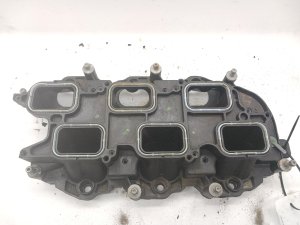

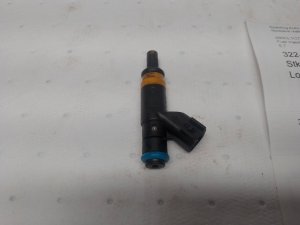
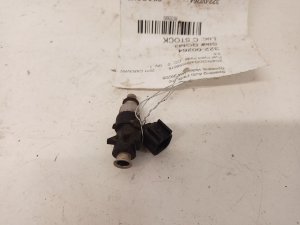


New Aftermarket Parts Available

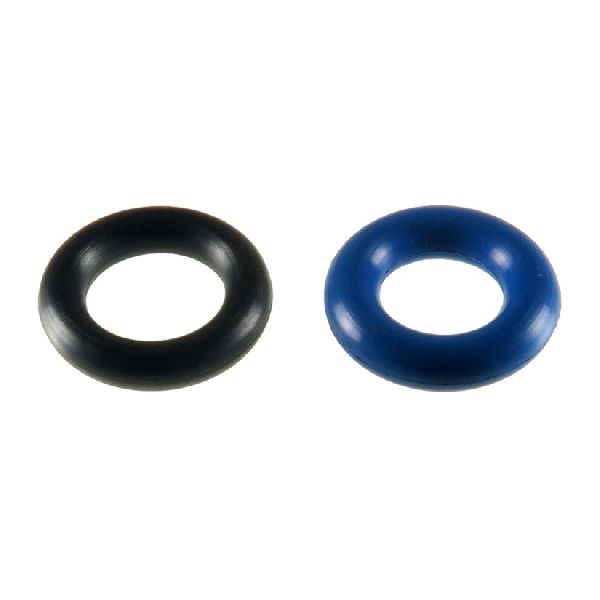

The information in this article is provided for general reference and educational purposes only. Vehicle specifications, procedures, and part compatibility can vary by production date, trim level, and region. Always consult your vehicle's factory service manual and verify part numbers before purchasing or performing repairs. Safety-critical components such as airbags, seat belts, and braking systems should be installed by a qualified professional.
- Chrysler 300:
- 🎬 Helpful Videos
- 🛍️ Shop This Part
- What's Unique About the 2011-2023 Chrysler 300
- Symptoms You May Notice
- Most Likely Causes
- Rare But Worth Checking
- Diagnosis Steps
- Parts You'll Likely Need
- Related Codes That Often Appear With This One
- Technical Service Bulletins (TSBs) & Recalls
- Platform-Specific Known Issues
- Mechanic-Grade Diagnostic Values
- Scan Tool Commands That Help
- Wiring & Ground Locations
- Real Owner Repair Stories
- OEM Part Supersession History
- Model Year Variations Within This Range
- Diagnostic Flowchart
- Other Known Issues on This Vehicle
- Used vs. New Parts: Buying Guide for This Vehicle
- Real Owner Stories
- 2011-2013 Chrysler 300 3.6L Pentastar V6
- 2012 Jeep Grand Cherokee 3.6L V6 — ~125000 miles
- 2014 Jeep Grand Cherokee 3.6L V6
- Related OBD-II Codes
- Frequently Asked Questions
- 🎟️ Get 5% Off