

P0203 on 2003-2012 Saab 9-3: Injector Circuit Malfunction Cylinder 3 Causes and Fixes
On a 2003-2011 Saab 9-3 with the 2.0T engine, code P0203 is most often caused by a failed Engine Control Module (ECM/ECU) due to heat exposure. The Trionic 8 ECM is mounted on the engine, leading to cracked internal solder joints for the injector driver circuits. If swapping the injector to another cylinder doesn't move the fault, the ECM is the likely culprit. A rebuilt ECM costs approximately $200-$400 and is a common, well-documented repair.
- For a 2003-2011 Saab 9-3 2.0T, a P0203 code has a high probability of being a failed Engine Control Module (ECM).
- Always perform the simplest test first: swap the cylinder 3 injector with one from another cylinder. If the code moves, you only need to replace the injector.
- If the code stays on cylinder 3 after the swap, the ECM is the most likely culprit. Do not buy a new ECM; use a specialized service to rebuild your original unit to save money and avoid programming issues.
- While less common, always perform a quick visual inspection of the injector wiring and connector for obvious damage before condemning the expensive ECM.
What's Unique About the 2003-2012 Saab 9-3

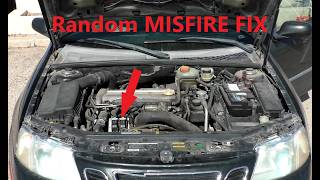
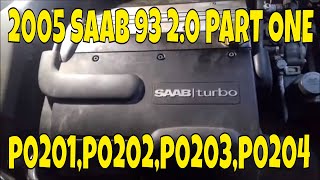
For the 2.0T (B207) engine, used from 2003-2011, the Bosch Trionic 8 (T8) ECM is notoriously prone to failure. It is mounted directly on the engine block, near the exhaust, where constant heat and vibration cause internal solder joints for the injector driver circuits to crack over time. As a result, P0203 (and related codes like P0201, P0202, P0204) is frequently caused by a faulty ECM rather than the injector or wiring itself, a key difference from many other vehicles where the injector is the more common failure point. 🎬 Watch: Why the ECM is usually the culprit for these codes. This failure is so common that multiple companies specialize in repairing these specific ECUs.
Generation note: The 2003-2012 year range covers the entire second generation (YS3F) of the Saab 9-3. This includes the pre-facelift (2003-2006) and post-facelift (2007-2012) models. The primary cause of this code, a failing T8 ECU on the 2.0T engine, is common across all years from 2003-2011. The 2.8T V6 uses a different ECU (Bosch Motronic ME9) which is less prone to this specific failure mode, though still possible.
Symptoms You May Notice
- Check Engine Light is on
- Rough or erratic idle
- Engine misfires, which may feel like shaking or stumbling.
- Noticeable loss of power and poor acceleration.
- Reduced fuel economy
- Engine may be hard to start, or may start and then stall immediately.
- Strong smell of unburnt fuel from the exhaust
- Visible white or black smoke from the exhaust, especially on startup
- Replacing the fuel injector without first swapping it to another cylinder to confirm it is the faulty component. On this Saab, the ECM is a more likely culprit than the injector itself.
- Replacing spark plugs and ignition coils. While these can cause a misfire (P0303), they do not cause an injector circuit code like P0203.
Most Likely Causes

- Failed Engine Control Module (ECM/ECU) 🔴 High Probability The Trionic 8 ECM on 2.0T models is mounted on the hot engine block, leading to heat-soak and vibration that damages internal BGA (Ball Grid Array) solder joints for the main processor and injector driver chips over time. This is a widely documented failure pattern for this specific platform.
How to confirm: After confirming the injector and wiring are good (by swapping the injector to another cylinder and testing the wiring), the ECM becomes the primary suspect. If the P0203 code does not move with the injector, the ECM is very likely the cause. This diagnostic step is consistently cited in owner forums and repair videos as the definitive test.
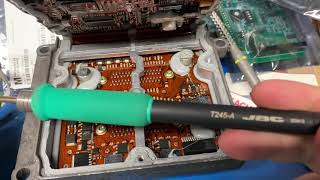
Typical fix: The ECM must be repaired or replaced. Many specialized services (e.g., Nicks Electronics, Your Parts Source) can rebuild the original unit for a fraction of the cost of a new one. This involves removing the processor chips, 'reballing' them with new solder, and re-soldering them to the board. A rebuild also avoids the need for expensive dealer programming (Tech 2) as the vehicle's VIN and key data are preserved.
Est. part cost: $200-$450 for a rebuild service. - Faulty Fuel Injector #3 🟡 Medium Probability
How to confirm: Swap the fuel injector from cylinder 3 with one from another cylinder (e.g., cylinder 2). Clear the codes and drive the vehicle. If the code changes to P0202, the injector is confirmed to be faulty. You can also test the injector's internal resistance with a multimeter; it should be between 12-14 ohms for the 2.0T engine. A reading far outside this range indicates a failed injector.
Typical fix: Replace the faulty fuel injector. It is often recommended to replace all injectors at the same time, especially on high-mileage vehicles, to ensure balanced fuel delivery.
Est. part cost: $40-$100 per injector. - Wiring or Connector Issue ⚪ Low Probability The plastic injector connectors can become brittle and crack from engine heat cycles, leading to poor contact. There is also a known issue where pins in the H42-2 connector, a large harness connector located under the battery box, can lose connection strength or corrode, causing various electrical issues including injector circuit faults.
How to confirm: Visually inspect the wiring harness and the connector for cylinder 3 for any signs of damage, corrosion, or loose pins. Use a noid light to verify that an electrical pulse is being sent to the injector connector. Check for continuity between the ECM connector and the injector connector using a multimeter. Wiggle the harness while the engine is running to see if it induces a misfire.
Typical fix: Repair the damaged section of wire or replace the brittle connector pigtail. Ensure all connections are clean and secure. If the H42-2 connector is at fault, it may need to be disassembled, cleaned, and have its pins re-tensioned or replaced.
Est. part cost: $10-$30 for a connector pigtail.
Rare But Worth Checking
- Failed Injector Driver IC within the ECM: This is the specific component inside the ECM that fails. While the entire ECM is listed as the common cause, some advanced DIYers or repair shops may attempt to replace only the driver chip (TPIC46L02) on the circuit board. This is a complex soldering job and may not be a permanent fix if the main processor's solder joints are also failing.
Diagnosis Steps

- Read the fault codes with an OBD-II scanner to confirm P0203 is present and note any other codes (e.g., P0303, P0201, P0204, P0245).
- Clear the codes and start the engine to see if the code returns immediately. Note any symptoms like rough idle or smoke.
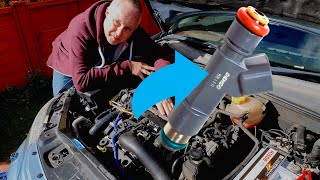
- Locate cylinder 3. On the 2.0T 4-cylinder, cylinders are numbered 1-2-3-4 from the timing chain side (right side of the engine) to the transmission side (left). 🎬 See this walkthrough on how to remove the fuel injectors. On the 2.8T V6, the front bank (radiator side) is cylinders 2-4-6 and the rear bank (firewall side) is 1-3-5.
- Swap the fuel injector from cylinder 3 with the injector from cylinder 2.
- Clear the codes again, drive the vehicle, and re-scan. If the code is now P0202, the fuel injector is bad and must be replaced.
- If the code remains P0203, the problem lies in the wiring or the ECM. Test the injector resistance with a multimeter. A healthy injector should read around 12-14 ohms.
- Disconnect the injector #3 connector and use a 'noid light' to test for a signal pulse while the engine is cranking or running. If the light flashes, the ECM is sending a signal, and the wiring is likely okay.
- If the noid light does not flash, inspect the wiring harness between the ECM and the injector for damage, chafing, or corrosion. Pay close attention to the connector itself and the H42-2 harness connector under the battery tray.
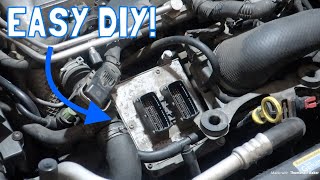
- If the wiring and injector are confirmed to be good, the Engine Control Module (ECM) is the most probable cause of the fault. It should be removed and sent to a specialist for testing and repair. 🎬 Watch: A quick guide to removing and replacing the ECU.
Parts You'll Likely Need
- Engine Control Module (ECM/ECU) Rebuild Service
(OEM #55353231, 55565020, 55567225, 55569738, 55571182, 55574377 (Verify by VIN))— This is the most common failure point for P020x codes on the 2.0T Saab 9-3 due to heat-related damage to internal components.
Trusted brands: Nicks Electronics Repair, Your Parts Source (YPS-USA), SPARTS AB, Maptun
OEM price range: $1000+ for new, plus programming
Aftermarket price range: $200-$450 for a rebuild service - Fuel Injector
(OEM #12790827 (Bosch 0280156096) - for 2.0T B207R)— The injector itself can fail electrically or become clogged, causing the circuit fault.
Trusted brands: Bosch
OEM price range: $80-$150
Aftermarket price range: $40-$100 - Fuel Injector Connector Pigtail — The original plastic connector becomes brittle with age and heat cycles and often breaks during removal.
Trusted brands: Dorman, Standard Motor Products (HP3945), AC Delco (PT2160)
OEM price range: $25-$40
Aftermarket price range: $10-$25
Related Codes That Often Appear With This One
- P0303 — P0303 indicates a misfire on cylinder 3. A faulty injector circuit (P0203) will prevent proper fueling, directly causing a misfire on that cylinder.
- P0201, P0202, P0204 — When the Trionic 8 ECM begins to fail, it's common for multiple injector driver circuits to become faulty at the same time or intermittently, resulting in several P020x codes appearing together.
- P0245 — This code for the turbocharger wastegate solenoid is also controlled by a driver chip in the ECM. It frequently appears alongside the P020x codes when the ECM is failing due to heat damage.
Platform-Specific Known Issues

- The Trionic 8 ECM on 2.0T models is mounted directly to the engine, causing it to fail from heat and vibration. This is the single most important vehicle-specific issue related to code P0203.
Mechanic-Grade Diagnostic Values
- Fuel Injector Coil Resistance (B207 Engine) — expected: 12 Ohms. A range of 12-14 Ohms is generally considered acceptable.. Failure: A reading of infinite resistance (open circuit) or very low resistance (short circuit) indicates a failed injector.
- Injector Connector Voltage (Key On, Engine Off) — expected: Approximately 12V (battery voltage) on the power supply pin (Pin 1).. Failure: Low or no voltage indicates a problem with the power supply from the main relay or a wiring issue upstream of the injector.
- Injector Control Signal (Oscilloscope) — expected: When the ECM commands the injector on, the control wire is pulled to ground. When it switches off, a large inductive voltage spike of 60-80V should be observed.. Failure: Absence of the ground pull or the inductive spike indicates a fault in the ECM driver or the wiring.
- Fuel Pressure at Idle (B207 Engine) — expected: Approximately 42 PSI with the vacuum hose connected to the regulator.. Failure: Significantly lower pressure could indicate a weak fuel pump or a leaking regulator, though this would typically affect all cylinders, not just one.
- Fuel Pressure, Regulator Vacuum Disconnected (B207 Engine) — expected: Pressure should jump to approximately 51-52 PSI.. Failure: If pressure does not rise, the fuel pressure regulator is likely faulty.
Scan Tool Commands That Help
- Tech 2: Fuel Injector Balance Test — This function individually pulses each injector and measures the corresponding drop in fuel rail pressure. It is used to identify an injector that is mechanically sticking or has a different flow rate from the others. If all injectors show a similar pressure drop (within 20 kPa or 3 psi of the average), they are likely functioning correctly.
- Tech 2: Cylinder Power Balance Test — This test deactivates one cylinder at a time by cutting its fuel supply and measures the drop in engine RPM. A cylinder that produces little or no RPM drop when deactivated is not contributing power, pointing to a severe fuel, spark, or compression issue on that cylinder. This can help confirm the misfire is isolated to cylinder 3.
- Tech 2 / T8Suite: Injector Flow Rate Programming — When replacing a fuel injector or the ECM, the 7-digit flow rate adjustment code printed on the new injector must be programmed into the ECM. This ensures the ECM can precisely control the new component for correct fueling.
Wiring & Ground Locations
- ECM Pin B51 — On the larger of the two main connectors for the Trionic 8 ECM, mounted on the engine.. This is the specific pin that the ECM uses to ground and control the fuel injector for cylinder 3. A continuity test should be performed between this pin and Pin 2 at the injector connector to rule out a wiring break.
- Injector #3 Connector — On the fuel rail, connected to the third fuel injector from the right (timing chain side) of the engine.. Pin 1 is the 12V power supply from the main relay. Pin 2 is the control wire (ground signal) from ECM pin B51.
- G7 — On the engine control module's top right attachment lug.. This is a primary ground point for the ECM itself. A poor connection here can cause a variety of erratic engine management faults, including injector circuit codes. Ensure it is clean and tight.
- H42-2 Connector — A large, grey multi-pin connector located in front of the battery on the side of the left structural member.. This is a major harness-to-harness connector. Corrosion or loose pins within this connector are a known cause of intermittent electrical faults, including injector circuit problems. It should be inspected if direct wiring tests are inconclusive.
- G2 — On the side of the left-hand structure strut, near the battery and connector bracket.. This is a main chassis ground point for the battery. While less likely to cause a single injector fault, a poor connection here can lead to widespread electrical issues.
Real Owner Repair Stories
- Kennedy's garage on YouTube (2009 Saab 9-3) — Engine starts and then immediately stalls/cuts out. Fault codes P0202 and P0203 for injector circuit malfunction on cylinders 2 and 3.
❌ Tried (didn't work) Swapped the wiring harnesses between injectors (e.g., put connector #2 on injector #1, and #3 on #4). The fault codes P0202 and P0203 remained, they did not follow the injectors., Performed a wiring integrity test between the ECU and the injectors, which showed no faults.
✅ What actually fixed it The Engine Control Unit (ECU) was replaced. The old ECU showed signs of water damage and had a small hole pierced in the casing. After the new ECU was installed, the car started and ran correctly. - Kyle Panis on YouTube (2007 Saab 9-3 2.0T Convertible) — Loss of power, check engine light, misfiring. Codes P0201, P0202, P0203, P0204 present.
❌ Tried (didn't work) The video directly identifies the ECM as the known culprit, bypassing other diagnostics based on the common failure pattern for these codes on this platform.
✅ What actually fixed it The Trionic 8 ECM was removed and sent to a specialist for a rebuild service (costing approximately $200). This resolved the issue. The video emphasizes this is a very common and straightforward fix that is often misdiagnosed as a more expensive problem.
OEM Part Supersession History
55352571, 55352688, 55353231→55565020, 55567225, 55569738, etc.— Standard part revisions and updates by the manufacturer over the production run.
Heads up: For the purpose of cloning or rebuilding, most Trionic 8 ECMs from 2003-2011 2.0T FWD models are interchangeable. A specialist can copy the original car's software and security data to a compatible donor unit, even if the part numbers don't match exactly. An exception is for XWD (all-wheel-drive) models, which require an ECM from another XWD car.
Model Year Variations Within This Range
- 2007-2011: Some later model year 2.0T engines (B207R) may use a different fuel injector (PN 55559397) with a higher flow rate compared to earlier models. While the P0203 fault is typically electronic, if replacing the injector, it is critical to use the correct part number for the specific engine and year.
- 2003-2012: The 2.8T V6 engine uses a Bosch Motronic ME9 ECU, not the Trionic 8. While an injector circuit fault can still occur, the common heat-related failure of the engine-mounted T8 is not applicable. Diagnosis on a V6 should follow a more traditional path, suspecting the injector or wiring first.
Diagnostic Flowchart
Used vs. New Parts: Buying Guide for This Vehicle
When a used part is the smart pick: A used fuel injector from a low-mileage donor car can be a cost-effective option, but it should be tested for resistance before installation. A used, unrepaired ECM is NOT recommended, as it will likely suffer from the same heat-related defect. A used ECM is only a viable option if it is sent with your original unit to a specialist for 'cloning', where your car's data is transferred to the donor unit.
Donor-vehicle mileage cap: roughly under 80000 miles for the part to have meaningful remaining life.
What to inspect on the donor part:
- For a fuel injector: Check for physical damage, cracks, or corrosion on the body and electrical connector. Ask if the donor car was running well before being dismantled.
- For a donor ECM (for cloning): Verify it is from a compatible model year and drivetrain (FWD vs. XWD). Avoid units with any signs of physical damage, water intrusion, or pierced casings.
OEM-only on this vehicle (don't cheap out):
- Engine Control Module (ECM): While a new OEM unit is expensive, the recommended path is not a typical aftermarket part but a 'rebuild service' for your original OEM unit. This preserves vehicle programming and is a permanent fix for the known design flaw. Avoid unbranded, new aftermarket ECUs.
Aftermarket brands forum-validated for this vehicle:
- Fuel Injector: Bosch is the Original Equipment Manufacturer and is the most recommended brand.
Brands owners have reported issues with on this vehicle:
- Avoid no-name, unbranded fuel injectors and ECMs from online marketplaces, as their quality control and long-term reliability are often poor.
Real Owner Stories
Aggregated from forums and TSBs cited above. Mileages and costs reflect what owners reported in those sources.
2009 Saab 9-3 1.9 diesel
Symptoms: The car would start, sometimes rev up, and then immediately cut out. Fault codes P0202 and P0203 were present.
What fixed it: The owner found the ECU had water damage. Swapping the ECU fixed the problem.
Source hint: youtube_comment from 'Kennedy's garage'
Saab 9-3
Symptoms: The car was in limp mode, would not start, and had multiple fault codes: P0201, P0202, P0203, P0204, and P0300.
What fixed it: Sending the original ECU to 'Your Parts Source' for repair resolved all codes.
Source hint: saabcentral.com: Thread titled 'P0201, P0202, P0203, P0204, P0300, limp mode, no start'
Saab 9-3
Symptoms: The P0203 code remained even after swapping the injector to another cylinder and checking the wiring.
What fixed it: A rebuilt ECU from a specialist was the ultimate fix.
Source hint: saabscene.com: Thread 'P0203 - Injector circuit malfunction cyl 3'
Related OBD-II Codes
Frequently Asked Questions
Why is my 2.0T Saab 9-3 so prone to getting the P0203 code?
I swapped the fuel injector from cylinder 3 to cylinder 2, but the code is still P0203. What's next?
Do I have to go to a dealer and use a Tech 2 scanner to replace the ECM?
What is the correct resistance for a fuel injector on my Saab 9-3 2.0T?
I checked the injector connector, but are there other common wiring problem spots for this code?
Are other cars built on the same platform as the Saab 9-3 known to have this same P0203 issue?
Helpful Videos
We Have This Part in Stock



The information in this article is provided for general reference and educational purposes only. Vehicle specifications, procedures, and part compatibility can vary by production date, trim level, and region. Always consult your vehicle's factory service manual and verify part numbers before purchasing or performing repairs. Safety-critical components such as airbags, seat belts, and braking systems should be installed by a qualified professional.
- Saab 9-3:
- 🎬 Helpful Videos
- 🛍️ Shop This Part
- What's Unique About the 2003-2012 Saab 9-3
- Symptoms You May Notice
- Most Likely Causes
- Rare But Worth Checking
- Diagnosis Steps
- Parts You'll Likely Need
- Related Codes That Often Appear With This One
- Platform-Specific Known Issues
- Mechanic-Grade Diagnostic Values
- Scan Tool Commands That Help
- Wiring & Ground Locations
- Real Owner Repair Stories
- OEM Part Supersession History
- Model Year Variations Within This Range
- Diagnostic Flowchart
- Used vs. New Parts: Buying Guide for This Vehicle
- Real Owner Stories
- 2009 Saab 9-3 1.9 diesel
- Saab 9-3
- Saab 9-3
- Related OBD-II Codes
- Frequently Asked Questions
- 🎟️ Get 5% Off