

P0203 on 2004-2012 Porsche 911: Injector Circuit Malfunction Causes and Fixes
P0203 on a Porsche 911 indicates an electrical fault with the cylinder 3 fuel injector circuit. The most common cause is a failed fuel injector, followed by wiring issues. For 997.1 models (2005-2008), a replacement port injector costs ~$100-$150. For 997.2 models (2009-2012), the Direct Fuel Injection (DFI) injector is more complex and expensive. Diagnosis typically involves swapping injectors between cylinders or measuring injector resistance.
What's Unique About the 2004-2012 Porsche 911
The 2004-2012 Porsche 911 range covers two distinct generations with different fuel systems, which is critical for diagnosing P0203. The 997.1 generation (2005-2008) uses the M97 engine with traditional Port Fuel Injection (PFI). The 997.2 generation (2009-2012) introduced the 9A1 engine with Direct Fuel Injection (DFI). DFI injectors operate at much higher pressures and have different electrical characteristics. Therefore, the parts, diagnostic procedures, and labor costs differ significantly between these two versions. On either generation, cylinder 3 is located on the driver's side of the engine (US models), closest to the cabin.
Generation note: This guide covers the Porsche 911 997.1 (2005-2008) with the M97 port-injected engine and the 997.2 (2009-2012) with the 9A1 direct-injected engine. The causes are similar, but the specific parts (injectors) and replacement procedures are different. DFI injector replacement on the 997.2 is generally more complex and costly.
Symptoms You May Notice
- Check Engine Light is on
- Engine runs rough, especially at idle
- Noticeable engine misfire or hesitation during acceleration
- Reduced engine power and sluggish performance
- Decrease in fuel economy
- A flashing Check Engine Light, indicating a severe misfire that risks catalytic converter damage
- Raw fuel smell from the exhaust due to unburned fuel passing through the cylinder
- Replacing the spark plug or ignition coil for cylinder 3. While these parts can cause a misfire (P0303), they will not cause an injector circuit code (P0203). If you have P0203, the problem is in the fuel injection electrical system. 🎬 See how to access spark plugs and coils without removing bumpers.
Most Likely Causes
- Failed Cylinder 3 Fuel Injector 🔴 High Probability Injectors are electro-mechanical parts that can fail over time. An internal short or open circuit in the injector's solenoid coil is a common failure mode. This can sometimes be intermittent, occurring only when the engine is cold or hot.
How to confirm: Measure the resistance across the injector's two electrical pins with a multimeter. For a 997.1 PFI injector (high impedance), the reading should be around 12-17 Ohms. For a 997.2 DFI injector (low impedance), it should be much lower, around 1.5-2.5 Ohms. A reading of 0 ohms (short) or infinity (open) confirms a bad injector. If resistance is good, swap the cylinder 3 injector with one from another cylinder (e.g., cylinder 1). Clear the codes and drive. If the fault code changes to P0201 (for cylinder 1), the injector is faulty.
Typical fix: Replace the failed fuel injector. It is often recommended to replace all injectors on the same bank (1-3) or all six for balanced performance, especially on higher mileage vehicles. New injector seals are required. 🎬 Watch: This walkthrough shows how to replace 997.1 fuel injectors.
Est. part cost: $100-$180 for a 997.1 PFI injector; $150-$250+ for a 997.2 DFI injector. - Wiring Harness or Connector Issue 🟡 Medium Probability The engine bay is a high-heat environment. Over time, the plastic connectors can become brittle and the wiring insulation can degrade, leading to breaks, shorts, or loose connections right at the connector. The harness can also chafe against engine components.
How to confirm: Visually inspect the wiring harness leading to the cylinder 3 injector for any signs of chafing, melting, or damage. Wiggle the connector and wiring with the engine running to see if it affects the idle. Check that the electrical connector is fully seated and that the pins are clean and not corroded or bent. A 'noid light' can be plugged into the connector to verify the DME is sending a pulse signal. If the light flashes, the wiring and DME are likely okay.
Typical fix: Repair the damaged section of the wiring harness. If the connector is damaged, it may need to be replaced with a new pigtail. Clean corroded terminals with electrical contact cleaner and apply dielectric grease.
Est. part cost: $15-$40 for a connector pigtail.
Rare But Worth Checking
- Failed DME (Engine Computer): This is the least likely cause. The injector driver circuit within the DME can fail, but this should only be considered after definitively ruling out the injector and wiring. A failure here might present with no voltage pulse on the noid light test, even with good wiring continuity.
- Intermittent Open/Short: A user on 6speedonline reported a P0203 that only occurred on cold starts and would resolve itself after the engine warmed up. This points to a component (likely the injector itself or a wiring connection) that is failing at a specific temperature range before making a proper connection.
Diagnosis Steps
- Read the fault codes with an OBD-II scanner to confirm P0203 and note any other codes present, like P0303 or P0267.
- Locate cylinder 3. On a Porsche 911, it is on the driver's side (left side of the car in the US), the cylinder closest to the passenger cabin.
- Visually inspect the wiring and connector for the cylinder 3 fuel injector. Look for obvious damage, chafing, or loose connections. Reseat the connector firmly.
- Disconnect the injector and measure its resistance with a multimeter. For a 997.1 (PFI), expect ~12-17 ohms. For a 997.2 (DFI), expect ~1.5-2.5 ohms. If the reading is out of spec, the injector has failed.
- If resistance is within spec, perform a 'swap test'. Swap the cylinder 3 fuel injector with the cylinder 1 injector (driver's side, rear-most). Clear the codes.
- Drive the vehicle until the Check Engine Light returns. Re-scan the codes.
- If the code is now P0201, the fuel injector you moved is faulty and must be replaced.
- If the code remains P0203, the injector is good, and the problem lies in the wiring or the DME.
- To test the wiring, use a 'noid light'. Disconnect the injector and plug the noid light into the harness connector. Crank the engine. The light should flash, indicating a signal from the DME. If it does not flash, there is a problem with the wiring or the DME itself.
- If the noid light does not flash, use a multimeter to check for continuity on the signal and power wires between the injector connector and the DME connector. Repair any open or shorted wires.
Parts You'll Likely Need
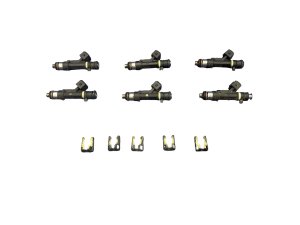
- Fuel Injector (997.1 PFI)
(OEM #99760512300)— This is the most common failure part for a P0203 code on 2005-2008 models. The internal coil fails electrically.
Trusted brands: Bosch
OEM price range: $150-$200
Aftermarket price range: $100-$140 - Fuel Injector (997.2 DFI)
(OEM #9A111012810)— The most common failure part for a P0203 code on 2009-2012 models. DFI injectors are more complex and operate under higher pressure.
Trusted brands: Bosch
OEM price range: $200-$300
Aftermarket price range: $150-$220 - Injector Connector Pigtail — If the plastic connector at the injector is broken or the wires are frayed right at the connector, a replacement pigtail is needed to be spliced into the main harness.
Trusted brands: Bosch EV1 style connector
OEM price range: $25-$40
Aftermarket price range: $15-$25
Related Codes That Often Appear With This One
- P0303 — P0303 means 'Cylinder 3 Misfire Detected'. Since P0203 indicates a fault that prevents the injector from firing correctly, the cylinder will not have proper combustion, leading to a misfire.
- P0300 — This code for 'Random/Multiple Cylinder Misfire' can sometimes accompany P0203 if the single-cylinder misfire is severe enough to disrupt engine timing and cause instability that the DME interprets as misfires on other cylinders.
- P0267 — Stands for 'Cylinder 3 Injector Circuit Low'. This is a more specific version of the P0203 fault, indicating the DME has detected a short to ground in the circuit. A RennTech forum user experienced both codes together, pointing directly to an electrical issue with the #3 injector.
Platform-Specific Known Issues
- On 997 models, accessing the fuel injectors, particularly on the driver's side (Bank 1, cylinders 1-3), is notoriously difficult with the engine in the car. DIY replacement is considered time-consuming and requires patience.
- The wiring harness for the injectors can become brittle from heat cycles, especially the section that bends to meet the injector connector. Breaks in the wire can occur inside the insulation right at the connector, making the damage difficult to see without pulling on the wire.
Mechanic-Grade Diagnostic Values
- 997.1 (PFI) Fuel Injector Resistance — expected: 12 - 17 Ohms. Failure: 0 Ohms (shorted) or infinite resistance/OL (open circuit).
- 997.2 (DFI) Fuel Injector Activation Voltage — expected: Peak of ~75-90 Volts to open, then drops to a lower holding voltage.. Failure: Standard 12V signal. The DME contains an internal DC/DC converter to generate the high voltage; failure to see this high voltage points to a DME driver issue.
- Injector Pulse Width (IPW) at Idle — expected: ~1.5 ms to 5 ms. Failure: 0 ms (no pulse) or an unusually high value at idle.
- Injector Pulse Width (IPW) Under Load — expected: ~6 ms to 10+ ms. Failure: Pulse width does not increase with engine RPM and load.
Hidden / Shadow Codes Worth Checking
- 154: Injector circuit cylinder 3 (see via This is the Porsche-specific fault code that corresponds to the generic P0203, often displayed by Porsche-aware scan tools like Durametric.)
Scan Tool Commands That Help
- PIWIS Tester (Porsche Official): Actual Values / Input Signals -> 'Number of misfires per cylinder' — To confirm if the P0203 circuit fault is causing detectable misfires on cylinder 3, especially in cases where the fault is intermittent. A Porsche service document outlines using this function during a test drive to isolate a faulty injector.
- Advanced Scan Tool (PIWIS, Autel, etc.): Injector Activation / Bidirectional Test — With the engine off, this command allows the technician to manually fire the cylinder 3 injector. Hearing a 'click' confirms the injector solenoid is mechanically functioning and the wiring to it is capable of carrying a signal. No click points directly to a bad injector or an open/short in the wiring.
Wiring & Ground Locations
- Engine-to-Chassis Ground Strap — A braided strap from the engine block to the chassis frame rail. Location varies; some 997s have it on the passenger side (Bank 2), while others report it on the driver's side (Bank 1), sometimes near a turbo bracket or under the fuel rail.. A corroded or loose main engine ground can cause unstable voltage and electrical noise, leading to erratic behavior from sensors and actuators, including the DME's injector drivers. This can trigger false or intermittent circuit codes.
- DME Connector Pin (997.1 M97 w/ ME7.8) — On the Bosch Motronic ME7.8 ECU, the signal wire for the cylinder 3 injector can be found at Pin 15 of the 52-pin Connector III OR Pin 5 of the 88-pin connector, depending on the specific DME version.. This allows a technician to test for continuity and shorts directly from the main ECU connector, definitively isolating the fault between the wiring harness and the DME itself without having to access the injector.
Real Owner Repair Stories
- Volvo Forums user (2000 Volvo S40 (Illustrates a common failure pattern applicable to any vehicle)) — Intermittent P0303 (Cylinder 3 Misfire) and P0203 (Injector Circuit) codes, with a rough run condition that would come and go.
❌ Tried (didn't work) Replaced spark plug on cylinder 3., Replaced ignition coil on cylinder 3., Swapped fuel injectors between cylinders; the problem remained on cylinder 3.
✅ What actually fixed it The wire terminal inside the injector's electrical connector had become loose, causing a poor connection. The fix was to disassemble the plastic connector, repair the loose wire-to-pin connection, and tighten the terminal's grip on the injector pin before reassembly.
OEM Part Supersession History
9A160522000→9A111012810— Likely an internal revision for improved reliability or manufacturing process.
Heads up: The new part number is a direct replacement for the old one on 997.2 DFI engines.
Model Year Variations Within This Range
- 2005-2008 (997.1): Uses the M97 Port Fuel Injected (PFI) engine with a Bosch Motronic ME7.8.x DME. The injectors are high-impedance and are activated by a standard 12V signal.
- 2009-2012 (997.2): Uses the 9A1 Direct Fuel Injected (DFI) engine with a Continental EMS SDI 3.1 DME. This DME has an internal voltage converter to supply a ~75V peak signal to activate the low-impedance DFI injectors, a critical difference for electrical diagnosis.
Diagnostic Flowchart
Used vs. New Parts: Buying Guide for This Vehicle
When a used part is the smart pick: A used wiring harness or connector pigtail can be a cost-effective solution if it is sourced from a low-mileage, non-corroded donor car and inspected for brittleness or damage. For the primary failure part (the fuel injector), used is not recommended.
Donor-vehicle mileage cap: roughly under 60000 miles for the part to have meaningful remaining life.
What to inspect on the donor part:
- For wiring: Check for flexibility; avoid any harness that is stiff or brittle.
- Inspect connectors for cracked plastic, broken locking tabs, or any green/white corrosion on the pins.
- Gently pull on wires entering the back of the connector to ensure they are secure and not broken internally.
OEM-only on this vehicle (don't cheap out):
- Fuel Injector (DFI): Due to the high pressures and precise nature of Direct Fuel Injection, using a new OEM (Porsche) or OEM-supplier (Bosch) injector is critical for performance and reliability. Remanufactured DFI injectors have a mixed reputation.
Aftermarket brands forum-validated for this vehicle:
- Bosch: As the original equipment manufacturer for the injectors, Bosch-branded parts are equivalent to Genuine Porsche parts.
Brands owners have reported issues with on this vehicle:
- Unnamed, no-brand injectors from online marketplaces. Fuel injectors are precise components, and cheap knock-offs often have poor spray patterns, incorrect flow rates, or high failure rates, leading to persistent running issues.
Real Owner Stories
Aggregated from forums and TSBs cited above. Mileages and costs reflect what owners reported in those sources.
Porsche 911 (Turbo/GT2 forum)
Symptoms: The car ran on five cylinders only during cold starts, triggering fault codes P0203, P0300, and P0303. The problem would disappear and the car would run fine after the engine warmed up.
What fixed it: The owner did not post a final resolution, but forum members suggested the cause was likely a bad injector or a loose electrical connector, consistent with a temperature-sensitive electrical fault.
Source hint: 6SpeedOnline thread titled 'P0203 Porsche Fault Code 154 - Injector circ. cyl. 3'
2008 Porsche 911 Carrera 3.6L — 45000 miles
Symptoms: The owner experienced an engine shutdown with smoke from the exhaust, accompanied by multiple codes including P0203, P0267 (Injector Circuit Low), P0300, and P0303.
What fixed it: The owner reported that the issue was resolved by fixing a vacuum pump line, which is an unusual solution for a specific injector electrical fault code.
Source hint: RennTech.org forum discussion
Related OBD-II Codes
Frequently Asked Questions
Where is cylinder 3 located on my 2004-2012 Porsche 911?
Is it difficult to replace the cylinder 3 fuel injector myself on my 997?
What is the correct resistance for the fuel injector on my 2008 911 Carrera (997.1)?
I have a 2010 911 Carrera (997.2). Is the injector resistance different?
My Check Engine Light is flashing. What does this mean?
What is a 'swap test' and how does it help diagnose P0203?
How can I test the wiring if the injector's resistance is good?
Helpful Videos


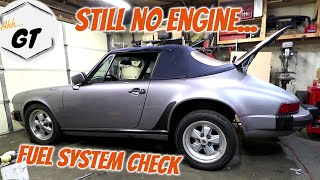
![3.2L Porsche 911 Cabriolet: Fuel injector test/clean, engine assembly and startup [4K] Ep107](https://img.youtube.com/vi/nT--gtwkwco/mqdefault.jpg)
Used OEM Parts in Stock
New Aftermarket Parts Available


The information in this article is provided for general reference and educational purposes only. Vehicle specifications, procedures, and part compatibility can vary by production date, trim level, and region. Always consult your vehicle's factory service manual and verify part numbers before purchasing or performing repairs. Safety-critical components such as airbags, seat belts, and braking systems should be installed by a qualified professional.
- Porsche 911:
- 🎬 Helpful Videos
- 🛍️ Shop This Part
- What's Unique About the 2004-2012 Porsche 911
- Symptoms You May Notice
- Most Likely Causes
- Rare But Worth Checking
- Diagnosis Steps
- Parts You'll Likely Need
- Related Codes That Often Appear With This One
- Platform-Specific Known Issues
- Mechanic-Grade Diagnostic Values
- Hidden / Shadow Codes Worth Checking
- Scan Tool Commands That Help
- Wiring & Ground Locations
- Real Owner Repair Stories
- OEM Part Supersession History
- Model Year Variations Within This Range
- Diagnostic Flowchart
- Used vs. New Parts: Buying Guide for This Vehicle
- Real Owner Stories
- Porsche 911 (Turbo/GT2 forum)
- 2008 Porsche 911 Carrera 3.6L — 45000 miles
- Related OBD-II Codes
- Frequently Asked Questions
- 🎟️ Get 5% Off