

P0203 on 2005-2010 Pontiac G6 3.5L: Injector Circuit Malfunction Causes and Fixes
P0203 on a Pontiac G6 3.5L indicates an electrical problem with the cylinder 3 fuel injector circuit. The most common cause is a failed fuel injector, followed by wiring issues. Expect to pay $40-$80 for an aftermarket injector and around $150 for an OEM part. Diagnosis involves checking the injector, its connector, and wiring.
- P0203 points specifically to an electrical problem in the cylinder 3 injector circuit, not a general misfire.
- The most likely culprit is the fuel injector itself having failed internally.
- Before buying parts, test the injector's resistance with a multimeter (spec is 11-14 Ohms) and check for a pulse signal at the connector with a noid light.
- Cylinder 3 is on the rear bank of the engine (closest to the firewall), in the middle position.
- If replacing the injector, also inspect the connector pigtail for damage, as it's a common secondary failure point.
What's Unique About the 2005-2010 Pontiac G6
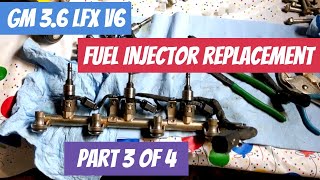
The Pontiac G6 shares its 3.5L V6 engine and Epsilon platform with other GM vehicles like the Chevrolet Malibu and Saturn Aura. For this engine, a P0203 code is a straightforward electrical fault. There are no widespread, unique design flaws that make the G6 unusually prone to this specific code compared to its platform mates. Diagnosis is standard, focusing on the injector, its connector, and the wiring harness leading back to the ECM. A known weak point on these vehicles is ground connections, particularly G105 and G106 on the transmission, which can cause various electrical issues, including injector circuit faults. The most challenging part of the repair is accessing the rear bank of cylinders 🎬 See this walkthrough for accessing and replacing V6 fuel injectors. where cylinder #3 is located.
Symptoms You May Notice
- Check Engine Light is on
- Rough idle or engine shaking
- Engine misfire, which may feel like a jerking or stumbling during acceleration
- Reduced engine power and sluggish performance
- Poor fuel economy
- Smell of unburnt fuel from the exhaust
- Engine may be hard to start
- Replacing the spark plug or ignition coil for cylinder 3. While these can cause a misfire (P0303), they will not cause a P0203 injector circuit code.
Most Likely Causes
- Failed Cylinder 3 Fuel Injector 🔴 High Probability Fuel injectors are wear-and-tear components that can fail electrically over time due to heat cycles and mileage. The internal coil winding can develop an open or short circuit.
How to confirm: Disconnect the injector and measure its resistance with a multimeter set to Ohms. The resistance for a cold engine should be between 11 and 14 Ohms. A remanufactured OEM Delphi injector for this engine is specified at 12.8 Ohms. If the reading is significantly outside this range or shows 'OL' (Open Loop), the injector is bad. You can also compare the resistance of injector #3 to a known good injector on another cylinder.
Typical fix: Replace the cylinder 3 fuel injector. It is often recommended to replace the full set if the vehicle has high mileage and the others are original.
Est. part cost: $40-$150 - Damaged Wiring or Connector 🟡 Medium Probability The engine wiring harness is exposed to high temperatures and vibration, which can cause wires to become brittle, frayed, or shorted over time. The plastic connector itself can also become corroded, loose, or the locking tab can break, leading to a poor connection.
How to confirm: Visually inspect the wiring harness and connector for cylinder 3 for any signs of damage, melting, or corrosion. Use a noid light to test for a pulse signal at the injector connector while the engine is running. 🎬 Watch: A step-by-step guide to diagnosing injector circuit malfunctions. If the noid light doesn't flash, there is a problem in the wiring or the ECM. Wiggle the harness while testing to check for intermittent opens or shorts.
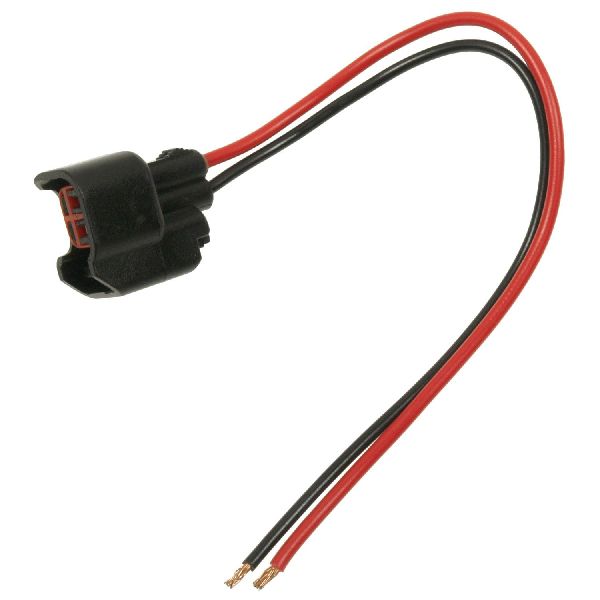
Typical fix: Repair the damaged section of wire or replace the injector pigtail connector. A common part is the Dorman 85137.
Est. part cost: $10-$30
Rare But Worth Checking
- Faulty Engine Control Module (ECM): This is the least likely cause. The internal driver circuit in the ECM that controls the injector can fail. This should only be considered after thoroughly testing the injector and wiring and confirming they are both good. Swapping the ECM requires programming to the vehicle's VIN.
Diagnosis Steps
- Read the trouble codes with an OBD-II scanner to confirm P0203 and note any other codes present, like P0303.
- Locate cylinder 3 on the 3.5L V6 engine. On this transverse-mounted engine, the cylinders are arranged with the even numbers (2, 4, 6) on the front bank (near the radiator) and the odd numbers (1, 3, 5) on the rear bank (near the firewall). Cylinder 3 is the middle cylinder on the rear bank.
- Visually inspect the fuel injector connector and nearby wiring for any obvious signs of damage, such as frayed wires, melting, or corrosion.
- Disconnect the electrical connector from the cylinder 3 injector. Accessing the rear bank may require removing the upper intake manifold or plenum.
- Use a noid light to test for a signal. Plug the noid light into the connector, start or crank the engine, and check if the light flashes. A steady flashing light indicates the ECM and wiring are sending a pulse. No light or a steady-on light points to a wiring or ECM issue.
- If the noid light test passes, test the injector itself. Set a multimeter to Ohms and measure the resistance across the two pins on the fuel injector. It should be between 11-14 Ohms. A reading far outside this range (e.g., infinity/OL for an open, or near zero for a short) means the injector has failed.
- As a practical test, you can swap the cylinder 3 injector with another easily accessible injector (e.g., cylinder 2). Clear the codes and run the engine. If the code changes to P0202, the injector is confirmed to be faulty. If P0203 returns, the problem is in the wiring or ECM.
- If the noid light test fails, check for 12V power at the connector with the key on, engine off. One wire (typically pink/black) should have constant power from the fuse block. If power is missing, check the fuse for the fuel injectors (often labeled INJ or F/INJ). For a 2006 G6, this may be the 10A 'INJ' fuse 44 in the underhood fuse block.
- If power is present but the noid light doesn't flash, check the continuity of the ground-side wire (the control wire) between the injector connector and the ECM connector. If the wire is good, the ECM's injector driver is the likely culprit.
Parts You'll Likely Need
- Fuel Injector
(OEM #12592648)— This is the most common component to fail for a P0203 code, either due to an internal short or open circuit in its coil.
Trusted brands: ACDelco (OEM), Delphi, Bosch, Standard Motor Products
OEM price range: $90-$160
Aftermarket price range: $40-$80 - Fuel Injector Connector Pigtail — The plastic connector and its locking tab can become brittle and break, or the wires can fray right at the connector, causing an intermittent open circuit.
Trusted brands: Dorman, Standard Motor Products (SMP)
OEM price range: $20-$40
Aftermarket price range: $10-$25
Related Codes That Often Appear With This One
- P0303 — P0303 means "Cylinder 3 Misfire Detected." A faulty injector circuit (P0203) prevents fuel from being delivered to cylinder 3, which directly causes a misfire.
- P0200 — P0200 is a general "Injector Circuit Malfunction" code. It can sometimes appear alongside a specific cylinder code like P0203 if there is an intermittent or widespread issue.
- P0201, P0202, P0204, P0205, P0206 — If multiple injector circuit codes are present simultaneously, it strongly suggests a wiring harness issue (like a bad ground or power feed) or a failing ECM, rather than multiple individual injector failures.
Mechanic-Grade Diagnostic Values
- Fuel Injector Resistance — expected: 11-14 Ohms (a known remanufactured OEM injector specifies 12.8 Ohms). Failure: Reading of 'OL' (Open Loop) or near zero indicates a failed injector.
- Injector Pulse Width at Idle — expected: 2.0 - 4.0 milliseconds (ms). Failure: A missing, erratic, or flat-lined pulse width reading for cylinder 3 on a scan tool's live data.
- Injector Circuit Voltage Drop — expected: Less than 0.5 Volts. Failure: A voltage drop greater than 0.5V across the injector circuit suggests high resistance in the wiring or connectors.
- Injector Power Supply Voltage — expected: ~12V (Battery Voltage) with Key On, Engine Off. Failure: Significantly less than battery voltage on the power feed wire at the injector connector indicates a problem with the fuse or supply wiring.
Scan Tool Commands That Help
- Tech 2 / GDS2: Injector Balance Test — This test helps determine if an injector is mechanically clogged or flowing differently from others, though it's less direct for a pure electrical fault like P0203. The scan tool commands each injector to fire for a specific duration while monitoring the drop in fuel rail pressure. An inconsistent pressure drop for cylinder 3 compared to others could point to a combined electrical and mechanical issue. The test requires a physical fuel pressure gauge connected to the fuel rail.
Wiring & Ground Locations
- G105 — On the left rear side of the engine compartment, on an engine-to-transmission stud, below the upper coolant hose.. This is a critical ground point shared by the ECM, TCM, and other sensors. Corrosion or looseness here can create voltage offsets and intermittent signals, potentially tricking the ECM into flagging a circuit fault.
- G106 — On the front of the engine, at a transmission stud, near the Park/Neutral Position (PNP) switch.. This is another primary ground for the ECM and TCM. A poor connection at this stud is a known issue on the G6 platform and can cause a wide range of difficult-to-diagnose electrical problems, including injector circuit codes.
- Injector #3 Control Wire — Runs from the Cylinder 3 fuel injector connector to the ECM connector.. This is the specific wire the ECM uses to ground-switch the injector. A continuity test from the injector connector pin to the corresponding pin at the ECM connector is essential if a noid light test fails but power is present. An open or short in this wire is a direct cause of P0203.
- Underhood Fuse Block — In the left side of the engine compartment, in front of the battery.. This block contains the fuse and relay for the fuel injectors. For a 2006 model, this could be the 10A 'INJ' fuse at position 44, which supplies power to the injector circuit.
Real Owner Repair Stories
- YouTube channel 'Steve's Auto Care Videos' (2006 Pontiac G6 3.5L) — Misfire on cylinder #2, with a P0202 (Injector Circuit Fault) code.
❌ Tried (didn't work) Confirmed injector wiring from the main harness connector to the injector was good via an ohms test., Confirmed the injector itself was electrically sound with correct resistance.
✅ What actually fixed it The Engine Control Module (ECM) was faulty and was not sending the ground pulse to fire the injector for cylinder 2. Replacing and reprogramming the ECM resolved the misfire and the code.
OEM Part Supersession History
12586557→12592648— Part consolidation and potential design updates by the manufacturer.
Heads up: The earlier LX9 engine (2005-2006) may have used injector 12586557. The later LZ4/LZE engine (2007-2010) primarily uses 12592648. While they might be physically interchangeable, flow rates and spray patterns could differ. It is critical to use the correct injector for the specific engine variant.
Model Year Variations Within This Range
- 2005-2006: These model years used the 3.5L V6 LX9 engine, which does not have Variable Valve Timing (VVT). They may use an earlier fuel injector part number (e.g., 12586557).
- 2007-2010: These model years switched to the updated 3.5L V6 LZ4 engine (and LZE for FlexFuel), which added VVT. These engines use the later fuel injector part number (12592648). The wiring for the ECM and some sensors may also differ slightly from the earlier LX9-equipped models.
Diagnostic Flowchart
Other Known Issues on This Vehicle
Issues unrelated to this code that are worth knowing about as an owner of this generation:
- Electric Power Steering (EPS) Failure 🔴 High — Very common, especially on 2005-2007 models. Can result in a sudden loss of steering assist. (Ref: Multiple Recalls: 14V153000 (N140115), 15V064000 (14772).)
- 4T45-E Automatic Transmission Problems 🔴 High — Commonly reported issues include hard shifting, no forward gears (but reverse works), and shift solenoid failure. Average lifespan is often cited as 130,000-180,000 miles. (Ref: Recall 12V460000 for fractured shift cable tabs.)
- Body Control Module (BCM) Electrical Issues 🟠 Medium — Can cause numerous electrical gremlins, including faulty brake lights, turn signals, and other random electrical behavior. Often related to poor connections at the BCM. (Ref: Recall 14V252000 for BCM voltage fluctuations affecting brake lights.)
- Timing Cover Gasket / Coolant Crossover Gasket Leaks 🟠 Medium — The 3.5L V6 is known for developing oil leaks from the timing cover gasket and coolant leaks from the coolant crossover pipe gaskets located under the intake manifold.
- Ignition Switch Failure 🔴 High — Part of the massive GM ignition switch recall. The switch can move out of the 'Run' position, shutting off the engine and disabling airbags. (Ref: Part of the broader GM ignition switch recall saga (e.g., 14V047000, though G6 was often handled under customer satisfaction programs).)
Used vs. New Parts: Buying Guide for This Vehicle
When a used part is the smart pick: Used parts from a junkyard are generally not recommended for electronic fuel system components like injectors due to unknown history and risk of clogging or electrical failure. However, a used wiring harness or ECM could be a cost-effective option if the donor vehicle has low mileage and shows no signs of flood or fire damage.
Donor-vehicle mileage cap: roughly under 80000 miles for the part to have meaningful remaining life.
What to inspect on the donor part:
- For wiring: Check for any signs of brittleness, melting, or previous repairs (e.g., splices with electrical tape). Ensure all connector locking tabs are intact.
- For an ECM: Inspect the connectors for corrosion or bent pins. Try to get history on the donor car to ensure it wasn't junked for an electrical issue.
- For injectors: Avoid used injectors. If you must, only consider a set from a running, low-mileage engine with no fuel-related codes.
OEM-only on this vehicle (don't cheap out):
- Engine Control Module (ECM) - While aftermarket/rebuilt units exist, an OEM unit (new or from a dealer) ensures correct software and compatibility, though it will require VIN programming.
Aftermarket brands forum-validated for this vehicle:
- Delphi: Delphi was an OEM supplier for many GM components, and their aftermarket parts are generally considered high quality and a safe alternative to ACDelco.
- Bosch: A reputable manufacturer of fuel system components.
- Standard Motor Products (SMP): A well-regarded aftermarket supplier for connectors and sensors.
Brands owners have reported issues with on this vehicle:
- Unbranded, no-name injectors from online marketplaces should be avoided. They often have inconsistent flow rates and high failure rates, leading to performance issues and recurring codes.
Real Owner Stories
Aggregated from forums and TSBs cited above. Mileages and costs reflect what owners reported in those sources.
2009 Pontiac G6 3.5L V6
Symptoms: Burning smell and oil leak from the timing cover gasket area.
What fixed it: The source discusses the timing cover gasket leak as a common issue that can saturate nearby wiring harnesses, though the specific P0203 fix is typically injector or wiring repair.
Source hint: Car Talk Community - 2009 Pontiac G6 Burning Smell/oil leak/Timing Cover Gasket Leak
Related OBD-II Codes
Frequently Asked Questions
Where is cylinder 3 located on my 2005-2010 Pontiac G6 3.5L V6?
What is the correct resistance for a replacement fuel injector for the LZ4/LZE engine?
Is there a specific wiring connector part number if my cylinder 3 injector plug is damaged?
Could an oil leak be causing my P0203 injector circuit code?
Which fuse should I check if my fuel injectors aren't getting power?
Does the P0203 code on my G6 share parts or diagnostic steps with the Chevy Malibu?
Helpful Videos

Used OEM Parts in Stock


New Aftermarket Parts Available


The information in this article is provided for general reference and educational purposes only. Vehicle specifications, procedures, and part compatibility can vary by production date, trim level, and region. Always consult your vehicle's factory service manual and verify part numbers before purchasing or performing repairs. Safety-critical components such as airbags, seat belts, and braking systems should be installed by a qualified professional.
- Pontiac G6:
- 🎬 Helpful Videos
- 🛍️ Shop This Part
- What's Unique About the 2005-2010 Pontiac G6
- Symptoms You May Notice
- Most Likely Causes
- Rare But Worth Checking
- Diagnosis Steps
- Parts You'll Likely Need
- Related Codes That Often Appear With This One
- Mechanic-Grade Diagnostic Values
- Scan Tool Commands That Help
- Wiring & Ground Locations
- Real Owner Repair Stories
- OEM Part Supersession History
- Model Year Variations Within This Range
- Diagnostic Flowchart
- Other Known Issues on This Vehicle
- Used vs. New Parts: Buying Guide for This Vehicle
- Real Owner Stories
- 2009 Pontiac G6 3.5L V6
- Related OBD-II Codes
- Frequently Asked Questions
- 🎟️ Get 5% Off