

P0203 on 2005-2014 Ford Mustang: Injector Circuit Malfunction Causes and Fixes
Code P0203 on a 2005-2014 Mustang indicates an electrical fault with the cylinder 3 fuel injector. The most common causes are a failed fuel injector or a damaged wiring connector. Expect to pay $40-$110 for a new injector and replace it yourself in about 1-2 hours.
- P0203 is an electrical circuit code for the cylinder 3 fuel injector.
- Before buying parts, test the injector with a multimeter and the circuit with a noid light.
- The most likely fix is replacing the cylinder 3 fuel injector.
- Correctly identifying cylinder 3 is crucial: for V6 engines, it's at the back on the passenger side; for V8s, it's the third from the front on the passenger side.
- Driving with a flashing check engine light can cause expensive catalytic converter damage.
What's Unique About the 2005-2014 Ford Mustang
On the S197 Mustang platform, the P0203 code is a straightforward electrical fault without unique platform-specific quirks. However, locating cylinder 3 is critical and differs by engine. For V6 models (4.0L, 3.7L), it's the rearmost cylinder on the passenger side. For V8s (4.6L, 5.0L), it's the third cylinder from the front on the passenger side. The most common failures are consistent with many vehicles of this era: either the injector itself fails electrically or the wiring harness connector becomes damaged from heat and vibration. The injector connectors (USCAR/EV6 type on later models) can become brittle and the locking tabs can break, leading to a poor connection.
Generation note: While the 2005-2014 model years all fall under the fifth generation (S197) Mustang, this period includes a major refresh in 2010 and several different engines. The diagnostic process is the same, but the location of cylinder #3 and the specific part numbers for the fuel injector will vary. - 2005-2010 V6: 4.0L SOHC V6. Cylinder 3 is the rearmost cylinder on the passenger side. - 2005-2010 GT V8: 4.6L 3V SOHC V8. Cylinder 3 is the third cylinder from the front on the passenger side. These injectors typically have a resistance of 11-18 ohms. - 2011-2014 V6: 3.7L DOHC V6. Cylinder 3 is the rearmost cylinder on the passenger side. - 2011-2014 GT V8: 5.0L DOHC 'Coyote' V8. Cylinder 3 is the third cylinder from the front on the passenger side. These are typically high-impedance Bosch EV14 style injectors with a resistance of around 12.0-12.4 ohms.
Symptoms You May Notice
- Check Engine Light is on or flashing
- Rough, vibrating, or shaky idle
- Engine misfire, which may feel like a hesitation or stumble during acceleration
- Noticeable loss of engine power
- Reduced fuel economy
- Engine may be difficult to start
- Raw fuel smell from the exhaust
- Overheat warning lights may occasionally trigger during driving, as noted in NHTSA ODI #11351494.
- Replacing the spark plug or ignition coil for cylinder 3. While these parts can cause a misfire (P0303), the P0203 code specifically points to an electrical fault in the injector circuit, not an ignition problem. Always diagnose the specific code you have.
Most Likely Causes
- Failed Cylinder 3 Fuel Injector 🔴 High Probability Fuel injectors contain an internal wire coil that can break (open circuit) or short out over time due to age and millions of heat cycles, causing an electrical failure. This is the most frequent cause for a P020x code.
How to confirm: Disconnect the injector and measure its resistance with a multimeter. It should be within a specific range, typically 11-18 ohms for these engines. A reading of infinity (OL) indicates an open circuit, while near-zero ohms means a short. The most definitive test is to swap the injector with an adjacent one (e.g., cylinder 2), clear the codes, and see if the trouble code follows to the new cylinder (e.g., P0202).
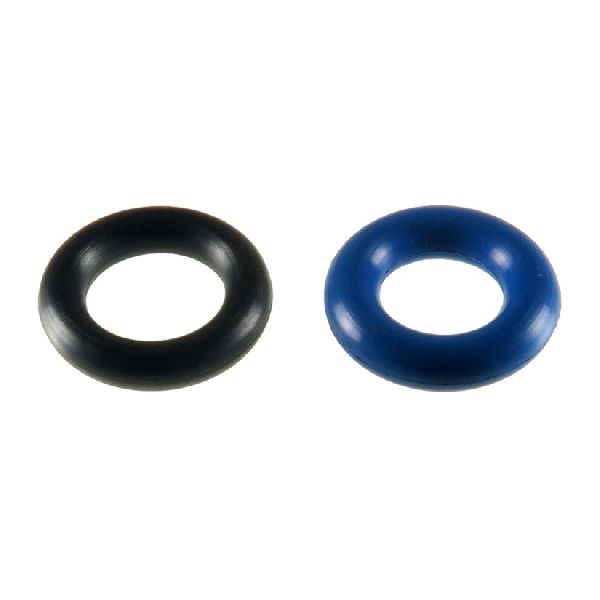
Typical fix: Replace the faulty fuel injector. It is highly recommended to replace the O-rings for any injectors that are removed to prevent fuel leaks.
Est. part cost: $40-$110 - Damaged Injector Wiring or Connector 🟡 Medium Probability The engine wiring harness is exposed to constant heat and vibration, which can make wires brittle and cause the plastic connector to become fragile or loose. The locking tab on the connector can break, leading to a poor connection that can trigger the code intermittently.
How to confirm: Visually inspect the wiring going to the cylinder 3 injector for any signs of melting, chafing, or breaks. Wiggle the connector while the engine is running to see if it causes a change in the idle. Use a noid light to confirm if an electrical pulse is reaching the connector. If the noid light flashes, the wiring is likely good.
Typical fix: Repair the broken wire or replace the injector pigtail connector. 🎬 See this walkthrough for fixing Ford fuel injector circuit codes The common Motorcraft pigtail for this repair is part number WPT-105 (Ford P/N 1U2Z-14S411-DA).
Est. part cost: $10-$30
Rare But Worth Checking
- Faulty Powertrain Control Module (PCM): This is the least likely cause. The internal driver circuit in the PCM that controls the injector can fail. This should only be considered after the injector and wiring have been thoroughly tested and confirmed to be good. Some companies offer a repair service for the PCM specifically for failed injector driver circuits.
Technical Service Bulletins (TSBs) & Recalls
While not specific to the Mustang, manufacturer service bulletin #SSM 49759 notes that an illuminated MIL with codes P0201 through P0206 may occur on other Ford models, advising technicians to follow specific Pinpoint Tests in the Powertrain Control/Emissions Diagnosis Manual (PC/ED) for these DTCs.
Diagnosis Steps
- Identify Cylinder 3: First, correctly locate cylinder 3 for your specific engine (V6 or V8) using the guide in the 'Generation Notes' section.
- Visual Inspection: Carefully inspect the electrical connector and wiring harness going to the cylinder 3 fuel injector. Look for any obvious signs of damage, such as melted plastic, chafed wires against the fuel rail or intake manifold, or corrosion on the connector pins.
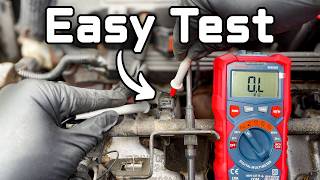
- Test the Injector Resistance: Disconnect the electrical connector. Set a multimeter to the 200 ohms (Ω) setting. 🎬 Watch: How to test fuel injectors with a multimeter Measure the resistance between the two pins on the injector. For most of these engines, a good injector will read between 11 and 18 ohms. Specifically for the 5.0L Coyote, expect around 12.0-12.4 ohms. A reading of 'OL' (open) or near zero (short) confirms a bad injector.
- Test the Circuit with a Noid Light: Plug a noid light into the injector's electrical connector. Crank or start the engine. The noid light should flash steadily, indicating the PCM is sending a signal. If it flashes, the wiring and PCM are likely okay, pointing to a bad injector. If it does not flash, or is very dim, the problem is in the wiring or the PCM.
- Swap the Injector: If you don't have a multimeter or noid light, a reliable technique is to swap the cylinder 3 injector with one from an adjacent cylinder (like cylinder 2). Clear the codes, run the engine, and re-scan. If the code changes to P0202, you have confirmed the fuel injector is the faulty part. If P0203 returns, the problem is in the wiring or PCM.
- Check for Power and Ground: If the noid light did not flash, use a multimeter to check the circuit. One wire on the connector should have constant battery voltage (around 12V) with the key on. The other wire is the ground-side, which the PCM pulses to fire the injector. Check for continuity to ground on the control wire back at the PCM connector if you have a wiring diagram.
- Final Diagnosis: If the injector tests good but the circuit does not have a proper signal, and power is present, the wiring between the injector and the PCM is likely damaged, or the PCM itself has failed. Tracing the specific wire for a break or short is the next step, which may require a professional.
Parts You'll Likely Need
- Fuel Injector (Cylinder 3)
(OEM #BR3Z-9F593-A (5.0L V8), CM5187 (5.0L V8), W0133-1914164 (4.6L V8) - Varies by Engine)— This is the most common cause of a P0203 code, where the injector's internal coil has failed electrically.
Trusted brands: Motorcraft, Bosch, Denso
OEM price range: $60-$110
Aftermarket price range: $40-$75 - Fuel Injector Connector Pigtail
(OEM #WPT-105 (Ford P/N: 1U2Z-14S411-DA))— If the wiring or plastic connector at the injector is damaged from heat and vibration, replacing the pigtail is the standard repair.
Trusted brands: Motorcraft, Dorman
OEM price range: $25-$45
Aftermarket price range: $10-$25
Related Codes That Often Appear With This One
- P0303 — P0303 means "Cylinder 3 Misfire Detected." Since the P0203 fault prevents the injector from delivering fuel, cylinder 3 cannot fire properly, which the PCM detects as a misfire. This is the most common code to appear alongside P0203.
- P0200 — P0200 means "Injector Circuit Malfunction." This is a more general code that may appear alongside P0203 if there is a wider issue affecting the injector circuits, such as a power supply problem or a ground issue common to multiple injectors.
- P0300 — P0300 means "Random/Multiple Cylinder Misfire Detected." If the wiring issue is intermittent or affects a shared power/ground, it could cause misfires on other cylinders as well, leading to a P0300 code.
Mechanic-Grade Diagnostic Values
- Injector Pulse Width at Idle (5.0L Coyote) — expected: ~1.5 - 3.5 ms. Failure: A value of 0 ms or an erratic, unstable reading on cylinder 3 while other cylinders are stable. A value significantly higher or lower than other cylinders can also indicate a problem.
- Injector Control Wire Voltage (Key On, Engine Off) — expected: ~12V (Battery Voltage). Failure: Significantly lower voltage or 0V. With the key on, the PCM supplies power through the injector coil to the driver circuit. The driver side wire should read near battery voltage until the PCM grounds it to fire the injector.
- Injector Control Wire at PCM Connector (Cranking) — expected: Pulsing ground signal (visible on oscilloscope or as flashing on a noid light). Failure: No pulse, or a constant ground. This tests the entire wire from the PCM to the injector.
Scan Tool Commands That Help
- Ford IDS (Integrated Diagnostic System) or equivalent high-end scanner: Power Balance Test — This is a critical first step for a suspected misfire. It graphically displays the power contribution of each cylinder in real-time. A P0203 should show a significant power drop on cylinder 3. Wiggling the injector connector while watching this graph can instantly confirm a bad connection if the cylinder's contribution returns intermittently.
- Ford IDS or capable bidirectional scanner: Injector Buzz Test / Actuator Activation — With the engine off, this command sends a signal to each injector, causing it to make an audible 'click' or 'buzz'. If cylinder 3 is silent while others click, it confirms the fault is isolated to that injector or its circuit. This helps differentiate a mechanical injector failure from a wiring issue without removing parts.
Wiring & Ground Locations
- Cylinder 3 Injector Control Wire at PCM — For the 2011-2014 5.0L V8, the Cylinder 3 injector driver wire is located at Pin 2 on PCM connector C1381E. The wire color is typically Gray/Brown (GY-BN).. This is the specific pin to test at the PCM for continuity to the injector connector. If there is no continuity, there is a break in the wire. If the wire is good but a noid light doesn't flash at the injector, this pin can be tested for a signal directly from the PCM, isolating the fault to either the wiring or the PCM itself.
- G104 - Main Engine Harness Ground — On the S197 platform, a critical ground point, G104, is located on the left (driver's side) front fender apron, often behind the battery.. This ground is a primary grounding point for the PCM and sections of the engine harness. A corroded or loose connection here can cause numerous, difficult-to-diagnose electrical issues, including erratic injector behavior or PCM faults.
- Injector Harness Ground — The fuel injector wiring harness often has its own ground, typically an orange wire with a ring terminal, bolted to the back of the lower intake manifold or cylinder head.. While the injectors are controlled on the ground side by the PCM, the entire circuit relies on solid power and ground references. A faulty injector harness ground can introduce electrical noise or voltage drops that could affect injector performance across a bank of cylinders.
Real Owner Repair Stories
- Mustang6G.com forum user (2017 Ford Mustang GT (S550, but relevant principle)) — Car ran fine at low speeds, but started running rough with a check engine light in higher gears on the highway. Codes for cylinder 4 and 7 misfire appeared.
❌ Tried (didn't work) Initial diagnosis pointed to misfires without a clear cause.
✅ What actually fixed it The issue occurred after installing aftermarket long tube headers. The O2 sensor extensions were loose. Heat expansion caused them to back out, creating an exhaust leak and incorrect readings that led the PCM to command improper fueling, resulting in misfires. Tightening the O2 sensors resolved the issue. In another similar case, the header tube was vibrating against a motor mount bolt, which can cause false knock readings. - Ford Truck Enthusiasts forum user (Ford Van with 5.4L V8 (similar engine family)) — Check Engine Light with code P0203. Engine ran fine with no noticeable power loss.
❌ Tried (didn't work) Replacing the fuel injector twice did not resolve the code. The wiring was also tested and appeared to be good.
✅ What actually fixed it The user was advised to trace the wiring circuit from the injector connector all the way back to the corresponding pin on the PCM connector. The final resolution was not posted, but the strong implication after multiple part swaps failed was a fault in the wiring harness that wasn't visually obvious, or a failing PCM injector driver.
Documented NHTSA Reports
- An owner reported in NHTSA ODI #11351494 experiencing a misfire on cylinder 3 with code P0203 at 75,000 miles, noting that an overheat warning light would also come on and off while driving.
- According to NHTSA ODI #10405277, a driver had to pull over immediately when their vehicle threw multiple codes including P0201, P0202, P0203, and P0204. The dealer checked electrical connections and reassembled the components, though the issue recurred.
Diagnostic Flowchart
Real Owner Stories
Aggregated from forums and TSBs cited above. Mileages and costs reflect what owners reported in those sources.
Ford 5.4L V8 (Platform Mate)
Symptoms: Persistent P0203 code that would not clear after replacing parts.
What fixed it: Owner suspected a PCM failure after replacing the cylinder 3 fuel injector twice and testing the wiring harness without resolving the issue.
Source hint: FordTruckEnthusiasts.com (P0203 - Injector Circuit/Open - Cylinder 3)
2013 Ford F-150 5.0L Coyote V8
Symptoms: Experienced multiple injector codes (P0201, P0202, P0203, and P0204) simultaneously after performing an engine swap.
What fixed it: Traced the issue to a main harness connection problem affecting the entire passenger-side bank of injectors.
Source hint: Reddit.com/r/MechanicAdvice (2013 Ford F-150 5.0 injectors 1-4 malfunction)
Related OBD-II Codes
Frequently Asked Questions
What is the correct resistance for a fuel injector on my 2011-2014 Mustang 5.0L Coyote?
Is there a specific replacement connector if the wiring to my cylinder 3 injector is damaged?
How can I confirm if the P0203 code is caused by a bad injector or bad wiring on my Mustang?
Why does my Mustang smell like raw fuel and idle roughly with this code?
Does the P0203 code affect other Ford vehicles with the same engines as the 2005-2014 Mustang?
Helpful Videos

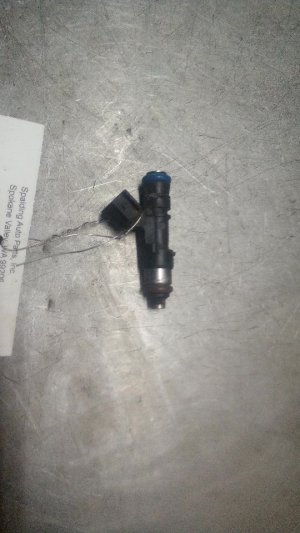
Used OEM Parts in Stock



New Aftermarket Parts Available


The information in this article is provided for general reference and educational purposes only. Vehicle specifications, procedures, and part compatibility can vary by production date, trim level, and region. Always consult your vehicle's factory service manual and verify part numbers before purchasing or performing repairs. Safety-critical components such as airbags, seat belts, and braking systems should be installed by a qualified professional.
- Ford Mustang:
- 🎬 Helpful Videos
- 🛍️ Shop This Part
- What's Unique About the 2005-2014 Ford Mustang
- Symptoms You May Notice
- Most Likely Causes
- Rare But Worth Checking
- Technical Service Bulletins (TSBs) & Recalls
- Diagnosis Steps
- Parts You'll Likely Need
- Related Codes That Often Appear With This One
- Mechanic-Grade Diagnostic Values
- Scan Tool Commands That Help
- Wiring & Ground Locations
- Real Owner Repair Stories
- Documented NHTSA Reports
- Diagnostic Flowchart
- Real Owner Stories
- Ford 5.4L V8 (Platform Mate)
- 2013 Ford F-150 5.0L Coyote V8
- Related OBD-II Codes
- Frequently Asked Questions
- 🎟️ Get 5% Off