

P0203 on 2002 Dodge Ram 3500 5.9L V8: Injector Circuit Malfunction Guide
P0203 on a 2002 Dodge Ram 3500 with the 5.9L V8 Magnum engine indicates an electrical fault in the fuel injector circuit for cylinder #3. While a failed injector is possible, the most common cause on this platform is a faulty wiring harness that is integrated into the passenger-side valve cover gasket, a known issue cited in a Dodge TSB. A replacement injector costs $40-$150, while the gasket/harness assembly is $70-$160.
- P0203 means cylinder #3 is not getting fuel due to an electrical problem.
- On this truck, the most likely cause is a bad wiring harness inside the passenger-side valve cover gasket, a known issue cited in a Dodge TSB.
- A simple 'noid light' test can quickly tell you if the wiring/PCM is sending a signal.
- Swapping the #3 injector with another one is a free and definitive way to confirm if the injector is the faulty part.
- Address this code promptly to avoid a constant misfire that can damage your catalytic converter over time.
What's Unique About the 2002-2002 Dodge Ram 3500
For the second-generation Dodge Ram with the 5.9L Magnum V8, the P0203 code is frequently caused by a specific, well-documented design issue. Unlike many other vehicles where injector wiring is external, the harness for each bank of injectors is integrated into the valve cover gasket. Over many years, engine heat and oil exposure cause the wiring insulation to become brittle and crack, especially where it passes through the gasket, leading to an open or short circuit. This is a known failure point cited in Dodge Technical Service Bulletin (TSB) #9002688, which advises checking this harness before replacing the injector itself.
Symptoms You May Notice
- Check Engine Light is on
- Rough idle and engine shaking
- Noticeable engine misfire, sometimes felt as a jerking or popping during acceleration
- Reduced engine power and sluggish performance
- Poor fuel economy
- Engine may stall or be hard to start
- Black smoke from the tailpipe under load
- Replacing spark plugs and ignition coils. While these can cause a misfire (P0303), the P0203 code specifically points to an electrical issue in the fuel injector circuit, not the ignition system.
- Replacing the fuel injector without first testing the wiring harness. The TSB for this vehicle explicitly warns against this, as the harness integrated into the valve cover gasket is a very common point of failure.
Most Likely Causes
- Faulty Injector Wiring Harness (in Valve Cover Gasket) 🔴 High Probability This is a known design flaw on Dodge Magnum engines. The wiring is routed through the passenger-side valve cover gasket, where constant heat and oil saturation degrade the insulation, causing cracks and breaks. This is documented in TSB #9002688.
How to confirm: Visually inspect the wiring harness where it connects to the injector and at the round pass-through connector on the valve cover. Perform a 'wiggle test' by carefully moving the harness with the engine running; if the misfire changes or is induced, the harness is faulty. For a definitive test, remove the valve cover and inspect the internal harness for brittle or bare wires.
Typical fix: Replace the passenger side valve cover gasket which comes as an assembly with the new integrated injector wiring harness. The Mopar part is often cited as 56027067AC.
Est. part cost: $70-$160 - Failed Cylinder 3 Fuel Injector 🟡 Medium Probability After many years and heat cycles, the internal coil windings of the injector can fail, creating an open or short circuit. While common, this should be suspected after ruling out the wiring harness per the TSB.
How to confirm: After confirming the wiring is good with a noid light, disconnect the injector and measure its resistance with a multimeter. For a 1998-2000 5.9L Magnum, it should be around 10.8-13.2 ohms. A reading of infinity (OL) means it's open, and a very low reading means it's shorted. The most definitive test is to swap the #3 injector with another cylinder (e.g., #1). Clear the codes and run the engine. If the code changes to P0201, the injector is confirmed bad.
Typical fix: Replace the faulty fuel injector.
Est. part cost: $40-$150 - Damaged Wiring Harness or Connector 🟡 Medium Probability Engine heat and vibration can make the external wiring insulation brittle and cause it to crack, leading to a short or open circuit. The connector itself can also become corroded or damaged. A user on the ScannerDanner forum reported a P0203 caused by a rat chewing through the injector plug wires.
How to confirm: Visually inspect the wiring going to the #3 fuel injector for any signs of cracking, melting, or chafing. Wiggle the harness with the engine running to see if it causes the misfire to change. Use a 'noid light' plugged into the injector connector; it should flash steadily with the engine running. If it does not flash, the problem is in the wiring or the PCM.
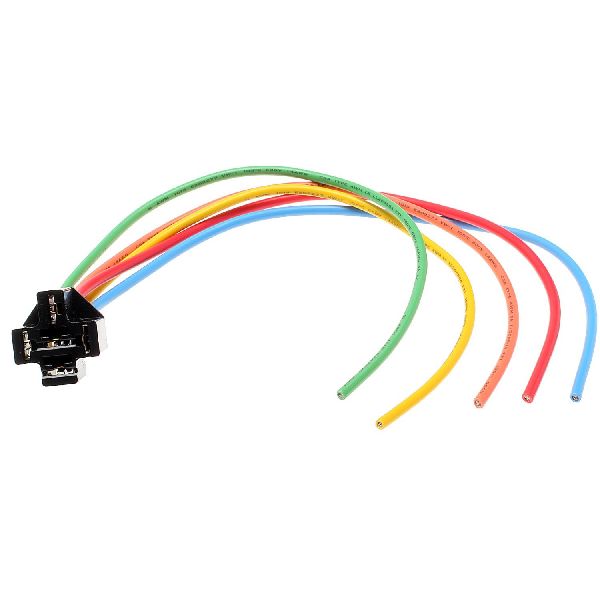
Typical fix: Repair the damaged section of wire or replace the injector connector pigtail.
Est. part cost: $15-$60
Rare But Worth Checking
- Faulty Powertrain Control Module (PCM): This should be the last consideration after thoroughly testing the injector and wiring. The internal driver circuit in the PCM that controls the injector can fail, but it is uncommon. A YouTube video shows a detailed diagnosis where a remanufactured PCM was also suspect, highlighting the need for thorough circuit testing before condemning the PCM.
Diagnosis Steps
- Read the trouble codes with an OBD-II scanner to confirm P0203 and check for any other codes like P0303.
- Locate cylinder #3, which is the second cylinder from the front on the passenger side. Perform a visual inspection of the fuel injector and its external wiring harness. Look for obvious signs of damage, melting, or corrosion.
- Test the injector signal using a noid light. Disconnect the injector, plug in the noid light, and start the engine. The light should flash steadily. If it flashes, the wiring and PCM are likely okay, and the injector is the prime suspect. If it's off or stays on solid, there's a problem in the wiring or PCM.
- If the noid light test failed, perform a 'wiggle test' on the wiring harness at the valve cover with the engine running. If the engine stumble changes, the harness inside the valve cover gasket is likely faulty, as noted in TSB #9002688.
- If the noid light flashes correctly, test the injector itself. Turn off the engine and disconnect the injector. Set a multimeter to Ohms (Ω) and measure the resistance between the two pins on the injector. It should be between 10.8 and 13.2 ohms for a 2002 model. An infinite (OL) or zero reading indicates a failed injector.
- As a definitive test, swap the cylinder 3 fuel injector with one from an adjacent cylinder (like cylinder 1). Clear the codes and run the engine. If the code returns as P0201, the fuel injector is faulty and needs to be replaced. If P0203 returns, the problem is in the wiring harness or PCM.
- If the noid light test failed and the wiggle test was inconclusive, check for continuity in the two wires running from the PCM connector to the injector connector. Resistance should be less than 5 ohms. If the wires are good, the PCM's injector driver has likely failed, though this is rare.
Parts You'll Likely Need
- Valve Cover Gasket with Injector Harness (Passenger Side)
(OEM #56027067AC)— This is the most probable cause of P0203 on this specific truck, as documented by TSB #9002688. The integrated harness becomes brittle from heat and oil, causing wires to break.
Trusted brands: Mopar, Fel-Pro (e.g., VS50522R), Standard Motor Products
OEM price range: $100-$180
Aftermarket price range: $70-$120 - Fuel Injector
(OEM #53031740AA, 53030778AB, 0280155784)— This is the next most common failure point after the wiring harness. The internal coil fails, causing an electrical open or short.
Trusted brands: Bosch, Standard Motor Products, Delphi, Mopar
OEM price range: $90-$150
Aftermarket price range: $40-$90 - Fuel Injector Connector Pigtail
(OEM #5183448AA)— The plastic connector and external wires can become brittle from engine heat, causing a poor connection or a break in the circuit.
Trusted brands: Dorman, Mopar, Standard Motor Products
OEM price range: $30-$60
Aftermarket price range: $15-$30
Related Codes That Often Appear With This One
- P0303 — P0303 means 'Cylinder 3 Misfire Detected.' Since P0203 indicates a fault in the fuel delivery circuit for cylinder 3, a misfire is the direct result. These two codes almost always appear together.
Technical Service Bulletins (TSBs) & Recalls
- TSB #9002688: Advises technicians to check the wiring loom/connector in the valve cover gasket before replacing fuel injectors for P0201-P0206 codes on Magnum engines.
- Chrysler TSB 18-024-03: Also references the injector harness issue under the valve cover as a common cause for P020x codes.
Platform-Specific Known Issues
- The most significant issue is the injector wiring harness being integrated into the valve cover gaskets, as detailed in TSB #9002688. The passenger side harness (for cylinders 2, 4, 6, 8) and driver side harness (for 1, 3, 5, 7) are prone to failure from heat and oil saturation, making this the first place to check for P020x codes.
- Some owners on forums have also reported the injector wiring harness melting where it runs under the power steering reservoir, which can cause shorts and trigger these codes.
Mechanic-Grade Diagnostic Values
- Fuel Injector Coil Resistance — expected: 10.8 - 13.2 Ohms for 1998-2000 models. Some sources cite 12.5 to 12.8 Ohms as a common real-world reading.. Failure: A reading of infinity (OL) indicates an open coil; a reading near zero indicates a shorted coil.
- Injector Connector Voltage (Key On, Engine Off) — expected: ~12 Volts (Battery Voltage) on the power feed wire (typically Dark Green/Orange).. Failure: No voltage suggests a problem with the ASD (Auto Shutdown) relay or its circuit.
- Wiring Continuity (PCM to Injector Connector) — expected: Less than 5.0 Ohms, with professional sources recommending less than 0.5 Ohms.. Failure: High resistance or an OL reading indicates a break in the wire.
- Injector Inductive Kick (Oscilloscope) — expected: A sharp voltage spike of 60-80 Volts immediately after the PCM commands the injector off.. Failure: A missing or weak voltage spike is what the PCM detects to set the P0203 code, confirming an open or high-resistance fault.
Scan Tool Commands That Help
- DRB III: Injector Kill / Cylinder Cut-out Test — The OEM DRB III scan tool for this vehicle can individually disable injectors. This allows a technician to confirm which cylinder is misfiring without swapping parts. If killing cylinder #3 has no effect on the engine's idle, it confirms that cylinder is not contributing.
- DRB III: Actuator Tests — The DRB III can command the PCM to perform specific actuator tests, which can include cycling the fuel injectors with the engine off to listen for an audible click, helping to verify the control circuit and injector function without starting the engine.
Wiring & Ground Locations
- Cylinder #3 Injector — On the 5.9L V8, cylinder #3 is the second cylinder from the front on the driver's side.. This is the specific injector and circuit referenced by the P0203 code. Note: The Pass 2 data incorrectly stated it was on the passenger side.
- PCM (Powertrain Control Module) — Located on the passenger side firewall in the engine compartment.. The injector driver circuit originates here. The wiring must be tested for continuity from the injector connector back to the PCM connector.
- Injector Power Feed Wire — A Dark Green/Orange wire at the injector connector on many models.. This wire supplies 12V+ power from the Auto Shutdown (ASD) relay to all fuel injectors. A failure here would likely affect multiple injectors, not just #3.
- G105 — A primary engine ground located on the right side of the engine.. A poor engine ground can cause a variety of electrical issues, including erratic sensor readings and actuator problems. While not a primary cause for a single injector code, it should be checked for tightness and corrosion.
Real Owner Repair Stories
- YouTube channel 'Jess Cleary Auto Repair LLC' (Dodge Ram with Magnum V8) — Pronounced misfire and a P0203 code.
❌ Tried (didn't work) Customer had already replaced the PCM with a remanufactured unit., Injector resistance tested good (~12.7 ohms)., Wiring continuity and load tests passed.
✅ What actually fixed it The technician used an oscilloscope and found the inductive kick (flyback voltage) was weak and ramping up slowly instead of spiking sharply on the cylinder 3 circuit. This indicated a faulty injector driver inside the remanufactured PCM. Replacing the PCM again with a good unit fixed the problem. - ScannerDanner Forum user 'Ram273' (2000 Dodge Ram 1500 5.9L Magnum) — P0203 code and severe misfire.
❌ Tried (didn't work) Replaced the injector connector pigtail after finding rat damage., Replaced all fuel injectors.
✅ What actually fixed it The user performed a test by checking for a ground signal from the PCM at the injector wire and found it was missing. The implied final fix, after confirming the wiring was good post-repair, was a faulty injector driver in the PCM.
When the Usual Fixes Don't Work
- In one documented case, a technician diagnosed a P0203 on a Magnum V8 where the customer had already replaced the PCM. All standard tests (resistance, continuity, noid light) passed. The final diagnosis required an oscilloscope, which showed the PCM's injector driver was weak and not creating the proper inductive spike, even though it was a remanufactured unit. This highlights that even when wiring and the injector are confirmed good, the PCM can still be the culprit in a non-obvious way.
OEM Part Supersession History
53030778→53030778AB, 53031740AA, RL031740AA (reman).— Part revision and introduction of remanufactured part numbers.
Heads up: The Bosch equivalent part number is 0280155784 or 0280155934. These are for the 5.9L Magnum V8 and are not compatible with the 4.7L PowerTech V8 injectors used in 3rd Gen Ram 1500s.
Diagnostic Flowchart
Used vs. New Parts: Buying Guide for This Vehicle
When a used part is the smart pick: A used fuel injector from a low-mileage donor vehicle can be a cost-effective option, as they are not a high-failure item when the wiring is the primary suspect. A used PCM can also be an option, but it carries risks and may require programming.
Donor-vehicle mileage cap: roughly under 120000 miles for the part to have meaningful remaining life.
What to inspect on the donor part:
- For injectors: Ensure the donor vehicle was running well with no misfire codes. Check the injector's plastic body for cracks and the metal tip for heavy carbon buildup.
- For PCM: Match part numbers exactly. Check the case for signs of water intrusion or physical damage. Ask the seller if the vehicle had any electrical issues.
OEM-only on this vehicle (don't cheap out):
- Powertrain Control Module (PCM): While used can work, a new Mopar or professionally remanufactured unit with a warranty is strongly recommended to avoid issues like faulty internal drivers, which can be difficult to diagnose.
Aftermarket brands forum-validated for this vehicle:
- Valve Cover Gasket/Harness: Fel-Pro is a widely trusted aftermarket brand for gaskets and seals, and their version of the valve cover gasket with integrated harness (VS50522R) is a common repair part.
- Fuel Injectors: Bosch is the original equipment manufacturer and is the most recommended brand.
Brands owners have reported issues with on this vehicle:
- Unbranded 'no-name' fuel injectors from online marketplaces are often poorly manufactured, may not be flow-matched, and can cause performance issues or fail prematurely.
Real Owner Stories
Aggregated from forums and TSBs cited above. Mileages and costs reflect what owners reported in those sources.
2000 Dodge Ram 5.9L
Symptoms: A P0203 code was triggered after a rat chewed through the injector plug wires.
What fixed it: The damaged section of the injector wiring was repaired.
Source hint: ScannerDanner Forum thread titled 'Cylinder 3 injector'
Dodge Ram 5.9L V8
Symptoms: Owners reported injector codes after the wiring harness melted where it runs under the power steering reservoir, causing a short.
What fixed it: Repairing the melted section of the external wiring harness.
Source hint: Owner reports on forums mentioned in vehicle_specific_issues
Related OBD-II Codes
Frequently Asked Questions
I have a P0203 code on my 2002 Ram 3500. Is there a TSB I should know about?
What is the most common cause for P0203 on this specific truck?
Where is cylinder #3 located on my 5.9L V8 engine?
What part do I need to fix the common wiring harness issue inside the valve cover?
How can I test the fuel injector on my 2002 Ram 5.9L?
My friend's Dodge Durango has the same P0203 code. Is the problem likely the same?
Used OEM Parts in Stock


New Aftermarket Parts Available


The information in this article is provided for general reference and educational purposes only. Vehicle specifications, procedures, and part compatibility can vary by production date, trim level, and region. Always consult your vehicle's factory service manual and verify part numbers before purchasing or performing repairs. Safety-critical components such as airbags, seat belts, and braking systems should be installed by a qualified professional.
- Dodge Ram 3500:
- 🛍️ Shop This Part
- What's Unique About the 2002-2002 Dodge Ram 3500
- Symptoms You May Notice
- Most Likely Causes
- Rare But Worth Checking
- Diagnosis Steps
- Parts You'll Likely Need
- Related Codes That Often Appear With This One
- Technical Service Bulletins (TSBs) & Recalls
- Platform-Specific Known Issues
- Mechanic-Grade Diagnostic Values
- Scan Tool Commands That Help
- Wiring & Ground Locations
- Real Owner Repair Stories
- When the Usual Fixes Don't Work
- OEM Part Supersession History
- Diagnostic Flowchart
- Used vs. New Parts: Buying Guide for This Vehicle
- Real Owner Stories
- 2000 Dodge Ram 5.9L
- Dodge Ram 5.9L V8
- Related OBD-II Codes
- Frequently Asked Questions
- 🎟️ Get 5% Off