

P0203 on 1998-2003 Dodge Ram 1500 Magnum: Injector Circuit Causes and Fixes
On a 1998-2003 Ram with a Magnum engine, P0203 almost always points to a failed injector wiring harness that is integrated into the driver's side valve cover gasket. This is a well-known issue, documented in Dodge TSB #9002688. Before replacing the injector, inspect or replace this harness/gasket assembly, which costs around $60-$160.
- For a P0203 code on a 1998-2003 Ram, immediately suspect the driver's side valve cover wiring harness, as documented in Dodge TSB #9002688.
- Use a noid light to test the circuit before buying parts. No flash means a wiring/PCM problem; a steady flash points to a bad injector.
- The 'injector swap' is a zero-cost, definitive test to confirm a failed injector.
- This issue is also common on other Magnum-powered vehicles like the Dakota, Durango, and Grand Cherokee of the same era.
What's Unique About the 1998-2003 Dodge Ram 1500
For this generation of Dodge Ram with Magnum engines (both the 5.2L and 5.9L V8), the injector wiring is a notorious weak point. The harness is uniquely designed to pass through the valve cover gasket. Over many years of heat cycles and oil exposure, the wiring becomes brittle and cracks, causing an open or short in the circuit. This issue is so common that Dodge issued a Technical Service Bulletin (TSB #9002688, NHTSA ID: #10139009) on Feb 13, 2013, advising technicians to inspect this harness before condemning the fuel injector itself for any P0201-P0206 codes.
Generation note: This range covers the end of the second generation (1998-2001) and the start of the third generation (2002-2003) Ram 1500. However, the Magnum V8 engines used in both generations share the same fundamental design, and the common cause related to the valve cover wiring harness applies to the entire 1998-2003 period. This issue is also prevalent in platform mates like the Dodge Dakota, Durango, and Jeep Grand Cherokee from the same era.
Symptoms You May Notice
- Check Engine Light is on
- Rough idle and engine vibration
- Noticeable engine misfire (often described as a 'dead miss' or stumbling)
- Reduced engine power and poor acceleration
- Increased fuel consumption
- Engine may stall, especially under load
- Replacing the fuel injector without first testing the wiring harness. The harness integrated into the valve cover gasket is the most common point of failure on this specific vehicle, as noted by TSB #9002688.
Most Likely Causes
- Failed Injector Wiring Harness (Integrated into Driver's Side Valve Cover Gasket) 🔴 High Probability The design routes the injector wiring through the valve cover gasket, where constant heat and oil exposure makes it brittle and prone to cracking, causing opens or shorts in the circuit for cylinder #3. This is a widely documented failure, explicitly mentioned in TSB #9002688.
How to confirm: Visually inspect the wiring where it enters and exits the driver's side valve cover. Perform a 'wiggle test': with the engine idling, carefully wiggle the harness near the valve cover connector; if the misfire changes or disappears, the harness is faulty. The definitive test is using a 'noid light' at the injector connector; if it doesn't flash while the engine is cranking, the problem is in the wiring or PCM, not the injector.
Typical fix: Replace the entire driver's side valve cover gasket, which comes with the new integrated wiring harness. Cylinder #3 is on the driver's side.
Est. part cost: $60-$160 - Failed Fuel Injector #3 🟡 Medium Probability
How to confirm: Swap the fuel injector from cylinder #3 with another cylinder (e.g., cylinder #1). Clear the codes and run the engine. If the code changes to P0201, the injector is faulty. Alternatively, test the injector's resistance with a multimeter. For Magnum engines, it should be within 10.8-13.2 ohms. An open (infinite resistance/OL) or shorted (near-zero resistance) reading indicates a bad injector.
Typical fix: Replace the faulty fuel injector.
Est. part cost: $70-$120 - Wiring Issue (External Harness) ⚪ Low Probability
How to confirm: Visually inspect the main engine wiring harness leading to the valve cover for any signs of chafing, melting, or rodent damage. A user on the ScannerDanner forum reported this code was caused by a rat chewing through injector wires. Check for a clean, tight connection at the main harness plug on the valve cover.
Typical fix: Repair the damaged section of wiring.
Est. part cost: $5-$20
Rare But Worth Checking
- Faulty Powertrain Control Module (PCM): This is the least likely cause. The PCM's internal driver for the injector circuit can fail, but all other possibilities, especially wiring, should be exhaustively ruled out first. In one documented case on a Dodge Ram, a P0203 persisted even after a PCM replacement because the *remanufactured* PCM was faulty out of the box. This highlights the importance of thorough diagnosis before and after replacing the PCM.
Diagnosis Steps
- Verify the code with an OBD-II scanner. Note if P0303 is also present.
- Identify Cylinder #3. On the Magnum V8, it is the third cylinder from the front on the driver's side.
- Perform a preliminary check: Start the engine and listen for the distinct 'tick' of the #3 injector using a mechanic's stethoscope or a long screwdriver held to your ear. A silent injector points towards an electrical or injector fault.
- Disconnect the electrical connector at the #3 fuel injector. Connect a 'noid light' to the connector harness.
- Have a helper crank the engine. If the noid light flashes steadily, the wiring and PCM are likely good, and the injector itself is the prime suspect. If the noid light does not flash, the problem is in the wiring or the PCM.
- If the noid light did NOT flash, perform a 'wiggle test'. With the engine running, carefully wiggle the wiring harness where it enters the driver's side valve cover. If this causes the engine stumble to change or the noid light to flicker on a re-test, the harness is confirmed as the fault.
- If the wiring is suspect, replace the valve cover gasket/harness assembly.
- If the noid light DID flash, confirm the injector is bad by swapping it with an adjacent injector (like from cylinder #1). Clear the codes, run the engine, and see if the code follows the injector (e.g., P0201 appears). If it does, the injector is bad.
- As a final injector check, use a multimeter to measure the resistance of the injector coil. A reading outside of the 10.8-13.2 ohm range indicates a failure.
- Only after exhaustively ruling out the injector and all wiring should a faulty PCM be considered.
Parts You'll Likely Need
- Valve Cover Gasket with Integrated Injector Harness (Driver Side)
(OEM #56028226AA or 56027067AC)— This is the most common cause of P0203 on Magnum engines due to a design where the harness fails from heat and oil exposure. Cylinder #3 is on the driver's side, which requires this specific part. (Note: Part #56028227AA is for the passenger side).
Trusted brands: Mopar, Fel-Pro, Dorman, Standard Motor Products
OEM price range: $90-$140
Aftermarket price range: $60-$100 - Fuel Injector
(OEM #53030778AB or 0280155784)— If the wiring harness is confirmed to be good via a noid light test, the injector itself may have an internal electrical failure (open or shorted coil).
Trusted brands: Mopar, Bosch, Standard Motor Products, Delphi
OEM price range: $70-$120
Aftermarket price range: $40-$80
Related Codes That Often Appear With This One
- P0303 — P0303 means 'Cylinder 3 Misfire Detected'. Since P0203 indicates an electrical problem preventing the injector from firing, the cylinder doesn't get fuel, which directly causes a misfire. These two codes almost always appear together.
- P0201, P0205, P0207 — The driver-side valve cover harness powers injectors for cylinders 1, 3, 5, and 7. As the harness degrades, it's possible for multiple injector circuit codes on this bank to appear simultaneously as other wires begin to fail.
Technical Service Bulletins (TSBs) & Recalls
- TSB #9002688 (NHTSA ID: #10139009, Announced: 02/13/2013): Addresses the tendency for the injector wiring harness, which is integrated into the valve cover gasket, to fail from heat and oil exposure, causing injector circuit codes. Advises checking the loom before replacing injectors.
Platform-Specific Known Issues
- A Technical Service Bulletin (TSB #9002688) was issued by Dodge acknowledging the high failure rate of the injector wiring harness that passes through the valve cover gasket on Magnum engines. It specifically advises checking this component before replacing injectors for P0201-P0206 codes.
Mechanic-Grade Diagnostic Values
- Injector Inductive Kick (Flyback Voltage) — expected: 60-80 Volts. Failure: A missing, weak, or rounded-off voltage spike. This is the specific signal the PCM monitors to confirm injector operation.
- Injector Pulse Width (Scan Tool, Warm Idle) — expected: 2.0 - 3.5 milliseconds (ms). Failure: A value of 0 ms or an erratic reading for cylinder 3 while other cylinders are normal suggests a PCM driver or control circuit wiring fault.
- Injector Circuit Continuity (PCM to Injector Connector) — expected: < 5.0 Ohms. Failure: Higher resistance (or Open Line/OL) indicates a break or corrosion in the control wire (Circuit K13) or power wire.
- Injector Power Supply (KOEO) — expected: ~12 Volts (Battery Voltage). Failure: Low or no voltage points to an issue with the ASD (Auto Shutdown) relay or the power feed wiring (Circuit F342).
- Auto Shutdown (ASD) Relay Coil Resistance — expected: 75 ± 5 Ohms. Failure: A reading outside this range indicates a faulty relay coil, which would prevent power from reaching the injectors.
Scan Tool Commands That Help
- DRB III or equivalent professional scanner: Auto Shutdown (ASD) Control State Actuation — To manually energize the ASD relay, providing power to the injector circuit. This allows for testing the power feed wire (Circuit F342) under a load (e.g., with a test light or 1-amp load device) without the engine running.
- DRB III or equivalent professional scanner: Cylinder Power Balance / Injector Kill Test — To confirm that cylinder #3 is the source of the misfire. The scan tool deactivates injectors one by one; if there is no change in engine RPM when cylinder #3 is deactivated, it confirms that cylinder was not contributing.
Wiring & Ground Locations
- Injector #3 Control Circuit — Wire running from the PCM connector (C2 on some models) to the #3 fuel injector connector, passing through the driver's side valve cover gasket harness.. This is the specific wire (Circuit K13) the PCM uses to ground-switch the injector. An open or short on this wire is a direct cause of P0203.
- Injector Power Feed Circuit — Wire running from the ASD relay to all injector connectors on that bank.. This circuit (F342) supplies battery voltage to the injector. While a failure here would likely affect multiple injectors, a high-resistance fault could potentially isolate to one connector.
- Main Chassis Ground — Under or near the driver's side battery tray, connecting the negative battery terminal to the body.. While a poor main ground typically causes multiple, widespread electrical issues, it can contribute to intermittent and difficult-to-diagnose circuit faults, including erratic PCM behavior that could trigger an injector code.
Real Owner Repair Stories
- YouTube channel 'Jess Cleary Auto Repair LLC' / 'Rainman Ray's Repairs' (Dodge Ram with Magnum V8) — Pronounced misfire and a P0203 injector control circuit code.
❌ Tried (didn't work) Replacing the PCM with a remanufactured unit, Voltage drop test on the control side of the circuit (passed), Load-testing the power (ASD) side of the circuit (passed), Injector resistance test (passed at ~12.7 ohms)
✅ What actually fixed it The remanufactured PCM was faulty. An oscilloscope revealed a very low inductive kick (flyback voltage) on the cylinder 3 circuit compared to a good cylinder. A simple noid light test would have missed this. A second replacement PCM resolved the code. - DodgeForum.com user 'Scuba Sam' (1999 Dodge Ram 1500 5.9L) — No power to injector, P0206 (analogous code for cylinder 6).
❌ Tried (didn't work) Confirming continuity of wires from injector plug back to the PCM., Confirming continuity of ASD relay wiring.
✅ What actually fixed it The problem was resolved by replacing the valve cover gasket which contained the integrated injector wiring harness, confirming the failure pattern described in the TSB.
When the Usual Fixes Don't Work
- While the valve cover harness is the most common culprit, there are documented cases where it is not the cause. In one professional diagnosis, after a remanufactured PCM was installed by the owner to fix a P0203, the code persisted. Extensive testing of the wiring harness and injector showed they were both good. The ultimate cause was a faulty injector driver inside the 'new' remanufactured PCM, which was only discoverable with an oscilloscope. This proves that even after replacing the least-likely component (the PCM), the replacement part itself can be the source of the failure.
OEM Part Supersession History
53030778→53030778AB— Standard part revision/update by manufacturer.
Heads up: Part 53030778AB is the correct service replacement for models including the 1998-2002 Dodge Ram.
Model Year Variations Within This Range
- 1998-2002 vs. 2003: There was a transition from the JTEC (Jeep/Truck Engine Controller) PCM to the NGC (Next Generation Controller) PCM around the 2002-2003 model years. 1998-2002 models typically use the 3-plug JTEC PCM. 2003 models use the 4-plug NGC PCM, which also integrates the transmission controller. These systems are not interchangeable as they use different crankshaft tone rings (16-tooth vs 32-tooth), and wiring harness connectors are different. While the root cause of P0203 is often the same (valve cover harness), the specific PCM connector pinouts and diagnostic trees may vary between a JTEC and NGC truck.
Diagnostic Flowchart
Real Owner Stories
Aggregated from forums and TSBs cited above. Mileages and costs reflect what owners reported in those sources.
2000 Dodge Ram 1500 5.9L Magnum
Symptoms: Got a p0203 code... missfires pretty bad.
What fixed it: No resolution was posted in the thread; the user was in the middle of diagnosing a potential wiring or ECM issue after replacing a rat-chewed plug and all injectors without success.
Source hint: ScannerDanner Forum thread 'P0203 on 2000 Dodge Ram 1500 5.9L'
Dodge Ram (4th Gen Tech Forum)
Symptoms: Experienced the classic P0203 and P0303 code combination.
What fixed it: Forum members advised chasing the P0203 code first, recommending a noid light test to differentiate between a wiring and injector problem before throwing parts at it.
Source hint: DodgeForum.com thread titled 'p0203 and p0303 codes'
Related OBD-II Codes
Frequently Asked Questions
Does TSB #9002688 apply to my 1998-2003 Dodge Ram 1500 Magnum for code P0203?
Where is cylinder #3 located on my Dodge Ram Magnum V8?
Should I replace the fuel injector right away if I get a P0203 code?
How can I test if the valve cover wiring harness is causing my P0203 code?
What is the correct resistance for a fuel injector on a Dodge Ram Magnum engine?
Can replacing the valve cover gasket fix my P0203 code?
Used OEM Parts in Stock

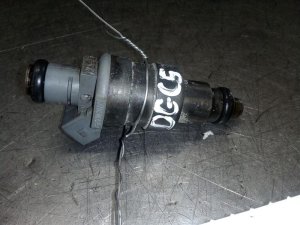
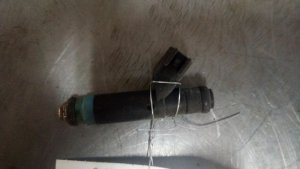
New Aftermarket Parts Available
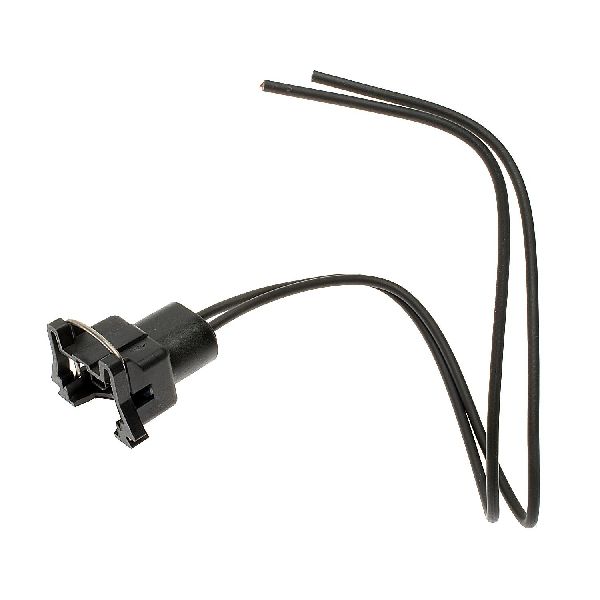


The information in this article is provided for general reference and educational purposes only. Vehicle specifications, procedures, and part compatibility can vary by production date, trim level, and region. Always consult your vehicle's factory service manual and verify part numbers before purchasing or performing repairs. Safety-critical components such as airbags, seat belts, and braking systems should be installed by a qualified professional.
- Dodge Ram 1500:
- 🛍️ Shop This Part
- What's Unique About the 1998-2003 Dodge Ram 1500
- Symptoms You May Notice
- Most Likely Causes
- Rare But Worth Checking
- Diagnosis Steps
- Parts You'll Likely Need
- Related Codes That Often Appear With This One
- Technical Service Bulletins (TSBs) & Recalls
- Platform-Specific Known Issues
- Mechanic-Grade Diagnostic Values
- Scan Tool Commands That Help
- Wiring & Ground Locations
- Real Owner Repair Stories
- When the Usual Fixes Don't Work
- OEM Part Supersession History
- Model Year Variations Within This Range
- Diagnostic Flowchart
- Real Owner Stories
- 2000 Dodge Ram 1500 5.9L Magnum
- Dodge Ram (4th Gen Tech Forum)
- Related OBD-II Codes
- Frequently Asked Questions
- 🎟️ Get 5% Off