

P0203 on 2011-2016 Chrysler Town & Country: Cylinder 3 Injector Circuit Fixes
On the 3.6L Pentastar V6, code P0203 almost always means the fuel injector for cylinder #3 has failed. The repair involves replacing the injector, which is a moderate DIY job because the upper intake manifold must be removed. Due to the labor involved, it's wise to replace all rear bank injectors at once.
- P0203 on your Town & Country points to an electrical problem with the #3 fuel injector circuit.
- The most likely cause is a failed fuel injector, a common issue on the 3.6L Pentastar engine.
- You will almost always see a P0303 (Cylinder 3 Misfire) code along with P0203; fix the P0203 first.
- Repair requires removing the upper intake manifold, so you must also replace the intake gaskets.
- Before buying parts, confirm the injector is bad by testing its resistance or swapping it with another cylinder to see if the code follows.
What's Unique About the 2011-2016 Chrysler Town & Country
The 3.6L Pentastar V6, used across many Chrysler, Dodge, and Jeep vehicles, is known for having fuel injectors as a common failure point. For the Town & Country, which has a transverse engine layout, cylinder #3 is located on the rear bank (closer to the firewall), making it one of the more difficult injectors to reach as it requires removing the upper intake manifold. While wiring issues can occur, a failed injector is the most probable cause for a P0203 code on this specific engine.
Symptoms You May Notice
- Check Engine Light is on
- Rough idle or shaking, especially when stopped
- Engine misfire, felt as a stumble or jerking during acceleration
- Reduced engine power and sluggish performance
- Decreased fuel economy
- Difficulty starting the engine
- Engine may go into 'limp mode'
- Replacing the spark plug or ignition coil for cylinder 3. While these parts can cause a misfire code (P0303), they will not cause an injector circuit code like P0203, which specifically points to an electrical fault in the fuel system.
Most Likely Causes
- Failed Cylinder 3 Fuel Injector 🔴 High Probability Fuel injectors on the 3.6L Pentastar are a known, widespread failure item due to internal coil windings failing after many heat cycles. This is a well-documented issue across the entire engine family.
How to confirm: Swap the cylinder 3 injector with an adjacent one (e.g., cylinder 1). If the code changes to P0201, the injector is bad. Alternatively, test the injector's resistance with a multimeter; a healthy injector should read around 12-14 Ohms. A reading of infinity (Open Line), zero, or a significantly different value (like 24 Ohms) indicates a failed injector.
Typical fix: Replace the faulty fuel injector. It is often recommended to replace all three injectors on the rear bank (or all six) at the same time to ensure they are flow-matched and prevent future failures, given the significant labor to remove the intake manifold.
Est. part cost: $30-$150 - Wiring Harness or Connector Issue 🟡 Medium Probability The engine wiring harness is exposed to high heat and vibration, which can make wires and connectors brittle over time. Wires can chafe against the fuel rail or other components, causing a short or open circuit. The injector connector's locking tab can also break, leading to a poor connection.
How to confirm: Visually inspect the wiring and connector for cylinder 3's injector. Look for signs of melting, chafing, corrosion, or broken locking tabs. Use a noid light to confirm if the PCM is sending a pulse to the connector.
Typical fix: Repair the damaged section of wire or replace the fuel injector connector pigtail.
Est. part cost: $15-$40
Rare But Worth Checking
- Faulty Powertrain Control Module (PCM): This is the least likely cause. The PCM's internal driver for the injector can fail, but all other possibilities should be exhausted before condemning the PCM. In some cases, a user has found a visibly burnt transistor on the PCM board corresponding to the injector drivers.
Diagnosis Steps
- Read the codes with an OBD-II scanner to confirm P0203 is present. Note any other codes, especially P0303.
- Locate cylinder #3. On the 3.6L Pentastar in a Town & Country, it is the middle cylinder on the bank closer to the firewall (rear bank).
- Inspect the wiring harness and connector for the cylinder 3 fuel injector. Look for any visible damage, melting, or corrosion.
- If a noid light is available, disconnect the injector and plug the light into the connector. Crank the engine. If the light flashes, the PCM and wiring are likely good, pointing to a bad injector.
- If a noid light is not available, perform an injector swap. Swap the cylinder 3 injector with the cylinder 1 injector (rear bank, passenger side). Clear the codes and run the engine.
- Rescan for codes. If the code is now P0201, the fuel injector is confirmed to be faulty. If P0203 returns, the problem is in the wiring or the PCM.
- To confirm a bad injector, use a multimeter to measure its resistance. It should be between 12-14 Ohms. A reading outside this range confirms failure.
- If the injector swap and resistance test prove the injector is good, thoroughly re-inspect the wiring harness for continuity and shorts before considering a PCM replacement. Check for continuity on the control wire from the injector connector to Pin 10 (Brown/Blue wire) on the PCM's C2 connector.
Parts You'll Likely Need
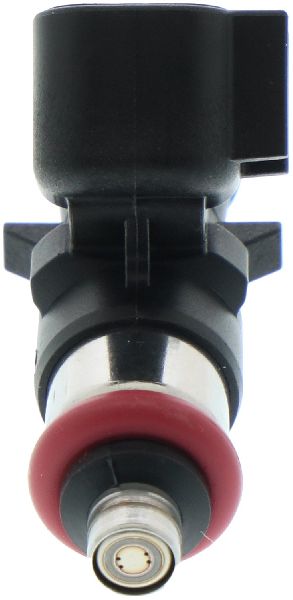
- Fuel Injector
(OEM #05184085AD)— This is the most common failure part for a P0203 code on the 3.6L Pentastar engine due to internal coil failure.
Trusted brands: Mopar, Bosch, Standard Motor Products
OEM price range: $80-$150
Aftermarket price range: $45-$100 - Upper and Lower Intake Manifold Gaskets
(OEM #5184331AC, 5184562AC)— These are single-use gaskets that must be replaced anytime the intake manifold is removed to access the fuel injectors to prevent vacuum leaks.
Trusted brands: Mopar, Fel-Pro, Mahle
OEM price range: $30-$50
Aftermarket price range: $20-$40 - Fuel Injector Connector Pigtail
(OEM #68064996AA)— Needed if the original connector is found to be cracked, corroded, or has damaged wires.
Trusted brands: Mopar, Dorman
OEM price range: $25-$40
Aftermarket price range: $15-$30
Related Codes That Often Appear With This One
- P0303 — P0303 means 'Cylinder 3 Misfire'. The P0203 circuit fault prevents fuel from being delivered to cylinder 3, which directly causes it to misfire. P0203 is the cause, and P0303 is the symptom.
- P0300 — This code means 'Random/Multiple Cylinder Misfire'. A severe misfire in one cylinder can sometimes cause crankshaft speed variations that the PCM misinterprets as a random misfire.
Technical Service Bulletins (TSBs) & Recalls
- TSB 18-033-14: This service bulletin involves a software update for the Powertrain Control Module (PCM) for 'Powertrain System Improvements/Enhancements'. It primarily addresses shift quality and pedal response. It is not a direct fix for the P0203 code, but a dealer may perform this update as part of a general service if the vehicle's software is out of date.
Platform-Specific Known Issues
- Due to the significant labor involved in removing the upper intake manifold, many technicians and experienced DIYers strongly recommend replacing all three fuel injectors on the rear bank (cylinders 1, 3, 5), or even all six injectors, at the same time. This is considered preventative maintenance to avoid a similar failure on an adjacent original injector in the near future, which would require repeating the entire job.
Mechanic-Grade Diagnostic Values
- Fuel Injector Coil Resistance — expected: 12.0 to 14.0 Ohms at room temperature.. Failure: A reading of 'OL' (Open Line/infinite resistance), near 0 Ohms (shorted), or a significantly different value (e.g., ~24 Ohms) indicates a failed injector.
- Injector Power Supply Voltage (at connector) — expected: Approximately 12.6V (Battery Voltage) with Key On, Engine Off (KOEO).. Failure: Low or no voltage suggests a fault in the power supply wire or the Auto Shutdown (ASD) relay.
- Injector Control Circuit Continuity (PCM to Injector) — expected: Below 5.0 Ohms.. Failure: Resistance above 5.0 Ohms points to excessive resistance or an open circuit in the control wire.
- Injector Control Circuit Resistance to Ground — expected: Infinite resistance (Open Line / O.L.).. Failure: Any continuity or low resistance reading indicates a short to ground in the control wire.
- Injector Pulse Width (Live Scan Tool Data) — expected: ~1-5 milliseconds (ms) at idle.. Failure: A value of 0 ms on cylinder 3 while others show a normal pulse width indicates the PCM is not commanding the injector to fire, or is detecting a fault and shutting it down.
Hidden / Shadow Codes Worth Checking
- P0201, P0202, P0203 (simultaneously): On some Chrysler vehicles, a short circuit in one injector's wiring can cause the PCM's internal driver for that entire bank to fault, logging codes for all three cylinders on that bank. (see via Standard OBD-II scanner. This pattern is a strong clue that points towards a wiring short or a potential PCM driver failure rather than three simultaneously failed injectors.)
Scan Tool Commands That Help
- Chrysler wiTECH 2.0: Actuator Tests (e.g., 'Fuel Injector 3 Actuator') — After confirming the P0203 code, this bidirectional command allows a technician to manually command the PCM to pulse the #3 injector. Listening for an audible click from the injector during this test can quickly confirm if the PCM driver, wiring, and injector coil are all functioning, helping to isolate intermittent faults without disassembly. This is found under the PCM -> Actuators tab.
- High-End Aftermarket (e.g., Xtool D8): Cam/Crank Relearn — This is not a direct fix for P0203 but can be crucial after major engine work or if persistent, unresolved misfires accompany the injector code. If timing components, sensors, or the PCM have been disturbed, a relearn procedure may be needed to resolve erratic misfires that persist even after the primary P0203 fault is fixed.
Wiring & Ground Locations
- Cylinder 3 Injector Control Wire — Runs from the cylinder 3 fuel injector electrical connector to the PCM. The PCM is located in the engine bay, typically near the battery or firewall.. This is the specific wire the PCM uses to pulse the ground for the #3 injector. A continuity test must be performed on this wire if the injector itself tests good. It is a Brown/Blue (BN/BU) wire located at Pin 10 of the PCM's C2 (middle) connector.
- Injector Power Supply Wire — This wire provides power to all six fuel injectors and originates from the Auto Shutdown (ASD) relay, located in the underhood fuse box (Totally Integrated Power Module - TIPM).. While a failure here would typically affect multiple injectors, damage to the section of this wire near injector #3 could cause an isolated fault. It should have battery voltage with the key on.
- Engine Harness Chafe Points — The main engine harness is routed across the top of the engine, near the fuel rail and exhaust components. Pay close attention to where the harness may rub against mounting brackets, the fuel rail itself, or the exhaust crossover pipe.. Vibration and heat can cause the harness loom to wear through, allowing the injector control wire to short to ground or break, causing an open circuit.
Real Owner Repair Stories
- Chrysler Forum user 'van man' (2003 Chrysler Town & Country 3.8L (similar platform/issue)) — Rough running, Check Engine Light with codes P0203 and P0303.
❌ Tried (didn't work) Swapping the #3 fuel injector with the #2 injector; the P0203 code did not move., Performing a continuity check on the wiring harness from the injector connector to the PCM connector; all wires tested good.
✅ What actually fixed it The issue was a failed Powertrain Control Module (PCM). The owner removed the PCM, inspected the circuit board through the potting compound, and identified a visibly burnt transistor in the bank of six injector drivers, confirming an internal hardware failure in the PCM. - Jeep Wrangler JK Forum user 'Rdartua' (2011 Dodge Durango 3.6L with 245,000 miles (same engine)) — Persistent Check Engine Light with misfires on cylinders 1, 3, and 5, mostly at idle or low load.
❌ Tried (didn't work) Replacing ignition coils, Replacing spark plugs, Replacing rocker arms and lifters, Replacing PCV valve, Replacing all fuel injectors, Replacing O2 sensors
✅ What actually fixed it After numerous part replacements failed to solve the issue, the owner used a high-end scan tool (Xtool D8) to perform a 'Cam/Crank Relearn' procedure. This resolved the majority of the misfire counts and stopped the Check Engine Light from illuminating, indicating the PCM's learned values were out of sync. - NHTSA ODI #11539650 — An owner of a related Chrysler vehicle reported that the car was shaking and the check engine light was on with three codes present: P0420, P0303, and P0203.
OEM Part Supersession History
05184085AC→05184085AD— Standard part revision and improvement by the manufacturer.05184085AD (4-hole injector)→05281427AA (or 05281427A)— This is a popular, owner-discovered upgrade, not an official supersession. The 05281427AA injector is from the newer 3.6L Pentastar Upgrade (PUG) engine found in vehicles like the Jeep Wrangler (JL). It features an 8-hole nozzle design for better fuel atomization compared to the original 4-hole design.
Heads up: This is a direct, drop-in replacement. The physical dimensions and electrical connector are identical. Owners report improved throttle response and potentially minor fuel economy gains. It is also often significantly cheaper than the original part number.
Model Year Variations Within This Range
- 2011-2013: These early Pentastar engines were subject to an extended warranty for a cylinder head defect. However, this issue primarily caused misfires on the left bank (cylinders 2, 4, 6) and is unrelated to a P0203 electrical fault on the right bank. It is important not to confuse the two issues during diagnosis.
Diagnostic Flowchart
Other Known Issues on This Vehicle
Issues unrelated to this code that are worth knowing about as an owner of this generation:
- Cracked Oil Filter / Cooler Housing 🔴 High — Extremely common. The original plastic housing becomes brittle with heat cycles and often fails, causing a major oil and/or coolant leak in the engine valley. Often misdiagnosed as a rear main seal leak.
- Rocker Arm / Lifter Failure ('Pentastar Tick') 🟠 Medium — Common, especially on higher mileage engines. Caused by premature wear of the rocker arm needle bearings, resulting in a distinct ticking/tapping sound and can lead to misfires. (Ref: Multiple TSBs exist for diagnosing misfires and valvetrain noise, e.g., 09-011-25.)
- Left Cylinder Head Failure 🔴 High — Primarily affects early models (2011-2013). Caused by excessive valve seat wear on the left-bank cylinders (2, 4, 6), leading to misfires and requiring cylinder head replacement. Less than 1% of engines were estimated to be affected. (Ref: Chrysler extended the warranty on the left cylinder head to 10 years/150,000 miles for affected vehicles. TSB 09-002-14 addresses this issue.)
- Totally Integrated Power Module (TIPM) Failure 🔴 High — Most common on the 2011 model year. A faulty internal fuel pump relay can cause intermittent no-start or stalling conditions. (Ref: Recalls were issued for other vehicles with the same TIPM, but not specifically for the Town & Country, though the problem is identical.)
Used vs. New Parts: Buying Guide for This Vehicle
When a used part is the smart pick: A used fuel injector can be a cost-effective option, but it's best to acquire the entire fuel rail with all three injectors for that bank from a single donor vehicle. This ensures they are from the same batch and have similar wear. Given the low cost of new aftermarket or upgraded OEM injectors, many prefer new parts to avoid repeating the labor-intensive intake manifold removal.
Donor-vehicle mileage cap: roughly under 80000 miles for the part to have meaningful remaining life.
What to inspect on the donor part:
- Check the donor vehicle's mileage; lower is always better.
- Inspect the injector connectors on the donor harness for any signs of melting, cracking, or brittleness.
- If possible, test the resistance of the used injectors before purchase; they should all read between 12-14 Ohms and be consistent with each other.
- Ensure the plastic pintle caps at the tip of the injectors are not cracked or missing.
OEM-only on this vehicle (don't cheap out):
- Powertrain Control Module (PCM) - Due to VIN programming and security requirements, a new or professionally refurbished and programmed OEM unit is required if the PCM is condemned.
Aftermarket brands forum-validated for this vehicle:
- Injectors: Bosch (often the OEM supplier), Standard Motor Products (SMP).
- Gaskets: Fel-Pro, Mahle.
Brands owners have reported issues with on this vehicle:
- Unbranded, no-name injectors from online marketplaces are a significant gamble. Sticking to known brands is highly recommended as poor quality control can lead to incorrect flow rates, leaks, or premature failure, forcing you to do the job again.
Real Owner Stories
Aggregated from forums and TSBs cited above. Mileages and costs reflect what owners reported in those sources.
2003 Dodge Grand Caravan 3.3L
Symptoms: Owner experienced a P0203 code and sought help with troubleshooting the injector circuit and wiring continuity.
What fixed it: The owner followed a diagnostic path involving checking wiring continuity and replacing the fuel injector; a technician also suggested the possibility of running a new wire from the PCM ground if the harness was faulty.
Source hint: DodgeForum.com: '03 grand caravan w/ 3.3L P0203 code Need Help!'
2017 Jeep Wrangler 3.6L Pentastar V6
Symptoms: Misfire and rough running with P0203 and P0303 codes present.
What fixed it: Replacement of the failed fuel injector after accessing it under the intake manifold.
Source hint: YouTube (South Main Auto LLC): 'Jeep Wrangler: Misfire & Rough Running / Failed Injector'
Chrysler Town & Country 3.6L Pentastar V6
Symptoms: Intermittent P0203 code indicating an injector 3 circuit malfunction.
What fixed it: The owner was advised to swap the injector with another cylinder to see if the fault code moved, confirming the injector as the failure point.
Source hint: Reddit r/AskMechanics: 'P0203 - Injector 3 Circuit Malfunction'
Related OBD-II Codes
Frequently Asked Questions
Where is cylinder #3 located on my 2011-2016 Chrysler Town & Country 3.6L?
Does TSB 18-033-14 fix the P0203 code on my Town & Country?
Should I replace just the one bad injector or all of them on that side?
Is there an extended warranty for engine issues on my 2011-2013 Town & Country?
How can I tell if the P0203 code is a bad injector or a wiring problem?
What is the correct resistance for a healthy fuel injector on the 3.6L Pentastar?
Helpful Videos


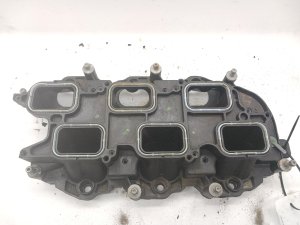
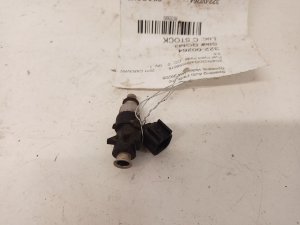
Used OEM Parts in Stock

New Aftermarket Parts Available


The information in this article is provided for general reference and educational purposes only. Vehicle specifications, procedures, and part compatibility can vary by production date, trim level, and region. Always consult your vehicle's factory service manual and verify part numbers before purchasing or performing repairs. Safety-critical components such as airbags, seat belts, and braking systems should be installed by a qualified professional.
- Chrysler Town & Country:
- 🎬 Helpful Videos
- 🛍️ Shop This Part
- What's Unique About the 2011-2016 Chrysler Town & Country
- Symptoms You May Notice
- Most Likely Causes
- Rare But Worth Checking
- Diagnosis Steps
- Parts You'll Likely Need
- Related Codes That Often Appear With This One
- Technical Service Bulletins (TSBs) & Recalls
- Platform-Specific Known Issues
- Mechanic-Grade Diagnostic Values
- Hidden / Shadow Codes Worth Checking
- Scan Tool Commands That Help
- Wiring & Ground Locations
- Real Owner Repair Stories
- OEM Part Supersession History
- Model Year Variations Within This Range
- Diagnostic Flowchart
- Other Known Issues on This Vehicle
- Used vs. New Parts: Buying Guide for This Vehicle
- Real Owner Stories
- 2003 Dodge Grand Caravan 3.3L
- 2017 Jeep Wrangler 3.6L Pentastar V6
- Chrysler Town & Country 3.6L Pentastar V6
- Related OBD-II Codes
- Frequently Asked Questions
- 🎟️ Get 5% Off