

P0203 on 2015-2017 Chrysler 200 2.4L: Cylinder 3 Injector Circuit Causes and Fixes
P0203 on a 2015-2017 Chrysler 200 almost always means the cylinder 3 fuel injector has failed due to an internal electrical open circuit. The most reliable diagnostic is to swap the injector with another cylinder (e.g., cylinder 4) and see if the code follows (to P0204). An OEM Mopar injector (part #04627890AB) costs about $50-$70. Before paying for repairs, check with a dealer about the extended fuel injector warranty which may cover the cost.
- P0203 on this car is an electrical code for the cylinder 3 injector; the most likely cause is a failed injector.
- Before starting any repair, check your engine oil level. Low oil can cause similar misfire symptoms on the 2.4L Tigershark engine.
- Check with a Chrysler dealer if your vehicle is covered by the 15-year/150,000-mile extended warranty for fuel injectors before paying for any repairs.
- The most reliable way to confirm a bad injector at home is to swap it with an adjacent cylinder (like #4) and see if the code changes to P0204.
What's Unique About the 2015-2017 Chrysler 200
The 2.4L Tigershark MultiAir II engine, shared across many Chrysler, Dodge, and Jeep vehicles, has a few quirks related to this code. First, the engine is known for excessive oil consumption, which can cause misfires that might be mistaken for an injector fault, so checking the oil level is a critical first step. The MultiAir valve actuation system is hydraulically operated by engine oil, and low levels can cause a variety of symptoms. Second, due to a class-action lawsuit, many of these vehicles have an extended warranty covering fuel injectors for 15 years or 150,000 miles, potentially making this a no-cost repair at a dealership. Finally, the fuel injectors are located under the intake manifold, making replacement more labor-intensive than on many other engines.
Symptoms You May Notice
- Check Engine Light is on (may be flashing if the misfire is severe)
- Rough or shaking idle
- Engine misfire, felt as a shudder or hesitation
- Reduced engine power and sluggish acceleration
- Poor fuel economy
- Engine may stall at idle
- Replacing the spark plug or ignition coil. While these can cause a misfire (P0303), the P0203 code specifically points to an electrical fault in the injector circuit, not the ignition system.
Most Likely Causes
- Failed Cylinder 3 Fuel Injector 🔴 High Probability Fuel injectors on this platform are a common failure item, leading to an electrical 'open' in their internal coil winding. A class-action lawsuit extended the warranty on these parts for many vehicles. This is a common issue across all vehicles with the 2.4L Tigershark engine.
How to confirm: The most definitive test is to swap the cylinder 3 injector with an adjacent one (e.g., cylinder 4). Clear the codes and run the engine. If the code changes to P0204, the injector is faulty. Alternatively, measure the injector's resistance with a multimeter; it should be around 12-15 ohms. A reading of 'OL' (Open Loop) or infinite resistance confirms failure.
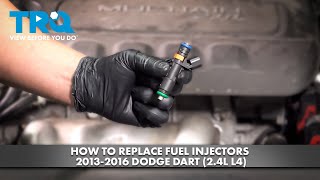
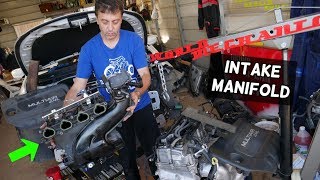
Typical fix: Replace the faulty fuel injector. It's wise to lubricate the new injector's O-rings with clean engine oil before installation to ensure a good seal. Since accessing the injectors requires removing the intake manifold, 🎬 See this walkthrough on removing the intake manifold and gaskets. some owners elect to replace all four at once. 🎬 Watch: Step-by-step fuel injector replacement for the 2.4L engine.
Est. part cost: $47-$70 (OEM), $40-$80 (Aftermarket) - Damaged Wiring or Loose Connector 🟡 Medium Probability The engine wiring harness is routed in a high-heat area, which can make wires and connectors brittle over time. The locking tab on the injector connector can also break, leading to a poor or intermittent connection. In some cases, the harness can chafe against the engine or firewall.
How to confirm: Visually inspect the wiring and connector for cylinder 3. Wiggle the connector with the engine running to see if it affects the idle. Use a 'noid light' in the injector connector; it should flash steadily with the engine running. If it doesn't flash, the problem is in the wiring or PCM.
Typical fix: Repair the damaged section of wire or replace the injector pigtail connector.
Est. part cost: $15-$40 - Low or Incorrect Engine Oil ⚪ Low Probability The 2.4L MultiAir II valvetrain uses engine oil pressure to actuate the intake valves. Critically low or dirty oil can cause erratic valve operation, leading to misfires and symptoms that mimic a fuel injector fault. This engine is widely known for excessive oil consumption due to piston ring issues.
How to confirm: Check the engine oil level and condition on the dipstick before performing any other diagnosis. This engine is known for high oil consumption. Ensure the correct full synthetic SAE 0W-20 oil is being used.
Typical fix: Top up or change the engine oil and filter using the correct specification oil (e.g., SAE 0W-20).
Est. part cost: $40-$70
Rare But Worth Checking
- Faulty Powertrain Control Module (PCM): This is rare. The internal driver circuit for the injector can fail. This should only be considered after the injector and wiring have been proven to be good. Check for available PCM software updates before replacing the hardware, as software glitches have caused similar codes on this engine family.
Diagnosis Steps
- Check the engine oil level and condition. Top up if necessary. This is a critical first step for the 2.4L Tigershark engine.
- Read codes with an OBD-II scanner and confirm P0203 is present. Note any other codes like P0303.
- Locate cylinder 3. On the 2.4L engine, cylinders are numbered 1-2-3-4 from the passenger side (belt side) to the driver side (transmission side). Cylinder 3 is the second from the driver's side.
- Visually inspect the electrical connector and wiring for the cylinder 3 fuel injector. Look for signs of melting, chafing, or a loose connection. Pay close attention to the plastic locking tab on the connector.
- Perform a 'wiggle test' on the connector with the engine idling to see if it causes a change in the engine's roughness.
- To definitively test the circuit, unplug the injector and connect a 'noid light'. Start the engine. A steady flashing light means the wiring and PCM are sending the signal correctly. No light or a solid light points to a wiring or PCM issue.
- If the noid light flashes correctly, the injector is the primary suspect. Turn off the engine and relieve fuel system pressure. Proceed to swap the cylinder 3 injector with the cylinder 4 injector.
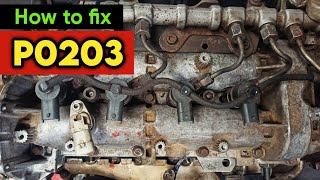
- Clear the codes, start the engine, and re-scan. If the code is now P0204, the fuel injector is confirmed to be faulty and must be replaced. If P0203 returns, the problem is in the wiring harness between the PCM and the injector. 🎬 Watch: A deep dive into P0203 causes and circuit fixes.
Parts You'll Likely Need
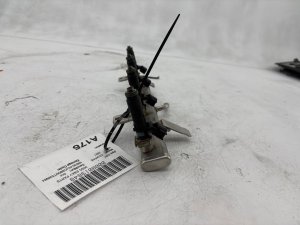
- Fuel Injector
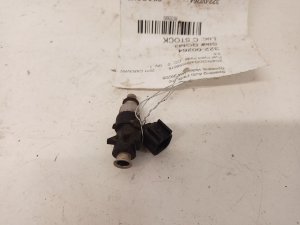
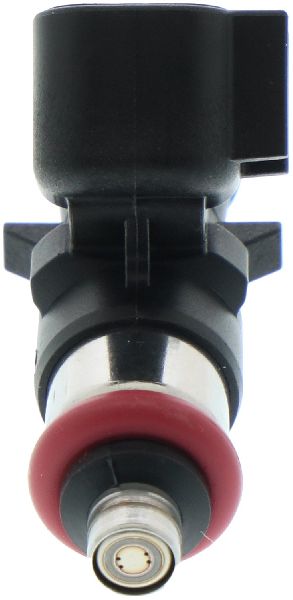
(OEM #04627890AB)— This is the most common failure point for a P0203 code on this engine, typically due to an internal electrical failure. The OEM part number supersedes 4627890AA.
Trusted brands: Mopar, Bosch, Standard Motor Products (SMP), TRQ
OEM price range: $47-$70
Aftermarket price range: $40-$80
Related Codes That Often Appear With This One
- P0303 — This code means 'Cylinder 3 Misfire Detected.' A P0203 fault prevents fuel from being injected into cylinder 3, which directly causes it to misfire.
- P0201, P0202, P0204 — Seeing other injector codes may point to a widespread wiring harness issue or a failing PCM. A P020x code will also appear as a result of swapping a bad injector to a different cylinder during diagnosis.
Technical Service Bulletins (TSBs) & Recalls
- TSB #09-003-23 Rev. A: Addresses excessive oil consumption on the 2.4L engine, a related issue that can cause similar symptoms. It outlines an oil consumption test and potential engine replacement under an extended warranty (XB1).
- TSB #18-014-14: While for code P0204 on a 2014 model, it's relevant as it involved a PCM reflash to fix an injector circuit code on the same engine family, showing a precedent for software-related fixes.
Platform-Specific Known Issues
- Extended Warranty: A class-action settlement extended the warranty for fuel injectors to 15 years/150,000 miles on model-year 2015-2017 Chrysler 200 vehicles originally sold as PZEV in CA, CT, DE, ME, MD, MA, OR, PA, RI, VT, or WA. Owners should check with a dealer before paying for repairs.
- Oil Consumption: The 2.4L Tigershark engine is subject to TSB #09-003-23 Rev. A for excessive oil consumption. Low oil levels can cause a variety of drivability problems that can be misdiagnosed as injector issues.
Mechanic-Grade Diagnostic Values
- Fuel Injector Coil Resistance — expected: 12.3 - 13.4 Ohms. Failure: A reading of 'OL' (Open Loop), near 0 Ohms (short circuit), or a value significantly outside the expected range.
- Injector Pulse Width (at warm idle) — expected: 2.0 - 4.0 milliseconds (ms). Failure: A value of 0 ms for cylinder 3 while others are pulsing, or a value that is drastically different from the other cylinders.
- Injector Control Circuit Voltage at PCM — expected: Pulsing 0-12V signal when cranking or running (best viewed on an oscilloscope).. Failure: No pulse (open wire or dead PCM driver), constant voltage (short to power), or constant ground (short to ground).
- Injector Power Supply Wire Voltage (Key On, Engine Off) — expected: ~12V (Battery Voltage). Failure: Low or no voltage indicates a break in the power supply circuit, possibly from the ASD relay or a fuse.
Scan Tool Commands That Help
- wiTECH (Dealer Tool) or equivalent high-end scanner: Injector Kill Test / Cylinder Balance Test — This bidirectional command allows a technician to individually disable each fuel injector while the engine is running. If disabling cylinder 3 causes no change in engine RPM or smoothness, it confirms that cylinder is not contributing. If disabling other cylinders causes a noticeable drop in RPM, it further isolates the problem to the cylinder 3 circuit.
Wiring & Ground Locations
- PCM Connector C2, Pin 10 — On the main Powertrain Control Module (PCM), located in the engine bay near the battery.. This is the specific control circuit pin for the cylinder 3 fuel injector. The wire color is typically Brown/Light Blue (BR/LB). Testing for a pulse signal at this pin can definitively determine if the PCM driver is functioning correctly, separating a PCM failure from a wiring harness issue.
- Injector Power Supply (ASD Relay Output) — This circuit provides power to all fuel injectors and is controlled by the Auto Shutdown (ASD) relay, usually located in the under-hood fuse box (Power Distribution Center).. The power supply wire (often Dark Green/Orange) is common to multiple injectors. While a failure here would likely trigger codes for multiple injectors, an intermittent fault or high resistance in the harness branch leading to injector 3 could be a possibility.
- G308 (Engine Ground) — Located at the right rear of the engine.. While not directly for the injector circuit, a poor engine block ground can cause a variety of electrical issues and erratic sensor readings. Ensuring this connection is clean and tight is a good practice during any electrical diagnosis.
Real Owner Repair Stories
- Vehicle-Specific Repair Database (iATN) (Jeep Cherokee with 2.4L MultiAir (same engine platform)) — Intermittent P0202 code and engine hesitation.
❌ Tried (didn't work) Initial visual inspection did not reveal any issues.
✅ What actually fixed it The main engine wiring harness was found to be chafing against the firewall, causing intermittent damage to the cylinder 2 injector wire. Repairing the damaged section of the wire and re-routing the harness to prevent future chafing resolved the code. - NHTSA ODI #11539650 (Chrysler Pacifica - Cross-Manufacturer Reference) — An owner reported that the vehicle was shaking and the check engine light was on. A scan revealed three codes: P0420, P0303, and P0203.
OEM Part Supersession History
4627890AA→04627890AB— Standard part revision and improvement by the manufacturer.
Diagnostic Flowchart
Other Known Issues on This Vehicle
Issues unrelated to this code that are worth knowing about as an owner of this generation:
- Excessive Engine Oil Consumption 🔴 High — Very common across all model years. Can start at any mileage. Consumption of 1 quart per 1,000-2,000 miles is frequently reported. (Ref: TSB 09-003-23 Rev. A; Warranty Extension XB1.)
- ZF 9-Speed (948TE) Transmission Faults 🔴 High — Widespread issue, especially in 2015 models. Symptoms include harsh/erratic shifting, lurching, and sudden shifts to neutral. (Ref: Multiple TSBs (e.g., 21-013-16) and a recall for a wiring harness issue that could cause a shift to neutral.)
- MultiAir Actuator ('Brick') Failure 🟠 Medium — Less common than oil consumption but a known failure point, often triggered by low/dirty oil. Typically occurs at higher mileage (70k+ miles). (Ref: No specific TSB, but related to oil quality TSBs. Failure often throws codes like P1067.)
- Electronic System Glitches 🟡 Low — Intermittent issues reported by owners, including problems with the Uconnect infotainment system, electronic throttle body warnings, and other random electrical faults. (Ref: Various software update TSBs exist for different modules.)
Used vs. New Parts: Buying Guide for This Vehicle
When a used part is the smart pick: A used wiring harness pigtail from a junkyard is a smart choice if only the plastic connector is broken, as this is a common failure point. A complete used engine wiring harness can also be a cost-effective solution if multiple connectors or wires are damaged by heat or rodents.
Donor-vehicle mileage cap: roughly under 100000 miles for the part to have meaningful remaining life.
What to inspect on the donor part:
- For a fuel injector, avoid parts from engines with known high oil consumption or sludge, as this can affect injector performance.
- For wiring, inspect for any signs of brittleness, melting, or previous repairs (e.g., tape, butt connectors).
- Ensure the plastic locking tabs on any connectors are intact and functional.
- Check the donor vehicle's history for signs of front-end collision or fire, which could have damaged the harness.
OEM-only on this vehicle (don't cheap out):
- Powertrain Control Module (PCM) - Aftermarket or improperly programmed used units often cause compatibility issues with the vehicle's security system. A remanufactured OEM unit programmed to the vehicle's VIN is the most reliable option.
Aftermarket brands forum-validated for this vehicle:
- Bosch (often the original equipment manufacturer)
- Standard Motor Products (SMP)
- Continental
Brands owners have reported issues with on this vehicle:
- Unnamed, no-brand injectors from online marketplaces should be avoided, as their quality control, flow rates, and coil resistance can be inconsistent, leading to performance issues or repeat failures.
Real Owner Stories
Aggregated from forums and TSBs cited above. Mileages and costs reflect what owners reported in those sources.
2015-2017 Chrysler 200 2.4L Tigershark
Symptoms: Check Engine Light on, engine misfire felt as a shudder or hesitation, and reduced engine power with sluggish acceleration.
What fixed it: Replacement of the Cylinder 3 fuel injector after confirming an electrical 'open' in the internal coil winding.
Source hint: vehicle_specific_issues
2015 Chrysler 200 2.4L
Symptoms: The engine experienced excessive oil consumption, which can lead to drivability problems misdiagnosed as injector issues.
What fixed it: Oil consumption test and potential engine replacement under the XB1 warranty extension as outlined in TSB #09-003-23 Rev. A.
Source hint: TSB #09-003-23 Rev. A
2013-2016 Dodge Dart 2.4L L4
Symptoms: P0203 code indicating an injector circuit malfunction on the 2.4L Tigershark engine.
What fixed it: Replacement of the fuel injectors following a step-by-step visual guide for the 2.4L platform.
Source hint: YouTube - 'How to Replace Fuel Injectors 2013-2016 Dodge Dart (2.4L L4)' by TRQ Auto Parts
Related OBD-II Codes
Frequently Asked Questions
Is there an extended warranty for the fuel injectors on my 2015-2017 Chrysler 200?
My Chrysler 200 2.4L is throwing P0203; could this be related to the engine oil issues I've heard about?
How do I know if the P0203 code on my 2.4L Tigershark is a bad injector or a wiring problem?
Does TSB #09-003-23 Rev. A apply to the P0203 code on my Chrysler 200?
Where is the cylinder 3 fuel injector located on the Chrysler 200 2.4L engine?
What is the correct oil type for my 2015-2017 Chrysler 200 2.4L to prevent MultiAir issues?
Helpful Videos

Used OEM Parts in Stock
New Aftermarket Parts Available


The information in this article is provided for general reference and educational purposes only. Vehicle specifications, procedures, and part compatibility can vary by production date, trim level, and region. Always consult your vehicle's factory service manual and verify part numbers before purchasing or performing repairs. Safety-critical components such as airbags, seat belts, and braking systems should be installed by a qualified professional.
- Chrysler 200:
- 🎬 Helpful Videos
- 🛍️ Shop This Part
- What's Unique About the 2015-2017 Chrysler 200
- Symptoms You May Notice
- Most Likely Causes
- Rare But Worth Checking
- Diagnosis Steps
- Parts You'll Likely Need
- Related Codes That Often Appear With This One
- Technical Service Bulletins (TSBs) & Recalls
- Platform-Specific Known Issues
- Mechanic-Grade Diagnostic Values
- Scan Tool Commands That Help
- Wiring & Ground Locations
- Real Owner Repair Stories
- OEM Part Supersession History
- Diagnostic Flowchart
- Other Known Issues on This Vehicle
- Used vs. New Parts: Buying Guide for This Vehicle
- Real Owner Stories
- 2015-2017 Chrysler 200 2.4L Tigershark
- 2015 Chrysler 200 2.4L
- 2013-2016 Dodge Dart 2.4L L4
- Related OBD-II Codes
- Frequently Asked Questions
- 🎟️ Get 5% Off