

P0203 on 2010-2014 Cadillac CTS: Cylinder 3 Injector Circuit Malfunction Causes and Fixes
P0203 on a 2010-2014 Cadillac CTS most often means the cylinder 3 fuel injector has failed or its wiring is damaged. A bad injector is the most common cause, but a known issue with wiring harness chafing (TSB PIP4924D) should be investigated first. Expect a shop repair to cost $975-$1350 due to the labor to access the injector under the intake manifold. It is critical to use the correct injector, as 2010-2011 models use a high-resistance injector while 2012-2014 models use a low-resistance one.
- P0203 is an electrical fault code for the cylinder 3 fuel injector, not an ignition or mechanical problem.
- The most likely causes are a failed injector or a chafed wiring harness, as detailed in GM TSB PIP4924D.
- A simple diagnostic step is to swap the cylinder 3 injector with another cylinder to see if the code follows the injector.
- Due to the location of the injectors under the intake manifold, replacement is labor-intensive and has a high DIY difficulty.
- Do not drive extensively with this code, as the resulting misfire can cause expensive damage to the catalytic converter.
What's Unique About the 2010-2014 Cadillac CTS
For the direct-injection V6 engines in the second-generation CTS, a P0203 code is frequently more than just a bad injector. There are key differences by year: 2010-2011 models use the 3.0L LF1 or 3.6L LLT engine with a Bosch ECM and high-impedance injectors (~12 Ohms), while 2012-2014 models use the 3.6L LFX with a Delphi ECM and low-impedance injectors (~1.5 Ohms). Despite these differences, all are covered by GM Technical Service Bulletin (TSB) PIP4924D, which highlights that the fuel injector wiring harness is prone to rubbing through against components like the intake plenum, valve cover bolts, fuel lines, or the side of the cylinder head. This makes a thorough wiring inspection just as critical as testing the injector itself.
Symptoms You May Notice
- Check Engine Light is on
- Flashing Check Engine light if the misfire is severe
- Rough idle and engine vibration
- Engine misfire, which may feel like a popping or jerking sensation
- Poor acceleration and reduced engine power
- Decreased fuel economy
- Replacing the spark plug or ignition coil for cylinder 3. A misfire code (P0303) can be caused by ignition parts, but a P0203 code is specific to the fuel injector's electrical circuit and will not be fixed by ignition parts.
Most Likely Causes
- Failed Cylinder 3 Fuel Injector 🔴 High Probability Direct injectors operate under high pressure and temperature and can fail electrically (coil winding) or mechanically over time. This is a very common failure point for this code.
How to confirm: Swap the cylinder 3 injector with another cylinder (e.g., cylinder 1). If the code changes to P0201, the injector is faulty. You can also test the injector's internal resistance with a multimeter. 🎬 Watch: How to test fuel injectors with a multimeter Crucially, the spec depends on the engine: for 2010-2011 3.0L LF1 / 3.6L LLT, expect ~12 Ohms. For 2012-2014 3.6L LFX, expect 1.2-1.8 Ohms. An open (OL) or shorted (near 0) reading indicates a bad injector.
Typical fix: Replace the failed fuel injector. It is highly recommended to replace all three injectors on the same bank (Bank 1) as well as all injector seals, since the intake manifold must be removed for access. 🎬 See this 3.6L intake and fuel injector replacement walkthrough
Est. part cost: $70-$180 per injector - Chafed or Damaged Wiring Harness 🟡 Medium Probability As noted in GM TSB PIP4924D, the injector harness can rub against the intake plenum, valve cover bolts, fuel lines, or the sharp edge of the cylinder head, causing an open or short in the circuit.
How to confirm: Visually inspect the entire length of the injector wiring harness for Bank 1. The wire for cylinder 3 is typically Pink with a Black stripe. Pay close attention to the contact points mentioned in the TSB. Perform a wiggle test on the harness with the engine running to see if it induces a misfire or stumble.
Typical fix: Repair the damaged section of wire and protect the harness from future chafing using loom or by re-routing it slightly. If the connector is damaged, replace it with a new pigtail (e.g., ACDelco PT2160).
Est. part cost: $10-$50 for repair materials, $100-$250 for a new harness section. - Poor Connection at Injector or ECM ⚪ Low Probability Vibration and heat cycles can cause electrical connectors to become loose or corroded over time. The locking tabs on the injector connectors can become brittle and break.
How to confirm: Disconnect and inspect the electrical connector at the fuel injector and the corresponding pins at the ECM. Look for bent, corroded, or backed-out pins. Ensure the connector clicks firmly into place.
Typical fix: Clean or repair the connector terminals. Apply dielectric grease upon reassembly. If the connector housing is damaged, it may need to be replaced with a pigtail.
Est. part cost: $10-$30
Rare But Worth Checking
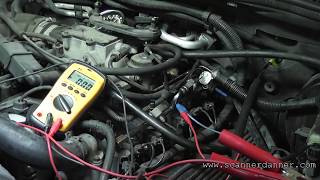
- Faulty Engine Control Module (ECM): This is rare. The injector driver circuit within the ECM can fail, but all other possibilities, especially wiring and the injector itself, should be exhaustively ruled out first. A post on the ScannerDanner forum for a similar CTS with a P0202 code confirmed an ECM replacement was the ultimate fix after other parts failed to resolve it.
Diagnosis Steps
- Verify the code with an OBD-II scanner. Note any other codes present, especially P0303.
- Clear the codes and test drive to see if the P0203 code returns immediately.
- Locate cylinder 3 (middle cylinder, passenger side/right bank).
- Visually inspect the injector wiring harness for chafing, especially against the intake manifold, valve covers, and fuel lines as per TSB PIP4924D. The wire for cylinder 3 is typically Pink/Black.
- Perform a "wiggle test": With the engine idling, carefully wiggle the wiring harness for Bank 1. If the idle changes, a wiring fault is highly likely.
- Use a noid light to test the injector connector. The light should flash steadily when the engine is cranked or running, indicating the ECM is sending a signal. Note: For direct injection systems, a standard noid light may not work due to the high voltage (65V+) pulses; a lab scope is the definitive tool.
- If the noid light does not flash, the problem is in the wiring or the ECM. 🎬 Watch: How to test a fuel injector circuit for wiring faults If it flashes, the problem is likely the injector itself.
- Test the injector's resistance. Disconnect the injector and measure across its two pins. For 2010-2011 (3.0L/3.6L LLT), it should be ~12 Ohms. For 2012-2014 (3.6L LFX), it should be 1.2-1.8 Ohms. If it's out of spec, the injector is bad.
- To definitively confirm a bad injector, swap the cylinder 3 injector with another one (e.g., cylinder 1). Clear the codes and run the engine. If the code moves to P0201, the injector is confirmed bad. If the code remains P0203, the problem is in the wiring or ECM.
- If the injector and wiring are confirmed to be good, the final step is to suspect a faulty ECM injector driver, though this is the least common cause.
Parts You'll Likely Need
- Direct Fuel Injector (2012-2014 3.6L LFX)
(OEM #12634123)— The internal coil of the low-impedance fuel injector for the LFX engine fails, causing an open or short circuit.
Trusted brands: ACDelco, Bosch
OEM price range: $130-$180
Aftermarket price range: $70-$120 - Direct Fuel Injector (2010-2011 3.0L LF1 / 3.6L LLT)
(OEM #12669384 (supersedes 12638530))— The internal coil of the high-impedance fuel injector for the LF1/LLT engines fails, causing an open circuit. These are not interchangeable with LFX injectors.
Trusted brands: ACDelco, Bosch
OEM price range: $110-$160
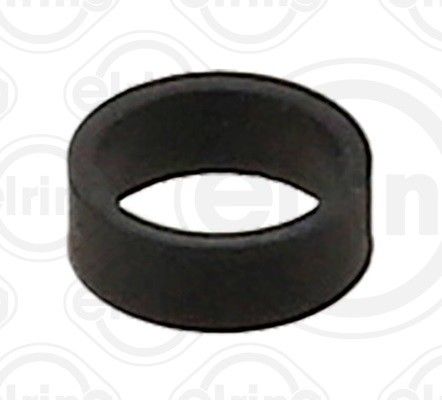
Aftermarket price range: $60-$110 - Fuel Injector Seal Kit — New Teflon seals are required anytime a direct injector is removed and reinstalled to prevent high-pressure fuel leaks. They are single-use.
Trusted brands: ACDelco, Fel-Pro
OEM price range: $15-$25 per injector
Aftermarket price range: $10-$20 per injector - Intake Manifold Gasket Set — The intake manifold must be removed to access the fuel injectors, and the gaskets are one-time use and must be replaced to prevent vacuum leaks.
Trusted brands: ACDelco, Fel-Pro
OEM price range: $40-$60
Aftermarket price range: $25-$40 - Fuel Injector Connector Pigtail
(OEM #ACDelco PT2160 / GM 13576411)— If the wiring is damaged right at the connector or the locking tab is broken, splicing in a new pigtail is the standard repair.
Trusted brands: ACDelco, Dorman
OEM price range: $25-$40
Aftermarket price range: $15-$30
Related Codes That Often Appear With This One
- P0303 — P0303 means "Cylinder 3 Misfire Detected." Since P0203 indicates an electrical fault stopping the injector from firing, a misfire on that cylinder is the direct and expected result.
- P0300 — This code for 'Random/Multiple Cylinder Misfire' can appear if a wiring harness issue is intermittently affecting more than one injector circuit or if the initial misfire is severe enough to disrupt overall engine balance.
- P2146 — This code indicates a fault with the entire injector group for Bank 1 (cylinders 1, 3, 5). If a wiring issue is severe enough, it can affect the entire bank's power supply circuit, triggering P2146 alongside the individual P0203 code.
Technical Service Bulletins (TSBs) & Recalls
- PIP4924D: SES Light And Misfire With Injector Codes - Recommends inspecting the fuel injector wiring harness for rub-through at common chafe points before replacing any parts.
Platform-Specific Known Issues
- GM Technical Service Bulletin PIP4924D specifically calls out the fuel injector wiring harness for potential chafing issues against engine components. The most common rub-through points are against the intake plenum, sharp edges of the cylinder head, valve cover bolts, and fuel lines.
Mechanic-Grade Diagnostic Values
- Low-Side Fuel Pressure (at Schrader valve) — expected: 297-400 kPa (43-58 psi) at idle. 276-600 kPa (40-87 psi) at key-on, engine-off.. Failure: Pressure below spec could indicate a weak in-tank fuel pump, but is not a direct cause of a P0203 circuit code.
- High-Side Fuel Pressure (Scan Tool Data) — expected: Ranges from 2,000-2,800 PSI, controlled by the high-pressure fuel pump.. Failure: Low high-side pressure would typically set other codes (e.g., P0087) before an isolated injector circuit code.
- Injector Circuit Voltage (at injector connector) — expected: These are not simple 12V circuits. The ECM uses a capacitive charge to send a ~65V pulse to open the injector, followed by a lower holding voltage. This cannot be accurately measured with a standard multimeter.. Failure: The only way to verify the signal is with a lab scope. A standard noid light will not work and may be damaged.
- Injector Resistance (LFX Engine, 2012-2014) — expected: 1.25-1.75 ohm when ECT is between 10-32°C (50-90°F). A common field measurement is 1.2-1.8 ohms.. Failure: A reading of OL (open loop) or near 0 ohms indicates a failed injector.
- Injector Resistance (LLT/LF1 Engine, 2010-2011) — expected: Approximately 11-15 ohms.. Failure: A reading outside this range indicates a failed injector.
Hidden / Shadow Codes Worth Checking
- P0267 / P0268: DTC P0267 is 'Cylinder 3 Injector Control Circuit Low Voltage' and P0268 is 'Cylinder 3 Injector Control Circuit High Voltage'. These are more specific versions of the general P0203 fault and may be set simultaneously or viewable on a dealer-level scan tool like GDS2, helping to pinpoint if the fault is a short to ground or a short to power. (see via GM GDS2 or a high-end professional scan tool.)
Scan Tool Commands That Help
- GDS2 (GM Diagnostic System 2): Injector Test / Cylinder Power Balance — This bidirectional command allows the technician to disable one injector at a time to see the effect on engine RPM and smoothness. When cylinder 3 is disabled, there should be no change in how the engine runs, confirming it was not contributing. This helps verify the fault location before disassembly.
- GDS2 (GM Diagnostic System 2): Fuel Pressure Control — Allows the technician to command the in-tank fuel pump ON to verify low-side fuel pressure without starting the engine. This is useful for initial system checks and leak-down tests.
Wiring & Ground Locations
- G130 / G131 — G130 is on the rear of the right cylinder head (Bank 2). G131 is on the rear of the left cylinder head (Bank 1).. These are primary engine-to-chassis grounds. While not directly for the injector circuit, a poor ground at G131 (Bank 1, where cylinder 3 is) can cause unstable sensor readings and erratic behavior for all components on that bank.
- ECM Connector X1 — The ECM is located in the left front of the engine compartment. X1 is one of the main connectors.. For the LFX engine, the cylinder 3 injector control wires (Dark Green and Dark Green/White) terminate at pins 51 and 26 of the X1 connector. Technicians can test for continuity from these pins to the injector connector to isolate a wiring break without tearing the entire harness apart.
- X116 / X117 Connectors — These are large, multi-way harness connectors located at the rear of the intake manifold.. These connectors serve as the main pass-through for the engine harness. Service manual procedures often involve disconnecting them to test the wiring harness in segments—from the ECM to these connectors, and from these connectors to the injectors.
Real Owner Repair Stories
- CadillacForums.com user post (2011 Cadillac CTS 3.6L (LLT)) — P0203, P0303, rough idle, flashing check engine light.
❌ Tried (didn't work) Initial diagnosis suggested a bad injector.
✅ What actually fixed it The owner found the injector wiring harness was rubbing against the back of the cylinder head, causing an intermittent short. After repairing the damaged wires and securing the harness away from the sharp edge, the codes were resolved.
OEM Part Supersession History
12638530→12669384— Standard part evolution for improved reliability or manufacturing process.
Heads up: This part number trail (which also includes older numbers 12611545 and 12632255) is for the high-impedance (~12 Ohm) injector used on the 3.0L LF1 and 3.6L LLT engines (2010-2011). It is NOT compatible with the 2012+ 3.6L LFX engine.
Model Year Variations Within This Range
- 2012-2014: The 2012 model year introduced the 3.6L LFX engine, which replaced the previous LLT. The LFX uses low-impedance (~1.5 Ohm) injectors (PN 12634123) and a Delphi ECM. This is a critical distinction from the 2010-2011 LLT/LF1 engines which use high-impedance (~12 Ohm) injectors (PN 12669384) and a Bosch ECM. The parts are not interchangeable.
Diagnostic Flowchart
Real Owner Stories
Aggregated from forums and TSBs cited above. Mileages and costs reflect what owners reported in those sources.
Cadillac CTS V6
Symptoms: Needed to test for an injector signal without removing the intake manifold.
What fixed it: Identified the Pink/Black wire for cylinder 3 and successfully tested the injector harness connector for a signal to rule out wiring issues before teardown.
Source hint: YouTube video by user JaboTheMechanic titled 'cts p0201 p0202 p0203 p0204 p0205 p0206'
Cadillac CTS V6
Symptoms: Engine misfire accompanied by a flashing check engine light.
What fixed it: Removed the intake manifold to replace the fuel injectors. The repair was noted as difficult specifically due to the hard-to-reach rearmost bolts on the manifold.
Source hint: YouTube video by user JaboTheMechanic titled 'cadillac cts injector replacement missfire check engine light flashing'
Cadillac CTS V6
Symptoms: Persistent injector circuit code even after replacing the fuel injector and verifying the wiring harness was intact.
What fixed it: Replaced the Engine Control Module (ECM) due to a failed internal injector driver, which was the ultimate root cause.
Source hint: ScannerDanner Forum Discussion
Related OBD-II Codes
Frequently Asked Questions
Does TSB PIP4924D apply to my 2010-2014 Cadillac CTS for code P0203?
What is the correct resistance specification for the cylinder 3 fuel injector on my CTS?
Where is cylinder 3 located on the 3.0L or 3.6L V6 engine?
Can I use a standard noid light to test the injector pulse on my CTS?
If I need to replace the cylinder 3 injector, should I replace the others?
What color is the wiring for the cylinder 3 injector?
Is there a specific replacement connector available if my injector wiring is damaged?
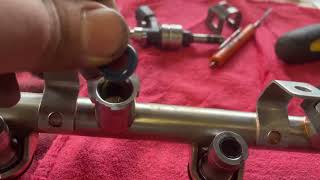
Helpful Videos
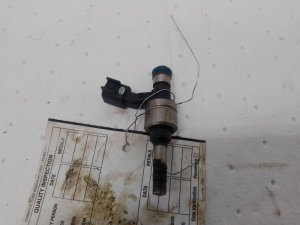
Used OEM Parts in Stock


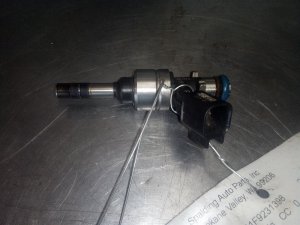


New Aftermarket Parts Available


The information in this article is provided for general reference and educational purposes only. Vehicle specifications, procedures, and part compatibility can vary by production date, trim level, and region. Always consult your vehicle's factory service manual and verify part numbers before purchasing or performing repairs. Safety-critical components such as airbags, seat belts, and braking systems should be installed by a qualified professional.
- Cadillac CTS:
- 🎬 Helpful Videos
- 🛍️ Shop This Part
- What's Unique About the 2010-2014 Cadillac CTS
- Symptoms You May Notice
- Most Likely Causes
- Rare But Worth Checking
- Diagnosis Steps
- Parts You'll Likely Need
- Related Codes That Often Appear With This One
- Technical Service Bulletins (TSBs) & Recalls
- Platform-Specific Known Issues
- Mechanic-Grade Diagnostic Values
- Hidden / Shadow Codes Worth Checking
- Scan Tool Commands That Help
- Wiring & Ground Locations
- Real Owner Repair Stories
- OEM Part Supersession History
- Model Year Variations Within This Range
- Diagnostic Flowchart
- Real Owner Stories
- Cadillac CTS V6
- Cadillac CTS V6
- Cadillac CTS V6
- Related OBD-II Codes
- Frequently Asked Questions
- 🎟️ Get 5% Off