

P0203 on 2004-2013 BMW 1 Series N47 Diesel: Injector Circuit Malfunction Fixes
The P0203 code on a BMW 1 Series N47 diesel almost always points to a faulty fuel injector in cylinder 3 or a problem with its wiring. A new Bosch injector costs around $200-$350, and it must be coded to the vehicle's computer (DDE) after installation using BMW-specific software like ISTA.
- P0203 on your BMW 1 Series diesel means there's an electrical problem with the cylinder 3 fuel injector circuit.
- The most likely cause is a failed fuel injector, followed by damaged wiring. A faulty engine computer (DDE) is rare.
- The best DIY diagnostic is to swap the cylinder 3 injector with another one; if the code follows the injector, you've found the problem.
- A new injector is not plug-and-play. It MUST be coded to the car's computer using BMW-specific tools to function correctly.
- Driving with this fault will cause a rough idle and severe power loss, and should be fixed soon to avoid damage to emissions components.
What's Unique About the 2004-2013 BMW 1 Series

On the BMW N47 diesel engine, this code is a straightforward electrical fault. While the N47 is infamous for timing chain problems, those are unrelated to P0203. The key platform-specific detail is that replacing a fuel injector on this engine is not a simple swap. The new injector must be 'coded' to the DDE using BMW-specific diagnostic software like ISTA or Tool32 to input the new injector's calibration value. Failure to do so can lead to persistent running issues, rough idle, and incorrect fueling.
Generation note: The 2004-2013 year range covers the first generation (E81, E82, E87, E88) and the first few years of the second generation (F20, F21) 1 Series. Both generations used the N47 engine. The causes and diagnostic procedures for P0203 are identical for both, though specific part numbers for injectors may vary slightly by production date and power output.
Symptoms You May Notice
- Check Engine Light is on
- Engine runs rough or vibrates, especially at idle
- Noticeable loss of power and poor acceleration (limp mode)
- Engine misfire, which may feel like a jerking or stumbling sensation
- Increased fuel consumption
- Difficulty starting the engine
- Smell of unburnt diesel from the exhaust
- Replacing spark plugs (diesel engines do not have them).
- Replacing the fuel filter without diagnosing the circuit; while a clogged filter can cause performance issues, it will not typically trigger a specific injector circuit code like P0203.
Most Likely Causes

- Faulty Cylinder 3 Fuel Injector 🔴 High Probability Diesel injectors operate under high pressure and temperature, and internal electrical components like the solenoid or piezo element can fail over time. Injector problems are a known issue on modern diesels, including the N47.
How to confirm: The most reliable method is to swap the cylinder 3 injector with an injector from another cylinder (e.g., cylinder 4). Clear the codes and run the engine. If the fault code changes to P0204 (for cylinder 4), the injector is confirmed to be faulty. A multimeter can also be used to check the injector's internal resistance to see if it's open or out of spec.
Typical fix: Replace the faulty fuel injector. The new injector must be coded to the DDE with a compatible diagnostic tool. It is also critical to replace the copper sealing washer and ensure the injector bore is clean before installation.
Est. part cost: $200-$450 - Wiring Harness or Connector Fault 🟡 Medium Probability The engine wiring harness is exposed to constant vibration and heat cycles, which can cause wires to break or insulation to crack and chafe over time. The connector at the injector can also become corroded or develop loose pins, sometimes due to water ingress.
How to confirm: Visually inspect the wiring going to the cylinder 3 injector for any signs of damage, melting, or corrosion at the connector. Use a multimeter to check for continuity on both wires from the injector connector back to the DDE connector. A noid light can also be used to verify if the DDE is sending a pulse signal to the connector.
Typical fix: Repair the broken wire or replace the injector connector pigtail. If damage is extensive, a portion of the engine harness may need to be replaced.
Est. part cost: $15-$75
Rare But Worth Checking
- Faulty Digital Diesel Electronics (DDE/ECU): This is the least likely cause. The injector driver circuit inside the DDE can fail, but this is usually considered only after definitively ruling out the injector and wiring. On some BMW models, the DDE is housed in an electronics box (E-Box) in the engine bay that can be susceptible to water ingress, which can corrode connections or damage the module itself.
Diagnosis Steps

- Read the fault codes with an OBD-II scanner to confirm P0203 is present. Note any other codes, especially P0303 or BMW-specific 4xxx codes.
- Locate cylinder 3 on the N47 engine (it is the third cylinder from the front of the car).
- Visually inspect the electrical connector and wiring harness for injector #3. Look for loose connections, corrosion, or obvious damage like chafed or melted wires.
- Check the main engine computer (DDE/DME) E-Box for any signs of water ingress or corrosion, as this can cause various electrical faults.
- If the visual inspection is inconclusive, perform an 'injector swap test'. Disconnect the battery. Swap the fuel injector from cylinder 3 with the one from cylinder 4. Reconnect everything.
- Clear the fault codes, start the engine, and let it run for a few minutes. Re-scan for codes.
- If the code is now P0204, the fuel injector you moved to cylinder 4 is faulty and must be replaced.
- If the code remains P0203, the injector is good, and the fault lies in the wiring or the DDE.
- To test the wiring, use a multimeter to check for continuity from the injector connector back to the DDE. You will need a wiring diagram for pin locations. Check for shorts to ground or power.
- A 'noid light' can be plugged into the injector connector to visually confirm if the DDE is sending a pulse signal while the engine is cranked. If the light flashes, the DDE and wiring are likely good. If it does not flash, the problem is in the wiring or the DDE itself.
- If the injector and wiring are confirmed to be good, the DDE is the likely culprit, which requires professional diagnosis and replacement.
Parts You'll Likely Need

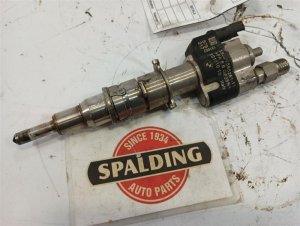
- Diesel Fuel Injector
(OEM #13537805428 (Bosch: 0445116024))— This is the most common cause of a P0203 fault. The internal electronics of the injector fail, creating an open or short circuit. Other compatible Bosch part numbers may include 0445110382, 0445110478, and others depending on the specific engine variant. Always verify by VIN.
Trusted brands: Bosch, BMW (Genuine)
OEM price range: $350-$500
Aftermarket price range: $200-$350 - Fuel Injector Connector Pigtail — If the wiring is damaged right at the connector, replacing the pigtail is the standard repair.
Trusted brands: Bosch, Delphi
OEM price range: $30-$60
Aftermarket price range: $15-$30
Related Codes That Often Appear With This One
- P0303 — P0303 means 'Cylinder 3 Misfire Detected'. Since the P0203 code indicates the injector isn't firing correctly, a misfire on that same cylinder is a direct consequence.
- 4xxx (BMW-specific codes) — When using BMW-specific diagnostic software like ISTA, you may see manufacturer codes (e.g., 4A54, 4BDB) alongside the generic P-code. These often provide more detailed information but usually point back to the same root cause. A Reddit user with an E87 120d reported seeing 443C, 4A07, 4A10, and 4B37 along with P0203, all related to the injector issue.
Platform-Specific Known Issues
- Water Ingress in DME/DDE E-Box: On some models like the E90, water can leak into the electronics box (E-Box) that houses the main engine computer. A forum user on E90Post noted that past water issues can lead to corrosion and bizarre electrical problems, including injector circuit faults. It is worth inspecting this area for any signs of moisture or corrosion when diagnosing electrical codes.
Mechanic-Grade Diagnostic Values
- Piezo fuel injector internal resistance (pin-to-pin) — expected: 170 kΩ to 200 kΩ. Failure: A reading outside this range, or one that is not instant and stable, indicates a faulty injector. An open circuit (infinite resistance) or a low reading (e.g., 50kΩ) points to failure.
- Piezo fuel injector resistance to ground (either pin to injector metal casing) — expected: Infinite resistance / Open Line (OL). Failure: Any continuity or measurable resistance (e.g., 1000 ohms) indicates an internal short to ground, often caused by corrosion. This is a definitive failure.
- ISTA 'Smooth Running' or 'Injector Quantity Compensation' values at idle — expected: Close to 0.0 mm³/stroke. Values should be stable.. Failure: A value consistently exceeding +4.0 or -5.0 mm³/stroke indicates the DDE is struggling to balance that cylinder, often due to a faulty injector.
Hidden / Shadow Codes Worth Checking
- 443C: Injector cylinder 3, interruption. This is the direct BMW-specific equivalent of the generic P0203 code. (see via BMW-specific diagnostic software like ISTA, INPA, or high-end scanners with BMW software.)
- 4AF5: Zero-quantity adaptation, injector, cylinder 3. This code indicates the DDE has failed to adapt the minimum fueling for injector 3, pointing to a problem with that injector's performance at idle. (see via BMW-specific diagnostic software like ISTA or INPA.)
- 4BDB: Fuel presupply-pressure control. This suggests an issue with the low-pressure fuel system. While not directly an injector circuit fault, a fuel supply problem can sometimes trigger other fuel-related codes. (see via BMW-specific diagnostic software like ISTA or INPA.)
Scan Tool Commands That Help
- ISTA (BMW Dealer Software): Injector Coding / IMA-ISA Adjustment — This is mandatory after replacing a fuel injector. The function writes the new injector's multi-digit calibration code into the DDE, ensuring the computer knows its precise flow characteristics for accurate fueling.
- ISTA (BMW Dealer Software): Smooth Running Analysis / Injector Quantity Compensation — This live data test is used for diagnosis. It displays how much the DDE is adjusting the fuel quantity for each cylinder to maintain a smooth idle. A cylinder with a large positive or negative correction value likely has a faulty injector.
- ISTA (BMW Dealer Software): Activate Components -> Injector — This bidirectional test allows the technician to command a specific injector to fire (with the engine off). This can help verify the electrical circuit and listen for the injector's audible click, though a noid light is often more effective for confirming the pulse signal.
Wiring & Ground Locations
- Injector Connector at Cylinder 3 — On top of the engine, under the plastic engine cover, third connector from the front of the vehicle.. This is the primary connection point for the injector. It is susceptible to heat, vibration, and potential oil/water contamination. Corrosion on the pins or a loose connection here is a common cause of the P0203 open circuit fault.
- DDE (ECU) in E-Box — Located in the engine bay, typically on the passenger side (LHD) or driver's side (RHD) under a plastic cover near the windshield cowl.. The DDE sends the signal to the injector. The E-Box housing the DDE is a known weak point for water leaks from clogged cowl drains. Water ingress can corrode the DDE connector pins or damage the DDE's internal injector driver circuit, causing a P0203 fault.
- Engine Ground Straps — There are multiple ground points for the engine harness. A key one is often located on the chassis rail near the engine mount.. While not specific to cylinder 3, a poor engine ground can cause a host of bizarre, floating electrical issues, including intermittent injector circuit faults. Verifying the main engine-to-chassis ground is clean and tight is a wise step in any electrical diagnosis.
Real Owner Repair Stories
- Bimmerpost user 'torqueisking' (BMW 3-series with diesel engine (similar piezo injectors)) — Intermittent hiccupping, limp mode, and injector activation short codes on multiple cylinders.
❌ Tried (didn't work) Replacing only one injector initially worked for two days before faults returned on other cylinders.
✅ What actually fixed it The user tested the resistance of all injectors. The one new injector read a correct 180 kΩ instantly. The five old injectors read much lower values (50kΩ to 160kΩ) and the reading climbed slowly, indicating they had all failed electrically. The final fix was replacing the remaining five faulty injectors.
OEM Part Supersession History
13537805428→13537805429— Standard part revision by BMW/Bosch. The parts are generally interchangeable.
Heads up: The corresponding Bosch part number is 0445116024 (New) or 0986435394 (Remanufactured). Always verify fitment with the vehicle's VIN as minor variations exist.
Model Year Variations Within This Range
- 2007-2011 vs 2011-2013: The N47 engine received a Technical Update (N47TU, sometimes called N47T or N47N) around 2011. While the injector design for the 2.0L remained largely the same (piezoelectric), the updated engines had revised timing chain components and a more advanced DDE.
- Full Range (power dependent): Lower power versions of the N47 engine (e.g., in some 116d/118d models) used solenoid-type injectors, whereas higher-power versions (120d, 123d) used piezoelectric injectors. These two types are not interchangeable as they operate on different principles and are controlled differently by the DDE. A P0203 fault diagnosis must first confirm which injector type is in the vehicle.
Diagnostic Flowchart
Other Known Issues on This Vehicle
Issues unrelated to this code that are worth knowing about as an owner of this generation:
- Premature Timing Chain Failure 🔴 High — Very common, especially on models produced before 2011. Can occur from 60,000 miles. A rattling or grinding noise from the rear of the engine is a key symptom. (Ref: BMW issued a 'technical campaign' (TSB SI B 11 03 10) for some 2007-2008 models, but not a full recall in most regions.)
- EGR Cooler / Valve Failure 🟠 Medium — The EGR valve can clog with carbon, and the cooler can leak, causing performance issues or, in severe cases, a fire risk. (Ref: A safety recall was issued in the UK (NSC R/2018/151) and other regions for fire risk associated with leaking EGR coolers.)
- Swirl Flap Failure 🔴 High — The swirl flaps in the intake manifold can degrade, break, and fall into the engine, causing catastrophic damage. This is a known issue carried over from the previous M47 engine. (Ref: No official recall; many owners and independent shops perform a preventative 'swirl flap delete' by installing blanking plates.)
- Diesel Particulate Filter (DPF) Clogging 🟠 Medium — Common for vehicles used primarily for short, city-based journeys where the DPF cannot get hot enough to perform its regeneration cycle.
- Turbocharger Failure 🟠 Medium — Can occur due to oil supply issues or bearing wear, leading to loss of power and excessive smoke.
Used vs. New Parts: Buying Guide for This Vehicle
When a used part is the smart pick: A used injector is almost never a smart choice for this repair unless it is from a verified, very low-mileage donor vehicle and you are on an extremely tight budget. The labor and mandatory coding costs are significant enough that installing a part with an unknown lifespan is a major risk.
Donor-vehicle mileage cap: roughly under 50000 miles for the part to have meaningful remaining life.
What to inspect on the donor part:
- Verify the part number and IMA code on the injector body are clearly legible.
- Inspect the nozzle for any signs of physical damage or heavy carbon buildup.
- Check the electrical connector pins for any corrosion or damage.
- If possible, test the resistance before purchase; it should be within the 170-200 kΩ range.
OEM-only on this vehicle (don't cheap out):
- Fuel Injector
Aftermarket brands forum-validated for this vehicle:
- Bosch (This is the Original Equipment Manufacturer; buying a Bosch-branded part is equivalent to buying a Genuine BMW part without the dealer markup).
Brands owners have reported issues with on this vehicle:
- Unnamed 'refurbished' or 'remanufactured' injectors from eBay or Amazon. Forum consensus is that these are highly unreliable. They may be cleaned used injectors, fakes, or have incorrect calibration data, leading to persistent running problems even after coding.
Real Owner Stories
Aggregated from forums and TSBs cited above. Mileages and costs reflect what owners reported in those sources.
2008 BMW 120d (E87) N47
Symptoms: The car entered limp mode and the engine was running rough with a P0203 code present.
What fixed it: The owner was advised to perform an injector swap test to confirm if the fault followed the injector or stayed at the cylinder, identifying the injector, wiring, or ECU as the culprit.
Source hint: reddit.com/r/BMW/comments/181z16s/bmw_series_1_p0203/
2010 BMW 3 Series (E90) N47
Symptoms: Bizarre electrical problems including injector circuit faults.
What fixed it: Inspecting the electronics box (E-Box) for signs of moisture or corrosion, as water ingress into the DME/DDE housing was known to cause these faults.
Source hint: e90post.com/forums/showthread.php?t=1796122
2012 BMW 3 Series (F30) N47
Symptoms: Required a fuel injector replacement.
What fixed it: Physical replacement of the injector followed by mandatory coding using software like ISTA-D or Tool32.
Source hint: f30.bimmerpost.com/forums/showthread.php?t=1711956
Related OBD-II Codes
Frequently Asked Questions
Is there a recall for the N47 engine's timing chain failure that might be related to my engine running rough?
Can I just swap the injector to fix P0203, or is there a software requirement for the N47?
Is my 1 Series at risk for engine fires related to this code?
Could water in the electronics box be causing my P0203 code?
How can I tell if the P0203 code is a bad injector or a wiring problem on my 120d?
Helpful Videos
We Have This Part in Stock





The information in this article is provided for general reference and educational purposes only. Vehicle specifications, procedures, and part compatibility can vary by production date, trim level, and region. Always consult your vehicle's factory service manual and verify part numbers before purchasing or performing repairs. Safety-critical components such as airbags, seat belts, and braking systems should be installed by a qualified professional.
- BMW 1 Series:
- 🎬 Helpful Videos
- 🛍️ Shop This Part
- What's Unique About the 2004-2013 BMW 1 Series
- Symptoms You May Notice
- Most Likely Causes
- Rare But Worth Checking
- Diagnosis Steps
- Parts You'll Likely Need
- Related Codes That Often Appear With This One
- Platform-Specific Known Issues
- Mechanic-Grade Diagnostic Values
- Hidden / Shadow Codes Worth Checking
- Scan Tool Commands That Help
- Wiring & Ground Locations
- Real Owner Repair Stories
- OEM Part Supersession History
- Model Year Variations Within This Range
- Diagnostic Flowchart
- Other Known Issues on This Vehicle
- Used vs. New Parts: Buying Guide for This Vehicle
- Real Owner Stories
- 2008 BMW 120d (E87) N47
- 2010 BMW 3 Series (E90) N47
- 2012 BMW 3 Series (F30) N47
- Related OBD-II Codes
- Frequently Asked Questions
- 🎟️ Get 5% Off