

P0202 on 2007-2017 Mitsubishi Lancer: Injector Circuit Malfunction Causes and Fixes
This code indicates an electrical problem with the fuel injector for cylinder #2. The most common fix is replacing the faulty fuel injector itself, which is a moderately easy DIY job. Expect to pay between $50-$120 for an aftermarket injector. Before replacing, swap the #2 injector with another cylinder's injector; if the code changes to follow the injector (e.g., P0203), the injector is confirmed bad.
- P0202 specifically points to an electrical fault in the cylinder 2 fuel injector circuit, not a spark or compression issue.
- The most likely culprit is a failed fuel injector. The correct resistance should be 10.5-13.5 Ohms.
- A simple way to confirm a bad injector is to swap it with an adjacent one (e.g., cylinder 3) and see if the trouble code follows to the new cylinder (P0203).
- Before buying parts, always inspect the wiring and connector at the #2 injector for visible damage, as this is a simple and free first step.
- Driving with this code can lead to more expensive repairs, like a damaged catalytic converter, so it should be addressed promptly.
What's Unique About the 2007-2017 Mitsubishi Lancer
For the 2007-2017 Lancer, the P0202 code does not point to a widespread, model-specific defect. The causes are typical for this type of fault across many vehicles. Diagnosis is straightforward because the code pinpoints a specific cylinder's circuit, making it easier to isolate the problem compared to more general engine codes. The inline 4-cylinder engine layout of the 4B11 and 4B12 engines makes accessing the fuel rail and injectors relatively simple for diagnosis and replacement. Unlike some earlier Lancer Evolution models, the non-turbo Lancers of this generation do not use an external injector resistor pack, simplifying the circuit diagnosis.
Generation note: The 2007-2017 year range covers the tenth generation of the Mitsubishi Lancer (chassis code CY/CZ), which launched in 2007. The causes and fixes for P0202 are generally consistent across this entire generation for its common 4-cylinder engines (like the 4B11 2.0L and 4B12 2.4L). From 2011, some 4B12 engines switched to a MIVEC system on the intake side only, but this does not fundamentally change the P0202 diagnosis.
Symptoms You May Notice
- Check Engine Light is on
- Rough or vibrating idle
- Engine misfire (may feel like a stumble or shake)
- Hesitation or lack of power during acceleration
- Decreased fuel economy
- Hard starting
- A 'popping' or 'tapping' sound from the engine bay
- Replacing the spark plug or ignition coil for cylinder 2. While these parts can cause a misfire (P0302), they will not cause a P0202 code, which is specific to the injector's electrical circuit.
Most Likely Causes
- Faulty Cylinder 2 Fuel Injector 🔴 High Probability Fuel injectors are wear-and-tear components. Over many cycles, the internal coil can fail, creating an open or short circuit. This is the most common failure point for this code.
How to confirm: Disconnect the injector and measure its resistance with a multimeter. The standard value for a Lancer is 10.5 - 13.5 Ω at 20°C (68°F). A reading of infinite ohms (open) or near zero ohms (short) indicates failure. The easiest confirmation is to swap the cylinder 2 injector with another (e.g., cylinder 3). Clear the codes, run the engine, and if the code changes to P0203, the injector is confirmed bad.
Typical fix: Replace the faulty fuel injector. It is recommended to replace the O-rings and seals at the same time.
Est. part cost: $50-$150 - Wiring Harness or Connector Issue 🟡 Medium Probability Engine vibration and heat can cause wires to break or insulation to chafe over time. The plastic connector clip can become brittle and fail, or the pins can become corroded or loose, leading to a poor connection.
How to confirm: Visually inspect the wiring going to the cylinder 2 injector for any signs of damage, melting, or chafing against other components. Unplug the connector and check for corrosion or bent/pushed-out pins. Use a noid light to confirm that the connector is receiving a pulse signal from the PCM while the engine is cranking. If the light flashes, the wiring is likely good.
Typical fix: Repair the damaged section of wire or replace the injector pigtail connector.
Est. part cost: $10-$30
Rare But Worth Checking
- Faulty Powertrain Control Module (PCM): This is the least likely cause. The internal driver circuit for the injector can fail, but this should only be considered after thoroughly ruling out the injector and wiring. A professional diagnosis is recommended before replacing the PCM, as it requires programming to the vehicle.
- Faulty Injector Resistor Pack (Evo models): While standard 2007-2017 Lancers do not have one, older Lancer Evolution models (like the Evo 8/9) use an external injector resistor pack. On those specific vehicles, failure of the resistor pack is a common cause for P020x codes and can be misdiagnosed as a bad injector. This is a point of confusion in forums but does not apply to the non-turbo CY/CZ platform.
Diagnosis Steps
- Scan for Codes: Confirm P0202 is the primary code. Note if P0302 is also present, which is expected.
- Locate Cylinder 2: On a Lancer's inline-four engine, the cylinders are numbered 1-2-3-4, starting from the timing belt/chain side (passenger side in the US). Cylinder 2 is the second one from the belt.
- Inspect Wiring: Visually inspect the electrical connector and wiring harness for the cylinder 2 fuel injector. Look for obvious damage, corrosion, or loose connections. Wiggle the connector and harness with the engine running to see if it affects the idle.
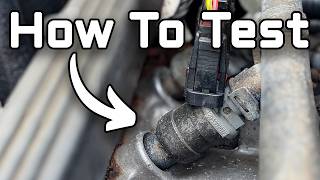
- Test with a Noid Light: Disconnect the injector and plug a noid light into the connector. Crank or start the engine. The light should flash rapidly, indicating the PCM is sending a pulse signal. 🎬 See how to test if your fuel injectors are firing If it doesn't flash, the problem is in the wiring or the PCM. If it flashes, the problem is almost certainly the injector itself.
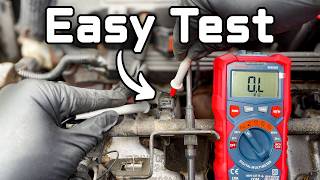
- Check Injector Resistance: With the engine off, disconnect the injector and use a multimeter set to Ohms. Measure the resistance across its two terminals. 🎬 Watch how to measure injector resistance using a multimeter It should be between 10.5 and 13.5 Ohms. Compare the reading to an adjacent injector to be sure. An infinite (OL) or zero reading confirms a failed injector.
- Swap Injectors: If you don't have a multimeter, this is the definitive test. First, relieve fuel pressure by pulling the fuel pump fuse and running the engine until it stalls. Swap the cylinder 2 injector with the cylinder 3 injector. Reassemble, clear the codes, and run the engine. If the code returns as P0203 ('Injector Circuit / Open - Cylinder 3'), you have confirmed the injector is faulty. If P0202 returns, the problem is in the wiring or PCM.
- Check for Power and Ground: If the noid light didn't flash, use a multimeter to check for battery voltage on one pin of the connector with the key on (it should be present). Then, check the continuity of the other wire (the driver/ground signal) from the injector connector back to the corresponding pin on the PCM connector. An open circuit here means a broken wire.
Parts You'll Likely Need
- Fuel Injector (Cylinder 2)
(OEM #1465A412 (for 2.4L 4B12), 1465A205, 1465A029 (for 2.0L 4B11))— This is the most common part to fail for a P0202 code. The internal coil windings break, causing an open circuit.
Trusted brands: Denso, Bosch, Hitachi, Standard Motor Products (SMP), GB Remanufacturing
OEM price range: $180-$235
Aftermarket price range: $50-$120 - Fuel Injector Connector Pigtail — If the wiring or connector itself is damaged, replacing the pigtail is the standard repair.
Trusted brands: Dorman, Standard Motor Products (SMP)
OEM price range: $20-$40
Aftermarket price range: $10-$25
Related Codes That Often Appear With This One
- P0302 — P0302 means 'Cylinder 2 Misfire Detected'. Since the P0202 code indicates the cylinder 2 injector isn't working, that cylinder can't combust properly, which the PCM detects as a misfire. A P0202 will almost always cause a P0302.
Platform-Specific Known Issues
- Real Owner Experience: Intermittent Connection: A user on EvolutionM.net reported an intermittent P0202 where the check engine light would turn off and on. This behavior often points to a wiring or connector issue rather than a completely failed injector. Wiggling the harness or re-seating the connector can sometimes temporarily resolve the issue, confirming a connection problem.
- Real Owner Experience: Sudden Failure After Hard Acceleration: In a thread on EvolutionM.net, a Lancer owner experienced a sudden rough running condition and codes P0202/P0302 immediately after downshifting to pass other cars. This sudden failure during a high-load event is characteristic of an aging injector coil finally breaking.
Mechanic-Grade Diagnostic Values
- Fuel Injector Resistance — expected: 10.5 - 13.5 Ω at 20°C (68°F). Failure: Infinite resistance (Open Loop) or near 0 Ω (short).
- Fuel Pressure (4B11 Engine) — expected: Approx. 47 PSI. Failure: Significantly lower pressure could indicate a weak fuel pump, but will not directly cause a P0202 circuit code.
- Fuel Injector Pulse Width (at idle) — expected: 1-5 milliseconds (ms). Failure: A value of 0 ms on cylinder 2 while other cylinders show a pulse would confirm the PCM is not commanding the injector.
- Voltage at Injector Connector (Power Feed) — expected: Battery Positive Voltage (approx. 12V) with Key On, Engine Off. Failure: Less than battery voltage indicates a problem with the power supply from the injector relay.
- Injector Circuit Continuity (PCM to Injector Connector) — expected: Less than 5.0 Ω. Failure: Higher resistance or an open circuit (OL) indicates a broken wire in the harness.
Scan Tool Commands That Help
- Mitsubishi M.U.T.-III: Actuator Test - Item 1: Injectors — This function allows a technician to individually command each fuel injector to operate while the engine is idling. If commanding the cylinder 2 injector causes no change in idle roughness, while other cylinders do, it helps confirm a fault in the cylinder 2 injector or its circuit.
- Professional Scan Tool (e.g., MUT-III, Snap-on, Autel): Injector Balance Test — This test measures the pressure drop in the fuel rail as each injector is pulsed. If the pressure drop for cylinder 2 is significantly different (less than) the others, it points to a clogged or failing injector. A difference greater than 2.9 PSI (20 kPa) between injectors is considered a failure.
Wiring & Ground Locations
- Injector #2 Connector (B-102) — On the fuel rail, second from the passenger side (US models) on the 4B11/4B12 engine.. This is the primary connection point for the cylinder 2 injector. Check for corrosion, pushed-out pins, or damage to the connector body and wiring pigtail.
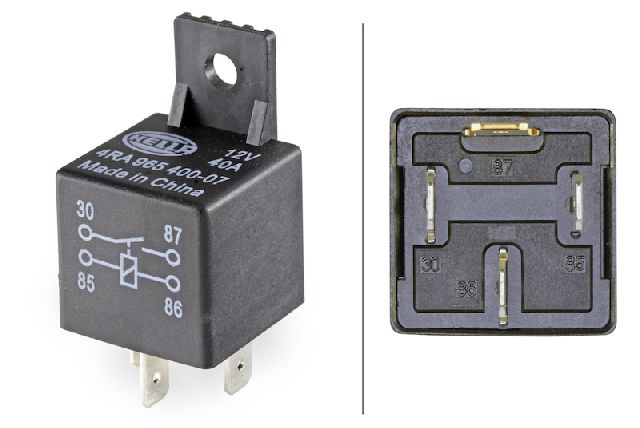
- Injector Relay Connector (A-21X or A-25X) — Located in the under-hood fuse and relay box.. This relay supplies power to all fuel injectors. A fault here would typically affect all injectors, but a problem with the specific wire leading from this relay to injector #2 could cause P0202. Terminal 1 should have battery voltage with the key on.
- Engine Ground (G1) — At the right front corner of the engine compartment.. This is a primary ground point for multiple engine components, including the Engine Control Module. A poor ground here can cause a variety of electrical issues, including erratic sensor and actuator behavior.
- Engine Ground (G7) — At the top left side of the dash/firewall area.. Another critical ground point for engine electronics. Verifying it is clean and tight is a good practice when diagnosing any electrical fault code.
- PCM Connector (Cylinder 2 Injector Pin) — At the Powertrain Control Module (PCM/ECU). The specific pin number for the cylinder 2 injector driver wire needs to be referenced from a model-year specific wiring diagram.. This is the origin of the control (ground) signal for the injector. Testing continuity between this pin and the injector connector is the final step to confirm if the wiring is intact or if the PCM driver itself has failed.
Real Owner Repair Stories
- YouTube video - 'Mitsubishi ecu failed injector driver diag' (Older Mitsubishi (demonstrates a principle applicable to the Lancer)) — Engine vibration, check engine light on with an injector control circuit open code (equivalent to P0202).
❌ Tried (didn't work) Swapping injectors., Confirming injector resistance was in spec (16.3 ohms).
✅ What actually fixed it The injector driver transistor on the ECU circuit board had failed. The video demonstrates confirming good wiring continuity to the ECU, then opening the ECU to identify and replace the faulty driver transistor from a donor board, which resolved the issue.
OEM Part Supersession History
1465A205→1465A412— Part number consolidation and potential minor revisions by the manufacturer.
Model Year Variations Within This Range
- 2011-2017 (4B12 Engine): Some post-facelift 2.4L (4B12) engines may have switched from dual MIVEC (variable valve timing on both intake and exhaust cams) to single MIVEC (intake only). This change affects valve timing strategy but does not alter the fundamental design or diagnosis of the port fuel injection system or the P0202 code.
- 2011-2017: Models from 2011 onward were updated to meet Euro 5 emissions standards, which may involve minor ECU calibration and hardware changes. However, these changes do not affect the basic diagnostic procedure for a P0202 circuit fault.
Diagnostic Flowchart
Other Known Issues on This Vehicle
Issues unrelated to this code that are worth knowing about as an owner of this generation:
- CVT Transmission Shudder and Overheating 🔴 High — Common on models equipped with the Jatco CVT8 (F1CJC/W1CJC). Can occur at various mileages, often exacerbated by high ambient temperatures and highway driving. (Ref: TSB-22-23-001REV, TSB-10-23-005. These address shudder/surge conditions and overheating warnings by updating ECU software or modifying fluid levels.)
- Clear Coat Peeling / Paint Failure 🟠 Medium — Widespread reports, especially on darker colors and on horizontal surfaces like the roof, hood, and spoiler. Often begins after 5-8 years. (Ref: No specific recall, but it is a widely documented owner complaint across forums.)
- ETACS ECU Failure 🟠 Medium — Can occur intermittently, causing a range of bizarre electrical issues like wipers, lights, or turn signals acting on their own or not working at all. (Ref: No specific TSB, but a known issue in the Lancer community. Diagnosis can be difficult as symptoms are erratic.)
Used vs. New Parts: Buying Guide for This Vehicle
When a used part is the smart pick: A used wiring harness from a junkyard can be a cost-effective solution if your original harness has isolated, hard-to-repair damage. A used fuel rail assembly (with injectors) can also be a good value if from a low-mileage donor.
Donor-vehicle mileage cap: roughly under 80000 miles for the part to have meaningful remaining life.
What to inspect on the donor part:
- For a wiring harness, inspect for any cuts, melted sections, or brittle connectors. Ensure it came from a vehicle with the same engine and transmission.
- For fuel injectors, look for a donor vehicle with no signs of engine fire or major front-end collision.
- Check the injector connectors for corrosion or damage before pulling the part.
OEM-only on this vehicle (don't cheap out):
- Powertrain Control Module (PCM) - Aftermarket or improperly matched used units can cause a host of compatibility issues. A replacement PCM must be programmed to the vehicle's VIN and immobilizer system.
Aftermarket brands forum-validated for this vehicle:
- Denso
- Bosch
- Standard Motor Products (SMP)
- Hitachi
Brands owners have reported issues with on this vehicle:
- Unnamed, no-brand injectors from online marketplaces should be avoided. While cheap, they often have inconsistent flow rates and high failure rates, which can lead to poor performance and even engine damage.
Real Owner Stories
Aggregated from forums and TSBs cited above. Mileages and costs reflect what owners reported in those sources.
2006 Mitsubishi Lancer Evolution MR
Symptoms: The owner was on a long road trip and downshifted to pass slower cars; the pass was smooth but then the vehicle threw codes P0202 and P0302.
What fixed it: The issue was traced to the injector resistor pack (a component specific to that platform).
Source hint: EvolutionM.net - 'CEL P0202 and P0302 Cylinder two missing'
2007-2017 Mitsubishi Lancer
Symptoms: Intermittent check engine light that would turn off and on.
What fixed it: Wiggling the wiring harness or re-seating the injector connector temporarily resolved the issue, indicating a connection problem.
Source hint: EvolutionM.net - 'SES Light on P0202'
Related OBD-II Codes
Frequently Asked Questions
Where is cylinder 2 located on my 2007-2017 Mitsubishi Lancer?
What is the correct resistance for a fuel injector on a Lancer?
My Lancer has a P0202 and a P0302; which one should I fix first?
Could my Lancer's CVT transmission issues be related to the P0202 code?
Is there a specific part I should check on an Evolution MR that is different from a base Lancer?
Helpful Videos
We Have This Part in Stock


The information in this article is provided for general reference and educational purposes only. Vehicle specifications, procedures, and part compatibility can vary by production date, trim level, and region. Always consult your vehicle's factory service manual and verify part numbers before purchasing or performing repairs. Safety-critical components such as airbags, seat belts, and braking systems should be installed by a qualified professional.
- Mitsubishi Lancer:
- 🎬 Helpful Videos
- 🛍️ Shop This Part
- What's Unique About the 2007-2017 Mitsubishi Lancer
- Symptoms You May Notice
- Most Likely Causes
- Rare But Worth Checking
- Diagnosis Steps
- Parts You'll Likely Need
- Related Codes That Often Appear With This One
- Platform-Specific Known Issues
- Mechanic-Grade Diagnostic Values
- Scan Tool Commands That Help
- Wiring & Ground Locations
- Real Owner Repair Stories
- OEM Part Supersession History
- Model Year Variations Within This Range
- Diagnostic Flowchart
- Other Known Issues on This Vehicle
- Used vs. New Parts: Buying Guide for This Vehicle
- Real Owner Stories
- 2006 Mitsubishi Lancer Evolution MR
- 2007-2017 Mitsubishi Lancer
- Related OBD-II Codes
- Frequently Asked Questions
- 🎟️ Get 5% Off