

P0202 on 2007-2015 Lincoln MKX: Injector Circuit Malfunction - Cylinder 2 Causes and Fixes
On a 2007-2015 Lincoln MKX, code P0202 is almost always caused by a failed fuel injector for cylinder 2. Because cylinder 2 is on the rear bank against the firewall, the repair is labor-intensive, requiring removal of the intake manifold. Expect to pay $45-$75 for an OEM Motorcraft injector and 2-3 hours of labor. Due to the significant labor, it's wise to replace all three rear injectors and the intake gaskets at the same time.
- P0202 on your MKX points to an electrical fault with the fuel injector for cylinder 2.
- The most likely culprit is a bad fuel injector, which is a common failure item.
- Cylinder 2 is on the rear bank against the firewall, so replacing it requires removing the upper intake manifold, making it a labor-intensive job (DIY 4/5).
- Always replace the upper intake manifold gaskets when doing this job.
- A simple way to confirm a bad injector is to swap it with another cylinder and see if the fault code follows the injector.
What's Unique About the 2007-2015 Lincoln MKX
The Lincoln MKX from this era uses the Ford Cyclone V6 engine (3.5L or 3.7L). The key challenge with a P0202 code on this vehicle is the location of cylinder 2. It is the middle cylinder on the rear bank of the engine (Bank 1), tucked against the firewall. This means that accessing the injector for testing or replacement is not a simple task; it requires the complete removal of the upper intake manifold, which adds significant labor time and cost to the repair compared to an injector on the front bank (Bank 2).
Generation note: This guide covers two generations of the Lincoln MKX: - 1st Generation (2007-2010): Equipped with the 3.5L V6 engine. - 2nd Generation (2011-2015): Equipped with the updated 3.7L V6 engine. The fundamental cause and diagnostic process for P0202 are the same for both, but they use different fuel injector part numbers. The issue is also common on platform mates like the Ford Edge.
Symptoms You May Notice
- Check Engine Light is on (may be flashing if the misfire is severe)
- Engine running rough, shaking, or sputtering
- Noticeable loss of power and poor acceleration
- Rough or unstable idle
- Decreased fuel economy
- Engine may stall intermittently
- Replacing the spark plug or ignition coil for cylinder 2. While a P0302 (Cylinder 2 Misfire) code will almost always accompany P0202, the P0202 code specifically points to an electrical fault in the fuel injector circuit, not the ignition system. Replacing ignition parts will not fix a P0202.
Most Likely Causes
- Failed Fuel Injector (Cylinder 2) 🔴 High Probability The internal electronic coil of the injector can fail over time, creating an open or short circuit. This is the most common point of failure for this code. The failure can sometimes be intermittent, occurring only when the engine is hot.
How to confirm: The most definitive DIY test is to swap the cylinder 2 injector with an adjacent one on the same bank (like cylinder 1 or 3). Clear the codes and run the engine. If the code changes to P0201 or P0203, the injector is faulty. Alternatively, after gaining access, measure the resistance across the injector's pins with a multimeter; it should be between 11-18 ohms. A reading of infinity (OL) means it's open and bad.
Typical fix: Replace the failed fuel injector. Since the intake manifold must be removed, it is highly recommended to replace the upper intake manifold gaskets at the same time. Many owners and mechanics choose to replace all three rear injectors (cylinders 1, 2, 3) to avoid future repeat labor for an adjacent aging injector.
Est. part cost: $45-$75 - Wiring Harness or Connector Fault 🟡 Medium Probability The plastic locking tabs on the injector connectors can become brittle with age and break, leading to a loose connection that vibrates free. Wires in the harness can also chafe or break due to heat and vibration, causing an open or short circuit.
How to confirm: After confirming the injector is good (via a swap test), the next step is to test the circuit. Use a 'noid light' on the cylinder 2 connector; it should flash steadily with the engine running, indicating a good signal from the PCM. If there's no flash, visually inspect the wiring harness for damage and test for continuity between the connector and the PCM. Check for battery voltage at one pin of the connector with the key on.
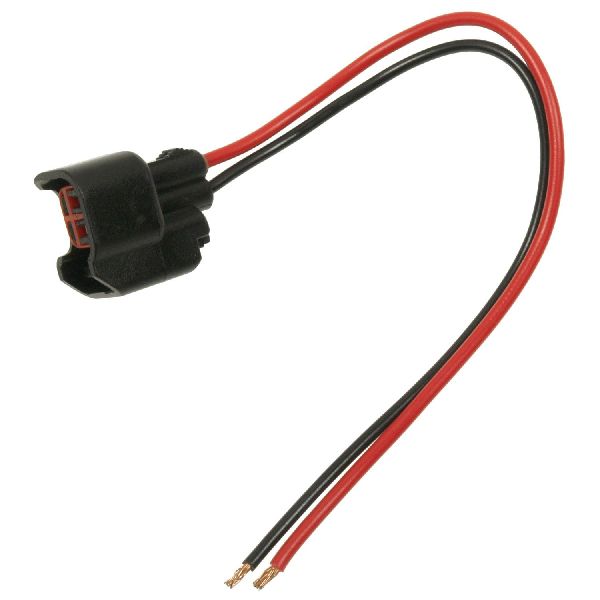
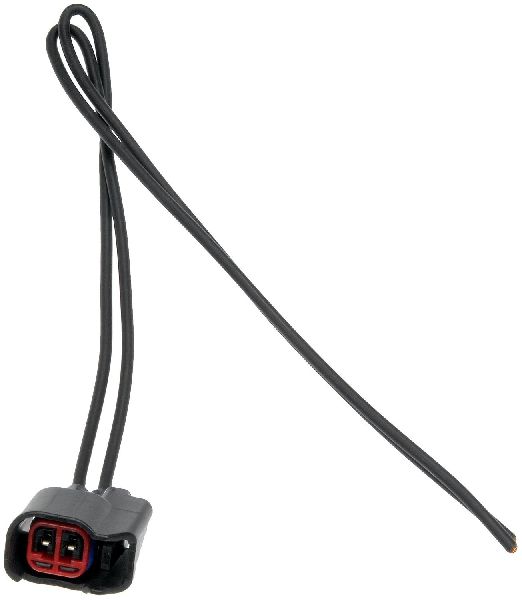
Typical fix: If the connector is broken, splice in a new pigtail connector (e.g., Dorman 645-215 or Standard Motor Products HP3945). If a wire is broken, repair the damaged section of the harness.
Est. part cost: $15-$30 for a pigtail connector - Faulty Powertrain Control Module (PCM) ⚪ Low Probability While rare, the internal injector driver circuit within the PCM can fail. This is less common than an injector or wiring fault.
How to confirm: This should only be considered after the fuel injector and wiring have been definitively ruled out by testing. Professional diagnosis is typically required to confirm a failed injector driver circuit inside the PCM. A scan tool may show other injector circuit codes if the PCM is failing. An advanced scan tool can run an ECM injector-driver self-test; if it fails for cylinder 2 after the wiring is confirmed good, the PCM is faulty.
Typical fix: Replace and reprogram the PCM. This requires a VIN-matched module.
Est. part cost: $400-$800
Diagnosis Steps
- Scan the vehicle for codes. Confirm P0202 is present, and note any other codes like P0302.
- Due to the difficult access, the most efficient diagnostic step is to perform an injector swap. This requires removing the upper intake manifold.
- Label the electrical connectors for cylinders 1, 2, and 3 on the rear bank.
- Remove the fuel rail and swap the fuel injector from cylinder 2 with the one from cylinder 1.
- Reassemble the fuel rail and intake manifold using new gaskets. Clear all diagnostic codes.
- Start the engine and let it run for a few minutes. Re-scan for codes.
- If code P0201 ('Injector Circuit Malfunction - Cylinder 1') appears, the fuel injector you moved is faulty and must be replaced.
- If code P0202 returns, the injector is good, and the problem lies in the wiring or the PCM.
- To test the wiring, disconnect the injector connector and plug in a 'noid light'. With the engine running, the light should flash consistently. If it does not, the problem is in the wiring or PCM.
- If the noid light test fails, inspect the wiring harness for physical damage. Check for battery voltage on the power wire and check for continuity on the signal wire between the injector connector and the PCM.
- If the wiring and injector are confirmed good, the fault is likely within the PCM, which requires professional diagnosis.
Parts You'll Likely Need
- Fuel Injector (3.7L V6)
(OEM #Motorcraft CM-5188 (BR3Z-9F593-B))— This is the most common cause of P0202. This part number is for the 2011-2015 models.
Trusted brands: Motorcraft, Bosch, Standard Motor Products
OEM price range: $45-$75
Aftermarket price range: $30-$50 - Fuel Injector (3.5L V6)
(OEM #Motorcraft CM-5165 (8U5Z-9F593-B))— This is the most common cause of P0202. This part number is for the 2007-2010 models.
Trusted brands: Motorcraft, Bosch
OEM price range: $40-$70
Aftermarket price range: $30-$50 - Upper Intake Manifold Gasket Set
(OEM #Motorcraft 9L8Z-9439-A (3.5L) or BL3Z-9439-A (3.7L))— These gaskets are single-use and must be replaced anytime the intake manifold is removed to access the rear fuel injectors.
Trusted brands: Motorcraft, Fel-Pro, Mahle
OEM price range: $20-$40
Aftermarket price range: $15-$30 - Fuel Injector Connector Pigtail
(OEM #Dorman 645-215 / Standard Motor Products HP3945)— Needed if the original connector's locking tab breaks during removal, which is a common occurrence.
Trusted brands: Dorman, Standard Motor Products (SMP)
OEM price range: N/A
Aftermarket price range: $15-$30
Related Codes That Often Appear With This One
- P0302 — P0302 means 'Cylinder 2 Misfire Detected'. Since P0202 indicates the injector for cylinder 2 isn't working, the cylinder can't get fuel, leading directly to a misfire.
- P0171 or P0174 — These codes indicate a 'System Too Lean' condition for Bank 1 (rear) or Bank 2. If an injector is dead, that bank of cylinders will run lean overall, which can be detected by the oxygen sensors. P0171 (Bank 1) is more likely to appear with P0202 since cylinder 2 is in Bank 1.
- P0201, P0203 — If other injector codes for the same bank (Bank 1) appear, it strongly suggests a wiring harness issue common to all three cylinders or a problem with the PCM's driver for that bank.
Technical Service Bulletins (TSBs) & Recalls
- TSB 15-0137: While for the F-150, this TSB is relevant as it addresses a melting fuel pump fuse that can cause multiple injector circuit codes (P0201-P0208) due to power loss. This should be considered if multiple injector codes are present.
Platform-Specific Known Issues
- The plastic retaining clips on the factory fuel injector connectors are known to become brittle and break during removal, which can cause intermittent connections if not properly addressed. A secure connection is critical.
- Because of the labor involved in removing the intake manifold, most mechanics and experienced owners strongly recommend replacing all three rear fuel injectors (Cylinders 1-2-3) and the intake gaskets as a preventative measure.
Mechanic-Grade Diagnostic Values
- Fuel Injector Coil Resistance — expected: 11 - 18 Ohms. Failure: A reading of infinity (OL) indicates an open circuit, while a reading far outside the expected range suggests an internal failure.
- Fuel Injector Circuit Voltage (at connector) — expected: 12V (approx. battery voltage) on the power wire with key on, engine off.. Failure: No voltage indicates a problem with the power supply from the PCM or a break in the wire.
- Injector Pulse Signal (with Noid Light) — expected: A consistent, flashing light while the engine is cranking or running.. Failure: No light or a very dim/erratic flash indicates a problem with the PCM driver or the signal wire.
Scan Tool Commands That Help
- Ford IDS (or equivalent high-end scan tool): Power Balance Test — This test graphically displays the RPM drop from each cylinder as it's individually deactivated. For P0202, cylinder 2 would show little to no RPM drop, confirming it is not contributing power. This helps verify the symptom before tearing down the intake manifold.
- Ford IDS (or equivalent high-end scan tool): Relative Injector Flow Test — This is a more advanced test that pulses each injector individually with the engine off and measures the corresponding drop in fuel rail pressure. It can identify a clogged or electrically weak injector by comparing its pressure drop to the others. It's useful for confirming a bad injector when a resistance test is inconclusive.
Wiring & Ground Locations
- PCM Connector C175B — This is one of the main connectors at the Powertrain Control Module, which is typically located in the engine bay near the firewall or battery.. The control (ground pulse) wire for the cylinder 2 fuel injector runs to a specific pin on this connector. A continuity test from the injector connector to this pin is required to rule out a broken wire.
- G104 / G105 (Engine Grounds) — These are primary engine ground points, typically located on the engine block or cylinder head and connected to the chassis. For the 3.7L, one is often found on the left side of the engine compartment.. A poor engine ground can cause a variety of strange electrical issues, including erratic behavior of sensors and actuators like fuel injectors. While not a direct cause of a single-cylinder code, it should be checked for tightness and corrosion if multiple electrical codes are present.
- Battery Junction Box (BJB) — Located in the engine compartment, on the left side.. This box contains the fuses and relays that supply power to the PCM and, by extension, the fuel injector circuits. Fuse F27 (in the engine compartment box for 2011-2015 models) is often related to the PCM power supply that controls the injectors.
Real Owner Repair Stories
- Lincoln vs Cadillac Forum user (Lincoln MKZ with 3.5L V6 (platform mate)) — P0302 (Cylinder 2 Misfire) and P0202 (Injector Circuit Open Cylinder 2), terrible hesitation and stuttering.
❌ Tried (didn't work) Initial diagnosis pointed to either wiring or the injector.
✅ What actually fixed it The owner used a multimeter to test the resistance of all fuel injectors. Cylinder #2's injector measured a very high resistance (readings of 138.7-213 ohms were mentioned, while good injectors were around 12.5 ohms). Replacing the single bad injector resolved the codes and drivability issues.
OEM Part Supersession History
7T4Z-9F593-B (Motorcraft CM-5132)→8U5Z-9F593-B (Motorcraft CM-5165)— Part update/revision by Ford.
Heads up: These parts are for the 3.5L V6 (2007-2010). While they may physically fit other engines, the flow rates can differ. Use the part number specified for the 3.5L engine.0280158191 (Bosch)→BR3Z-9F593-B (Motorcraft CM-5188)— This is the OEM part number that corresponds to the Motorcraft part for the 3.7L engine.
Heads up: This injector is for the 3.7L V6 (2011-2015). It is not interchangeable with the injector for the 3.5L V6 due to different flow characteristics.
Model Year Variations Within This Range
- 2007-2010: These models use the 3.5L V6 engine and require fuel injector part number Motorcraft CM-5165 (or its equivalent).
- 2011-2015: These models use the updated 3.7L V6 engine and require fuel injector part number Motorcraft CM-5188 (or its equivalent).
Diagnostic Flowchart
Other Known Issues on This Vehicle
Issues unrelated to this code that are worth knowing about as an owner of this generation:
- Internal Water Pump Failure 🔴 High — Common after 80,000-120,000 miles. Failure can cause coolant to mix with engine oil, leading to catastrophic engine failure.
- Power Transfer Unit (PTU) Overheating/Failure 🔴 High — Common on AWD models. The PTU fluid overheats and breaks down, leading to seal leaks and eventual gear/bearing failure. Often noticed by a burning gear oil smell. (Ref: TSB 19-2017 (for later models, but concept applies))
- Electronic Throttle Body (ETB) Failure 🟠 Medium — Can cause the vehicle to enter a 'limp mode' with reduced power. Internal contacts get contaminated. (Ref: Customer Satisfaction Program 16B23 (for 2011-2012 models))
- Leaking Axle Seals 🟠 Medium — Fluid leaks from the axle area are a common complaint, often related to the PTU seals on AWD models.
- Door Ajar Sensor Malfunction 🟡 Low — A faulty switch in the door latch can cause the 'door ajar' light to stay on, draining the battery. Common on 2011-2013 models.
- Takata Airbag Inflator Recalls 🔴 High — Affects many 2007-2012 models. Inflators can rupture during deployment, causing serious injury. (Ref: Multiple NHTSA Recalls)
Used vs. New Parts: Buying Guide for This Vehicle
When a used part is the smart pick: For this repair, a used fuel injector is generally not recommended. The part is a high-wear item with a finite lifespan (often cited around 100,000 miles), and it is buried under the intake manifold. The significant labor cost to access the injector makes it unwise to install a used part with an unknown history, as a premature failure would require repeating the entire expensive job.
Donor-vehicle mileage cap: roughly under 50000 miles for the part to have meaningful remaining life.
What to inspect on the donor part:
- Verify the part number on the injector itself matches the required OEM number for your specific engine (3.5L vs 3.7L).
- Inspect the plastic connector for any cracks or broken locking tabs.
- Check the pintle end and filter screen for any visible debris or corrosion.
- If possible, ask the seller to provide a resistance (ohm) reading for the injector before purchase.
OEM-only on this vehicle (don't cheap out):
- While not strictly 'OEM-only', using a reputable brand like Motorcraft or Bosch is highly advised for fuel injectors. The cost difference is minimal compared to the labor involved, and cheap, unbranded aftermarket injectors have a much higher failure rate.
Aftermarket brands forum-validated for this vehicle:
- Bosch (often the original OE manufacturer)
- Standard Motor Products (SMP)
- DeatschWerks (for performance applications)
Brands owners have reported issues with on this vehicle:
- Unbranded, no-name injectors from online marketplaces should be avoided. Their quality control, flow rates, and spray patterns are often inconsistent, which can lead to persistent performance issues even if the P0202 code is resolved.
Real Owner Stories
Aggregated from forums and TSBs cited above. Mileages and costs reflect what owners reported in those sources.
Lincoln MKZ 3.5L V6
Symptoms: The vehicle was throwing a P0302 and a P0202 code simultaneously.
What fixed it: The owner diagnosed a bad injector by measuring its resistance, which was significantly higher than the other injectors. Replacing the injector resolved the issue.
Source hint: Lincoln MKZ Forum thread titled 'throwing-a-p0302-and-a-p0202'
Related OBD-II Codes
Frequently Asked Questions
I have multiple injector codes (P0201-P0208) on my Lincoln MKX; does TSB 15-0137 apply to me?
Why do mechanics recommend replacing all three rear injectors on the 3.5L/3.7L V6 even if only P0202 is active?
My MKX has a P0202 code and the connector tab is broken. Is there a specific part to fix this?
Can I just swap injectors to test if the Cylinder 2 injector is actually bad?
What resistance should I see if I test the Cylinder 2 injector with a multimeter?
Is there a specific recall for the throttle issues I'm having alongside my P0202 code?
Helpful Videos
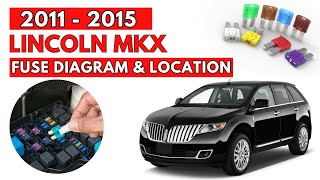
Used OEM Parts in Stock


New Aftermarket Parts Available


The information in this article is provided for general reference and educational purposes only. Vehicle specifications, procedures, and part compatibility can vary by production date, trim level, and region. Always consult your vehicle's factory service manual and verify part numbers before purchasing or performing repairs. Safety-critical components such as airbags, seat belts, and braking systems should be installed by a qualified professional.
- Lincoln MKX:
- 🎬 Helpful Videos
- 🛍️ Shop This Part
- What's Unique About the 2007-2015 Lincoln MKX
- Symptoms You May Notice
- Most Likely Causes
- Diagnosis Steps
- Parts You'll Likely Need
- Related Codes That Often Appear With This One
- Technical Service Bulletins (TSBs) & Recalls
- Platform-Specific Known Issues
- Mechanic-Grade Diagnostic Values
- Scan Tool Commands That Help
- Wiring & Ground Locations
- Real Owner Repair Stories
- OEM Part Supersession History
- Model Year Variations Within This Range
- Diagnostic Flowchart
- Other Known Issues on This Vehicle
- Used vs. New Parts: Buying Guide for This Vehicle
- Real Owner Stories
- Lincoln MKZ 3.5L V6
- Related OBD-II Codes
- Frequently Asked Questions
- 🎟️ Get 5% Off