

P0202 on 2015-2024 Ford Mustang 5.0L: Injector Circuit Malfunction Causes and Fixes
P0202 on a 5.0L Mustang most often means the fuel injector for cylinder #2 has failed or its connector is loose. A simple test is to swap the injector with another cylinder to see if the code follows. Expect to pay $50-$120 for a new Motorcraft injector. Before replacing parts, check the wiring harness for chafing or loose connector pins, as this is a known issue.
- P0202 points specifically to an electrical problem with the cylinder #2 fuel injector circuit.
- The most likely cause is a failed fuel injector, which can be easily diagnosed by swapping it with another cylinder's injector.
- Before replacing parts, carefully inspect the wiring and connector for cylinder #2, as loose pins or damage are known issues on this platform.
- Cylinder #2 is the second one from the front on the passenger side.
- Driving with this code, especially if the check engine light is flashing, can lead to costly catalytic converter damage, so it should be addressed promptly.
What's Unique About the 2015-2024 Ford Mustang
The 2015-2024 Mustang range covers two key versions of the 5.0L Coyote V8. The 2018-2024 models feature a dual-injection system with both port and direct injectors. The P0202 code specifically refers to the port fuel injector circuit (sometimes labeled 'Injector A'), not the high-pressure direct injection system, which uses a different set of codes. On the 5.0L V8, cylinder #2 is the second cylinder back from the front on the passenger side of the engine.
Generation note: The 2015-2024 range covers the S550 (2015-2023) and the start of the S650 (2024+) generations. A key engine change occurred in 2018 with the introduction of the Gen 3 Coyote, which added direct injection alongside the existing port injection. P0202 consistently refers to the port injector circuit across these years. The part numbers for the port injectors differ between the Gen 2 (2015-2017) and Gen 3/4 (2018+) engines.
Symptoms You May Notice
- Check Engine Light is on (may be flashing)
- Rough idle or engine shaking
- Engine hesitation or stumbling during acceleration
- Noticeable loss of power
- Poor fuel economy
- Strong smell of gasoline from the exhaust
- Difficulty starting the engine
- Engine stalling
- Replacing the spark plug or ignition coil for cylinder #2. While these can cause a misfire code (P0302), they will not cause an injector circuit code (P0202). P0202 is an electrical fault, not a combustion fault. Always diagnose the circuit code first.
Most Likely Causes
- Faulty Fuel Injector (Cylinder 2) 🔴 High Probability Fuel injectors are high-wear components that open and close millions of times. Internal electrical coils can fail over time, creating an open circuit (infinite resistance) or a short.
How to confirm: The most definitive test is to swap the cylinder #2 injector with an injector from another cylinder (e.g., cylinder #1). Clear the codes and drive the vehicle. If the code changes to P0201, the injector is confirmed to be faulty. Alternatively, use a multimeter to check the resistance across the injector's pins. A healthy injector should read between 11-15 Ohms. An 'OL' or infinite reading indicates an open circuit and a bad injector.
Typical fix: Replace the faulty fuel injector. It is often recommended to replace all injectors on the same bank or all eight for balanced performance on higher mileage vehicles, but it is not strictly necessary.
Est. part cost: $50 - $120 - Wiring Harness or Connector Issue 🟡 Medium Probability Engine vibration and heat can cause wires to become brittle or chafe against other components. The connector pins can also lose tension or corrode, leading to a poor connection. This has been documented by owners as a 'pin fit issue'.
How to confirm: Visually inspect the wiring harness and connector for cylinder #2 for any signs of damage, melting, or corrosion. With the engine running, gently wiggle the connector and wiring to see if it affects the idle. Use a noid light to confirm if an electrical pulse is reaching the injector connector; the light should flash while the engine is cranking or running. If the noid light is dim or doesn't flash, but other cylinders do, the wiring is suspect.
Typical fix: Repair the damaged section of wire or replace the injector pigtail connector. Ford offers specific pigtail kits like WPT-1253 for various applications, which can be spliced in using adhesive-lined heat shrink butt connectors for a durable, sealed repair.
Est. part cost: $15 - $40
Rare But Worth Checking
- Failed Powertrain Control Module (PCM): This is very rare. The internal driver circuit for the injector can fail. This is more common on the 2011-2014 F-150s with the 5.0L engine, but possible on any vehicle. All other possibilities, especially the injector and wiring, should be exhaustively ruled out before considering PCM replacement or repair.
- Failed EEC Power Relay: One owner on a Mustang forum traced a persistent P0202 to a faulty EEC (Electronic Engine Control) power relay located in the passenger kick panel, which supplies power to the injectors. If multiple injector codes appear at once, this relay or its fuse is a more likely culprit.
Technical Service Bulletins (TSBs) & Recalls
- Bulletin #SSM 49759: While issued for the Ford Expedition, this manufacturer bulletin notes that an illuminated MIL with codes P0201 through P0206 may occur. It instructs technicians to follow specific Pinpoint Tests in the Powertrain Control/Emissions Diagnosis Manual (PC/ED) to resolve the circuit fault.
Diagnosis Steps
- Read the code using an OBD-II scanner and confirm it is P0202. Note any other codes present, especially P0302.
- Locate cylinder #2. On the 5.0L V8, it is the second cylinder from the front on the passenger side (Bank 1).
- Inspect the wiring and connector for injector #2. Look for any obvious signs of damage, corrosion, or loose connection. A common issue found by owners is a poor pin connection.
- Perform an injector swap test. Swap the fuel injector from cylinder #2 with the one from cylinder #1 (P0201). Clear the codes, run the engine, and see which code returns. If P0201 appears, the injector is bad. If P0202 returns, the problem is in the wiring or PCM.
- If the problem persists after the swap, use a 'noid light' to test the injector connector. The light should flash when the engine is cranked or running, indicating the PCM is sending a signal.
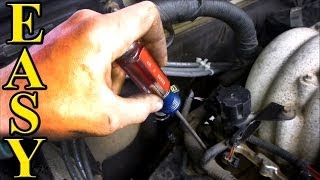
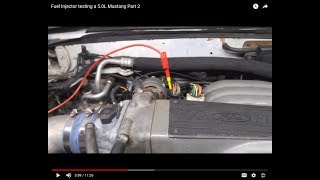
- If the noid light does not flash, check for 12V power at one pin of the connector with the key on (engine off). This is typically a red wire. Then, check the continuity of the other wire (the ground/control wire pulsed by the PCM) 🎬 See this walkthrough for testing injectors on a 5.0L Mustang. back to the PCM connector to ensure it's not broken.
- As a secondary check, measure the resistance of the suspect injector with a multimeter. It should be within 11-15 ohms. An open circuit (OL) or zero ohms (short) confirms a failed injector.
- If all wiring and the injector are confirmed to be good, the fault may lie within the EEC power relay or, in very rare cases, the PCM's internal driver circuit.
Parts You'll Likely Need
- Fuel Injector (Port)
(OEM #JR3Z-9F593-B (2018-2023) or BR3Z-9F593-A (2015-2017) - always verify with VIN)— This is the most common failure point for a P0202 code. The internal electronics of the injector fail, causing an open circuit.
Trusted brands: Motorcraft, Bosch
OEM price range: $70 - $120
Aftermarket price range: $40 - $80 - Fuel Injector Connector Pigtail
(OEM #WPT-1253 (Verify application))— If the connector or its immediate wiring is damaged by heat or vibration, replacing the pigtail is the standard repair.
Trusted brands: Motorcraft, Dorman
OEM price range: $25 - $40
Aftermarket price range: $10 - $20
Related Codes That Often Appear With This One
- P0302 — P0302 means 'Cylinder 2 Misfire Detected.' A P0202 will almost always cause a P0302 because if the injector circuit fails, no fuel is delivered, leading to a misfire.
- P0200 — This is a general 'Injector Circuit Malfunction' code. It may appear alongside P0202 if there is a broader issue affecting the injector system, like a problem with the power feed from the EEC relay or a ground issue.
- P0300 — P0300 is 'Random Misfire Detected.' While P0202 points to a specific cylinder, an intermittent wiring short or failing power relay could cause erratic behavior that the PCM initially flags as a random misfire.
Platform-Specific Known Issues
- Pin Fitment Issues at Connector: A known, though uncommon, cause for P0202 on the S550 platform is poor terminal tension ('pin fit') within the injector's electrical connector. This creates an intermittent open circuit that can be hard to diagnose, as the injector itself is not faulty. Wiggling the connector while the engine is running may reveal the issue.
Mechanic-Grade Diagnostic Values
- Port Fuel Injector Resistance — expected: 11.0 - 15.0 Ohms. Failure: A reading of 'OL' (Open Loop/infinite) indicates a broken internal coil. A reading near 0.0 Ohms indicates an internal short. Any significant deviation from other injectors is suspect.
- Injector Connector Power (Key On, Engine Off) — expected: 12.0 Volts (approx. battery voltage). Failure: Significantly less than 12V or no voltage indicates a problem with the power supply wire, fuse, or EEC power relay.
- Injector Pulse Width (at idle) — expected: Typically 1 - 5 milliseconds (ms). Failure: While a specific value isn't a pass/fail, a value of 0 ms for cylinder #2 while others are pulsing indicates the PCM is not commanding the injector to fire. Unusually high values on other cylinders can indicate compensation for the dead cylinder.
- PCM Ground Resistance — expected: Less than 0.2 Ohms. Failure: Higher resistance between the PCM ground pin and the negative battery terminal indicates a poor ground, which can cause erratic behavior from the PCM injector driver.
Scan Tool Commands That Help
- Ford IDS (or equivalent high-end scanner): KOEO Injector Electrical Self-Test (Injector Buzz Test) — This is a primary electrical test. With the engine off, the PCM commands each injector to fire in sequence, creating an audible 'buzz'. A weak or silent buzz from cylinder #2, when others are loud and clear, points directly to an issue with that injector's coil or wiring.
- Ford IDS (or equivalent high-end scanner): Relative Injector Flow Test — This test is used to identify a mechanically or electrically weak injector that isn't completely dead. The PCM pulses each injector and measures the corresponding drop in fuel rail pressure. If cylinder #2 shows a significantly different pressure drop time (in milliseconds) compared to the others, it indicates a flow issue.
- Ford IDS (or equivalent high-end scanner): Power Balance Test — This live data graph shows the power contribution of each cylinder. While running, the tool can disable one cylinder at a time. Disabling cylinder #2 should result in no change to the engine's idle if it's already dead, confirming it's the source of the misfire before you start disassembling parts.
Wiring & Ground Locations
- C175B — This is the main 70-pin engine control connector at the Powertrain Control Module (PCM). The PCM is located in the passenger-side footwell, behind the kick panel.. The control wire for the cylinder #2 fuel injector runs from the injector connector to a specific pin on C175B. For a 2019 model, the control wire is on Pin 66. Checking continuity from the injector connector to this pin can confirm if the wire is broken.
- G201 — Passenger-side kick panel, near the PCM.. This is a primary ground for the PCM. A poor connection here can cause unpredictable behavior from the PCM, including false injector driver codes.
- EEC Power Relay — In the passenger kick panel area, often mounted above or near the PCM.. This relay supplies battery voltage to the fuel injectors. If it fails or has a poor connection, it can cut power to one or more injectors, causing a P0202 code even if the injector and wiring are good.
- G104 — On the left (driver's side) front fender apron, typically behind the battery.. This is a major chassis ground point. While not directly for the injector circuit, poor grounding here can create electrical noise and voltage drop issues that affect various sensors and modules, potentially leading to misdiagnosis.
Real Owner Repair Stories
- Mustang6G.com forum user (2019 Mustang GT 10-speed) — Hard starting, misfires on cylinders 4 and 8 initially, then a persistent P0202 after replacing DI injectors and DI pump.
❌ Tried (didn't work) Replaced all 8 lower direct injectors, Replaced high-pressure DI pump, Had all 8 upper port injectors professionally cleaned and flow-tested (all tested good), Replaced the passenger side upper injector wiring harness
✅ What actually fixed it The cause was a failed EEC power relay, a $25 part located in the passenger kick panel area above the ECM. The issue did not follow the injector when swapped, pointing to a wiring or power supply problem. - Mustang6G.com forum user (Low-mileage Shelby GT500 (S550 platform)) — Check Engine Light with code P0202.
❌ Tried (didn't work) Initial diagnosis pointed towards a faulty injector.
✅ What actually fixed it After dealer diagnosis with Ford engineering assistance, the fault was traced to a 'pin fit issue' in the electrical connector for the #2 injector. The terminal inside the connector was not making a secure connection with the injector pin. The injector itself was not faulty. - Documented NHTSA Reports:
- An owner reported in NHTSA ODI #10944544 that their vehicle would turn over but not start, displaying P0201 and P0202 codes, which indicated an open circuit for every injector.
- NHTSA ODI #10405277 describes a situation where a vehicle lost power on the highway with codes P0201, P0202, P0203, and P0204; the dealer eventually checked and reassembled the electrical connections to address the issue.
"I Checked Everything" — The Actual Cause
- A smoke test is not applicable for diagnosing a P0202 code. This is a purely electrical circuit fault code, indicating an open, short, or high resistance in the wiring, connector, or injector coil. A smoke test is used to find vacuum or evaporative emissions (EVAP) system leaks.
When the Usual Fixes Don't Work
- In multiple documented cases, the most common fix (replacing the fuel injector) did not solve the P0202 code. In one instance, after replacing the harness and confirming the injector was good, the root cause was a faulty EEC power relay that supplies voltage to the injectors. In another case, the problem was poor terminal tension ('pin fit') inside the factory connector, which required repairing the connector, not replacing the injector. This highlights the importance of testing the full circuit (power, ground, and signal) before replacing the most expensive component.
OEM Part Supersession History
BR3Z-9F593-A (also known as Motorcraft CM5187 or Bosch 0280158227)→N/A, this part is still correct for its application.— N/A
Heads up: CRITICAL: This injector for 2015-2017 models is NOT compatible with 2018+ models. The 2018+ Gen 3 Coyote engine uses a different port injector (JR3Z-9F593-B) as part of its dual-injection system. They are not interchangeable.
Model Year Variations Within This Range
- 2018-2024: Starting in 2018, the 5.0L 'Gen 3' Coyote engine was introduced, featuring a dual-fuel system (port and direct injection). While P0202 still refers to the port injector, the injector itself is a different part number (JR3Z-9F593-B) and is not interchangeable with the 2015-2017 version (BR3Z-9F593-A). All diagnostic steps for the port injector circuit remain conceptually the same.
Diagnostic Flowchart
Used vs. New Parts: Buying Guide for This Vehicle
When a used part is the smart pick: Used fuel injectors can be a cost-effective option, but only if purchased as a complete, flow-matched set of eight from a single, low-mileage donor vehicle. This minimizes the chance of an unbalanced engine due to varying flow rates between old and new injectors.
Donor-vehicle mileage cap: roughly under 60000 miles for the part to have meaningful remaining life.
What to inspect on the donor part:
- Verify the part number is correct for your model year (BR3Z-9F593-A for 2015-17, JR3Z-9F593-B for 2018+).
- Inspect the plastic body for any cracks or signs of heat damage.
- Ensure the electrical connector pins are straight and free of corrosion.
- Check that the nozzle tip (pintle) is intact and not damaged.
- Always install with new O-rings, regardless of the condition of the used ones.
OEM-only on this vehicle (don't cheap out):
- Powertrain Control Module (PCM): A used PCM must be professionally reprogrammed and flashed to match the vehicle's VIN and options. This is not a plug-and-play part.
Aftermarket brands forum-validated for this vehicle:
- Bosch: Bosch is the original equipment manufacturer (OEM) for the 2015-2017 injectors (part 0280158227), making them a top-tier replacement.
- Motorcraft: This is Ford's official parts brand and is equivalent to OEM quality.
Brands owners have reported issues with on this vehicle:
- Unbranded, generic injectors from online marketplaces should be avoided. They often suffer from inconsistent flow rates, poor spray patterns, and high failure rates, which can lead to persistent performance issues and even engine damage.
Real Owner Stories
Aggregated from forums and TSBs cited above. Mileages and costs reflect what owners reported in those sources.
GT500 — 800 miles
Symptoms: The check engine light came on, and a code reader showed P0202 - Cylinder 2 Injector A Circuit.
What fixed it: The dealership identified and repaired a "pin fit issue on the #2 fuel injector wiring harness connector."
Source hint: Mustang6G.com thread titled 'Check Engine Light - P0202 | 2015+ S550 Mustang Forum (GT, EcoBoost, GT350, GT500, Bullitt, Mach 1) - Mustang6G.com'
2019 Mustang GT
Symptoms: The owner experienced a P0202 code for the cylinder 2 fuel injector circuit.
What fixed it: The fault was traced to a failed EEC power relay, which is located above the ECU in the passenger kick panel.
Source hint: Mustang6G.com thread titled 'p0202-cylinder-2-fuel-injector-circuit-open-2019-mustang-gt-10spd'
Related OBD-II Codes
Frequently Asked Questions
Where is cylinder #2 located on my 5.0L Mustang?
What is the correct resistance for a fuel injector on my Mustang?
I've heard about wiring issues causing P0202 on these cars. What should I look for?
If I need to replace an injector, what part number should I use for my 2019 Mustang?
Is it safe to use a generic aftermarket fuel injector?
I swapped the injector from cylinder #2 to #1 and the P0202 code came back. What's next?
Helpful Videos
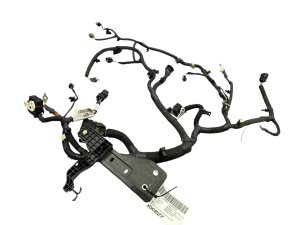
Used OEM Parts in Stock



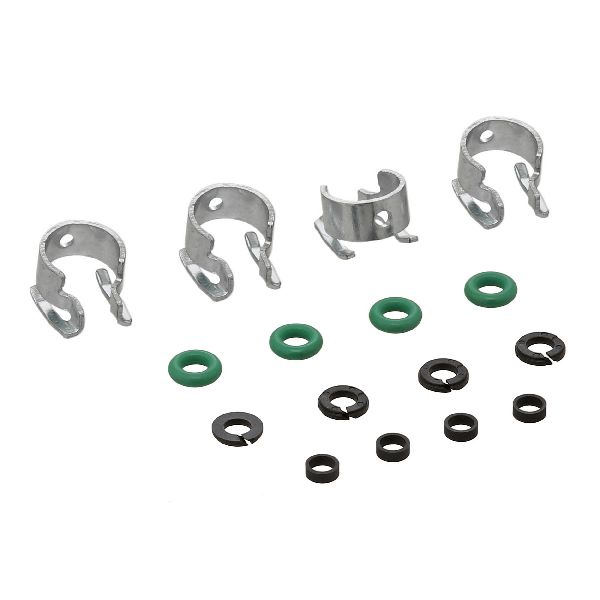
New Aftermarket Parts Available


The information in this article is provided for general reference and educational purposes only. Vehicle specifications, procedures, and part compatibility can vary by production date, trim level, and region. Always consult your vehicle's factory service manual and verify part numbers before purchasing or performing repairs. Safety-critical components such as airbags, seat belts, and braking systems should be installed by a qualified professional.
- Ford Mustang:
- 🎬 Helpful Videos
- 🛍️ Shop This Part
- What's Unique About the 2015-2024 Ford Mustang
- Symptoms You May Notice
- Most Likely Causes
- Rare But Worth Checking
- Technical Service Bulletins (TSBs) & Recalls
- Diagnosis Steps
- Parts You'll Likely Need
- Related Codes That Often Appear With This One
- Platform-Specific Known Issues
- Mechanic-Grade Diagnostic Values
- Scan Tool Commands That Help
- Wiring & Ground Locations
- Real Owner Repair Stories
- "I Checked Everything" — The Actual Cause
- When the Usual Fixes Don't Work
- OEM Part Supersession History
- Model Year Variations Within This Range
- Diagnostic Flowchart
- Used vs. New Parts: Buying Guide for This Vehicle
- Real Owner Stories
- GT500 — 800 miles
- 2019 Mustang GT
- Related OBD-II Codes
- Frequently Asked Questions
- 🎟️ Get 5% Off