

P0202 on 2004-2008 Ford F-150 5.4L: Injector Circuit Malfunction Causes and Fixes
On a 2004-2008 F-150 with the 5.4L V8, code P0202 is most often caused by a failed fuel injector on cylinder #2. Replacing the single injector is the most common fix. Expect to pay $40-$90 for an aftermarket part or $100+ for an OEM Motorcraft part.
- P0202 on your F-150 means there's an electrical fault with the #2 fuel injector, not necessarily a clog.
- The most likely culprit is the fuel injector itself failing. This is a very common issue on the 5.4L V8, especially on 2005 models.
- Before buying parts, test the injector. A simple multimeter resistance check (looking for 11-18 Ohms) can often confirm if the injector's internal coil is broken.
- If the injector tests good, use a noid light to check for a pulse at the connector. If the light doesn't flash, the problem is in the wiring or PCM.
- This is a DIY-friendly repair for those with basic tools. The #2 injector is relatively easy to access on the passenger side fuel rail.
What's Unique About the 2004-2008 Ford F-150
The P0202 code is extremely common on the Ford 5.4L 3V Triton engine, which is notorious for a range of issues including cam phasers, timing chains, and difficult-to-remove spark plugs. While wiring issues can occur, the fuel injectors themselves are a frequent failure point. Cylinder #2 is located on the passenger side of the engine, the second cylinder back from the front. Due to the engine's design, heat and vibration in the engine bay contribute to the eventual failure of both the injector's internal coil and the wiring connectors over time. Specifically for 2005 models, Ford used a different injector supplier which led to a higher rate of failures, sometimes causing injectors to stick open.
Symptoms You May Notice
- Check Engine Light is on
- Rough or shaking idle
- Engine misfire (may feel like a stumble or pop)
- Poor acceleration and loss of power
- Reduced fuel economy
- Strong fuel smell from exhaust if the injector is stuck open
- Replacing the spark plug or ignition coil. While these can cause a misfire (P0302), they will not cause an injector circuit code like P0202. The P0202 code is specifically for an electrical fault in the fuel injector circuit.
Most Likely Causes
- Failed Fuel Injector (Cylinder #2) 🔴 High Probability The fuel injectors on the 5.4L 3V engine are a known common failure item. The internal electrical coil inside the injector can break, creating an 'open' circuit that triggers the P0202 code. This was particularly an issue on 2005 models due to a problematic batch of injectors from a new supplier.
How to confirm: Test the injector's resistance with a multimeter. Unplug the connector and probe the two pins on the injector itself. A good injector should read between 11 and 18 Ohms. A common range seen by owners is 12.9 to 13.2 Ohms. If the meter reads 'O.L.' (Open Line) or infinite resistance, the injector is bad. A more definitive test is to swap the cylinder #2 injector with the cylinder #1 injector. Clear the codes and run the engine. If the code changes to P0201, the injector is confirmed faulty.
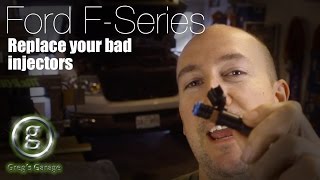
Typical fix: Replace the failed fuel injector. While some recommend replacing all four injectors on that bank, especially on higher mileage engines, it is common to replace only the single failed unit.
Est. part cost: $40-$120 - Damaged Wiring or Connector 🟡 Medium Probability The engine wiring harness is exposed to constant heat and vibration, which can make the plastic connector brittle and cause wires to break or chafe over time. Sometimes, previous repair work can disturb the harness and cause a connector to not be fully seated.
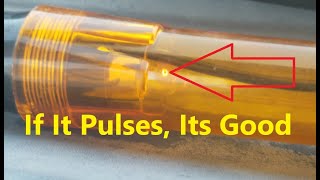
How to confirm: Visually inspect the wiring harness and connector for cylinder #2. Look for broken wires, melted plastic, or corrosion on the pins. Use a 'noid light' plugged into the harness connector; it should flash steadily when the engine is cranked. If there is no flash, or the light stays on solid, the problem is in the wiring or the PCM. A multimeter is often too slow to see the rapid pulse from the PCM. 🎬 Watch: How to test the injector circuit with a meter.
Typical fix: Repair the broken section of wire or replace the injector connector pigtail. This involves cutting out the old connector and splicing in a new one.
Est. part cost: $10-$30
Rare But Worth Checking
- Faulty Powertrain Control Module (PCM): This is the least likely cause. Before condemning the PCM, you must exhaustively rule out a bad injector and any wiring faults. A PCM failure might be suspected if multiple, unrelated injector codes appear simultaneously. One owner confirmed a bad PCM was the ultimate cause after verifying the wiring harness was intact and the injector signal was absent at the PCM connector.
- Water Intrusion at PCM Connector: In some cases, particularly after heavy rain, water can get into the main PCM connectors, causing shorts or open circuits. One forum user reported getting P0201, P0202, and P0207 simultaneously after driving in a downpour, suggesting a wiring or PCM connector issue rather than three injectors failing at once.
Diagnosis Steps
- Verify the code with an OBD-II scanner.
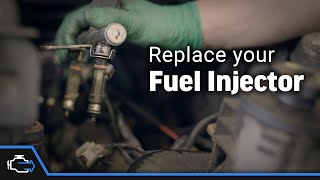
- Identify cylinder #2 (passenger side, second from the front). 🎬 Watch this guide to identifying and accessing the fuel injectors.
- Visually inspect the electrical connector and wiring going to the #2 fuel injector. Look for obvious signs of damage, such as chafed or broken wires, or a melted connector. Ensure it is fully seated.
- If the wiring looks good, disconnect the connector. Use a multimeter set to Ohms (Ω) to measure the resistance across the two pins on the fuel injector itself. A reading between 11-18 Ohms is good. A reading of infinity (O.L.) means the injector has failed and must be replaced.
- If the injector resistance is good, test the harness side. Plug a noid light into the connector. Crank the engine and watch the light. It should flash rapidly and consistently. If it does, the wiring and PCM driver are likely good, pointing back to an intermittent injector issue. If it does not flash, there is a problem in the wiring or the PCM.
- As a final confirmation, you can swap the fuel injector from cylinder #2 with one from another cylinder (e.g., cylinder #1). Clear the codes and run the engine. If the code returns as P0201, you have confirmed the injector is the faulty part. If P0202 returns, the fault is in the wiring or PCM.
- If the wiring is suspected, check for continuity from the injector connector back to the PCM connector. Also check for 12V power on one of the pins with the key in the 'ON' position.
Parts You'll Likely Need
- Fuel Injector
(OEM #5C3Z-9F593-DC (supersedes 5C3Z-9F593-DA), also known as Motorcraft CM5138)— This is the most common failure for a P0202 code on this engine. The internal coil fails, creating an open circuit. Note: Part number 5C3Z-9F593-DC is specified for models built up to 12/03/2006; always verify with your vehicle's VIN.
Trusted brands: Motorcraft, Bosch, Standard Motor Products
OEM price range: $100-$140
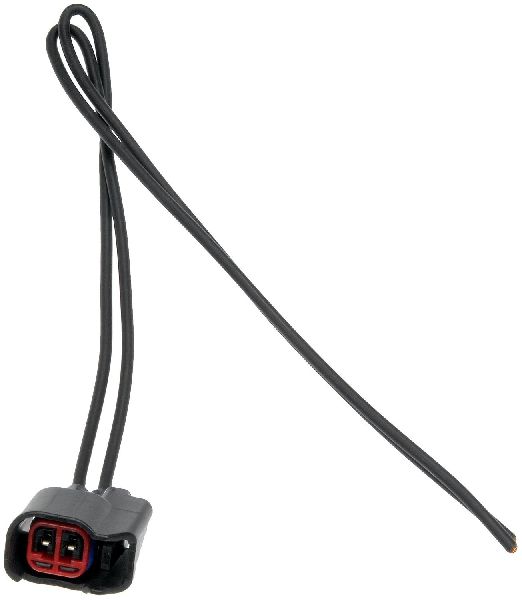
Aftermarket price range: $40-$90 - Fuel Injector Connector Pigtail — If the wiring is damaged right at the connector, replacing the pigtail is the standard repair. The plastic can become brittle from heat cycles and break.
Trusted brands: Motorcraft, Dorman
OEM price range: $25-$40
Aftermarket price range: $10-$20
Related Codes That Often Appear With This One
- P0302 — P0302 means 'Cylinder 2 Misfire Detected'. Since the P0202 code indicates the injector isn't firing, the cylinder isn't getting fuel, which directly causes a misfire. P0202 is the cause, and P0302 is the effect.
- P0171 or P0174 — These codes indicate the engine is running lean. A non-functioning injector means less fuel is being delivered than the computer expects, which can lead to a lean condition, especially if the issue is intermittent.
Technical Service Bulletins (TSBs) & Recalls
- TSB 05-13-4 - Leaking Fuel Injectors (2005 Models): A forum member references this TSB, which specifically addresses leaking fuel injectors on 2005 model year vehicles with the 5.4L 3V engine, corroborating the known issue with a supplier change for that year.
- TSB 06-19-8 - Ticking/Knocking Noises: This TSB helps diagnose various noises from the 5.4L 3V engine. It explicitly states that injector noise (ticking) is considered normal and increases with RPM. This can help an owner differentiate the normal, noisy operation of the injectors from a more serious mechanical knock.
- Bulletin #SSM 49759: While issued for other Ford models like the Expedition, this bulletin notes that an illuminated MIL with codes P0201, P0202, P0203, P0204, P0205, or P0206 requires following specific Pinpoint Tests in the Powertrain Control/Emissions Diagnosis Manual.
Platform-Specific Known Issues
- 2005 Model Year Injector Failures: For the 2005 model year, Ford allegedly switched fuel injector suppliers. This resulted in a higher-than-normal failure rate for injectors on these specific trucks. The issue was common enough that Ford issued a Customer Satisfaction Program (07M08) for injectors that could stick open, potentially flooding a cylinder with fuel and causing catastrophic engine damage.
- Water Intrusion Causing Multiple Injector Codes: Driving through heavy rain or high water can sometimes lead to water getting into the main PCM electrical connectors. This can cause short circuits that trigger multiple injector codes at once (e.g., P0201, P0202, P0207). If you suddenly get several of these codes after wet conditions, the fix may be to disconnect, dry, and apply dielectric grease to the PCM connectors rather than replacing injectors.
Mechanic-Grade Diagnostic Values
- Fuel Injector Coil Resistance — expected: 11.0 to 18.0 Ohms. A group of healthy injectors on one truck measured between 12.9 and 13.2 Ohms.. Failure: A reading of 'O.L.' (Open Line) or infinite resistance indicates a failed injector coil. A reading significantly outside the normal range also indicates a problem.
- Injector Power Supply Voltage (Key On, Engine Off) — expected: Approximately 12 Volts (Battery Voltage) on the power supply wire at the injector connector.. Failure: Low or no voltage indicates a problem with the power supply wire or the related fuse.
- Injector Pulse Width (Live Scan Data) — expected: Typically 1-5 milliseconds (ms) at idle, increasing with engine load.. Failure: A value of 0 ms for cylinder 2 while others show normal readings points to a circuit or PCM driver issue.
Scan Tool Commands That Help
- Ford IDS (or high-end aftermarket scanner): Power Balance Test — This function graphically displays the power contribution of each cylinder. A significant drop for cylinder #2 would confirm it is not firing. This helps differentiate a complete failure (P0202) from a weak cylinder and can be used to verify the repair is successful.
- High-end aftermarket scanner (e.g., iCarsoft): Injector Actuation Test / Buzz Test — This bidirectional command allows you to manually trigger the cylinder #2 injector. Listening for an audible 'click' or 'buzz' can confirm if the injector's solenoid is mechanically and electrically capable of activating, helping to isolate a wiring or PCM driver issue from a physically stuck injector.
Wiring & Ground Locations
- PCM Connector C175E — This is the engine harness connector at the Powertrain Control Module (PCM), which is located on the passenger-side firewall. The PCM has three main connectors; C175E is the one that carries the engine sensor and actuator signals, including the fuel injectors.. The control wire for the cylinder #2 fuel injector runs to a specific pin on this connector. For a 2008 F-150 5.4L, the control wire is White. Checking for the ground pulse signal directly at this pin can definitively rule the PCM in or out as the cause of the fault.
- Injector #2 Control Wire — Runs from the injector connector for cylinder #2 back to pin 56 on PCM connector C175E.. This is the specific wire that the PCM grounds to fire the injector. An open or short in this wire will cause a P0202. For a 2008 model, this wire is White (WHT). The power feed wire to all injectors on that bank is Red (RED).
- Main Engine Ground Strap — There is a primary ground strap from the firewall to a mounting point on the back of the passenger-side cylinder head.. While not directly for the injector circuit, a poor main engine ground can cause a host of bizarre electrical issues and floating voltages. Ensuring this connection is clean and tight is a critical step in diagnosing any electrical fault.
- G103 / G104 — These are primary chassis/engine ground points. On a 2008 F-150, wiring diagrams show G103 located on the right rear of the engine compartment. Forum discussions suggest looking for grounds near the bellhousing or behind the oil pan area.. The PCM and its related sensors rely on clean ground connections. A corroded or loose ground at one of these points can create resistance that leads to incorrect sensor readings or faulty actuator commands, including injector circuit codes.
Real Owner Repair Stories
- Ford F150 Forum user '3lowdown' (2008 F-150 4x4 5.4L) — Engine miss, traced to cylinder #2 fuel injector control wire.
❌ Tried (didn't work) Verified 12V power at the injector., Confirmed no pulse on the control wire using a test light., Unwrapped the entire wiring loom from the injector to the PCM and found no visible breaks or damage., Tested for a pulse directly at the PCM connector pin and found nothing.
✅ What actually fixed it The PCM was faulty. A shop confirmed the diagnosis, and installing a rebuilt, VIN-programmed PCM resolved the P0202 code and the misfire.
OEM Part Supersession History
5C3Z-9F593-DC (Motorcraft CM-5138)→7C3Z-9F593-A (Motorcraft CM-5144)— The original injector (CM-5138) used a single-hole design. The later part (CM-5144), specified for trucks built after 12/03/2006, features a 4-hole design.
Heads up: While physically interchangeable, many owners report a smoother idle and better throttle response by upgrading older trucks to the newer 4-hole injectors. It is recommended to replace all injectors on a bank if upgrading to maintain balanced fuel delivery.
Model Year Variations Within This Range
- 2005 only: Ford used a different fuel injector supplier for the 2005 model year 5.4L 3V. These injectors have a significantly higher failure rate, including a tendency to stick open, which can lead to catastrophic engine damage from hydro-locking. Ford issued Customer Satisfaction Program 07M08 for this issue, which has since expired.
- 2004-2006 vs 2007-2008: The OEM fuel injector design changed from a single-hole (CM-5138) to a four-hole (CM-5144) design for trucks built after December 3, 2006. The newer design is considered an upgrade for better fuel atomization.
Diagnostic Flowchart
Used vs. New Parts: Buying Guide for This Vehicle
When a used part is the smart pick: For a fuel injector, buying a used part is generally not recommended. The risk of receiving a clogged, leaking, or near-failure injector is high, and the labor to replace it again outweighs the initial savings. A used wiring harness or PCM connector pigtail from a junkyard can be a viable option if the donor vehicle is clean and shows no signs of heat damage.
Donor-vehicle mileage cap: roughly under 80000 miles for the part to have meaningful remaining life.
What to inspect on the donor part:
- For wiring: Check for brittle plastic, cracked insulation, or any signs of previous repairs (splices, electrical tape).
- For connectors: Ensure locking tabs are intact and pins are straight and free of corrosion.
- Avoid parts from vehicles with signs of engine fires, heavy fluid leaks, or rodent infestation.
OEM-only on this vehicle (don't cheap out):
- Fuel Injector: Due to the critical nature of this part and the known issues on this engine, using an OEM Motorcraft injector is strongly recommended to avoid performance problems or catastrophic failure (especially on 2005 models).
Aftermarket brands forum-validated for this vehicle:
- Bosch (often the OEM supplier)
- Standard Motor Products (SMP)
- Continental
Brands owners have reported issues with on this vehicle:
- Unbranded, no-name injectors from online marketplaces. Forum consensus is that the risk of poor quality control, incorrect flow rates, and premature failure is too high.
Documented NHTSA Reports
NHTSA ODI #10944544
Symptoms: An owner reported that while driving, the truck would turn over but would not start. The check engine light was on with codes P0201 and P0202, and the diagnostic tool indicated an open circuit for every injector.
NHTSA ODI #10405277 (Cross-Manufacturer Reference)
Symptoms: A manufacturer report for a Ford Fusion noted codes P0010, P0201, P0202, P0203, and P0204. The dealer checked electrical connections and reassembled them, but the issue recurred shortly after.
Real Owner Stories
Aggregated from forums and TSBs cited above. Mileages and costs reflect what owners reported in those sources.
2005 Ford F-150 5.4L 3V
Symptoms: Check Engine Light with code P0202, along with a strong fuel smell from the exhaust, indicating the injector was stuck open.
What fixed it: The failed fuel injector was replaced. This was a known issue for the 2005 model year, covered by Ford's Customer Satisfaction Program (07M08).
Source hint: Vehicle Specific Issues section regarding 2005 Model Year Injector Failures
2006 Ford F-150 5.4L 3V
Symptoms: Multiple injector codes (P0201, P0202, P0207) appeared suddenly after driving through high water.
What fixed it: Instead of replacing injectors, the owner disconnected the main PCM electrical connectors, dried them out completely, and applied dielectric grease before reconnecting them. This resolved the short circuit and cleared the codes.
Source hint: Vehicle Specific Issues section regarding Water Intrusion
2004 F-150 5.4L 3V — ~125000 miles
Symptoms: Check Engine Light came on with code P0202. A visual inspection of the connector showed no obvious issues.
What fixed it: After receiving advice, the owner confirmed the injector was faulty by swapping it with the one from cylinder #1. The code followed the injector (changing to P0201), confirming the injector needed to be replaced.
Source hint: f150forum.com: 'Code P0202'
Related OBD-II Codes
Frequently Asked Questions
Where is cylinder #2 on my 2004-2008 F-150's 5.4L V8 engine?
What is the correct resistance for a fuel injector on this truck?
I have a 2005 F-150. Are my injectors more likely to fail?
How can I definitively confirm the injector is bad before buying a new one?
I got P0202 and other injector codes after driving in a heavy storm. What should I check first?
I hear a ticking noise from my engine. Is that the bad injector?
Should I replace just the one failed injector or all four on that side?
Helpful Videos

Used OEM Parts in Stock


New Aftermarket Parts Available

The information in this article is provided for general reference and educational purposes only. Vehicle specifications, procedures, and part compatibility can vary by production date, trim level, and region. Always consult your vehicle's factory service manual and verify part numbers before purchasing or performing repairs. Safety-critical components such as airbags, seat belts, and braking systems should be installed by a qualified professional.
- Ford F-150:
- 🎬 Helpful Videos
- 🛍️ Shop This Part
- What's Unique About the 2004-2008 Ford F-150
- Symptoms You May Notice
- Most Likely Causes
- Rare But Worth Checking
- Diagnosis Steps
- Parts You'll Likely Need
- Related Codes That Often Appear With This One
- Technical Service Bulletins (TSBs) & Recalls
- Platform-Specific Known Issues
- Mechanic-Grade Diagnostic Values
- Scan Tool Commands That Help
- Wiring & Ground Locations
- Real Owner Repair Stories
- OEM Part Supersession History
- Model Year Variations Within This Range
- Diagnostic Flowchart
- Used vs. New Parts: Buying Guide for This Vehicle
- Documented NHTSA Reports
- NHTSA ODI #10944544
- NHTSA ODI #10405277 (Cross-Manufacturer Reference)
- Real Owner Stories
- 2005 Ford F-150 5.4L 3V
- 2006 Ford F-150 5.4L 3V
- 2004 F-150 5.4L 3V — ~125000 miles
- Related OBD-II Codes
- Frequently Asked Questions
- 🎟️ Get 5% Off