

P0202 on 2006-2010 Dodge Charger 3.5L: Injector Circuit Malfunction Causes and Fixes
This code points to an electrical problem with the fuel injector for cylinder #2. The most likely causes are a bad fuel injector or a wiring issue. Since cylinder #2 is on the driver's side, the intake manifold must be removed for access, making this a labor-intensive repair. Due to the labor involved, it's wise to replace all three driver-side injectors, the intake gaskets, and inspect related components at the same time.
- P0202 on this Charger indicates an electrical fault with the cylinder #2 fuel injector, not a spark or compression issue.
- Cylinder #2 is the front cylinder on the driver's side, and accessing it requires removing the entire upper intake manifold.
- The most common fixes are a bad fuel injector or a wiring problem near the injector.
- Due to the high labor involved, always replace the intake manifold gaskets when performing this repair.
- Consider replacing all three driver-side injectors (2, 4, 6) at the same time to save on future labor costs.
What's Unique About the 2006-2010 Dodge Charger
The key challenge for a P0202 on the Dodge Charger's 3.5L V6 is not the code itself, but the physical location of cylinder #2. The driver's side bank of cylinders (2, 4, 6) is located underneath the upper intake manifold plenum. This means that any diagnosis or replacement of the #2 injector requires the complete removal of the intake manifold, a job that adds significant labor time and cost compared to working on the more easily accessible passenger-side injectors. Because of this, many owners and technicians choose to replace all three driver-side injectors, along with spark plugs and the upper/lower intake gaskets, at the same time to avoid future repairs for an adjacent cylinder.
Symptoms You May Notice
- Check Engine Light is on
- Rough or shaking idle
- Engine misfire (may feel like a stumble or shudder)
- Poor acceleration and reduced engine power
- Hesitation when pressing the gas pedal
- Increased fuel consumption
- Unbalanced engine feel
- Replacing the spark plug or ignition coil for cylinder 2. While these can cause a misfire (P0302), they will not cause an injector circuit code (P0202). The P0202 code is specifically for an electrical fault in the injector circuit, not a combustion failure.
Most Likely Causes
- Faulty Cylinder 2 Fuel Injector 🔴 High Probability Fuel injectors are wear-and-tear items that can fail electrically (internal coil shorts/opens) after many miles and heat cycles. This is the most common failure point for a P020x code.
How to confirm: The most definitive test is to swap the cylinder #2 injector with another one (e.g., cylinder #4, also on the driver's side). Clear the codes and run the engine. If the code changes to P0204 (for cylinder 4), the injector is confirmed to be faulty. You can also test the injector's internal resistance with a multimeter; it should be within the manufacturer's specified range (typically 11-14 ohms). An 'OL' or infinite reading indicates an open coil.
Typical fix: Replace the faulty fuel injector. Given the labor to remove the intake manifold, it is highly recommended to replace all three injectors on the driver's side bank (2, 4, 6) at the same time, along with new intake manifold gaskets.
Est. part cost: $40-$90 per injector - Wiring Harness or Connector Issue 🟡 Medium Probability The engine wiring harness is exposed to constant heat and vibration, which can cause wires to become brittle, chafe against other components, or break. The injector connector's locking tab can become brittle and break, or its terminals can corrode or loosen, causing an open or short in the circuit.
How to confirm: Visually inspect the wiring going to the cylinder #2 injector for any signs of melting, chafing, or breaks. Wiggle the connector and wiring with the engine running to see if it affects the idle. Use a 'noid light' to confirm if the PCM is sending a pulse signal to the connector. If the noid light flashes, the PCM and wiring up to the connector are likely good. If it doesn't flash, there is a break in the wiring or a problem with the PCM. Check for continuity and shorts to ground/voltage on the control wire between the injector and PCM connectors using a multimeter.
Typical fix: Repair the damaged section of wiring. This may involve soldering in a new wire or replacing the injector connector pigtail. Ensure the repair is sealed against moisture. Pigtail connectors are readily available.
Est. part cost: $10-$30 for a connector pigtail - Faulty Powertrain Control Module (PCM) ⚪ Low Probability While PCM failure is rare, the internal driver circuit for a specific injector can fail. This is less common than the injector or wiring itself.
How to confirm: This should be the last resort after thoroughly testing and confirming that both the fuel injector and the wiring are good. If there is no pulse signal at the connector (tested with a noid light) and the wiring shows perfect continuity back to the PCM with no shorts, the injector driver circuit inside the PCM may have failed.
Typical fix: Replace and reprogram the Powertrain Control Module. This typically requires specialized tools for programming. Sometimes, a software reflash from the dealer can resolve intermittent electrical issues.
Est. part cost: $200-$500 for a remanufactured PCM
Diagnosis Steps
- Confirm the code with an OBD-II scanner. Note any other codes present, especially P0302.
- Locate cylinder #2. On the 3.5L V6, it is the front-most cylinder on the driver's side.
- Visually inspect the wiring harness and connector for the #2 fuel injector. Look for obvious damage like chafed wires, melting, or a loose connection.
- If a 'noid light' is available, disconnect the injector and plug in the light. Crank the engine. A flashing light indicates the wiring and PCM are sending a signal. No light points to a wiring or PCM issue.
- To definitively test the injector, the upper intake manifold must be removed to gain access.
- Once the manifold is off, swap the #2 fuel injector with the #4 fuel injector (middle, driver's side).
- Reassemble the intake manifold using NEW gaskets. Do not reuse old gaskets as this will cause vacuum leaks.
- Clear the codes with the scanner and start the vehicle. Let it run for a few minutes.
- Re-scan for codes. If the code is now P0204, the fuel injector you moved is bad and needs to be replaced. If the code remains P0202, the problem is in the wiring or PCM.
- If the problem is in the wiring, use a multimeter to check for continuity on the control wire from the injector connector to the PCM connector, and check for shorts to ground or voltage as per the service manual.
Parts You'll Likely Need
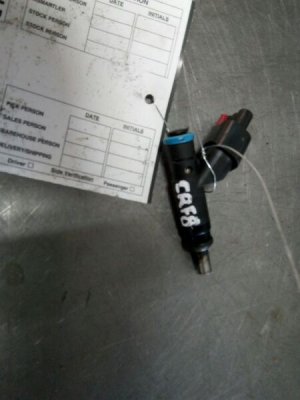
- Fuel Injector
(OEM #04591851AA)— This is the most common component to fail in the circuit. Due to the high labor cost, it's often the first part replaced once the intake is removed.
Trusted brands: Mopar, Bosch, Standard Motor Products (SMP)
OEM price range: $70-$110
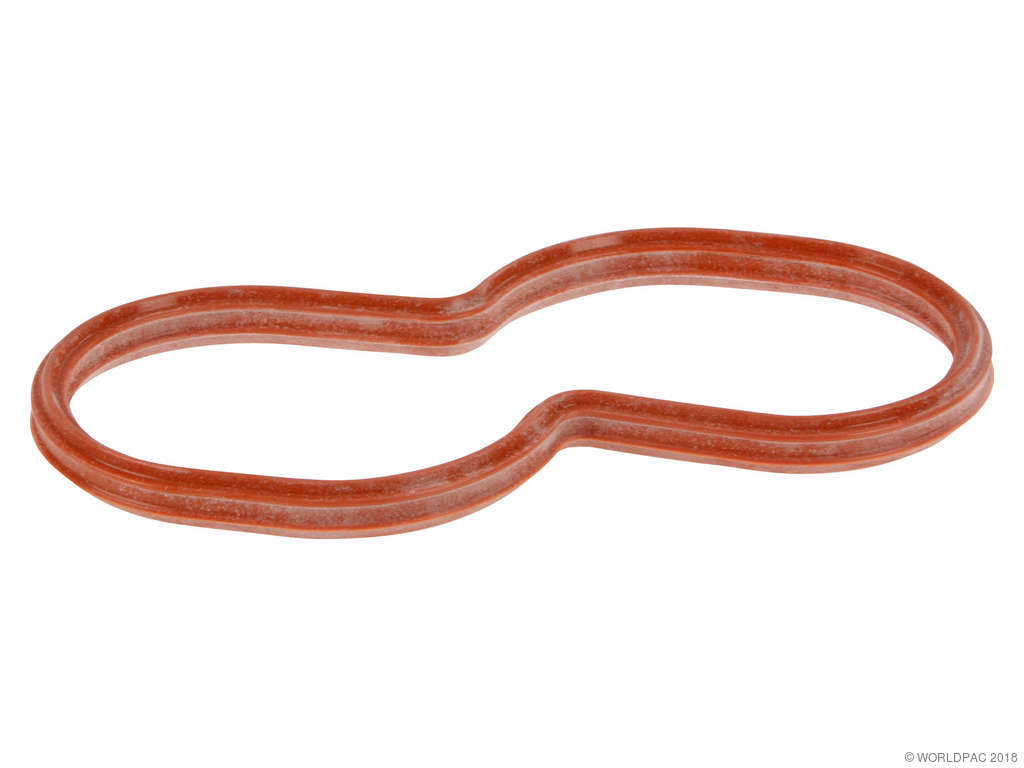
Aftermarket price range: $40-$80 - Upper and Lower Intake Manifold Gaskets
(OEM #MS96474 (Fel-Pro Set Number))— These are single-use gaskets that must be replaced anytime the intake manifold is removed to prevent vacuum leaks.
Trusted brands: Fel-Pro, Mahle, Mopar
OEM price range: $40-$60
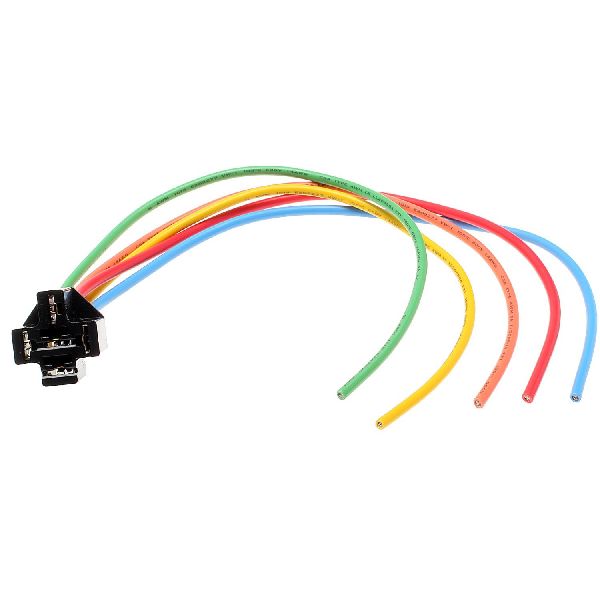
Aftermarket price range: $20-$40 - Fuel Injector Connector Pigtail — If the wiring fault is at the connector itself (corrosion, broken lock tab, loose terminals), replacing the pigtail is the standard repair.
Trusted brands: Dorman, Carquest, Standard Motor Products (S824)
OEM price range: N/A
Aftermarket price range: $10-$30
Related Codes That Often Appear With This One
- P0302 — P0302 means 'Cylinder 2 Misfire Detected'. Since P0202 indicates a problem with the fuel supply to cylinder 2, a misfire is a direct and expected consequence.
- P1004 — This code for 'Short Runner Valve Performance' is common on these engines. Since the intake manifold must be removed to fix P0202, it's common to discover issues with the SRV system, which is housed within the manifold. TSB 18-003-07 REV. A addresses this issue, sometimes requiring a PCM reflash.
- P1005 — Similar to P1004, this code points to a problem with the Manifold Tuning Valve (MTV), another component on the intake manifold. Its location near the firewall makes it a 'while you're in there' inspection item during an injector job.
Technical Service Bulletins (TSBs) & Recalls
- TSB 18-003-07 REV. A: While for code P1004 (Short Runner Valve), it is highly relevant as it involves components on the intake manifold that must be removed for the P0202 job. It notes that a PCM reflash may be required before replacing parts.
- TSB 18-031-05: Addresses intermittent crank sensor issues (P0339) that can occur on the 3.5L engine, sometimes accompanied by misfire codes. The fix involves shimming the crankshaft position sensor.
- TSB Bulletin #9002688: A manufacturer service bulletin notes that before replacing injectors for codes P0201 through P0206, technicians should ensure the wiring loom and/or connector in the valve cover gasket is not the root cause of the fault.
Platform-Specific Known Issues
- Access to the driver's side fuel injectors (2, 4, 6) requires removing the upper intake manifold, significantly increasing labor time and cost for what would otherwise be a simple repair.
Mechanic-Grade Diagnostic Values
- Fuel Injector Coil Resistance — expected: 11 - 14 ohms. Failure: A reading of 'OL' (infinity) indicates an open coil, while a reading near zero indicates a shorted coil.
- Injector Power Supply Voltage (KOEO) — expected: ~12V (Battery Voltage). Failure: No voltage at the power supply pin of the injector connector indicates a problem with the ASD relay or the wiring from it.
- Injector Control Circuit Voltage (KOEO, Unplugged) — expected: 0V. Failure: Any voltage present on the control wire with the injector unplugged indicates a short to voltage in the harness.
- Injector Inductive Kick Voltage Spike — expected: A brief spike to ~50V. Failure: The absence of this spike, as viewed on an oscilloscope when the injector is commanded off, is the primary trigger for the P0202 code.
Scan Tool Commands That Help
- Professional Scan Tool (e.g., WiTech): Actuate Auto Shutdown (ASD) Relay Control State — This command is used to verify the power supply side of the injector circuit. By commanding the ASD relay on, you can check for battery voltage at the injector connector without the engine running, helping to isolate a power-side fault.
- Professional Scan Tool (e.g., WiTech): Injector Kill / Cylinder Power Balance Test — This bidirectional test allows the technician to disable injectors one by one. Disabling cylinder 2 should produce no change in engine RPM or smoothness if it's already not firing, confirming the fault is isolated to that cylinder. If disabling another cylinder *does* change the idle, it proves that cylinder was working correctly.
Wiring & Ground Locations
- Cylinder 2 — Front-most cylinder on the driver's side of the engine.. This is the specific cylinder with the circuit fault. Access requires removing the upper intake manifold.
- (K12) Injector 2 Control Circuit — The specific wire running from the #2 fuel injector connector to a dedicated pin on the Powertrain Control Module (PCM).. This is the ground-side switched wire that the PCM uses to fire the injector. It must be tested for continuity and for shorts to voltage or ground.
- G106 (3.5L) — On the left side of the engine.. This is a primary engine ground. A loose or corroded connection here can cause erratic behavior in various electronic components, including the injector circuits, by creating an unstable ground reference for the PCM.
- G107 (3.5L) — On the right side of the engine, near the generator.. Another critical engine ground point. Both G106 and G107 should be inspected, cleaned, and tightened as part of any in-depth electrical diagnosis.
Real Owner Repair Stories
- Chrysler Forum User (2004 Chrysler Pacifica 3.5L (mechanically very similar)) — P0202 code, rough running, especially when cold.
❌ Tried (didn't work) Replaced spark plug, Replaced ignition coil, Replaced fuel injector
✅ What actually fixed it The story is a cautionary tale; the user's mechanic replaced all logical parts without fixing the issue and then incorrectly suggested replacing the Transmission Control Module (TCM). This highlights the critical need to perform electrical circuit tests (checking for power, ground pulse, and wiring integrity) before replacing expensive components. The actual fix was not posted, but the story serves as a valuable example of common misdiagnosis.
"I Checked Everything" — The Actual Cause
- A smoke test is not a valid diagnostic procedure for a P0202 code. This code indicates a purely electrical fault (an open or short in a circuit) and not a physical leak in the intake or vacuum system that a smoke test is designed to find.
OEM Part Supersession History
04591851AA→04591851AB— Standard part revision by the manufacturer.
Heads up: The parts are interchangeable. 4591851AB is the correct current service part.Mopar 04591851AA/AB→Bosch 0280158028— This is a common, high-quality aftermarket cross-reference. Bosch is often the original equipment manufacturer.
Model Year Variations Within This Range
- 2006-2010: There are no significant variations within the 2006-2010 model year range for the 3.5L EGG engine that would affect the diagnosis or repair of a P0202 code. A minor cosmetic refresh occurred in 2009, but the powertrain components remained the same.
Diagnostic Flowchart
Other Known Issues on This Vehicle
Issues unrelated to this code that are worth knowing about as an owner of this generation:
- Shifter Stuck in Park ('Pink Thingy' Failure) 🔴 High — Very common, especially on 2005-2007 models. The plastic interlock lever becomes brittle and breaks.
- Intake Manifold Runner/Tuning Valve Failure 🟠 Medium — Common failure item, often triggering codes P1004 (SRV) or P1005 (MTV). (Ref: TSB 18-003-07 REV. A)
- Oil Cooler O-Ring Leaks 🟠 Medium — The O-rings/gaskets for the oil cooler adapter can degrade over time, causing significant oil leaks that can be mistaken for other seals.
- Transmission Shift Quality / Limp Mode 🟠 Medium — Owners report intermittent hard shifting, hesitation, or the transmission entering 'limp mode'. (Ref: Various PCM/TCM software updates were released by Chrysler to address shift logic.)
- Crankshaft Position Sensor Intermittent Failure 🟡 Low — Can cause intermittent stalling or no-start conditions, often setting a P0339 code. (Ref: TSB 18-031-05)
Used vs. New Parts: Buying Guide for This Vehicle
When a used part is the smart pick: Using a used wiring harness pigtail or a section of harness from a junkyard vehicle is a smart choice if the original is physically damaged (e.g., by rodents or heat). A complete used PCM is also an option, but it MUST be reprogrammed to your vehicle's VIN and configuration.
Donor-vehicle mileage cap: roughly under 100000 miles for the part to have meaningful remaining life.
What to inspect on the donor part:
- For wiring: Check for flexibility (not brittle), intact connector tabs, and no signs of corrosion on the pins.
- For a PCM: Ensure the donor vehicle was not in a flood or fire. Check that the part number matches exactly.
OEM-only on this vehicle (don't cheap out):
- Powertrain Control Module (PCM): While a used unit can be sourced, the programming is critical and often best left to a dealer or specialist with Mopar-specific tools to ensure compatibility with all vehicle systems.
Aftermarket brands forum-validated for this vehicle:
- Gaskets: Fel-Pro, Mahle
- Injectors: Bosch (often the OEM supplier), Standard Motor Products (SMP)
- Connectors: Dorman, Standard Motor Products (SMP)
Brands owners have reported issues with on this vehicle:
- Unbranded, exceptionally low-cost fuel injectors from online marketplaces are a significant gamble. Given the high labor cost to access the injectors on this engine, the risk of premature failure from a low-quality part outweighs the initial savings.
Real Owner Stories
Aggregated from forums and TSBs cited above. Mileages and costs reflect what owners reported in those sources.
2006-2010 Dodge Charger 3.5L V6
Symptoms: The owner experienced a 'Short Intake Runner' code alongside other performance issues, confirming the commonality of manifold-related faults on this platform.
What fixed it: Diagnostic steps included swapping components to isolate the fault and checking wiring continuity to confirm if the issue was the component or the harness.
Source hint: DodgeForum.com
Related OBD-II Codes
Frequently Asked Questions
Why is the labor for replacing a single fuel injector so high on my 3.5L Dodge Charger?
Should I replace more than just the Cylinder 2 injector while the engine is apart?
Does TSB 18-003-07 REV. A apply to my P0202 repair?
Could my P0202 code be related to the crankshaft position sensor issue mentioned in TSB 18-031-05?
What should the resistance be if I test the Cylinder 2 injector with a multimeter?
Can a software update fix my P0202 code?
Helpful Videos
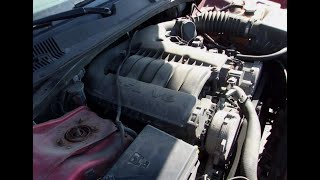
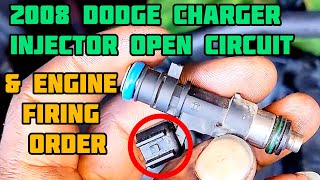
Used OEM Parts in Stock

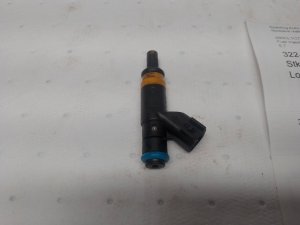
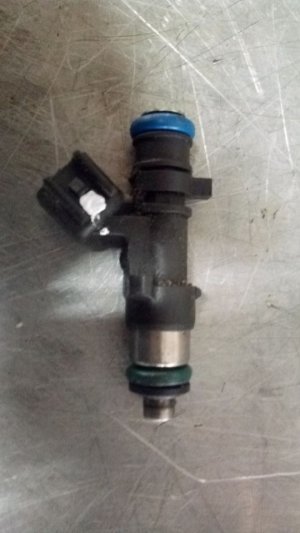

New Aftermarket Parts Available


The information in this article is provided for general reference and educational purposes only. Vehicle specifications, procedures, and part compatibility can vary by production date, trim level, and region. Always consult your vehicle's factory service manual and verify part numbers before purchasing or performing repairs. Safety-critical components such as airbags, seat belts, and braking systems should be installed by a qualified professional.
- Dodge Charger:
- 🎬 Helpful Videos
- 🛍️ Shop This Part
- What's Unique About the 2006-2010 Dodge Charger
- Symptoms You May Notice
- Most Likely Causes
- Diagnosis Steps
- Parts You'll Likely Need
- Related Codes That Often Appear With This One
- Technical Service Bulletins (TSBs) & Recalls
- Platform-Specific Known Issues
- Mechanic-Grade Diagnostic Values
- Scan Tool Commands That Help
- Wiring & Ground Locations
- Real Owner Repair Stories
- "I Checked Everything" — The Actual Cause
- OEM Part Supersession History
- Model Year Variations Within This Range
- Diagnostic Flowchart
- Other Known Issues on This Vehicle
- Used vs. New Parts: Buying Guide for This Vehicle
- Real Owner Stories
- 2006-2010 Dodge Charger 3.5L V6
- Related OBD-II Codes
- Frequently Asked Questions
- 🎟️ Get 5% Off