

OBD-II Code P1005: Comprehensive Guide to a Manufacturer-Specific Fault
What P1005 means for GM, Dodge, VW, and more, why it triggers, and how to fix it for good.
- P1005 definitions vary entirely by manufacturer; verify your specific make and model's code definition before buying any parts.
- On 2019-2020 GM trucks, P1005 guarantees a failed Fuel Pump Driver Control Module requiring updated part 13540028 or 13540026.
- For Dodge and Chrysler 3.5L V6 engines, P1005 indicates a stuck Manifold Tuning Valve that requires cleaning or a $150 replacement.
- On VW and Audi TDI models, P1005 signals a Cylinder 2 torque difference, usually caused by a failed fuel injector covered under the extended emissions warranty.
- Driving with an active P1005 code drops fuel economy by up to 15% and risks a complete engine stall or no-start condition within weeks.
What Does P1005 Mean?

P1005 is a manufacturer-specific code, meaning its definition changes depending on your car. For Dodge, Chrysler, and Jeep vehicles, it signals a performance problem with the Manifold Tuning Valve (MTV) or Intake Manifold Runner Control (IMRC) system. For 2019-2020 GM trucks, it points directly to a known software defect in the Fuel Pump Driver Control Module (FPDM). For Volkswagen and Audi models, it indicates a 'Torque Difference on Cylinder 2,' pointing to a failed fuel injector, low compression, or wiring issue.
Technical definition: The official SAE/OBD-II definition for P1005 varies significantly by manufacturer. Common definitions include 'Manifold Tuning Valve Control Performance' (Dodge/Chrysler/Jeep), 'Fuel Pump Driver Control Module Performance' (General Motors), and 'Torque Difference Cylinder 2: Limit Value Exceeded' (Volkswagen/Audi). On older GM vehicles like the 2002 Chevrolet Cavalier, it means 'MAP sensor performance compared to TPS'.
Can I Drive With P1005?
Yes, But With Caution. You can drive, but do not exceed 50 miles. For GM trucks, you risk sudden stalling or a no-start condition, which leaves you stranded. For Dodge/Chrysler, reduced engine power creates a safety hazard in traffic. Ignoring the code leads to poor fuel economy and damages components like the catalytic converter over time, a repair that costs over $1,000.
Common Causes


- Failed Fuel Pump Driver Control Module (FPDM) (Very Common) — On 2019-2020 Chevrolet Silverado and GMC Sierra trucks, this is the guaranteed cause. A known software error inside the module triggers the code. GM issued Technical Service Bulletin (TSB) #PIT5636D 🎬 See this guide for diagnosing the fuel pump control module. to address this specific failure.
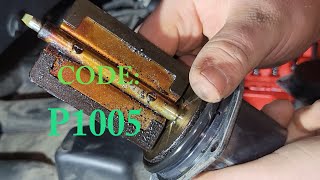
- Failed Manifold Tuning Valve (MTV) or IMRC Solenoid (Very Common) — This is the most frequent cause on Dodge, Chrysler, and Jeep vehicles with V6 engines. The solenoid or internal valve gets stuck or fails electronically, preventing it from adjusting the intake runner length correctly. 🎬 Watch: How to replace the intake manifold tuning valve.
- Faulty or Dirty Fuel Injector (Volkswagen/Audi) (Common) — For VW and Audi models, P1005 points to a torque imbalance on cylinder 2. This is caused by a fuel injector that is clogged, dirty, or failing, leading to improper fuel delivery for that specific cylinder. 🎬 Watch: Step-by-step fuel injector replacement for VW and Audi.
- Damaged or Corroded Wiring/Connectors (Common) — The wiring harness leading to the manifold tuning valve, fuel pump control module, or fuel injector becomes frayed, loose, or corroded. This interrupts the signal from the main computer. On GM trucks, wire harness chafing is a known issue.
- Carbon Buildup on Intake Runners or Valves (Common) — Carbon deposits build up inside the intake manifold, physically blocking the runner flaps or the tuning valve from moving freely. This is especially common on direct-injection engines.
- Vacuum Leaks (Less Common) — On systems using vacuum to operate the intake runners, a cracked, disconnected, or leaking vacuum line prevents the runners from moving. This causes a performance fault like P1005 even if the electronic solenoid works perfectly.
- Low Engine Compression (Volkswagen/Audi) (Less Common) — For VW/Audi, a torque difference is also caused by a mechanical engine issue. Low compression in cylinder 2 due to worn piston rings, a bad valve, or a head gasket leak triggers a P1005 code.
- Warped or Damaged Intake Manifold (Rare) — On vehicles with plastic intake manifolds (like the Dodge Journey), extreme heat cycles cause the manifold to warp. This prevents the internal runner flaps from sealing or moving properly, leading to a performance code even after replacing the valve.
- Failed Powertrain Control Module (PCM) (Rare) — In rare cases, the engine computer itself fails. The PCM's internal driver for the component fails, or it interprets data incorrectly, falsely setting the P1005 code. Consider this only after exhausting all other possibilities.
Symptoms
- Check Engine Light On — The vehicle's computer detects a fault and stores the P1005 code, illuminating the Malfunction Indicator Lamp (MIL) on your dashboard.
- Reduced Engine Power and Acceleration — The engine feels sluggish or goes into 'limp mode,' especially during hard acceleration. The intake or fuel system fails to adjust correctly for the increased demand.
- Rough Idle, Stalling, or No-Start — The engine runs unevenly or vibrates at a stop. With the GM fuel module issue, the engine stalls unexpectedly or fails to start completely.
- Poor Fuel Economy — When the engine's airflow or fuel delivery is not optimized, it burns more fuel than necessary, leading to a noticeable drop in MPG.
- Flapping or Clicking Noise from Engine Bay — On Dodge/Chrysler vehicles, drivers report a distinct flapping or tapping sound at low speeds as the faulty intake runner valve attempts to move but gets stuck.
Diagnostic Flowchart
Tap your situation to follow the diagnostic path that matches what you're seeing on this code.
Common Fixes & Costs
- Replace Fuel Pump Driver Control Module (GM) — Parts: $60-$100, Labor: $75-$100, ~0.5 hr book time (DIY)
- Replace Manifold Tuning Valve / IMRC Solenoid — Parts: $120-$250, Labor: $100-$200, ~1.5 hr book time (Intermediate)
- Replace Fuel Injector (VW/Audi) — Parts: $150-$300 per injector, Labor: $250-$450, ~2.5 hr book time (Intermediate)
- Clean Manifold Tuning Valve — Parts: $10-$20, Labor: $0-$100, ~1.0 hr book time (DIY)
- Repair Damaged Wiring — Parts: $20-$60, Labor: $150-$400, ~2.0 hr book time (Professional)
DIY vs Professional
- Replace Fuel Pump Driver Control Module (GM) — Beginner: Yes
Tools: Basic socket set (10mm, 13mm sockets), flathead screwdriver. - Replace Manifold Tuning Valve (Dodge/Chrysler) — Beginner: No
Tools: Socket set, torque wrench, pliers, screwdriver set, intake cleaner, rags. - Replace Fuel Injector (VW/Audi) — Beginner: No
Tools: Injector puller (slide hammer), new injector seals and stretch bolts, torque wrench, VCDS scan tool.
Used vs. New Parts: Buying Guide
When a used part is worth it: For mechanical parts like an IMRC valve, a used part from a low-mileage donor vehicle is a budget-friendly option. Avoid used electronic modules like the GM FPDM, as the original part has a known software defect.
Donor-vehicle mileage cap: roughly under 70000 miles for the part to have meaningful remaining life.
Donor quality checklist:
- Verify the donor vehicle was not scrapped for a related engine or emissions failure.
- For electronic modules, always buy the new, updated part number specified in TSBs.
- Match part numbers exactly; superseded numbers indicate an updated design.
- Avoid parts from rust-belt states, as corrosion damages connectors and housings.
Decision logic:
- If The part is a GM Fuel Pump Driver Control Module for a 2019-2020 truck → Buy new ONLY. The original part is defective by design; a used one fails the same way.
- If The part is a mechanical valve (IMRC/MTV) and the new aftermarket price is under $150 → Buy new aftermarket. The small savings on a used part isn't worth the risk of it failing soon after installation.
- If The part is a complete intake manifold assembly costing over $400 new → A used assembly from a low-mileage, rear-end collision donor is a reasonable choice to save money.
Warranty tradeoff: Used parts from a salvage yard typically have a 30-90 day warranty covering only the part. New aftermarket parts carry a 1-year to limited lifetime warranty. New OEM parts have a 1-2 year warranty.
Worst-case if a used part fails: $300-$600 if a used part fails after the warranty period, requiring a second replacement and labor charge.
What Happens If You Wait — Timeline
- 0-1 month: Check Engine Light is on. GM trucks experience intermittent hesitation or rough idle. Dodge vehicles show a slight decrease in acceleration. VW models develop a subtle engine knock at certain RPMs. (MPG impact: 0-5%% · Added cost: $0-$40 in wasted fuel.)
- 1-3 months: Symptoms become consistent. GM trucks have an increased risk of stalling or a no-start event. Dodge vehicles show a noticeable loss of power ('limp mode'). VW TDIs experience worse fuel economy and an obvious rough idle. (MPG impact: 5-15%% · Added cost: $50-$150 in wasted fuel and increased risk of being stranded.)
- 3-6 months: Risk of secondary damage increases. For VW TDI, the incorrect fuel mixture overheats and damages the Diesel Particulate Filter (DPF). For Dodge, a consistently incorrect air/fuel ratio damages the catalytic converter. (MPG impact: 10-20%% · Added cost: $1500-$4000 for potential DPF or catalytic converter replacement.)
- 6+ months: Component failure becomes critical. The GM Fuel Pump Driver Module fails completely, resulting in a definite no-start condition requiring a tow. For VW/Audi, prolonged bad injection leads to cylinder washing, causing internal engine damage. (MPG impact: 15-25%% · Added cost: $2000-$6000+ for towing, emergency repairs, and replacement of a catalytic converter, DPF, or internal engine components.)
Cost of Not Fixing It
- 0-1 month: Noticeable drop in fuel economy (5-15%), rough idle, and hesitation. For GM trucks, risk of intermittent stalling or no-start condition increases. (Added cost: $20-$60 per month in wasted fuel.)
- 1-6 months: An incorrect air/fuel mixture caused by a faulty IMRC or misfiring cylinder overheats and destroys the catalytic converter. (Added cost: $1200-$2800 for catalytic converter replacement.)
- 6+ months: Complete failure of the GM Fuel Pump Driver Module results in a definite no-start condition requiring a tow. Prolonged poor combustion leads to internal engine wear. (Added cost: $100-$300 for towing plus the cost of an emergency repair.)
Diagnosis Steps

- Identify Your Vehicle's P1005 Definition
Perform a quick search for 'P1005 [Your Car's Make, Model, and Year]' to see which system this code refers to. The diagnostic path for a Dodge (Manifold Tuning Valve) is completely different from a 2019 Silverado (Fuel Pump Module) or a VW (Cylinder 2 Torque).
Tools: Internet access (Beginner) - Check for Technical Service Bulletins (TSBs)
For GM trucks, TSB #PIT5636D directly addresses this code and is the definitive fix. Always check for TSBs related to your vehicle and this code, as the manufacturer provides specific, known solutions that save significant diagnostic time.
Tools: Internet access (Beginner) - Pro Tip: Analyze Scan Tool Live Data (GM)
Using a capable OBD-II scanner, monitor the 'Fuel Rail Pressure' (FRP) and 'Fuel Pump Control Module Status' PIDs. For a typical 5.3L engine at idle, FRP should be stable around 50-65 PSI (350-450 kPa). Erratic pressure readings or sudden drops to zero confirm the FPDM is failing.
Tools: OBD-II scanner with live data (Advanced) - Pro Tip: Analyze Injector Deviation (VW/Audi)
With a VW/Audi-specific scan tool (like VCDS), access the engine control module and view 'Measuring Blocks' for 'Injection Quantity Deviation'. At idle with the engine warm, a reading for Cylinder 2 consistently above +1.5 mg/stroke or below -1.5 mg/stroke indicates a fueling problem with that injector.
Tools: VCDS or equivalent VW/Audi scan tool (Advanced) - Pro Tip: Test the IMRC Actuator (Dodge/Chrysler/Ford)
Use a bi-directional OBD-II scanner to command the IMRC or Manifold Tuning Valve actuator to open and close. You should hear or see the valve linkage move. If the scanner sends the command but the valve doesn't move, the actuator has failed.
Tools: Bi-directional OBD-II scanner (Advanced) - Inspect the Wiring and Connectors
Visually inspect the wiring harness connected to the component in question (Manifold Tuning Valve, Fuel Pump Driver Module, or Cylinder 2 Injector). Look for signs of melting, corrosion, loose pins, or rodent damage. A poor electrical connection is a common cause.
Tools: Flashlight (Beginner) - Clean the Manifold Tuning Valve (Dodge/Chrysler)
If your vehicle has the IMRC-related code, remove the Manifold Tuning Valve. Clean the valve and the port with intake or carburetor cleaner to remove carbon buildup causing it to stick. This is a common, low-cost fix.
Tools: Socket set, carburetor cleaner, rags (Intermediate) - Replace the Fuel Pump Driver Control Module (GM)
For 2019-2020 Silverado/Sierra trucks, the TSB directs you to replace the FPDM. It is located on the driver's side frame rail above the spare tire. Disconnect the battery, unplug the old module, unbolt it, and install the new, updated part.
Tools: Socket set (Intermediate) - Check IMRC Solenoid Voltage and Resistance (Dodge/Chrysler/Ford)
Disconnect the IMRC solenoid connector. With the key on, engine off, use a multimeter to check for battery voltage (~12.6V) at the power wire. Check the resistance of the solenoid itself between its two pins. A reading outside 20-40 ohms indicates a failed solenoid.
Tools: Multimeter (Advanced) - Perform a Compression Test (Volkswagen/Audi)
If a fuel injector replacement doesn't solve P1005 on a VW or Audi, perform a compression test on cylinder 2. A healthy TDI engine has compression readings between 400-500 PSI. If cylinder 2's pressure is more than 10-15% lower than the others, it confirms a mechanical issue.
Tools: Compression tester kit (diesel) (Professional)
When This Code Triggers (Freeze-Frame Conditions)
- Engine Coolant Temp: 180-210°F (82-99°C) (The engine must be fully warmed up for the ECU to run performance-based self-tests.)
- RPM: 1500-3000 RPM (For IMRC/MTV faults, the code sets when the ECU commands a valve change and doesn't see the expected airflow change.)
- Engine Load: 20-50% (The fault is detected under light to moderate load, such as steady cruising or gentle acceleration.)
- Vehicle Speed: 40-65 mph (65-105 kph) (Steady highway driving is a common condition for the ECU to run diagnostics on fuel system and intake components.)
Related Codes
- U0109 — Appears with P1005 on GM trucks and means 'Lost Communication With Fuel Pump Control Module'. If you have both codes, the FPDM has failed electrically and is offline.
- P0660 — This code for 'Intake Manifold Tuning Valve Control Circuit Open' points to an electrical problem. P1005 is a performance code. If you have P0660, the problem is almost certainly electrical.
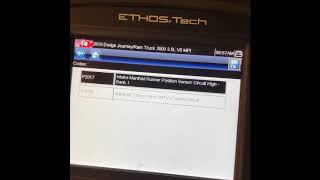
- P2017 — This code for 'Intake Manifold Runner Position Sensor/Switch Circuit High' points specifically to the sensor reporting the runner flap position. A stuck flap triggers both codes.
- P1004, P1006, P1007 — On Volkswagen and Audi vehicles, these indicate the same 'Torque Difference' fault for cylinders 1, 3, and 4. Multiple codes together point to a systemic issue like a failing high-pressure fuel pump.
Climate & Environmental Factors
- Cold Weather: The electronic software glitch in the GM FPDM is exacerbated by cold starts. Plastic vacuum lines and actuator components for IMRC systems become brittle and crack in freezing temperatures.
- Humidity and Road Salt: High humidity or road salt significantly increases corrosion on wiring harnesses and electrical connectors. This corrosion causes high resistance or open circuits, triggering P1005.
How to Talk to a Mechanic About This Code
Say this: "For a 2019-2020 GM Truck: 'I have a P1005 code and suspect the Fuel Pump Driver Module failure covered by TSB PIT5636D. Can you check if it's covered by my emissions warranty?' For a Dodge/Chrysler V6: 'I have a P1005 code. Please test the Manifold Tuning Valve actuator and check for wiring damage or a warped manifold before recommending a full replacement.' For a VW/Audi TDI: 'I have a P1005, indicating a Torque Difference on Cylinder 2. Please check my VIN for warranty coverage and diagnose the fuel injector for cylinder 2.'"
This vehicle-specific language shows you've done your research, directs the technician to the most likely cause, and brings up known TSBs and warranties, protecting you from misdiagnosis.
Avoid saying:
- 'My check engine light is on, can you just fix it?' (This invites unnecessary diagnostic time and upselling.)
- 'I think it's an intake problem.' (On a VW, this is completely wrong and sends the mechanic down a costly rabbit hole.)
- 'Just do whatever you think is best.' (This gives up your control over the cost and repair process.)
Questions to ask before authorizing the repair:
- For GM: Did you confirm the updated part number is being used?
- For Dodge: Did you use a bi-directional scanner to confirm the valve isn't moving, or did you find a wiring/vacuum issue?
- For VW: Can you show me the printout of the injector quantity deviation values for all cylinders?
- Will you provide a written estimate with a clear breakdown of parts and labor?
- What is the warranty on this specific repair, including both parts and labor?
Where to Take It: Dealer vs Independent vs Chain
- Dealer:
Highly Recommended for GM and VW. The dealer is the best choice due to known TSBs, potential warranty coverage, and the need for specialized diagnostic tools.
Best for: 2019-2020 GM trucks and 2009-2015 VW/Audi TDI models with this code., Any vehicle where the repair is covered by a manufacturer's warranty., Complex electrical diagnostics or issues requiring manufacturer-specific software.
Downsides: Highest labor rates, typically 1.5-2x more than independent shops., Recommends replacing a whole assembly when a smaller component or cleaning suffices. (Typical cost: +50% vs. baseline) - Independent Shop:
Good for Dodge/Chrysler, but use caution for GM/VW. A good independent shop easily handles the mechanical IMRC/MTV issue on a Dodge. For GM/VW, only use an indie shop if you confirm they are aware of the specific TSBs and have the right tools.
Best for: Out-of-warranty Dodge/Chrysler vehicles with the Manifold Tuning Valve issue., Owners who have a trusted relationship with a local mechanic with ASE certifications.
Downsides: Quality and expertise vary widely; ensure the shop has experience with your vehicle's brand., Lacks awareness of specific TSBs or warranty extensions for the GM or VW issues., Lacks the expensive, specialized tools needed for VW/Audi injector diagnostics. (Typical cost: +0% vs. baseline) - Chain Shop:
AVOID. The manufacturer-specific nature of this code makes it a very poor fit for a chain repair shop. The risk of misdiagnosis is extremely high.
Best for: Simple, unrelated maintenance like oil changes or tire rotations.
Downsides: Technician skill varies dramatically., High pressure to upsell common items like fluid flushes or filters., Unlikely to correctly diagnose a manufacturer-specific code like P1005. (Typical cost: -10% vs. baseline)
When to Walk Away From the Repair
If the estimated repair cost exceeds 40-50% of your car's private-party value, seriously consider selling or trading it in instead of repairing it.
- Car worth $28000, fix is $250: Fix it. The repair for the FPDM on a 2019 Silverado is a tiny fraction of the truck's value.
- Car worth $4000, fix is $1800: Walk away. If a 2010 Dodge Journey needs a new intake manifold on top of other issues, the repair cost approaches 50% of the vehicle's value.
- Car worth $9000, fix is $500: Fix it. Replacing a single fuel injector on a 2012 VW Passat TDI is well below the threshold and restores fuel economy and performance.
What Scan Tool You Need for This Code
Minimum: A scanner with live data streaming. For Dodge/Chrysler, bi-directional control is highly recommended. For VW/Audi, manufacturer-specific functions are required.
A basic $20 code reader only shows the 'P1005' code but won't give you the necessary data to diagnose it. You need to see live fuel pressure (GM), command the intake valve to move (Dodge), or read injector deviation values (VW).
Budget: BlueDriver Pro (~$100) — This Bluetooth scanner reads codes, views live data (for GM fuel pressure), and accesses Mode 6 advanced diagnostics. It is a strong choice for the GM diagnosis but lacks the bi-directional control needed for Dodge and the deep VW-specific functions.
Mid-range: Foxwell NT510 Elite / NT530 (~$180) — This is an excellent choice for this code. It offers full bi-directional control to test the IMRC valve on a Dodge and reads manufacturer-specific measuring blocks like injector quantity deviation on a VW.
Professional: Autel MaxiCOM MK808 / MK906BT (~$500-1200) — A professional-level tool that provides full bi-directional control, all OEM-level diagnostic functions, and performs special functions like injector coding for VW/Audi. This guarantees an accurate diagnosis.
Rent vs buy: For a one-time fix, auto parts stores offer free loaner tools, but they are often basic readers insufficient for this code. Buying a mid-range scanner like the Foxwell is a wise investment that saves money on future diagnostic fees.
How to Clear the Code After You Fix It
- Use an OBD-II scan tool to erase the diagnostic trouble codes.
- Disconnecting the battery for 15 minutes clears the code but resets all vehicle memory.
- Perform a complete OBD-II drive cycle to allow readiness monitors to run.
Drive cycle (~30 minutes): A generic drive cycle includes: a cold start (sit for 8+ hours), idle for 2-3 minutes with electrical load, drive 10-15 minutes at steady highway speed (55-60 mph), followed by 15-20 minutes of stop-and-go city driving.
Readiness monitors affected: Catalyst (CAT), Evaporative System (EVAP), Oxygen Sensor (O2S), Oxygen Sensor Heater
Before emissions retest: drive at least 100 miles to fully set monitors.
Watch out for:
- Clearing the code with a scanner does not fix the underlying problem; the code returns if the fault is present.
- Taking the car for an emissions test immediately after clearing codes results in a 'Not Ready' failure.
- Some monitors, especially the EVAP and Catalyst, require multiple drive cycles to set.
Will This Fail Emissions / State Inspection?
Yes — this code typically fails an OBD-II emissions inspection.
- California: An active Check Engine Light is an automatic failure. After repair, a full OBD-II drive cycle must be completed to set all readiness monitors before passing the smog check.
- New York: The NYS DMV inspection includes an OBD-II scan. An illuminated MIL for code P1005 results in an automatic inspection failure.
- Texas: In the 17 counties requiring emissions testing, an active P1005 code causes the vehicle to fail. Clearing the code just before the test leads to failure due to 'Not Ready' monitors.
Most Commonly Affected Vehicles

- Chevrolet Silverado 1500/2500/3500 (2019-2020) — Extremely common issue due to a software fault in the Fuel Pump Driver Control Module, covered by GM TSB #PIT5636D. The updated part number for gas engines is 13540028.
- GMC Sierra 1500/2500/3500 (2019-2020) — Shares the same platform and faulty Fuel Pump Driver Control Module as the Silverado. The fix is identical and covered by GM TSB #PIT5636D.
- Dodge Journey (2009-2010) — Very prone to failure of the Manifold Tuning Valve (MTV) on the 3.5L V6 engine, often due to carbon buildup or electronic failure of the valve itself.
- Dodge Charger, Magnum (2006-2010) — Models with the 3.5L V6 experience P1005 related to the Manifold Tuning Valve or the associated Short Runner Valve (SRV) system.
- Volkswagen Passat, Jetta, Golf (TDI) (2009-2015) — On TDI diesel models, P1005 indicates 'Torque Difference Cylinder 2,' commonly caused by a faulty fuel injector or low compression on that cylinder.
- Audi A3 (TDI) (2010-2013) — Shares the same TDI engine platform as VW, so P1005 carries the same meaning: 'Torque Difference Cylinder 2,' pointing towards a fuel injector or compression issue.
- Ford F-150, Mustang (2004-2008) — Some Ford models with Intake Manifold Runner Control (IMRC) systems set this code when the actuator or linkage fails. Diagnosis is similar to the Dodge system.
- Chevrolet Cavalier (2002) — On some early 2000s models, P1005 is defined as 'MAP sensor performance compared to TPS,' indicating a logic fault between the two sensors.
Manufacturer-Specific Notes
- General Motors: For 2019-2020 Silverado and Sierra trucks, P1005 is exclusively caused by a software error in the Fuel Pump Driver Control Module. GM issued TSB #PIT5636D with an updated part to fix this. Do not replace the fuel pump.
- Dodge / Chrysler / Jeep: This code points to the Manifold Tuning Valve (MTV) on 3.5L V6 engines. Cleaning the gunk off the valve resolves the issue without needing to replace the part. If a replacement is needed and the code returns, suspect a warped plastic intake manifold.
- Volkswagen / Audi: On VW/Audi TDIs, P1005 means 'Torque Difference Cylinder 2.' Diagnosis must focus on the fuel injector and compression for that cylinder. Many of these vehicles are covered by the 'Dieselgate' Extended Emissions Warranty, making this a free dealer repair.
- Ford: Ford uses P1005 for IMRC performance issues, but also uses a wide range of other P1xxx codes for IMRC faults. Verify the definition for your specific model and year.
Real Owner Stories
2019 Chevy Silverado 1500 stalled in traffic
Truck had intermittent hesitation for a week, then stalled completely in an intersection and wouldn't restart. Check Engine Light was on with code P1005.
What they tried:
- Owner initially thought it was bad gas.
- Towed to a shop that immediately identified the common Fuel Pump Driver Module (FPDM) failure.
Outcome: Shop replaced the FPDM with the updated GM part (13540028) in under an hour. The truck started immediately and runs without issue. The repair was covered under the GM emissions warranty.
Lesson: On a 2019-2020 GM truck, P1005 is a well-known issue with a specific fix (TSB #PIT5636D). Do not waste time on other diagnoses; the FPDM is the cause 99% of the time.
2010 Dodge Journey 3.5L with persistent P1005
Car had a 'flapping noise' at low speeds and a Check Engine Light. Initially had code P0660, which changed to P1005 after a part replacement.
What they tried:
- Replaced the Manifold Tuning Valve (MTV) three times, including once with a Mopar OEM part, but the P1005 code kept returning.
- Replaced the entire upper intake manifold with a used part from a donor vehicle.
Outcome: Even after replacing the intake manifold, the code and noise returned. The owner suspected a wiring issue as the final possibility but was unable to afford further diagnosis at a dealership.
Lesson: If replacing the primary component (like the MTV) doesn't fix the code, the issue lies in the supporting system. For Dodge 3.5L engines, this means a warped plastic intake manifold or a damaged wiring harness.
2012 VW Passat TDI with a knocking noise and P1005
Car developed a gradual injector knock that became aggressive under light load, eventually triggering codes P1005 and P1007 (Torque Difference on Cylinders 2 & 4).
What they tried:
- Tried using Liqui Moly Diesel Purge, which provided a slight but temporary improvement.
- A VCDS scan confirmed the torque difference codes.
Outcome: The owner replaced the faulty fuel injectors. This required cleaning the injector bores, installing new seals, and coding the new injectors to the ECU using VCDS. The repair completely resolved the knocking noise and cleared the codes.
Lesson: On a VW TDI, P1005 is a fuel system code, not an intake code. The fix almost always involves the fuel injector for cylinder 2, and this repair is often covered under VW's 'Dieselgate' extended emissions warranty.
How to Prevent This Code From Triggering
- Use Top Tier gasoline or high-quality diesel fuel (Every fill-up) — Fuels with robust detergent packages prevent the formation of carbon deposits on fuel injectors and intake valves. For VW/Audi TDIs, this keeps injectors spraying correctly. For Dodge/Chrysler, it reduces carbon buildup that causes the IMRC valve to stick.
- Perform periodic fuel system cleaning (Every 15,000-30,000 miles) — Using a high-quality in-tank fuel system cleaner dissolves existing deposits inside injectors, restoring the spray pattern and preventing codes like P1005 on a VW.
- Install an oil catch can on direct-injection engines (Once) — On direct-injection engines, oil vapor from the PCV system bakes onto the intake valves, causing buildup that restricts airflow or makes IMRC flaps stick. A catch can intercepts this oil vapor, significantly reducing carbon accumulation.
- Apply dielectric grease to vulnerable connectors (During any related maintenance) — For components mounted in exposed areas, like the GM Fuel Pump Driver Module, applying dielectric grease to the connector's weather seal blocks moisture and road salt from causing corrosion on the electrical pins.
- Ensure engine reaches full operating temperature regularly (Weekly) — Frequent short trips accelerate carbon and sludge buildup. Allowing the engine to run at full temperature for at least 20-30 minutes burns off moisture and fuel contaminants from the oil, reducing vapor passed through the PCV system.
Frequently Asked Questions
Can I just clear the P1005 code and keep driving?
You can clear the code, but it will return. Ignoring the problem leads to worsening symptoms like stalling, reduced power, and poor fuel efficiency. It also causes permanent damage to the catalytic converter over time.
What is an Intake Manifold Tuning Valve and what does it do?
It is a butterfly valve inside the intake manifold that opens or closes to change the length of the air's path into the engine cylinders. A longer path at low RPMs improves torque, while a shorter path at high RPMs improves horsepower. This helps the engine make power efficiently across its entire operating range.
My mechanic misdiagnosed P1005 on my VW as an intake issue. What's a common pitfall?
A common misdiagnosis is applying the definition from one manufacturer to another. A mechanic seeing 'Manifold Performance' on a Dodge might incorrectly assume the same for a VW and inspect the intake manifold. On a VW TDI, P1005 means 'Torque Difference Cylinder 2,' requiring a fuel injector and compression check.
I replaced the Manifold Tuning Valve on my Dodge Journey and the code came back. What now?
If a new part fails to fix the code, the problem lies in the wiring harness, a vacuum leak, or a warped plastic intake manifold. A warped manifold prevents the new valve from moving correctly. Thoroughly inspect the vacuum lines and electrical connector for damage before replacing more parts.
Is the P1005 fix for a Chevy Silverado covered under warranty?
Yes, GM's TSB #PIT5636D states repairs are often covered under Bumper-to-Bumper or Emissions warranties. You must check with a dealership using your VIN to confirm your specific vehicle's coverage status. Warranty periods expire based on strict time or mileage limits.
How difficult is it to replace the Fuel Pump Driver Module on a Silverado?
It is a straightforward DIY repair requiring basic hand tools. The module sits on the frame rail above the spare tire and unbolts easily. The repair takes under 30 minutes and requires no special programming.
What does 'Torque Difference Cylinder 2' actually mean?
It means the engine control unit (ECU) detects cylinder 2 is producing less power than the others. The ECU monitors the crankshaft's rotational speed and notices a slowdown after cylinder 2 fires. This underperformance is usually caused by a lack of fuel from a bad injector or low compression.
Key Takeaways
- P1005 definitions vary entirely by manufacturer; verify your specific make and model's code definition before buying any parts.
- On 2019-2020 GM trucks, P1005 guarantees a failed Fuel Pump Driver Control Module requiring updated part 13540028 or 13540026.
- For Dodge and Chrysler 3.5L V6 engines, P1005 indicates a stuck Manifold Tuning Valve that requires cleaning or a $150 replacement.
- On VW and Audi TDI models, P1005 signals a Cylinder 2 torque difference, usually caused by a failed fuel injector covered under the extended emissions warranty.
- Driving with an active P1005 code drops fuel economy by up to 15% and risks a complete engine stall or no-start condition within weeks.
Helpful Videos



The information in this article is provided for general reference and educational purposes only. Vehicle specifications, procedures, and part compatibility can vary by production date, trim level, and region. Always consult your vehicle's factory service manual and verify part numbers before purchasing or performing repairs. Safety-critical components such as airbags, seat belts, and braking systems should be installed by a qualified professional.
- 🎬 Helpful Videos
- What Does P1005 Mean?
- Can I Drive With P1005?
- Common Causes
- Symptoms
- Diagnostic Flowchart
- Common Fixes & Costs
- DIY vs Professional
- Used vs. New Parts: Buying Guide
- What Happens If You Wait — Timeline
- Cost of Not Fixing It
- Diagnosis Steps
- When This Code Triggers (Freeze-Frame Conditions)
- Related Codes
- Climate & Environmental Factors
- How to Talk to a Mechanic About This Code
- Where to Take It: Dealer vs Independent vs Chain
- When to Walk Away From the Repair
- What Scan Tool You Need for This Code
- How to Clear the Code After You Fix It
- Will This Fail Emissions / State Inspection?
- Most Commonly Affected Vehicles
- Manufacturer-Specific Notes
- Real Owner Stories
- 2019 Chevy Silverado 1500 stalled in traffic
- 2010 Dodge Journey 3.5L with persistent P1005
- 2012 VW Passat TDI with a knocking noise and P1005
- How to Prevent This Code From Triggering
- Frequently Asked Questions
- Can I just clear the P1005 code and keep driving?
- What is an Intake Manifold Tuning Valve and what does it do?
- My mechanic misdiagnosed P1005 on my VW as an intake issue. What's a common pitfall?
- I replaced the Manifold Tuning Valve on my Dodge Journey and the code came back. What now?
- Is the P1005 fix for a Chevy Silverado covered under warranty?
- How difficult is it to replace the Fuel Pump Driver Module on a Silverado?
- What does 'Torque Difference Cylinder 2' actually mean?
- Key Takeaways
- 🎟️ Get 5% Off