

P0202 on 2012-2020 Chevrolet Sonic 1.8L: Injector Circuit Malfunction Causes and Fixes
For a 2012-2020 Sonic with the 1.8L engine, P0202 almost always means the fuel injector for cylinder #2 has failed. It's a common, straightforward repair. Before replacing the injector, check the 15A fuse labeled F8 in the engine bay fuse box. Expect to pay $40-$60 for an aftermarket injector or around $70 for an OEM ACDelco part.
- P0202 on a Sonic 1.8L points directly to an electrical issue with the cylinder 2 fuel injector.
- The most likely cause by far is a failed fuel injector, which is a common and relatively inexpensive part to replace.
- Before replacing parts, always check the 15A fuse at position F8 in the engine bay fuse box.
- A simple diagnostic test is to swap the cylinder 2 injector with another one (like cylinder 3) and see if the trouble code follows the injector (changing to P0203).
- This is a DIY-friendly repair for those with basic tools and mechanical aptitude.
What's Unique About the 2012-2020 Chevrolet Sonic
The Chevrolet Sonic shares its 1.8L engine with the first-generation Chevrolet Cruze. On this engine, the P0202 code is a very common and direct fault, almost always pointing to a failed fuel injector. Unlike the 1.4L Turbo engine in some Sonics, which has more complex PCV-related issues that can cause various misfire codes, the 1.8L's fuel system is more conventional and easier to diagnose for this specific code. Owner experiences frequently confirm that a simple injector swap resolves the issue.
Symptoms You May Notice
- Check Engine Light is on (can be steady or flashing)
- Rough, shaking idle
- Engine misfire (may feel like a stumble or pop)
- Hesitation or lack of power during acceleration
- Poor fuel economy
- Engine may stall
- Gasoline smell from the exhaust due to unburnt fuel
- Replacing the spark plug for cylinder 2.
- Replacing the ignition coil pack. While ignition components can cause misfires (P0302), they do not cause an injector circuit code (P0202).
Most Likely Causes
- Failed Cylinder 2 Fuel Injector 🔴 High Probability The fuel injectors on this platform are a known common failure item as the vehicles age. The internal coil windings fail, creating an open circuit which the PCM detects.
How to confirm: The most reliable method is to swap the cylinder 2 fuel injector with another cylinder (e.g., cylinder 3). Clear the codes and drive the vehicle. If the code changes to P0203, the injector is confirmed to be faulty. You can also test the injector's internal resistance with a multimeter; 🎬 Watch: How to diagnose injector circuit codes on a Sonic. a good injector should read between 11 and 14 ohms. A reading of infinity (open circuit) or zero indicates a failed injector.
Typical fix: Replace the faulty fuel injector. It is often recommended to replace all four injectors at the same time, especially on higher mileage vehicles, to ensure balanced fuel delivery and prevent future failures.
Est. part cost: $40-$100 - Damaged Wiring or Connector 🟡 Medium Probability Engine vibration and heat can cause wiring to become brittle or chafe over time. The plastic locking tabs on the connectors can also become brittle and break. In some cases, rodents have been known to chew through the injector wiring harness.
How to confirm: Visually inspect the wiring harness and the connector going to the cylinder 2 fuel injector. Look for any signs of breaks, chafing, melting, or corrosion on the pins. Use a 'noid light' to confirm the PCM is sending a pulse signal to the connector; a flashing light confirms the wiring and PCM driver are working.
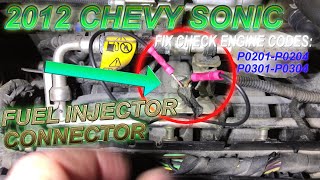
Typical fix: Repair the damaged section of wire or replace the injector connector pigtail. 🎬 See this guide on replacing a damaged fuel injector connector.
Est. part cost: $10-$25 - Blown Fuse ⚪ Low Probability Not especially prone, but it's a simple check. On the related Chevy Cruze, injectors for cylinders 2 and 4 are powered by the same fuse.
How to confirm: Check the 15A fuse at position F8 in the under-hood fuse box. If it is blown, replacing it may resolve the code. However, a blown fuse often indicates an underlying short circuit in the wiring or one of the injectors on that circuit that must be found.
Typical fix: Replace the blown 15A fuse.
Est. part cost: $1-$5
Rare But Worth Checking
- Faulty Powertrain Control Module (PCM): This is extremely rare. The internal driver circuit for the injector can fail, but this should only be considered after all other possibilities (injector, wiring, fuse) have been exhaustively ruled out.
Diagnosis Steps
- Scan the vehicle for codes and confirm P0202 and likely P0302 are present.
- Check the 15A fuse in position F8 of the engine compartment fuse box. If it's blown, replace it and re-test. If it blows again, suspect a short circuit.
- Locate cylinder 2. On the 1.8L engine, the cylinders are numbered 1-2-3-4 from left to right (timing belt side to transmission side).
- Visually inspect the wiring and connector for cylinder 2's fuel injector. Check for obvious damage, looseness, or corrosion.
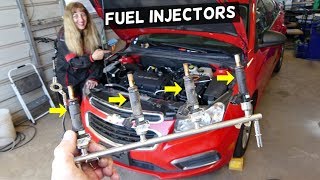
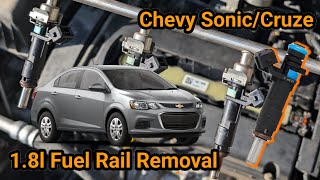
- If the wiring looks good, perform an injector swap. Disconnect the battery. Relieve fuel pressure. Unbolt the fuel rail and lift it up. Swap the injector from cylinder 2 with the injector from cylinder 3.
- Reassemble, reconnect the battery, clear the codes, and start the engine. Let it run for a few minutes.
- Re-scan for codes. If the code is now P0203 (Injector Circuit Malfunction - Cylinder 3), the injector you moved is bad and must be replaced.
- If the code remains P0202, the problem is in the wiring or the PCM. Use a 'noid light' on the cylinder 2 connector to see if the PCM is sending a signal. If the noid light flashes, the wiring and PCM are likely okay, pointing back to an intermittent injector issue. If it does not flash, you need to check for continuity in the wiring between the injector connector and the PCM.
Parts You'll Likely Need
- Fuel Injector
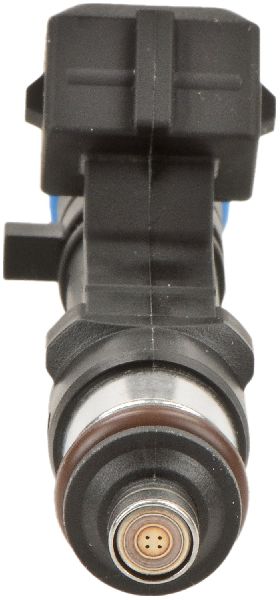
(OEM #55562599)— This is the most common cause of a P0202 code on this specific engine. The internal coil windings fail, creating an open circuit. This part is also used in various Chevrolet, Opel, and Vauxhall models.
Trusted brands: ACDelco, Bosch, Standard Motor Products, GB Remanufacturing
OEM price range: $70-$100
Aftermarket price range: $35-$60 - Fuel Injector Connector Pigtail — Needed if the wiring or connector itself is damaged, often by heat, vibration, or rodents.
Trusted brands: Dorman, Standard Motor Products
OEM price range: $15-$30
Aftermarket price range: $10-$20
Related Codes That Often Appear With This One
- P0302 — P0302 means 'Cylinder 2 Misfire Detected.' Since P0202 indicates an electrical fault preventing fuel from being delivered to cylinder 2, a misfire is the direct result. These two codes almost always appear together.
- P0204 — This code for 'Injector Circuit Malfunction - Cylinder 4' can sometimes appear with P0202 on the related Chevy Cruze because both injectors are powered by the same fuse (F8). If the fuse blows, both codes may be set.
Technical Service Bulletins (TSBs) & Recalls
- PIP5105A: While not for P0202 directly, this GM Preliminary Information bulletin warns technicians about potential damage to the ignition coil assembly during removal if the proper tool (EN-6009) is not used. This is relevant as the coil pack must be removed to access the fuel rail and injectors.
Mechanic-Grade Diagnostic Values
- Fuel Injector Internal Resistance — expected: 11.8 - 12.5 Ohms. Failure: A reading of infinity (OL) indicates an open coil, while a reading near zero indicates a shorted coil. Any reading significantly outside the expected range suggests a faulty injector.
- Injector Connector Voltage (Key On, Engine Off) — expected: One pin should show battery voltage (approx. 12V).. Failure: No voltage on the power feed pin indicates a wiring issue or a blown fuse (F8 in the under-hood fuse box).
- Injector Control Signal (Noid Light Test) — expected: A noid light plugged into the injector connector should flash steadily while cranking the engine.. Failure: No flash indicates a lack of signal from the ECM, pointing to a wiring or ECM driver issue. A light that stays on constantly indicates a short to ground on the control wire.
Scan Tool Commands That Help
- GDS2 (GM Global Diagnostic System 2): Injector Test / Fuel Injector Balance — This bidirectional test allows a technician to command each injector to fire individually while monitoring fuel pressure drop. For P0202, the technician would command the cylinder 2 injector. If there is no corresponding drop in fuel pressure, it confirms that injector is not delivering fuel, which, combined with electrical tests, isolates the fault to the injector itself.
- GDS2 (GM Global Diagnostic System 2): Cylinder Power Balance — This function graphically displays the contribution of each cylinder to engine speed. For a P0202, the graph would show cylinder 2 contributing significantly less than the others, confirming the impact of the fault. This is useful to verify the symptom before and after the repair.
Wiring & Ground Locations
- ECM Connector X2, Pin 3 — At the Engine Control Module (ECM), which is located on the left side of the engine compartment.. This is the specific pin for the 'Fuel Injector Control 3' circuit on the LUW engine. A wiring diagram shows this corresponds to cylinder 2. Testing for continuity between this pin and the injector connector's control wire pin can definitively rule out a wiring break.
- G104 / G107 — Lower right/left rear of the engine block.. These are critical engine block grounds. While not directly in the injector circuit, a poor or corroded engine ground can cause a variety of electrical issues and unpredictable sensor readings for the ECM, potentially leading to incorrect fault codes.
- G105 — Left front of the engine compartment, near the underhood fuse block.. This is a primary ground for the Engine Control Module (ECM). A poor connection here can directly impact the ECM's operation and its ability to control components like fuel injectors.
- Injector Harness Splice J102 — In the fuel injector harness, approximately 15 cm (6 inches) to the right of the X160 connector.. This is a factory splice point within the harness. While not a common failure, harness splices can sometimes corrode or break, leading to an open circuit. If wiring tests point to a break, this location is a potential culprit.
Real Owner Repair Stories
- YouTube channel JBroFix (2012 Chevrolet Sonic) — Engine won't start or chugs along with loss of power, Check Engine Light on with codes P0202 and P0302.
✅ What actually fixed it The wiring to the cylinder 2 fuel injector connector was chewed through by squirrels. The fix was to splice in a new fuel injector connector pigtail, matching the wire colors (red wire and white-with-black-stripe wire) to the correct pins on the new connector. - YouTube channel Everything Chevrolet (2013 Chevrolet Sonic 1.8L) — Check Engine Light on with codes P0202 and P0204 after sitting parked.
✅ What actually fixed it The injector wiring harness connectors had become brittle and broken. The entire injector harness was removed, and the broken plastic connectors were replaced by splicing in new pigtails. The video notes the color code for the control wires: Cylinder 2 is purple with a yellow stripe.
OEM Part Supersession History
55562599→55570284, 217-3433 (ACDelco), FJ1153— Standard part lifecycle updates and consolidation across GM platforms.
Heads up: These part numbers are generally interchangeable for the specified vehicle and engine. However, always verify fitment with the vehicle's VIN when purchasing.
Diagnostic Flowchart
Other Known Issues on This Vehicle
Issues unrelated to this code that are worth knowing about as an owner of this generation:
- Cracked Plastic Thermostat Housing 🔴 High — Very common, often occurs after 80,000 miles. The plastic becomes brittle from heat cycles and cracks, causing coolant leaks.
- Oil Cooler Gasket Leaks 🔴 High — A frequent issue where the seals between the oil cooler and engine block fail, causing oil to leak externally or, more severely, mix with the coolant. This can be misdiagnosed as a cracked engine block.
- PCV System / Valve Cover Failure 🟠 Medium — The PCV valve diaphragm, often integrated into the valve cover, can rupture, creating a significant vacuum leak. This typically causes a P0171 (System Too Lean) code, rough idle, and increased oil consumption. (Ref: GM service bulletin PIP5197 provides technical information on this issue for the related Cruze.)
- Timing Belt Replacement Interval 🔴 High — Not a failure, but a critical maintenance item. The 1.8L engine uses a timing belt that must be replaced at or before the 97,500-mile interval specified by GM to prevent catastrophic engine failure.
- Dry Rot of Intake Piping 🟠 Medium — The rubber intake piping can become brittle and crack over time, leading to unmetered air entering the engine and causing a rich running condition.
Used vs. New Parts: Buying Guide for This Vehicle
When a used part is the smart pick: For a P0202 code, buying a used fuel injector from a junkyard is a reasonable budget option, especially if you are replacing only one. The failure is typically electrical (open coil) and not related to clogging, so a used part from a lower-mileage donor vehicle is likely to have significant life left. Given the low cost of new aftermarket parts ($35-$60), the savings may only be marginal, but it's a viable path.
Donor-vehicle mileage cap: roughly under 80000 miles for the part to have meaningful remaining life.
What to inspect on the donor part:
- Check for physical damage to the injector body and connector.
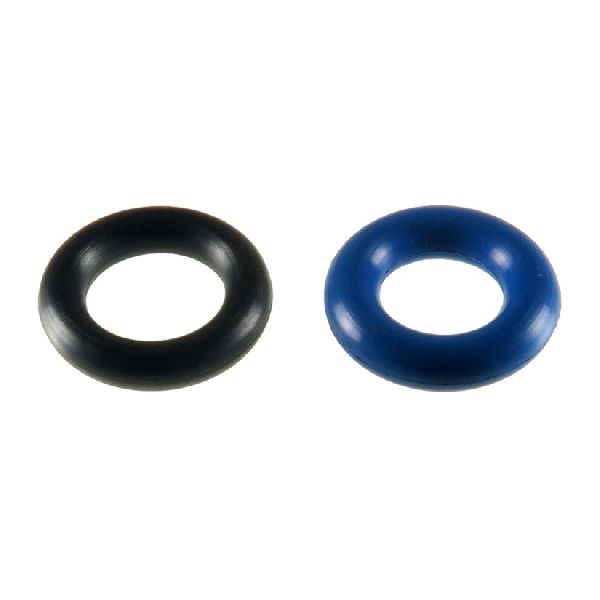
- Ensure the O-rings are present and not obviously cracked (though you should always replace them anyway).
- Ask the salvage yard if they can test the resistance of the injector with a multimeter before purchase. It should be between 11-14 ohms.
- Avoid injectors that show heavy rust or corrosion on the metal body.
OEM-only on this vehicle (don't cheap out):
- Powertrain Control Module (PCM)
Aftermarket brands forum-validated for this vehicle:
- Bosch (often the OEM supplier)
- ACDelco (GM's official brand)
- Standard Motor Products (SMP)
- GB Remanufacturing
Brands owners have reported issues with on this vehicle:
- No-name, unbranded injectors from online marketplaces are a gamble. While they may work, their flow rates can be inconsistent, leading to poor performance or other fuel trim codes down the line. Stick to reputable brands if possible.
Real Owner Stories
Aggregated from forums and TSBs cited above. Mileages and costs reflect what owners reported in those sources.
2012 Chevy Sonic 1.8L
Symptoms: The car would chug along, had a significant loss of power, and threw codes P0201 through P0204 (injector circuit/open).
What fixed it: Rewired a severed fuel injector connector after squirrels chewed through the wiring harness.
Source hint: youtube_comment from JBroFix
Chevrolet Sonic 1.8L
Symptoms: Check engine light for P020x codes and an associated P030x misfire code.
What fixed it: Replaced the faulty fuel injector after confirming the cylinder numbering (1-2-3-4, left to right).
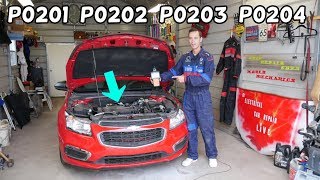
Source hint: YouTube - 'FIX CODE P0201 P0202 P0203 P0204 CHEVROLET CRUZE CHEVY SONIC'
Chevrolet Cruze 1.8L
Symptoms: P0202 code indicating an injector circuit malfunction on cylinder 2.
What fixed it: Replaced the #2 fuel injector; diagnostics included checking fuse F8 and performing resistance checks.
Source hint: GM Forum - 'P0201-P0202-P0203 -P0204 -P0205 -P0206'
Related OBD-II Codes
Frequently Asked Questions
Which fuse should I check for a P0202 code on my Chevy Sonic 1.8L?
How are the cylinders numbered on the Sonic 1.8L engine to find cylinder 2?
Does TSB PIP5105A apply when I am fixing a fuel injector issue?
Is there a common reason the wiring fails on the Sonic's fuel injectors?
What is the correct resistance for a healthy fuel injector on this vehicle?
Should I replace just the cylinder 2 injector or all of them?
Helpful Videos
Used OEM Parts in Stock


New Aftermarket Parts Available


The information in this article is provided for general reference and educational purposes only. Vehicle specifications, procedures, and part compatibility can vary by production date, trim level, and region. Always consult your vehicle's factory service manual and verify part numbers before purchasing or performing repairs. Safety-critical components such as airbags, seat belts, and braking systems should be installed by a qualified professional.
- Chevrolet Sonic:
- 🎬 Helpful Videos
- 🛍️ Shop This Part
- What's Unique About the 2012-2020 Chevrolet Sonic
- Symptoms You May Notice
- Most Likely Causes
- Rare But Worth Checking
- Diagnosis Steps
- Parts You'll Likely Need
- Related Codes That Often Appear With This One
- Technical Service Bulletins (TSBs) & Recalls
- Mechanic-Grade Diagnostic Values
- Scan Tool Commands That Help
- Wiring & Ground Locations
- Real Owner Repair Stories
- OEM Part Supersession History
- Diagnostic Flowchart
- Other Known Issues on This Vehicle
- Used vs. New Parts: Buying Guide for This Vehicle
- Real Owner Stories
- 2012 Chevy Sonic 1.8L
- Chevrolet Sonic 1.8L
- Chevrolet Cruze 1.8L
- Related OBD-II Codes
- Frequently Asked Questions
- 🎟️ Get 5% Off