

P0201 on 2011-2020 Dodge Grand Caravan 3.6L: Injector Circuit Causes and Fixes
P0201 on your Grand Caravan means a problem with the cylinder 1 fuel injector circuit. Most often, this is a failed fuel injector. Since cylinder 1 is on the difficult-to-access rear bank, expect a shop repair to cost between $355 and $500, with the part itself being a smaller portion of the cost. Due to the labor, it's wise to replace all three rear injectors at once.
- P0201 points specifically to an electrical problem with the cylinder 1 injector circuit, most commonly the injector itself failing with an open coil.
- Cylinder 1 is on the rear bank against the firewall, making this a labor-intensive repair that requires removing the intake manifold.
- Due to the high labor cost, it is strongly recommended to replace all three rear injectors (1, 3, 5) and the intake gaskets at the same time.
- Do not confuse this with an ignition problem; replacing the spark plug or coil for a P0201 code will not fix the issue.
- A definitive diagnosis can be made by swapping the injector with a neighboring one and seeing if the trouble code follows the injector, or by measuring injector resistance (should be ~12.3 ohms).
What's Unique About the 2011-2020 Dodge Grand Caravan

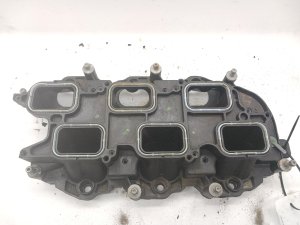
On the 3.6L Pentastar engine in the Grand Caravan, the fuel injectors are buried under the upper and lower intake manifolds. Cylinder 1 is part of the rear bank, against the firewall, making it labor-intensive to access. Because of the significant labor involved, many technicians and experienced owners strongly recommend replacing all three rear injectors (cylinders 1, 3, 5) or all six at once, even if only one has failed, to prevent paying for the same difficult job again in the near future.
Symptoms You May Notice
- Check Engine Light is on
- Rough, unstable, or shaky idle
- Engine misfiring, may feel like a stutter or hesitation
- Reduced engine power and poor acceleration
- Worse than usual fuel economy
- Strong smell of gasoline (if the injector is leaking or stuck open)
- Replacing the spark plug or ignition coil for cylinder 1. While a misfire code (P0301) can be caused by these parts, the P0201 code specifically points to an electrical fault in the fuel injector circuit, not the ignition system.
Most Likely Causes

- Failed Cylinder 1 Fuel Injector 🔴 High Probability Fuel injectors are a common wear-and-tear item. After many years and miles, the internal coil winding can fail, creating an open circuit which is the most common reason for a P0201 code.
How to confirm: The most definitive test is to measure the resistance of the injector with a multimeter. 🎬 Watch: How to test Pentastar fuel injectors with a multimeter. A good injector for this engine should have a resistance of around 12.3 ohms, though a range of 12-14 ohms is acceptable. An open circuit (infinite resistance or 'O.L.') confirms a bad injector. A common DIY method is to swap the cylinder 1 injector with the cylinder 3 injector (also on the rear bank). If the code changes to P0203, the injector is faulty.
Typical fix: Replace the failed fuel injector. It is highly recommended to replace all three rear injectors (1, 3, 5) and their corresponding O-rings at the same time due to the labor-intensive process of removing the intake manifold.
Est. part cost: $40-$160 - Wiring Harness or Connector Issue 🟡 Medium Probability The engine wiring harness is subjected to constant heat and vibration. Wires can become brittle and break, or the connector terminals can corrode or loosen over time. On some Chrysler/Dodge vehicles, the two large connectors near the throttle body are known for water intrusion which can cause corrosion and multiple injector codes.
How to confirm: Visually inspect the wiring harness and the connector going to the cylinder 1 injector. Look for any signs of damage, melting, corrosion, or loose pins. Use a noid light to test for a pulse signal at the injector connector; if there's no pulse, the problem is in the wiring or the PCM. Also check for continuity on the ground wire from the injector connector back to the PCM.
Typical fix: Repair the damaged section of the wiring harness or replace the injector pigtail connector. Ensure the connection is secure and protected from heat. If corrosion is found in the main harness connectors, they must be cleaned and sealed.
Est. part cost: $15-$40
Rare But Worth Checking
- Faulty Powertrain Control Module (PCM): This is the least likely cause. The PCM's internal driver for the cylinder 1 injector can fail. This should only be considered after thoroughly ruling out a bad injector and any wiring issues with continuity tests. Throwing parts at the problem, like multiple PCMs, without proper diagnosis can be very expensive and ineffective.
Diagnosis Steps

- Confirm the presence of code P0201 with an OBD-II scanner. Check for any other codes, especially P0301.
- Locate cylinder 1. On the 3.6L Pentastar in the Grand Caravan, the engine is mounted transversely. The rear bank of cylinders (against the firewall) contains cylinders 1, 3, and 5. Cylinder 1 is on the passenger side of the rear bank.
- To gain access, you must remove the upper and lower intake manifolds. This is a multi-hour job 🎬 See this step-by-step fuel injector replacement walkthrough. requiring disconnection of the airbox, throttle body, various vacuum lines, and electrical connectors.
- Once the fuel rail is accessible, visually inspect the wiring harness and connector for cylinder 1. Look for obvious damage, corrosion, or loose connections.
- If the wiring looks okay, disconnect the injector and test for a pulse signal using a noid light while an assistant cranks the engine. A flashing light indicates the PCM and wiring are likely okay. No light points to a wiring or PCM issue.
- If a pulse is present, test the fuel injector itself. Use a multimeter set to ohms to measure the resistance across the two pins of the injector. A reading of approximately 12.3 ohms is ideal, with 12-14 ohms being a good range. A reading of infinity (OL) means the injector's internal coil is broken (open circuit) and the injector is bad.
- If you don't have a multimeter, a common diagnostic trick is to swap the cylinder 1 injector with another injector on the same fuel rail (like cylinder 3). Reassemble enough to run the engine, clear the codes, and see if the fault moves. If the code changes to P0203, you have confirmed the injector is the faulty component.
- If the injector and wiring test good, the problem may be a rare failure of the PCM's injector driver circuit.
Parts You'll Likely Need
- Fuel Injector
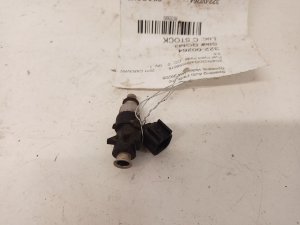
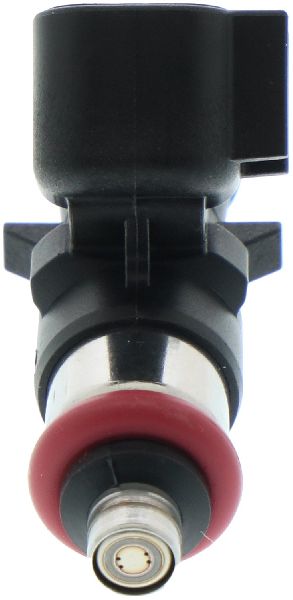
(OEM #5184085AD)— This is the most common failure point for a P0201 code, where the injector's internal coil has failed. The OEM part number 5184085AD supersedes previous versions 5184085AC and RL184085AC.
Trusted brands: Mopar, Bosch (Often the OEM manufacturer), Standard Motor Products (SMP)
OEM price range: $150-$225
Aftermarket price range: $40-$95 - Upper and Lower Intake Manifold Gaskets
(OEM #5184562AC (Upper), 5184331AC (Lower))— These must be removed to access the fuel injectors and are designed for one-time use. They must be replaced to prevent vacuum leaks.
Trusted brands: Fel-Pro, Mahle, Mopar
OEM price range: $40-$60
Aftermarket price range: $20-$40
Related Codes That Often Appear With This One
- P0301 — P0301 means 'Cylinder 1 Misfire Detected'. Since the P0201 code indicates the cylinder 1 injector isn't working, that cylinder isn't getting fuel, which directly causes it to misfire.
Platform-Specific Known Issues
- A known issue with the 3.6L Pentastar engine is that it can be sensitive to aftermarket injectors. Some owners report setting fuel trim codes (like P0172/P0175, too rich) after installing non-OEM injectors, even if they are new. 🎬 Watch this warning about using aftermarket injectors on your Caravan. Using OEM Mopar or the OEM supplier (Bosch) is the safest choice.
Technical Service Bulletins (TSBs) & Recalls
- TSB Bulletin #9002688: A manufacturer service bulletin notes that before replacing injectors for codes P0201 through P0206, technicians should verify that the wiring loom and/or connector in the valve cover gasket is not the actual root cause of the circuit fault.
Mechanic-Grade Diagnostic Values
- Fuel Injector Pulse Width at Idle — expected: 2.0 - 4.0 milliseconds (ms). Failure: A static value or a value significantly different from the other injectors indicates a problem.
- Injector Power Supply Wire Voltage (Key On, Engine Off) — expected: Battery Voltage (~12.6V). Failure: Low or no voltage indicates a problem with the ASD relay or the power supply wiring.
- PCM Inductive Kick Sense Time — expected: The PCM must sense the injector's inductive voltage spike within 0.18 milliseconds after the injector is commanded off.. Failure: If this spike is not detected within the time window, the PCM will set the P0201 code. This is best measured with an oscilloscope.
Scan Tool Commands That Help
- wiTECH, Autel, ICON T8, or other professional bidirectional scanner: Injector Kill Test / Cylinder Cut Out Test — This test allows a technician to disable individual injectors while the engine is idling. If disabling cylinder 1 causes no change in engine RPM or smoothness, it confirms that cylinder was not contributing, pointing directly to a fault in the injector or its circuit. If disabling another cylinder (e.g., cylinder 3) causes a noticeable stumble, it proves that cylinder was working correctly.
Wiring & Ground Locations

- Cylinder 1 Injector Control Wire — Runs from Pin 8 of the PCM's C2 connector (black connector) to the #1 fuel injector. The wire color is typically Brown with a Yellow tracer.. This is the specific wire the PCM uses to pulse the ground for the #1 injector. Testing for continuity on this wire from end-to-end is the definitive way to rule out a wiring break.
- Injector Power Supply Wire (Common) — Runs from the Auto Shutdown (ASD) relay (located in the TIPM/fuse box) to all injectors on the bank (1, 3, 5). The wire color is often Dark Green with an Orange tracer.. This wire provides 12V power to the injector. While a fault here would typically set codes for all three cylinders on the bank, a break in the harness near the #1 injector could isolate the fault to just P0201.
- Engine Ground Strap — A braided metal strap connecting the top of the passenger-side engine mount to the vehicle's chassis/frame.. A broken or corroded main engine ground can cause a host of intermittent and difficult-to-diagnose electrical issues, including injector circuit faults. This strap is a known failure point and should be visually inspected.
Real Owner Repair Stories
- YouTube channel 'Pine Hollow Auto Diagnostics' (2015 Jeep Wrangler 3.6L Pentastar) — Severe misfire when warm, codes P0202 and P0302 (for cylinder 2, but the diagnostic principle is identical).
❌ Tried (didn't work) Initial visual inspection showed no obvious wiring damage.
✅ What actually fixed it Using a multimeter, the technician found the injector coil was open circuit (infinite resistance). Wiggling the connector pin caused the reading to change, confirming the break was internal to the injector itself. The final fix was replacing the faulty fuel injector. - YouTube channel 'Electrical Car Repair LIVE' (Dodge Journey 3.6L Pentastar) — Engine light on, misfiring and shaking, code P0201 present and current.
❌ Tried (didn't work) N/A, direct diagnosis.
✅ What actually fixed it The video demonstrates the diagnostic process, identifying cylinder 1 as the problem. The narrator confirms that after replacing the cylinder 1 fuel injector and clearing the codes, the engine ran smoothly and the check engine light did not return.
OEM Part Supersession History
5184085AC, RL184085AC→5184085AD— Standard part revision for manufacturing improvements or supplier changes.
Model Year Variations Within This Range
- 2011-2020 (Informational): The original injectors for this engine (like 5184085AD) are a 4-hole design. Around 2018, Chrysler began using an updated 8-hole injector (PN 05281427A) in Pentastar engines. The injectors are physically and electrically interchangeable. Some owners choose to 'upgrade' to the 8-hole design when replacing injectors, believing it provides better fuel atomization, though it is not required.
Diagnostic Flowchart
Used vs. New Parts: Buying Guide for This Vehicle
When a used part is the smart pick: For the injector wiring sub-harness. The plastic locking tabs on the injector and coil connectors become brittle and frequently break during removal. Sourcing a complete, used sub-harness from a junkyard can be a faster and more reliable repair than attempting to solder a single broken wire or live with a connector secured by a zip tie.
Donor-vehicle mileage cap: roughly under 80000 miles for the part to have meaningful remaining life.
What to inspect on the donor part:
- For a wiring harness, check for flexibility; avoid any harnesses that feel stiff or crispy.
- Inspect all connector locking tabs (especially the small red ones) to ensure they are intact.
- Look for any signs of previous repairs, like mismatched wire colors, electrical tape, or non-factory connectors.
- For used injectors, check the resistance with a multimeter before purchase to ensure they are within the 12-14 ohm spec.
OEM-only on this vehicle (don't cheap out):
- Fuel Injectors: The 3.6L Pentastar PCM is known to be sensitive to the flow rates and electrical characteristics of injectors. Using non-OEM brands can sometimes lead to new fuel trim codes (P0172/P0175) even after the P0201 code is fixed. Sticking with Mopar or the direct OEM supplier (Bosch) is the safest option.
Aftermarket brands forum-validated for this vehicle:
- Bosch (often the OEM supplier)
- Standard Motor Products (SMP)
Brands owners have reported issues with on this vehicle:
- Unbranded, no-name injectors from online marketplaces are frequently reported on forums as being poorly calibrated, leading to new performance issues.
Real Owner Stories
Aggregated from forums and TSBs cited above. Mileages and costs reflect what owners reported in those sources.
2015 Dodge Grand Caravan 3.6 Pentastar
Symptoms: Vehicle would not start and was showing codes P0201 through P0206, plus P0032 and P0118. White smoke, assumed to be raw fuel, was observed. All spark plugs and ignition coils were found to be 'toast'.
What fixed it: No solution was found after replacing all injectors, the injector wiring harness, O2 sensors, and the ECT sensor. The owner believed the next logical step was to replace the PCM.
Source hint: Reddit r/AskMechanics
2008 Dodge Grand Caravan
Symptoms: The vehicle was experiencing all six injector codes simultaneously (P0201-P0206).
What fixed it: The owner was advised to check the main harness connectors near the throttle body for water intrusion and to swap the ASD relay before condemning the PCM, which had already been replaced multiple times without success.
Source hint: DodgeForum.com: A user with a 2008 Grand Caravan experiencing all six injector codes (P0201-P0206)...
2017 Dodge Caravan
Symptoms: Experienced a failed fuel injector, setting code P0204, while on vacation 300 miles from home.
What fixed it: The owner successfully replaced the failed fuel injector in an Advance Auto Parts parking lot. The repair took about 2 hours using a basic mechanic's tool kit.
Source hint: YouTube (FinallyHeSleeps): An owner of a 2017 Dodge Caravan documented replacing a failed fuel injector (P0204)...
2016 Jeep Wrangler
Symptoms: The owner reported getting codes P0201 and P0301.
What fixed it: The final fix was not documented in the source; the owner was seeking DIY advice to avoid a dealership repair for this common 3.6L Pentastar issue.
Source hint: Reddit (r/Jeep): A 2016 Jeep Wrangler owner reported P0201 and P0301 codes...
Related OBD-II Codes
Frequently Asked Questions
Where is cylinder 1 located on my 2011-2020 Grand Caravan's 3.6L engine?
Do I have to remove the intake manifold to replace the cylinder 1 fuel injector?
What is the correct resistance for a fuel injector on this engine?
If only the cylinder 1 injector is bad, should I replace the others at the same time?
Can I use cheaper aftermarket fuel injectors for this repair?
How can I test the injector if I don't have a multimeter?
I have codes for all six injectors (P0201-P0206). What could cause this?
Helpful Videos
Used OEM Parts in Stock

New Aftermarket Parts Available


The information in this article is provided for general reference and educational purposes only. Vehicle specifications, procedures, and part compatibility can vary by production date, trim level, and region. Always consult your vehicle's factory service manual and verify part numbers before purchasing or performing repairs. Safety-critical components such as airbags, seat belts, and braking systems should be installed by a qualified professional.
- Dodge Grand Caravan:
- 🎬 Helpful Videos
- 🛍️ Shop This Part
- What's Unique About the 2011-2020 Dodge Grand Caravan
- Symptoms You May Notice
- Most Likely Causes
- Rare But Worth Checking
- Diagnosis Steps
- Parts You'll Likely Need
- Related Codes That Often Appear With This One
- Platform-Specific Known Issues
- Technical Service Bulletins (TSBs) & Recalls
- Mechanic-Grade Diagnostic Values
- Scan Tool Commands That Help
- Wiring & Ground Locations
- Real Owner Repair Stories
- OEM Part Supersession History
- Model Year Variations Within This Range
- Diagnostic Flowchart
- Used vs. New Parts: Buying Guide for This Vehicle
- Real Owner Stories
- 2015 Dodge Grand Caravan 3.6 Pentastar
- 2008 Dodge Grand Caravan
- 2017 Dodge Caravan
- 2016 Jeep Wrangler
- Related OBD-II Codes
- Frequently Asked Questions
- 🎟️ Get 5% Off