

P0201 on 2012-2020 Chevrolet Impala 3.6L: Injector Circuit Malfunction Causes and Fixes
P0201 on a 3.6L Impala indicates an electrical fault with the cylinder 1 fuel injector. The most likely cause is a chafed or broken wire in the engine harness, a known issue covered by GM Technical Service Bulletins. A faulty injector is the next most likely cause. Repair is complex as the injector is under the intake manifold.
- P0201 on this Impala is an electrical circuit fault, not a fuel pressure issue.
- Before replacing any parts, thoroughly inspect the engine wiring harness for chafing, as this is a very common, documented problem.
- Cylinder 1 is on the rear bank against the firewall, making access difficult and labor-intensive.
- Due to the high labor cost, if an injector is found to be faulty, it is wise to replace all injectors on that bank (or all six) at the same time.
- This is not a beginner-friendly DIY repair due to the location of the components and the high-pressure fuel system.
What's Unique About the 2012-2020 Chevrolet Impala
For the Impala with the 3.6L LFX V6, this code is frequently caused by a specific, well-documented issue. GM has issued multiple Technical Service Bulletins (TSBs), notably PIP4924D, because the engine wiring harness is prone to rubbing against sharp edges on the engine and transmission. Common chafe points include the intake plenum, the side of the cylinder head, fuel lines, and the EVAP purge solenoid bracket. This chafing can break the wire for the cylinder 1 injector, making a wiring fault a higher probability than a failed injector itself. Cylinder 1 is located on the rear bank against the firewall, making both visual inspection and repair a labor-intensive job that requires removing the upper intake manifold.
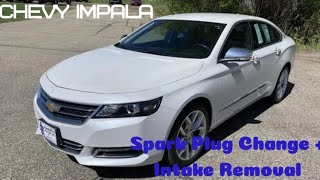
🎬 Watch: Step-by-step guide to removing the intake manifoldGeneration note: This range covers two Impala generations: the end of the 9th generation (2012-2013, plus the 'Limited' fleet model from 2014-2016) and the entire 10th generation (2014-2020). Both generations used the 3.6L LFX V6 engine, and the causes and repair procedures for code P0201 are consistent across them. The underlying wiring harness vulnerability is present on both.
Symptoms You May Notice
- Check Engine Light is on
- Rough, shaking, or vibrating idle
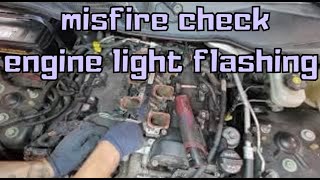
- Engine misfire, which may cause a flashing Check Engine Light
- Hesitation or stumbling during acceleration
- Noticeable loss of engine power
- Poor fuel economy
- Engine may be hard to start
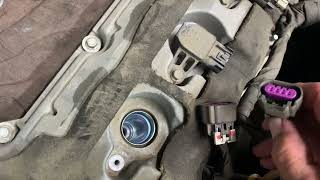
- Replacing only the spark plug and ignition coil for cylinder 1. While these parts can cause a misfire (P0301), they will not cause an injector circuit code 🎬 Watch: How to access and replace spark plugs on this model like P0201, which specifically points to an electrical fault in the fuel injector's circuit.
Most Likely Causes
- Chafed or Damaged Fuel Injector Wiring Harness 🔴 High Probability Multiple GM TSBs (PIP4924D, PI1067B) confirm the engine harness is routed in a way that causes it to rub against the intake plenum, cylinder head, EVAP purge solenoid bracket, or transmission case, leading to broken wires. This is a very common failure on the entire GM 3.6L engine family.
How to confirm: After removing the upper intake manifold, perform a thorough visual and physical inspection of the injector harness, especially where it bends around the rear of the engine near the firewall and down towards the transmission. Wiggle the harness while the engine is running (if possible) to see if the misfire changes. A continuity test from the injector connector to the ECM connector will definitively prove an open circuit.
Typical fix: Repair the specific broken wire(s) using solder and heat-shrink tubing. Re-route the harness with protective conduit (split loom), securing it away from sharp edges with zip ties. In severe cases, the Bank 1 injector sub-harness (GM P/N 12621096) may need replacement.
Est. part cost: $10-$50 for wire repair materials, $100-$160 for a new harness section. - Faulty Cylinder 1 Fuel Injector 🟡 Medium Probability Direct injectors operate under high pressure and can fail electrically (open or shorted coil) or mechanically over time.
How to confirm: Swap the cylinder 1 injector with another cylinder's injector (e.g., cylinder 3). If the code changes to P0203, the injector is faulty. You can also test the injector's resistance with a multimeter; it should be between 1.2 and 1.8 ohms for the LFX engine. A reading of 'OL' (Open Loop) indicates a failed coil.
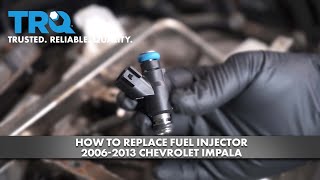
Typical fix: Replace the fuel injector. It is highly recommended to replace all three injectors on the same bank (Bank 1, the rear bank) or all six at the same time due to the high labor cost of access. 🎬 See this walkthrough for replacing injectors on the 3.6L engine New Teflon seals and O-rings must be installed correctly using special tools to prevent high-pressure fuel leaks.
Est. part cost: $80-$140 per injector (OEM). - Damaged Fuel Injector Connector ⚪ Low Probability The plastic connector and its locking tab can become brittle from heat cycles and break during service or from vibration. The terminals inside can also lose tension or corrode.
How to confirm: Visually inspect the connector for cracks, broken locking tabs, or corroded/green pins. Wiggle the connector with the engine running to see if it affects the misfire. Check for proper pin tension.
Typical fix: Replace the connector pigtail, which involves cutting the old connector off and splicing the new one in using weatherproof butt connectors or solder and heat shrink. An example pigtail is ACDelco PT2187.
Est. part cost: $15-$40
Rare But Worth Checking
- Faulty Engine Control Module (ECM): This is the least likely cause. The internal driver circuit for the cylinder 1 injector can fail. This should only be considered after all wiring and the injector itself have been proven to be good through resistance testing, a noid light test, and an injector swap.
Diagnosis Steps
- Read the trouble codes with an OBD-II scanner and confirm P0201 is present. Note any other codes like P0301 or P0300.
- Locate Cylinder 1. On the transverse 3.6L LFX, it is on the rear cylinder bank (against the firewall), closest to the passenger side.
- Inspect the visible portions of the engine wiring harness for any obvious signs of damage, rubbing, or melting, especially near the back of the engine.
- Test the circuit signal. Disconnect the injector connector and use a 'noid light'. Start the engine; the light should flash steadily, indicating the ECM is sending a signal. If it doesn't flash, the problem is in the wiring or ECM.
- If the noid light flashes, the problem is likely the injector itself. Turn the engine off. Use a multimeter to measure the resistance across the two pins of the fuel injector. It should be between 1.2 and 1.8 ohms. If it's out of spec or shows an open circuit (OL), the injector is bad.
- If the noid light test and resistance test are inconclusive, perform an injector swap. This requires removing the intake manifold. Swap the injector from cylinder 1 with the injector from cylinder 3. Reassemble, clear the codes, and run the engine. If the code returns as P0203, the injector is confirmed bad. If P0201 returns, the fault is in the wiring to cylinder 1.
- If a wiring fault is suspected, remove the intake manifold and meticulously inspect the entire harness branch going to Bank 1, paying close attention to the chafe points identified in TSB PIP4924D, such as where the harness passes over the rear cylinder head and near the EVAP purge solenoid bracket.
Parts You'll Likely Need
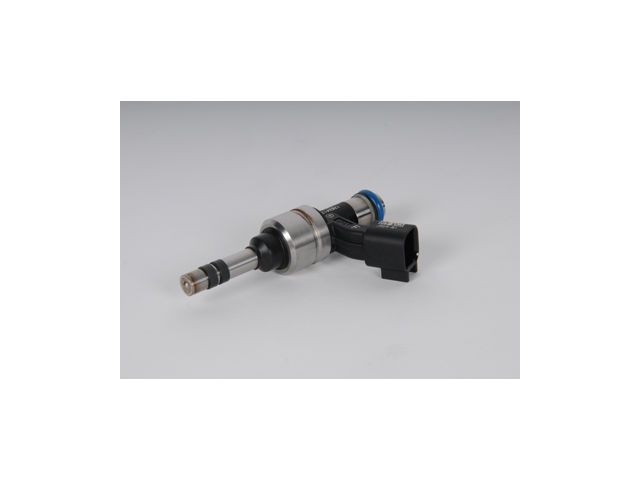
- Direct Fuel Injector
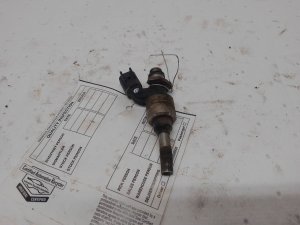
(OEM #12634126)— This is the second most common cause after wiring. If the injector coil fails its resistance test, it must be replaced.
Trusted brands: ACDelco (OEM), Bosch, Hitachi, Standard Motor Products
OEM price range: $90-$140
Aftermarket price range: $70-$110 - Fuel Injector Connector Pigtail
(OEM #ACDelco PT2187 (GM 88988505))— If the wiring harness is damaged right at the connector, or the connector itself is broken, a new pigtail must be spliced in.
Trusted brands: ACDelco, Dorman
OEM price range: $25-$40
Aftermarket price range: $15-$30 - Upper Intake Manifold Gasket Set
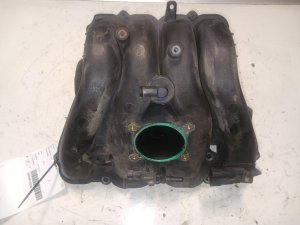
(OEM #ACDelco 12679527 (supersedes 12647263))— These gaskets must be replaced anytime the intake manifold is removed to access the fuel injectors.
Trusted brands: ACDelco, Fel-Pro
OEM price range: $30-$50
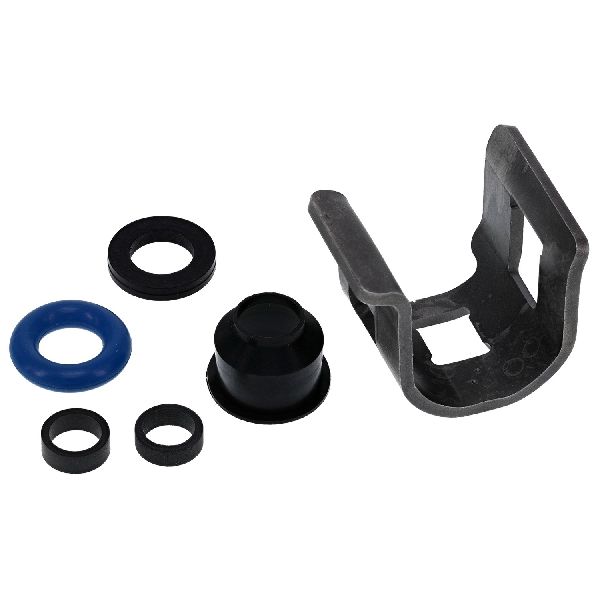
Aftermarket price range: $20-$40 - Direct Injector Seal Kit
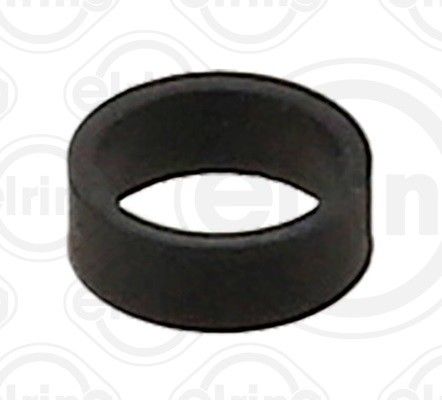
(OEM #ACDelco 12643398)— The Teflon seal at the tip of the direct injector is a one-time-use part and MUST be replaced and properly sized with a special tool whenever an injector is removed and reinstalled to prevent compression and fuel leaks.
Trusted brands: ACDelco
OEM price range: $10-$20 per injector
Aftermarket price range: $5-$15 per injector
Related Codes That Often Appear With This One
- P0301 — P0301 means 'Cylinder 1 Misfire Detected'. Since P0201 indicates the cylinder 1 injector isn't firing correctly, a misfire is the direct and immediate result.
- P0300 — This code for 'Random/Multiple Cylinder Misfire' can appear if the wiring issue is intermittent or if the engine is running very poorly, causing instability that the ECM interprets as misfires on other cylinders.
- P2146 — This code means 'Fuel Injector Group 'A' Supply Voltage Circuit/Open' and refers to Bank 1 (cylinders 1, 3, 5). It can appear alongside P0201 if the chafed wire is the main power feed to that bank of injectors.
Technical Service Bulletins (TSBs) & Recalls
- PIP4924D: Addresses engine misfires and injector circuit codes due to the fuel injector wiring harness rubbing against the intake plenum, valve cover bolts, or fuel lines.
- PI1067B: Notes a potential wiring harness chafe point at the ECM bracket on 2013-2014 models.
- PI0631H: Lists P0201 as a possible DTC resulting from the engine harness rubbing on the transmission case on 2012-2013 models.
Platform-Specific Known Issues
- A known high-probability failure is the engine wiring harness chafing against engine or transmission components, causing an open/short in the injector circuit. This is documented in GM TSBs like PIP4924D and is a common fault on the 3.6L LFX engine platform.
Mechanic-Grade Diagnostic Values
- Fuel Injector Coil Resistance — expected: 1.2 - 1.8 Ohms. Failure: A reading of OL (open), near 0 Ohms (short), or significantly outside this range.
- Injector Circuit Voltage (Initial Pulse) — expected: ~65 Volts DC. Failure: Absence of this high-voltage spike, viewed on an oscilloscope, indicates a problem with the ECM's boost capacitor or driver circuit.
- Injector Circuit Voltage (Hold Phase) — expected: ~12 Volts DC. Failure: After the initial 65V pulse, the voltage should drop to a 12V signal to hold the injector open; failure to do so points to a driver circuit fault.
- Injector Pulse Width (at warm idle) — expected: 2.0 - 4.0 milliseconds (ms). Failure: A value of 0 ms on cylinder 1 while others are pulsing normally indicates the ECM is not commanding the injector, pointing to a circuit or driver issue.
- Low-Pressure Fuel System (KOEO) — expected: 55-60 PSI (380-410 kPa). Failure: Pressure significantly below 55 PSI indicates a weak in-tank pump or leak, which is a separate issue from the P0201 electrical fault but important for overall system health.
- High-Pressure Fuel System (Warm Idle) — expected: 290 - 798 PSI (2.0 - 5.5 MPa). Failure: While not a direct cause of P0201, pressure that is unstable or significantly out of this range indicates a failing High-Pressure Fuel Pump (HPFP), a common issue on the LFX engine.
Scan Tool Commands That Help
- GDS2 (GM Global Diagnostic System 2): Fuel Injector Balance Test — This bidirectional test is crucial for confirming injector health. The ECM cranks the engine, builds fuel pressure, then pulses each injector individually while measuring the pressure drop on the fuel rail. If cylinder 1 shows a significantly different pressure drop than the others, it points to a faulty injector.
- GDS2 / Tech2Win: Cylinder Power Balance — This function allows the technician to disable individual injectors while the engine is running. If disabling cylinder 1 causes no change in engine RPM or smoothness, it confirms that cylinder is not contributing, which is expected with a P0201.
- GDS2: Fuel Trim Reset — This function must be performed after replacing a fuel injector to clear the ECM's long-term learned fuel trim values and allow it to adapt to the new component correctly.
Wiring & Ground Locations
- G105 / G106 — Primary engine grounds. G106 is often on the rear of the left (firewall side) cylinder head. G105 can be on the front of the engine or the nearby frame rail under the crank pulley area.. The ECM and injector driver circuits rely on these main grounds for a stable voltage reference. A loose or corroded ground can cause erratic voltage, electrical noise, and false injector circuit codes.
- ECM Connector X1 — The main 73-pin connector at the Engine Control Module (ECM), located in the engine compartment.. The control and power circuits for the cylinder 1 injector run through this connector. Testing for continuity, shorts, or voltage drops between the injector connector and the specific pins at X1 can definitively isolate a wiring fault from an ECM fault.
- Injector Harness Chafe Points — Common rub spots include where the harness passes over the intake plenum, valve cover bolts, fuel lines, the side of the cylinder head, and the metal ECM mounting bracket.. These are the specific, known failure locations documented in GM TSBs where the injector wiring is most likely to chafe through and cause an open or short circuit, triggering P0201.
Real Owner Repair Stories
- Reddit user in r/Justrolledintotheshop (Chevrolet Impala 3.5L (similar platform, demonstrates common failure mode)) — P0201 code stored.
✅ What actually fixed it A visual inspection revealed that the wiring for the cylinder 1 injector was chewed, exposing copper wire. The cylinder 2 injector wires also showed damage. The confirmed fix was to replace the entire injector wiring harness.
OEM Part Supersession History
12614936→12621096— Part update/revision by GM.
Heads up: 12621096 is the correct replacement harness for the passenger side (Bank 1) on many 3.6L applications.12634126→12669384— Part update/revision by GM.
Heads up: For some 3.6L LFX applications, the original injector has been superseded. Always verify the correct part number by VIN, but be aware of this change.
Model Year Variations Within This Range
- 2018-2020: While the Impala generation is the same, some 2018-2020 models may feature the updated 3.6L LGX V6 engine instead of the LFX. The LGX has different fuel system components, including a different fuel rail pressure sensor and potentially different injector part numbers. Diagnosis is similar, but part verification by VIN is critical.
Diagnostic Flowchart
Other Known Issues on This Vehicle
Issues unrelated to this code that are worth knowing about as an owner of this generation:
- Timing Chain Stretch 🔴 High — A well-documented issue on the GM High Feature V6 family. While the LFX is improved over the earlier LLT engine, premature chain stretch can still occur, typically between 70,000 and 120,000 miles. Symptoms include rattling on startup and codes like P0008, P0017, and P0018. (Ref: Multiple TSBs exist, including 12-06-01-009D, which provided updated timing chain kits.)
- Intake Valve Carbon Buildup 🟠 Medium — Inherent to all Gasoline Direct Injection (GDI) engines, including the LFX. Fuel is sprayed directly into the cylinder, so it no longer cleans the back of the intake valves. Buildup becomes significant after 60,000-80,000 miles, causing subtle misfires, hesitation, and reduced fuel economy. Requires periodic manual cleaning (e.g., walnut blasting).
- PCV System Issues / Oil Consumption 🟠 Medium — The PCV orifice, integrated into the valve cover, can become clogged. This can lead to increased crankcase pressure, causing oil leaks (especially the rear main seal) and increased oil consumption. GM released TSB 12-06-01-009D with instructions for cleaning the orifice during other service. (Ref: TSB 12-06-01-009D)
- Thermostat Failure 🟡 Low — The thermostat is known to fail, often sticking open, which results in the engine not reaching full operating temperature and can trigger a P0128 code. It's a relatively common repair item for owners.
Used vs. New Parts: Buying Guide for This Vehicle
When a used part is the smart pick: A used engine wiring harness from a low-mileage donor vehicle can be a cost-effective solution if the original harness is severely damaged by rodents or chafing in multiple locations. A single used fuel injector is generally not recommended due to the high labor cost to access it.
Donor-vehicle mileage cap: roughly under 75000 miles for the part to have meaningful remaining life.
What to inspect on the donor part:
- For a wiring harness, inspect it meticulously before purchase. Look for any signs of prior repairs (tape, butt connectors), brittleness in the plastic conduit, or damage to connector locking tabs.
- Ensure the donor vehicle was not in a front-end collision that could have stressed the harness.
- Avoid harnesses from vehicles that show signs of rodent infestation (nesting material, droppings) in the engine bay.
OEM-only on this vehicle (don't cheap out):
- Direct Fuel Injector: Due to the high operating pressures and the critical nature of fuel delivery, OEM (ACDelco) or a direct OEM supplier like Bosch is strongly recommended. Aftermarket injectors have a higher reported failure rate and can cause performance issues.
- Injector Seals: Always use new, OEM Teflon seals and O-rings. Re-using seals or using low-quality aftermarket seals is a major fire and engine damage risk.
Aftermarket brands forum-validated for this vehicle:
- Bosch (Often the OEM supplier for injectors)
- Fel-Pro (For intake manifold gaskets)
Brands owners have reported issues with on this vehicle:
- Unbranded, no-name fuel injectors from online marketplaces. Forum discussions frequently mention issues with inconsistent performance and premature failure.
Real Owner Stories
Aggregated from forums and TSBs cited above. Mileages and costs reflect what owners reported in those sources.
2012 Chevrolet Impala LTZ 3.6L LFX
Symptoms: Check engine light on with codes P0201, P0301, and P0300. The owner noted the difficulty of accessing the rear bank for diagnosis.
What fixed it: The discussion points to either the common wiring harness chafe issue or a faulty injector, requiring removal of the intake manifold for access.
Source hint: ImpalaForums.com thread titled '2012 Impala LTZ P0201, P0301 and P0300'
2012 Chevrolet Traverse 3.6L LFX
Symptoms: Misfire with codes P0301 and P0201. The owner attempted swapping coils and plugs but the misfire remained on Cylinder 1.
What fixed it: Discovered a broken wire in the harness going to the #1 injector, confirming the common chafe issue found on this engine platform.
Source hint: TraverseForum.com thread titled 'Misfire found P0301 & P0201'
2014 Chevrolet Impala 3.6L LFX
Symptoms: A 'phantom' misfire on Bank 1 (cylinders 1, 3, and 5).
What fixed it: The root cause was determined to be a stretched timing chain on Bank 1.
Source hint: GoForParts.com blog post '3.6L GM Misfire Nightmare'
Related OBD-II Codes
Frequently Asked Questions
My 2012 Impala has a P0201 code; is there a specific TSB for wiring issues on this model?
Where is the Cylinder 1 injector located on my 3.6L LFX engine?
What is the correct resistance specification for a replacement LFX fuel injector?
I have a 2014 Impala with a misfire; does TSB PIP4924D apply to my vehicle?
Is there a specific part number for the injector wiring harness if it's too damaged to repair?
Can a 2013-2014 Impala have wiring issues near the ECM?
Helpful Videos
Used OEM Parts in Stock




New Aftermarket Parts Available


The information in this article is provided for general reference and educational purposes only. Vehicle specifications, procedures, and part compatibility can vary by production date, trim level, and region. Always consult your vehicle's factory service manual and verify part numbers before purchasing or performing repairs. Safety-critical components such as airbags, seat belts, and braking systems should be installed by a qualified professional.
- Chevrolet Impala:
- 🎬 Helpful Videos
- 🛍️ Shop This Part
- What's Unique About the 2012-2020 Chevrolet Impala
- Symptoms You May Notice
- Most Likely Causes
- Rare But Worth Checking
- Diagnosis Steps
- Parts You'll Likely Need
- Related Codes That Often Appear With This One
- Technical Service Bulletins (TSBs) & Recalls
- Platform-Specific Known Issues
- Mechanic-Grade Diagnostic Values
- Scan Tool Commands That Help
- Wiring & Ground Locations
- Real Owner Repair Stories
- OEM Part Supersession History
- Model Year Variations Within This Range
- Diagnostic Flowchart
- Other Known Issues on This Vehicle
- Used vs. New Parts: Buying Guide for This Vehicle
- Real Owner Stories
- 2012 Chevrolet Impala LTZ 3.6L LFX
- 2012 Chevrolet Traverse 3.6L LFX
- 2014 Chevrolet Impala 3.6L LFX
- Related OBD-II Codes
- Frequently Asked Questions
- 🎟️ Get 5% Off