

P0193 on 2007-2010 Saturn Outlook: Fuel Rail Pressure Sensor Circuit High Causes and Fixes
P0193 on a Saturn Outlook indicates the fuel pressure sensor is sending an abnormally high voltage signal. The most likely causes are a chafed engine wiring harness, as noted in GM service bulletins, or a failed Fuel Rail Pressure (FRP) sensor. Start by inspecting the wiring harness for damage and check that the sensor is properly seated before replacing parts.
- P0193 on a 2007-2010 Saturn Outlook is a 'Circuit High' code for the Fuel Rail Pressure sensor.
- Before replacing any parts, thoroughly inspect the engine wiring harness for chafing, especially near the transmission and camshaft covers, as this is a known issue covered by GM service bulletins.
- If the wiring is intact, the most likely cause is a failed Fuel Rail Pressure (FRP) sensor.
- Due to the high-pressure direct injection system, professional service is recommended for any repairs involving the fuel lines or pumps to avoid injury and fire risk.
What's Unique About the 2007-2010 Saturn Outlook
The 2007-2010 Saturn Outlook and its GM Lambda platform-mates (Acadia, Enclave, Traverse) use a 3.6L V6 engine with a direct injection fuel system (LLT engine variant from 2009-on). This system has both a low-pressure and a high-pressure fuel pump (HPFP). While the HPFP is a known failure point, it typically causes low-pressure codes. For P0193, the most significant platform-specific issue is the engine wiring harness's tendency to chafe against engine components, causing electrical shorts. General Motors has issued multiple Technical Service Bulletins (TSBs) addressing this problem, which can directly cause a P0193 code.
Symptoms You May Notice
- Check Engine Light is on
- Engine may be hard to start or take a long time to crank
- Hesitation or stuttering during acceleration
- Rough or erratic idle
- Engine stalling unexpectedly
- Reduced engine power ('limp mode')
- Decreased fuel economy
- Strong fuel smell
- Replacing the Fuel Rail Pressure sensor without first thoroughly inspecting the wiring harness for chafing, as described in GM TSBs and seen in owner forums.
- Replacing the in-tank (low-pressure) fuel pump when the issue is in the high-pressure system.
- Immediately replacing the High-Pressure Fuel Pump, which is less likely to cause a 'circuit high' code compared to low-pressure codes.
Most Likely Causes
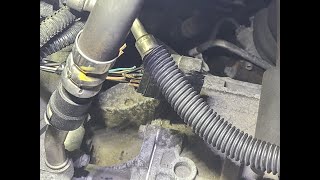
- Engine Wiring Harness Chafing or Damage 🔴 High Probability Multiple GM Technical Service Bulletins (e.g., 21-NA-149) document this issue on the 3.6L V6 platform. The harness routing makes it vulnerable to rubbing against the transmission housing, camshaft cover, or various brackets, leading to shorts. The area near the intake manifold is also susceptible to rodent damage, which can chew through wires leading to the FRP sensor.
How to confirm: Visually inspect the engine wiring harness, especially where it runs near the transmission, camshaft covers, and around the intake manifold. Look for signs of rubbing, exposed wires, or damaged conduit. A technician may gently move the harness while the engine is running to see if the fault can be duplicated. On platform-mates, rodent damage has been found on the harness section that is accessible after removing the plastic engine cover.
Typical fix: Repair the damaged wires according to manufacturer procedures. The repaired section must be re-secured and protected with new conduit or tape to prevent future chafing. In some cases, a new fir tree clip or zip tie is installed to reroute the harness away from the chafe point.
Est. part cost: $10-$50 for repair materials - Faulty or Dislodged Fuel Rail Pressure (FRP) Sensor 🟡 Medium Probability In addition to internal failure, there are documented cases on this platform of the sensor physically popping out of its seat in the fuel rail, possibly after a jolt like hitting a bump. This breaks the seal and causes an immediate fault.
How to confirm: With a scan tool, observe the FRP sensor voltage with the key on, engine off. A reading of 5V or close to it indicates a failed sensor or a short in the signal wire. Before replacing, physically inspect the sensor on the fuel rail (may require intake manifold removal) to ensure it is fully seated and the connector is secure. If it has popped out, it may simply need to be pushed back into place.
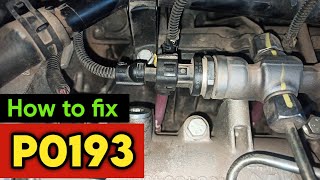
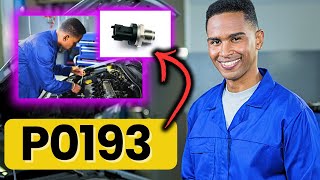
Typical fix: Replace the Fuel Rail Pressure sensor if it has failed internally. If it has become dislodged, securely re-install it and ensure its retaining clip is in place. 🎬 See this walkthrough for replacing the fuel pressure sensor. The sensor is located on the high-pressure fuel rail.
Est. part cost: $60-$150 - Failing High-Pressure Fuel Pump (HPFP) ⚪ Low Probability The HPFP is a common failure part on this engine, but it usually fails by producing low pressure (P0087, P0191). A failure in its internal pressure regulation could theoretically cause a pressure spike, but this is not its typical failure mode for P0193.
How to confirm: Use a scan tool to monitor 'Commanded Fuel Rail Pressure' vs. 'Actual Fuel Rail Pressure'. If the actual pressure is consistently and significantly higher than commanded pressure, and the sensor/wiring have been ruled out, the HPFP may be at fault.
Typical fix: Replace the high-pressure fuel pump and the single-use high-pressure fuel line connected to it.
Est. part cost: $250-$500
Rare But Worth Checking
- Faulty Engine Control Module (ECM/PCM): This is a last-resort diagnosis. An internal ECM fault can cause it to misinterpret the sensor signal, but this is rare. All wiring and sensor issues must be definitively ruled out first.
Diagnosis Steps
- Connect a scan tool and verify that P0193 is the primary code. Note any other codes present.
- Using the scan tool's live data, monitor the 'Fuel Rail Pressure Sensor' voltage or pressure. With the key on and engine off, the voltage should be around 0.5V. If it reads near 5.0V, a circuit high condition is confirmed. 🎬 Watch: A helpful explanation of P0193 and sensor testing.
- Carefully inspect the engine wiring harness for signs of chafing or damage. Pay close attention to the areas where the harness passes over the transmission, near the camshaft covers, and around the ECM mounting bracket. Also check for rodent damage on top of the engine near the intake.
- Physically inspect the Fuel Rail Pressure sensor to ensure it is fully seated in the fuel rail and its connector is secure. A video of a GMC Acadia showed the sensor had popped out of its housing, causing a P0193.
- If no visible damage is found, disconnect the FRP sensor connector. Check for 5V reference and a good ground at the connector with a multimeter. Check the signal wire for any voltage; it should be 0V with the sensor unplugged.
- If the signal wire shows voltage when unplugged, there is a short to voltage in the harness that must be traced and repaired.
- If the wiring, reference voltage, and ground are all good, the FRP sensor itself is most likely faulty.
- If the sensor and wiring are confirmed good but actual fuel pressure is verified to be excessively high, investigate the high-pressure fuel pump.
Parts You'll Likely Need
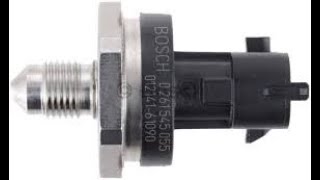
- Fuel Rail Pressure Sensor
(OEM #12621649)— This sensor can fail internally, causing it to send a constant high voltage signal to the ECM. It can also become physically dislodged from the fuel rail. It is a common cause after wiring issues have been ruled out.
Trusted brands: ACDelco, Bosch
OEM price range: $100-$150
Aftermarket price range: $60-$120 - High-Pressure Fuel Pump
(OEM #12639260)— This is the correct HPFP for the 3.6L V6. While less likely to cause P0193, it's a known high-failure item on this engine for other codes. It would only be replaced for this code after all electrical and sensor faults are eliminated. Alternate P/Ns include 12614934, 12626234.
Trusted brands: ACDelco, Bosch, Delphi
OEM price range: $350-$500
Aftermarket price range: $250-$400
Related Codes That Often Appear With This One
- P0191 — Indicates a range/performance issue with the same sensor. The presence of both codes could point to an intermittent wiring problem or a failing sensor.
- P0087 — Indicates fuel rail pressure is too low. If seen with P0193, it could suggest a very erratic HPFP or a complex electrical issue affecting multiple systems. 🎬 Watch: Diagnosing multiple codes caused by engine harness chafing.
- P0201-P0206 — These are fuel injector circuit codes. If the wiring harness chafing affects multiple wires in the same bundle, it's possible to see injector codes alongside the P0193.
Technical Service Bulletins (TSBs) & Recalls
- 21-NA-149: A broad bulletin addressing engine wire harness chafing on many GM vehicles that can cause various DTCs, including P0193.
- PIP4924D: Addresses fuel injector wiring harness rubbing through, which is in the same area as the FRP sensor circuit and can cause collateral electrical issues.
Platform-Specific Known Issues
- GM Special Coverage 14329 and 11340C were issued for failing high-pressure fuel pumps and timing chains respectively on many 3.6L V6 engines, indicating high failure rates for these components.
- GM TSB 21-NA-149 (and its predecessors) details common locations for the engine wiring harness to chafe and cause various electrical faults, including P0193.
Mechanic-Grade Diagnostic Values
- Fuel Rail Pressure Sensor (FRP) Signal Voltage, Key On Engine Off (KOEO) — expected: ~0.5V. Failure: A reading stuck near 5.0V indicates a circuit high fault, an open signal wire, or an unplugged/failed sensor.
- FRP Sensor Connector Pinout Test (Connector Unplugged, KOEO) — expected: Pin 1 (Reference): 5.0V; Pin 2 (Ground): < 0.1V (continuity to ground); Pin 3 (Signal): 0V.. Failure: Absence of 5V or good ground points to a wiring or ECM issue. Voltage present on the signal wire with the sensor unplugged indicates a short to voltage in the harness.
- High-Pressure Fuel System Pressure (Warm Idle) — expected: 2.0-5.0 MPa (290-725 PSI). Failure: Pressure significantly and consistently above the commanded pressure, after ruling out sensor/wiring faults, may indicate a faulty High-Pressure Fuel Pump (HPFP).
- Low-Pressure Fuel System Pressure (In-tank pump) — expected: 50-65 PSI (345-448 kPa). Failure: Pressure below 50 PSI indicates a weak in-tank pump or clogged filter, which can cause other fuel system codes but is not a direct cause of P0193.
- High-Pressure Fuel Pump Actuator Resistance (LLT Engine) — expected: 0.35 - 0.6 Ohms at 20°C (68°F). Failure: Resistance outside this range indicates a failure of the pump's internal control solenoid.
Hidden / Shadow Codes Worth Checking
- P0193 with Symptom Byte 5A: Indicates a 'Range/Performance' fault. The ECM sees a voltage that is valid (e.g., 4.9V) but not plausible for the current operating conditions. (see via GM Tech2 or GDS2 scan tool)
- P0193 with Symptom Byte 5B: Indicates a 'Signal Plausibility Failure'. The signal is changing in a way that is not physically possible (e.g., jumping instantly between 0V and 5V), strongly pointing to an intermittent wiring or connector fault. (see via GM Tech2 or GDS2 scan tool)
Scan Tool Commands That Help
- GDS2 / Tech2: Fuel System > Fuel Pressure Control — This bidirectional test allows a technician to command a specific fuel rail pressure and observe if the 'Actual' pressure reported by the sensor changes accordingly. If the commanded pressure is low but the sensor still reads high, it helps isolate the fault to the sensor or its circuit.
Wiring & Ground Locations
- G102 — At the left rear of the engine.. This is a primary engine ground. A poor connection here can cause erratic behavior from multiple engine sensors that share this ground path, potentially leading to incorrect voltage readings.
- G103 — On the cowl at the left rear of the engine compartment, above the brake booster.. This ground is used by the Body Control Module (BCM) and Instrument Panel Cluster (IPC). While not a direct engine ground, a fault here can cause communication issues on the data bus, which could indirectly affect how codes are reported or interpreted.
- FRP Sensor Connector — On the driver's side high-pressure fuel rail, located underneath the upper intake manifold.. This is the primary connection point for the sensor. The connector itself and the pigtail wiring are susceptible to heat damage and corrosion, which can cause a high resistance or open circuit, leading to a P0193 code.
Real Owner Repair Stories
- acadiaforum.net user report (GMC Acadia with 3.6L LLT engine (platform-mate)) — Check engine light with codes P0191 and P0087, stalling, and hesitation.
❌ Tried (didn't work) Replaced the High-Pressure Fuel Pump (HPFP) based on the common failure and codes.
✅ What actually fixed it The codes and symptoms returned. Further diagnosis found the Fuel Rail Pressure (FRP) sensor was sending an incorrect, fixed high-pressure reading. This caused the ECM to command very low pressure from the new HPFP, triggering the low-pressure code. Replacing the faulty FRP sensor resolved all issues.
OEM Part Supersession History
12621649 (Incorrectly identified in Pass 2)→N/A— Part number correction
Heads up: Part number 12621649 is for the Engine Oil Pressure Sensor, not the Fuel Rail Pressure sensor. It is electrically and physically incompatible. The correct part number for the FRP sensor on the 2009-2010 LLT engine is GM 12633423.
Model Year Variations Within This Range
- 2007-2008: These models use the 3.6L LY7 Port Fuel Injection (PFI) engine. They do NOT have a high-pressure fuel pump or a high-pressure fuel rail. While a P0193 code is technically possible (referring to the ~60 PSI standard rail), the diagnostic context of HPFPs and extreme pressure does not apply. The fault would be purely electrical (sensor or wiring).
- 2009-2010: These models use the 3.6L LLT Spark Ignited Direct Injection (SIDI) engine. This engine has both a low-pressure and a high-pressure fuel system. The P0193 code specifically refers to the high-pressure rail sensor. All discussions of the HPFP and pressures exceeding 290 PSI apply only to these years.
Diagnostic Flowchart
Other Known Issues on This Vehicle
Issues unrelated to this code that are worth knowing about as an owner of this generation:
- Premature Timing Chain Stretch 🔴 High — Extremely common on 2007-2012 models, often occurring between 70,000 and 120,000 miles. Caused by a combination of poor chain design and long oil change intervals recommended by the original Oil Life Monitor (OLM) calibration. (Ref: GM Special Coverage Adjustment #11340C (expired) extended warranty to 10 years/120,000 miles. TSB #12-06-01-009F provided details on updated replacement parts.)
- 3-5-R Transmission Wave Plate Failure 🔴 High — Common failure in the 6T70/6T75 transmission, typically occurring between 60,000 and 110,000 miles. A specific wave plate for the 3rd, 5th, and Reverse gears fractures, sending metal fragments throughout the transmission, leading to a loss of those gears and often requiring a full rebuild. (Ref: GM Special Coverage Adjustment #14404B (expired) covered this specific failure for 10 years/120,000 miles.)
- Power Steering Leaks and/or Failure 🟠 Medium — Widespread reports of power steering fluid leaks from the rack and pinion seals, or from hoses rubbing on engine pulleys. Can also present as an intermittent loss of power assist at low speeds.
Used vs. New Parts: Buying Guide for This Vehicle
When a used part is the smart pick: A used part is a reasonable choice for a wiring harness pigtail if the original connector is damaged. It is not recommended for the sensor or pump itself.
Donor-vehicle mileage cap: roughly under 100000 miles for the part to have meaningful remaining life.
What to inspect on the donor part:
- For a wiring pigtail, ensure the plastic is not brittle or cracked.
- Check that the connector's locking tab is intact.
- Inspect the pins inside the connector for any signs of green or white corrosion.
OEM-only on this vehicle (don't cheap out):
- High-Pressure Fuel Pump (HPFP): This is a high-failure, precision part with multiple factory revisions. Using a new OEM (ACDelco) or OEM-supplier (Bosch) part is critical to ensure reliability and avoid catastrophic failure.
- Fuel Rail Pressure Sensor (FRP): Due to the high labor cost of accessing this sensor (intake manifold removal), using a new, quality part is strongly advised to prevent repeat repairs.
Aftermarket brands forum-validated for this vehicle:
- ACDelco (Original Equipment)
- Bosch (Often the OEM supplier for fuel components)
Brands owners have reported issues with on this vehicle:
- Unbranded, 'white-box' sensors from online marketplaces are a significant gamble and may fail prematurely or provide inaccurate readings, leading to further misdiagnosis.
Real Owner Stories
Aggregated from forums and TSBs cited above. Mileages and costs reflect what owners reported in those sources.
2009 GMC Acadia 3.6L V6
Symptoms: The vehicle had a P0193 code.
What fixed it: A mechanic discovered the fuel rail pressure sensor had physically popped out of its seat on the fuel rail. Pushing it back into place and clearing the codes resolved the issue.
Source hint: YouTube: GMC Acadia 2009 p0193 sensor de presión de gasolina
2015 GMC Acadia 3.6L V6
Symptoms: The vehicle had multiple codes, including P0193, P018C, P0201, P0203, and P0452.
What fixed it: The cause was found to be rodent damage (chewed wires) on the engine wiring harness near the injectors and FRP sensor. The fix was to repair the damaged wiring.
Source hint: YouTube: 2015 GMC ACADIA P018C P0193 P0201 P0203 P0452
Related OBD-II Codes
Frequently Asked Questions
I heard there's a TSB for wiring problems on my Saturn Outlook. Could that cause a P0193 code?
My Check Engine Light with code P0193 came on right after I hit a big pothole. Could that be related?
Could mice or other rodents cause a P0193 code on my Outlook?
My mechanic says I might need a high-pressure fuel pump. Wasn't there a special coverage for that on the 3.6L engine?
I've heard about timing chain issues on these engines. Is that related to the P0193 code?
My Outlook is having transmission problems and a P0193 code. Is the 3-5-R wave plate failure related to this engine code?
Helpful Videos
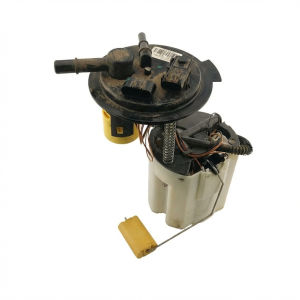
Used OEM Parts in Stock

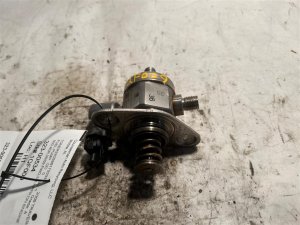
New Aftermarket Parts Available
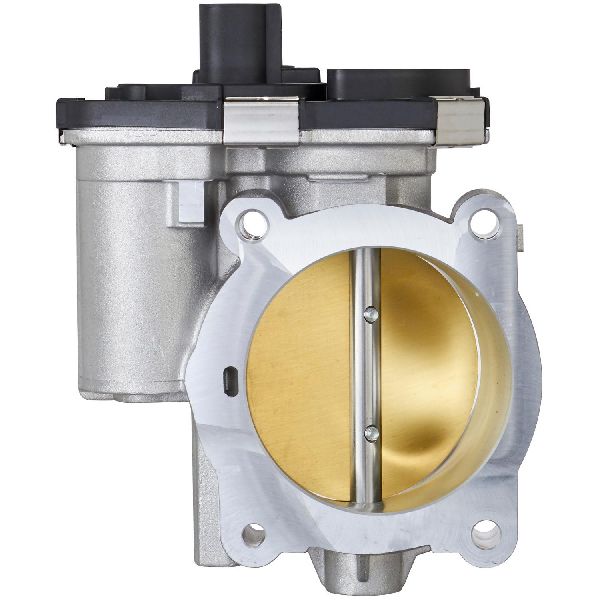


The information in this article is provided for general reference and educational purposes only. Vehicle specifications, procedures, and part compatibility can vary by production date, trim level, and region. Always consult your vehicle's factory service manual and verify part numbers before purchasing or performing repairs. Safety-critical components such as airbags, seat belts, and braking systems should be installed by a qualified professional.
- Saturn Outlook:
- 🎬 Helpful Videos
- 🛍️ Shop This Part
- What's Unique About the 2007-2010 Saturn Outlook
- Symptoms You May Notice
- Most Likely Causes
- Rare But Worth Checking
- Diagnosis Steps
- Parts You'll Likely Need
- Related Codes That Often Appear With This One
- Technical Service Bulletins (TSBs) & Recalls
- Platform-Specific Known Issues
- Mechanic-Grade Diagnostic Values
- Hidden / Shadow Codes Worth Checking
- Scan Tool Commands That Help
- Wiring & Ground Locations
- Real Owner Repair Stories
- OEM Part Supersession History
- Model Year Variations Within This Range
- Diagnostic Flowchart
- Other Known Issues on This Vehicle
- Used vs. New Parts: Buying Guide for This Vehicle
- Real Owner Stories
- 2009 GMC Acadia 3.6L V6
- 2015 GMC Acadia 3.6L V6
- Related OBD-II Codes
- Frequently Asked Questions
- 🎟️ Get 5% Off