

P0193 on 2016-2021 Honda Civic: Fuel Rail Pressure Sensor Circuit High Causes and Fixes
P0193 on a 10th gen Honda Civic means the fuel rail pressure sensor circuit has an abnormally high voltage, typically reading near 5V. This is most often caused by a failed fuel rail pressure sensor itself. Replacing the sensor is the most common fix. The part number varies by engine (1.5T vs 2.0L) and costs around $50-$200. It's a DIY-friendly repair for many owners.
- P0193 is an electrical fault code, not a mechanical one. Do not immediately replace the fuel pump.
- The most likely culprit by a large margin is a failed Fuel Rail Pressure (FRP) sensor that has shorted internally.
- Diagnosis is straightforward with a scan tool that can read live data; a reading stuck near 5V with the key on (engine off) points directly to the sensor or wiring.
- The repair is accessible for a DIYer with basic tools. The sensor is located on the fuel rail and is relatively easy to access on both the 1.5T and 2.0L engines.
- Consider using an OEM sensor for the replacement, as owner anecdotes suggest aftermarket versions may not be as reliable.
- Always check if your vehicle is affected by the massive fuel pump recall (TSB 24-008/24-027), as it addresses another major fuel system weakness on this car.
What's Unique About the 2016-2021 Honda Civic
The 2016-2021 Honda Civic came with two main engines: the port-injected 2.0L (K20C2) and the direct-injected 1.5L Turbo (L15B7). While both have a fuel rail pressure sensor, the 1.5L Turbo's direct injection system operates at much higher pressures and has a more complex fuel system with both a low-pressure and a high-pressure pump. For both engines, however, P0193 is primarily an electrical fault code. The sensor for the 1.5T is located on the high-pressure fuel rail, while the 2.0L sensor is on its respective fuel rail. The diagnostic approach is similar, but part numbers and locations differ.
Symptoms You May Notice
- Check Engine Light illuminated
- Engine hesitation or stumbling during acceleration.
- Rough or unstable idle
- Difficulty starting the engine, or extended cranking time.
- Engine may stall, especially at stops or under load.
- Reduced engine power and poor acceleration (Limp Mode)
- Increased fuel consumption or a noticeable smell of fuel.
- Replacing the fuel pump. This code indicates a circuit voltage issue, not a fuel pressure issue. While a fuel pump can fail, it typically causes a P0087 (Fuel Pressure Too Low) code, not P0193. The extensive fuel pump recalls on this platform (TSB 20-040, 24-008, 24-027) 🎬 See this guide on replacing the low fuel pressure sensor. are for a no-start/stalling condition due to a seized pump, which is a separate issue.
Most Likely Causes
- Faulty Fuel Rail Pressure (FRP) Sensor 🔴 High Probability Sensors are electronic components that can fail over time from heat cycles and vibration. An internal short to the 5V reference circuit is the most common failure mode for this sensor, leading directly to a P0193 code. Owner forums frequently cite this as the cause.
How to confirm: With the key on and engine off, use a scan tool to read the live data for the FRP sensor voltage. If it reads at or near 5 volts, the sensor is almost certainly internally shorted. A normal reading at KOEO (Key On, Engine Off) should be around 0.5V. Disconnecting the sensor should cause the voltage to drop to 0V on the scan tool; if it does, the sensor is confirmed bad.
Typical fix: Replace the fuel rail pressure sensor. It is often recommended to use an OEM sensor, as some owners report aftermarket sensors failing quickly.
Est. part cost: $60 - $200 - Wiring or Connector Issue 🟡 Medium Probability The engine bay is a harsh environment. Wires can chafe against brackets or other components, and connectors can become corroded or have pins back out, leading to a short or open circuit.
How to confirm: Visually inspect the wiring harness and connector for the FRP sensor. Look for frayed wires, corrosion in the connector, or loose pins. Perform a continuity test on the signal, reference, and ground wires between the sensor connector and the PCM connector. A short to voltage on the signal wire (e.g., it's touching the 5V reference wire) will cause this code.
Typical fix: Repair the damaged section of the wiring harness or clean/replace the connector.
Est. part cost: $5 - $50 - Faulty Powertrain Control Module (PCM) ⚪ Low Probability PCM failure is very rare on modern Hondas but can happen, usually due to voltage spikes or internal component failure.
How to confirm: This is a diagnosis of exclusion. After definitively proving the sensor is good (e.g., by testing with a known-good part) and the wiring between the sensor and PCM is intact with no shorts, the PCM becomes the primary suspect. This step should be performed by a professional.
Typical fix: Replace and reprogram the PCM.
Est. part cost: $500 - $1000+
Rare But Worth Checking
- Short in a Shared 5V Reference Circuit:
Diagnosis Steps
- Connect an OBD-II scanner and confirm P0193 is present. Record any other codes and freeze frame data.
- Access the live data stream on the scanner. Observe the 'Fuel Rail Pressure' (FRP) reading and the corresponding voltage.
- With the Key On, Engine Off (KOEO), check the FRP sensor voltage. A normal reading is ~0.5V. If the reading is stuck high, at or near 5.0V, the circuit has a high voltage condition.
- Locate the FRP sensor. On the 1.5T, it's on the fuel rail on top of the engine. On the 2.0L, it's on the end of the fuel rail. Visually inspect the sensor connector and its wiring harness for any signs of damage, corrosion, or loose connections.
- Disconnect the FRP sensor connector. The voltage on the scanner's live data should drop to 0V. If it does, the sensor is internally shorted and needs replacement. This is the most common outcome.
- If the voltage remains high (~5V) after disconnecting the sensor, there is a short to voltage in the signal wire between the sensor connector and the PCM. Inspect the entire length of the harness for chafing or damage.
- If the sensor and wiring are confirmed to be good, the issue may lie with the PCM, but this is extremely rare and should be the last component considered.
Parts You'll Likely Need
- Fuel Rail Pressure Sensor
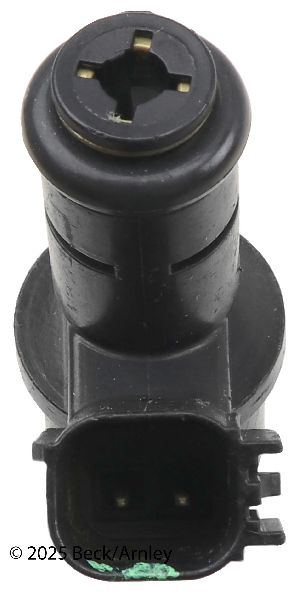
(OEM #1.5T (L15B7): 37890-R07-003; 2.0L (K20C2): 16035-5BA-A01 (Verify with VIN))— This is the most common cause of a P0193 code, as the sensor itself fails internally, causing a short that sends a high voltage signal.
Trusted brands: Honda (Genuine OEM), Bosch (Often the OEM supplier), Denso, Standard Motor Products (SMP)
OEM price range: $120-$200
Aftermarket price range: $60-$150
Related Codes That Often Appear With This One
- P0192 — P0192 is 'Fuel Rail Pressure Sensor Circuit Low'. Seeing both codes intermittently could point to a loose connection or a failing sensor that is fluctuating between open and shorted states.
- P0088 — P0088 is 'Fuel Rail / System Pressure - Too High'. While P0193 is an electrical code, it's possible for an extreme, legitimate overpressure event to max out the sensor's reading, causing the PCM to log both a pressure code (P0088) and a circuit code (P0193). This is more likely on the 1.5T engine if the high-pressure fuel pump fails mechanically.
Technical Service Bulletins (TSBs) & Recalls
- 24-008: Safety Recall: 2016–21 Civic Fuel Pump Motor (Non-Si)
- 24-027: Safety Recall: 2017-20 Civic Si Fuel Pump Motor
Platform-Specific Known Issues
- Owner Experience with Aftermarket Sensor: A user on Reddit reported getting a P0193 code, replacing the sensor with an aftermarket part, and having the code return after about a month. This highlights a potential quality issue with non-OEM sensors and suggests that using a genuine Honda part may be worth the extra cost for this specific repair.
- Fuel Pump Motor Recall (NHTSA 23V-782): There is a major safety recall (Honda Campaigns 24-008 and 24-027) for the low-pressure fuel pump in many 2016-2021 Civics, including Si models. The issue is a defective impeller that can cause the fuel pump to seize, leading to stalling and a P0087 code (Fuel Pressure Too Low). While this recall does not directly cause P0193, it's a critical issue for the fuel system on this platform that owners should be aware of.
Mechanic-Grade Diagnostic Values
- FRP Sensor Voltage (KOEO - Key On, Engine Off) — expected: ~0.5V. Failure: A reading at or near 5.0V indicates an internal short in the sensor or a short-to-voltage in the signal wire.
- FRP Sensor Voltage (Idle) — expected: ~1.3V - 1.5V. Failure: Voltage stuck at 5.0V, or not responding to engine load changes.
- FRP Sensor Voltage (Snap Throttle/High Load) — expected: Rises towards 3.7V - 4.5V. Failure: Voltage does not increase with load, or remains pegged at 5.0V.
- FRP Sensor 5V Reference Wire Voltage — expected: 4.8V - 5.2V with sensor disconnected, key on.. Failure: 0V indicates an open or short-to-ground in the reference circuit from the PCM. Voltage significantly over 5.2V could indicate a PCM fault.
- High Pressure Fuel System (1.5T L15B7 Engine) — expected: Up to 200 bar (2900 PSI). Failure: While P0193 is electrical, this is the operational pressure the sensor measures. A mechanical failure causing extreme overpressure could theoretically max out the sensor's voltage range.
Scan Tool Commands That Help
- Honda HDS (Honda Diagnostic System): CKP Pattern Clear / CKP Pattern Learn — While not directly for the fuel sensor, if other work was done and multiple codes are present, clearing and relearning the crankshaft position sensor pattern can resolve false codes by ensuring the PCM has an accurate baseline for all engine calculations. This is a good final step after a repair.
- Advanced Scan Tools (e.g., iCarsoft): Sensor Relearn / Fuel System Adaptation Reset — After replacing the fuel rail pressure sensor, using this function can reset the ECM's fuel pressure calibration and adaptations, potentially clearing the code faster and ensuring correct operation without waiting for a full drive cycle.
Wiring & Ground Locations
- FRP Sensor Connector (3-Pin) — On the fuel rail. For the 1.5T, it is on the high-pressure rail on top of the engine. For the 2.0L, it is on the end of the fuel rail.. This is the primary point for testing. Disconnecting it helps isolate the sensor from the wiring. The pins are typically 5V Reference, Signal, and Ground.
- PCM Connector E (80-Pin) - 1.5T Engine — In the engine bay, connected to the Powertrain Control Module (PCM).. This connector contains the pins for the FRP sensor circuit. Pin E72 is for the PF wire (signal) and Pin E71 is for the SG1 wire (ground). Checking for continuity and shorts between the sensor connector and these specific pins is a definitive wiring test.
- PCM Connector C (51-Pin) - 2.0L Engine (Similar models) — In the engine bay, connected to the Powertrain Control Module (PCM).. On similar Honda engines, the FRP sensor pins are located on this connector. For example, Pin C46 (Signal) and Pin C42 (Ground). This provides a target for multimeter testing at the PCM side of the harness.
- Engine/Transmission Ground Straps — Key grounds are typically from the battery negative to the chassis, from the chassis to the transmission case, and from the valve cover to the chassis.. A poor engine ground can cause floating voltages and erratic behavior from multiple sensors, including the FRP sensor. While not a direct cause of a 'Circuit High' code (which is usually a short to power), verifying grounds are clean and tight is a fundamental step in any electrical diagnosis.
Real Owner Repair Stories
- YouTube Comment on 'P0035 P2565 Honda Civic SI TYPE R TURBO BYPASS SOLENOID ISSUE ** EASY FIX' (2017 Honda Civic Si Coupe) — Undisclosed codes, but dealer quoted $2100 for a full wiring harness replacement.
❌ Tried (didn't work) Dealer diagnosis pointed to entire harness.
✅ What actually fixed it The owner found a wiring continuity issue following the video's advice, implying a single wire repair fixed the problem instead of replacing the whole harness. This highlights that P0193 and other electrical codes are often caused by a single point of failure in the wiring, not a catastrophic harness failure.
Model Year Variations Within This Range
- 2019-2021: The 2019 model year received a facelift which included minor styling updates and the inclusion of the Honda Sensing safety suite as standard on all trims. While the core 1.5T and 2.0L engines remained the same, there could be minor variations in harness routing or connector types. The 2.0L engine became standard on more trims like the Sport, whereas early models may have had different engine availability by trim.
Diagnostic Flowchart
Used vs. New Parts: Buying Guide for This Vehicle
When a used part is the smart pick: For this specific repair, a used part is NOT recommended. The fuel rail pressure sensor is a relatively low-cost electronic component that is a common failure point. The risk of getting a part that is already near the end of its life or is outright defective from a junkyard is high.
What to inspect on the donor part:
- Not applicable as used part is not recommended.
OEM-only on this vehicle (don't cheap out):
- Fuel Rail Pressure Sensor
Aftermarket brands forum-validated for this vehicle:
- Bosch (Often the original equipment manufacturer)
- Denso
Brands owners have reported issues with on this vehicle:
- Unknown or unbranded 'white box' parts from online marketplaces. Owner forums contain anecdotal reports of these parts failing within weeks or months, bringing the P0193 code back.
Real Owner Stories
Aggregated from forums and TSBs cited above. Mileages and costs reflect what owners reported in those sources.
2016-2021 Honda Civic
Symptoms: The owner received a P0193 code.
What fixed it: The owner replaced the sensor with an aftermarket part, but the code returned after about a month, suggesting the use of a genuine Honda part is necessary for a permanent fix.
Source hint: Reddit r/MechanicAdvice: P0193 code (fuel rail pressure sensor)
Related OBD-II Codes
Frequently Asked Questions
What is the most common cause for a P0193 code on my 2016-2021 Honda Civic?
Should I use an OEM Honda part to replace the Fuel Rail Pressure sensor?
How can I test the FRP sensor on my Civic before replacing it?
I heard about a fuel pump recall for the 10th gen Civic. Could this be causing my P0193 code?
My Civic is hesitating and sometimes has trouble starting. Are these common symptoms for P0193?
If the FRP sensor and its wiring are good, what else could cause P0193?
Helpful Videos
We Have This Part in Stock


The information in this article is provided for general reference and educational purposes only. Vehicle specifications, procedures, and part compatibility can vary by production date, trim level, and region. Always consult your vehicle's factory service manual and verify part numbers before purchasing or performing repairs. Safety-critical components such as airbags, seat belts, and braking systems should be installed by a qualified professional.
- Honda Civic:
- 🎬 Helpful Videos
- 🛍️ Shop This Part
- What's Unique About the 2016-2021 Honda Civic
- Symptoms You May Notice
- Most Likely Causes
- Rare But Worth Checking
- Diagnosis Steps
- Parts You'll Likely Need
- Related Codes That Often Appear With This One
- Technical Service Bulletins (TSBs) & Recalls
- Platform-Specific Known Issues
- Mechanic-Grade Diagnostic Values
- Scan Tool Commands That Help
- Wiring & Ground Locations
- Real Owner Repair Stories
- Model Year Variations Within This Range
- Diagnostic Flowchart
- Used vs. New Parts: Buying Guide for This Vehicle
- Real Owner Stories
- 2016-2021 Honda Civic
- Related OBD-II Codes
- Frequently Asked Questions
- 🎟️ Get 5% Off