

OBD-II Code P0194: Fuel Rail Pressure Sensor 'A' Circuit Intermittent/Erratic
The Ultimate Guide to Understanding, Diagnosing, and Fixing P0194
- Always perform a live-data 'wiggle test' on the sensor harness before replacing parts; wiring faults cause up to 40% of P0194 codes.
- Do not drive with an active P0194 code; unexpected stalling in traffic poses a severe safety risk and destroys a $1,500 catalytic converter within months.
- If your scanner shows P0194 alongside P0087 (Low Pressure), diagnose the mechanical fuel pump or filter first, as the sensor is accurately reporting a genuine pressure drop.
- On 2004-2019 Ford trucks, inspect the aluminum Fuel Pump Driver Module (FPDM) near the spare tire for frame corrosion before touching the fuel rail sensor.
What Does P0194 Mean?

Your car's Powertrain Control Module (PCM) detects an unreliable, fluctuating signal from the fuel rail pressure (FRP) sensor. This sensor measures fuel rail pressure so the PCM can calculate exact injector pulse widths. An intermittent signal—jumping or dropping out—confuses the computer and immediately disrupts fuel delivery.
Technical definition: The SAE/OBD-II definition is "Fuel Rail Pressure Sensor 'A' Circuit Intermittent/Erratic". The PCM expects a steady voltage signal between 0.5V and 4.5V. P0194 triggers when this voltage spikes, drops to zero, or becomes excessively noisy, indicating an electrical circuit failure rather than a steady mechanical pressure drop.
Can I Drive With P0194?
Yes, But With Caution. Limit driving to short, essential trips and avoid highways. The engine stalls unexpectedly, loses power, or fails to start, creating a severe safety risk in traffic. Ignoring P0194 forces a rich or lean fuel condition that destroys the catalytic converter, turning a minor fix into a $1,500+ repair.
Common Causes

- Faulty Fuel Rail Pressure (FRP) Sensor (Very Common) — The sensor is the most frequent culprit. Internal components like the pressure-sensing diaphragm wear out, leak, or fail electronically, sending erratic voltage signals to the computer.
- Damaged Wiring, Connectors, or Grounds (Common) — The wiring harness and connectors degrade from heat, vibration, and moisture. Chafed wires, loose connector pins, or a corroded ground wire introduce resistance and interrupt the 5V reference or signal circuit.
- Weak Fuel Pump or Clogged Fuel Filter (Less Common) — A restricted fuel filter or failing fuel pump causes actual fuel pressure to fluctuate rapidly. The sensor accurately reports this erratic pressure, which the PCM flags as an intermittent signal fault.
- Faulty Fuel Pressure Regulator (Less Common) — A malfunctioning regulator fails to maintain consistent pressure in the fuel rail. The sensor reads these mechanical fluctuations as an erratic signal, triggering the code.
- External Electrical Interference (EMI) (Rare) — Improperly grounded high-current aftermarket accessories (audio amplifiers, off-road lighting) introduce electrical noise into the sensor's circuit, corrupting the signal.
- Powertrain Control Module (PCM) Failure (Very Rare) — The PCM itself fails or requires a software calibration update. Outdated firmware fails to filter normal sensor variations, or the internal circuit reading the sensor burns out.
Symptoms

- Check Engine Light is On (also visible on scanner) — The Malfunction Indicator Lamp (MIL) illuminates immediately upon detecting the erratic signal.
- Engine Stalling and Limp Mode (also visible on scanner) — The engine stalls unexpectedly at idle or low speeds. The PCM activates 'limp mode' to prevent damage, severely restricting acceleration and power.
- Hesitation, Surging, or Rough Idle (also visible on scanner) — The vehicle stumbles during acceleration and idles erratically as the PCM struggles to maintain a stable air-fuel ratio.
- Hard Starting or No Start (also visible on scanner) — The engine cranks extensively before firing, or fails to start entirely, because the PCM commands incorrect fuel volume for ignition.
- Poor Fuel Economy and Exhaust Smoke (also visible on scanner) — Erratic pressure readings force the PCM to dump excess fuel, plummeting MPG and occasionally producing black exhaust smoke.
- Engine Misfires (also visible on scanner) — An unstable fuel supply starves individual cylinders, causing misfires felt as rhythmic shaking or shuddering.
Diagnostic Flowchart

Tap your situation to follow the diagnostic path that matches what you're seeing on this code.
Common Fixes & Costs
- Replace Fuel Rail Pressure Sensor
— Parts: $50-$200, Labor: $100-$250, ~1.2 hr book time
(DIY)
: OEM
: OEM
: OEM - Repair Wiring or Replace Connector Pigtail — Parts: $15-$50, Labor: $130-$260, ~1.5 hr book time (Intermediate)
- Replace Clogged Fuel Filter — Parts: $20-$80, Labor: $65-$150, ~0.8 hr book time (DIY)
- Replace Fuel Pressure Regulator — Parts: $50-$200, Labor: $100-$250, ~1.5 hr book time (Intermediate)
- Replace Fuel Pump — Parts: $200-$600, Labor: $250-$500, ~3.5 hr book time (Professional)
DIY vs Professional
- Replace Fuel Rail Pressure Sensor — Beginner:
- Repair Wiring or Replace Connector Pigtail — Beginner:
- Replace Fuel Filter — Beginner:
- Replace Fuel Pump — Beginner:
Used vs. New Parts: Buying Guide
When a used part is worth it: Buying a used electronic fuel rail pressure sensor is highly discouraged. The risk of a cheap used part failing and causing catastrophic engine damage outweighs the small cost savings. Only consider it as a last resort on a low-value vehicle.
Donor-vehicle mileage cap: roughly under 50000 miles for the part to have meaningful remaining life.
Donor quality checklist:
- Verify the donor vehicle was not scrapped for fuel or engine-related issues.
- Match the OEM part number exactly; do not rely on visual similarity.
- Avoid parts from vehicles in flood zones or with visible corrosion.
Decision logic:
- If The new part (OEM or quality aftermarket) costs less than $200 → Always buy new. The risk of repeat labor and potential engine damage is not worth the minimal savings.
- If The vehicle is over 150,000 miles and has low resale value → A used part from a verified low-mileage donor is a high-risk but acceptable budget option.
- If The part has a known electronic failure mode that causes physical engine damage → Strongly favor a new OEM or reputable aftermarket part.
Warranty tradeoff: Used salvage parts typically offer a 30-90 day warranty for part function only. New aftermarket parts carry a 1-year to limited lifetime warranty. New OEM parts usually have a 1-2 year warranty.
Worst-case if a used part fails: $4000+ if a cheap sensor fails internally and leaks fuel into the engine, causing catastrophic failure.
What Happens If You Wait — Timeline
- 0-1 month: Intermittent check engine light and occasional hesitation during acceleration. No severe drivability issues. (MPG impact: 0-5%% · Added cost: $0-$30 (in wasted fuel))
- 1-3 months: Check engine light remains constant. Engine stumbles frequently, idle becomes rough, and cold starts take longer. (MPG impact: 5-15%% · Added cost: $50-$150 (in wasted fuel))
- 3-6 months: Engine stalls at idle or low speeds. The persistent rich/lean fuel mixture begins overheating the catalytic converter. (MPG impact: 15-25%% · Added cost: $800-$2500 (catalytic converter damage begins))
- 6+ months: Severe drivability issues, frequent stalling, and no-start conditions. The catalytic converter clogs completely, and the fuel pump fails from chronic strain. (MPG impact: >25%% · Added cost: $1500-$4000+ (catalytic converter and fuel pump replacement))
Cost of Not Fixing It
- 0-1 month: Noticeable drop in fuel economy (5-15%), annoying hesitation, and risk of stalling in traffic. (Added cost: $20-$60 (in wasted fuel))
- 1-6 months: Persistent lean/rich conditions overheat and melt the catalytic converter substrate. (Added cost: $1200-$2800)
- 6+ months: Chronic stress on the fuel delivery system causes premature failure of the fuel pump and injectors. (Added cost: $800-$2000)
Diagnosis Steps
- Analyze Codes and Freeze Frame Data
Scan for all stored codes. Address mechanical codes (like P0087 for low pressure) before P0194. Review freeze frame data to identify the exact RPM, engine load, and temperature when the fault occurred to recreate the conditions.
Tools: OBD-II Scanner (Beginner) - Monitor Live Data and Perform a Wiggle Test
With the engine running, graph the 'Fuel Rail Pressure' live data PID. Carefully wiggle the sensor's wiring harness and connector. If the pressure reading spikes or drops to zero when moved, you have isolated an intermittent open or short in the wiring.
Tools: OBD-II Scanner with Live Data Graphing, Gloves (Intermediate) - Visually Inspect and Clean Connectors
Disconnect the battery. Unplug the FRP sensor and inspect for frayed wires, melted plastic, or green/white corrosion on the pins. Clean the pins with contact cleaner, apply dielectric grease to the weather seal, and ensure a tight fit.
Tools: Flashlight, Electrical Contact Cleaner, Dielectric Grease (Beginner) - Test Sensor Electrical Values
Turn the key ON, engine OFF. Back-probe the sensor connector with a multimeter. Verify a steady 5V reference from the PCM and a clean ground (voltage drop <100mV). The signal wire should read ~0.5V and increase smoothly as pressure builds.
Tools: Digital Multimeter, Back-probe Kit (Advanced) - Verify Mechanical Fuel Pressure
On standard gasoline engines, attach a mechanical fuel pressure gauge to the fuel rail test port. Compare the mechanical reading to the scanner's live data. If the mechanical gauge is steady but the scanner is erratic, the sensor/circuit is faulty. Do NOT perform this on high-pressure GDI or diesel systems.
Tools: Mechanical Fuel Pressure Gauge (Advanced) - Perform Advanced Oscilloscope Testing
Back-probe the sensor signal wire with an oscilloscope while the engine runs. A healthy sensor displays a clean, stable line. Hash, electrical noise, or sudden vertical dropouts definitively confirm an intermittent electrical fault.
Tools: Oscilloscope, Back-probe Kit (Advanced)
When This Code Triggers (Freeze-Frame Conditions)
- Engine Coolant Temp: 180-200°F (The fault typically occurs when the engine is fully warmed up and in closed-loop fuel control.)
- RPM: 1500-3000 (Occurs during cruise, light acceleration, or when climbing a grade.)
- Engine Load: 30-60% (Triggered under moderate engine load, rarely at idle or wide-open throttle.)
- Vehicle Speed: 35-65 mph (Often occurs during highway driving with changing throttle inputs.)
Related Codes
- P0193 — Indicates 'Circuit High Input' (signal stuck >4.5V). If paired with P0194, it strongly suggests a sensor shorting internally or a short-to-power in the wiring harness.
- P0192 — Indicates 'Circuit Low Input' (signal stuck <0.5V). An intermittently failing sensor drops voltage to zero before recovering, logging both P0192 and P0194. Also indicates an open ground.
- P0087 — Indicates 'Fuel Pressure Too Low'. If both are present, diagnose P0087 first. A mechanical problem (weak pump, clogged filter) causes actual pressure drops, which the sensor accurately reports as erratic.
- P0088 — Indicates 'Fuel Pressure Too High'. Points to a mechanical issue like a faulty regulator. Resulting pressure spikes are interpreted by the PCM as an erratic signal, triggering P0194.
Climate & Environmental Factors
- High Humidity and Road Salt: Vehicles in the 'rust belt' or coastal areas suffer accelerated corrosion of wiring harnesses and ground points. Saltwater acts as an electrolyte, destroying connector pins and causing the high resistance that triggers P0194.
How to Talk to a Mechanic About This Code
Say this: "I have a P0194 code and I'd like to schedule a diagnostic. I want to confirm if the issue is the sensor, the wiring, or a mechanical fuel delivery problem. Please start by monitoring live fuel pressure data and performing a wiggle test on the sensor connector."
This signals you understand the common causes and directs the technician to perform specific diagnostic steps, preventing them from simply replacing the sensor without confirming it is the actual point of failure.
Avoid saying:
- 'Just fix my check engine light.'
- 'My car is hesitating, just replace whatever you think is wrong.'
- 'I read online it's the fuel sensor, can you just swap it out?'
Questions to ask before authorizing the repair:
- Did you see the fuel pressure drop out or spike on the live data graph?
- Did wiggling the harness or connector cause the reading to change?
- Have you confirmed the wiring has proper voltage, ground, and signal integrity first?
- Is this repair estimate for a diagnostic, or for the full repair?
- What is the warranty on the parts and labor for this repair?
Where to Take It: Dealer vs Independent vs Chain
- Dealer:
Best for: Vehicles under warranty., Complex, manufacturer-specific issues (e.g., Ford FPDM, Hyundai/Kia HPFP warranty claims)., High-pressure diesel systems (e.g., Cummins, Duramax) requiring specialized tools.
Downsides: Highest labor rates., May recommend replacing related components as a precaution, increasing cost. (Typical cost: +50% vs. baseline) - Independent Shop:
Best fit for most cases. An experienced independent technician efficiently diagnoses P0194 at a lower cost than a dealer.
Best for: Out-of-warranty vehicles where cost is a factor., Diagnosing common electrical faults, wiring issues, and mechanical fuel system problems.
Downsides: Quality varies greatly; seek shops with ASE-certified technicians specializing in electrical diagnostics. (Typical cost: +0% vs. baseline) - Chain Shop:
Avoid for initial diagnosis. Acceptable for a straightforward fuel filter replacement, but inadequate for troubleshooting intermittent electrical faults.
Best for: Simple, clear-cut part replacements if the diagnosis is already certain.
Downsides: Technician skill varies widely., Lacks advanced diagnostic tools (like oscilloscopes) needed for intermittent electrical faults. (Typical cost: -10% vs. baseline)
When to Walk Away From the Repair
If the estimated repair cost exceeds 50% of the car's private-party value, seriously consider selling or trading it in.
- Car worth $3000, fix is $1100: Borderline. If the fix is a fuel pump, you are approaching the walk-away point. Get a second opinion before authorizing.
- Car worth $15000, fix is $450: Fix it. A $450 sensor replacement is well below the threshold and restores full function to a valuable vehicle.
- Car worth $2000, fix is $1200: Walk away. The repair cost is over half the car's value, and other age-related issues are likely.
What Scan Tool You Need for This Code

Minimum: A scanner that reads and graphs live data, specifically the 'Fuel Rail Pressure' PID.
A basic $20 code reader only shows the P0194 code. It cannot display the live, fluctuating pressure signal essential to see if the sensor drops out or if wiggling a wire affects it.
Budget: BlueDriver Pro or Ancel BD310 (~$100) — These Bluetooth scanners connect to a smartphone app to graph live data. You can watch the fuel pressure PID in real-time to spot intermittent drops or spikes, making it excellent for DIY diagnosis.
Mid-range: Innova 5610 or Foxwell NT301 (~$150) — These handheld scanners offer robust live data graphing and freeze frame analysis. The Innova 5610 records data for later review, perfect for catching an intermittent fault while driving.
Professional: Autel MaxiCOM MK808 or Launch X431 series (~$500-1500) — Provides full bidirectional control and OEM-level diagnostics. These tools compare 'Desired' vs 'Actual' fuel pressure PIDs side-by-side, making them the gold standard for pinpointing the fault.
Rent vs buy: AutoZone's Loan-A-Tool program offers free basic scanners, but they lack live data graphing. Buying a budget pick like the BlueDriver is a necessary investment for diagnosing P0194.
How to Clear the Code After You Fix It
- Reconnect the battery if it was disconnected.
- Use an OBD-II scan tool to formally clear the P0194 trouble code.
- Perform a complete OBD-II drive cycle to allow readiness monitors to run.
Drive cycle (~30 minutes): Start the engine cold and idle for 5 minutes. Drive for 20 minutes in mixed city/highway conditions, including steady-speed cruises and gentle accelerations. Finish with 5 minutes of steady driving at 55-65 mph, then allow the vehicle to cool down completely.
Readiness monitors affected: Fuel System Monitor, Catalyst Monitor, O2 Sensor Monitor
Before emissions retest: drive at least 100 miles to fully set monitors.
Watch out for:
- Disconnecting the battery does not reliably clear codes on modern vehicles and resets all readiness monitors to 'incomplete'.
- The code returns immediately if the underlying intermittent electrical fault was not repaired.
Will This Fail Emissions / State Inspection?
Yes — this code typically fails an OBD-II emissions inspection.
- California: An active Check Engine Light from code P0194 is an automatic failure. All OBD readiness monitors must be set to 'Ready', requiring a full drive cycle after repair.
- New York: The NYS DMV inspection includes an OBD-II scan. A P0194 code causes an immediate failure.
- Texas: In the 17 counties requiring emissions testing, an illuminated Check Engine Light for P0194 fails the inspection.
Most Commonly Affected Vehicles
- Ford F-150, Expedition, Focus (2004-2019) — On 5.4L V8 trucks, inspect the Fuel Pump Driver Module (FPDM) for corrosion. On 2009-2014 F-150s, check TSB 15-0137 for a melting fuel pump fuse.
- Hyundai / Kia Sonata, Optima, Santa Fe, Sorento (2011-2022) — Extremely common on GDI engines. Check for active warranty extensions (up to 15 years/150k miles) related to the high-pressure fuel pump (HPFP) before paying for repairs.
- Chevrolet / GMC Silverado, Sierra, Equinox (2007-2018) — Corrosion inside the sensor's electrical connector is the primary failure point. Clean the connector thoroughly before replacing the sensor.
- Dodge / Ram Ram (Cummins Diesel) (2003-2018) — Critical code on Cummins engines. Extreme pressures (up to 30,000 PSI) mean intermittent sensor issues cause major drivability problems. Diagnosis requires professional tools.
- BMW 3 Series, 5 Series, X3, X5 (2004-2017) — Intermittent short circuits or heat damage in the engine wiring harness are known failure points alongside the sensor itself.
- Volkswagen / Audi Golf, Passat, A4, Q5 (TSI/TFSI) (2005-2019) — Common in direct-injection models. The VAG-specific name for the sensor is G247. Faulty wiring near the hot engine block is a frequent cause.
- Mercedes-Benz C-Class, E-Class, GLK (2007-2020) — Triggered by faulty sensors, wiring problems, or failing high-pressure fuel pumps on CGI and BlueTEC models.
Manufacturer-Specific Notes
- Ford: The Fuel Pump Driver Module (FPDM) on many trucks is made of aluminum and corrodes against the steel frame. This causes intermittent fuel pump shutoffs, perfectly mimicking a P0194 sensor fault.
- GM (Chevrolet/GMC): The primary failure point is often water intrusion and corrosion within the sensor's electrical connector, not the sensor itself. Always clean the pins before replacing parts.
- Dodge/Ram (Cummins): High-pressure common-rail diesel systems operate at extreme pressures. Diagnosis must be left to professionals due to the severe physical danger of high-pressure fuel injection injuries.
- Hyundai/Kia: GDI engines have known high-pressure fuel pump (HPFP) issues. Both manufacturers have issued 15-year/150,000+ mile warranty extensions for HPFPs that cause erratic pressure codes. Check your VIN with a dealer.
Real Owner Stories
2005 Ford F-150 5.4L stalling at low speeds
Truck intermittently stalled and hesitated. P0194 was the only code. Replacing the FRP sensor did not resolve the issue.
What they tried:
- Replaced FRP sensor.
- Inspected the Fuel Pump Driver Module (FPDM) mounted on the rear frame rail.
Outcome: The FPDM's aluminum housing corroded through, exposing the circuit board to moisture and causing intermittent fuel pump shutoffs. Replacing the $70 FPDM permanently fixed the stalling.
Lesson: On Ford trucks, always inspect the FPDM for frame corrosion before replacing the fuel rail pressure sensor.
2012 Hyundai Sonata GDI rough idle and P0194
Car developed a severe rough idle and triggered P0194. A shop quoted $450 for a new sensor.
What they tried:
- Performed a live-data wiggle test on the sensor connector.
- Engine stumbled immediately when the wires were touched.
Outcome: Cleaned the connector pins with contact cleaner and applied dielectric grease to the weather seal. The code cleared and never returned. Total cost: $15.
Lesson: Never skip the wiggle test. A dirty or loose connection perfectly mimics a failed sensor.
2011 Chevy Silverado 5.3L showing P0194 and P0087
Truck lost power while towing. Scanner showed P0194 (erratic signal) and P0087 (pressure too low).
What they tried:
- Ignored the electrical code (P0194) and focused on the mechanical code (P0087).
- Replaced the original, heavily restricted fuel filter.
Outcome: The clogged filter caused actual fuel pressure to surge and drop. The sensor accurately reported this, triggering P0194. Replacing the $30 filter resolved both codes.
Lesson: When P0194 pairs with a mechanical pressure code like P0087, diagnose the mechanical fuel delivery system first.
How to Prevent This Code From Triggering
- Use Top-Tier Certified Gasoline (Every fill-up) — Top-Tier fuels contain detergents that prevent carbon buildup on injectors, ensuring a stable fuel spray pattern and reducing erratic pressure fluctuations.
- Replace the Fuel Filter at Recommended Intervals (Every 30,000-40,000 miles) — A clean filter ensures stable fuel flow. A restricted filter causes pressure fluctuations that strain the pump and trigger false sensor faults.
- Apply Dielectric Grease to Connectors (During any related maintenance) — Applying dielectric grease to the rubber weather seal of the sensor connector prevents moisture intrusion, the primary cause of intermittent electrical signals.
- Avoid Running the Fuel Tank to Empty (Daily habit) — Fuel cools the electric fuel pump. Running low overheats the pump and ingests air, causing premature wear and unstable pressure.
Frequently Asked Questions
Can I still drive my car with a P0194 code?
You can, but it is strongly discouraged. The engine stalls unexpectedly in traffic, loses power, or fails to restart, creating a severe safety hazard. Limit driving strictly to reaching a repair shop.
What is the most common fix for P0194?
Replacing the fuel rail pressure sensor is the most common repair. However, you must rule out wiring and connector issues first, as corroded pins cause the exact same symptoms and are much cheaper to fix.
What is the difference between a P0194 and a P0087 code?
P0194 indicates an erratic electrical signal, suggesting a sensor or wiring problem. P0087 indicates actual fuel pressure is consistently too low, pointing to a mechanical issue like a weak pump. If you have both, diagnose the mechanical P0087 code first.
I replaced the sensor, but the P0194 code came back. What now?
The issue is almost certainly in the wiring, a poor ground, or a loose connector. Perform a wiggle test on the harness and a voltage drop test on the ground wire to locate the high resistance.
How much does it cost to fix a P0194 code?
A simple connector cleaning costs under $20. Replacing the sensor typically costs $150 to $450 for parts and labor. If the fuel pump requires replacement, costs easily exceed $700.
Can a bad ground cause a P0194 code?
Absolutely. A corroded ground connection creates excess electrical resistance. This makes the sensor's signal voltage unstable, causing the PCM to log an intermittent fault.
Key Takeaways
- Always perform a live-data 'wiggle test' on the sensor harness before replacing parts; wiring faults cause up to 40% of P0194 codes.
- Do not drive with an active P0194 code; unexpected stalling in traffic poses a severe safety risk and destroys a $1,500 catalytic converter within months.
- If your scanner shows P0194 alongside P0087 (Low Pressure), diagnose the mechanical fuel pump or filter first, as the sensor is accurately reporting a genuine pressure drop.
- On 2004-2019 Ford trucks, inspect the aluminum Fuel Pump Driver Module (FPDM) near the spare tire for frame corrosion before touching the fuel rail sensor.
Helpful Videos
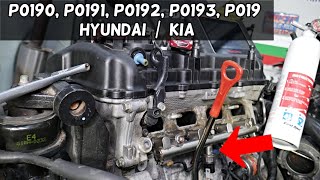

The information in this article is provided for general reference and educational purposes only. Vehicle specifications, procedures, and part compatibility can vary by production date, trim level, and region. Always consult your vehicle's factory service manual and verify part numbers before purchasing or performing repairs. Safety-critical components such as airbags, seat belts, and braking systems should be installed by a qualified professional.
- 🎬 Helpful Videos
- What Does P0194 Mean?
- Can I Drive With P0194?
- Common Causes
- Symptoms
- Diagnostic Flowchart
- Common Fixes & Costs
- DIY vs Professional
- Used vs. New Parts: Buying Guide
- What Happens If You Wait — Timeline
- Cost of Not Fixing It
- Diagnosis Steps
- When This Code Triggers (Freeze-Frame Conditions)
- Related Codes
- Climate & Environmental Factors
- How to Talk to a Mechanic About This Code
- Where to Take It: Dealer vs Independent vs Chain
- When to Walk Away From the Repair
- What Scan Tool You Need for This Code
- How to Clear the Code After You Fix It
- Will This Fail Emissions / State Inspection?
- Most Commonly Affected Vehicles
- Manufacturer-Specific Notes
- Real Owner Stories
- 2005 Ford F-150 5.4L stalling at low speeds
- 2012 Hyundai Sonata GDI rough idle and P0194
- 2011 Chevy Silverado 5.3L showing P0194 and P0087
- How to Prevent This Code From Triggering
- Frequently Asked Questions
- Can I still drive my car with a P0194 code?
- What is the most common fix for P0194?
- What is the difference between a P0194 and a P0087 code?
- I replaced the sensor, but the P0194 code came back. What now?
- How much does it cost to fix a P0194 code?
- Can a bad ground cause a P0194 code?
- Key Takeaways
- 🎟️ Get 5% Off