

P0191 on 2007-2009 Suzuki XL7: Fuel Rail Pressure Sensor Issues, Causes, and Fixes
This code usually points to a faulty Fuel Rail Pressure (FRP) sensor on the GM-sourced 3.6L V6 engine. It can cause long crank times, hard starting, stalling, and reduced power. Replacing the sensor is the most common fix, costing around $40-$100 for the part. The sensor is located under the intake manifold, making replacement a moderately involved DIY job.
- P0191 on the 2007-2009 Suzuki XL7 indicates a problem with the fuel rail pressure sensor's reading.
- The most common cause is a faulty fuel rail pressure sensor itself, leading to symptoms like hard starting, stalling, and low power.
- Always diagnose before replacing parts. Use a scan tool and a mechanical fuel pressure gauge to determine if the sensor is bad or if the fuel pump is weak.
- This vehicle uses a GM engine, so parts and repair procedures are shared with many Chevrolet, GMC, and Buick models from the same era.
- The repair is generally DIY-friendly if it's the sensor, but replacing the fuel pump is more involved as it's located inside the fuel tank.
What's Unique About the 2007-2009 Suzuki XL7
The 2007-2009 Suzuki XL7 uses a 3.6L V6 engine (N36A) sourced from General Motors, specifically the LY7 variant. This is critical because the causes, symptoms, and repairs for this code are identical to those for a huge range of GM vehicles from the same era with this engine, like the Chevrolet Traverse, GMC Acadia, Buick Enclave, and Cadillac CTS. Problems with the fuel rail pressure sensor are a well-documented issue on this GM engine family, often leading to long crank times, hesitation, and stalling. The repair often requires removing the upper intake manifold to access the sensor.
Symptoms You May Notice
- Check Engine Light is on
- Engine is hard to start or has a long crank time
- Engine stalls, especially at idle or when stopping
- Reduced engine power and poor acceleration (may enter 'limp mode')
- Engine hesitation or stumbling
- Decreased fuel economy
- Rough or shaky idle
- Replacing the fuel pump when the fuel rail pressure sensor is actually the faulty component. It's crucial to test the sensor's reading against a mechanical gauge 🎬 Watch: How to diagnose a faulty fuel rail pressure sensor before condemning the more expensive pump. Because the sensor is under the intake manifold, some may be tempted to replace the easier-to-access pump first, which is often incorrect.
Most Likely Causes
- Faulty Fuel Rail Pressure (FRP) Sensor 🔴 High Probability The FRP sensor on the GM 3.6L LY7 engine is a very common failure point. It is located under the upper intake manifold, where heat can contribute to its failure over time. It can fail internally, sending incorrect voltage signals to the PCM, or develop leaks.
How to confirm: Use a scan tool to monitor live data for 'Fuel Rail Pressure'. Compare this reading to a mechanical fuel pressure gauge connected to the rail's service port. If the scan tool reading is erratic, stuck, or significantly different from the mechanical gauge, the sensor is bad. The mechanical pressure should be steady (around 40-60 PSI), while the scan tool might show fluctuating or out-of-range values. The sensor's signal voltage should typically be between 0.5V and 4.5V.
Typical fix: Replace the fuel rail pressure sensor. This requires removing the upper intake manifold to gain access. It is also highly recommended to replace the upper intake manifold 🎬 See this walkthrough for replacing the sensor on a 3.6L gaskets at the same time.
Est. part cost: $40-$100 - Weak or Failing Fuel Pump 🟡 Medium Probability The in-tank electric fuel pump can wear out over time, failing to provide adequate pressure to the fuel rail. Symptoms can be intermittent at first.
How to confirm: Connect a mechanical fuel pressure gauge. If the pressure is below the manufacturer's specification (typically below 40 PSI at idle for this engine), the pump is likely weak. In this case, the FRP sensor is correctly reporting a low-pressure condition. The engine may require you to cycle the key a few times to build pressure before it will start.
Typical fix: Replace the in-tank fuel pump module. This requires dropping the fuel tank. 🎬 Watch: How to replace the in-tank fuel pump module
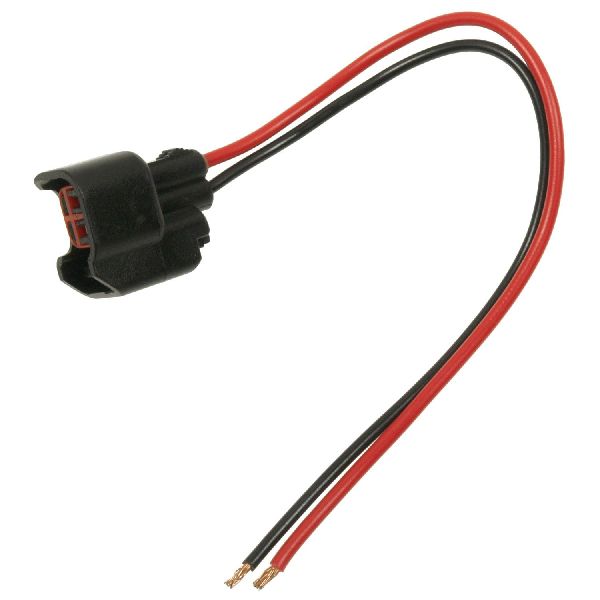
Est. part cost: $150-$300 - Damaged Wiring or Connector ⚪ Low Probability Engine heat and vibration can cause the wiring harness or the connector for the FRP sensor to become brittle, corroded, or develop a loose connection. The harness runs near hot engine components, making it susceptible to damage. Poor ground connections for the engine computer can also cause erratic sensor readings.
How to confirm: Visually inspect the FRP sensor's electrical connector and wiring for any signs of damage, corrosion (green crust), or loose pins. Use a multimeter to check for a 5V reference signal, a good ground, and a signal wire that isn't shorted or open. Check main engine ground straps to ensure they are clean and tight.
Typical fix: Repair the damaged section of wiring or replace the connector pigtail. Clean or tighten engine ground connections.
Est. part cost: $15-$40 - Clogged Fuel Filter ⚪ Low Probability The fuel filter is integrated into the fuel pump module inside the fuel tank. While not a separate service item, debris in the fuel tank can clog the filter sock or internal filter, restricting fuel flow and causing a drop in pressure.
How to confirm: This is difficult to confirm without removing the fuel pump assembly. If fuel pressure is low and the pump is suspected, a clogged filter is a contributing possibility. A technical service bulletin for the XL7 details the process of checking and replacing the fuel tank module seals.
Typical fix: The fuel filter is part of the fuel pump module. The entire module is typically replaced.
Est. part cost: $150-$300 (as part of pump module)
Rare But Worth Checking
- Faulty Powertrain Control Module (PCM): This is very rare. The PCM is the last item to suspect after all other possibilities (sensor, pump, wiring) have been exhaustively tested and ruled out.
Diagnosis Steps
- Connect an OBD-II scanner and confirm P0191 is present. Check for any other related fuel system or misfire codes.
- Using the scanner's live data function, monitor the 'Fuel Rail Pressure' (FRP) reading with the key on, engine off. Note the value.
- Start the engine and observe the FRP reading at idle and while revving the engine. Note any erratic fluctuations or readings that don't respond to engine speed changes.
- Connect a mechanical fuel pressure gauge to the service port on the fuel rail.
- Compare the mechanical gauge reading to the scanner's live data reading. They should be within a few PSI of each other.
- If the mechanical pressure is steady and within spec (e.g., 40-60 PSI), but the scanner reading is erratic or incorrect, the Fuel Rail Pressure sensor is faulty and should be replaced.
- If both the mechanical pressure and the scanner reading are low, the problem is likely a weak fuel pump, a clogged fuel filter, or a leak in the fuel line.
- If the sensor and fuel pressure test good, inspect the FRP sensor's wiring harness and connector for damage, corrosion, or loose connections. Test for 5V reference, ground, and signal continuity back to the PCM. Also check engine block and chassis grounds for integrity.
Parts You'll Likely Need
- Fuel Rail Pressure Sensor
(OEM #ACDelco 12633423 (GM), Bosch 0261230238)— This is the most frequent cause of P0191 on the GM 3.6L engine. The sensor fails and sends incorrect data to the computer.
Trusted brands: ACDelco, Bosch, Delphi
OEM price range: $70-$120
Aftermarket price range: $40-$80 - Electric Fuel Pump Assembly
(OEM #15100-78J30)— If fuel pressure is confirmed to be low, a weak in-tank fuel pump is the likely cause. The filter is integrated into this assembly.
Trusted brands: ACDelco, Delphi, Spectra Premium
OEM price range: $250-$400
Aftermarket price range: $150-$300 - Upper Intake Manifold Gasket Set
(OEM #ACDelco 12607432)— These gaskets must be replaced when the intake manifold is removed to access the fuel rail pressure sensor. Reusing old gaskets will likely cause a vacuum leak.
Trusted brands: ACDelco, Fel-Pro
OEM price range: $20-$40
Aftermarket price range: $15-$30
Related Codes That Often Appear With This One
- P0087 — Stands for 'Fuel Rail/System Pressure - Too Low'. This code may appear with P0191 if the fuel pump is failing or the filter is severely clogged, causing an actual low-pressure condition that the sensor correctly detects but which is outside the normal performance range.
- P0192 — Stands for 'Fuel Rail Pressure Sensor Circuit Low Input'. This points more specifically to an electrical issue, like a short to ground in the sensor's signal wire.
- P0193 — Stands for 'Fuel Rail Pressure Sensor Circuit High Input'. This indicates an electrical fault like an open circuit or a short to voltage.
- P0300 — Stands for 'Random/Multiple Cylinder Misfire Detected'. An erratic fuel pressure signal can cause an incorrect air/fuel mixture, leading to misfires across multiple cylinders.
Technical Service Bulletins (TSBs) & Recalls
- While no TSB is specific to P0191 on the XL7, GM has issued related bulletins for the 3.6L engine family. For example, TSB 11-06-04-007C deals with DTC P2135 (Throttle Position Sensor Correlation) on many GM vehicles, showing the complexity of the engine management system. Other TSBs on related engines sometimes mention P0191 as a secondary code to other issues like misfires.
Platform-Specific Known Issues
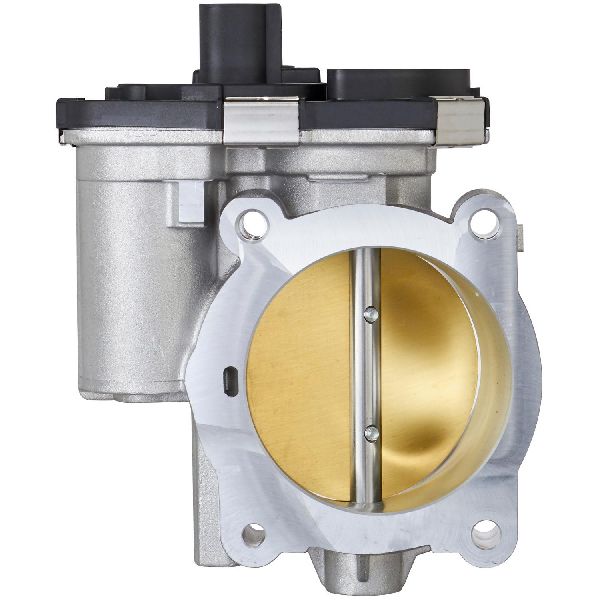
- Sensor Location Requires Intake Removal: A common frustration for owners is that the most likely failed part, the FRP sensor, is located under the upper intake manifold. This turns a simple sensor swap into a more involved job that requires removing the throttle body and intake plenum. A video for a related GM vehicle shows the process, which involves removing several bolts and disconnecting various hoses and electrical connectors.
Mechanic-Grade Diagnostic Values
- FRP Sensor 5V Reference Voltage — expected: 4.8 - 5.2 Volts. Failure: Voltage below 4.8V or above 5.2V indicates a circuit issue between the ECM and sensor, not necessarily a bad sensor.
- FRP Sensor Signal Voltage (KOEO) — expected: ~0.5V to 1.0V. Failure: Voltage significantly outside this range, or at 0V or 5V, points to a sensor or wiring short/open.
- FRP Sensor Signal Voltage (General Operating Range) — expected: 0.5V - 4.5V. Failure: A signal that is stuck or falls outside this range during engine operation indicates a fault.
- FRP Sensor Low Reference Circuit Resistance to Ground — expected: Less than 5 ohms. Failure: Resistance higher than 5 ohms indicates a poor ground connection for the sensor circuit.
- Low-Pressure Fuel System (KOEO) — expected: 50-60 PSI. Failure: Pressure dropping off or well below 50 PSI indicates a weak in-tank pump.
Scan Tool Commands That Help
- GM Tech2 / GDS2 or equivalent professional scanner: Fuel Pump On/Off Command — This bidirectional command allows a technician to activate the in-tank fuel pump with the engine off. It is used to verify fuel pump operation and to build pressure in the rail for leak testing or for checking the maximum pressure the pump can generate against a mechanical gauge, helping to isolate a weak pump from a sensor issue.
Wiring & Ground Locations
- G107 — On the rear of the left cylinder head.. This is a primary engine block ground. A loose or corroded G107 can cause a host of sensor-related issues, including erratic readings from the fuel rail pressure sensor, as it can affect the sensor's reference ground.
- G109 — On the right rear of the cylinder head.. This is another critical engine ground. Like G107, poor contact here can lead to floating ground issues for the ECM and its associated sensors, potentially causing a P0191 code.
- FRP Sensor Connector — Under the upper intake manifold, connected to the fuel rail.. This is the direct connection to the sensor. The three terminals are typically: Pin 1 (Low Reference/Ground), Pin 2 (Signal), and Pin 3 (5V Reference). Testing for voltage and continuity at these specific pins is essential for diagnosing a circuit fault.
Real Owner Repair Stories
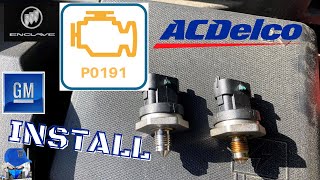
- YouTube user Magnus Prime E1, Buick Enclave Forum (2012 Buick Enclave 3.6L (Lambda platform sibling)) — Check Engine Light with P0191, engine goes into limp mode.
❌ Tried (didn't work) Initially, the owner noted that shutting the car off for a few minutes and restarting would temporarily clear the limp mode condition, but the problem would return.
✅ What actually fixed it The problem was a faulty Fuel Rail Pressure sensor. The repair involved removing the upper intake manifold to access and replace the sensor located on the fuel rail.
Model Year Variations Within This Range
- 2009 only: The 2009 model year XL7 received a six-speed automatic transmission, replacing the five-speed automatic used in the 2007-2008 models. This does not directly affect the cause of a P0191 code but is a key mechanical difference within the generation.
Diagnostic Flowchart
Used vs. New Parts: Buying Guide for This Vehicle
When a used part is the smart pick: For this specific repair, using used parts is generally not recommended for the primary failure components. The only exception might be a complete wiring harness from a low-mileage donor if a specific connector is unavailable and a section of harness needs to be spliced in.
Donor-vehicle mileage cap: roughly under 75000 miles for the part to have meaningful remaining life.
What to inspect on the donor part:
- For a wiring harness, check for any signs of brittleness, cracking, or previous repairs.
- Ensure connectors are free of corrosion (no green or white powder) and that locking tabs are intact.
OEM-only on this vehicle (don't cheap out):
- Fuel Rail Pressure Sensor: While quality aftermarket brands like Bosch exist, forums consistently show that using cheap, no-name online sensors often leads to premature failure or incorrect readings out of the box. Sticking with OEM (ACDelco) or the original manufacturer (Bosch) is highly advised.
- Fuel Pump Assembly: This is a high-labor job. Using a low-quality aftermarket pump risks having to do the job again. Reputable brands like ACDelco or Delphi are strongly recommended over generic store brands.
Aftermarket brands forum-validated for this vehicle:
- Fel-Pro (for intake manifold gaskets)
- Bosch (for the Fuel Rail Pressure Sensor, as they are an OEM supplier)
- Delphi, Spectra Premium (for fuel pump assemblies)
Brands owners have reported issues with on this vehicle:
- Unbranded or 'white-box' electronic sensors from online marketplaces.
- Any brand that offers a lifetime warranty on a fuel pump for a suspiciously low price, as quality is often sacrificed.
Real Owner Stories
Aggregated from forums and TSBs cited above. Mileages and costs reflect what owners reported in those sources.
2008-2017 Buick Enclave 3.6L V6
Symptoms: The vehicle would enter 'limp mode' with reduced power, but this could be temporarily fixed by restarting the car.
What fixed it: Replacement of the fuel rail pressure sensor located under the intake manifold.
Source hint: YouTube: How To: 2008-2017 Buick Enclave P0191 Fix, Fuel Rail Injection Pressure Sensor Install
2007 Suzuki XL-7 Luxury 3.6L
Symptoms: The Check Engine Light was on with multiple codes stored, including P0191, P0172 (System Too Rich), P0175 (System Too Rich), and various misfire codes.
What fixed it: The forum post describes the diagnosis, highlighting how a faulty fuel pressure reading can cause multiple other codes, but does not state the final repair.
Source hint: iATN Repair Forum Discussion
Related OBD-II Codes
Frequently Asked Questions
Where is the fuel rail pressure sensor on my 2008 XL7, and is it a difficult part to replace?
Is the P0191 code on my Suzuki XL7 more likely to be the sensor or the fuel pump?
My mechanic says the whole fuel pump module needs to be replaced because the filter is clogged. Is this correct for the 2007-2009 XL7?
What should the correct fuel pressure be on my XL7's 3.6L engine?
I have a 2009 GMC Acadia with P0191. Is the diagnosis and repair the same as for the Suzuki XL7?
Are there any official Technical Service Bulletins (TSBs) from Suzuki or GM specifically for code P0191 on the XL7?
Helpful Videos
Used OEM Parts in Stock


New Aftermarket Parts Available


The information in this article is provided for general reference and educational purposes only. Vehicle specifications, procedures, and part compatibility can vary by production date, trim level, and region. Always consult your vehicle's factory service manual and verify part numbers before purchasing or performing repairs. Safety-critical components such as airbags, seat belts, and braking systems should be installed by a qualified professional.
- Suzuki XL7:
- 🎬 Helpful Videos
- 🛍️ Shop This Part
- What's Unique About the 2007-2009 Suzuki XL7
- Symptoms You May Notice
- Most Likely Causes
- Rare But Worth Checking
- Diagnosis Steps
- Parts You'll Likely Need
- Related Codes That Often Appear With This One
- Technical Service Bulletins (TSBs) & Recalls
- Platform-Specific Known Issues
- Mechanic-Grade Diagnostic Values
- Scan Tool Commands That Help
- Wiring & Ground Locations
- Real Owner Repair Stories
- Model Year Variations Within This Range
- Diagnostic Flowchart
- Used vs. New Parts: Buying Guide for This Vehicle
- Real Owner Stories
- 2008-2017 Buick Enclave 3.6L V6
- 2007 Suzuki XL-7 Luxury 3.6L
- Related OBD-II Codes
- Frequently Asked Questions
- 🎟️ Get 5% Off