

P0191 on 2007-2011 Mercedes-Benz M156 6.2L V8: Fuel Pressure Causes and Fixes
For the M156 engine, code P0191 often points to a failing in-tank fuel pump/filter assembly or a faulty PCV valve, not the fuel rail sensor itself. Expect to spend $500-$1500+ on fuel pump replacement at a shop. Diagnosis should focus on fuel pressure drop under load and signs of PCV failure.
- Do not automatically replace the fuel rail pressure sensor for a P0191 code on an M156 engine; it is rarely the cause.
- The most likely culprits are the in-tank fuel pump/filter assemblies, which fail with age and cause pressure instability.
- A faulty PCV valve is another common cause, creating a vacuum leak that can trigger this fuel code, often along with a P2187 lean code.
- Diagnosis should focus on monitoring actual vs. specified fuel pressure under load and inspecting the PCV system before replacing parts.
What's Unique About the 2007-2011 Mercedes-Benz C-Class / E-Class / ML-Class

On the M156 engine, the P0191 code is frequently a symptom of another failing component rather than the fuel rail pressure sensor itself. Owners and technicians report that the in-tank fuel pumps and integrated filters are a common failure point, leading to pressure deviations. The left-side pump unit contains an integrated pressure regulator, and failure of this regulator is a common cause for the 'upper limit' fault. Additionally, a faulty PCV (Positive Crankcase Ventilation) valve can create vacuum issues that indirectly trigger this fuel pressure code, a quirk specific to this and other Mercedes engines. It's crucial to diagnose beyond the sensor, as replacing it rarely solves the root problem on this platform.
Generation note: This guide covers the M156 engine found in the C-Class (W204), E-Class (W211/W212), and ML-Class (W164) from 2007-2011. While the engine is the same, the physical location and part numbers for the in-tank fuel pumps and filters differ between these chassis. The diagnostic principles remain the same.
Symptoms You May Notice

- Check Engine Light is on
- Reduced engine power or entering 'limp mode', especially after 10-15 minutes of driving
- Engine hesitation or stumbling during acceleration
- Rough or unstable idle
- Difficulty starting, long crank times, or the engine dying shortly after starting
- White smoke from exhaust on cold start (when accompanied by PCV valve failure)
- Whistling sound from the engine bay, especially near the firewall, that may persist for a few seconds after shutdown (PCV failure)
- Replacing only the fuel rail pressure sensor without diagnosing the fuel pumps or PCV system. Many owners and shops replace the sensor first because the code points to it, but this rarely fixes the P0191 issue on an M156.
Most Likely Causes

- Failing In-Tank Fuel Pump / Clogged Fuel Filter 🔴 High Probability The fuel filter is integrated with the pump/sender units in the tank. As the filter clogs with age and mileage (often around 5-6 years), it restricts flow, overworking the pumps and causing pressure to become unstable or drop under load. The system uses two pumps, and failure of one often indicates the other is also near the end of its life. A failure of the integrated pressure regulator in the left-side pump can also cause the 'upper limit' fault.
How to confirm: Use a scan tool to monitor fuel rail pressure. Compare the requested pressure with the actual pressure, especially during a wide-open throttle pull in a safe location. If actual pressure cannot keep up with the specified pressure or drops significantly, suspect the pumps/filters. In some cases, one of the saddle tanks may be found to be empty, indicating a transfer issue between the pumps.
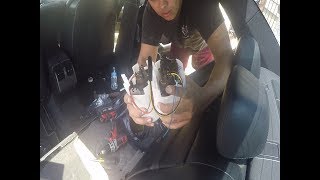
Typical fix: Replace both the left and right in-tank fuel pump/filter/sender assemblies. It is critical to replace both sides as they work together and a failure of one side indicates the other is likely worn or will fail soon.
Est. part cost: $600-$1200 for a pair of OEM/quality aftermarket units - Faulty PCV Valve / Crankcase Breather Hose 🟡 Medium Probability The PCV valve on the M156 is a known wear item with a diaphragm that deteriorates, often failing around 60,000-70,000 miles. A failed PCV valve creates a significant vacuum leak, which the ECU tries to compensate for, leading to fuel trim issues that can trigger a P0191 code, often alongside lean codes.
How to confirm: Look for oil residue around the PCV valve area on the valve cover. Listen for a distinct whistling sound from the rear of the engine. A classic test is to remove the oil dipstick while the engine is running; if the whistling sound disappears, the PCV valve is bad. This issue is often seen with lean codes like P2187.
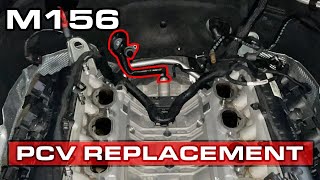
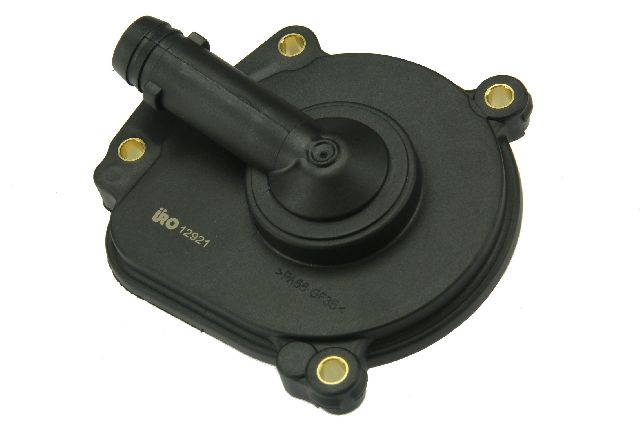
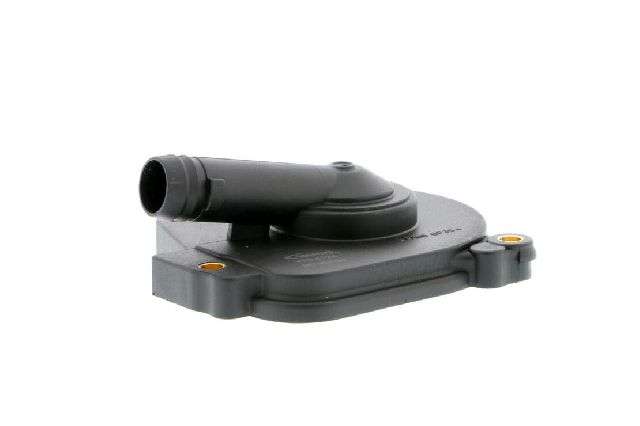
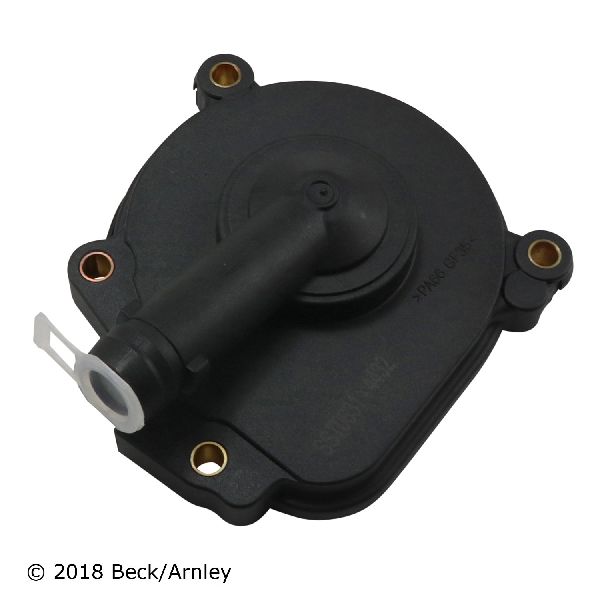
Typical fix: Replace the PCV valve (breather hose assembly). The part number is typically A1560100370.
Est. part cost: $90-$150 - Faulty Fuel Rail Pressure Sensor ⚪ Low Probability While the sensor can fail, it is more often blamed incorrectly. It is more likely to be accurately reporting a real pressure problem caused by another component. Many owners replace it without success.
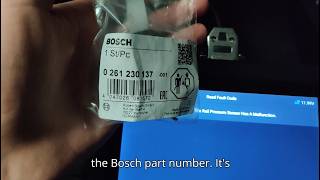
How to confirm: With the engine off (key on), check the sensor's voltage reading on a scan tool. It should be a stable baseline (e.g., ~0.5V). Compare the scan tool's pressure reading at idle to a mechanical fuel pressure gauge connected to the rail. If the readings differ significantly, the sensor is likely faulty. The OEM part is Bosch 0261230137, corresponding to Mercedes part A1561530028.
Typical fix: Replace the fuel rail pressure sensor.
Est. part cost: $100-$200
Rare But Worth Checking
- Vacuum Leak: A significant vacuum leak from sources other than the PCV, such as a cracked intake manifold gasket, can also lead to lean conditions and trigger P0191 as the ECU struggles to maintain fuel mixture.
- Wiring Harness Issue: Damage or corrosion on the wiring or connector for the fuel rail pressure sensor can cause erratic signals. This is less common than mechanical fuel system failures but should be checked.
- Fuel Pump Control Module: The W164 ML63 AMG in particular has a fuel pump control module/relay that can fail, leading to a loss of power to the pumps and causing pressure issues.
Diagnosis Steps
- Scan for all codes in the ECM using a Mercedes-specific tool like Xentry. Note if other codes like P2187 are present, which strongly points towards a vacuum/PCV issue.
- Inspect the PCV valve. Listen for a whistling sound at the back of the engine. With the engine running, pull the oil dipstick out slightly. If the sound stops, the PCV valve has failed and must be replaced.
- Connect a scan tool and monitor 'Fuel Rail Pressure (actual)' and 'Fuel Rail Pressure (specified)'.
- Start the engine and observe the pressure at idle. It should be stable around its specified value, typically 4.0-5.0 bar (58-73 PSI).
- Test drive the vehicle while monitoring the pressures, especially under hard acceleration. If the actual pressure cannot keep up with the specified pressure or drops significantly, it points to a fuel delivery issue (pumps/filter).
- If the pressure is erratic or reads an impossible value (e.g., maxed out or zero with the engine running), inspect the fuel rail pressure sensor connector and wiring for damage.
- If all other components test okay, consider testing the fuel rail pressure sensor by comparing its reading to a mechanical gauge.
- Based on widespread experience with the M156, if fuel pressure drops under load, the primary suspects are the in-tank fuel pump and filter assemblies. If the code is for 'upper limit reached' (3699), it also points to a failure in the fuel pump's internal pressure regulator.
Parts You'll Likely Need
- In-Tank Fuel Pump & Sender Assembly (Left and Right)
(OEM #W204 C63: A2044701694 (Left), A2184700494 (Right); W211/W212 E63: A2124703294 (Left); W164 ML63: A1644701194)— This is the most common cause of P0191 on the M156. The integrated filter clogs, causing the pumps to fail and pressure to become unstable. They must be replaced as a pair.
Trusted brands: Genuine Mercedes-Benz, Bosch, VDO, Delphi
OEM price range: $800-$1500 (pair)
Aftermarket price range: $500-$1000 (pair) - PCV Valve / Crankcase Vent Valve Assembly
(OEM #A1560100370)— A common failure item on the M156 that creates a vacuum leak, leading to lean conditions and sometimes triggering fuel pressure codes.
Trusted brands: Genuine Mercedes-Benz
OEM price range: $90-$150
Aftermarket price range: $70-$120 - Fuel Rail Pressure Sensor
(OEM #A1561530028 (Bosch 0261230137))— Infrequently the cause, but may be needed if diagnosis confirms it is faulty. It is often replaced unnecessarily.
Trusted brands: Bosch
OEM price range: $150-$250
Aftermarket price range: $100-$180
Related Codes That Often Appear With This One
- P2187 — System Too Lean at Idle, Bank 1. This code is frequently seen with P0191 when the root cause is a vacuum leak, such as a failed PCV valve.
- P0451 — Evaporative Emission System Pressure Sensor/Switch Range/Performance. This can appear alongside P0191, often pointing towards a broader issue with vacuum lines or system pressure regulation, sometimes linked to the PCV system.
Technical Service Bulletins (TSBs) & Recalls
- NHTSA ID: 10058268 / MB TSB LI07.03-P-052223: Mentions P0191 in the context of various potential vacuum leaks, including the PCV system and intake manifold, causing rough running.
- DTB S-B-01.20/24 (FEB09): Describes a whistling sound from the engine caused by a malfunctioning diaphragm in the PCV valve.
- LI09.20-P-061233: Details troubleshooting for fuel pressure codes 3698/3699 when accompanied by lean codes (P2187/P2189), pointing towards unmetered air leaks from various sources like the oil dipstick seal, intake manifold seals, or vacuum fittings.
Platform-Specific Known Issues

- A Mercedes-Benz document (NHTSA LI-7.0-P-053343) notes that on early ML63 AMG models (W164.177 up to VIN xA 185373), a smaller diameter fuel feed line was installed, which could contribute to pressure issues and should be replaced with the larger diameter line if P0191 (lower limit) is present.
Mechanic-Grade Diagnostic Values
- Fuel Rail Pressure at Idle — expected: ~4.0-5.0 bar (58-73 PSI). Failure: Pressure that is significantly higher or lower, or drops under load when specified pressure increases.
- Fuel Rail Pressure Sensor Voltage (Key On, Engine Off) — expected: ~0.5V. Failure: Voltage significantly different from 0.5V, or a reading that doesn't change with pressure.
- Fuel Rail Pressure Sensor Voltage (Operating Range) — expected: 0.5V to 4.5V. Failure: Voltage outside this range indicates a sensor or circuit fault.
- Fuel Rail Pressure Sensor Reference Voltage (from ECU) — expected: 4.9V - 5.0V. Failure: No voltage or incorrect voltage indicates an ECU or wiring issue.
Hidden / Shadow Codes Worth Checking
- 3699: Fuel pressure control: The upper limit value is reached. This often points to a faulty pressure regulator inside the left-side fuel pump assembly. (see via Mercedes-Benz specific diagnostic tool like Xentry/STAR.)
- 3698: Fuel pressure regulation: The lower limit has been reached. This typically indicates a failing fuel pump or a clogged fuel filter. (see via Mercedes-Benz specific diagnostic tool like Xentry/STAR.)
Scan Tool Commands That Help

- Xentry/STAR: Fuel Pump Actuation Test — This bidirectional command allows a technician to manually activate the fuel pumps to verify they are receiving power and are functional before condemning them or the control module.
- Xentry/STAR or capable scanner: Reset of mixture adaptation values — After replacing components that affect the air-fuel ratio, like the PCV valve, intake gaskets, or fuel injectors, resetting adaptations forces the ECU to relearn fuel trims from a baseline, which can resolve rough running issues.
Wiring & Ground Locations

- Fuel Rail Pressure Sensor Connector — On the driver's side fuel rail, towards the front of the engine.. The connector or its wiring can become damaged or corroded, leading to erratic signals that trigger P0191. The sensor is a 4-pin connector that combines pressure and temperature signals.
- Fuel Pump Control Module — Under the rear seat.. This module powers the fuel pumps. A failure here will cut power to the pumps, causing a P0191 (lower limit) code. This is a known issue on the W164 ML63.
- Rear SAM / Trunk Ground Point — In the trunk, near the battery and Rear Signal Acquisition Module (SAM). There is a dedicated ground post on the body sidewall.. The fuel pump control module and pumps are grounded through the rear of the vehicle. A poor ground connection at this point can cause intermittent power to the fuel pumps, leading to pressure fluctuations and P0191.
- Engine Bay Ground Point (W4/1) — On the W204, there is a primary ground point on the driver's side inner fender, near the strut tower, often a bronze-colored post.. The Engine Control Module (ME) and its associated sensors, including the fuel rail pressure sensor, rely on clean engine bay grounds. A corroded or loose ground here can cause erratic sensor readings.
Real Owner Repair Stories
- MBWorld.org Forums user (2007 CLK63 AMG (M156)) — P0191 'Fuel Pressure Control Upper Limit'.
❌ Tried (didn't work) Replacing the fuel rail pressure sensor.
✅ What actually fixed it The driver's side of the saddle fuel tank was empty while the passenger side was full, indicating a fuel transfer failure. Replacing both in-tank fuel pumps resolved the issue. - YouTube - LegitStreetCars (2008 Mercedes CLK63 AMG Convertible (M156)) — Check engine light with P0191 for fuel high pressure being maxed out. Code would return a few minutes after clearing, even at idle.
❌ Tried (didn't work) Initially suspected the fuel rail pressure sensor, which had visible cracks, but replacing it did not fix the problem.
✅ What actually fixed it The driver's side fuel tank was found to be completely empty. The failure was traced to the internal pressure regulator in the pump assembly. Replacing both in-tank fuel pumps fixed the problem. The updated pumps also required a new wiring harness adapter. - MBWorld.org Forums user 'e55igor1' (E63 AMG (M156)) — P0191 (Mercedes code 3699 'upper limit value is reached'), P2187 (lean), and P0451 (EVAP). White smoke on cold start and oil dipstick popping out.
❌ Tried (didn't work) Replacing the fuel rail pressure sensor., Initially replacing the PCV valve did not immediately clear the code until the car was driven.
✅ What actually fixed it The final confirmed fix was replacing the PCV valve (breather hose assembly, part A1560100370). The combination of P0191 with lean and EVAP codes was the key indicator. - MBWorld.org Forums user 'Merc63' (C63 AMG (M156), modified with a smaller supercharger pulley.) — P0191, huge power loss on and off while cruising, but ran fine under full load.
❌ Tried (didn't work) Replacing both fuel pumps., Replacing the fuel pump control modules.
✅ What actually fixed it After swapping multiple parts, the issue was resolved by replacing the fuel rail pressure sensor on the end of the fuel rail. This is an edge case where the sensor itself was the culprit, contrary to the more common pump failures.
When the Usual Fixes Don't Work
- While the overwhelming majority of P0191 cases on the M156 are caused by the fuel pumps or PCV system, there are documented instances where the code was resolved only by replacing the fuel rail pressure sensor itself. In one case involving a modified C63, the owner replaced both pumps and control modules to no avail, but swapping the fuel rail pressure sensor with one from another car finally fixed the issue. This highlights that while the sensor is an unlikely cause, it should not be completely ruled out after the more common causes have been thoroughly investigated.
OEM Part Supersession History
A1560100270→A1560100370— Revision of the PCV valve assembly to improve durability of the internal diaphragm.Varies by chassis→Varies by chassis— Updated fuel pump assemblies may have different electrical connectors.
Heads up: When replacing fuel pumps, especially on older models, be aware that an updated pump may require a new adapter harness to connect to the vehicle's existing wiring. This is often sold separately.
Model Year Variations Within This Range
- 2007-2008: Early ML63 AMG models (W164) up to a specific VIN had a smaller diameter fuel feed line installed from the factory. A technical service bulletin suggests this could contribute to P0191 (lower limit) codes and recommends replacing it with the larger diameter line used on later models.
Diagnostic Flowchart
Other Known Issues on This Vehicle
Issues unrelated to this code that are worth knowing about as an owner of this generation:
- Cylinder Head Bolt Failure 🔴 High — Common on pre-2012 engines (before engine serial number 60-060658). Bolts can corrode and break, allowing coolant into the cylinders.
- Premature Camshaft and Lifter Wear 🔴 High — Common around 100,000 miles. The camshaft lobes wear down, often requiring replacement of cams and hydraulic lifters. A ticking noise on cold start is a key symptom. (Ref: A class action lawsuit was filed regarding this issue in 2011.)
- Intake Manifold Failure 🟠 Medium — The magnesium intake manifold can corrode or the center actuator shaft can fail. This is an expensive part that is reportedly no longer sold new by Mercedes.
- Failing Camshaft Adjusters 🟠 Medium — The camshaft adjuster plates can wear out, causing a rattling noise from the front of the engine for a few seconds on a cold start.
- Idler Pulley Failure 🟡 Low — The plastic idler pulleys for the serpentine belt are a common wear item and can fail, causing belt-related issues.
Used vs. New Parts: Buying Guide for This Vehicle
When a used part is the smart pick: Used parts are generally not recommended for fixing a P0191 code on this platform due to the nature of the failures. The primary culprits are wear-and-tear items.
Donor-vehicle mileage cap: roughly under 40000 miles for the part to have meaningful remaining life.
What to inspect on the donor part:
- For a fuel rail pressure sensor, ensure the connector pins are clean and the plastic housing is free of cracks.
- Avoid any electronic parts from flood-damaged or collision-damaged vehicles.
OEM-only on this vehicle (don't cheap out):
- In-Tank Fuel Pump Assemblies: Given that these are a high-failure-rate item with an integrated filter, installing a used unit is a significant risk. The labor to access the pumps is substantial, making it unwise to use a part with unknown remaining life.
- PCV Valve Assembly: This part is relatively inexpensive and fails due to a rubber diaphragm deteriorating over time. A used part offers no reliability. Always buy new Genuine Mercedes or an OE supplier part.
Aftermarket brands forum-validated for this vehicle:
- Bosch: Bosch is the Original Equipment Manufacturer (OEM) for the fuel rail pressure sensor (part 0261230137).
- VDO / Delphi: These are reputable OE suppliers for fuel system components and are often considered reliable alternatives to Genuine Mercedes-Benz fuel pumps.
Brands owners have reported issues with on this vehicle:
- Unbranded 'no-name' fuel pumps and sensors from online marketplaces. The M156's fuel system is sensitive, and poorly calibrated or low-quality electronic parts can cause persistent issues or fail prematurely.
Real Owner Stories
Aggregated from forums and TSBs cited above. Mileages and costs reflect what owners reported in those sources.
2009 Mercedes-Benz C63 AMG M156 — ~65000 miles
Symptoms: Check Engine Light with P0191 code. Other owners noted that replacing the sensor did nothing to resolve the issue.
What fixed it: Replacing the fuel pumps and integrated filters.
Source hint: MBWorld.org: 'Check Engine: P0191 code' - https://mbworld.org/forums/c63-amg-w204/601729-check-engine-p0191-code.html
2007 Mercedes-Benz E63 AMG M156 — ~70000 miles
Symptoms: Engine light is on, P0191, P2187, and P0451 codes present, and white smoke appearing from the exhaust.
What fixed it: Replacing the PCV valve (part A1560100370).
Source hint: MBWorld.org: 'M156 63 P0191 Engine Light is on and White smoke from exhaust' - https://mbworld.org/forums/w211-amg/509191-m156-63-p0191-engine-light-white-smoke-exhaust.html
2008 Mercedes-Benz E63 AMG M156
Symptoms: Whistling sound from the engine bay and rough running.
What fixed it: PCV valve / breather hose replacement.
Source hint: MBWorld.org: 'DIY - PCV Valve / Breather Hose Replacement (M156 E63)' - https://mbworld.org/forums/w211-amg/473147-diy-pcv-valve-breather-hose-replacement-m156-e63.html
Related OBD-II Codes
Frequently Asked Questions
My ML63 AMG has a P0191 (lower limit) code; is there a specific mechanical part I should check besides the sensor?
I'm hearing a whistling sound from the back of my M156 engine and getting a P0191 code. How can I confirm if it's the PCV valve?
What is the specific Mercedes part number for the PCV valve on the M156 engine?
My scan tool shows a '3699' code alongside P0191. What does this indicate on the C63?
Can I just replace the fuel filter to fix the P0191 code on my E63?
Is the P0191 code often caused by a bad fuel rail pressure sensor on the M156?
Helpful Videos
Used OEM Parts in Stock


New Aftermarket Parts Available



The information in this article is provided for general reference and educational purposes only. Vehicle specifications, procedures, and part compatibility can vary by production date, trim level, and region. Always consult your vehicle's factory service manual and verify part numbers before purchasing or performing repairs. Safety-critical components such as airbags, seat belts, and braking systems should be installed by a qualified professional.
- Mercedes-Benz C-Class / E-Class / ML-Class:
- 🎬 Helpful Videos
- 🛍️ Shop This Part
- What's Unique About the 2007-2011 Mercedes-Benz C-Class / E-Class / ML-Class
- Symptoms You May Notice
- Most Likely Causes
- Rare But Worth Checking
- Diagnosis Steps
- Parts You'll Likely Need
- Related Codes That Often Appear With This One
- Technical Service Bulletins (TSBs) & Recalls
- Platform-Specific Known Issues
- Mechanic-Grade Diagnostic Values
- Hidden / Shadow Codes Worth Checking
- Scan Tool Commands That Help
- Wiring & Ground Locations
- Real Owner Repair Stories
- When the Usual Fixes Don't Work
- OEM Part Supersession History
- Model Year Variations Within This Range
- Diagnostic Flowchart
- Other Known Issues on This Vehicle
- Used vs. New Parts: Buying Guide for This Vehicle
- Real Owner Stories
- 2009 Mercedes-Benz C63 AMG M156 — ~65000 miles
- 2007 Mercedes-Benz E63 AMG M156 — ~70000 miles
- 2008 Mercedes-Benz E63 AMG M156
- Related OBD-II Codes
- Frequently Asked Questions
- 🎟️ Get 5% Off