

P0175 on 2006-2013 Porsche 911 Turbo: Rich Fuel Mixture (Bank 2) Causes and Fixes
Code P0175 on a 997 Turbo means the engine is running too rich on Bank 2. If it appears with P0172 (Bank 1 rich), the most likely cause is a faulty or contaminated Mass Airflow (MAF) sensor. Several owners report that using non-OEM MAF sensors can cause these codes. If P0175 appears alone, suspect a bad pre-catalyst O2 sensor on Bank 2 or a leaking fuel injector. A genuine Bosch MAF sensor costs ~$200-400, while a Bosch O2 sensor is ~$100-200.
- P0175 means your 911 Turbo's right-side cylinder bank (4-6) is getting too much fuel.
- If you also have code P0172 for the left bank, the problem is almost certainly a bad Mass Airflow (MAF) sensor. Replace with Bosch parts.
- If P0175 appears by itself, the most likely culprits are a failing pre-catalyst O2 sensor on Bank 2 or a leaking fuel injector.
- Do not ignore this code. Continued driving can ruin your catalytic converters, a very expensive repair.
- The 2006-2009 (997.1) and 2010-2013 (997.2) models have different fuel injection systems, but the primary causes for this code are largely the same.
What's Unique About the 2006-2013 Porsche 911 Turbo
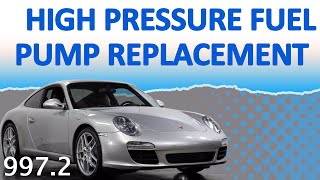
The 997 Turbo's twin-turbocharged flat-six engine uses a sophisticated engine management system with dual Mass Airflow (MAF) sensors, one for each bank. The key difference within this year range is the fuel system. The 2006-2009 (997.1) models use the Mezger-based M97.70 engine with traditional multi-port fuel injection (MPI). The 2010-2013 (997.2) models feature the newer 9A1 engine with Direct Fuel Injection (DFI). This distinction is critical, as DFI systems operate at much higher pressures (~1700 psi) and can have different failure points, such as the high-pressure fuel pump (HPFP), which is a known, though uncommon, failure item on the 997.2. MAF and O2 sensor issues remain common to both generations.
Generation note: Yes, this range covers two distinct sub-generations of the 997. - 997.1 Turbo (2006-2009): Features the 3.6L M97.70 Mezger-based engine with multi-port fuel injection. - 997.2 Turbo (2010-2013): Features the 3.8L 9A1 engine with Direct Fuel Injection (DFI). While many causes are similar (MAF, O2 sensors), DFI-specific issues like a leaking high-pressure injector or failing HPFP are unique to the 997.2.
Symptoms You May Notice
- Check Engine Light is on
- Poor fuel economy
- A strong smell of gasoline from the exhaust, sometimes noticeable in the cabin.
- Black smoke from the exhaust, especially under acceleration.
- Rough or unstable idle.
- Hesitation or lack of power.
- Engine misfires, which may trigger additional codes like P0304, P0305, P0306.
- Difficulty starting the engine.
- Replacing the post-catalyst (downstream) O2 sensor. The downstream sensor's primary role is to monitor catalytic converter efficiency and it has minimal impact on fuel trim.
- Assuming a vacuum leak. Vacuum leaks typically introduce un-metered air, which leads to a lean condition (P0171/P0174), not a rich one.
- Using cheap aftermarket MAF sensors. Forum discussions are filled with owners who chased rich codes until they replaced aftermarket MAFs with genuine Bosch units.
Most Likely Causes
- Faulty or Contaminated Mass Airflow (MAF) Sensor(s) 🔴 High Probability The dual MAF sensor setup is sensitive. Contamination from sources like oiled air filters or simple age can cause them to send incorrect airflow readings to the DME, leading to an improper fuel mixture. This is the most likely cause if you also have a P0172 code (Bank 1 Rich). Forum users have repeatedly stressed the importance of using genuine Bosch sensors, as aftermarket units (even from reputable brands) have been shown to cause rich codes.
How to confirm: Use an OBD-II scanner (like a Durametric or PIWIS for Porsche-specific data) to monitor live data for both MAF sensors. Compare g/s readings at idle and under load to see if one is inconsistent. Unplugging the MAFs and seeing if the fuel trims normalize to a baseline can be a quick test. Cleaning the sensors with dedicated MAF cleaner may help temporarily, but replacement is often necessary.
Typical fix: Replace the faulty MAF sensor(s). It is highly recommended to use OEM Bosch sensors and replace them as a pair to ensure balanced readings. 🎬 Watch: How to replace the MAF sensors on your 997.
Est. part cost: $200-$400 for a pair of Bosch sensors - Failing Pre-Catalyst Oxygen (O2) Sensor 🟡 Medium Probability O2 sensors measure oxygen in the exhaust to regulate the fuel mixture. As they age, they can become slow or biased, sending incorrect signals. A faulty Bank 2 sensor can get stuck on a 'lean' reading (low voltage), tricking the DME into thinking the engine is lean and causing it to add too much fuel. This is a primary suspect if P0175 appears alone.
How to confirm: Monitor the live voltage data from the pre-catalyst O2 sensors for both banks. A healthy sensor fluctuates rapidly between ~0.1V and ~0.9V. A failing sensor might be stuck at a high voltage or respond very slowly. Swapping the Bank 1 and Bank 2 sensors and seeing if the code changes to P0172 (Bank 1 Rich) is a definitive diagnostic step, as confirmed by owners on forums.
Typical fix: Replace the Bank 2, Sensor 1 (pre-catalyst) oxygen sensor. Use a quality brand like Bosch. 🎬 See this walkthrough for replacing pre-catalyst O2 sensors.
Est. part cost: $100-$200 - Leaking Fuel Injector(s) 🟡 Medium Probability A fuel injector can get stuck partially open or develop a poor seal, causing it to leak excess fuel into a cylinder even when it's not supposed to fire. This is more likely if the rich code is isolated to one bank and may be accompanied by misfire codes for specific cylinders on that bank (e.g., P0304, P0305, P0306). In extreme cases, this can lead to engine hydrolock.
How to confirm: This is harder to diagnose. A professional may perform a fuel pressure leak-down test. A DIY method is to remove the spark plugs from Bank 2 and inspect them. A plug from a cylinder with a leaking injector will be black, sooty, and smell strongly of fuel compared to the others.
Typical fix: Replace the faulty fuel injector(s) on Bank 2. It's often recommended to replace all injectors on that bank, or even all injectors on the engine, at the same time for balanced flow.
Est. part cost: $150-$500+ per injector - Incorrect Fuel Pressure ⚪ Low Probability A failing fuel pressure regulator can cause system-wide high fuel pressure, forcing too much fuel through the injectors. This typically affects both banks, triggering P0172 and P0175. On 997.2 DFI models, this role is managed by the HPFP system.
How to confirm: Connect a fuel pressure gauge to the fuel rail's service port and measure the pressure at idle. Compare the reading to the manufacturer's specification. For the M97.70, this is typically around 3.8 bar (55 psi). For the 9A1, you must use a scan tool to monitor high pressure readings from the sensor.
Typical fix: Replace the fuel pressure regulator (on 997.1) or investigate the HPFP system (on 997.2).
Est. part cost: $100-$250
Rare But Worth Checking
- Failing High-Pressure Fuel Pump (HPFP): This applies only to the 2010-2013 (997.2) DFI engines. A failing HPFP can cause erratic fuel pressure, leading to rich conditions, though it often presents with other symptoms like hard starting, stalling, or low-pressure codes (P1023, P1021). These pumps have been known to fail and can be on backorder.
- Stuck-Open EVAP Purge Valve: If the EVAP purge valve sticks open, it can allow un-metered fuel vapors from the charcoal canister to enter the intake manifold at the wrong time, creating a rich mixture. This usually affects both banks, causing P0172 and P0175.
- Camshaft Position Sensor Failure: A failing camshaft position sensor on Bank 2 can cause the engine to run poorly and misfire, which the DME might interpret as a rich condition. A user on 6SpeedOnline diagnosed P0175 with misfires by finding the camshaft deviation on that bank was zero, indicating a failed sensor.
Diagnosis Steps
- Scan for Codes: Use a Porsche-specific scanner (Durametric, PIWIS, Foxwell) to confirm P0175 and check for any other codes, especially P0172 or misfire codes (P030X).
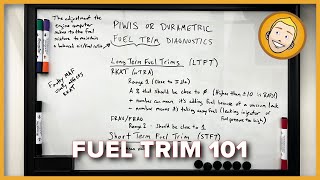
- Analyze Live Data (Fuel Trims): Observe long-term fuel trims (LTFT) for both banks. For P0175, Bank 2 LTFT will be highly negative (e.g., -15% to -25%). If Bank 1 is also highly negative, suspect a common cause (MAFs, fuel pressure). If Bank 1 is normal, the issue is isolated to Bank 2. 🎬 Learn how to check fuel trims using PIWIS or Durametric.
- Analyze Live Data (Sensors): Watch the live voltage of the pre-catalyst (Sensor 1) O2 sensors. A healthy sensor fluctuates rapidly between ~0.1V and ~0.9V. A sensor stuck high (>0.8V) or responding slowly on Bank 2 is suspect. Also, check MAF sensor readings in g/s; they should be similar for both banks at idle and under load.
- Isolate Bank-Specific Issues (If only P0175): If you suspect the O2 sensor, swap the pre-catalyst sensors between Bank 1 and Bank 2. Clear codes and drive. If the code returns as P0172 (Bank 1 Rich), you have confirmed a bad O2 sensor. This is a common and effective diagnostic step shared on owner forums.
- Inspect/Clean MAF Sensors: If both banks are rich (P0172 & P0175), inspect and clean the MAF sensors with a dedicated cleaner. Re-check fuel trims. If the problem persists, replacement with genuine Bosch units is the recommended next step.
- Test Fuel Pressure: If sensors appear to be working correctly, test the fuel pressure to ensure it's within Porsche's specifications. For 997.1, use a mechanical gauge. For 997.2, use a scan tool to monitor the high-pressure fuel system.
- Inspect for Leaking Injectors: If all else fails, pull the spark plugs on Bank 2 (cylinders 4-6). Look for a plug that is significantly more fouled, black, or wet with fuel than the others. This points to a leaking injector.
Parts You'll Likely Need
- Mass Air Flow (MAF) Sensor
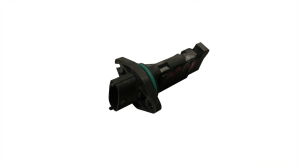
(OEM #997-606-125-01 (or 99760612500, 99760612502))— This is the most common cause when both banks run rich (P0172 & P0175). Contamination leads to incorrect air measurement. Must be Bosch brand for reliable operation.
Trusted brands: Bosch (OEM)
OEM price range: $200-$250 per sensor
Aftermarket price range: $100-$180 per sensor (Not recommended, known to cause issues) - Pre-Catalyst Oxygen Sensor (Bank 2, Sensor 1)
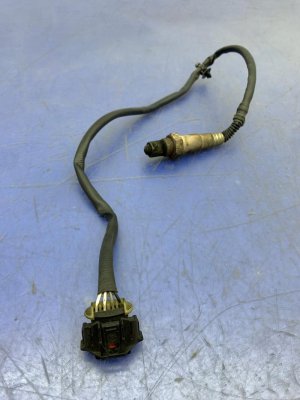
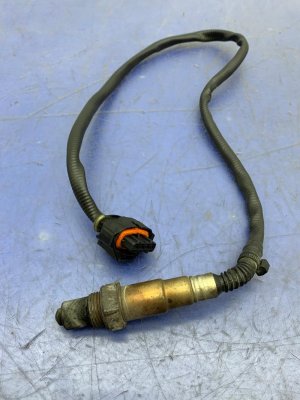
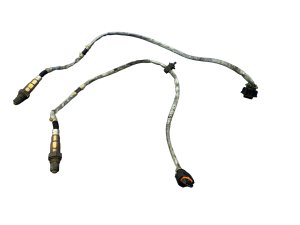
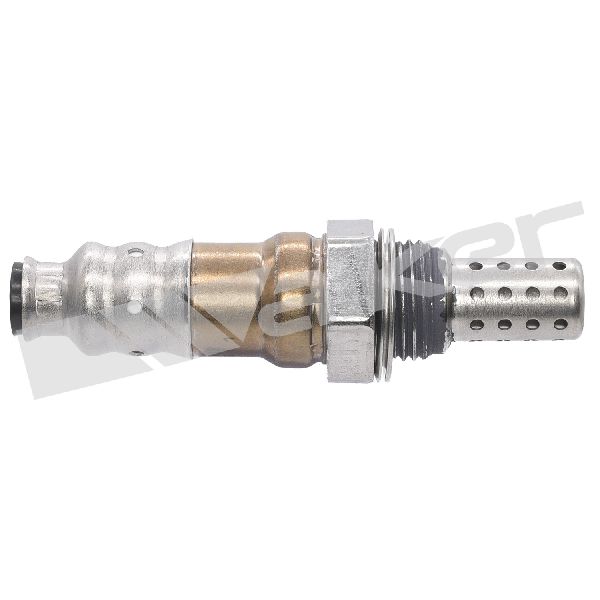
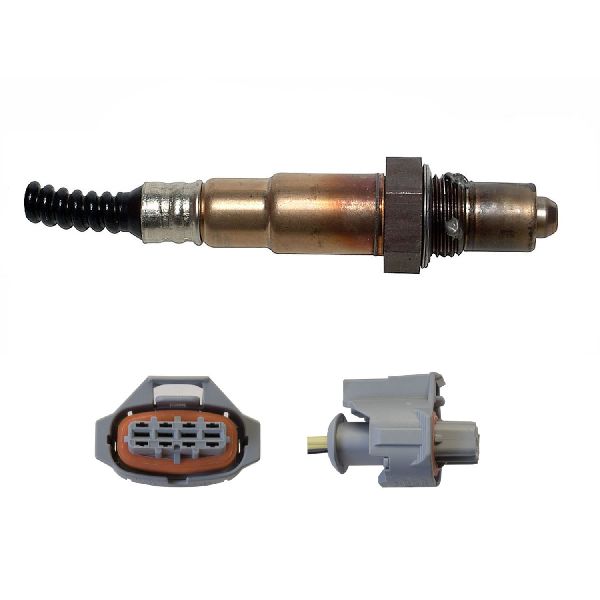
(OEM #997-606-168-02 (supersedes 99760616801))— This is a primary cause when only Bank 2 is running rich. A failed sensor sends incorrect data, causing the DME to over-fuel that bank.
Trusted brands: Bosch (OEM)
OEM price range: $120-$200
Aftermarket price range: $70-$140
Related Codes That Often Appear With This One
- P0172 — System Too Rich (Bank 1). If both P0172 and P0175 are present, it strongly indicates a problem with a component common to both engine banks, such as the MAF sensors, fuel pressure regulator, or a bad tank of fuel.
- P0300, P0304, P0305, P0306 — Misfire codes (P0300 for random, P0304-P0306 for cylinders on Bank 2). An excessively rich mixture can foul spark plugs and cause misfires on the affected bank.
Mechanic-Grade Diagnostic Values
- Fuel Pressure (997.1 M97.70 at idle) — expected: 46-48 psi (3.2 - 3.3 bar). Failure: Significantly higher pressure could indicate a failed regulator; lower pressure could be a pump issue.
- Fuel Pressure (997.2 9A1 Low-Pressure System) — expected: 5.0 bar (72.5 psi). Failure: Low pressure readings under load can indicate a failing in-tank pump.
- Fuel Pressure (997.2 9A1 High-Pressure System) — expected: Up to ~1700 psi (117 bar) under load. Failure: Inability to reach or maintain high pressure, or erratic readings, can indicate a failing HPFP or sensor.
- Mass Airflow (MAF) Reading at Idle (Both Engines) — expected: ~5.0 - 7.0 g/s (per sensor) at warm idle. Failure: Readings that are significantly different between Bank 1 and Bank 2, or values that are erratic or much higher/lower than expected, point to a sensor issue.
- Camshaft Deviation (Durametric/PIWIS) — expected: A steady value within +/- 6 degrees of zero at idle.. Failure: A value outside the +/- 6 degree specification, or a value that fluctuates at idle, indicates a problem with the cam timing mechanism (chain, tensioner, actuator). A reading of exactly 0.0 can indicate a failed position sensor.
Scan Tool Commands That Help
- COBB Accessport: Datalogging Short-Term Fuel Trim (STFT) — For 997.1 Turbo models, if STFT for both banks reads exactly 1.25 under boost, it is a definitive sign that the fuel pressure regulator vacuum reference line has disconnected.
- PIWIS (Porsche Dealer Tool): Fuel Injection System Bleeding — This function is required after replacing the High-Pressure Fuel Pump (HPFP) on a 997.2 DFI engine to safely purge air from the high-pressure lines before starting the engine.
- Durametric / PIWIS: Monitor Camshaft Deviation — To diagnose timing-related issues that could be misinterpreted as fuel mixture problems. A deviation outside the +/- 6 degree spec points to mechanical timing issues like a worn chain pad, failing tensioner, or a slipped camshaft sleeve on the M97.70 engine.
Wiring & Ground Locations
- DME Main Ground — A ground post on the #1 intake runner in the engine compartment.. A poor DME ground can cause erratic sensor readings and incorrect calculations, potentially leading to false rich or lean codes. This is a primary ground point for the engine computer.
- Ground Point II — Multipoint ground located under the driver's side dash, above the relay and fuse panel.. This interior ground point serves various electronic components. A fault here could potentially affect sensor signals that are processed inside the cabin before reaching the DME.
- Ground Point III — Under the hood, on top of the fender near the unused diagnostic test port.. An easily accessible ground point in the front of the car that should be checked for corrosion or looseness during any electrical diagnosis.
Real Owner Repair Stories
- Reddit user BuilderOfEngines44 (2009-2012 Porsche 997.2) — Check Engine Light with codes P0172 and P0175 (System Too Rich, Banks 1 & 2).
❌ Tried (didn't work) The issue appeared after installing an aftermarket (NTK brand) MAF sensor.
✅ What actually fixed it Replacing the aftermarket NTK MAF sensor with the original OEM Bosch sensor resolved the rich condition and cleared the codes. - Rennlist forum user (Porsche 996 Turbo (similar M97 Mezger engine to 997.1)) — Sporadic P0172 and P0175 codes.
❌ Tried (didn't work) Chasing the issue with the standard MAF-based engine tune.
✅ What actually fixed it The problem was permanently resolved by updating the engine tune to a 'mafless' configuration, which calculates load based on other sensors (like MAP and RPM) instead of using the MAF sensors. This strongly implies the MAF sensors were the root cause. - 6SpeedOnline forum discussion (2007-2009 Porsche 997.1 Turbo) — Lean condition under boost (Short Term Fuel Trim at 1.25), which can be related to rich conditions at idle.
❌ Tried (didn't work) Initial diagnosis was unclear as it doesn't always throw a specific code.
✅ What actually fixed it The issue was a disconnected fuel pressure regulator (FPR) reference line on the passenger side of the engine. The hard plastic line slips out of its rubber vacuum tube connection. Securing it with a small zip tie or hose clamp permanently fixes the problem.
"I Checked Everything" — The Actual Cause
- While a smoke test is for vacuum leaks (lean codes), a similar pattern exists for this rich code on the 997.1 Turbo. Technicians may find that all sensors (MAF, O2) test perfectly and fuel trims appear confusing. The hidden cause is often the fuel pressure regulator (FPR) vacuum reference line having slipped off. It doesn't leak vacuum at idle (so no lean code) but fails to increase fuel pressure under boost, causing a lean condition then (STFT pegs at 1.25). The DME's attempts to compensate can contribute to rich running at other times. It's missed because it's a simple slipped hose in a hard-to-see location that doesn't look broken.
When the Usual Fixes Don't Work
- In several documented cases where P0172 and P0175 (both banks rich) were present, the root cause was not a complex fuel system failure but simply the use of non-OEM Mass Airflow sensors. One owner on Reddit fixed the issue by swapping a new aftermarket NTK sensor back to the original Bosch unit. Another owner on a forum ultimately solved their persistent rich codes by having the car tuned to be 'mafless,' completely bypassing the problematic sensors. This highlights that for the 997 Turbo, MAF sensor brand and quality is a critical, and often overlooked, primary diagnostic step before investigating more complex components.
OEM Part Supersession History
997.606.125.00→997.606.125.01— Standard part revision.
Heads up: These are for the 997 Turbo. Do not use MAF sensors from other Porsche models like the 996 (non-Turbo) or early Boxsters, as the calibration is different even if the housing fits. Must be a genuine Bosch unit.9A111031572, 9A111031573→9A111031574— Part revision for the High-Pressure Fuel Pump (HPFP) on 997.2 DFI engines.
Heads up: Applies only to 2010-2013 9A1 DFI engines.
Model Year Variations Within This Range
- 2006-2009 (997.1 M97.70 only): These models use a fuel pressure regulator with a vacuum reference line. This line is a known failure point, where it can slip off its connection, causing fuel pressure issues. This part does not exist on the 997.2 DFI engine.
- 2006-2009 (997.1 M97.70 only): The Mezger engine in these models is susceptible to an internal camshaft sleeve slipping, which blocks oil flow for the VarioCam system. This is a mechanical failure mode not present on the 997.2's 9A1 engine.
- 2010-2013 (997.2 9A1 only): These models use a Direct Fuel Injection (DFI) system with a High-Pressure Fuel Pump (HPFP). The HPFP is a known failure point unique to this generation that can cause rich conditions or other fuel-related codes.
Diagnostic Flowchart
Other Known Issues on This Vehicle
Issues unrelated to this code that are worth knowing about as an owner of this generation:
- Coolant Pipe Failure (997.1 M97.70) 🔴 High — Considered a matter of 'when,' not 'if.' The factory-glued coolant pipe fittings in the Mezger engine can fail, causing a catastrophic and sudden loss of coolant. This requires an engine-out service to fix permanently by pinning or welding the new fittings.
- High-Pressure Fuel Pump (HPFP) Failure (997.2 9A1) 🟠 Medium — An uncommon but well-documented failure on DFI engines. Can fail at relatively low mileage (under 50k miles) and cause hard starting, stalling, and limp mode. Parts can sometimes be on backorder.
- Camshaft Actuator/Solenoid Failure (997.1 M97.70) 🟠 Medium — The VarioCam actuators or their solenoids can fail, causing camshaft deviation errors, rough running, and misfires. Often requires engine-out service for replacement.
- Front Coolant Hose/Crossover Pipe Corrosion 🟡 Low — The metal fittings on the front coolant hoses and the crossover pipes located near the front axle are prone to corrosion, leading to coolant leaks. Less critical than the engine coolant pipes but a common age-related issue.
Used vs. New Parts: Buying Guide for This Vehicle
When a used part is the smart pick: Used parts make the most sense for non-electronic, mechanical components like intake manifolds, engine covers, or brackets. A used VVT solenoid or camshaft position sensor from a documented low-mileage donor vehicle could be a cost-effective option, but carries inherent risk.
Donor-vehicle mileage cap: roughly under 50000 miles for the part to have meaningful remaining life.
What to inspect on the donor part:
- For electronic parts, verify the donor vehicle's mileage and ensure it was not a flood or fire-damaged car.
- Inspect connectors for corrosion, bent pins, or damaged locking tabs.
- For mechanical parts like a VVT solenoid, check for any physical damage or sludge buildup.
OEM-only on this vehicle (don't cheap out):
- Mass Airflow (MAF) Sensor: This is the most critical part to buy OEM-only (Bosch). Multiple owner reports confirm that even reputable aftermarket brands can be improperly calibrated and cause persistent rich codes on this platform.
- High-Pressure Fuel Pump (HPFP): Given the high pressures and importance to the DFI system, a new OEM part is strongly recommended over a used unit to benefit from any potential design revisions.
Aftermarket brands forum-validated for this vehicle:
- Bosch: As the Original Equipment Manufacturer for MAF sensors, O2 sensors, and other electronics, buying the Bosch-branded part is equivalent to Genuine Porsche at a lower cost.
Brands owners have reported issues with on this vehicle:
- Any non-Bosch MAF sensor brand. A specific case cited an NTK sensor causing rich codes that were resolved by switching back to Bosch.
Real Owner Stories
Aggregated from forums and TSBs cited above. Mileages and costs reflect what owners reported in those sources.
2010-2013 Porsche 911 Turbo (997.2)
Symptoms: Check engine light with P0175 and misfire codes P0304, P0305, and P0306 specifically on Bank 2.
What fixed it: The community suggested swapping O2 sensors to diagnose, while also noting potential camshaft position sensor failure as a contributor for bank-specific rich/misfire issues.
Source hint: 6SpeedOnline: Getting CEL - P0175 and P030{4,5,6} misfires on Bank 2
2010-2013 Porsche 911 Turbo (997.2)
Symptoms: System Too Rich codes P0172 and P0175 appearing after installing new parts.
What fixed it: Removed recently installed aftermarket (NTK) MAF sensors and reinstalled the original Bosch MAF sensors.
Source hint: Reddit r/porsche911: Q: What are the possible causes for the 997.2 codes P0172/P0175 for Bank 1 and Bank 2 “System Too Rich”?
2006-2009 Porsche 911 Turbo (997.1)
Symptoms: Simultaneous P0172 and P0175 codes.
What fixed it: Cleaning or replacing the MAF sensors, as the dual MAF setup often causes both banks to go rich when contaminated.
Source hint: Rennlist: Ooops P0172 / P0175"s
Related OBD-II Codes
Frequently Asked Questions
Can I use aftermarket MAF sensors like NTK on my 997.2 Turbo to fix P0175?
If I have P0175 and misfires on cylinders 4, 5, and 6, what is the likely cause?
How can I tell if my P0175 code is caused by a bad O2 sensor without buying new parts?
Does a P0175 code on a 911 Turbo always mean the MAF is dirty?
What should the fuel pressure be for my M97.70 engine to rule out a rich condition?
I have a MAF-less tune but I'm still getting P0175. What else should I check?
Helpful Videos
Used OEM Parts in Stock
New Aftermarket Parts Available


The information in this article is provided for general reference and educational purposes only. Vehicle specifications, procedures, and part compatibility can vary by production date, trim level, and region. Always consult your vehicle's factory service manual and verify part numbers before purchasing or performing repairs. Safety-critical components such as airbags, seat belts, and braking systems should be installed by a qualified professional.
- Porsche 911 Turbo:
- 🎬 Helpful Videos
- 🛍️ Shop This Part
- What's Unique About the 2006-2013 Porsche 911 Turbo
- Symptoms You May Notice
- Most Likely Causes
- Rare But Worth Checking
- Diagnosis Steps
- Parts You'll Likely Need
- Related Codes That Often Appear With This One
- Mechanic-Grade Diagnostic Values
- Scan Tool Commands That Help
- Wiring & Ground Locations
- Real Owner Repair Stories
- "I Checked Everything" — The Actual Cause
- When the Usual Fixes Don't Work
- OEM Part Supersession History
- Model Year Variations Within This Range
- Diagnostic Flowchart
- Other Known Issues on This Vehicle
- Used vs. New Parts: Buying Guide for This Vehicle
- Real Owner Stories
- 2010-2013 Porsche 911 Turbo (997.2)
- 2010-2013 Porsche 911 Turbo (997.2)
- 2006-2009 Porsche 911 Turbo (997.1)
- Related OBD-II Codes
- Frequently Asked Questions
- 🎟️ Get 5% Off