

P0175 on 2005-2006 Ford Expedition 5.4L: System Too Rich Bank 2 Causes and Fixes
Code P0175 on a 2005-2006 Expedition with the 5.4L 3V engine most often points to a leaking or stuck-open fuel injector on Bank 2. These engines are known for injector issues, especially the 2005 model year. An oil change is critical after the repair to remove fuel contamination from the crankcase.
- P0175 on a 2005-2006 Expedition 5.4L is very frequently caused by a leaking fuel injector on the driver's side (Bank 2).
- The 2005 model year was subject to a Ford warranty extension for this exact problem, highlighting its prevalence.
- Do not ignore this code. A leaking injector can quickly lead to a ruined catalytic converter and fuel-diluted engine oil, risking major engine damage.
- Always perform an oil and filter change after replacing a leaking fuel injector.
- If both P0175 (Bank 2) and P0172 (Bank 1) are present, suspect a component that affects the whole engine, like the MAF sensor.
What's Unique About the 2005-2006 Ford Expedition
The 5.4L 3V Triton engine used in this generation of Expedition is particularly known for fuel injector problems. In 2005, Ford used a supplier for injectors that were prone to sticking in the open position, dumping raw fuel into the cylinder. This known issue led to a Customer Satisfaction Program (07M08) extending the warranty for 2005 models to 11 years or 120,000 miles. Though 2006 models can experience the same failure, they were not included in this program. A stuck injector is a top suspect for a single-bank rich code like P0175 on this specific engine.
Symptoms You May Notice
- Check Engine Light is on
- Strong smell of raw gasoline from the exhaust or around the vehicle
- Rough or unstable idle
- Noticeable decrease in fuel economy
- Engine hesitation or loss of power
- Black smoke from the tailpipe in severe cases
- Hard starting, especially when the engine is warm (due to flooding)
- Engine oil level appears to be rising or smells strongly of gasoline
- Replacing the oxygen sensor first. While an O2 sensor can fail, it is more often correctly reporting a problem caused by another component, like a leaking injector or faulty MAF sensor. Always diagnose the fuel delivery system before replacing sensors, especially on this engine with its known injector issues.
Most Likely Causes
- Leaking or Stuck-Open Fuel Injector 🔴 High Probability The 2005 model year 5.4L 3V engines are notorious for fuel injector failures, where the injector sticks open. This was so common Ford issued an extended warranty (Customer Satisfaction Program 07M08) for this specific issue on 2005 Expeditions, Navigators, and F-Series trucks. The 2006 models use a similar injector design and are also known to fail, but are not covered by the warranty program.
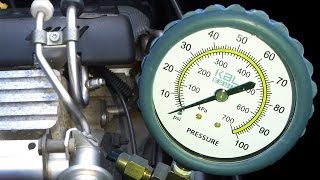
How to confirm: Perform a fuel pressure leak-down test. 🎬 Watch this guide on how to perform a fuel pressure test. With a gauge on the fuel rail, prime the system (key on, engine off) and note the pressure (should be 30-45 psi). Turn the key off. The pressure should hold steady. If it drops quickly, an injector is likely leaking. You can also pull the spark plugs on Bank 2 (driver's side) and check for one that is wet with fuel or excessively black and sooty. A noid light can confirm the injector is receiving a signal, but won't confirm a mechanical leak.
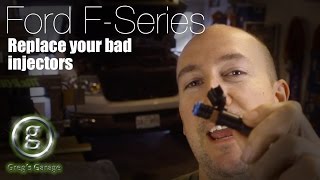
Typical fix: Replace the faulty fuel injector. 🎬 See this walkthrough on how to replace your Triton fuel injectors. It is often recommended to replace all four injectors on the affected bank (or all eight) at the same time, especially on high-mileage vehicles. An oil and filter change is mandatory after the repair to remove fuel-contaminated oil.
Est. part cost: $50-$120 per injector - Dirty or Faulty Mass Airflow (MAF) Sensor 🟡 Medium Probability If the MAF sensor is dirty, it can under-report the amount of air entering the engine, causing the computer to inject too much fuel. This usually affects both banks (setting P0172 and P0175), but can sometimes manifest on just one bank initially, especially if the problem is intermittent.
How to confirm: Inspect the MAF sensor wires (located in the intake tube after the air filter) for dirt or oil contamination. You can try cleaning it with a dedicated MAF sensor cleaner spray. Monitor MAF readings with a scan tool; look for erratic or out-of-spec values at idle and under load.
Typical fix: Clean the MAF sensor with a specialized cleaner. If cleaning doesn't resolve the issue, the sensor must be replaced.
Est. part cost: $10-$15 for cleaner, $60-$150 for a new sensor - Faulty Upstream Oxygen (O2) Sensor ⚪ Low Probability While the O2 sensor can fail, it is more often correctly reporting a rich condition caused by another component. However, a sensor that is old or contaminated by fuel from a leaking injector can become slow or biased, sending a false 'rich' signal to the computer.
How to confirm: Use a scan tool to graph the voltage of the Bank 2, Sensor 1 (upstream, driver's side) O2 sensor. A healthy sensor will fluctuate rapidly between approximately 0.1 and 0.9 volts. A sensor that is stuck high (above 0.8v) or is very slow to respond may be faulty.
Typical fix: Replace the Bank 2, Sensor 1 (upstream) oxygen sensor. This is the sensor located on the driver's side exhaust manifold, before the catalytic converter.
Est. part cost: $50-$90
Rare But Worth Checking
- Leaking Fuel Pressure Regulator/Damper: The fuel rail on the 5.4L 3V has a fuel pressure damper with a vacuum line. If its internal diaphragm ruptures, raw fuel can be sucked directly into the intake manifold, causing a rich condition that usually affects both banks but can start on one. You can check this by pulling the vacuum hose off the damper and checking for the presence or smell of fuel.
- Stuck Open EVAP Purge Valve: If the evaporative emissions purge valve sticks open, it can allow unmetered fuel vapors from the charcoal canister to enter the intake manifold, leading to a rich mixture. This typically causes issues on both banks but can be intermittent.
Diagnosis Steps
- Use an OBD-II scanner to confirm P0175 and check for any other codes, like misfire codes (P030x) or a Bank 1 rich code (P0172).
- View live data on the scanner. Observe the Short-Term (STFT) and Long-Term Fuel Trim (LTFT) for Bank 2. With P0175, you will see highly negative numbers (e.g., -20% or more), indicating the PCM is aggressively removing fuel.
- Inspect the MAF sensor, located in the air intake tube after the air filter. Check for debris or contamination. Clean it with dedicated MAF cleaner spray 🎬 Watch: Two quick DIY methods to fix a P0175 code. as an inexpensive first step.
- Check for a leaking fuel pressure damper. Locate the damper on the driver's side fuel rail, pull its vacuum line, and check for any signs of raw fuel or a strong fuel smell.
- Perform a fuel pressure leak-down test. Connect a fuel pressure gauge to the fuel rail's test port. Prime the system (Key On, Engine Off) and check that pressure is within spec (typically 30-45 psi). Turn the key off and watch the gauge. A rapid drop indicates a leak, most likely from an injector.
- If a leak is suspected, isolate the faulty injector. Pull the spark plugs on Bank 2 (driver's side, cylinders 5-8). Inspect them for signs of one cylinder running rich (black, sooty, or wet with fuel). The corresponding injector is the culprit.
- If no fuel delivery issue is found, test the Bank 2, Sensor 1 O2 sensor's response using the scanner's graphing function to ensure it is switching correctly and not stuck in a high-voltage (rich) state.
- After replacing any parts, clear the codes and perform an oil and filter change. This is critical to prevent engine damage from gasoline diluting the engine oil.
Parts You'll Likely Need
- Fuel Injector
(OEM #Motorcraft CM-5138 (Ford P/N: 5C3Z-9F593-DC))— This is the most probable cause of a single-bank rich code on the 5.4L 3V engine due to a known history of injector failures, especially for the 2005 model year.
Trusted brands: Motorcraft, Bosch
OEM price range: $80-$120
Aftermarket price range: $40-$70 - Mass Airflow (MAF) Sensor
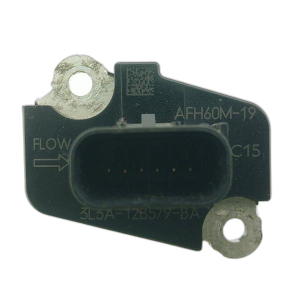
(OEM #Motorcraft AFLS-131)— A dirty or failing MAF sensor is a common cause for fuel trim issues on many vehicles. Cleaning is often attempted before replacement.
Trusted brands: Motorcraft, Hitachi
OEM price range: $100-$150
Aftermarket price range: $60-$120 - Upstream Oxygen Sensor (Bank 2, Sensor 1)
(OEM #Motorcraft or Bosch equivalent (e.g., Bosch 15735))— If the sensor itself fails, it can send incorrect data to the PCM. It's less common than an injector failure but is a possibility, especially if it has been contaminated by excess fuel.
Trusted brands: Motorcraft, Bosch, Denso
OEM price range: $70-$100
Aftermarket price range: $50-$90
Related Codes That Often Appear With This One
- P0172 — System Too Rich (Bank 1). If both P0172 and P0175 are present, it points to a problem affecting the entire engine, such as a faulty MAF sensor, fuel pressure regulator/damper issue, or stuck EVAP purge valve.
- P0305, P0306, P0307, P0308 — Cylinder Misfire codes for Bank 2. A cylinder running excessively rich from a leaking injector will eventually foul its spark plug and begin to misfire.
- P0300 — Random/Multiple Cylinder Misfire. This can occur if the rich condition is severe enough to cause intermittent misfires across multiple cylinders on Bank 2.
Technical Service Bulletins (TSBs) & Recalls
- Customer Satisfaction Program 07M08 - While not a formal TSB, this Ford program directly addresses the most common cause of P0175 on the 2005 model: failing fuel injectors. It authorized dealers to diagnose and replace stuck injectors free of charge within the program's time and mileage limits.
Platform-Specific Known Issues
- Customer Satisfaction Program 07M08: Ford issued this program for certain 2005 model year F-150, F-Super Duty, Expedition, and Navigator vehicles with the 5.4L 3V engine. It extended the warranty on the fuel injectors to 11 years or 120,000 miles from the original warranty start date. The issue was injectors sticking in the open or closed position. A stuck-open injector can lead to P0175, misfires, and even catastrophic engine damage. This program has expired but highlights the known prevalence of this specific failure on 2005 models.
Mechanic-Grade Diagnostic Values
- Fuel Injector Resistance — expected: 10 - 18 Ohms. Failure: A reading outside of this range indicates a faulty injector coil.
- Fuel Pressure (KOEO - Key On, Engine Off) — expected: 30 - 45 psi. Failure: Significantly higher pressure could indicate a faulty regulator/damper; lower pressure points to a weak pump or leak.
- Mass Air Flow (MAF) Rate at warm idle — expected: ~5.4 grams/second. Failure: A significantly higher reading (e.g., >7 g/s) at idle can indicate a faulty sensor causing a false rich condition. A low reading suggests a vacuum leak.
- Fuel Injector Pulse Width at warm idle — expected: 1.5 - 2.5 milliseconds (ms). Failure: Values that are significantly different from other cylinders, or a PCM commanding a very low pulse width (in response to a leak) can indicate an issue.
Scan Tool Commands That Help
- Ford IDS (or equivalent professional scanner): Fuel Injector Balance Test — This is a definitive test to identify a leaking or mechanically failed injector. The tool commands each injector to fire and measures the corresponding fuel pressure drop. A leaking injector will often fail this test or show a pressure drop that is inconsistent with the others.
- Ford IDS (or equivalent professional scanner): Reset Fuel Trims — After a repair is completed (e.g., replacing an injector or MAF sensor), the PCM's learned long-term fuel trim values must be cleared. This forces the computer to relearn fuel strategy with the new components, preventing it from running rich based on old data.
Wiring & Ground Locations
- Main Engine Grounds — Typically found on the engine block, firewall, and near the battery. A key ground strap often connects the engine block to the chassis.. A poor ground for the PCM, injectors, or O2 sensors can cause erratic voltage signals, leading to incorrect readings and improper fuel calculations. For example, a poor O2 sensor ground can bias the voltage reading high, tricking the PCM into thinking the engine is rich.
- Transmission Dipstick Tube Ground — A ground strap is sometimes bolted to the mount for the transmission dipstick tube.. This is one of several grounds for the engine and its sensors. If it becomes corroded or is left disconnected during service, it can contribute to intermittent electrical issues that are difficult to trace.
Real Owner Repair Stories
- Reddit user on r/MechanicAdvice (2003 Ford Expedition 5.4L V8) — P0172 and P0175 (rich on both banks), with long-term fuel trims at -20% to -29% at idle. Trims improved at higher RPMs. No smoke, smooth running.
❌ Tried (didn't work) Cleaned MAF sensor, Replaced fuel injection damper valve on the fuel rail
✅ What actually fixed it Replacing the Mass Airflow (MAF) sensor solved the problem.
"I Checked Everything" — The Actual Cause
- This pattern is uncommon for a P0175 code. A smoke test is used to find vacuum leaks, which cause unmetered air to enter the engine, resulting in a lean condition (P0171/P0174). A rich code like P0175 is almost always caused by excess fuel delivery (e.g., leaking injector, high fuel pressure) or incorrect air measurement (faulty MAF sensor), none of which would be identified by a smoke test.
OEM Part Supersession History
5C3Z-9F593-DA→5C3Z-9F593-DC (Motorcraft CM-5138)— Standard part revision.
Heads up: These parts are interchangeable.5C3Z-9F593-DC (Motorcraft CM-5138)→7C3Z-9F593-A (Motorcraft CM-5144) - Design Change— The original CM-5138 injector has a single-hole nozzle. Ford later introduced the CM-5144 with a four-hole nozzle for improved fuel atomization, smoother idle, and better throttle response.
Heads up: The newer four-hole injectors are considered a direct-fit upgrade for the 2005-2006 models. Many owners and technicians proactively replace the older single-hole design with the newer four-hole injectors for better performance and reliability.
Model Year Variations Within This Range
- 2005: The 2005 model year is particularly notorious for fuel injector failures due to a specific supplier used by Ford. This led to Ford issuing Customer Satisfaction Program 07M08, which extended the injector warranty but did not apply to 2006 models, even though they can suffer similar failures.
- 2005 - early 2006: These models were originally equipped with single-hole fuel injectors (Motorcraft CM-5138). Models built after December 2006 used an updated four-hole injector (Motorcraft CM-5144).
Diagnostic Flowchart
Real Owner Stories
Aggregated from forums and TSBs cited above. Mileages and costs reflect what owners reported in those sources.
2003 Ford Expedition
Symptoms: Vehicle threw both P0175 and P0172 rich codes.
What fixed it: Checked the fuel pressure damper on the driver's side fuel rail for a ruptured diaphragm, which is a common cause for rich codes on both banks.
Source hint: Ford Expedition Forum: P0175 - system too rich
2005 Ford Expedition 5.4L 3V
Symptoms: Stuck fuel injectors causing rich conditions and potential engine damage.
What fixed it: Replaced the stuck fuel injectors under Ford's Customer Satisfaction Program 07M08, which covered the repair for 11 years or 120,000 miles.
Source hint: Ford Truck Enthusiasts Forums: Stuck fuel Injection - Extended Warranty..
2006 Ford F-150 5.4L 3V
Symptoms: Experienced the exact same injector failure issues as the notorious 2005 models.
What fixed it: Replaced the faulty fuel injectors and had to pay out-of-pocket, as Ford did not extend the 07M08 warranty program to the 2006 model year.
Source hint: Ford F150 Forum: 2006 5.4 injector problems
2005 Ford F-150 5.4L 3V
Symptoms: Engine ran rough and stalled, throwing codes P0175 (Bank 2 rich), P0171 (Bank 1 lean), and P0022 (timing). Unplugging the injectors on the driver's side resulted in no change in how the engine ran.
What fixed it: Diagnosed a major issue on Bank 2 by isolating the injectors and confirming the bank was dead/flooded.
Source hint: Ford F150 Forum: 2005 5.4l 3v runs rough stalls
Related OBD-II Codes
Frequently Asked Questions
Does Ford's Customer Satisfaction Program 07M08 cover my 2006 Expedition for P0175?
Why does my oil smell like gasoline after getting the P0175 code on my 5.4L 3V?
How do I test if a fuel injector is causing my Bank 2 rich code?
Can a bad fuel pressure damper cause P0175 on this engine?
Should I replace all the fuel injectors if only one is stuck open on my 2005 Expedition?
Will a dirty MAF sensor cause a rich code on just Bank 2?
Helpful Videos
![How to Fix P0175 Engine Code in 2 Minutes [2 DIY Methods / Only $8.99]](https://img.youtube.com/vi/pxuKkkqqvSs/mqdefault.jpg)

Used OEM Parts in Stock


New Aftermarket Parts Available


The information in this article is provided for general reference and educational purposes only. Vehicle specifications, procedures, and part compatibility can vary by production date, trim level, and region. Always consult your vehicle's factory service manual and verify part numbers before purchasing or performing repairs. Safety-critical components such as airbags, seat belts, and braking systems should be installed by a qualified professional.
- Ford Expedition:
- 🎬 Helpful Videos
- 🛍️ Shop This Part
- What's Unique About the 2005-2006 Ford Expedition
- Symptoms You May Notice
- Most Likely Causes
- Rare But Worth Checking
- Diagnosis Steps
- Parts You'll Likely Need
- Related Codes That Often Appear With This One
- Technical Service Bulletins (TSBs) & Recalls
- Platform-Specific Known Issues
- Mechanic-Grade Diagnostic Values
- Scan Tool Commands That Help
- Wiring & Ground Locations
- Real Owner Repair Stories
- "I Checked Everything" — The Actual Cause
- OEM Part Supersession History
- Model Year Variations Within This Range
- Diagnostic Flowchart
- Real Owner Stories
- 2003 Ford Expedition
- 2005 Ford Expedition 5.4L 3V
- 2006 Ford F-150 5.4L 3V
- 2005 Ford F-150 5.4L 3V
- Related OBD-II Codes
- Frequently Asked Questions
- 🎟️ Get 5% Off