

P0175 on 2011-2017 BMW 5-Series N55: Causes for System Too Rich Bank 2
P0175 on a BMW N55 engine most often points to a leaking fuel injector on Bank 2 (cylinders 4-6). Other strong possibilities include a failing pre-catalyst oxygen sensor or a faulty High-Pressure Fuel Pump (HPFP). Expect to pay $100-$300 for a single injector or O2 sensor, but over $1,000 if all injectors or the HPFP need replacement.
- P0175 on a 2011-2017 BMW 5-Series with the N55 engine means cylinders 4-6 are running too rich.
- The most likely cause is one or more leaking fuel injectors on Bank 2.
- A faulty Bank 2 pre-catalyst O2 sensor and a failing High-Pressure Fuel Pump (HPFP) are also common culprits.
- Do not drive the vehicle for an extended period, as the rich condition can cause serious and expensive damage to the catalytic converter and internal engine components.
- Diagnosis requires a scan tool capable of reading BMW-specific live data, particularly fuel trims and fuel rail pressure.
What's Unique About the 2011-2017 BMW 5-Series
The N55 engine uses a high-pressure direct injection fuel system, which operates under extreme pressures, making it susceptible to specific failures that cause rich conditions. Leaking fuel injectors are a well-documented issue, often caused by carbon buildup or internal wear from heat cycles. These injectors can leak fuel directly into the cylinder after the engine is shut off. Additionally, the High-Pressure Fuel Pump (HPFP) is a known weak point on earlier N55 engines, and its failure can lead to erratic fuel pressure and rich-running problems. These platform-specific vulnerabilities are the primary reason P0175 appears 🎬 Watch: A breakdown of common causes for the P0175 code. on these vehicles.
Symptoms You May Notice
- Check Engine Light is on
- Rough or unstable idle, sometimes feeling like the engine will stall
- Strong smell of gasoline from the exhaust
- Black smoke from the exhaust, especially during cold starts
- Reduced fuel economy
- Engine hesitation or stumbling on acceleration
- Difficulty starting the engine, especially when warm (long crank)
- Fuel smell noticeable in the engine oil on the dipstick
- Replacing spark plugs or ignition coils. While these should be checked, they typically cause misfires which can sometimes be misinterpreted, but they are not the root cause of a P0175 code. A rich condition will foul new spark plugs quickly if the underlying issue isn't resolved.
Most Likely Causes
- Leaking Fuel Injector(s) on Bank 2 🔴 High Probability The N55's direct injectors are prone to leaking internally due to carbon buildup or wear, allowing excess fuel to enter the cylinders, especially after shutdown. This can cause a very rich mixture on the next startup.
How to confirm: A mechanic can perform an injector flow test. A DIY method is to remove the spark plugs from Bank 2 (cylinders 4-6) after the car has sat overnight and check for a strong fuel smell or visible wetness from fuel. Comparing them to Bank 1 plugs can reveal the issue. A borescope can also be used to look for pooled fuel on top of the pistons. Monitoring fuel rail pressure after shutdown with a scan tool can also show a leak; the pressure should hold steady but will drop if an injector is leaking.
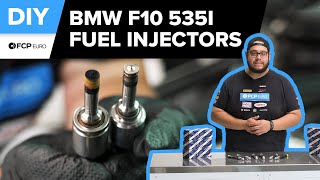
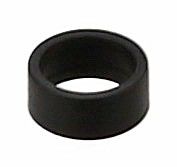
Typical fix: Replace the faulty injector(s). It is best practice to replace all injectors on the affected bank, or all six, as they are flow-matched and tend to fail around the same time. Each replacement requires a new Teflon seal and a metal decoupling element. 🎬 See this step-by-step walkthrough for replacing N55 fuel injectors. The new injector's flow rate value must be coded to the DME for proper fuel delivery calculation.
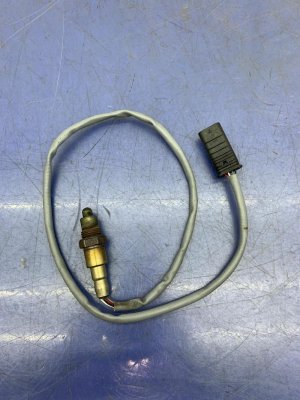
Est. part cost: $150-$300 per injector - Faulty Bank 2 Pre-Catalyst Oxygen (O2) Sensor 🟡 Medium Probability The O2 sensor provides feedback to the DME. If it becomes contaminated or fails, it can send a false 'lean' signal (low voltage). The DME will then over-compensate by adding too much fuel, creating a real rich condition.
How to confirm: Use a diagnostic scan tool to monitor the live data from the Bank 2 Sensor 1 voltage. A healthy sensor will fluctuate rapidly between approximately 0.1V and 0.9V. A sensor that is stuck at a low voltage (e.g., <0.2V) is likely telling the DME the engine is lean, causing the rich condition. Swapping the Bank 1 and Bank 2 pre-cat sensors (if accessible) and seeing if the fault code moves to P0172 (Bank 1 Rich) is another diagnostic step.
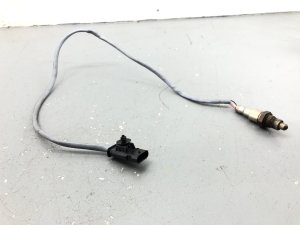
Typical fix: Replace the Bank 2 pre-catalyst (upstream) O2 sensor. This sensor is located on the exhaust downpipe for cylinders 4-6, just after the turbocharger. Access is tight and often requires specialized tools like an offset O2 sensor socket and long extensions with a swivel joint.
Est. part cost: $100-$220 - Failing High-Pressure Fuel Pump (HPFP) 🟡 Medium Probability Early N55 engines used a less reliable HPFP that is prone to failure. A failing HPFP can cause inconsistent fuel pressure, leading the DME to command incorrect fuel mixtures. While it often affects both banks (P0172 and P0175), it can sometimes manifest on a single bank first.
How to confirm: Requires a diagnostic scan tool to monitor requested vs. actual fuel rail pressure. Significant deviations, especially under load, indicate a problem. A failing HPFP can also leak fuel internally into the engine oil, which can be detected by a strong fuel smell on the dipstick.
Typical fix: Replace the High-Pressure Fuel Pump. This is a labor-intensive job. BMW extended the warranty on this part for some vehicles, so it's worth checking with a dealer.
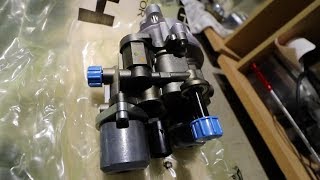
Est. part cost: $500-$1200 for the part, with OEM Bosch being a more affordable option than the BMW-branded part. 🎬 Watch: How to identify and install a new high-pressure fuel pump.
- Dirty or Faulty Mass Airflow (MAF) Sensor ⚪ Low Probability If the MAF sensor is dirty or failing, it can under-report the amount of air entering the engine. The DME then injects what it thinks is the correct amount of fuel, but it's too much for the actual airflow, causing a rich mixture. This typically causes rich codes on both banks (P0172 & P0175), but can sometimes appear on one bank if the fuel trims are on the edge.
How to confirm: Inspect the sensor for contamination. Try cleaning it with a dedicated MAF sensor cleaner. Monitor live data with a scan tool to see if readings are plausible for the given RPM. Unplugging the MAF sensor forces the DME to use a default fueling map; if the rich condition improves, the MAF is likely faulty.
Typical fix: Clean the MAF sensor with a specialized cleaner. If cleaning doesn't work, replace the sensor.
Est. part cost: $20-$30 (cleaner), $200-$400 (replacement sensor)
Rare But Worth Checking
- Leaking PCV/Crankcase Vent Valve: While typically causing lean codes (P0171/P0174) due to a vacuum leak from a torn diaphragm, a severe failure of the PCV system integrated into the valve cover can sometimes lead to oil being pulled into the intake and erratic fuel trims, potentially contributing to a rich code under certain conditions. The definitive symptom is often a loud whistling or squealing noise that stops when the oil cap is removed.
- Stuck-Open Thermostat: If the thermostat is stuck open, the engine will not reach its proper operating temperature. The DME may intentionally run a richer mixture to compensate, which could trigger a P0175 code in borderline cases. This would usually be accompanied by a low reading on the engine temperature gauge.
Diagnosis Steps
- Read Codes & Freeze Frame: Use a BMW-capable OBD-II scanner to confirm P0175 and check for any other codes. Note the freeze-frame data to see the engine conditions when the code was set.
- Analyze Fuel Trims: Monitor long-term (LTFT) and short-term (STFT) fuel trims for Bank 1 and Bank 2. For P0175, you will see highly negative values on Bank 2 (e.g., LTFT at -25%). If Bank 1 trims are also negative but not enough to set a code, suspect a common component like the MAF or HPFP.
- Check for Fuel in Oil: A strong gasoline odor on the engine oil dipstick is a critical clue pointing towards a leaking injector or a failing HPFP. Change the oil after the repair is complete.
- Inspect Spark Plugs (Bank 2 vs Bank 1): Remove the spark plugs from Bank 2 (cylinders 4, 5, 6) and compare them to Bank 1 (cylinders 1, 2, 3). Plugs from Bank 2 will likely be black, sooty, and possibly wet with fuel. This helps confirm the rich condition is isolated to Bank 2.
- Test Oxygen Sensors: Graph the voltage of the Bank 2, Sensor 1 (pre-catalyst) O2 sensor. It should fluctuate rapidly. If it's stuck low (e.g., <0.2V) or is very slow to respond compared to the Bank 1 sensor, it is suspect.
- Isolate Injectors: If spark plugs point to a specific cylinder being excessively rich, that injector is highly suspect. A simple test is to shut off the engine and monitor fuel rail pressure. A rapid drop indicates a leak. A professional can perform a leak-down test on the injectors.
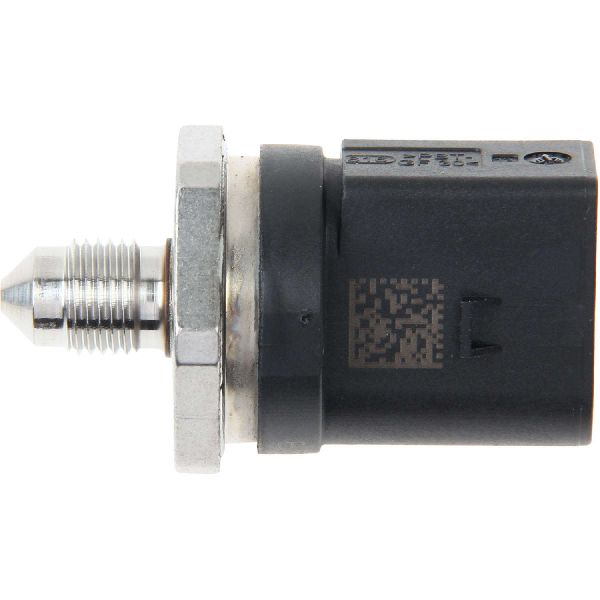
- Check Fuel Pressure: Monitor the high-pressure fuel rail requested vs. actual pressure using a scan tool. Large discrepancies, especially under load or during startup, point to an HPFP or fuel pressure sensor issue.
Parts You'll Likely Need
- Fuel Injector
(OEM #13538616079)— This is the most common cause of a bank-specific rich code on the N55 engine due to a high failure rate. This part number supersedes several older, less reliable versions.
Trusted brands: Bosch, Genuine BMW
OEM price range: $250-$350
Aftermarket price range: $150-$250 - Pre-Catalyst Oxygen Sensor (Bank 2)
(OEM #11787589475)— A faulty O2 sensor can send incorrect data to the DME, causing it to enrich the fuel mixture unnecessarily.
Trusted brands: Bosch, NTK, Genuine BMW
OEM price range: $180-$250
Aftermarket price range: $100-$180 - High-Pressure Fuel Pump (HPFP)
(OEM #13517616170)— A known failure point, especially on earlier N55s, that causes erratic fuel pressure and can trigger rich codes for one or both banks.
Trusted brands: Bosch, Genuine BMW
OEM price range: $800-$1200
Aftermarket price range: $450-$700
Related Codes That Often Appear With This One
- P0172 — System Too Rich, Bank 1. If both P0172 and P0175 are present, it points to a problem common to both banks, such as the HPFP or MAF sensor, rather than a single bank's O2 sensor or injector.
- P0304, P0305, P0306 — Cylinder 4, 5, or 6 Misfire. A severely rich condition from a leaking injector can foul the spark plug and cause a misfire on the corresponding cylinder.
- 29E0 — BMW-specific code for Fuel Mixture Control. This is often seen alongside the generic P017x codes and indicates the DME's struggle to maintain the correct air-fuel ratio.
Technical Service Bulletins (TSBs) & Recalls
- SI B12 05 16: Addresses an issue on N55 engines produced up to 3/2012 where winter-blend fuels could cause vapor formation in the fuel system, leading to rough running and fuel-related faults. The fix involves replacing the low-pressure fuel pump and updating DME software.
Platform-Specific Known Issues
- Early N55 engines (pre-2014) were equipped with a less robust High-Pressure Fuel Pump (HPFP) that is prone to failure and was the subject of warranty extensions in some cases.
- Direct fuel injectors on the N55 require special tools for removal and installation, including a specific tool to install the Teflon seal. Improper installation will result in leaks.
- New fuel injectors must be 'coded' to the vehicle's DME with a diagnostic tool to ensure proper fuel delivery.
Mechanic-Grade Diagnostic Values
- Low-Pressure Fuel Pump (LPFP) Pressure — expected: ~72 PSI (constant). Failure: Significant drops below 72 PSI. Note: Many early N55s do not have a sensor to read this value electronically, requiring a manual gauge.
- High-Pressure Fuel Pump (HPFP) Rail Pressure at Idle — expected: 700-800 PSI. Failure: Pressure significantly below this range, or erratic readings.
- High-Pressure Fuel Pump (HPFP) Rail Pressure Under Load/WOT — expected: 1300-2200+ PSI. Failure: Pressure failing to rise under load or dropping below 1200 PSI can indicate a failing HPFP.
- Short Term Fuel Trims (STFT) / Long Term Fuel Trims (LTFT) — expected: Close to 0% at idle in a healthy engine. BMW systems often represent this as a factor around '1'.. Failure: For P0175, LTFT on Bank 2 will be highly negative (e.g., -25% or a factor of 0.75), indicating the DME is removing fuel to compensate for a rich condition.
Hidden / Shadow Codes Worth Checking
- 29E1: DME: Fuel Mixture Control, Bank 2. This is the manufacturer-specific code that directly corresponds to the generic P0175 code. (see via BMW-specific diagnostic software like ISTA, INPA, or high-end scanners (Autel, Foxwell for BMW).)
- 2BDE: Fuel high pressure on enabling of injection: pressure too low. This shadow code often appears with long cranks and points towards a failing HPFP, which can be a root cause for mixture control faults like P0175. (see via BMW-specific diagnostic software like ISTA or INPA.)
Scan Tool Commands That Help
- ISTA (or equivalent high-end scanner): Injection Quantity Compensation / Injector Calibration — This is mandatory after replacing any fuel injector. The function allows you to enter the specific flow rate value (a three-digit number printed on the new injector) for the correct cylinder. Failure to code the new injector will result in incorrect fueling calculations, rough running, and persistent fault codes.
- ISTA (or equivalent high-end scanner): Reset Adaptation Values — This must be performed after coding new injectors or replacing other major fuel system components like an O2 sensor or MAF. It clears the long-term fuel trim data, forcing the DME to re-learn the fuel mixture strategy with the new parts.
- ISTA (or equivalent high-end scanner): Smooth Running Test — This function analyzes data from the crankshaft sensor to measure rotational speed variations, helping to identify which specific cylinder is contributing least (or most erratically) to engine operation. It can help pinpoint a problematic injector or cylinder before disassembly.
Wiring & Ground Locations
- Engine-to-Chassis Ground Strap — On the F10 N55, the primary powertrain ground strap is located at the very end of the transmission, grounding the transmission case to the transmission tunnel on the vehicle's chassis. It is not in the engine bay near the engine mount as on older BMWs.. This braided strap can corrode and break over time. A poor ground connection can cause erratic behavior from various sensors, including the oxygen sensors that provide the primary data for fuel mixture control. Incorrect sensor readings due to a bad ground can lead the DME to create a rich or lean condition.
Real Owner Repair Stories
- Bimmerpost user HeyTeeee (03/2011 N55) — Long cranks (3-5 seconds), shadow codes 2BDE & 2BF0.
❌ Tried (didn't work) Initial diagnosis considered O2 sensors and fuel pressure sensor.
✅ What actually fixed it The user's long crank and shadow codes were resolved by replacing the High-Pressure Fuel Pump (HPFP) and the fuel rail pressure sensor. - Bimmerpost user (N55 with E85 blend history) — 29E1 code present even when running on standard gasoline, accompanied by long start cranks.
❌ Tried (didn't work) Running standard gasoline did not clear the code.
✅ What actually fixed it The issue was resolved by replacing the failing HPFP.
OEM Part Supersession History
Various older part numbers→13648625397 (Bosch OEM)— Injector design was updated for reliability and emissions. There is a critical distinction between EU5 (pre-LCI, roughly pre-2013) and EU6 (LCI, roughly 2013+) injectors.
Heads up: EU5 and EU6 injectors are NOT interchangeable despite fitting physically. Installing the wrong type will cause the engine to run poorly. The correct type must be verified by checking the old part or using ISTA. The 'Index Number' system from the N54 engine does not apply to the N55.13517610761→13518604231 (Bosch OEM)— The original High-Pressure Fuel Pump (HPFP) had a higher failure rate. The new part is an updated, more reliable design.
Heads up: For vehicles produced before March 2014, the new HPFP has a different electrical connector. An adapter harness, part number 12518638006, is required to connect the new pump to the old vehicle harness.
Model Year Variations Within This Range
- 2011-2013: These models use a Pneumatic Wastegate (PWG) turbocharger. The fuel system uses EU5 injectors. The HPFP is the earlier, less reliable version.
- 2014-2017: These models use an Electronic Wastegate (EWG) turbocharger, which has a slightly larger turbine and downpipe. The fuel system uses EU6 injectors. The HPFP is the updated design, though early 2014 models may still need the adapter harness.
Diagnostic Flowchart
Other Known Issues on This Vehicle
Issues unrelated to this code that are worth knowing about as an owner of this generation:
- Oil Filter Housing Gasket (OFHG) Leak 🔴 High — Extremely common, typically fails between 70,000-100,000 miles. Leaking oil drips onto the serpentine belt, causing it to slip off, shred, and get ingested into the engine through the front main seal, leading to catastrophic engine failure.
- Valve Cover & Gasket Leak / PCV Failure 🟠 Medium — Very common around 70,000-100,000 miles. The plastic valve cover can crack, and the gasket will leak oil onto the exhaust manifold. More critically, the integrated PCV valve diaphragm tears, causing a large vacuum leak, rough idle, and a loud whistling noise.
- Electric Water Pump & Thermostat Failure 🔴 High — Common failure item, often between 60,000-90,000 miles. Failure is often sudden and without warning, causing rapid overheating that can lead to warped cylinder heads or severe engine damage if not shut down immediately.
- VANOS Solenoid Failure 🟡 Low — Fairly common. Solenoids get clogged with debris and fail, causing rough idle, hesitation, and VANOS-related fault codes. It's a relatively easy and inexpensive part to clean or replace.
- VANOS Camshaft Gear Bolt Recall 🔴 High — Affected early N55 engines (2010-2012). The bolts securing the VANOS unit to the camshaft could loosen or break, potentially causing severe engine damage. A recall was issued to replace these bolts. (Ref: NHTSA Campaign ID: 14V176000)
- Carbon Buildup on Intake Valves 🟠 Medium — An inherent issue with all direct-injection engines. Significant buildup can occur by 60,000-80,000 miles, causing rough idle, hesitation, and reduced performance. Requires periodic walnut blasting service to clean.
Used vs. New Parts: Buying Guide for This Vehicle
When a used part is the smart pick: For this specific fault, using used parts is generally not recommended for the most common causes. However, a used Mass Airflow (MAF) sensor or intake air ducting from a low-mileage donor vehicle could be a cost-effective option if they are confirmed as the cause.
Donor-vehicle mileage cap: roughly under 80000 miles for the part to have meaningful remaining life.
What to inspect on the donor part:
- Check for the date code on the part if visible.
- For sensors, ensure the connector pins are clean and free of corrosion.
- Avoid parts from vehicles that show signs of flood damage or major front-end impact.
OEM-only on this vehicle (don't cheap out):
- Fuel Injectors
- High-Pressure Fuel Pump (HPFP)
- Oxygen (O2) Sensors
Aftermarket brands forum-validated for this vehicle:
- Bosch (OEM supplier for injectors, HPFP, and sensors)
- NTK/NGK (For Oxygen Sensors and Spark Plugs)
- Lemförder (For suspension/chassis parts, not directly related to P0175 but a trusted brand)
Brands owners have reported issues with on this vehicle:
- Unbranded or no-name fuel injectors and fuel pumps from online marketplaces like eBay or Amazon. Forum users have reported receiving used, faulty, or incorrect parts sold as new.
Real Owner Stories
Aggregated from forums and TSBs cited above. Mileages and costs reflect what owners reported in those sources.
BMW F10 5-Series N55
Symptoms: A noisy fuel injector and a noticeable fuel leak smell.
What fixed it: Replacement of the faulty fuel injector.
Source hint: Bimmerpost forum member in thread 'troubleshooting a noisy fuel injector and fuel leak smell on an F10 N55'
BMW N55 3.0L I6 Turbo
Symptoms: P0175 code accompanied by a cylinder 4 misfire; owner performed diagnostics including swapping ignition coils.
What fixed it: Diagnostic steps pointed toward injector failure as the cause of the rich condition and misfire.
Source hint: Reddit r/BmwTech thread titled 'p0175'
BMW N55 3.0L I6 Turbo
Symptoms: Rough starts and a fuel mixture code (29E0) caused by a slow injector leak.
What fixed it: Identifying and replacing the leaking fuel injector.
Source hint: 1addicts.com forum thread 'symptoms of a slow injector leak causing rough starts'
BMW N55 3.0L I6 Turbo
Symptoms: A chuffing sound and strong fuel smell.
What fixed it: The issue was traced back to a fuel injector that was not sealing properly, causing a rich condition.
Source hint: Bimmerpost user in thread 'chuffing sound and strong fuel smell'
Related OBD-II Codes
Frequently Asked Questions
Does TSB SI B12 05 16 apply to my early N55 BMW 5-Series?
Can I just replace one fuel injector on Bank 2 to fix the P0175 code?
Do I need special tools to replace the injectors on my 2011-2017 5-Series?
Is there a warranty extension for the High-Pressure Fuel Pump (HPFP) on my BMW?
Why does my 5-Series have a long crank time when the engine is warm?
Do I need to program the car after replacing a Bank 2 injector?
Helpful Videos

Used OEM Parts in Stock



New Aftermarket Parts Available



The information in this article is provided for general reference and educational purposes only. Vehicle specifications, procedures, and part compatibility can vary by production date, trim level, and region. Always consult your vehicle's factory service manual and verify part numbers before purchasing or performing repairs. Safety-critical components such as airbags, seat belts, and braking systems should be installed by a qualified professional.
- BMW 5-Series:
- 🎬 Helpful Videos
- 🛍️ Shop This Part
- What's Unique About the 2011-2017 BMW 5-Series
- Symptoms You May Notice
- Most Likely Causes
- Rare But Worth Checking
- Diagnosis Steps
- Parts You'll Likely Need
- Related Codes That Often Appear With This One
- Technical Service Bulletins (TSBs) & Recalls
- Platform-Specific Known Issues
- Mechanic-Grade Diagnostic Values
- Hidden / Shadow Codes Worth Checking
- Scan Tool Commands That Help
- Wiring & Ground Locations
- Real Owner Repair Stories
- OEM Part Supersession History
- Model Year Variations Within This Range
- Diagnostic Flowchart
- Other Known Issues on This Vehicle
- Used vs. New Parts: Buying Guide for This Vehicle
- Real Owner Stories
- BMW F10 5-Series N55
- BMW N55 3.0L I6 Turbo
- BMW N55 3.0L I6 Turbo
- BMW N55 3.0L I6 Turbo
- Related OBD-II Codes
- Frequently Asked Questions
- 🎟️ Get 5% Off