

P0174 on 2008-2010 BMW 5-Series (N54): Causes and Fixes for Lean Condition Bank 2
On a BMW 5-Series with the N54 engine, code P0174 is most often caused by a vacuum leak from a cracked plastic valve cover or a faulty integrated PCV system. A smoke test is the best way to confirm. Other strong possibilities include leaking fuel injectors or a cracked charge pipe. Replacing the valve cover assembly typically costs between $200 and $500 for parts.
- P0174 on an N54-powered BMW means cylinders 4-6 are running lean (too much air/not enough fuel).
- The most likely cause is a vacuum leak. Perform a smoke test before buying any parts.
- Check the plastic valve cover and charge pipe first, as these are extremely common failure points on this engine.
- Do not attempt to diagnose or replace a Mass Airflow (MAF) sensor; this engine does not have one.
- If no vacuum leaks are found, the next most likely culprits are the Bank 2 fuel injectors or the pre-catalyst O2 sensor.
What's Unique About the 2004-2010 BMW 5-Series

The N54 engine in the 2008-2010 535i is a direct-injected, twin-turbocharged engine known for specific failure points that cause lean codes like P0174. Unlike many engines, the N54 does not use a Mass Airflow (MAF) sensor, relying on pressure sensors (MAP/TMAP) instead. Its plastic valve cover, which integrates the PCV system, is notoriously prone to cracking from repeated heat cycles, creating vacuum leaks that are a primary cause of this code. Additionally, high-pressure fuel system components, like the piezo fuel injectors and the High-Pressure Fuel Pump (HPFP), are well-documented weak points that can also lead to lean conditions.
Generation note: The 2004-2010 year range covers the E60/E61 generation of the BMW 5-Series. However, the N54 3.0L Twin-Turbo I6 engine was only available in the 535i models from 2008 to 2010. This guide is specific to those N54-equipped models.
Symptoms You May Notice
- Check Engine Light (Service Engine Soon) is on
- Rough or fluctuating idle
- Hesitation or stumbling during acceleration
- Reduced fuel economy
- Whistling or hissing noise from the engine bay, indicating a vacuum leak
- Engine stalling at idle
- Long crank starting times, especially if fuel system related
- Smell of exhaust fumes in the cabin, potentially indicating a pre-O2 sensor exhaust leak
- Replacing the Mass Airflow (MAF) sensor. The N54 engine does not have a MAF sensor, so this is an impossible and incorrect diagnosis. It uses a Speed-Density system with MAP sensors.
Most Likely Causes


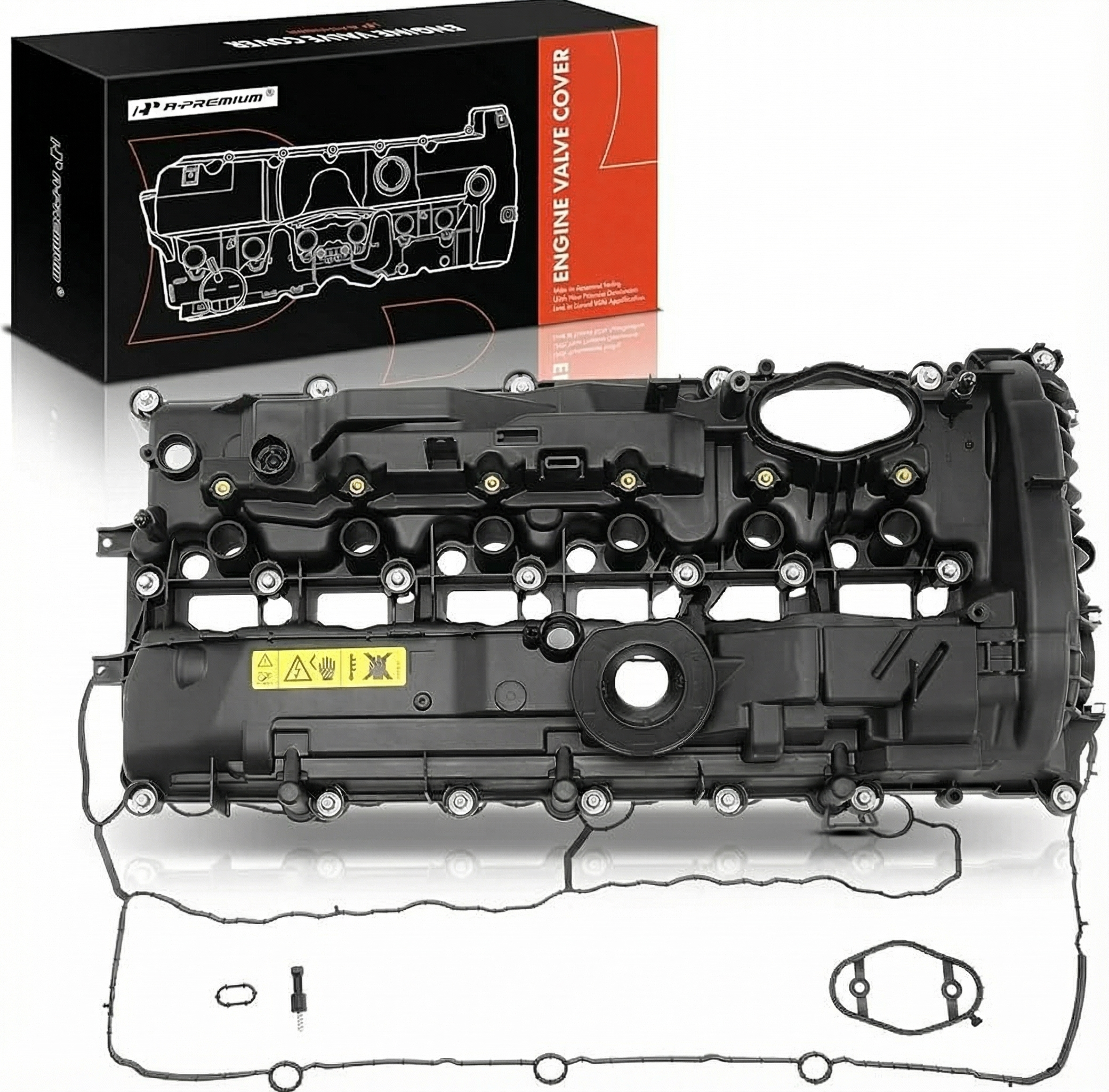
- Cracked Valve Cover / Failed PCV System 🔴 High Probability The N54's valve cover is made of plastic and integrates the PCV (Positive Crankcase Ventilation) valve. Repeated heat cycles cause the plastic to become brittle and crack, or the internal PCV diaphragm to fail. This creates a significant unmetered air leak, as the entire crankcase is put under vacuum.
How to confirm: Perform a smoke test on the intake system. Smoke will be seen escaping from the cracked valve cover or the oil fill cap area if the PCV valve has failed. A simple, though less definitive, test is to try and remove the oil cap while the engine is idling; a failed PCV will cause extremely strong suction, making the cap difficult to remove. A visual inspection may also reveal cracks or oil residue around the cover.
Typical fix: Replace the entire valve cover assembly, which includes a new gasket and integrated PCV valve. It is not possible to service the PCV system separately.
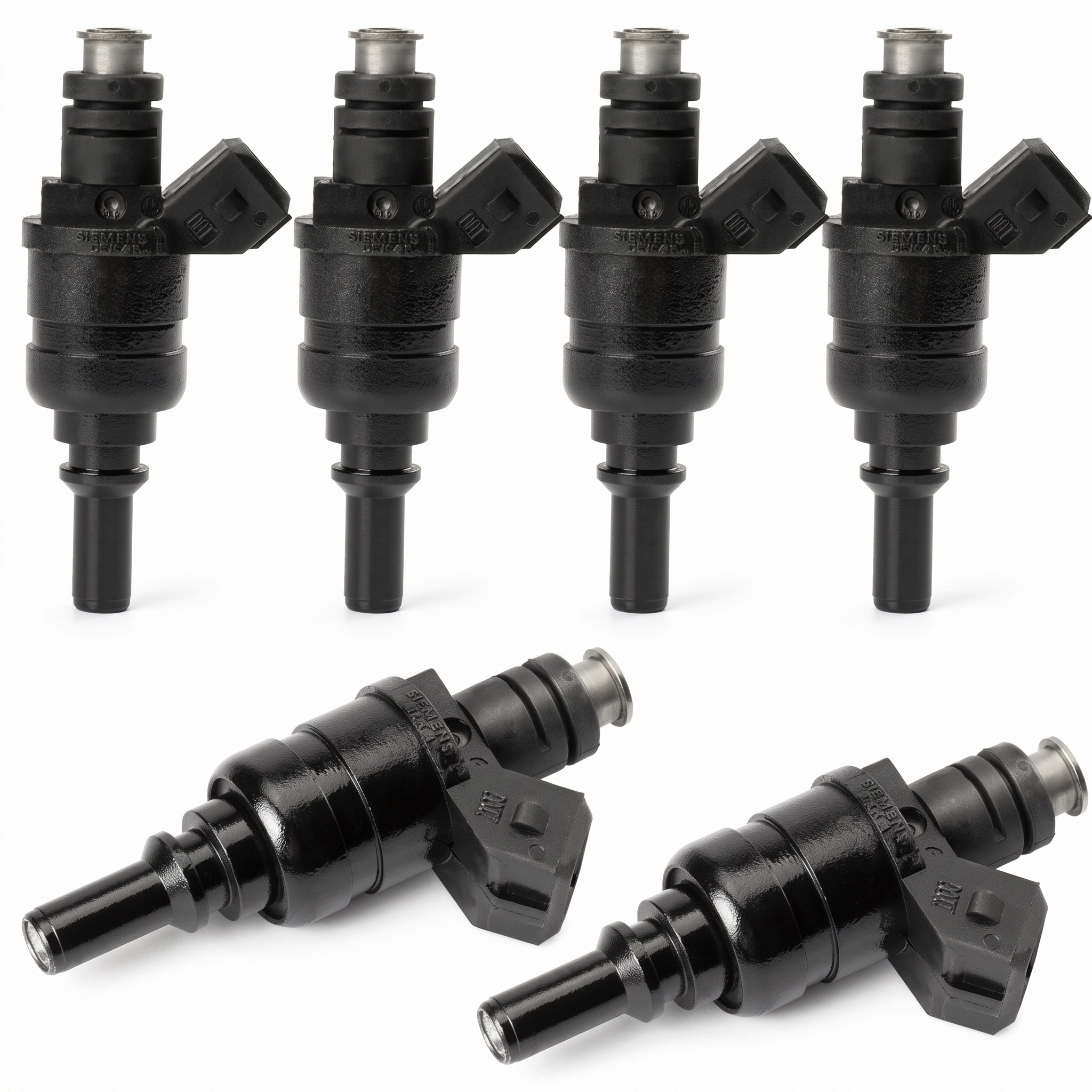
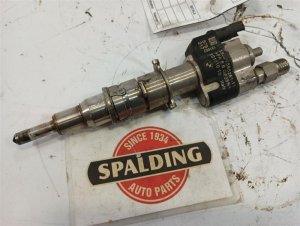
Est. part cost: $200-$500 - Leaking or Clogged Fuel Injector(s) 🟡 Medium Probability The N54 uses precise, high-pressure piezoelectric direct fuel injectors that are a known failure point. Early production 'index' numbers are particularly prone to failure. An injector can become clogged, delivering insufficient fuel, or develop a leak which can foul spark plugs and cause misfires. White smoke on startup is a common symptom of a leaking injector.
How to confirm: Requires a BMW-capable scan tool to monitor fuel trims per cylinder or professional injector flow testing. A common DIY diagnostic is to check the spark plugs on Bank 2 (cylinders 4-6); a plug that is either stark white (lean) or black and fuel-soaked (leaking) points to an injector issue.
Typical fix: Replace the faulty fuel injector(s). It is highly recommended to use the latest index version available (Index 12) and to code the new injector's calibration values to the DME using software like INPA or ISTA.
Est. part cost: $150-$300 per injector - Cracked Charge Pipe 🟡 Medium Probability The factory charge pipe, which connects the intercooler to the throttle body, is made of plastic and can crack under boost pressure, creating a leak. While this is a boost leak under acceleration, it can act as a vacuum leak at idle or low-load conditions, throwing lean codes. The connection point at the throttle body is a common failure point.
How to confirm: Visually inspect the charge pipe for cracks, especially near the throttle body connection and the diverter valve ports. A hissing sound may be audible. A smoke test will definitively show a leak from this component.
Typical fix: Replace the cracked charge pipe. Many owners upgrade to a more durable aluminum aftermarket version from brands like VRSF or Cobb.
Est. part cost: $150-$350 - Faulty Bank 2 Pre-Catalyst Oxygen (O2) Sensor ⚪ Low Probability O2 sensors are wear items and can fail over time, typically after 80,000+ miles. A failing sensor can send incorrect, slow, or biased signals to the DME, falsely reporting a lean condition when one doesn't exist. It's also possible for an exhaust leak before the sensor to introduce oxygen and cause false lean readings.
How to confirm: Use a scan tool to graph the voltage of the Bank 2, Sensor 1 O2 sensor. A healthy sensor's voltage should fluctuate rapidly between approximately 0.1V and 0.9V. A sensor that is slow to respond or stuck at a low voltage is faulty and needs replacement. This is often diagnosed after ruling out vacuum leaks and fuel delivery issues.
Typical fix: Replace the Bank 2 (cylinders 4-6) pre-catalyst (upstream) O2 sensor.
Est. part cost: $100-$200
Rare But Worth Checking
- Failing High-Pressure Fuel Pump (HPFP): While a failing HPFP often presents with specific low-pressure fault codes (like 29F2, 2FBF) and long cranks, a pump that is becoming weak can sometimes contribute to lean conditions under load before it fails completely. BMW issued recalls and extended warranties for this part.
- Leaking Intake Manifold Gaskets: The gaskets sealing the intake manifold to the cylinder head can become brittle and leak over time. If the leak is concentrated on the runners for cylinders 4-6, it can cause a P0174 code without a P0171. This is less common but can happen, especially if the manifold has been removed previously.
- Dirty TMAP/MAP Sensors: The N54 uses a TMAP sensor on the charge pipe and a MAP sensor on the intake manifold. Oil vapor from the PCV system can coat these sensors over time, causing inaccurate pressure readings that can contribute to lean codes. Cleaning them with appropriate sensor cleaner can sometimes resolve the issue.
Diagnosis Steps

- Read all fault codes with a BMW-capable scanner. Note if P0171 is also present, or any fuel pressure or misfire codes.
- With the engine running, listen for any obvious hissing or whistling sounds that indicate a vacuum leak. Pay close attention to the valve cover and charge pipe areas.
- Use a scan tool to monitor Long Term Fuel Trims (LTFT) for both banks. A high positive value on Bank 2 (typically >15-20%) confirms the lean condition. If both banks are high, suspect a large, central vacuum leak.
- Perform a smoke test. This is the most effective method for finding leaks. Introduce smoke into the intake system post-turbo and look for it escaping from the valve cover, charge pipe, vacuum lines, or intake manifold gaskets.
- If no vacuum leaks are found, inspect the fuel system. Use the scanner to check the requested vs. actual fuel rail pressure to assess the HPFP's health, especially under load.
- Inspect the spark plugs from Bank 2 (cylinders 4, 5, 6). Their condition can indicate a lean state (white, ashy) or a leaking injector (black, wet with fuel).
- Inspect the Bank 2 pre-catalyst O2 sensor's operation via live data on a scan tool. Ensure it is switching correctly and not biased low.
- If all else fails, the issue is likely with the Bank 2 fuel injectors, which may require professional testing or proactive replacement, especially if they are an old index number.
Parts You'll Likely Need

- Valve Cover Assembly
(OEM #11127565284)— This is the most frequent cause of P0174 on the N54 due to the plastic cracking and the integrated PCV system failing, causing a large vacuum leak.
Trusted brands: BMW (OEM), Mahle, Vaico, URO Parts (with caution, OEM preferred)
OEM price range: $400-$500
Aftermarket price range: $150-$300 - Fuel Injector (Index 12)
(OEM #13538616079)— A clogged or failing injector on Bank 2 will cause a lean condition specific to that bank. Index 12 is the most recent and reliable revision and should be used for replacement.
Trusted brands: BMW (OEM - manufactured by Eldor), Continental/VDO (for older indexes, not recommended)
OEM price range: $250-$350
Aftermarket price range: Not Recommended
Related Codes That Often Appear With This One
- P0171 — System Too Lean (Bank 1). If both P0171 and P0174 are present, it strongly suggests a large vacuum leak affecting the entire engine, such as a cracked valve cover, charge pipe, or failed PCV system.
- P0304, P0305, P0306 — Cylinder 4, 5, or 6 Misfire. A severe lean condition on Bank 2 can prevent proper combustion, leading to misfires on the affected cylinders. A leaking injector can also cause misfires directly.
- 29F2, 2FBF — Fuel High Pressure System codes. These BMW-specific codes often appear alongside lean codes when the High-Pressure Fuel Pump (HPFP) is beginning to fail and cannot supply adequate pressure.
Technical Service Bulletins (TSBs) & Recalls
- While no specific TSB for P0174 was found, BMW issued an extended warranty and recall for the High-Pressure Fuel Pump (HPFP) on the N54 engine, which can be a contributing cause. TSB SI B11 03 13 also relates to the N54 crankcase ventilation system (PCV) within the valve cover, a primary cause of vacuum leaks leading to lean codes.
Platform-Specific Known Issues
- The PCV system is integrated into the plastic valve cover and cannot be replaced separately. When it fails, the entire cover must be replaced.
- The stock plastic charge pipe is a known weak point and often fails, especially on tuned cars, leading to boost and vacuum leaks.
- Fuel injectors are coded to the DME. When replacing an injector, the new one's calibration values must be programmed into the engine computer for proper operation.
Mechanic-Grade Diagnostic Values
- High-Pressure Fuel Pump (HPFP) Rail Pressure at Idle (Warm) — expected: ~700 PSI (approx. 50 Bar). Failure: Pressure that is consistently below 500 PSI at idle or drops significantly under light load.
- High-Pressure Fuel Pump (HPFP) Rail Pressure at Wide-Open Throttle (WOT) — expected: 1500-2100 PSI. Failure: Pressure dropping below 1200-1500 PSI during a 3rd gear pull indicates a weak HPFP.
- Low-Pressure Fuel Pump (LPFP) Pressure — expected: Stable at ~5 Bar (~72 PSI) regardless of load.. Failure: Pressure dropping into the 40-50 PSI range under load indicates a failing LPFP. A sensor failure can cause the reading to be stuck at a static value like 55.7 PSI.
- Long Term Fuel Trim (LTFT) — expected: -5% to +5%. Failure: Sustained positive values above +15% confirm a lean condition. The Check Engine Light is typically triggered when trims exceed +12.5% to +25%.
- Valve Cover Bolt Torque — expected: 8.5 Nm (75 in-lbs or ~6.3 ft-lbs) for the steel bolts on the N54's plastic valve cover.. Failure: Over-torquing can crack the new plastic cover; under-torquing will cause leaks. A specific star-pattern sequence must be followed.
Hidden / Shadow Codes Worth Checking
- 2D2E: Throttle-valve angle - intake-manifold vacuum, correlation. This indicates a discrepancy between the pressure reading at the charge pipe (TMAP) and the intake manifold (MAP). (see via BMW-capable scanners like ISTA, INPA, or MHD. It often appears as a shadow/inactive code.)
- 2AAF: Fuel pump, plausibility. This code often accompanies other fuel-related faults and suggests an issue with the fuel delivery system, but doesn't specify low or high pressure side. (see via BMW-capable scanners like ISTA, INPA, or MHD.)
- 29E1: Mixture control 2. This is the direct BMW-specific equivalent of the generic P0174 code for Bank 2. (see via BMW-capable scanners like ISTA, INPA, or MHD.)
- 29F5: Catalytic-converter conversion 2. This shadow code can be stored when a persistent lean condition on Bank 2 affects catalyst efficiency. (see via BMW-capable scanners like ISTA, INPA, or MHD.)
Scan Tool Commands That Help
- ISTA/INPA/MHD: Register New Fuel Injectors (Injector Coding) — This is a mandatory step after replacing any fuel injector. Each injector has a unique calibration flow value printed on it that must be programmed into the DME for correct fuel delivery.
- ISTA/INPA: Reset Adaptations (Mixture/Lambda) — After any repair for a lean code (e.g., fixing a vacuum leak or replacing a sensor), all fuel adaptations must be reset to force the DME to relearn the fuel trims from a clean slate.
- INPA: Low-Pressure Fuel Pump Test — To actively test the function and pressure output of the in-tank low-pressure fuel pump, separate from monitoring passive data.
Wiring & Ground Locations
- Injector Harness Ground Posts — There are three threaded ground posts on the valve cover itself that secure the ground wires for the fuel injector harness.. During a valve cover replacement, these grounds are removed. If they are not cleaned and securely re-fastened, it can cause poor grounding for the Bank 2 injectors, leading to erratic injector behavior and potential lean or misfire conditions.
Real Owner Repair Stories
- Bimmerpost user 'TitanLH8' (2011 BMW 335is (N54)) — P0174 code, hissing sound from chargepipe area.
❌ Tried (didn't work) Initial search for broken vacuum hoses yielded no results.
✅ What actually fixed it The user removed the charge pipe, cleaned oil residue off the TMAP sensor using CRC sensor cleaner, reinstalled everything, and cleared the codes. The light did not return, suggesting the fix was either cleaning the sensor or, more likely, reseating the charge pipe O-ring correctly, fixing a small leak. - Reddit user on r/335i (2010 E90 335i (N54)) — P0171 and P0174, LTFTs high (+15-25%), long cranks when warm, occasional near-stall when stopping.
❌ Tried (didn't work) Noted that the valve cover, gasket, and 'fuel injection pump' had been recently replaced., Confirmed rail pressure and LPFP sensors seemed healthy via logging.
✅ What actually fixed it The user suspected a leaking fuel injector, even with Index 12s installed, as the cause of the long warm cranks and high fuel trims that weren't resolved by other common fixes. The thread highlights that even with correct parts, an individual component failure can be the root cause.
"I Checked Everything" — The Actual Cause
- In several forum discussions, owners report having persistent P0171/P0174 codes despite a smoke test showing no leaks. In these cases, the root cause often turns out to be a non-leak issue that a smoke test cannot find. The most common culprits are: 1) A failing pre-catalyst O2 sensor that is sending a false 'lean' signal to the DME. 2) A failing Low-Pressure Fuel Sensor (LPFS) that provides incorrect data, causing the DME to miscalculate fuel delivery. 3) Clogged or failing fuel injectors on one bank delivering insufficient fuel.
When the Usual Fixes Don't Work
- While a cracked valve cover or charge pipe are the most common causes of P0174, there are numerous documented cases where these parts were replaced and the code persisted. In a thread on Reddit, a user with both P0171 and P0174 had already replaced the valve cover, valve cover gasket, and HPFP, and performed a smoke test which came back clean. Their symptoms of long cranks when warm pointed towards a leaking fuel injector, demonstrating that even after addressing the most probable vacuum leaks, fuel delivery components must be thoroughly investigated.
OEM Part Supersession History
13537537317 (Index 01 and lower)→13537565138, then 13537585261, finally 13538616079 (Index 12)— Early index injectors were prone to internal failure, leaking, and inconsistent spray patterns. Revisions were made to improve reliability and performance.
Heads up: It is critical to not mix injectors of different index numbers within the same bank (e.g., Bank 1 or Bank 2). All injectors on a bank should be the same index. For best results, all 6 injectors across both banks should be replaced with the latest Index 12 (PN 13538616079). Any injector with Index 10 or lower should be replaced immediately.
Model Year Variations Within This Range
- 2008-2010: The E60 5-Series only used the N54 engine from 2008-2010; earlier E60s used M54/N52 engines and later F10 models used the N55. While there were no major design changes to the N54 in the E60 during this time, earlier production vehicles (2008-2009) are more likely to have the original, failure-prone lower-index fuel injectors compared to a 2010 model.
Diagnostic Flowchart
Other Known Issues on This Vehicle
Issues unrelated to this code that are worth knowing about as an owner of this generation:
- High-Pressure Fuel Pump (HPFP) Failure 🔴 High — Extremely common across all model years. Failure can occur at any mileage, often leading to long cranks, limp mode, and no-start conditions. (Ref: BMW issued multiple recalls and an extended warranty (10 years/120,000 miles) for the HPFP.)
- Turbocharger Wastegate Rattle 🟠 Medium — Very common, especially on earlier models. Caused by wear in the wastegate actuator rod and bushing. Often presents as a rattling noise on deceleration. (Ref: BMW extended the warranty for wastegate issues to 8 years/82,000 miles. A class-action lawsuit also addressed this.)
- Intake Valve Carbon Buildup 🟠 Medium — Inevitable due to the direct injection design. Significant buildup is common every 40,000-60,000 miles, causing rough idle, hesitation, and reduced performance. (Ref: No recall, considered a maintenance item. The standard fix is walnut shell blasting of the intake ports.)
- Electric Water Pump & Thermostat Failure 🔴 High — Common failure item, often between 60,000-100,000 miles. Failure is sudden and will cause rapid engine overheating, requiring an immediate shutdown.
- Oil Filter Housing Gasket (OFHG) & Oil Cooler Gasket Leaks 🟠 Medium — Extremely common. The gaskets degrade over time, causing significant oil leaks. A leaking OFHG can drip oil onto the serpentine belt, causing it to slip off and potentially get ingested by the main crank seal, leading to catastrophic engine failure.
Used vs. New Parts: Buying Guide for This Vehicle
When a used part is the smart pick: For this repair, used parts are generally not recommended due to the high failure rate of the primary culprits. However, a used structural component like an intake manifold or a factory charge pipe could be considered if thoroughly inspected for cracks or warping.
Donor-vehicle mileage cap: roughly under 80000 miles for the part to have meaningful remaining life.
What to inspect on the donor part:
- For a valve cover: Inspect meticulously for hairline cracks, especially around bolt holes and the integrated PCV port. Ensure all mounting surfaces are flat and not warped.
- For a charge pipe: Check for cracks near the throttle body flange and diverter valve ports. Squeeze the plastic to check for brittleness.
- For fuel injectors: Buying used is extremely risky. Only consider if they are confirmed to be Index 11 or 12 and come from a reputable seller with a warranty.
OEM-only on this vehicle (don't cheap out):
- Fuel Injectors (must be latest OEM Index 12)
- High-Pressure Fuel Pump (HPFP)
- Oxygen (O2) Sensors (OEM-brand like Bosch is acceptable)
- Low-Pressure Fuel Sensor (LPFS)
Aftermarket brands forum-validated for this vehicle:
- Valve Cover: Mahle (often the OEM supplier), Vaico.
- Charge Pipe: VRSF, Cobb, FTP Motorsport (upgrading to aluminum is recommended over replacing with OEM plastic).
Brands owners have reported issues with on this vehicle:
- Unbranded, low-cost valve covers from eBay/Amazon are frequently reported to warp, leak, or have defective integrated PCV valves right out of the box.
- Cheap, no-name sensors (O2, MAP, TMAP) are known for being inaccurate and failing prematurely.
Real Owner Stories
Aggregated from forums and TSBs cited above. Mileages and costs reflect what owners reported in those sources.
2010 BMW 535i N54 — 172000 miles
Symptoms: Experienced both P0171 and P0174 lean codes. A smoke test was performed but showed no leaks.
What fixed it: The owner was presented with options for a valve cover replacement or a full injector job, highlighting the common failure of these high-mileage components.
Cost: $1200-$3600
Source hint: 5Series.net Forums: E60 error codes P0174 & P0171 System too lean banks 1&2
2008 BMW 335i N54
Symptoms: Emissions codes P0171 and P0174; owner noted white smoke on startup.
What fixed it: The community identified the integrated PCV in the valve cover as the likely culprit, though the white smoke specifically pointed toward failing fuel injectors.
Cost: $2500-$2500
Source hint: Reddit r/BmwTech: 2008 335i n54 emissions codes (fuel injectors?)
2011 BMW 335is N54
Symptoms: P0174 code (Bank 2 Lean) accompanied by a distinct hissing sound coming from the engine bay.
What fixed it: The hissing was traced to the charge pipe and diverter valve lines, which are common sources of vacuum leaks on this platform.
Source hint: Bimmerpost E90 Forum: N54 P0174 Code - Bank 2 Running Lean
Related OBD-II Codes
Frequently Asked Questions
Can I just replace the PCV valve on my N54 5-Series to fix the P0174 code?
Is there a TSB or recall for the fuel system issues causing lean codes on the N54?
Do I need to do anything special when replacing a fuel injector on my 2008 535i?
Why would a cracked charge pipe cause a P0174 lean code at idle?
How can I tell if my P0174 code is caused by a leaking injector instead of a vacuum leak?
Helpful Videos
Used OEM Parts in Stock



New Aftermarket Parts Available


The information in this article is provided for general reference and educational purposes only. Vehicle specifications, procedures, and part compatibility can vary by production date, trim level, and region. Always consult your vehicle's factory service manual and verify part numbers before purchasing or performing repairs. Safety-critical components such as airbags, seat belts, and braking systems should be installed by a qualified professional.
- BMW 5-Series:
- 🎬 Helpful Videos
- 🛍️ Shop This Part
- What's Unique About the 2004-2010 BMW 5-Series
- Symptoms You May Notice
- Most Likely Causes
- Rare But Worth Checking
- Diagnosis Steps
- Parts You'll Likely Need
- Related Codes That Often Appear With This One
- Technical Service Bulletins (TSBs) & Recalls
- Platform-Specific Known Issues
- Mechanic-Grade Diagnostic Values
- Hidden / Shadow Codes Worth Checking
- Scan Tool Commands That Help
- Wiring & Ground Locations
- Real Owner Repair Stories
- "I Checked Everything" — The Actual Cause
- When the Usual Fixes Don't Work
- OEM Part Supersession History
- Model Year Variations Within This Range
- Diagnostic Flowchart
- Other Known Issues on This Vehicle
- Used vs. New Parts: Buying Guide for This Vehicle
- Real Owner Stories
- 2010 BMW 535i N54 — 172000 miles
- 2008 BMW 335i N54
- 2011 BMW 335is N54
- Related OBD-II Codes
- Frequently Asked Questions
- 🎟️ Get 5% Off