

P0172 on 2011-2014 Porsche Cayenne 4.8L V8: System Too Rich Causes and Fixes
On the 2011-2014 Cayenne with the 4.8L V8, code P0172 (System Too Rich, Bank 1) is most often caused by a failing high-pressure fuel pump (HPFP) or a leaking fuel injector. A faulty pre-catalyst oxygen sensor is also a common culprit. Diagnosis should focus on the high-pressure fuel system, as this DFI engine does not use a MAF sensor. Expect a diagnostic-heavy repair.
- Do not look for a Mass Airflow (MAF) sensor on your 4.8L V8 Cayenne; it doesn't have one.
- P0172 indicates a rich condition on Bank 1 (passenger side). If you also have P0175 (Bank 2), the problem affects the whole engine, likely pointing to the High-Pressure Fuel Pump (HPFP).
- The most likely causes are a failing High-Pressure Fuel Pump (HPFP), a leaking fuel injector, or a bad pre-catalyst O2 sensor.
- Diagnosis of the high-pressure fuel system is critical but dangerous due to extreme pressures; professional assistance is strongly recommended.
What's Unique About the 2011-2014 Porsche Cayenne
A key point for the 4.8L V8 (M48.02) in the 2011-2014 Cayenne is that it is a Direct Fuel Injection (DFI) engine that does not use a traditional Mass Airflow (MAF) sensor like the base VR6 model. Instead, it uses Manifold Absolute Pressure (MAP) sensors to help calculate engine load. This means that unlike many other vehicles, a faulty MAF is not a possible cause. Diagnosis for P0172 on this engine should focus heavily on the high-pressure fuel system components, particularly the High-Pressure Fuel Pump (HPFP), which is a known failure point on these DFI engines and is mechanically driven by the camshaft.
Symptoms You May Notice
- Check Engine Light is on
- Rough or unstable idle, especially after startup
- Noticeable decrease in fuel economy
- Strong smell of gasoline from the exhaust
- Black smoke from the tailpipe under acceleration
- Engine hesitation or loss of power
- Difficulty starting the engine, including prolonged cranking
- White coloration to exhaust smoke
- Replacing the Mass Airflow (MAF) sensor. The 4.8L V8 engine in this vehicle does not have a MAF sensor, so this is wasted money and effort.
Most Likely Causes
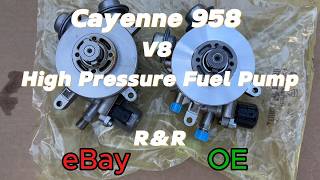
- Failing High-Pressure Fuel Pump (HPFP) 🔴 High Probability The DFI engines in this Cayenne generation are known for HPFP issues. The pump, driven by the camshaft, can fail internally, causing excessive or fluctuating pressure that leads to a rich condition. There have been several part number revisions for the pump, indicating ongoing updates to address failures.
How to confirm: Requires a professional scan tool (like Durametric or PIWIS) to monitor high-side fuel pressure at startup and under load. Specific codes like P1023 (Fuel pressure too low at start) or P1026 (Fuel high pressure implausible) are strong indicators of HPFP failure. A physical fuel pressure test is the definitive confirmation.
Typical fix: Replacement of the high-pressure fuel pump. This is a labor-intensive job (3-5 hours) due to the pump's location at the rear of the engine.
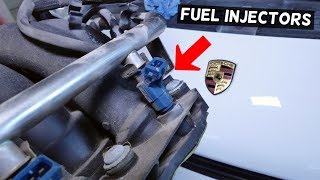
Est. part cost: $600-$1600 - Leaking Fuel Injector(s) on Bank 1 🟡 Medium Probability Direct fuel injectors operate under extreme pressure and can wear out or become stuck partially open, allowing excess fuel to drip into a cylinder.
How to confirm: This is difficult to confirm without professional diagnosis. A key symptom is a hard start after the car has been sitting (hot soak), as a cylinder floods with fuel. A mechanic can perform an injector balance test. Another method is to pull the spark plugs on Bank 1; a plug that is black and sooty points to the leaking injector's cylinder. A strong fuel smell from the oil dipstick is another indicator.
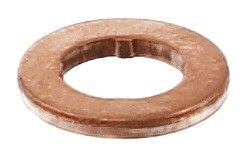
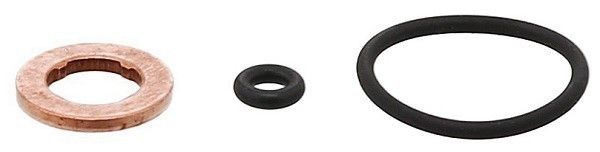
Typical fix: Replace the faulty fuel injector(s) on Bank 1. It's often recommended to replace all injectors on that bank at the same time, along with their seals.
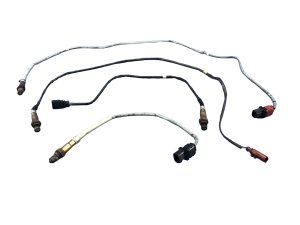
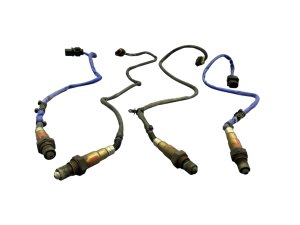
Est. part cost: $150-$300 per injector - Faulty Bank 1 Oxygen Sensor (Pre-Catalyst) 🟡 Medium Probability
How to confirm: Monitor the O2 sensor voltage with a scan tool. If it's stuck reading high (above 0.8V) and not fluctuating, it's likely faulty and telling the DME the engine is rich when it isn't. A common diagnostic trick is to swap the Bank 1 and Bank 2 pre-cat O2 sensors and see if the code changes to P0175 (Rich Bank 2). If it does, the sensor is bad.
Typical fix: Replace the Bank 1, Sensor 1 oxygen sensor. Bank 1 is the passenger side.
Est. part cost: $100-$250 - Stuck Open EVAP Purge Valve ⚪ Low Probability
How to confirm: Test the valve to see if it holds a vacuum when de-energized. If it allows air/vapor to pass through when it should be closed, it's faulty. This allows un-metered fuel vapor from the charcoal canister into the intake manifold, causing a rich condition, especially at idle.
Typical fix: Replace the EVAP purge valve.
Est. part cost: $50-$150
Rare But Worth Checking
- Faulty MAP Sensor: Since this engine relies on MAP sensors for air mass calculation, a faulty sensor providing incorrect (low) pressure readings could cause the DME to over-fuel. This would typically set other MAP-specific codes as well.
- Stale or Contaminated Fuel: If the vehicle has been sitting for many months, old fuel can cause combustion issues and trigger fuel trim codes.
- High Fuel Content in Engine Oil: This is often a symptom of a leaking injector rather than a root cause, but severely fuel-contaminated oil can itself contribute to rich running conditions and should be changed once the primary fault is fixed.
Diagnosis Steps
- Connect a Porsche-compatible OBD-II scanner (e.g., Durametric, PIWIS) and check for any other codes, especially P0175, P1026, or P1023.
- View live data, specifically Short-Term Fuel Trim (STFT) and Long-Term Fuel Trim (LTFT) for both banks. For P0172, Bank 1 trims will be highly negative (e.g., -20% or more).
- Inspect for any obvious fuel leaks, especially around the HPFP under the hood and the fuel lines. A fuel smell is a key indicator.
- Test the fuel pressure of both the low-pressure and high-pressure systems using appropriate gauges and scan tool functions. The high-pressure side should be between 580 and 1740 PSI depending on load. This step is critical and potentially dangerous; professional help is recommended.
- Test the Bank 1 pre-catalyst O2 sensor. Monitor its voltage and response time. Consider swapping it with the Bank 2 sensor to confirm failure. If the code moves to P0175, the sensor is bad.
- Test the EVAP purge valve for proper operation by checking if it holds vacuum when closed.
- If other components test good, suspect a leaking fuel injector on Bank 1. Check spark plugs on that bank for black soot or fuel wetness and smell the engine oil for a strong gasoline odor.
Parts You'll Likely Need
- High-Pressure Fuel Pump
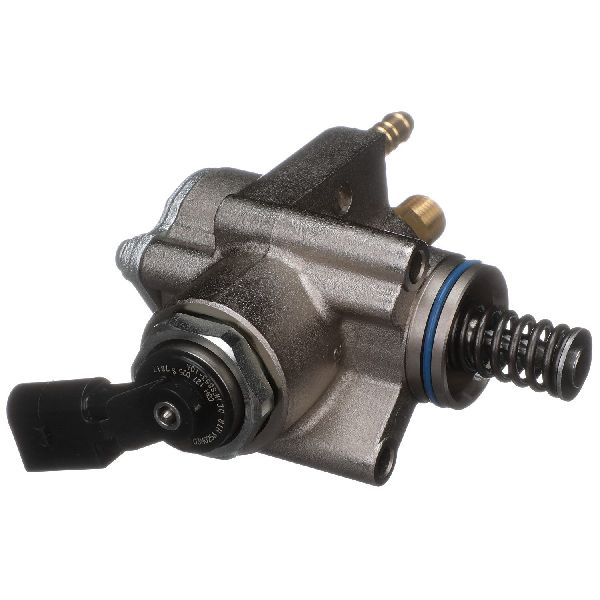
(OEM #948-110-316-KX (rebuilt), 948-110-316-LX (rebuilt), 95811031603)— This is a common failure item on Porsche DFI engines and a primary cause of rich conditions when it fails.
Trusted brands: Bosch (OEM), Genuine Porsche
OEM price range: $800-$1600
Aftermarket price range: $600-$900 - Oxygen Sensor (Bank 1, Sensor 1)
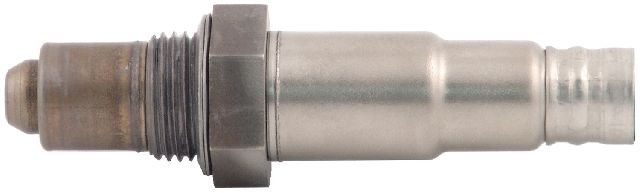
(OEM #958-906-262-F (Turbo), 948-606-134-00 (Non-Turbo))— The primary sensor responsible for measuring the air-fuel ratio on Bank 1. A faulty sensor can send incorrect rich signals.
Trusted brands: Bosch
OEM price range: $200-$300
Aftermarket price range: $100-$180 - Fuel Injector — A leaking injector directly causes a rich condition in one or more cylinders.
Trusted brands: Bosch (OEM), Genuine Porsche
OEM price range: $250-$400
Aftermarket price range: $150-$250
Related Codes That Often Appear With This One
- P0175 — System Too Rich (Bank 2). If both P0172 and P0175 are present, it points to a cause common to both engine banks, such as the HPFP, a MAP sensor issue, or a faulty fuel pressure regulator.
- P1026 — Fuel high pressure implausible. This code strongly indicates a problem with the high-pressure fuel pump or its sensor.
- P1023 — Fuel pressure too low during start. Another code pointing directly at a failing HPFP.
Platform-Specific Known Issues
- Failure of the High-Pressure Fuel Pump (HPFP) is a well-documented issue on the 958-generation Cayenne with DFI engines, leading to various fuel-related trouble codes, including P0172. Symptoms often include long crank times and rough idle.
- The camshaft that drives the HPFP is on the driver's side (Bank 2), but a failing pump can cause rich codes on either or both banks.
Mechanic-Grade Diagnostic Values
- High-Pressure Fuel System Pressure — expected: 580 to 1740 PSI (40 to 120 bar), depending on engine load.. Failure: Pressure that is significantly higher than commanded, or pressure that is unstable or fails to meet targets under load. Codes like P1026 are a strong indicator.
- Low-Pressure Fuel System Pressure — expected: Should be stable around 72-87 PSI at idle.. Failure: Pressure below 65 PSI while driving can indicate a failing in-tank low-pressure fuel pump, which can put a strain on the HPFP but is less likely to directly cause a rich code.
- Pre-Catalyst (Upstream) Oxygen Sensor Voltage — expected: Rapidly fluctuating between approximately 0.1V and 0.9V on a warm engine at idle.. Failure: Voltage stuck high (e.g., >0.8V) indicates the sensor is consistently reading rich, which could be a sensor fault or a true rich condition. A slow or non-fluctuating signal indicates a lazy or dead sensor.
- Oxygen Sensor Heater Resistance — expected: Typically between 4 and 25 Ohms when measured across the two heater wires (often the same color).. Failure: An open circuit (infinite resistance) or a dead short (zero resistance) indicates the internal heater element has failed, which will prevent the sensor from reaching operating temperature quickly, affecting its accuracy during warm-up.
Hidden / Shadow Codes Worth Checking
- Porsche Fault Code 360: This is a Porsche-specific fault code that corresponds to the generic P0172 code, specifically defining it as 'Oxygen adaptation idle range bank 1'. Seeing this on a Durametric or PIWIS scanner confirms the fault is occurring at idle. (see via Porsche-specific scanners like Durametric or PIWIS.)
Scan Tool Commands That Help
- PIWIS (Porsche Dealer Tool): Guided Fault Finding — After reading the P0172 code, this function provides vehicle-specific test plans, wiring diagrams, and step-by-step repair instructions, which is invaluable for complex diagnoses.
- PIWIS (Porsche Dealer Tool): Actual Values / Live Data Graphing — To monitor and graph high-pressure fuel pump requested vs. actual pressure, and to watch O2 sensor voltage fluctuations in real-time to check for lazy or stuck sensors.
- PIWIS / Durametric: Activations / Drive Links — To command components like the EVAP purge valve to open and close, allowing a technician to test its function without having to remove it from the vehicle.
- PIWIS / Durametric: Coding and Programming — While not typically required for a P0172 fix, if the DME (engine computer) itself were suspected and replaced, the new module would need to be coded to the vehicle's VIN and options using one of these tools.
Wiring & Ground Locations
- Engine-to-Chassis Ground Strap (Upper) — In the engine bay, a braided strap runs from the engine to the strut tower area.. A corroded or loose main ground can introduce electrical noise and voltage drops, potentially causing inaccurate readings from sensors like the O2 sensors and MAP sensors, leading to incorrect fuel calculations by the DME.
- Engine-to-Chassis Ground Strap (Lower) — Underneath the engine in the front right corner, connecting the bottom of the engine to the vehicle frame.. This is another primary ground path. High resistance here can cause a variety of difficult-to-diagnose electrical issues, including sensor signal problems that could trigger a P0172 code.
- DME Connector Pin 24 (Connector III) — On the 52-pin Connector III of the DME control module. It is a green wire.. This is the signal wire for the pre-catalyst oxygen sensor. A technician can back-probe this pin to test the O2 sensor signal directly at the computer, confirming if the signal is correct and ruling out wiring issues between the sensor and the DME.
Real Owner Repair Stories
- Rennlist user 'ktr6' (2011 Porsche Cayenne Turbo (958), 75k miles) — Rough idle after startup, prolonged cranking time, white exhaust smoke/smell, and eventually a Check Engine Light with a low fuel pressure code.
❌ Tried (didn't work) Initial diagnosis pointed away from common issues on newer models, but symptoms persisted.
✅ What actually fixed it Replacement of the High-Pressure Fuel Pump (HPFP). The owner noted there had been several part number updates since 2011, indicating it's a known issue. The car started and ran better immediately after replacement. - Rennlist user 'Ghalleck' (2011 Porsche Cayenne S (958)) — Developed long cranking times before starting.
✅ What actually fixed it Replaced the High-Pressure Fuel Pump (HPFP). The owner opted for a new pump instead of rebuilt for peace of mind. The car started immediately after the repair.
OEM Part Supersession History
Varies by production date→948-110-316-KX (rebuilt)— Porsche has released several updates to the HPFP to address reliability issues.
Heads up: A Rennlist user confirmed with a Porsche dealer that the HPFP from a 2010-2016 Panamera Turbo (Part No. 948-110-316-KX) is cross-compatible with the 958 Cayenne Turbo, sometimes offering a better price or availability.95860617210, 95860617211→958-906-262-F— Standard part number consolidation and updates for the front oxygen sensor on Turbo models.
Diagnostic Flowchart
Other Known Issues on This Vehicle
Issues unrelated to this code that are worth knowing about as an owner of this generation:
- Camshaft Adjuster Bolt Failure 🔴 High — Most common on 2011-2012 models with original aluminum bolts. Can cause catastrophic engine damage if bolts shear and are not fully recovered. (Ref: Recall AH08 / Campaign WC-22 issued to replace aluminum bolts with steel ones.)
- Transfer Case Failure 🔴 High — A well-documented issue across the 958 generation, often appearing between 30,000-60,000 miles. Symptoms include jerking, shuddering, or slipping during acceleration, especially on turns. (Ref: No recall, but Porsche updated the transfer case design and fluid recommendations. Regular fluid changes (every 20-30k miles) are recommended as a preventative measure.)
- Coolant Pipe & Housing Leaks 🟠 Medium — The V8 engines use plastic coolant pipes and thermostat housings that can become brittle and crack, causing leaks. A notable leak point is a pipe at the rear of the engine that can be very labor-intensive to replace. (Ref: No recall, but aftermarket aluminum replacement pipes are a common and permanent solution.)
- Cylinder Bore Scoring 🔴 High — A serious but less common issue on the M48 engines, leading to excessive oil consumption, engine knocking, and eventual engine failure.
Used vs. New Parts: Buying Guide for This Vehicle
When a used part is the smart pick: For this specific set of repairs, used parts are generally not recommended. The primary culprits (HPFP, injectors, O2 sensors) are wear items that operate under high stress. A used part may have limited remaining life and could fail shortly after installation, negating any cost savings.
Donor-vehicle mileage cap: roughly under 40000 miles for the part to have meaningful remaining life.
What to inspect on the donor part:
- For an HPFP, there are no reliable visual cues. Failure is internal. Buying used is a significant gamble.
- For fuel injectors, look for clean nozzles without carbon buildup, but this is not a guarantee of function. Professional cleaning and flow testing is required for any used injector.
- For O2 sensors, avoid any with physical damage to the wiring or connector. However, internal function cannot be verified visually.
OEM-only on this vehicle (don't cheap out):
- High-Pressure Fuel Pump (HPFP): Given the history of failures and subsequent part revisions, only a new or professionally rebuilt OEM (Bosch) or Genuine Porsche pump should be used to ensure you have the latest, most reliable version.
- Fuel Injectors: Due to the high pressures of the DFI system, cheap aftermarket injectors are a major risk. Stick with OEM (Bosch) or Genuine Porsche.
Aftermarket brands forum-validated for this vehicle:
- For Oxygen Sensors, Bosch, Denso, and NTK are OEM suppliers and are considered reliable, high-quality alternatives to Genuine Porsche parts.
Brands owners have reported issues with on this vehicle:
- Avoid unbranded or 'budget' electronic parts like oxygen sensors and especially fuel system components like the HPFP or injectors. Forum consensus strongly advises against non-OEM brands for these critical DFI parts on Porsche vehicles.
Real Owner Stories
Aggregated from forums and TSBs cited above. Mileages and costs reflect what owners reported in those sources.
2011 Porsche Cayenne Turbo
Symptoms: Long crank, rough idle, and a noticeable fuel smell.
What fixed it: DIY replacement of the High-Pressure Fuel Pump (HPFP) using part number 948-110-316-KX.
Source hint: Rennlist: 958 High Pressure Fuel Pump DIY
2011 Porsche Cayenne S
Symptoms: Rich codes (P0172) where Porsche eventually researched internal bulletins to find a specific solenoid failure.
What fixed it: Replacement of the HYDRAULIC LIFT SOLENOID (Part # 948 105 308 03) located in the back of the passenger side head.
Cost: $160-$200
Source hint: Rennlist owner report quoted in article context
2011-2014 Porsche Cayenne (958)
Symptoms: Both P0172 and P0175 codes appearing simultaneously, indicating a common cause for both cylinder banks.
What fixed it: Diagnosis pointed toward the High-Pressure Fuel Pump (HPFP) or a fuel pressure regulation issue affecting the entire system.
Source hint: Rennlist: Ooops P0172 / P0175's
Related OBD-II Codes
Frequently Asked Questions
Is there a recall for the camshaft issues on my 2011-2012 Cayenne V8?
My Cayenne has a rough idle and long crank times; could this be the High-Pressure Fuel Pump?
I'm seeing P0172 on Bank 1; how can I tell if it's just a bad O2 sensor?
Could a failing transfer case cause my P0172 code?
What specific scan tools are recommended for diagnosing fuel pressure on the Cayenne M48.02?
Why does my engine oil smell like gasoline?
Helpful Videos
Used OEM Parts in Stock
New Aftermarket Parts Available

The information in this article is provided for general reference and educational purposes only. Vehicle specifications, procedures, and part compatibility can vary by production date, trim level, and region. Always consult your vehicle's factory service manual and verify part numbers before purchasing or performing repairs. Safety-critical components such as airbags, seat belts, and braking systems should be installed by a qualified professional.
- Porsche Cayenne:
- 🎬 Helpful Videos
- 🛍️ Shop This Part
- What's Unique About the 2011-2014 Porsche Cayenne
- Symptoms You May Notice
- Most Likely Causes
- Rare But Worth Checking
- Diagnosis Steps
- Parts You'll Likely Need
- Related Codes That Often Appear With This One
- Platform-Specific Known Issues
- Mechanic-Grade Diagnostic Values
- Hidden / Shadow Codes Worth Checking
- Scan Tool Commands That Help
- Wiring & Ground Locations
- Real Owner Repair Stories
- OEM Part Supersession History
- Diagnostic Flowchart
- Other Known Issues on This Vehicle
- Used vs. New Parts: Buying Guide for This Vehicle
- Real Owner Stories
- 2011 Porsche Cayenne Turbo
- 2011 Porsche Cayenne S
- 2011-2014 Porsche Cayenne (958)
- Related OBD-II Codes
- Frequently Asked Questions
- 🎟️ Get 5% Off