

OBD-II Code P1026: Engine Temperature Sensor Correlation Fault
What P1026 means, why it triggers, and how to fix it
- P1026 is a manufacturer-specific code with drastically different meanings: Ford indicates a coolant sensor conflict, Porsche flags fuel pressure, and Mazda points to thermostat rationality.
- On Ford and Lincoln vehicles, P1026 triggers a false overheat warning and forces the vehicle into a reduced-power limp mode due to a 50°F+ discrepancy between the ECT and CHT sensors.
- The most frequent cause for Ford models is a faulty electrical connector or damaged wiring harness at the ECT sensor, requiring a $120-$350 pigtail replacement rather than a new sensor.
- Hyundai and Kia owners seeing P1026 must rescan with an OEM-level tool; cheap scanners often misread the critical P1326 knock sensor code, which requires immediate dealer intervention.
- Stop driving with an active P1026 code; the sudden engagement of limp mode creates a highway safety hazard, and the false data masks real overheating events that destroy engines ($5,000+).
What Does P1026 Mean?

P1026 is a manufacturer-specific code. For Ford and Lincoln vehicles, the Powertrain Control Module (PCM) sees a major disagreement between the Engine Coolant Temperature (ECT) and Cylinder Head Temperature (CHT) sensors. When these signals conflict, the computer sets this code and triggers a false overheating warning. For Porsche, BMW, Honda, or Mazda, this code points to completely unrelated issues like fuel pressure, valve timing, or thermostat rationality.
Technical definition: The official SAE definition of P1026 varies by manufacturer. For Ford and Lincoln, it is defined as: Engine Coolant Temperature (ECT) / Cylinder Head Temperature (CHT) Correlation. This indicates the PCM detects the difference between the ECT and CHT sensor readings exceeds a calibrated threshold for a specific duration.
Can I Drive With P1026?
Yes, But With Caution. Driving is not recommended. The code triggers a sudden, unexpected shift into a reduced-power "limp mode," creating a major safety hazard in traffic or on highways. Furthermore, this active fault masks real overheating events, risking catastrophic engine damage costing $5,000-$15,000+ if a separate cooling system failure occurs.
Common Causes

- Damaged or Loose ECT Sensor Connector/Wiring (Very Common) — On many affected Ford and Lincoln models, the electrical connector for the ECT sensor is the primary point of failure. A loose connection, corrosion on the pins, or damaged wires causes an erratic signal that triggers the code. TSBs like SSM 47791 specifically point to this as the root cause.
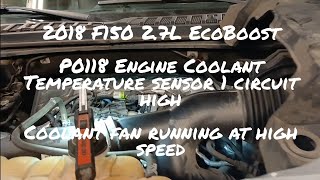
- Faulty Engine Coolant Temperature (ECT) Sensor (Common) — The ECT sensor itself fails, sending incorrect temperature readings to the computer. This is a known issue on some vehicles, with manufacturers issuing technical service bulletins (TSBs) about it, such as TSB 21-2168 for the Ford F-150. 🎬 Watch: How to fix P1026 on F-150 models using TSB 21-2168.
- Low Coolant Level or Air Pockets (Less Common) — If the coolant level is too low or air becomes trapped in the system after a service, the ECT sensor is exposed to air instead of coolant. This causes a sudden, inaccurate reading that conflicts with the CHT sensor (which measures metal temperature), triggering the code.
- Internal EGR Cooler Leak (Ford 2.0L EcoBoost) (Less Common) — On some Ford models with the 2.0L EcoBoost engine, like the Ford Edge, the EGR cooler fails internally. This allows coolant to leak into the intake or exhaust, causing erratic temperature readings, white smoke, and coolant loss, which sets a P1026 code.
- Faulty Cylinder Head Temperature (CHT) Sensor (Rare) — While less common than an ECT sensor failure, the CHT sensor also fails and sends incorrect data, creating a conflict that the PCM detects. Misdiagnosing the issue by replacing the CHT instead of the more common ECT and its wiring is a frequent mistake.
- Faulty Thermostat (Rare) — A thermostat stuck open or closed causes erratic warm-up behavior. While this more commonly sets a P0128 code, the resulting unstable temperature readings create a temporary discrepancy between the ECT and CHT sensors large enough to trigger P1026.
- Internal Head Gasket Leak (Rare) — A failing head gasket leaks combustion gases into the cooling system, creating air pockets and causing rapid, localized temperature fluctuations that confuse the ECT and CHT sensors, triggering a correlation code.
- Faulty Powertrain Control Module (PCM) (Very Rare) — In very rare cases, the vehicle's main computer has an internal fault, causing it to misinterpret sensor signals. This is only considered after all other possibilities, including wiring and reference voltage checks, are exhausted.
Symptoms

- False "Engine Overheating" Warning — The dashboard displays a warning message like "Engine Coolant Over Temperature" and the temperature gauge shoots to hot, even on a cold engine.
- Check Engine Light is On — The Malfunction Indicator Lamp (MIL) illuminates on the dashboard.
- Engine Cooling Fans Run Constantly — Believing the engine is overheating, the computer turns the cooling fans on high speed, and they remain on.
- Reduced Engine Power (Limp Mode) — The vehicle enters a protective "limp mode" to prevent damage from the perceived overheating, resulting in poor acceleration. This is often accompanied by code P1299.
- Rough Idle or Stalling — An incorrect temperature reading causes the PCM to deliver an improper fuel mixture, leading to rough idling, hesitation, or stalling, particularly on a cold engine.
- Poor Fuel Economy — If the PCM receives a false cold signal, it enriches the fuel mixture unnecessarily, leading to a noticeable decrease in fuel efficiency.
Diagnostic Flowchart
Tap your situation to follow the diagnostic path that matches what you're seeing on this code.
Common Fixes & Costs
- Replace Engine Coolant Temperature (ECT) Sensor — Parts: $20-$60, Labor: $95-$250, ~1 hr book time (DIY)
- Repair or Replace ECT Sensor Wiring/Connector — Parts: $20-$200, Labor: $100-$550, ~1.5 hr book time (Intermediate)
- Install ECT Sensor Relocation Kit (per TSB) — Parts: $50-$300, Labor: $150-$400, ~2 hr book time (Intermediate)
- Top Off Engine Coolant and Bleed System — Parts: $20-$50, Labor: $50-$150, ~0.5 hr book time (DIY)
- Replace Thermostat / Coolant Control Valve — Parts: $20-$150, Labor: $150-$400, ~1.8 hr book time (Intermediate)
Used vs. New Parts: Buying Guide
When a used part is worth it: For the most common fixes for this code—the ECT sensor and its connector pigtail—buying used parts is never recommended. These are low-cost electronic components whose primary failure modes are wear, heat cycling, and corrosion. The savings are minimal and the risk of installing a part already near the end of its life is high.
Donor-vehicle mileage cap: roughly under 10000 miles for the part to have meaningful remaining life.
Donor quality checklist:
- Not applicable for sensors or wiring. Always buy new from a reputable source (OEM or high-quality aftermarket).
Decision logic:
- If The required part is an electronic sensor (ECT, CHT) or a wiring pigtail. → Always buy new. The cost is low ($20-$60) and a used part has no reliable way to be tested for remaining life.
- If The fix requires a larger component like a full engine wiring harness. → A used harness from a low-mileage, non-accident vehicle is a cost-effective option, but it must be inspected meticulously for any signs of corrosion, brittleness, or prior repairs.
Warranty tradeoff: Used sensors/pigtails typically have no warranty. New aftermarket parts usually offer a 1-year to limited lifetime warranty. OEM parts offer a 1-2 year warranty.
Worst-case if a used part fails: $200-$500 if a used part fails shortly after installation, requiring a repeat of the labor charges plus the cost of another part.
What Happens If You Wait — Timeline
- 0-1 month: Intermittent false overheat warnings, especially on cold starts. Check Engine Light is on, and cooling fans run at high speed. Vehicle occasionally enters limp mode, but it often resets after a restart. (MPG impact: 3-8%% · Added cost: $0-$50 in wasted fuel. The PCM defaults to a rich fuel mixture and runs fans constantly, hurting fuel economy.)
- 1-4 months: The intermittent electrical fault becomes more frequent. Limp mode becomes a more common and annoying occurrence. The constant high-speed operation causes accelerated wear on the cooling fan motor and relay assembly. (MPG impact: 5-10%% · Added cost: $250-$600. This includes ongoing fuel waste plus the now-likely cost of replacing a prematurely failed cooling fan assembly.)
- The 'Bad Luck' Stage (can happen anytime): A separate, unrelated cooling system failure occurs (e.g., a radiator hose develops a leak, the water pump fails). Because the ECT sensor is already sending a false 'hot' signal, the PCM cannot provide a *new* warning. The driver has no idea a real overheating event is happening. (MPG impact: N/A% · Added cost: $1,500-$3,000. The engine genuinely overheats. The cost reflects repairs for a blown head gasket, which is a common outcome of running an engine hot for too long.)
- The Catastrophic Stage: The real overheating event from Stage 3 is severe or goes unnoticed for several minutes. The extreme heat warps the cylinder head or cracks the engine block, causing catastrophic internal damage. (MPG impact: N/A% · Added cost: $5,000-$15,000+. The engine is destroyed. This cost represents a full engine replacement or a major rebuild, which often exceeds the value of the vehicle.)
Cost of Not Fixing It
- Immediate: Sudden entry into 'limp mode' with reduced power, creating a significant safety hazard in traffic. Inability to distinguish between a false warning and a real, catastrophic overheating event. (Added cost: Towing costs ($100-$300) if the vehicle is undrivable or enters limp mode in an unsafe location.)
- 0-6 months: Masking of a real cooling system failure. If a separate issue like a coolant leak occurs, the existing false signal prevents a true warning, leading to severe engine damage (warped heads, blown head gasket). (Added cost: $5,000-$15,000 for engine replacement or major rebuild.)
- Long-term: Chronically poor fuel economy and performance due to the PCM operating on incorrect temperature data. Constant high-speed fan operation causes premature wear on the fan motors and assembly. (Added cost: $200-$500 for fan assembly replacement, plus ongoing fuel costs.)
Diagnosis Steps

- Scan for Codes and Analyze Live Data
Use an OBD-II scanner to check for accompanying codes like P1299 (Cylinder Head Overtemperature Protection Active). View the live data stream for both the ECT and CHT sensors on a cold engine. A key indicator of failure is if one sensor reads a default value (e.g., -40°F) or an impossibly high value immediately on a cold start, while the other reads ambient temperature.
Tools: OBD-II Scanner with Live Data (Beginner) - Check Coolant Level and Condition
With the engine completely cold, check the coolant level in the reservoir. If it's low, top it off with the correct type of coolant and check for visible leaks. On some 2022-2023 Ford Explorers, check for a blocked degas bottle hose by observing flow in the reservoir.
Tools: Flashlight, rag (Beginner) - Inspect the ECT Sensor Connector and Wiring
Locate the Engine Coolant Temperature (ECT) sensor. Carefully inspect its electrical connector for a secure fit, corrosion, or any signs of damage like melted plastic or backed-out pins. Follow the wiring harness back, looking for breaks or chafing.
Tools: Flashlight (Beginner) - Test the ECT Sensor Circuit and Voltage
Disconnect the ECT sensor. With the key on and engine off (KOEO), use a multimeter to check the reference voltage (VREF) at the connector, which should be approximately 5.0 volts. Check the ground pin for good continuity to the chassis ground (less than 0.1 ohms). Reconnect the sensor and back-probe the signal wire; voltage should drop smoothly as the engine warms up.
Tools: Multimeter, back-probe pins (Advanced) - Test ECT/CHT Sensor Resistance vs. Temperature
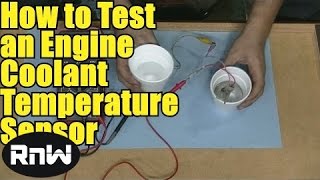
If the circuit tests good, remove the sensor and place it in a container of water with a thermometer. Measure its resistance at different temperatures and compare to a known specification chart. A reading that is infinite (open circuit) or near zero (short circuit) at any temperature indicates a failed sensor.
Tools: Multimeter, Thermometer, Service Manual (Advanced) - Check Fuel Pressure (Porsche Specific)
For Porsche vehicles where P1026 means 'Fuel High Pressure Implausible', use a scan tool to monitor high-pressure fuel rail pressure at idle (approx. 580 PSI) and under load (exceeding 1,700 PSI). Also check the low-pressure fuel pump; with KOEO, it should provide approximately 72-80 PSI to the high-pressure pump.
Tools: Scan Tool with Live Data, Fuel Pressure Gauge (Advanced) - Perform Advanced Signal Analysis
For intermittent faults, use an oscilloscope to graph the ECT sensor's voltage signal during a wiggle test of the harness. Look for any dropouts, spikes, or noise in the signal, which indicate a hidden wiring problem.
Tools: Oscilloscope, wiring diagram (Expert)
When This Code Triggers (Freeze-Frame Conditions)
- Engine State: After Cold Start (The fault typically occurs within minutes of starting the engine after it sits for several hours, especially in cold ambient temperatures.)
- Engine Coolant Temp (ECT) vs. Cylinder Head Temp (CHT): >50°F Difference (The code triggers when the PCM sees an illogical difference between the two main temperature sensors. For example, the CHT reads 190°F while the faulty ECT signal reads -40°F.)
- RPM: 800-2500 (The fault logs at idle or during steady-state cruising as the PCM continuously monitors the correlation.)
- Ambient Air Temperature: < 40°F (5°C) (Ford TSBs note the issue is most prevalent in cold weather, caused by thermal contraction of a faulty connector or sensor creating a poor electrical connection.)
Related Codes
- P1299 — This code for 'Cylinder Head Overtemperature Protection Active' is the *effect* caused by P1026. P1026 is the sensor conflict; P1299 is the PCM taking action (activating limp mode) because it believes the engine is overheating. Seeing them together confirms a false overheat event.
- P0116 / P0117 / P0118 — These are generic codes for the ECT sensor circuit. P0117 (Low Input) and P0118 (High Input) indicate a hard electrical fault like a short or open circuit. P1026 is a *correlation* fault, comparing the ECT to the CHT. A hard fault like P0117 almost certainly causes a P1026, but P1026 is also set by an intermittent connection that doesn't trigger a specific circuit code.
- P0128 — This code means 'Coolant Thermostat Rationality'. It is set when the engine does *not* warm up quickly enough. With P0128, the ECT and CHT sensors are working and agree, but they show the engine is too cold, usually due to a stuck-open thermostat. P1026 is the opposite: the engine temperature is fine, but the sensors *disagree* with each other.
- P1326 (Hyundai/Kia) — This is not a related code, but a common point of confusion. Inexpensive scanners often misread P1326 as P1026 on Hyundai and Kia vehicles. P1326 is a critical code from the Knock Sensor Detection System (KSDS) that puts the car in limp mode to protect against catastrophic engine bearing failure.
Climate & Environmental Factors
- Cold Weather: For the Ford/Lincoln correlation fault, cold weather is a major trigger. Multiple TSBs note that the false overheat warning is most likely to occur after a cold start in ambient temperatures at or below freezing. This is caused by material contraction in the faulty sensor or connector creating a poor connection when cold.
- High Humidity / Corrosion: In areas with high humidity or road salt usage, corrosion on the ECT sensor connector pins is more common. This corrosion increases resistance in the circuit, which causes an erratic or out-of-range signal, leading to the P1026 fault.
How to Talk to a Mechanic About This Code
Say this: "I have a [Your Car's Year and Make, e.g., 2020 Ford Explorer] with a P1026 code. For my vehicle, I believe this relates to the common ECT/CHT sensor correlation issue. Please write up a diagnostic to check the live data from both sensors on a cold start and inspect the ECT sensor connector and harness for damage, per the known TSBs."
This signals you've done your research, immediately focuses the technician on the correct system (e.g., cooling for a Ford, fuel for a Porsche), and references the specific TSBs that a good shop should already know about. It prevents wasted diagnostic time and protects you from a shop that might not understand the code's manufacturer-specific meaning.
Avoid saying:
- 'My check engine light is on, can you look at it?'
- 'The internet said to replace the CHT sensor.'
- 'Just fix whatever's wrong.'
Questions to ask before authorizing the repair:
- For a Ford: Did you see the temperature split between the ECT and CHT on a cold start? Was one of them reading a default value like -40°F?
- For a Ford: Did you find any corrosion or damage on the ECT connector or its wiring harness?
- For a Porsche: What were the low-pressure and high-pressure fuel readings at idle and under load? Did you test the low-pressure pump first?
- Can you show me the failed part or the data that confirms the failure?
- What is the warranty on this specific repair, including both parts and labor?
Where to Take It: Dealer vs Independent vs Chain
- Dealer:
Best for: Vehicles under warranty, Hyundai/Kia vehicles (to address the likely P1326 KSDS service campaign), Porsche, BMW, or other European makes where the code points to a complex system (fuel pressure, Valvetronic) and requires brand-specific diagnostic tools.
Downsides: Typically highest labor rates, May be less willing to perform a simple wiring repair and pushes for a more expensive full harness replacement. (Typical cost: +50% vs. baseline) - Independent Shop:
Best value for the common Ford/Lincoln fault. For other brands, choose a specialist indie or the dealer.
Best for: Out-of-warranty Ford and Lincoln vehicles with the common ECT/CHT correlation fault., A *brand-specialist* independent shop is a great alternative to the dealer for Porsche/BMW issues.
Downsides: Quality and experience vary greatly. Ensure they are familiar with manufacturer-specific TSBs., A general shop may not understand the different meanings of P1026 across brands. (Typical cost: +0% vs. baseline) - Chain Shop:
AVOID for diagnosis. High risk of misdiagnosis, such as replacing the wrong sensor or not understanding the code's meaning for your specific car.
Best for: Simple part replacement *after* a correct diagnosis has been made elsewhere (e.g., you've confirmed it's just a bad ECT sensor).
Downsides: Technician skill varies widely; high pressure to sell parts leads to misdiagnosis and unnecessary repairs., Very unlikely to have the expertise to diagnose this manufacturer-specific code correctly. (Typical cost: -10% vs. baseline)
When to Walk Away From the Repair
If the estimated repair cost exceeds 40-50% of the car's private-party market value, seriously consider selling the vehicle.
- Car worth $5000, fix is $450: Fix it. The repair for a common Ford ECT sensor issue is a small fraction of the car's value.
- Car worth $15000, fix is $2200: Fix it. A high-pressure fuel pump replacement on a Porsche is expensive, but at 15% of the vehicle's value, it's a worthwhile repair.
- Car worth $3000, fix is $3500: Walk away. If ignoring the P1026 warning led to a real overheat and a blown head gasket, the repair cost now exceeds the car's value. Sell as a 'mechanic's special' or scrap it.
What Scan Tool You Need for This Code
Minimum: A scanner that reads and graphs live data for multiple sensors at once. A basic code reader that only shows the code number is insufficient for diagnosing P1026.
You cannot diagnose a 'correlation' fault without seeing the data from the sensors that are failing to correlate. For a Ford, you must see the ECT and CHT temperature readings on a graph to confirm one is giving a faulty reading. For a Porsche, you need to see live fuel pressure data.
Budget: BlueDriver Pro Scan Tool (~$100) — Connects to your smartphone and provides detailed live data graphing for multiple PIDs (like ECT and CHT), reads manufacturer-specific codes, and provides freeze-frame data. This is enough to confirm the common Ford fault.
Mid-range: Foxwell NT510 Elite / Innova 5610 (~$150) — These handheld scanners offer manufacturer-specific diagnostics, allowing them to read the code with the correct OEM definition for your exact vehicle. The Innova 5610 also offers bi-directional control to test components.
Professional: Autel MaxiCOM MK808S / Launch X431 Series (~$450) — Provides full, professional-level bidirectional controls, OEM-level diagnostics for all vehicle systems, and advanced coding functions. These tools perform system-specific tests and resets required after more complex repairs, like replacing a fuel pump on a European vehicle.
Rent vs buy: For a one-time diagnosis, auto parts stores like AutoZone offer a loaner-tool program. You pay a deposit for the tool, which is fully refunded upon return. Ensure the loaner tool displays live data, not just reads codes.
How to Clear the Code After You Fix It
- Use an OBD-II scan tool to clear all Diagnostic Trouble Codes (DTCs).
- Perform a complete drive cycle to allow the vehicle's readiness monitors to run.
- Check the readiness monitor status with a scan tool to confirm the vehicle is ready for an emissions test.
Drive cycle (~30 minutes): A full Ford drive cycle involves several stages. Start with a cold engine (sit for 8+ hours). Idle for 2-4 minutes. Drive at a steady 40-45 MPH until the engine is fully warm (170°F+). Perform stop-and-go city driving for about 15 minutes, including multiple stops. Drive at a steady highway speed (55-60 MPH) for 5-10 minutes.
Readiness monitors affected: Comprehensive Component Monitor, Catalyst Monitor, Evaporative System Monitor, Oxygen Sensor Monitor
Before emissions retest: drive at least 100 miles to fully set monitors.
Watch out for:
- Simply clearing the code with a scanner or disconnecting the battery resets the readiness monitors to 'Not Ready'. You will fail an emissions test if you don't complete a drive cycle.
- The code returns immediately if the root cause, such as a bad wiring connection or faulty sensor, is not properly repaired.
Will This Fail Emissions / State Inspection?
Yes — this code typically fails an OBD-II emissions inspection.
- California: An illuminated Check Engine Light is an automatic failure. After repair, a full drive cycle must be completed to set all readiness monitors to 'Ready' before the vehicle can be re-tested.
- New York: The NYS DMV inspection includes an OBD-II scan. An active P1026 code causes an automatic failure.
- Texas: In counties requiring an emissions test, an illuminated Check Engine Light results in an automatic failure. You cannot renew your registration until the issue is repaired and the vehicle passes inspection.
Most Commonly Affected Vehicles
- Ford Explorer (2020-2023) — Particularly models with the 2.3L engine. A widely documented issue with multiple TSBs for a faulty ECT sensor (Part DY-1613), wiring, or a blocked degas bottle hose causing false overheat warnings, especially in cold weather or on a cold start.
- Ford F-150 (2018-2020) — Primarily affects models with the 2.7L EcoBoost engine. Ford released TSB 21-2168, which provides a permanent fix by relocating the ECT sensor with a new hose and jumper harness (Part No. ML3Z-14A411-H) to prevent false overheat signals.
- Lincoln Continental (2017-2020) — Models with the 2.7L engine are known to set this code due to a bad connection or damaged wiring at the ECT sensor, as documented in TSB SSM 47791. The fix often involves repairing the harness between connectors C1016 and C1168.
- Ford Edge (2015-2020) — On 2.0L EcoBoost models, P1026 is caused by a leaking EGR cooler, a known issue covered by Ford TSBs. On 2.7L EcoBoost models, it's more often the same ECT sensor wiring issue seen in other Fords, covered by TSBs like SSM 48991.
- Porsche Cayenne (2008-2018) — On these vehicles, P1026 means 'Fuel High Pressure Implausible' and is a completely different issue, often related to the high-pressure fuel pump (HPFP). Diagnosis should always include checking the low-pressure fuel system first, as a weak in-tank pump causes this code.
- BMW Various Models (2006-2016) — On many BMWs, P1026 is not a coolant code but indicates a fault with the Valvetronic system, which controls variable valve lift. It often points to a worn or binding eccentric shaft or a failing eccentric shaft sensor, sometimes caused by oil contamination in the sensor connector.
- Hyundai / Kia Various Models (2010-2021) — IMPORTANT: These brands rarely use P1026. If you see this code, it is almost certainly a cheap scanner misreading P1326, for the Knock Sensor Detection System (KSDS). This is a critical code requiring immediate dealer attention under Service Campaign 966.
- Mazda 3, CX-5 (2014-2021) — On many modern Mazda vehicles, P1026 is defined as 'Insufficient Coolant Temperature for Stable Operation,' which is functionally identical to the more common P0126 code. This is typically caused by a failing failsafe thermostat or coolant control valve (CCV) that is stuck open.
Manufacturer-Specific Notes
- Ford / Lincoln: This is the most common user of P1026. It almost always points to an ECT/CHT sensor correlation fault. Ford has issued numerous TSBs that identify the root cause as a faulty sensor connector, wiring harness, or sensor location, leading to false overheat warnings.
- Hyundai / Kia: P1026 is not a common code. If seen, it's likely a misreading of P1326 by a generic scanner. P1326 is related to the Knock Sensor Detection System (KSDS) and is part of a major service campaign (T3G / 966) to prevent engine failure.
- Porsche: On Porsche models, P1026 means 'Fuel High Pressure Implausible'. It has nothing to do with coolant temperature and points to a problem with the high-pressure fuel pump or the low-pressure pump that supplies it.
- BMW: On many BMW models, P1026 refers to a fault in the Valvetronic variable valve lift system. This is a mechanical issue, often caused by a worn eccentric shaft or a failing sensor, and is completely unrelated to the cooling system.
- Mazda: For many newer Mazda models, P1026 is defined as 'Insufficient Coolant Temperature for Stable Operation,' essentially a duplicate of P0126. It indicates the engine isn't warming up as expected, usually due to a stuck-open thermostat or a faulty coolant control valve (CCV).
- Volkswagen / Audi: For VW and Audi, P1026 typically means 'Intake Manifold Air Control Solenoid Short to Positive,' pointing to an issue with the intake runner control system, not engine temperature.
- Honda: On Honda vehicles, P1026 is defined as a circuit fault in the VTC/VTEC oil control system or the Valve Pause System (VPS), depending on the model. It is an oil pressure/control issue, not a coolant issue.
- Chrysler / Dodge / Jeep: On some vehicles from these brands, P1026 points to a fault in the Variable Valve Timing (VVT) system, often related to the VVT solenoid or oil control valve circuit.
Real Owner Stories
2020 Ford Explorer 2.3L at 45k miles - The Classic, Easy Fix
Owner experienced a sudden "Engine Coolant Over Temperature" warning on the dash immediately after a cold start on a winter morning. The temperature gauge shot to Hot, and the cooling fans ran at maximum speed. Check engine light came on with codes P1026 and P1299.
What they tried:
- Verified the coolant level was correct and the engine was not physically hot.
- Researched Ford TSBs and found multiple bulletins pointing to a faulty ECT sensor.
Outcome: Replaced the Engine Coolant Temperature (ECT) sensor with an OEM Motorcraft part (DY-1613). The repair cost was under $40 for the part and took about 30 minutes of DIY labor. After clearing the codes, the false overheat warning did not return.
Lesson: For a 2020-2023 Ford Explorer with a 2.3L engine, a P1026 code after a cold start is almost certainly the well-documented ECT sensor issue. Don't assume it's a major problem; start with the inexpensive sensor replacement, which is a very common and effective fix.
2019 Ford F-150 2.7L at 25k miles - A Story of Misdiagnosis
Owner experienced recurring limp mode and a temperature gauge that would peg to Hot then drop to Cold, accompanied by codes P1026 and P1299. The issue was intermittent, sometimes disappearing for a thousand miles after clearing codes.
What they tried:
- Dealer replaced the Cylinder Head Temperature (CHT) sensor under warranty, but the problem returned.
- Owner, assuming the new part was faulty, replaced the CHT sensor himself a second time. The problem still came back.
- The owner was about to replace the CHT sensor a third time before researching further.
Outcome: Forum research revealed that for the F-150 2.7L, the root cause is almost always the ECT sensor circuit, not the CHT sensor. The owner eventually had the issue resolved by having Ford perform TSB 21-2168, which relocates the ECT sensor with a new harness.
Lesson: Don't fall into the trap of replacing the CHT sensor. Even though P1026 is a correlation code between two sensors, on Ford platforms the ECT sensor and its wiring are the overwhelmingly common points of failure. Trust the TSBs over the code's generic description.
2010 Porsche 911 Carrera 4S at 74k miles - A Completely Different Problem
While driving in town, the car suddenly became sluggish and the dash displayed a "Reduced Engine Power" message. The car entered limp mode. After replacing a dead battery, the message returned within miles of driving, and a scan revealed code P1026.
What they tried:
- Initially suspected a bad battery, which was replaced.
- Researched the P1026 code for Porsche and discovered it means 'Fuel High Pressure Implausible', completely unrelated to coolant temperature.
Outcome: The issue was diagnosed as a failing High-Pressure Fuel Pump (HPFP). The owner had it replaced at a specialty shop. The repair is known to cost between $1,000 and $2,000 for parts and labor. This resolved the limp mode and cleared the P1026 code.
Lesson: The single most important step in diagnosing P1026 is identifying your vehicle's make. For a Porsche, this code has nothing to do with temperature and points directly to a serious fuel system problem. Do not attempt any cooling system repairs; focus diagnosis on the high and low-pressure fuel systems.
How to Prevent This Code From Triggering
- Perform scheduled coolant flushes with the manufacturer-specified fluid. (Every 5 years or 100,000 miles, or as specified in the owner's manual.) — Old coolant loses its anti-corrosive properties, becoming acidic and leading to internal corrosion of components like the radiator and water pump. A flush removes contaminants and rust particles that clog passages and damage sensors.
- Apply dielectric grease to the ECT sensor electrical connector. (Whenever the connector is disconnected for service.) — Dielectric grease is a non-conductive, silicone-based compound that seals electrical connectors from moisture, oxygen, and salt. This prevents the pin corrosion that is a common cause of the intermittent signals that trigger P1026.
- Regularly inspect coolant hoses and the area around the ECT sensor. (During every oil change.) — Visually checking for brittle or bulging hoses prevents a catastrophic leak. Keeping the area around sensors clean helps spot small leaks early and prevents debris from damaging wiring.
- For Porsche, use high-quality, top-tier fuel and consider an occasional fuel system cleaner. (Every fill-up (fuel); once every 10,000-15,000 miles (cleaner).) — Since the Porsche P1026 code is fuel-related, maintaining fuel system health is key. Quality fuels with good detergent packages help prevent deposits on injectors and within the high-pressure fuel pump, reducing strain on the system.
Frequently Asked Questions
Why does my car say it's overheating when the engine is cold?
This is the classic symptom for P1026 on many Ford and Lincoln vehicles. A faulty sensor or bad wire sends a false, high-temperature signal to the computer, tricking it into thinking the engine is dangerously hot right after starting. This is especially common in cold weather.
My scanner shows P1026 on my Hyundai Sonata. What does this mean?
Your scanner is almost certainly misinterpreting the critical P1326 Knock Sensor Detection System (KSDS) code. This warning indicates severe engine bearing wear and forces the car into limp mode. Tow the vehicle to a dealer immediately and reference Hyundai Service Campaign 966.
What is Ford TSB 21-2168 for the F-150?
TSB 21-2168 is a technical service bulletin for 2018-2020 Ford F-150s with the 2.7L engine. It provides a permanent fix for P1026 and related false overheating codes by relocating the ECT sensor to a more stable location using a new heater hose and jumper harness.
I replaced the Cylinder Head Temperature (CHT) sensor on my Ford, but P1026 came back. What went wrong?
This is a very common misdiagnosis. While the code indicates a conflict between the CHT and ECT sensors, the failure point is almost always the Engine Coolant Temperature (ECT) sensor or its wiring harness. Always inspect the ECT circuit thoroughly before replacing the CHT sensor.
Is it safe to just clear code P1026 and keep driving?
No, clearing the code only temporarily restores normal operation while the underlying fault remains. The car enters limp mode without warning, creating a serious safety risk in traffic. Ignoring the code also masks real overheating events, risking severe engine damage.
My Mazda has code P1026, is it a sensor problem like on Fords?
No, on modern Mazda vehicles, P1026 means the engine is not warming up fast enough, identical to code P0126. This is caused by a thermostat or coolant control valve stuck open, not a sensor correlation issue. Focus your diagnosis on the mechanical cooling components.
I have a Porsche and got P1026. Is it a sensor issue?
No, on a Porsche, P1026 indicates a 'Fuel High Pressure Implausible' condition. This is caused by a failing high-pressure fuel pump (HPFP) or a fault in the low-pressure fuel system supplying it. Do not replace cooling system components for this code on a Porsche.
Key Takeaways
- P1026 is a manufacturer-specific code with drastically different meanings: Ford indicates a coolant sensor conflict, Porsche flags fuel pressure, and Mazda points to thermostat rationality.
- On Ford and Lincoln vehicles, P1026 triggers a false overheat warning and forces the vehicle into a reduced-power limp mode due to a 50°F+ discrepancy between the ECT and CHT sensors.
- The most frequent cause for Ford models is a faulty electrical connector or damaged wiring harness at the ECT sensor, requiring a $120-$350 pigtail replacement rather than a new sensor.
- Hyundai and Kia owners seeing P1026 must rescan with an OEM-level tool; cheap scanners often misread the critical P1326 knock sensor code, which requires immediate dealer intervention.
- Stop driving with an active P1026 code; the sudden engagement of limp mode creates a highway safety hazard, and the false data masks real overheating events that destroy engines ($5,000+).
Helpful Videos


The information in this article is provided for general reference and educational purposes only. Vehicle specifications, procedures, and part compatibility can vary by production date, trim level, and region. Always consult your vehicle's factory service manual and verify part numbers before purchasing or performing repairs. Safety-critical components such as airbags, seat belts, and braking systems should be installed by a qualified professional.
- 🎬 Helpful Videos
- What Does P1026 Mean?
- Can I Drive With P1026?
- Common Causes
- Symptoms
- Diagnostic Flowchart
- Common Fixes & Costs
- Used vs. New Parts: Buying Guide
- What Happens If You Wait — Timeline
- Cost of Not Fixing It
- Diagnosis Steps
- When This Code Triggers (Freeze-Frame Conditions)
- Related Codes
- Climate & Environmental Factors
- How to Talk to a Mechanic About This Code
- Where to Take It: Dealer vs Independent vs Chain
- When to Walk Away From the Repair
- What Scan Tool You Need for This Code
- How to Clear the Code After You Fix It
- Will This Fail Emissions / State Inspection?
- Most Commonly Affected Vehicles
- Manufacturer-Specific Notes
- Real Owner Stories
- 2020 Ford Explorer 2.3L at 45k miles - The Classic, Easy Fix
- 2019 Ford F-150 2.7L at 25k miles - A Story of Misdiagnosis
- 2010 Porsche 911 Carrera 4S at 74k miles - A Completely Different Problem
- How to Prevent This Code From Triggering
- Frequently Asked Questions
- Why does my car say it's overheating when the engine is cold?
- My scanner shows P1026 on my Hyundai Sonata. What does this mean?
- What is Ford TSB 21-2168 for the F-150?
- I replaced the Cylinder Head Temperature (CHT) sensor on my Ford, but P1026 came back. What went wrong?
- Is it safe to just clear code P1026 and keep driving?
- My Mazda has code P1026, is it a sensor problem like on Fords?
- I have a Porsche and got P1026. Is it a sensor issue?
- Key Takeaways
- 🎟️ Get 5% Off