

P0171 on 2019-2023 Mazda 3: System Too Lean Causes and Fixes
For a 2019-2023 Mazda 3, code P0171 (System Too Lean) is commonly caused by a dirty Mass Airflow (MAF) sensor, a vacuum leak from a failed intake manifold gasket, or a faulty purge solenoid valve. Cleaning the MAF sensor is a good first step. If that fails, a smoke test for vacuum leaks is next. A Mazda TSB (MT-021/17) also points to faulty fuel injectors as a known final repair step after other causes are ruled out.
- Start with the simplest fixes: ensure the air filter box is sealed correctly and clean the MAF sensor with dedicated cleaner.
- The most common causes for P0171 on this Mazda 3 are a dirty MAF sensor or a vacuum leak from the intake manifold gaskets.
- A smoke test is the most effective way to confirm a vacuum leak.
- Be aware of Mazda's TSB (MT-021/17), which suggests faulty fuel injectors could be the root cause if simpler fixes don't work.
- Do not replace the oxygen (A/F) sensor unless all other possibilities have been thoroughly ruled out.
What's Unique About the 2019-2023 Mazda 3

While many cars get P0171 from vacuum leaks or dirty MAF sensors, Mazda has a specific Technical Service Bulletin (TSB MT-021/17, updated in 2023) that applies to all 2014-2023 Mazda 3 models with SKYACTIV engines. This TSB outlines a diagnostic procedure that, after ruling out simpler issues like intake leaks and sensor faults, points directly to replacing the fuel injectors as the final repair. This suggests that faulty fuel injectors are a more common and officially recognized problem on this platform than on many other vehicles. Additionally, Manufacturer TSB Bulletin #MT-004-22 confirms that vehicles may experience the Check Engine Light with P0171 and possibly P030X misfire codes, providing a standardized inspection and repair procedure for these specific symptoms.
Symptoms You May Notice
- Check Engine Light is on
- Rough or unstable idle, with RPMs fluctuating at stop lights
- Hesitation or lack of power during acceleration
- Reduced fuel economy
- Engine stalling, especially when stopped at a light or during idle
- Hissing or whistling noise from the engine bay, especially when accelerating at low RPMs
- Replacing the front oxygen (A/F) sensor first. The sensor is often correctly reporting the lean condition, not causing it. Diagnose vacuum leaks and MAF issues before replacing sensors.
- Replacing the MAF sensor when the root cause is a vacuum leak or faulty fuel injectors as per the TSB.
- Replacing the gas cap. A stuck-open purge valve is a vacuum leak that a new gas cap will not fix.
Most Likely Causes


- Dirty or Faulty Mass Airflow (MAF) Sensor 🔴 High Probability The MAF sensor measures the air entering the engine. If it's dirty, it can under-report the amount of air, causing the PCM to inject too little fuel. This is a very common first point of failure discussed on forums. Oiled air filters can sometimes contribute to contamination.
How to confirm: Inspect the sensor's wires for grime. A diagnostic scan tool can show if MAF readings are erratic or out of spec. Unplugging the sensor while the engine is idling may cause the idle to stabilize, pointing to a faulty sensor. Cleaning the sensor is a common first diagnostic step.
Typical fix: Clean the sensor using a dedicated MAF sensor cleaner spray. Do not touch the delicate wires or use other chemicals like brake cleaner. 🎬 Watch: How to safely clean your Mazda's MAF sensor If cleaning doesn't resolve the issue, the sensor must be replaced.
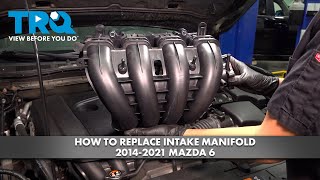
Est. part cost: $100-$250 - Vacuum Leak (Intake Manifold Gasket) 🔴 High Probability The intake manifold gaskets on Skyactiv engines are a well-documented, common failure point. Over time, the rubber gaskets can become hard and brittle, allowing unmetered air to be sucked into the engine after the MAF sensor, creating a lean mixture.
How to confirm: A hissing sound at idle can indicate a leak. The definitive way to confirm is with a smoke test, which forces smoke into the intake system and reveals leaks wherever smoke escapes. 🎬 See how to find vacuum leaks using a smoke machine A DIY method involves spraying flammable brake or carb cleaner near the gasket with the engine running and listening for a change in engine RPM, but this should be done with extreme caution.
Typical fix: Replace the set of four intake manifold gaskets. This is a labor-intensive but common repair.
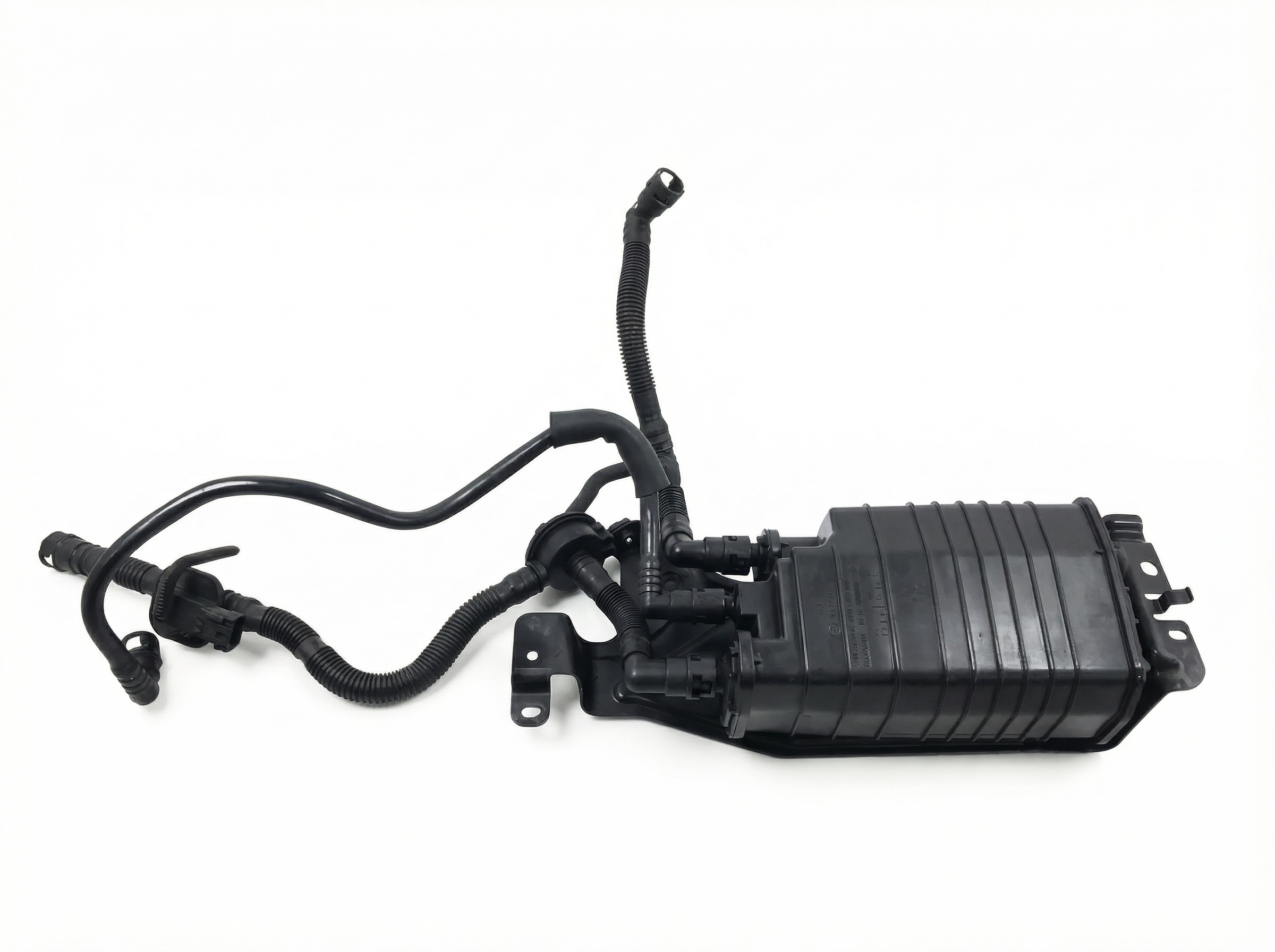
Est. part cost: $20-$50 - Faulty Purge Solenoid Valve 🟡 Medium Probability The purge valve controls the flow of fuel vapors from the charcoal canister to the engine. If it sticks open, it creates a vacuum leak. Several owners on forums for the Mazda 3 and CX-30 have reported this as the specific fix for their P0171 and stalling issues after other attempted repairs failed.
How to confirm: A common symptom is difficulty starting the car immediately after refueling. To test, with the engine off, disconnect the hose from the valve to the intake and try to blow through it; no air should pass. With the engine idling, there should be no vacuum felt on the intake port of the valve.
Typical fix: Replace the purge solenoid valve. OEM part number is PE01-18-751. 🎬 Watch this guide to replacing the purge solenoid valve
Est. part cost: $50-$100 - Faulty Fuel Injectors ⚪ Low Probability Mazda TSB MT-021/17 specifically identifies replacing the fuel injectors as the final repair step if other diagnostics don't resolve the P0171 code, indicating a known issue with injectors on these engines becoming clogged or failing.
How to confirm: This is typically diagnosed after ruling out vacuum leaks and MAF sensor issues. A technician may perform a fuel injector balance test or the dealer may follow the TSB procedure. One owner reported a fuel injector cleaner additive resolved their issue after multiple other parts failed to fix it.
Typical fix: Replace all four fuel injectors as recommended by the TSB. A relevant OEM part number for the 2.5L engine with cylinder deactivation is PX9R-13-250.
Est. part cost: $400-$800
Rare But Worth Checking
- Improperly Seated Air Filter Box: Several owners on forums have reported that if the air filter housing is not closed and latched correctly after a filter change, it can create an air leak after the MAF sensor and trigger a P0171 code. Always double-check that the cover is properly seated and all clips are secure before pursuing more complex repairs.
- Weak Fuel Pump: While less common on this generation than older models, a failing fuel pump can deliver insufficient fuel pressure, leading to a lean condition. Some 2018-2019 models of platform mates were subject to a recall for a faulty low-pressure fuel pump. This might be accompanied by other codes like P0192 (Fuel Rail Pressure Sensor Circuit Low). In a cross-manufacturer reference, NHTSA ODI #11505265 describes a vehicle that would not restart and threw codes P0192 and P0171, which was attributed to a defective fuel pump. Similarly, NHTSA ODI #11517077 notes a case where P0171 was triggered because a damaged fuel pump sent debris into the high-pressure pump.
- Faulty Front Air/Fuel Ratio Sensor (O2 Sensor): The sensor itself can fail and send incorrect lean readings to the PCM. However, it's more common for the sensor to be correctly reporting a problem caused by something else. It should be one of the last parts replaced after verifying other causes. Some owners have noted that moisture getting into damaged O2 sensor wiring after heavy rain has been a suspected cause.
Diagnosis Steps

- Read the code and check for any other stored codes. Note the freeze frame data.
- Inspect the air filter and air filter housing. Ensure the housing is properly latched and sealed, as an improper seal can cause a leak after the MAF sensor.
- Visually inspect all accessible vacuum hoses and the air intake tube for cracks, loose connections, or damage. Pay attention to the brake booster hose.
- Clean the Mass Airflow (MAF) sensor using a dedicated cleaner. Do not touch the internal wires. Clear the codes and test drive to see if the code returns.
- If the code persists, perform a smoke test to check for vacuum leaks, paying close attention to the intake manifold gaskets.
- Using a scan tool, monitor long-term (LTFT) and short-term (STFT) fuel trims. High positive numbers (e.g., LTFT > 15%) at idle that decrease as RPMs increase strongly indicate a vacuum leak.
- Test the purge solenoid valve. Check for vacuum at idle and ensure it is closed when the engine is off.
- If no vacuum leaks are found and the MAF is clean/working, check fuel pressure to rule out a weak fuel pump.
- If all other steps fail to find the cause, the issue is likely the fuel injectors, as outlined in Mazda's TSB MT-021/17.
Parts You'll Likely Need

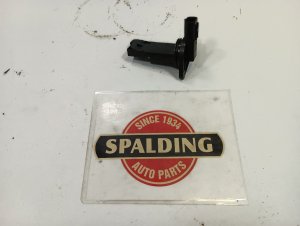
- Mass Airflow (MAF) Sensor
(OEM #PE01-13-215)— A dirty or faulty MAF sensor is a very common cause for P0171. Cleaning is often attempted first, but replacement is necessary if it fails.
Trusted brands: Denso, Hitachi, Genuine Mazda
OEM price range: $200-$250
Aftermarket price range: $100-$180 - Intake Manifold Gasket Set
(OEM #PE01-13-111)— These gaskets are a known failure point on Skyactiv engines, leading to vacuum leaks that cause a lean condition.
Trusted brands: Fel-Pro, Victor Reinz, Genuine Mazda
OEM price range: $30-$40
Aftermarket price range: $20-$30 - Purge Solenoid Valve
(OEM #PE01-18-751)— A stuck-open purge valve is a common cause of P0171 on these vehicles, with multiple owner reports confirming it as the fix.
Trusted brands: Standard Motor Products, Dorman, Genuine Mazda
OEM price range: $90-$140
Aftermarket price range: $50-$80 - Fuel Injector
(OEM #PX9R-13-250 (For 2.5L w/ cylinder deactivation))— Mazda's TSB points to faulty injectors as a final repair step for persistent P0171 after other causes are eliminated.
Trusted brands: Genuine Mazda
OEM price range: $150-$200 each
Aftermarket price range: Not Recommended
Related Codes That Often Appear With This One
- P0300-P0304 — A lean condition can cause incomplete combustion, leading to random (P0300) or specific cylinder (P0301-P0304) misfires. Mazda TSB MT-021/17 specifically notes that P0171 may appear with these codes.
- P0507 — Idle Air Control System RPM Higher Than Expected. A vacuum leak that causes P0171 can also cause the engine idle speed to be too high, triggering this code.
- P0192 — Fuel Rail Pressure Sensor Circuit Low. As noted in NHTSA ODI #11523568, this code often appears alongside P0171 when the vehicle is lacking RPM power due to fuel system issues.
Technical Service Bulletins (TSBs) & Recalls
- MT-021/17 (Supersedes MT-004-22): Check Engine Light ON with DTC P0171 and/or P030X. Outlines a diagnostic procedure for lean codes that may end with fuel injector replacement. Applies to 2014-2023 Mazda3, as well as CX-3, CX-5, CX-9, CX-30, CX-50, and Mazda6.
- Bulletin #MT-004-22: Specifically addresses vehicles experiencing the Check Engine Light with DTC P0171 and possibly misfire codes (P030X), providing a detailed inspection and repair procedure for Skyactiv engines.
Platform-Specific Known Issues
- A Technical Service Bulletin (MT-021/17) exists for 2014-2023 Mazda 3 models that specifically addresses DTC P0171. The procedure involves checking the air intake, MAF sensor, and A/F sensor before recommending the replacement of the fuel injectors as the final step.
- The intake manifold gaskets (PE01-13-111) are a widely acknowledged weak point across the entire Skyactiv-G engine family, making vacuum leaks a high-probability cause.
- Multiple owners have successfully resolved P0171 and associated stalling by replacing the EVAP Purge Solenoid Valve (PE01-18-751), suggesting it is a more common failure point on this platform than on other vehicles.
Mechanic-Grade Diagnostic Values
- Long-Term (LTFT) and Short-Term (STFT) Fuel Trims — expected: Both STFT and LTFT should be close to 0%, ideally within +/- 10%.. Failure: A vacuum leak is strongly indicated if STFT is high (e.g., > +15%) at idle but drops toward 0% as RPMs increase to 2500. If trims remain high across RPMs, suspect a MAF or fuel delivery issue. The P0171 code typically sets when total correction (LTFT + STFT) exceeds +25-35%.
- Mass Airflow (MAF) Sensor Reading — expected: For a 2.0L/2.5L engine, a healthy reading is approx. 2.0-7.0 g/s at a stable, warm idle. This should rise smoothly to 15-25 g/s at 2,500 RPM.. Failure: Readings significantly lower than 2.0 g/s at idle, or readings that are erratic or do not increase smoothly with RPM, suggest a faulty sensor. A reading of 3 g/s on a 2.0L engine at idle was identified as too high and indicative of a problem.
- EVAP Purge Solenoid Commanded Duty Cycle (PID: EVAPCP) — expected: 0% at idle. The ECU should not be commanding the valve to open when the engine is idling.. Failure: Any command percentage greater than 0% at idle indicates a potential software or ECU issue commanding the valve open when it should be closed.
- Purge Solenoid Valve Coil Resistance — expected: General specification for most automotive purge solenoids is 15-30 Ohms.. Failure: A reading of infinite resistance (open circuit) or zero resistance (short circuit) indicates a failed electrical coil inside the solenoid.
- MAF Sensor Connector Voltage — expected: With key-on, engine-off, you should find: ~12V (battery voltage) on one pin, a solid ground on another, and a 5V reference voltage on a third.. Failure: Missing voltage or ground indicates a wiring problem between the PCM and the sensor, not a faulty sensor itself.
Scan Tool Commands That Help
- Advanced Scan Tool (Mazda IDS, FORScan, etc.): Purge Solenoid Valve On/Off or Duty Cycle Command — Use this bidirectional control to manually command the purge valve closed (0%) at idle. While monitoring fuel trims, if the high positive trims immediately begin to drop, it proves the valve was physically stuck open and causing the vacuum leak.
- Advanced Scan Tool: Reset KAM (Keep Alive Memory) / Clear Fuel Trims — After replacing a part like a MAF sensor or fixing a vacuum leak, the PCM's learned long-term fuel trim values will still be high. Use this function (or disconnect the battery for 15 minutes) to force the PCM to relearn, allowing you to immediately see if the repair was successful by observing the new trim values.
- Scan Tool with Graphing & Data Logging: Volumetric Efficiency (VE) Test — This is an advanced technique to confirm a faulty MAF sensor. Perform a wide-open throttle pull in a safe location while logging RPM and MAF (g/s). A formula is used to calculate VE. A healthy engine should be >90%. A low result can condemn a MAF sensor that is under-reporting airflow.
Wiring & Ground Locations
- MAF Sensor Connector — On the Mass Airflow sensor, which is located on the air filter housing or in the intake tube just after the air filter.. The 5-pin connector itself is a known failure point. A loose connection between the internal pins and the copper wire strands can cause erratic voltage signals, leading the ECU to miscalculate airflow and trigger a P0171, even if the sensor itself is good. The pinout is typically: Pin A (Battery Voltage), Pin B (Ground), Pin C (MAF Signal), Pin D & E (IAT Sensor).
- Brake Booster Vacuum Hose — A large diameter hose running from the intake manifold to the brake booster on the firewall, typically behind the battery.. This hose can become partially disconnected from the brake booster, creating a massive vacuum leak that is sometimes missed during a smoke test if attention is focused only on the front of the engine.
Real Owner Repair Stories
- ScannerDanner Forum user 'ankush.jain' (2014 Mazda 3) — P0171, LTFT at +20.5%, rough idle oscillating between 550-700 RPM.
❌ Tried (didn't work) Replaced upstream O2 sensor, Replaced MAF sensor, Repaired exhaust leaks on flex pipe, Visual inspection for vacuum leaks (no smoke test)
✅ What actually fixed it Using a fuel injector cleaner additive (Amsoil PI performance additive). The code did not return for nearly a year, strongly suggesting clogged injectors were the root cause, aligning with the Mazda TSB. - YouTube channel 'Gears and Gasoline' (Mazda with SkyActiv engine) — P0171 lean code, comeback after a previous repair attempt.
❌ Tried (didn't work) A thorough smoke test which passed with no leaks found.
✅ What actually fixed it The MAF sensor mounting screws were stripped, preventing it from seating securely in the airbox. This created a small air leak around the body of the sensor that was not detected by the smoke test. Securing the sensor properly (and replacing it as it was also faulty) resolved the code. - Reddit user 'bootymuncher4900000' (2016 Mazda 6 Sport, 106k miles) — Persistent P0171 code.
❌ Tried (didn't work) Replaced both oxygen sensors, Replaced purge valve, Replaced MAF sensor, Performed a smoke test, Used fuel injector cleaners, Replaced the entire fuel pump per dealer diagnosis
✅ What actually fixed it No resolution was ever posted. This is included as a cautionary tale demonstrating that replacing multiple parts without pinpoint diagnosis can be expensive and ineffective.
"I Checked Everything" — The Actual Cause
- A user on a Mazda6 forum had a persistent P0171 and passed a smoke test. After replacing coils, plugs, and checking fuel pressure, the cause was found to be a brand new, but defective, aftermarket MAF sensor. Replacing the faulty new part with another new part fixed the issue.
- On a Mazda 3 forum, a user with high fuel trims and no vacuum leaks found via smoke test ultimately solved their P0171 by using a strong fuel injector cleaner, pointing to restricted injectors as the cause.
- A large vacuum leak was found at the connection for the brake booster hose on the firewall, an area that can be missed if a smoke test is focused solely on the intake manifold and its immediate connections.
When the Usual Fixes Don't Work
- While intake manifold gaskets and MAF sensors are very common causes, a significant number of owner-documented repairs for P0171 on this platform only found resolution after addressing the fuel system. One owner, after replacing multiple sensors and having a dealer recommend a fuel pump, finally fixed the code with a simple fuel injector cleaner additive. This gives strong anecdotal support to the Mazda TSB that points towards fuel injectors being a more common culprit on these engines than on other vehicles.
OEM Part Supersession History
PE01-18-751→PE01-18-751— Part number appears stable with no major supersessions noted for this generation.
Heads up: This part number has wide compatibility across many Mazda models from 2012 to 2024, suggesting it is a consistent design.
Model Year Variations Within This Range
- 2019-2020: Models with the 2.5L engine were equipped with a cylinder deactivation system. While not a direct cause of P0171, a recall on some 2018 models for related valvetrain issues means any diagnostic complexity involving misfires on these years should consider this system.
- 2021-2023: A 2.5L turbocharged engine option became available. Early 2021-2022 turbo models had a known issue with oil consumption from valve stem seals, which could foul sensors or affect combustion, indirectly contributing to fuel trim problems.
Diagnostic Flowchart
Real Owner Stories
Aggregated from forums and TSBs cited above. Mileages and costs reflect what owners reported in those sources.
2020 Mazda 3
Symptoms: Check engine light with a P0171 lean code.
What fixed it: Owner was quoted for a fuel injector cleaning to resolve the lean condition.
Source hint: Reddit r/mazda3 thread titled 'mazda_3_p0171_lean_code'
Mazda CX-30 (Platform Mate)
Symptoms: Check engine light with P0171 code that persisted after multiple other failed repair attempts.
What fixed it: Having the EVAP system serviced (specifically the purge valve).
Source hint: Reddit r/MazdaCX30 thread titled 'check_engine_p0171_code'
Mazda CX-5 (Platform Mate)
Symptoms: Persistent P0171 code requiring a long diagnostic journey.
What fixed it: A dealer software update and eventual O2 sensor replacement.
Source hint: Mazdas247.com forum thread 'CX-5-P0171-Code-HELP'
Mazda Skyactiv-G (General)
Symptoms: Infamous P0171 lean condition.
What fixed it: Locating and fixing vacuum leaks between the MAF sensor and the O2 sensor.
Source hint: Mazdas247.com forum thread 'Infamous-P0171-I-need-help-on-this-one'
Documented NHTSA Reports
NHTSA ODI #11523568 describes a vehicle that was not operating correctly and lacked RPM power, with a mechanic finding codes P0192 (low fuel rail pressure) and P0171 (System too lean). Another report, NHTSA ODI #11505265, notes a vehicle that threw both P0192 and P0171 codes, identifying it as a known issue for defective fuel pumps. Additionally, NHTSA ODI #11517077 reports a case where a vehicle was towed to a dealership and diagnosed with P0171 because a damaged fuel pump had sent debris into the high-pressure pump.
Related OBD-II Codes
Frequently Asked Questions
Is there a specific Technical Service Bulletin (TSB) for the P0171 code on my 2019-2023 Mazda 3?
I hear a hissing sound from the engine bay and have a P0171 code. What is the most likely cause on the Skyactiv engine?
My Mazda 3 stalls right after I fill up with gas and is throwing a P0171 code. What should I check?
Can a dirty air filter or improper installation cause a P0171 on this car?
If cleaning the MAF sensor and checking for vacuum leaks doesn't fix my P0171, what is the next step according to Mazda?
Helpful Videos
Used OEM Parts in Stock
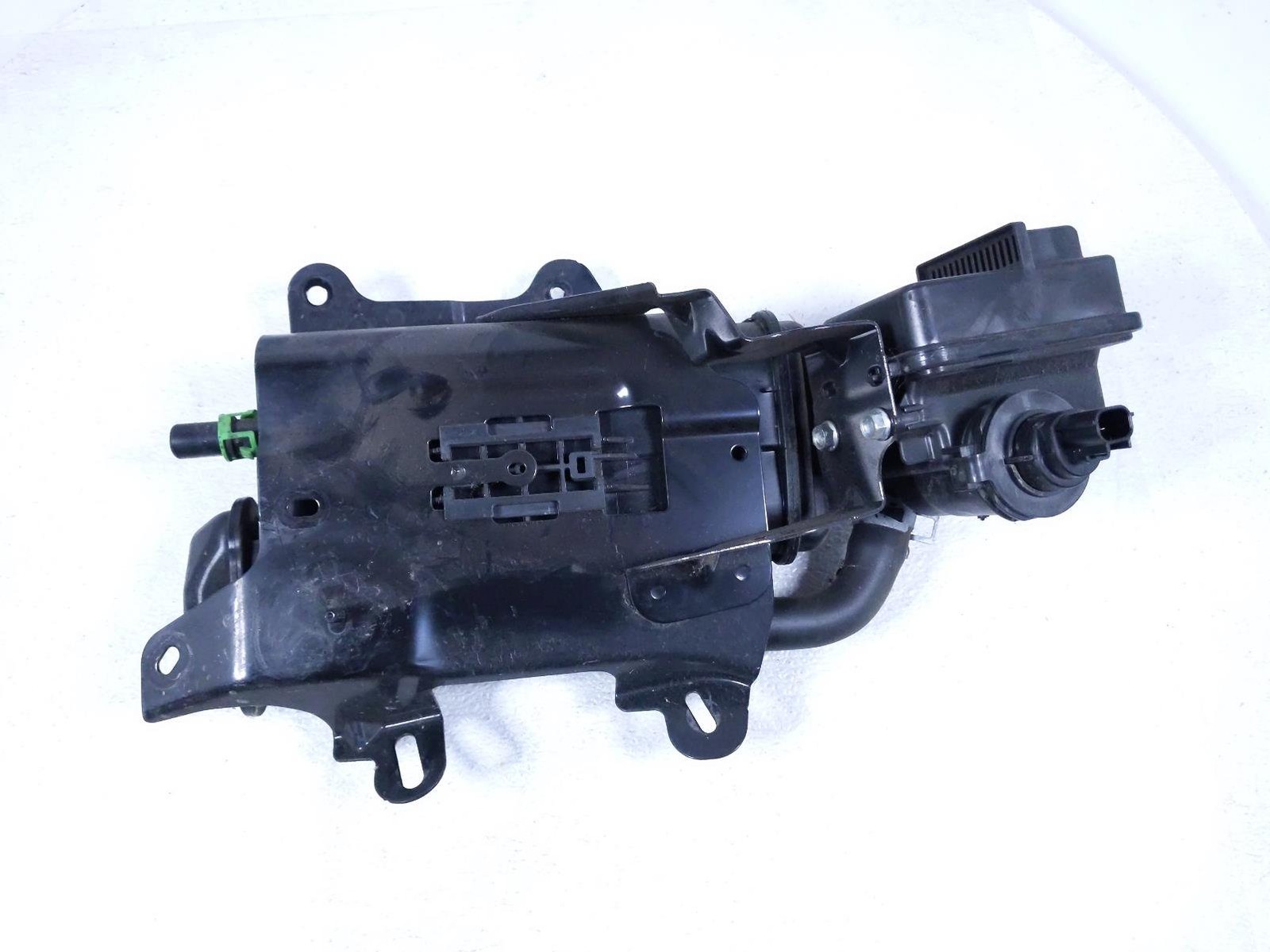
New Aftermarket Parts Available

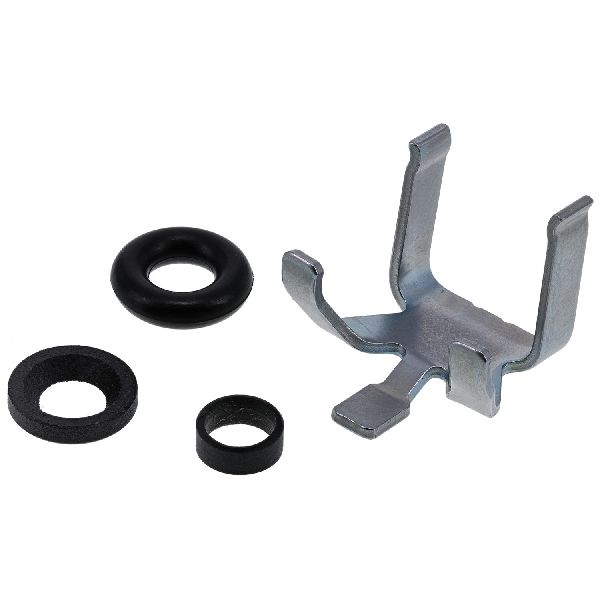

The information in this article is provided for general reference and educational purposes only. Vehicle specifications, procedures, and part compatibility can vary by production date, trim level, and region. Always consult your vehicle's factory service manual and verify part numbers before purchasing or performing repairs. Safety-critical components such as airbags, seat belts, and braking systems should be installed by a qualified professional.
- Mazda 3:
- 🎬 Helpful Videos
- 🛍️ Shop This Part
- What's Unique About the 2019-2023 Mazda 3
- Symptoms You May Notice
- Most Likely Causes
- Rare But Worth Checking
- Diagnosis Steps
- Parts You'll Likely Need
- Related Codes That Often Appear With This One
- Technical Service Bulletins (TSBs) & Recalls
- Platform-Specific Known Issues
- Mechanic-Grade Diagnostic Values
- Scan Tool Commands That Help
- Wiring & Ground Locations
- Real Owner Repair Stories
- "I Checked Everything" — The Actual Cause
- When the Usual Fixes Don't Work
- OEM Part Supersession History
- Model Year Variations Within This Range
- Diagnostic Flowchart
- Real Owner Stories
- 2020 Mazda 3
- Mazda CX-30 (Platform Mate)
- Mazda CX-5 (Platform Mate)
- Mazda Skyactiv-G (General)
- Documented NHTSA Reports
- Related OBD-II Codes
- Frequently Asked Questions
- 🎟️ Get 5% Off