

P0171 on 2013-2019 Ford Escape: Lean Code Causes, Symptoms, and Fixes
P0171 on a 2013-2019 Ford Escape most often means there's a vacuum leak. The top suspects are a faulty EVAP purge valve or a cracked intake manifold gasket. Stalling after getting gas is a key symptom pointing to the purge valve, a ~$50 part that's DIY-friendly. Check for cracked PCV hoses and intake boots as well.
- P0171 means your engine is getting too much air or not enough fuel.
- On your Escape, the most likely cause is a vacuum leak from a bad EVAP purge valve or a cracked intake manifold gasket.
- If your car stalls or runs rough right after you get gas, the EVAP purge valve is the number one suspect.
- Do not replace the oxygen sensor first; it is usually just reporting the problem correctly.
- Fixing this issue promptly can prevent stalling and protect your catalytic converter from expensive damage.
What's Unique About the 2013-2019 Ford Escape
On this generation of Ford Escape, the P0171 code is very frequently linked to the evaporative emissions (EVAP) system. A failing canister purge valve is a well-documented issue that causes symptoms like stalling after refueling, as reported by owners in NHTSA complaints. This valve can stick open, creating a significant vacuum leak that the engine's sensors can't account for, leading directly to the lean condition. This specific failure pattern is more common on these Ford platforms than a simple bad oxygen sensor. Another common source of vacuum leaks are the PCV valve and its associated hoses, which can be difficult to access.
Symptoms You May Notice
- Check Engine Light is on
- Rough or unstable idle
- Engine hesitation or stumbling during acceleration
- Stalling, especially right after filling up the gas tank
- A blinking Check Engine Light during stalling events
- Possible hissing noise from the engine bay indicating a vacuum leak
- Reduced power and poor acceleration
- Engine pinging or knocking under load
- Replacing the upstream oxygen (O2) sensor. The O2 sensor is what *detects* and *reports* the lean condition. While it can fail, it's more often the messenger than the cause of P0171. The code means the sensor is working correctly and seeing a real problem with the air-fuel mixture.
Most Likely Causes
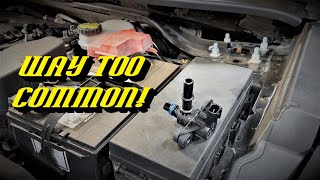
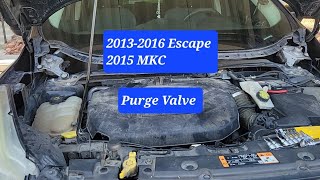
- Faulty EVAP Canister Purge Valve 🔴 High Probability The purge valve on many Ford models from this era is known to fail by sticking open, creating a constant vacuum leak. This is strongly suggested by NHTSA complaints linking P0171 to EVAP codes (P1450) and the classic symptom of stalling after refueling. A stuck open purge valve was so common it led to Ford Recall 18S32 for some vehicles, as the constant vacuum could deform the fuel tank.
How to confirm: Disconnect the valve and try to blow through it; if air passes, it's stuck open and bad. Another key symptom is a rough idle or stalling immediately after filling the gas tank. You can also monitor EVAP purge command with a scan tool while checking fuel trims.
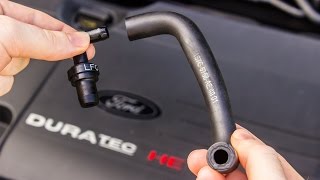
Typical fix: Replace the entire purge valve and hose assembly. It's typically located on or near the intake manifold and is accessible for DIY replacement.
Est. part cost: $40-$100 - Vacuum Leak (Intake Manifold Gasket, PCV Hoses, Injector O-rings) 🔴 High Probability With age and heat cycles, rubber hoses and plastic intake manifold gaskets become brittle and crack, allowing unmetered air to enter the engine. The PCV hose, in particular, is a known failure point that can collapse or split. Dried out fuel injector O-rings can also be a source of vacuum leaks.
How to confirm: Visually inspect all vacuum hoses for cracks, especially the PCV lines and the air intake boot. A mechanic can perform a smoke test to find the exact source of the leak. Spraying brake cleaner or starter fluid near suspected areas while the engine is running can also identify a leak if the engine's idle changes. With a scan tool, high positive fuel trims at idle that decrease as RPMs increase strongly suggest a vacuum leak.
Typical fix: Replace the specific leaking hose, the intake manifold gaskets, or the fuel injector O-rings.
Est. part cost: $10-$150 - Dirty or Faulty Mass Airflow (MAF) Sensor 🟡 Medium Probability If the air filter seal is poor, or if an aftermarket oiled air filter is used, dirt and oil vapors can coat the MAF sensor's delicate wire, causing it to under-report the amount of air entering the engine. The computer then injects too little fuel, creating a lean condition.
How to confirm: Remove the sensor from the air intake tube and inspect it for contamination. Cleaning it with a dedicated MAF sensor cleaner is a good first step. If cleaning doesn't work, the sensor may need to be replaced. A faulty MAF may also set its own codes (P0100-P0104).
Typical fix: Clean the MAF sensor with a specialized cleaner. If the problem persists, replace the sensor.
Est. part cost: $10 (cleaner) - $150 (sensor) - Low Fuel Pressure ⚪ Low Probability While not specific to this platform, a weak fuel pump, clogged in-tank fuel filter, or failing fuel pressure regulator can cause a lean condition across all engine operating ranges.
How to confirm: Connect a fuel pressure gauge to the fuel rail to check if the pressure is within the manufacturer's specifications. For EcoBoost engines, this may require checking both low-pressure and high-pressure fuel systems, which can be complex.
Typical fix: Replace the failing component, which could be the fuel filter, fuel pressure regulator, or the in-tank fuel pump module.
Est. part cost: $20-$400
Rare But Worth Checking
- Exhaust Leak (before O2 sensor): A crack in the exhaust manifold or a bad gasket can allow outside air to be sucked into the exhaust stream. The upstream O2 sensor will read this extra oxygen and incorrectly report a lean condition to the computer.
- Clogged Fuel Injectors: If one or more fuel injectors are partially clogged, they won't deliver the correct amount of fuel, leading to a lean mixture in those cylinders. This might be accompanied by a misfire code for a specific cylinder.
- Leaking Fuel Injector O-Rings: In addition to causing a vacuum leak, dried or cracked O-rings on the fuel injectors can also leak fuel externally, though a vacuum leak is more common for causing a P0171. A user on a forum fixed P0171 and P0174 on an older Escape by replacing leaking fuel injector seals.
Diagnosis Steps
- Check for other trouble codes. Codes like P1450 or P0456 strongly point towards the EVAP system.
- Use a Scan Tool to check Live Data. Observe the Short-Term (STFT) and Long-Term (LTFT) Fuel Trims at idle. High positive numbers (e.g., LTFT at or above +25%) confirm the lean condition. If trims are high at idle but improve (move closer to zero) at 2,500 RPM, you almost certainly have a vacuum leak.
- Visually inspect the engine bay. Look for obvious signs of a vacuum leak, such as cracked, disconnected, or collapsed rubber hoses, particularly the PCV lines and the air intake boot between the air filter and throttle body. Check that the oil cap is tight.
- Listen for hissing sounds with the engine running, which can pinpoint a vacuum leak.
- If a stalling-after-refueling symptom is present, prioritize testing the EVAP purge valve. Disconnect it and check if it's stuck open.
- Perform a Smoke Test. If no obvious leaks are found, a smoke test is the most effective way to find hard-to-see leaks from components like the intake manifold gasket or tiny cracks in hoses.
- Inspect and clean the Mass Airflow (MAF) sensor using a dedicated cleaner. Ensure it is reinstalled correctly and the air filter housing is sealed.
- If fuel trims are high at idle and under load, investigate the fuel system. Test the fuel pressure to rule out a weak fuel pump or clogged filter.
- Inspect for exhaust leaks before the upstream O2 sensor. Look for soot marks or listen for ticking noises near the exhaust manifold.
Parts You'll Likely Need
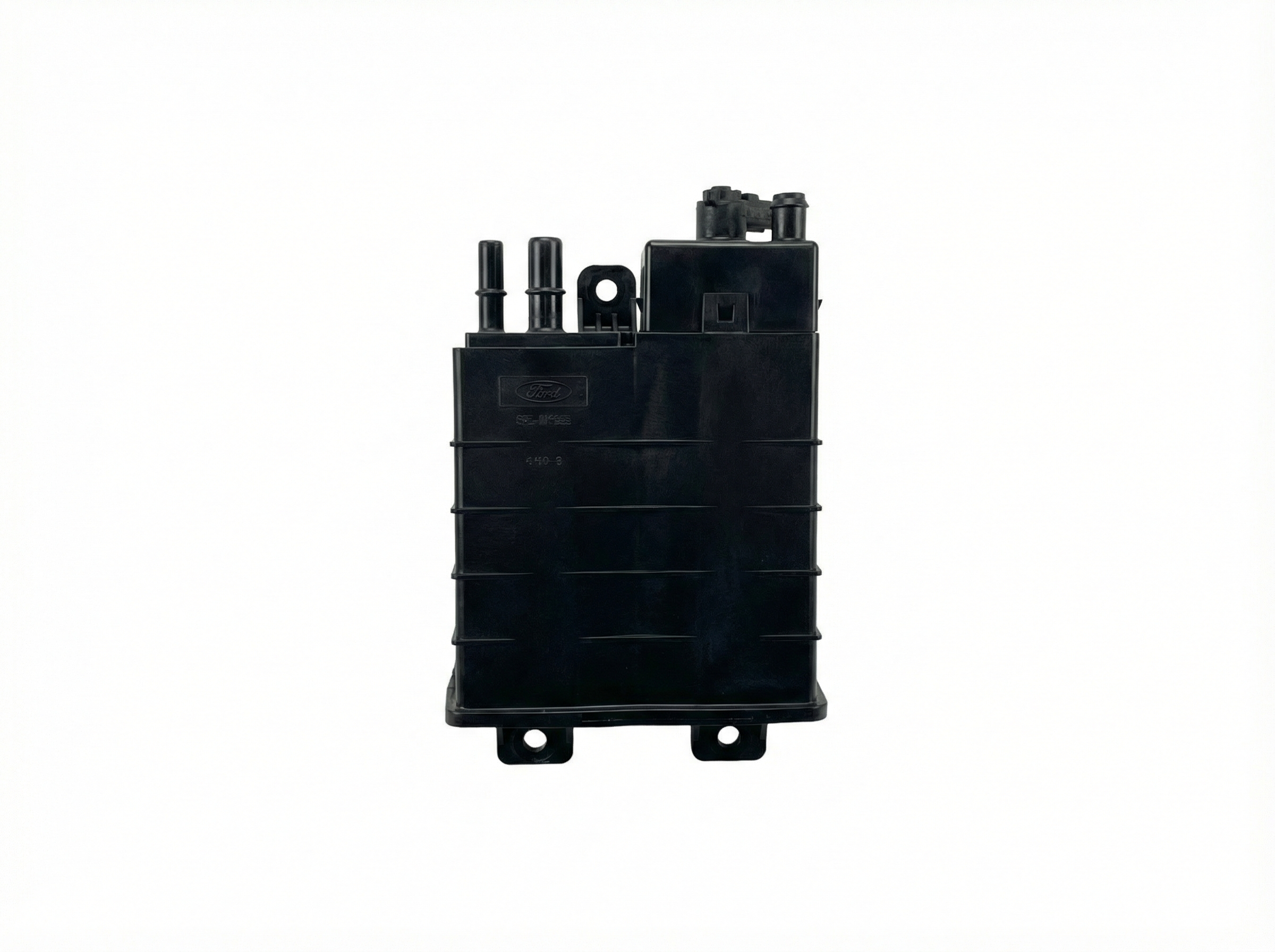
- Vapor Canister Purge Valve / Solenoid
(OEM #Motorcraft CX2482 (for 2.0L), AU5Z-9C915-B (for 1.6L). Note: Always verify with VIN.)— This is a very common failure point on Ford EcoBoost engines that directly causes a vacuum leak, leading to code P0171 and often stalling after refueling.
Trusted brands: Motorcraft, Standard Motor Products, Dorman
OEM price range: $60-$90
Aftermarket price range: $30-$60 - Intake Manifold Gasket Set
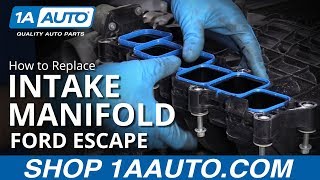
(OEM #CJ5Z-9439-A (for 2.0L). Note: Always verify with VIN.)— These gaskets can become brittle and fail, creating a vacuum leak that allows unmetered air into the engine, a direct cause of a lean condition.
Trusted brands: Motorcraft, Fel-Pro
OEM price range: $40-$70
Aftermarket price range: $20-$40 - PCV Valve and/or Hoses — The PCV system hoses, especially those under the intake manifold, are prone to cracking or collapsing under vacuum, creating a significant unmetered air leak.
Trusted brands: Motorcraft, Aftermarket hose kits
OEM price range: $50-$120
Aftermarket price range: $20-$60
Related Codes That Often Appear With This One
- P1450 — Stands for 'Unable to Bleed Up Fuel Tank Vacuum'. This code is a strong indicator that the EVAP purge valve is stuck open or malfunctioning, which is a primary cause of P0171 on these vehicles.
- P0174 — 'System Too Lean (Bank 2)'. This code is not applicable to the 4-cylinder Escape but would appear with P0171 on a V6/V8 engine if the cause (like a vacuum leak) affects both banks.
- P0456 — 'Evaporative Emission System Leak Detected (small leak)'. Often appears with a faulty purge valve, reinforcing the diagnosis of an EVAP system problem.
- P030X (e.g., P0301, P0302) — Misfire codes. A lean condition can become so severe in a particular cylinder that it causes a misfire. This can happen with clogged fuel injectors or a vacuum leak affecting one cylinder more than others.
Technical Service Bulletins (TSBs) & Recalls
- TSB 19-2171: While not directly for P0171, this TSB for 2017-2019 Escapes notes that EVAP codes P04F0 and P144C can be caused by connection issues at the purge valve, highlighting the sensitivity of this system.
Platform-Specific Known Issues
- EVAP Purge Valve Failure and Fuel Tank Deformation: A stuck-open EVAP purge valve is a known issue. It creates a constant vacuum on the fuel tank which can lead to the P1450 code ('Unable to Bleed Up Fuel Tank Vacuum') alongside P0171. In extreme, chronic cases, this constant vacuum can cause the plastic fuel tank to deform.
- Hidden PCV Hose Leaks: The PCV hoses, particularly a key elbow connector, are often located under the intake manifold, making them difficult to see and access. They frequently become brittle and crack, causing a significant vacuum leak that is a prime suspect for P0171 if the EVAP valve checks out.
Mechanic-Grade Diagnostic Values
- EVAP Canister Purge Valve Resistance — expected: 15 - 35 Ohms. Failure: Infinite resistance (open) or near-zero resistance (short) indicates a failed solenoid.
- Long Term Fuel Trim (LTFT) at Idle — expected: -10% to +10%. Failure: Sustained positive values approaching or exceeding +25% will trigger the P0171 code.
- Mass Airflow (MAF) Sensor Reading — expected: Approximately 4 g/s at idle, 8 g/s at 1500 RPM, and 13 g/s at 2500 RPM.. Failure: Readings that are significantly lower than expected for a given RPM can indicate a contaminated sensor, even if it doesn't set a MAF-specific code.
- Low-Side Fuel Pressure (at idle) — expected: Around 40-65 PSI (Varies by engine and system). Failure: Pressure that is significantly below specification or drops under load indicates a fuel delivery issue (pump, filter). Note: EcoBoost engines also have a high-pressure direct injection system that requires specialized tools to test.
Scan Tool Commands That Help
- Ford IDS / FORScan / Capable Scan Tool: Reset Keep Alive Memory (KAM) — After a repair is completed (e.g., replacing a purge valve or fixing a vacuum leak), a KAM reset will clear the old learned fuel trim values. This forces the PCM to relearn fuel strategy immediately, which can confirm the fix and prevent driveability issues.
- Ford IDS / FORScan / Capable Scan Tool: EVAP Purge Solenoid On/Off Command — This bidirectional control allows a technician to command the purge valve to open and close while the engine is running. You can monitor fuel trims or listen for a click to confirm if the valve is responding electrically and sealing properly.
Wiring & Ground Locations
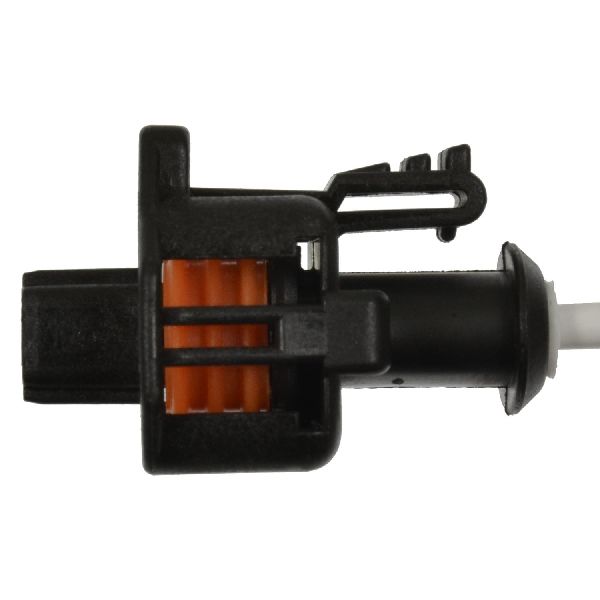
- EVAP Purge Valve Connector — On the EVAP purge valve solenoid, typically near the intake manifold.. Testing for voltage at the connector's pins is crucial for diagnosis. One pin should have battery voltage (~12V) with the key on (power supply). The other is the control wire from the PCM, which will show voltage when inactive and be pulled to ground by the PCM to activate the valve. Lack of power indicates a wiring or fuse issue, not a bad valve.
Real Owner Repair Stories
- YouTube Commenter (Ford Escape (older model, but common issue)) — Rough idling, sputtering, codes P0171 and P0174.
✅ What actually fixed it Replacing the lower intake manifold gaskets, which were leaking. - Reddit user r/fordescape (2012 Ford Escape 4-cylinder) — Check Engine Light with code P0171.
✅ What actually fixed it The user replaced the Mass Air Flow (MAF) sensor and the upstream oxygen sensor, which resolved the code. - Reddit user r/MechanicAdvice (2008 Ford Focus 2.0L (similar Ford 4-cyl platform)) — P0171 with fuel trims bad at idle and improving under load, indicating a vacuum leak.
❌ Tried (didn't work) Spraying intake and hoses with brake cleaner (no change in idle), Plugging brake booster line, Plugging PCV line, Plugging EVAP line, Smoke testing the intake
✅ What actually fixed it After all tests for a vacuum leak failed, the problem was a faulty Mass Airflow (MAF) sensor, even though its reported airflow values seemed nearly identical to the new sensor.
"I Checked Everything" — The Actual Cause
- In some cases, a technician may perform a smoke test and find no vacuum leaks, yet fuel trims will still indicate a leak (high at idle, normal at higher RPM). A known cause for this scenario on Ford 4-cylinder engines is a faulty Mass Airflow (MAF) sensor that is under-reporting airflow at idle. Even though it's not a leak, it causes the fuel trims to behave exactly like one. Replacing the MAF sensor can resolve the P0171 code in this situation after a smoke test comes back clean.
OEM Part Supersession History
AU5Z-9C915-B→AU5Z-9C915-E— Ford updated the part design to improve reliability.
Heads up: The older revisions (A, B, C, D) have been replaced by -E. While they may fit, the newest revision is recommended for durability.
Model Year Variations Within This Range
- 2013-2016 vs 2017-2019: The primary small EcoBoost engine changed from the 1.6L (2013-2016) to the 1.5L (2017-2019). This results in different part numbers for components like the EVAP purge valve and associated hoses. For example, part GV6Z-9D289-E is for the 1.5L engine.
- 2013-2019: Ford issued recall 18S32 for some vehicles due to a canister purge valve that could stick open, creating excessive vacuum in the fuel tank. This could cause tank deformation, inaccurate fuel gauge readings, and potential engine stalling, which directly relates to the symptoms of P0171.
- 2013-2019: All vehicles in this generation use a 'capless' fuel filler system. The seal in this inlet can become dirty or fail, causing an EVAP system leak that can contribute to or be misdiagnosed alongside a P0171 code.
Diagnostic Flowchart
Other Known Issues on This Vehicle
Issues unrelated to this code that are worth knowing about as an owner of this generation:
- Engine Coolant Intrusion 🔴 High — Well-documented issue, particularly on 1.5L (2017-2019) and 1.6L (2013-2016) engines, but also reported on 2.0L models. Can occur at various mileages. Ford has issued TSBs like 22-2322 and Customer Satisfaction Program 21N12. (Ref: TSB 22-2322, CSP 21N12, Recall 17S09)
- 6F35 Transmission Failure 🔴 High — Widespread complaints of shuddering, hesitation, harsh shifting, and complete failure, often due to premature fluid breakdown or internal component failure. Problems can start appearing under 100,000 miles. Subject of multiple class-action lawsuits. (Ref: No recall, but numerous complaints and lawsuits exist.)
- Overheating due to Cooling System Faults 🔴 High — Separate from coolant intrusion, the 1.6L engine was subject to recalls for fire risk due to localized overheating from poor coolant circulation, which could crack the cylinder head. (Ref: Recalls 13S12, 17S09 (NHTSA 17V209))
Used vs. New Parts: Buying Guide for This Vehicle
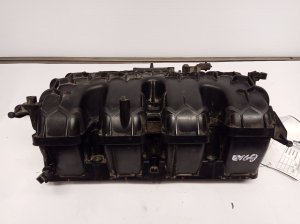
When a used part is the smart pick: For this repair, used parts are generally not recommended for the most common culprits. However, a used structural component like an intake manifold from a low-mileage, accident-damaged vehicle could be a cost-effective option if yours is found to be cracked.
Donor-vehicle mileage cap: roughly under 60000 miles for the part to have meaningful remaining life.
What to inspect on the donor part:
- For an intake manifold, ensure there are no visible cracks, especially around bolt holes and seams.
- Check that all threaded inserts and hose connection points are intact and not stripped or broken.
OEM-only on this vehicle (don't cheap out):
- Vapor Canister Purge Valve: Forum and owner reports consistently indicate that aftermarket purge valves, particularly from Dorman, have high failure rates, poor fitment, or are made with inferior materials that degrade with ethanol fuels. Sticking with the OEM Motorcraft part is strongly advised for longevity.
Aftermarket brands forum-validated for this vehicle:
- Fel-Pro: For intake manifold gaskets, Fel-Pro is a widely trusted aftermarket brand with a reputation for quality equivalent to OEM.
Brands owners have reported issues with on this vehicle:
- Dorman: Specifically for the EVAP purge valve assembly on this platform, owners report issues with incorrect connectors, the need to reuse old fittings, and premature failure.
Real Owner Stories
Aggregated from forums and TSBs cited above. Mileages and costs reflect what owners reported in those sources.
2016 Ford Escape
Symptoms: Stalling and a blinking check engine light.
What fixed it: A smoke test was recommended to find a vacuum leak, which is the cause 9/10 times for these symptoms.
Source hint: Reddit r/fordescape - Anyone ever have a P0171 check engine light code?
2013-2019 Ford Escape EcoBoost
Symptoms: Stalling right after filling up the gas tank; P0171 and P1450 codes present.
What fixed it: Replacement of the entire EVAP purge valve and hose assembly.
Source hint: common_causes - Faulty EVAP Canister Purge Valve
2013-2019 Ford Escape EcoBoost
Symptoms: Rough idle and high positive fuel trims at idle that decrease as RPMs increase.
What fixed it: Replacing the PCV hose elbow connector located under the intake manifold.
Source hint: vehicle_specific_issues - Hidden PCV Hose Leaks
Related OBD-II Codes
Frequently Asked Questions
Why does my Ford Escape stall specifically right after I fill up the gas tank?
Is there a TSB for EVAP issues on the 2017-2019 Ford Escape?
How can I tell if my P0171 code is caused by a vacuum leak or a bad MAF sensor?
Where is the PCV hose located on the EcoBoost engine, and why is it hard to find?
Can a dirty air filter cause a P0171 lean code on my Escape?
What does it mean if my Check Engine Light is blinking while the engine stumbles?
Helpful Videos
![How to [CHEAP] Find Vacuum Leaks with Brake Cleaner](https://img.youtube.com/vi/XNes9oRlC2M/mqdefault.jpg)
Used OEM Parts in Stock


New Aftermarket Parts Available


The information in this article is provided for general reference and educational purposes only. Vehicle specifications, procedures, and part compatibility can vary by production date, trim level, and region. Always consult your vehicle's factory service manual and verify part numbers before purchasing or performing repairs. Safety-critical components such as airbags, seat belts, and braking systems should be installed by a qualified professional.
- Ford Escape:
- 🎬 Helpful Videos
- 🛍️ Shop This Part
- What's Unique About the 2013-2019 Ford Escape
- Symptoms You May Notice
- Most Likely Causes
- Rare But Worth Checking
- Diagnosis Steps
- Parts You'll Likely Need
- Related Codes That Often Appear With This One
- Technical Service Bulletins (TSBs) & Recalls
- Platform-Specific Known Issues
- Mechanic-Grade Diagnostic Values
- Scan Tool Commands That Help
- Wiring & Ground Locations
- Real Owner Repair Stories
- "I Checked Everything" — The Actual Cause
- OEM Part Supersession History
- Model Year Variations Within This Range
- Diagnostic Flowchart
- Other Known Issues on This Vehicle
- Used vs. New Parts: Buying Guide for This Vehicle
- Real Owner Stories
- 2016 Ford Escape
- 2013-2019 Ford Escape EcoBoost
- 2013-2019 Ford Escape EcoBoost
- Related OBD-II Codes
- Frequently Asked Questions
- 🎟️ Get 5% Off