

P0171 on 2012-2019 Chevrolet Sonic 1.8L: Causes and Fixes for System Too Lean
On the 2012-2019 Chevy Sonic 1.8L, code P0171 is most often caused by a failed PCV valve diaphragm inside the engine valve cover. This creates a vacuum leak, causing a lean condition. Replacing the entire valve cover assembly is the standard fix, costing between $40-$100 for the part.
- The most probable cause of a P0171 code on a 1.8L Sonic is a failed PCV system within the valve cover.
- A loud hissing or whistling sound from the engine top is a strong indicator of the failed PCV diaphragm.
- The standard repair is to replace the entire valve cover assembly, which is a DIY-friendly job with a difficulty of 2/5.
- Before replacing any parts, check for simple issues like a cracked air intake hose between the air filter and throttle body.
- Avoid immediately replacing oxygen sensors, as this is a common misdiagnosis for this specific problem.
What's Unique About the 2012-2019 Chevrolet Sonic
The 1.8L Ecotec engine used in the Sonic, as well as the Chevy Cruze and Trax, has a well-documented weakness in its Positive Crankcase Ventilation (PCV) system. The PCV diaphragm is integrated into the valve cover and is not sold as a separate part. Over time, this diaphragm can tear, creating a significant vacuum leak that is a primary cause of the P0171 code on this specific platform. This issue is so common that Chevrolet issued technical service bulletins and a special coverage warranty extension (N202299080) to cover the replacement of the camshaft cover for this exact problem.
Symptoms You May Notice
- Check Engine Light is on
- Rough or erratic idle.
- Hesitation or loss of power during acceleration.
- Whistling or hissing noise from the engine bay, especially at idle.
- Engine stalling, particularly when coming to a stop.
- Reduced fuel economy.
- Traction Control System (TCS) light may illuminate intermittently, especially at idle.
- Replacing the Oxygen (O2) Sensor: While a faulty O2 sensor can cause a lean code, it's often not the root cause on this vehicle. An owner complaint (ODI #11243204) noted that replacing O2 sensors did not fix the P0171 code, which was likely caused by the more common PCV failure.
- Replacing the Catalytic Converter: A catalytic converter is highly unlikely to cause a P0171 code. This was also mentioned as an incorrect repair attempt in owner complaint ODI #11243204.
Most Likely Causes
- Failed PCV System / Valve Cover 🔴 High Probability The PCV diaphragm is integrated into the plastic valve cover and is known to rupture. This is a widely recognized failure point on this engine, confirmed by TSBs #19NA114 and Special Coverage #N202299080. The diaphragm tears, creating a direct, unmetered vacuum leak.
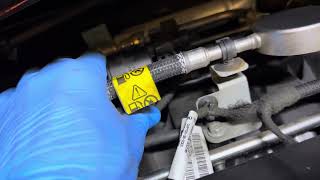
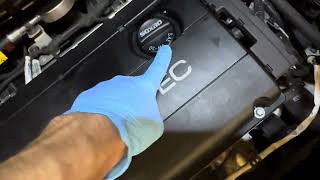
How to confirm: With the engine running, listen for a distinct hissing or whistling sound from the top of the valve cover. A definitive test is to place your finger over the small rectangular port on the PCV valve assembly; if you feel strong suction, the diaphragm is torn. Removing the oil filler cap will be difficult due to strong vacuum, and the engine's idle may change drastically.
Typical fix: Replace the entire engine valve cover assembly, which includes a new integrated PCV valve and gasket. Some owners opt for aftermarket aluminum valve covers for better durability.
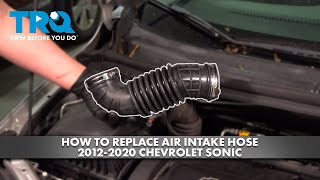
Est. part cost: $40 - $120 - Torn Air Intake Boot 🟡 Medium Probability The flexible rubber boot connecting the air filter box and MAF sensor to the throttle body can become brittle and crack over time, allowing unmetered air to enter the engine. This was common enough to warrant Special Coverage TSB GCUS-9-3731 (16139).
How to confirm: Visually inspect the entire length of the intake boot, especially in the ribbed/flexible sections, for cracks, splits, or loose connections. With the engine running, you can carefully spray brake cleaner or a combustible fluid around the boot; an increase in engine RPM indicates a leak.
Typical fix: Replace the torn air intake boot.
Est. part cost: $20 - $50 - Dirty or Faulty Mass Airflow (MAF) Sensor ⚪ Low Probability
How to confirm: The MAF sensor can be carefully removed and cleaned with a dedicated MAF sensor cleaner spray. If cleaning does not resolve the issue, the sensor's output can be monitored with an OBD-II scan tool to see if its readings are erratic or out of specification at idle and under load.
Typical fix: Clean the MAF sensor. If cleaning fails, replace the sensor.
Est. part cost: $50 - $150 - Leaking Intake Manifold Gasket ⚪ Low Probability
How to confirm: Listen for a hissing sound near where the intake manifold meets the cylinder head. A smoke test is the most effective way to confirm a leak in this area. On the related 1.4L engine, a check valve within the manifold itself can fail, a problem sometimes addressed with aftermarket kits.
Typical fix: Replace the intake manifold gaskets.
Est. part cost: $20 - $60
Rare But Worth Checking
- Weak Fuel Pump or Clogged Fuel Filter: This can cause insufficient fuel delivery, leading to a lean condition. A fuel pressure test is required to diagnose this.
- Clogged Fuel Injectors: Dirty injectors may not deliver enough fuel to one or more cylinders, disrupting the air-fuel ratio.
- Exhaust Leak Before the Oxygen Sensor: A leak in the exhaust manifold or downpipe can draw in outside air, causing the upstream O2 sensor to incorrectly read a lean condition.
- Stuck Open EVAP Purge Valve: The EVAP purge solenoid can stick open, creating a constant vacuum leak as it pulls fumes from the gas tank at the wrong time. This can be diagnosed by monitoring fuel trims while commanding the valve closed with a scan tool.
Diagnosis Steps
- Read the codes with an OBD-II scanner and note any other codes present. Check live data for Long Term Fuel Trim (LTFT); a value greater than +15% confirms a lean condition.
- With the engine running, perform a physical check for the most common failure. Listen for a loud sucking or whistling noise from the valve cover. Place a finger over the small rectangular PCV port on the cover; strong suction confirms a ruptured diaphragm.
- If no noise is heard from the valve cover, check for strong vacuum at the oil filler cap. If it's difficult to remove with the engine running, the PCV diaphragm is likely torn.
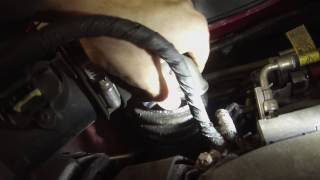
- Thoroughly inspect the entire air intake hose from the air filter box to the throttle body for any cracks, tears, or loose clamps, paying close attention to the accordion sections.
- If no obvious vacuum leaks are found, inspect and clean the Mass Airflow (MAF) sensor using a dedicated MAF sensor cleaner. Do not touch the sensor wires.
- Consider a stuck-open EVAP purge solenoid. With the engine idling, disconnect the electrical connector and the line running to the intake manifold. If vacuum is felt from the solenoid side, it is stuck open and needs replacement.
- If the cause is still not found, perform a smoke test. This is the most effective method to find hidden vacuum leaks from sources like intake manifold gaskets, injector O-rings, or smaller hose cracks.
Parts You'll Likely Need
- Engine Valve Cover (Camshaft Cover)
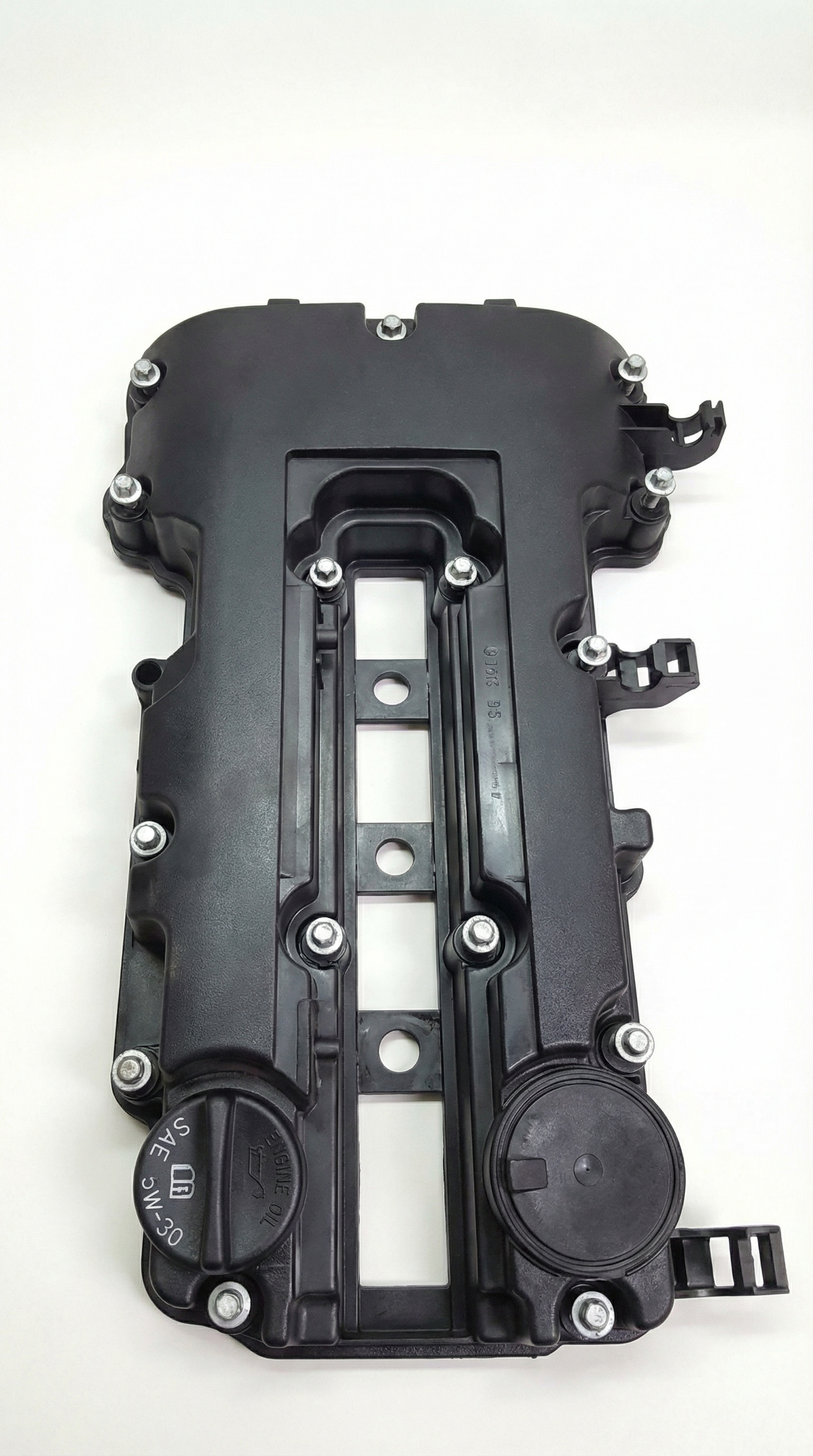
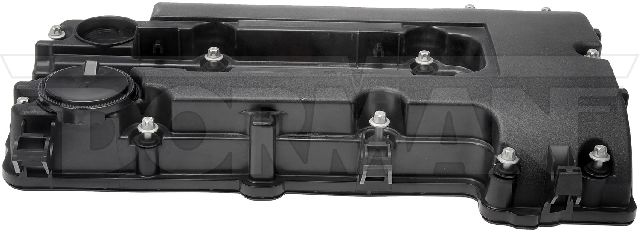
(OEM #55564395, 25198874)— This is the most common fix. The original plastic cover contains an integrated, non-serviceable PCV diaphragm that is prone to tearing, causing a vacuum leak. The replacement part includes a new cover, gasket, and PCV system.
Trusted brands: ACDelco (OEM), Dorman (e.g., 264-968)
OEM price range: $80-$150
Aftermarket price range: $40-$100 - Air Intake Hose
(OEM #95089363)— This hose can crack with age and heat, creating a vacuum leak after the MAF sensor. This was cited in an owner complaint (ODI #10723024) as the cause.
Trusted brands: GM Genuine, Gates
OEM price range: $40-$70
Aftermarket price range: $20-$50
Related Codes That Often Appear With This One
- P1101 — Intake Air Flow System Performance. This code is often triggered alongside P0171 because a vacuum leak (like a bad PCV) causes a mismatch between the air measured by the MAF sensor and the actual air entering the engine.
- P0496 — EVAP Flow During a Non-Purge Condition. This can sometimes appear with P0171, as noted in owner complaint ODI #11384224, suggesting a potential issue with the EVAP purge valve sticking open, creating another vacuum leak source.
- P0106 — Manifold Absolute Pressure (MAP) Sensor Performance. A large vacuum leak from the PCV system can cause erratic MAP sensor readings, triggering this code along with P0171.
- P2270 — O2 Sensor Signal Stuck Lean Bank 1 Sensor 2. This indicates the downstream oxygen sensor is also detecting a persistent lean condition, often a result of the primary issue causing P0171.
Technical Service Bulletins (TSBs) & Recalls
- 19NA114: Provides information to test the PCV for proper performance before replacing the camshaft cover to correct a MIL On w/DTC P0171.
- N202299080: Addresses rough idle and P0171 by instructing dealers to replace the engine camshaft cover as necessary, at no charge to the customer, for an extended period (10yr/120k miles).
- GCUS-9-3731 (16139): Special coverage for a cracked air cleaner outlet
Platform-Specific Known Issues
- TSB #N202299080: Acknowledges that a rough idle and P0171 code can be caused by the PCV system and instructs dealers to replace the engine camshaft cover at no charge under a special program for certain model years, extending coverage to 10 years or 120,000 miles.
- TSB #19NA114: Advises technicians to test the PCV system's performance before replacing the camshaft cover to correct a P0171 code, confirming this is a known diagnostic path.
- TSB #GCUS-9-3731 (Special Coverage 16139): Addresses P0171 or P0101 codes that may set as a result of a cracked air cleaner outlet duct (intake boot).
Mechanic-Grade Diagnostic Values
- Total Fuel Trim (Short Term + Long Term) — expected: Between -10% and +10%. Failure: Sustained positive values above +25% indicate a significant lean condition the ECM is trying to correct.
- Fuel Pressure (at fuel rail) — expected: Approximately 60 psi +/- 10 psi (415 kPa +/- 70 kPa) with engine running.. Failure: Significantly lower pressure indicates a weak fuel pump or clogged filter, which can cause a lean condition.
- Valve Cover Bolt Torque — expected: 71 inch-pounds. Failure: Improper torque can lead to oil leaks or a poor seal, though not directly a P0171 cause, it's critical during the most common repair.
Scan Tool Commands That Help
- GDS2 / Professional Scan Tool: EVAP Purge/Seal — To test the EVAP purge solenoid. A technician can command the valve closed and monitor fuel trims. If the trims improve, it indicates the valve was stuck open, causing a vacuum leak.
- GDS2 / Professional Scan Tool: Fuel Pump Relay Control — To manually activate the fuel pump to verify its operation and allow for fuel pressure testing without starting the engine.
Wiring & Ground Locations
- G104 — Lower right rear of the engine.. This is a primary engine ground. A poor connection here can affect various sensors, including those involved in the fuel system, potentially causing erratic readings.
- ECM Connector X1 — Left side of the engine compartment, on the Engine Control Module.. This connector houses the pins for critical sensors like the Mass Air Flow (Pin 3), Barometric Pressure (Pin 9), and Fuel Pump Relay Control (Pin 26). Checking for voltage and continuity at these pins is an advanced diagnostic step.
Real Owner Repair Stories
- YouTube video by 'Fix it Angel' (2013 Chevrolet Sonic 1.8L) — P0171 code. A shop quoted $2600-$2800 to replace the intake manifold.
❌ Tried (didn't work) Initial diagnosis pointed to a standard intake manifold leak.
✅ What actually fixed it The plastic intake manifold had a factory defect—a small hole near the rotary tuning valve stop. The owner cleaned the area and sealed the hole with JB Weld epoxy, which permanently fixed the vacuum leak and cleared the code for free.
OEM Part Supersession History
55573746→25198498, 25198874, 25203036— GM has updated the valve cover assembly over time to address failures of the integrated PCV system.
Heads up: While physically interchangeable, using an older part number from a salvage yard carries a higher risk of the same PCV failure. Aftermarket parts like Dorman 264-968 are designed to be a direct replacement for the latest OEM versions.
Diagnostic Flowchart
Other Known Issues on This Vehicle
Issues unrelated to this code that are worth knowing about as an owner of this generation:
- Cracked/Leaking Thermostat Housing 🟠 Medium — Common after 60,000-100,000 miles. The plastic housing becomes brittle and can crack, leading to coolant leaks and potential overheating.
- Oil Cooler Gasket/Seal Leaks 🟠 Medium — Frequently occurs, often noticed after 50,000 miles. The seals between the oil cooler and the engine block degrade, causing significant oil leaks onto the exhaust and ground.
- Water Pump Failure 🟠 Medium — Can fail prematurely, sometimes before 80,000 miles. Symptoms include a whining noise from the belt area and coolant leaks.
- Transmission Control Module (TCM) Failure 🔴 High — A known issue on automatic transmission models, causing erratic shifting, getting stuck in gear, or a no-start condition. Can occur at various mileages. (Ref: There have been warranty extensions and recalls for related transmission issues on some model years.)
Used vs. New Parts: Buying Guide for This Vehicle
When a used part is the smart pick: For this specific P0171 issue, using a USED valve cover from a junkyard is NOT recommended. The primary cause of the code is the failure of the integrated PCV diaphragm due to age and heat cycles. A used part is likely to have the same wear and could fail soon after installation.
What to inspect on the donor part:
- Not applicable, as used valve covers are not advised for this repair.
Aftermarket brands forum-validated for this vehicle:
- ACDelco (OEM): The safest bet for a direct, reliable replacement.
- Dorman (264-968): A widely available aftermarket alternative that includes a new gasket and bolts and is reported by many owners to be a successful fix.
Brands owners have reported issues with on this vehicle:
- Unbranded, no-name valve covers from online marketplaces can have quality control issues with the plastic molding or the diaphragm material, leading to premature failure.
Real Owner Stories
Aggregated from forums and TSBs cited above. Mileages and costs reflect what owners reported in those sources.
2012 Chevrolet Sonic 1.8L
Symptoms: Check engine light on with code P0171; found a clearly torn air intake boot.
What fixed it: Replacement of the 'Air Cleaner Intake Hose' (intake boot).
Source hint: Reddit r/ChevySonic - 'Code number P0171 on our 2012 Chevy Sonic...'
2015 Chevrolet Sonic 1.8L
Symptoms: Classic P0171 symptoms including a loud sucking noise coming from the valve cover port.
What fixed it: Replacement of the valve cover due to a torn PCV diaphragm.
Source hint: Sonic Owners Forum - 'P0171 / Valve Cover troubleshooting' (Mar 2015)
2012-2019 Chevrolet Sonic 1.8L — ~120000 miles
Symptoms: Long Term Fuel Trims (LTFT) in the +30s; vacuum leak effects most pronounced at idle.
What fixed it: Diagnostic steps included checking for vacuum at the dipstick tube to identify a PCV-related vacuum leak.
Source hint: Sonic Owners Forum - 'Dreaded P0171' (Jan 2022)
Related OBD-II Codes
Frequently Asked Questions
Is there a special warranty or TSB for the P0171 code on my Chevrolet Sonic?
How can I tell if my Sonic's P0171 code is caused by the valve cover or the intake boot?
I hear a whistling sound from the engine at idle; is this related to the P0171 code?
Can I just clean the sensor to fix a P0171 on my 1.8L Sonic?
Why is my Traction Control System (TCS) light coming on along with the P0171 code?
Is it true that the oil filler cap is hard to remove when the PCV fails?
Helpful Videos
Used OEM Parts in Stock
New Aftermarket Parts Available



The information in this article is provided for general reference and educational purposes only. Vehicle specifications, procedures, and part compatibility can vary by production date, trim level, and region. Always consult your vehicle's factory service manual and verify part numbers before purchasing or performing repairs. Safety-critical components such as airbags, seat belts, and braking systems should be installed by a qualified professional.
- Chevrolet Sonic:
- 🎬 Helpful Videos
- 🛍️ Shop This Part
- What's Unique About the 2012-2019 Chevrolet Sonic
- Symptoms You May Notice
- Most Likely Causes
- Rare But Worth Checking
- Diagnosis Steps
- Parts You'll Likely Need
- Related Codes That Often Appear With This One
- Technical Service Bulletins (TSBs) & Recalls
- Platform-Specific Known Issues
- Mechanic-Grade Diagnostic Values
- Scan Tool Commands That Help
- Wiring & Ground Locations
- Real Owner Repair Stories
- OEM Part Supersession History
- Diagnostic Flowchart
- Other Known Issues on This Vehicle
- Used vs. New Parts: Buying Guide for This Vehicle
- Real Owner Stories
- 2012 Chevrolet Sonic 1.8L
- 2015 Chevrolet Sonic 1.8L
- 2012-2019 Chevrolet Sonic 1.8L — ~120000 miles
- Related OBD-II Codes
- Frequently Asked Questions
- 🎟️ Get 5% Off