

P0149 on 2015-2019 Ford Transit 3.2L: Fuel Timing Error Causes and Fixes
On a 2015-2019 Ford Transit with the 3.2L Power Stroke diesel, P0149 almost always indicates a critical failure of the high-pressure fuel pump (HPFP). This is a known issue that can contaminate the entire fuel system with metal debris, leading to extremely expensive repairs typically ranging from $8,000 to $15,000+. A recall (16S33) was issued for 2015-2016 models for this problem, but the issue can affect all model years in this range.
- P0149 on a 3.2L Power Stroke Transit is a severe code that most often points to a failing high-pressure fuel pump (HPFP).
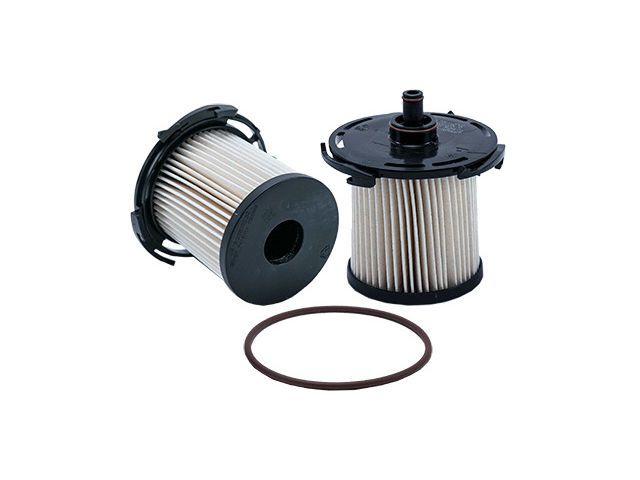
- Immediate diagnosis is critical. Check the fuel filter for metal particles. If metal is present, stop driving the vehicle immediately.
- A proper repair involves replacing the entire fuel system (pump, injectors, rails, lines) and cleaning the tank. A simple pump swap will fail.
- Check if your vehicle falls under Ford's recall 16S33, which covers this exact issue for 2015-2016 models.
- Due to the complexity and the need to handle a high-pressure fuel system, this repair should be left to a qualified professional.
What's Unique About the 2015-2019 Ford Transit

The 3.2L Power Stroke in this generation of Transit uses a Bosch CP4.2 high-pressure fuel pump, which is notoriously prone to self-destruction due to its roller-and-cam design and sensitivity to fuel with lower lubricity, like modern Ultra-Low Sulfur Diesel (ULSD). Unlike a simple sensor or solenoid failure, the P0149 code on this specific platform often signals the beginning of a catastrophic pump failure that sends metal fragments ('swarf') throughout the entire fuel system, including the rails, lines, and injectors. This turns a single component failure into a full system replacement, making the diagnosis and repair far more critical and costly than on other vehicles where this code might point to a less severe issue.
Symptoms You May Notice
- Sudden engine stalling, sometimes without warning.
- Engine cranks but will not start.
- Noticeable loss of power and poor acceleration.
- Rough or erratic idle, surging, or hesitation.
- Check Engine Light or Malfunction Indicator Lamp (MIL) is on.
- Vehicle enters 'limp mode' with severely restricted power.
- Increased fuel consumption.
- White or black smoke from the exhaust.
- A rhythmic knocking or ticking sound from the engine bay, indicating the pump is mechanically failing.
- Replacing only the fuel filter without checking for metal debris. A clogged filter can be a symptom, not the cause.
- Replacing only the high-pressure fuel pump. If the old pump failed and shed metal, the new pump will be destroyed by the debris remaining in the fuel system.
- Replacing fuel injectors without addressing the root cause (the failing HPFP that contaminated them).
- Attributing the issue to a bad timing chain when no other timing codes are present.
Most Likely Causes

- High-Pressure Fuel Pump (HPFP) Failure 🔴 High Probability The OEM Bosch CP4.2 pump is a known weak point on this engine and was subject to Ford recall 16S33 for 2015-2016 models due to its tendency to fail and disintegrate internally. The failure is often caused by internal metal-on-metal contact in the roller/cam assembly, exacerbated by air intrusion or low-lubricity fuel.
How to confirm: Carefully remove the fuel filter housing and pour the contents into a clean, clear jar. Let it settle and inspect for fine, glitter-like metallic particles ('swarf') using a strong light. A magnet can be used to confirm the particles are ferrous metal from the pump. The presence of any metal confirms HPFP failure.
Typical fix: Complete replacement of the entire fuel system is required. This includes the high-pressure pump, all five fuel injectors, fuel rails, all high and low-pressure lines, and dropping/cleaning the fuel tank. Simply replacing the pump is not enough as residual metal will destroy the new pump and injectors.
Est. part cost: $2500-$7000+ - Air in the Fuel System ⚪ Low Probability Air can be introduced during fuel filter changes if not bled properly. Leaks in lines or fittings can also introduce air, which is a primary cause of CP4.2 pump damage due to lack of lubrication.
How to confirm: Inspect all fuel lines from the tank to the engine for any signs of leaks, cracks, or loose connections. A fuel pressure test may show erratic readings if air is present. After a recent fuel filter service, this is a prime suspect if no metal is found.
Typical fix: Repairing the source of the leak, which could be a cracked line, loose fitting, or bad seal. The system will then need to be properly bled according to Ford's procedure to remove all air.
Est. part cost: $20-$300 - Faulty Fuel Timing Solenoid/Actuator ⚪ Low Probability
How to confirm: This requires an advanced scan tool to monitor the commanded vs. actual timing values and to command the solenoid directly. Resistance can be checked with a multimeter (typically 10-20 Ω). If the solenoid does not respond correctly, it is likely faulty.
Typical fix: Replacement of the fuel timing solenoid or actuator on the injection pump. On the Bosch CP4.2 pump, this component is often called the Fuel Control Actuator (FCA) or MPROP and is generally considered integral to the pump and not serviced separately. If this part fails, the entire HPFP is typically replaced.
Est. part cost: $100-$400
Rare But Worth Checking
- Stretched or Jumped Mechanical Timing Chain: While rare for causing just P0149, if the engine's mechanical timing is off, the PCM cannot achieve the correct injection timing. This is usually accompanied by other timing-related codes (like crankshaft-camshaft correlation faults) and significant running issues.
- Powertrain Control Module (PCM) Fault: In very rare cases, a software glitch or internal failure of the PCM can cause it to incorrectly report a timing error. This should only be considered after all mechanical and wiring possibilities have been exhaustively ruled out.
Diagnosis Steps
- Scan for all diagnostic trouble codes. Note any other codes present, especially P0087 or P1564.
- CRITICAL STEP: Remove the primary fuel filter. Carefully pour the fuel from the filter and its housing into a clean, clear container.
- Allow the fuel to settle for a few minutes, then use a bright flashlight to inspect the bottom of the container for metallic glitter or 'swarf'. Use a magnet against the outside of the jar to see if the particles are ferrous (magnetic).
- If metal debris is found, the diagnosis is confirmed: the high-pressure fuel pump has failed. Do not proceed with any other steps or start the engine again. The entire fuel system is contaminated and requires replacement.
- If no metal is found, proceed with checking for air intrusion. Inspect all fuel lines for wet spots, cracks, or damage. Ensure all fittings are tight, especially around the fuel filter housing if it was recently serviced.
- Check fuel quality. Ensure the tank was not filled with gasoline or contaminated diesel. Water in the fuel can also damage the HPFP.
- If no air leaks or fuel quality issues are found, use a professional scan tool to monitor Fuel Rail Pressure (FRP) and Injection Timing commands versus actual readings while the engine is running (if possible). Compare commanded vs. actual values.
- If all else fails, inspect the physical engine timing components (chain, guides, sprockets) for wear or damage, though this is an unlikely cause for P0149 alone.
Parts You'll Likely Need

- High-Pressure Fuel Pump (HPFP)
(OEM #BK3Q-9B395-AD (or superseding numbers like FB3Q-9B395-BA))— This is the primary point of failure for code P0149 on this engine. The failure contaminates the entire system, requiring a full replacement.
Trusted brands: Motorcraft, Bosch
OEM price range: $1000-$1800
Aftermarket price range: $700-$1200 - Fuel Injector Set (Set of 5)
(OEM #BK2Q-9K546-AG)— The original injectors become contaminated with metal debris from the failed HPFP and must be replaced to prevent failure of the new pump.
Trusted brands: Motorcraft, Bosch
OEM price range: $1200-$2000
Aftermarket price range: $800-$1500 - Fuel Rails and Lines Kit — Like the injectors, the fuel rails and all connecting high-pressure lines are contaminated with metal and must be replaced. These are often sold as a kit with the pump.
Trusted brands: Motorcraft
OEM price range: $500-$1000
Related Codes That Often Appear With This One
- P0087 — Stands for 'Fuel Rail/System Pressure - Too Low'. A failing HPFP cannot build or maintain the pressure commanded by the PCM, leading to this code appearing alongside P0149.
- P1564 — A Ford-specific code for 'Injection Pump Control Module Requesting Reduced Fuelling'. The pump's own internal controller detects a problem and signals the PCM to limit fuel, often appearing with P0149.
- P0088 — Stands for 'Fuel Rail/System Pressure - Too High'. Less common, but can occur if the pump's internal pressure regulation fails erratically.
Technical Service Bulletins (TSBs) & Recalls
- TSB 19-2091: Addresses various drivability concerns, though not exclusively P0149, it can be related to underlying fuel system issues.
Platform-Specific Known Issues
- Ford issued recall 16S33 for certain 2015-2016 Ford Transit vehicles with the 3.2L diesel engine. The recall addresses the potential for the high-pressure fuel pump to fail, which could result in an engine stall without warning.
Mechanic-Grade Diagnostic Values
- Low-Side Fuel Pressure (Lift Pump) — expected: 1-2 PSI. Failure: Zero or erratic pressure indicates a failing lift pump, which can starve the HPFP of fuel.
- High-Pressure Fuel Rail Pressure (FRP) - Cranking — expected: ~220 bar (3,200 PSI). Failure: Significantly lower pressure suggests the HPFP is unable to build pressure required for startup.
- High-Pressure Fuel Rail Pressure (FRP) - Idle — expected: ~29 PSI (Note: This value from a generic 3.2L seems low for a common rail diesel, which typically idles at 250-300 bar. Use with caution and compare against scan tool specified values.). Failure: Large deviation between commanded and actual FRP.
- Fuel Timing Solenoid (MPROP/FCA) Resistance — expected: 10-20 Ohms. Failure: A reading outside this range, or a short to ground (over 10 kΩ from pin to body is expected), indicates a faulty solenoid.
Scan Tool Commands That Help
- Ford IDS (Integrated Diagnostic System): Fuel System Test — To command the pump and injectors through a series of tests to check for pressure building capability and leaks. This is a key function to use when no metal is found but a pump issue is still suspected.
- Ford IDS (Integrated Diagnostic System): Live Data - PIDs: FRP_CMD (Commanded) vs FRP (Actual) — To monitor the fuel rail pressure in real-time. A significant and persistent lag or difference between the commanded pressure and the actual pressure under load is a strong indicator of a failing HPFP or a faulty fuel control actuator.
Real Owner Repair Stories
- Ford Transit Forum user (2005 Ford Transit 2.4L 90ps (European model, but illustrates a non-pump failure)) — P0149 and P1564, limp mode, but engine sounded fine with no knocking.
❌ Tried (didn't work) Initial diagnosis pointed towards pump timing or the timing solenoid based on TSBs.
✅ What actually fixed it The user later found the EGR valve was completely seized. After cleaning and freeing the valve, the codes did not return, suggesting the EGR fault was somehow contributing to the timing error detection.
OEM Part Supersession History
BK3Q-9B395-AD→FB3Q-9B395-BA, FB3Q-9B395-BC— Part revision and updates by the manufacturer. The newer part numbers are the current service replacements.
Heads up: While physically interchangeable, always verify the correct part number for the specific vehicle's VIN and emissions standard (e.g., Euro 6 vs earlier versions) as internal calibration may differ.
Model Year Variations Within This Range
- 2020+: For the 2020 model year, the 3.2L Power Stroke diesel was discontinued and the 6-speed automatic was replaced with a 10-speed unit on the remaining gasoline engines. This makes the 2015-2019 range a distinct generation for this specific P0149 issue.
Diagnostic Flowchart
Other Known Issues on This Vehicle
Issues unrelated to this code that are worth knowing about as an owner of this generation:
- Internal EGR Cooler Leakage 🔴 High — Common issue, can lead to coolant loss, white smoke, and potentially engine overheating or hydro-lock if severe. (Ref: Ford Customer Satisfaction Program 21M03 provides extended warranty coverage for this specific failure. TSB SSM 48543 also addresses this.)
- Turbocharger Actuator Failure 🟠 Medium — The electronic actuator on the variable geometry turbo can fail, causing low power, limp mode, and turbo-related fault codes. The turbo itself is generally robust, but the actuator is a common failure point.
- Water Intrusion into Air Intake 🟠 Medium — Poor design of the cowl can allow water to drip directly onto the air filter, leading to a saturated filter, drivability issues, and various fault codes. (Ref: TSB 19-2091 provides a procedure to install updated water management hardware.)
- Transmission Problems 🟠 Medium — Some owners report issues with the 6R80 transmission, including rough shifting or premature failure, particularly in the 2015 model year.
- Sliding Door Mechanism/Sensor Faults 🟡 Low — Common complaints regarding the power sliding door's reliability, including sensor faults and mechanism jams. (Ref: TSB SSM 50699 addresses intermittent operation of the power sliding door.)
Used vs. New Parts: Buying Guide for This Vehicle
When a used part is the smart pick: For this specific repair (P0149 due to HPFP failure), using used parts is extremely risky and generally not recommended. The risk of receiving contaminated components (injectors, rails, lines) from a donor vehicle that suffered the same failure is very high. If used parts must be considered for budget reasons, they should be limited to external, non-fuel-system components.
Donor-vehicle mileage cap: roughly under 50000 miles for the part to have meaningful remaining life.
What to inspect on the donor part:
- NEVER buy a used high-pressure fuel pump, fuel injectors, or fuel rails for this engine.
- If sourcing other engine components, demand proof the donor vehicle did NOT suffer an HPFP failure.
- Look for a donor vehicle with a documented service history, especially regular fuel filter changes.
- Avoid parts from vehicles in regions known for poor fuel quality.
OEM-only on this vehicle (don't cheap out):
- High-Pressure Fuel Pump (HPFP)
- Fuel Injectors
- Fuel Rails and High-Pressure Lines
Aftermarket brands forum-validated for this vehicle:
- Bosch (as OEM supplier)
- S&S Diesel Motorsport (for 'Disaster Prevention Kits' or CP4-to-DCR conversion pumps, though availability for the 3.2L specifically may be limited compared to the 6.7L).
Brands owners have reported issues with on this vehicle:
- Unknown, no-name brands for critical fuel system components like the pump or injectors. The cost of failure is too high to risk using unverified parts.
Real Owner Stories
Aggregated from forums and TSBs cited above. Mileages and costs reflect what owners reported in those sources.
2015 Ford Transit 3.2L Power Stroke
Symptoms: The fuel system on that engine is garbage. Every single one needed to be replaced for the first year that it was made.... Sometimes multiple times.
What fixed it: Complete fuel system replacement.
Source hint: Reddit r/MechanicAdvice
2015-2019 Ford Transit 3.2L Power Stroke
Symptoms: Sudden stalls and finding 'metal glitter' in the fuel filter as the definitive diagnostic sign.
What fixed it: Replacing the entire fuel system including pump, injectors, and rails.
Cost: $10,000-$10,000+
Source hint: Ford Transit USA Forum
2015-2019 Ford Transit 3.2L Power Stroke
Symptoms: Low power and surging issues; light metal debris found in the fuel filter cap even without codes.
What fixed it: High-pressure fuel pump (HPFP) replacement due to incipient failure.
Source hint: Diesel Technician Society Forum
Related OBD-II Codes
Frequently Asked Questions
Is there a recall for the fuel pump issues on my 2015 Ford Transit 3.2L?
How can I tell if my Bosch CP4.2 pump has failed without a teardown?
Can I just replace the fuel timing solenoid if it's faulty?
Why is the repair for P0149 so expensive on the Transit 3.2L?
Does TSB 19-2091 apply to my P0149 code?
Is there an extended warranty for other common 3.2L Power Stroke issues?
Used OEM Parts in Stock


New Aftermarket Parts Available


The information in this article is provided for general reference and educational purposes only. Vehicle specifications, procedures, and part compatibility can vary by production date, trim level, and region. Always consult your vehicle's factory service manual and verify part numbers before purchasing or performing repairs. Safety-critical components such as airbags, seat belts, and braking systems should be installed by a qualified professional.
- Ford Transit:
- 🛍️ Shop This Part
- What's Unique About the 2015-2019 Ford Transit
- Symptoms You May Notice
- Most Likely Causes
- Rare But Worth Checking
- Diagnosis Steps
- Parts You'll Likely Need
- Related Codes That Often Appear With This One
- Technical Service Bulletins (TSBs) & Recalls
- Platform-Specific Known Issues
- Mechanic-Grade Diagnostic Values
- Scan Tool Commands That Help
- Real Owner Repair Stories
- OEM Part Supersession History
- Model Year Variations Within This Range
- Diagnostic Flowchart
- Other Known Issues on This Vehicle
- Used vs. New Parts: Buying Guide for This Vehicle
- Real Owner Stories
- 2015 Ford Transit 3.2L Power Stroke
- 2015-2019 Ford Transit 3.2L Power Stroke
- 2015-2019 Ford Transit 3.2L Power Stroke
- Related OBD-II Codes
- Frequently Asked Questions
- 🎟️ Get 5% Off