

P0140 on 2005-2010 VW Jetta 2.5L: O2 Sensor No Activity Causes & Fixes
This code almost always means the rear oxygen sensor (Bank 1, Sensor 2) has failed. The sensor stops sending voltage signals, usually due to internal failure or a bad heater circuit. Expect to pay $70-$150 for a quality aftermarket sensor and about 30 minutes to an hour for a DIY replacement. A visual inspection of the wiring near the sensor is critical, as broken wires at the connector are a known issue.
- P0140 on a 2005-2010 Jetta 2.5L means the rear oxygen sensor is not sending a signal.
- The most likely cause is a failed sensor, which is a common wear-and-tear item.
- Before buying a new sensor, always perform a quick visual inspection of the wiring underneath the car for obvious breaks or corrosion.
- Replacing the rear O2 sensor is a manageable DIY job with the right tool (an O2 sensor socket) and will resolve the code in most cases.
- The car is safe to drive with this code, but it will not pass an emissions test until it is fixed.
What's Unique About the 2005-2010 Volkswagen Jetta
On the Mk5 Jetta with the 2.5L engine (codes BGP, BGQ, CBUA, CBTA), this is a very common and straightforward code. Unlike some platforms with complex emissions systems, the P0140 issue here is almost always isolated to the sensor itself or its direct wiring. The downstream sensor's primary role is to monitor the health of the catalytic converter, so a failure has little to no effect on how the car drives, which is a common experience for owners of these vehicles. However, electrical issues are a known general weakness on this platform, making a wiring check especially important.
Symptoms You May Notice
- Check Engine Light is on.
- Inability to pass an emissions/smog test.
- No noticeable drivability symptoms in most cases.
- Slight decrease in fuel economy (5-10%) in some cases as the ECM may operate in a default mode.
- Replacing the front (pre-catalyst) O2 sensor instead of the rear (post-catalyst) one.
- Replacing the catalytic converter. A P0140 code points to the sensor that *monitors* the converter, not necessarily the converter itself. A failing converter typically sets a P0420 code.
- Assuming a new sensor is good. A Reddit user reported getting a P0140 even after a second new sensor, highlighting the importance of testing wiring and considering the possibility of a defective new part.
Most Likely Causes
- Failed Rear Oxygen Sensor (Bank 1, Sensor 2) 🔴 High Probability Oxygen sensors are wear items and fail over time from heat cycles and contamination. The internal heater element is a common failure point, which is necessary for the sensor to warm up and provide an accurate signal.
How to confirm: Use a scan tool to view live data for 'B1S2'. If the voltage is flat and unchanging (e.g., stuck at 0.45V or 0V), the sensor is inactive. You can also test the resistance of the sensor's internal heater circuit with a multimeter; an open circuit (infinite resistance) or a value outside the typical 5-25 ohm range confirms failure.
Typical fix: Replace the rear oxygen sensor. This involves unplugging the electrical connector, and using a special 22mm (7/8") O2 sensor socket to unscrew the old sensor from the exhaust pipe. Apply anti-seize compound to the new sensor's threads before installation.
Est. part cost: $70-$150 - Damaged Wiring or Connector 🟡 Medium Probability The sensor wiring runs underneath the car and is exposed to road debris, moisture, and heat. On the Jetta 2.5L, wires have been known to break right at the connector body due to vibration and stress, which can be hard to spot without pulling on them. General electrical issues are also a known complaint for this vehicle generation.
How to confirm: Visually inspect the entire wiring harness from the sensor to where it enters the cabin. Pay extremely close attention to the wires right where they enter the plastic connector. A YouTube video specifically on a 2012 Jetta 2.5L showed a wire that had spontaneously broken inside its insulation right at the connector. Gently tug on each wire to ensure it's secure.
Typical fix: Repair the damaged section of wire or replace the connector pigtail. Ensure the repair is sealed against moisture using heat-shrink tubing or liquid electrical tape.
Est. part cost: $10-$30 - Blown Fuse for O2 Sensor Heater ⚪ Low Probability
How to confirm: Check your vehicle's fuse box diagram (often in the owner's manual or on the fuse panel cover) for the fuse related to the oxygen sensor heater circuit and verify it is not blown. The heater circuit allows the sensor to warm up quickly.
Typical fix: Replace the blown fuse. If it blows again, there is a short circuit in the wiring or the sensor's heater element that must be found and repaired.
Est. part cost: $1-$5
Rare But Worth Checking
- Exhaust Leak: An exhaust leak near the sensor can allow outside air into the exhaust stream, which can sometimes cause the sensor to give a flat, unchanging reading. This is less common for a 'no activity' code than for a 'stuck lean' code, but it's worth checking, especially if you hear any exhaust noise.
- Faulty Engine Control Module (ECM): In very rare cases, the driver circuit for the O2 sensor inside the ECM can fail. This should only be considered after all other possibilities (sensor, wiring, fuses) have been exhaustively ruled out. One owner on a Reddit forum replaced the sensor twice before suspecting a deeper issue.
Diagnosis Steps
- Read the code with an OBD-II scanner to confirm P0140 is present.
- Visually inspect the Bank 1 Sensor 2 (rear O2 sensor) and its wiring harness. Look for any obvious damage, such as broken wires, melted insulation, or a corroded connector. Pay special attention to the point where the wires enter the connector.
- Check the fuse for the O2 sensor heater circuit in the vehicle's fuse panel.
- Using a scan tool with live data capability, monitor the voltage for 'O2 Sensor B1S2'. Start the engine and let it warm up. A healthy downstream sensor will show a relatively steady voltage, typically above 0.5V if the catalyst is working well. A failed sensor will often show a flat, unchanging voltage (e.g., 0V, 0.45V, or sometimes a high voltage like 2.4V if there's a ground issue).
- If the wiring looks good, the next step is to test the sensor itself. Disconnect the sensor and use a multimeter to check the resistance across the two heater pins (usually the same color wires). A reading of 'OL' or infinite resistance means the heater is broken and the sensor must be replaced.
- If the heater circuit is good, check for power and ground at the harness connector. You should have 12V at the heater power wire with the key on.
- If all wiring and the sensor itself test good, the issue may be an exhaust leak or, in very rare cases, the ECM.
Parts You'll Likely Need
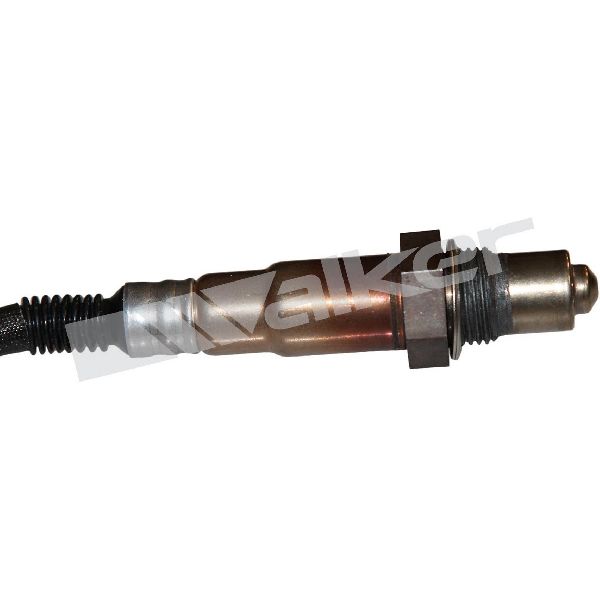
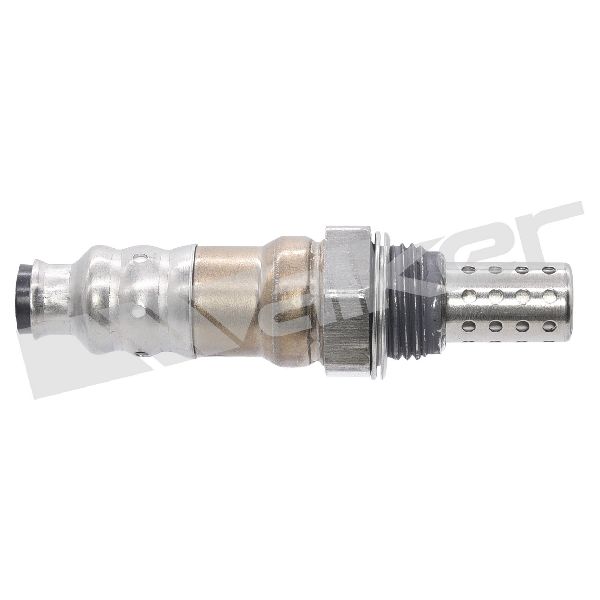
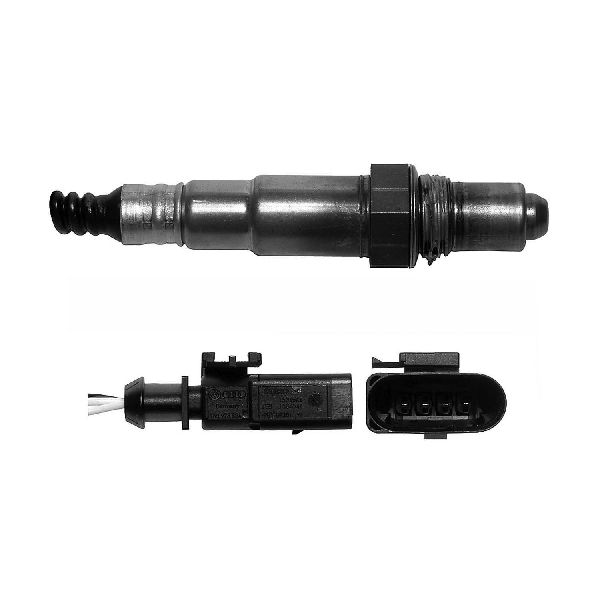
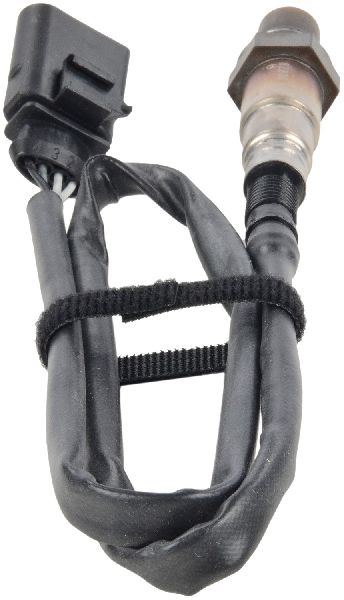
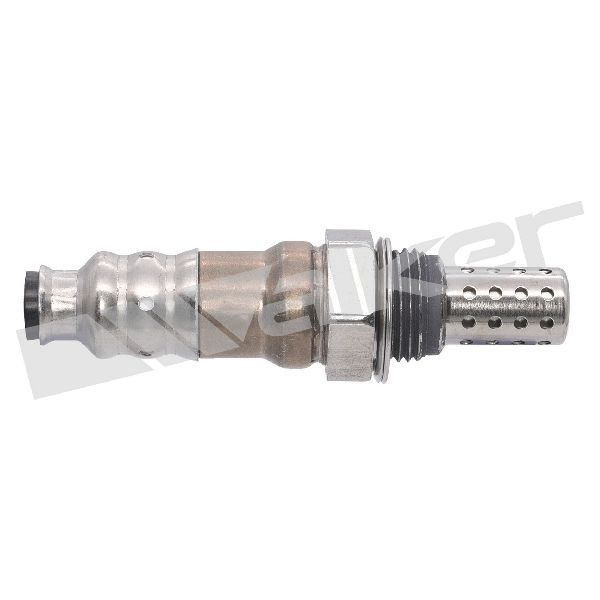
- Rear Oxygen Sensor (Downstream, Post-Catalyst)
(OEM #1K0998262D (This is a common VW part number, but always verify with VIN). This part number has many supersessions, including 06B906265D, 07C906262K, and others.)— This is the most common failure point for a P0140 code. The sensor's internal heating element or sensing components wear out over time.
Trusted brands: Bosch (OEM supplier), NTK, Denso
OEM price range: $150-$250
Aftermarket price range: $70-$150
Related Codes That Often Appear With This One
- P0141 — P0141 indicates a malfunction in the heater circuit for the same sensor (Bank 1, Sensor 2). Since a failed heater will prevent the sensor from becoming active, these codes often appear together.
- P2271 — This code means 'O2 Sensor Signal Stuck Rich (Bank 1 Sensor 2)'. A sensor that has failed and is no longer producing a signal can sometimes be interpreted by the ECU as being stuck, triggering this code alongside P0140.
- P1114 — This VW-specific code for 'Bank1, Sensor2 Internal Resistance Too High' can accompany P0140. It points directly to a failure in the sensor's internal sensing element or its wiring, reinforcing the diagnosis of a bad sensor or circuit.
Platform-Specific Known Issues
- The wiring harness for the rear O2 sensor is susceptible to breaking right at the plastic connector housing due to engine vibration and heat cycles. This specific failure is documented by owners and mechanics.
Mechanic-Grade Diagnostic Values
- O2 Sensor Heater Circuit Resistance — expected: 5 to 15 Ohms when the sensor is cold.. Failure: A reading of zero ohms (short circuit) or infinite/OL (open circuit) indicates a failed heater element.
- O2 Sensor Heater Circuit Voltage (at harness connector) — expected: Approximately 12V (battery voltage) with key on, engine off.. Failure: No voltage or significantly low voltage points to a blown fuse or a break in the power supply wire.
- O2 Sensor Signal Reference Voltage (at harness connector, sensor disconnected) — expected: 0.4V to 0.5V with key on.. Failure: No voltage or incorrect voltage suggests a problem with the ECM or the wiring between the ECM and the sensor connector.
- Downstream O2 Sensor Live Data (B1S2, engine warm) — expected: A relatively steady voltage, typically fluctuating slightly around 0.6V to 0.8V if the catalytic converter is healthy.. Failure: A flat, unchanging voltage (e.g., stuck at 0.0V, 0.45V, or 1.5V+) indicates no sensor activity.
- Wiring Harness Resistance (from sensor connector to ECM connector) — expected: Max 1.5 Ohms.. Failure: Resistance higher than 1.5 Ohms indicates corrosion or a partial break in the wire, which can cause signal loss.
Hidden / Shadow Codes Worth Checking
- 16524: This is the Ross-Tech VCDS equivalent fault code for P0140, meaning 'Oxygen (Lambda) Sensor B1 S2: No Activity'. (see via Ross-Tech VCDS diagnostic software.)
- P1114: Bank1, Sensor2 Internal Resistance Too High. This code is more specific than P0140 and directly points to a failure within the O2 sensor's sensing element itself, making a sensor replacement highly likely to be the correct fix. (see via VAG-COM/VCDS or other advanced OBD-II scanners capable of reading manufacturer-specific codes.)
Scan Tool Commands That Help
- VCDS (VAG-COM): Basic Settings, Group 041 - Oxygen Sensor Heater Test — This function actively turns the O2 sensor heaters on and allows you to monitor their resistance in real-time. It's used to confirm if the heater circuit (power, ground, and the heater element itself) is functioning correctly, which is a prerequisite for the sensor to become active.
- VCDS (VAG-COM): Readiness Monitors — After replacing the sensor and clearing codes, you can use the Guided Readiness Scripts or manually drive the vehicle to set the monitors. The O2 sensor monitor must show 'Pass' or 'Ready' to confirm the fix is complete and to pass an emissions test. VCDS can show you the status of this monitor.
Wiring & Ground Locations
- ECM Ground Pins — On the 121-pin connector for the Engine Control Module (ECM), pins 1 and 2 (both brown wires) are the main grounds.. A bad ECM ground can cause a host of sensor issues, including incorrect readings or no activity from the O2 sensors. The ECM is located in the plenum chamber at the base of the windshield.
- Ground Point 15 — A primary ground connection located directly on the cylinder head.. This is a critical engine ground. Corrosion or looseness here can affect various engine sensors that rely on a solid ground reference through the engine block.
- Ground Point 607 — A ground connection located in the plenum chamber (the area below the windshield where the wipers and ECM are located), on the left side.. Given its proximity to the ECM, this ground point is crucial for the ECM and its associated wiring harnesses. A fault here could interrupt sensor signals.
- B1S2 ECM Pins (2009-2010) — On the ECM harness connector, the signal wires for the rear O2 sensor are Pin 3 to ECM Pin 71 and Pin 4 to ECM Pin 62.. These are the specific pins to test for continuity between the sensor connector and the ECM if a wiring break is suspected.
- O2 Sensor Connector — The 4-pin connector for the rear O2 sensor is typically a black square connector (part number often 6Q0 973 704) located on a bracket on the vehicle's underbody, near the transmission mount.. This is the primary point of failure for wiring issues, either from corrosion in the connector or broken wires right at the back of the connector housing.
Real Owner Repair Stories
- YouTube channel 'Positive Lead Diagnostics' (2007 Volkswagen Jetta 2.5L) — Check Engine Light with code P0036 (O2 Sensor Heater Circuit Malfunction), which is functionally related to P0140. The sensor was not getting a ground signal from the ECM.
❌ Tried (didn't work) Replacing the downstream O2 sensor.
✅ What actually fixed it The mechanic found a large mouse nest near the ECM. The O2 sensor harness runs directly underneath where the nest was, and a mouse had chewed through the brown/green ground control wire (Pin 63 at the ECM) for the O2 sensor heater. Repairing this wire restored the ground signal and fixed the problem. - NHTSA ODI #10444637 — An owner reported persistent issues with their vehicle, frequently receiving DTC codes including P0140 and P1117. The report noted that these codes indicated open or short circuit conditions and poor electrical connections within the system.
OEM Part Supersession History
Multiple older numbers (e.g., 06B906265D, 07C906262K)→1K0998262D— VW and Bosch consolidated many different sensor part numbers into a universal kit to simplify inventory.
Heads up: The replacement kit 1K0998262D may come with longer wires than the original part and might include an extra, different-style connector in the box. If the connector on the new sensor doesn't match your car's harness, you are meant to swap to the other connector provided in the kit. Do not assume the part is wrong if the wire length or initial connector looks different.
Model Year Variations Within This Range
- 2005-2008 (Primarily BGP, BGQ engines): Some very early Mk5 Jettas with the 2.5L engine were equipped with three oxygen sensors: one pre-cat, one in the middle of the catalytic converter, and one post-cat. The P0140 code still refers to the final, post-cat sensor (Sensor 2), but technicians should be aware that a third sensor (often designated G465) might be physically present on these specific models.
- 2008-2010 (Primarily CBUA, CBTA engines): The later engines in this range, specifically the CBUA and CBTA, are largely identical long blocks but have differences in emissions equipment. The CBUA was often used for stricter emissions states (like California) and may have differences in secondary air injection and the number of vacuum lines compared to the more common CBTA. However, for a P0140 code, the diagnosis for the rear O2 sensor remains the same across both.
Diagnostic Flowchart
Real Owner Stories
Aggregated from forums and TSBs cited above. Mileages and costs reflect what owners reported in those sources.
2012 VW Jetta 2.5L
Symptoms: Check Engine Light with code P0140 (O2 circuit bank one sensor 2 no activity). The code would come back immediately after being cleared. The sensor itself had allegedly been replaced previously but did not fix the issue.
What fixed it: Repaired a broken wire leading to the Bank 1 Sensor 2 oxygen sensor. The mechanic soldered the wire and sealed it with liquid tape.
Source hint: YouTube comment - Pine Hollow Auto Diagnostics
2012 VW Jetta 2.5L
Symptoms: Vehicle presented with codes P0140 and P0141.
What fixed it: Found a clearly broken wire right at the sensor connector and repaired the connection.
Source hint: YouTube - 'VW P0140 p0141 2012 jetta Diagnose/fix' by 'Parts shooter'
Volkswagen 2.5L Engine
Symptoms: Persistent P0140 code on the 2.5L engine.
What fixed it: Replaced the rear O2 sensor specifically with a Bosch or NTK part.
Source hint: VWVortex Forums
Related OBD-II Codes
Frequently Asked Questions
Why does my 2005-2010 VW Jetta 2.5L keep throwing P0140 even after I replaced the rear oxygen sensor?
Which oxygen sensor needs to be replaced for code P0140 on my Jetta 2.5L?
Can a blown fuse cause the P0140 code on my Volkswagen?
Will I notice any driving issues with my Jetta if I have a P0140 code?
How can I test the rear O2 sensor on my 2.5L engine before buying a new one?
Are other Volkswagen models prone to this exact same P0140 issue?
We Have This Part in Stock


The information in this article is provided for general reference and educational purposes only. Vehicle specifications, procedures, and part compatibility can vary by production date, trim level, and region. Always consult your vehicle's factory service manual and verify part numbers before purchasing or performing repairs. Safety-critical components such as airbags, seat belts, and braking systems should be installed by a qualified professional.
- Volkswagen Jetta:
- 🛍️ Shop This Part
- What's Unique About the 2005-2010 Volkswagen Jetta
- Symptoms You May Notice
- Most Likely Causes
- Rare But Worth Checking
- Diagnosis Steps
- Parts You'll Likely Need
- Related Codes That Often Appear With This One
- Platform-Specific Known Issues
- Mechanic-Grade Diagnostic Values
- Hidden / Shadow Codes Worth Checking
- Scan Tool Commands That Help
- Wiring & Ground Locations
- Real Owner Repair Stories
- OEM Part Supersession History
- Model Year Variations Within This Range
- Diagnostic Flowchart
- Real Owner Stories
- 2012 VW Jetta 2.5L
- 2012 VW Jetta 2.5L
- Volkswagen 2.5L Engine
- Related OBD-II Codes
- Frequently Asked Questions
- 🎟️ Get 5% Off