

P0140 on 2006-2010 Hyundai Sonata: O2 Sensor Inactivity Causes and Fixes
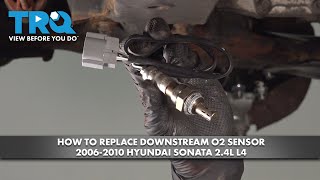
On a 2006-2010 Sonata, code P0140 almost always means the downstream oxygen sensor (Bank 1, Sensor 2) has failed. Replacing the sensor is the typical fix. Before replacing, inspect the wiring for melting and check the fuse. For the 3.3L V6, this specific sensor has a longer wire harness than the other three. Expect to pay $40-$90 for an aftermarket sensor and around $150 for an OEM part. It's a straightforward DIY repair with the right socket.
- P0140 on a 2006-2010 Sonata points overwhelmingly to a failed downstream O2 sensor (Bank 1, Sensor 2).
- Before buying a new sensor, perform a quick visual inspection of the wiring for obvious damage (especially melted sections) and check the 'SENSOR 1' fuse.
- For the 3.3L V6, be absolutely certain you are ordering the correct part for the Bank 1, Sensor 2 location, as its long wire harness makes it unique among the four sensors on the engine.
What's Unique About the 2006-2010 Hyundai Sonata
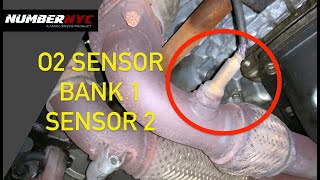
For the 2006-2010 (NF generation) Sonata, this code is a very common and straightforward issue, typically pointing directly to the sensor itself. On the 2.4L inline-4 engine, there is only one exhaust bank, making 'Bank 1' the only bank. On the 3.3L V6, 'Bank 1' is the bank of cylinders closer to the firewall, as this is the bank containing cylinder #1. A critical vehicle-specific detail for the 3.3L V6 is that the Bank 1, Sensor 2 (downstream rear) is a unique part with a much longer wire harness compared to the other three O2 sensors on the engine. There are no widespread specific TSBs for this exact code on this platform, but it's a common failure due to sensor age.
Symptoms You May Notice
- Check Engine Light is on.
- Vehicle will fail an emissions inspection test.
- Increased tailpipe emissions.
- Rough running or engine hesitation after deceleration (rare).
- Replacing the wrong oxygen sensor (e.g., replacing the upstream Sensor 1 instead of the downstream Sensor 2).
- Replacing the sensor on the wrong bank for V6 models (P0140 is for Bank 1, the rear bank, closest to the firewall).
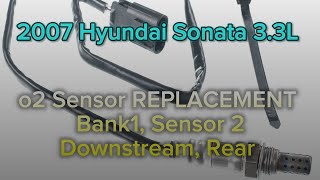
- Using the wrong part on a V6 model (the B1S2 sensor has a unique long wire harness and is not interchangeable with the other three sensors).
Most Likely Causes
- Failed Downstream Oxygen Sensor (Bank 1, Sensor 2) 🔴 High Probability Oxygen sensors are wear items that are exposed to extreme heat and exhaust gases, and they eventually fail over time. On the 3.3L V6, the B1S2 sensor is the downstream rear sensor, which has a unique long wire harness.
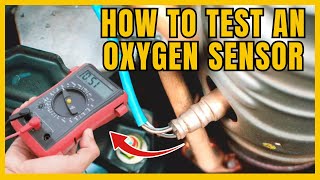
How to confirm: Use a scan tool to observe the live data for the B1S2 sensor. If the voltage is flat, stuck (e.g., at 1.25V as seen in one owner's log), or does not change, the sensor is likely dead. You can also 🎬 Watch: How to fix a P0140 code on your Sonata. test the sensor's internal heater circuit with a multimeter for proper resistance (typically 3-25 ohms). 🎬 See this simple way to test an oxygen sensor.
Typical fix: Replace the Bank 1, Sensor 2 oxygen sensor. Ensure you get the correct part, especially for the V6 model where the B1S2 sensor is unique.
Est. part cost: $40-$150 - Damaged Wiring or Connector 🟡 Medium Probability The sensor wiring is located under the vehicle and is exposed to road debris and heat from the exhaust, which can cause it to melt, chafe, or break.
How to confirm: Visually inspect the entire length of the sensor's wiring harness and its connector for any signs of melting, corrosion, or physical damage. Check for power and ground at the connector with a multimeter. A 'wiggle test' on the harness while monitoring live data can sometimes reveal an intermittent short.
Typical fix: Repair the damaged section of the wiring harness or replace the connector pigtail.
Est. part cost: $10-$30 - Blown Fuse for O2 Sensor Heater ⚪ Low Probability
How to confirm: Check the fuse box (both in the engine bay and inside the cabin) for a fuse labeled 'SENSOR' or 'O2'. On many Hyundais, this fuse may be labeled 'SENSOR 1'. Visually inspect the fuse or use a multimeter to check for continuity. A blown fuse will prevent the sensor from heating up and functioning.
Typical fix: Replace the blown fuse. If the new fuse blows immediately, this indicates a short circuit in the wiring that must be found and repaired.
Est. part cost: $1-$5
Rare But Worth Checking
- Exhaust Leak: An exhaust leak before the O2 sensor can allow outside air into the exhaust stream, which can prevent the sensor from reading correctly. This is less likely to cause a 'no activity' code but is worth checking if other diagnostics fail.
- Failing 12V Battery: In some cases, a weak or failing 12V battery can cause various electronic glitches after a jump-start or during startup. One owner reported the P0140 code appearing only after the battery was drained and the car was jump-started, suggesting the sensitive electronics were affected.
- Faulty Powertrain Control Module (PCM): This is extremely rare. The PCM should only be considered after all other possibilities, including the sensor and its entire circuit, have been thoroughly tested and ruled out.
Diagnosis Steps
- Connect an OBD-II scanner to confirm P0140 is present and check for any other codes. Document the freeze frame data.
- Visually inspect the Bank 1, Sensor 2 oxygen sensor and its wiring harness. Look for any signs of damage, such as melted wires touching the exhaust, corrosion in the connector, or broken wires.
- Check the fuse for the oxygen sensor heater circuit in the vehicle's fuse box, often labeled 'SENSOR' or 'SENSOR 1'.
- Inspect the exhaust system for any leaks between the engine and the B1S2 sensor.
- If you have a scan tool with live data capability, monitor the voltage for 'O2S B1S2'. A healthy downstream sensor should show a relatively stable voltage (typically above 0.5V) when the engine is warm and at a steady RPM. If the voltage is stuck flat (e.g., 0V), stuck high (e.g., 1.25V), or shows no activity, the sensor has likely failed.
- If the wiring and fuse are good but the sensor shows no activity, the sensor itself is the most likely culprit.
- Before replacing, you can test the heater circuit at the sensor's connector for resistance using a multimeter to definitively confirm an internal failure. Resistance should typically be between 3 and 25 ohms.
Parts You'll Likely Need
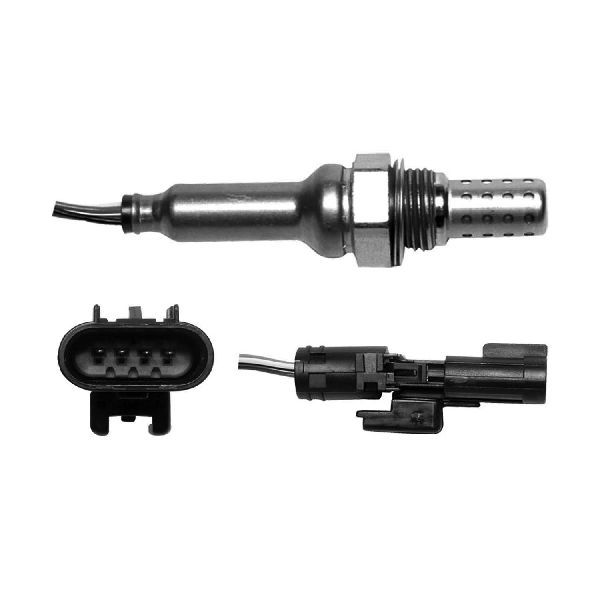
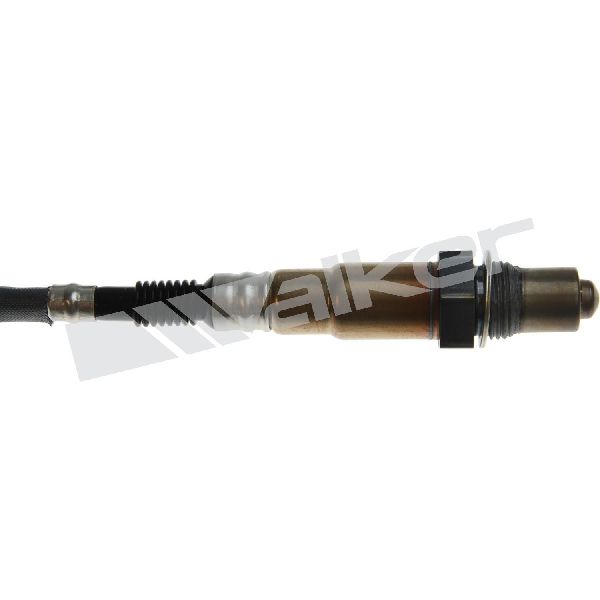
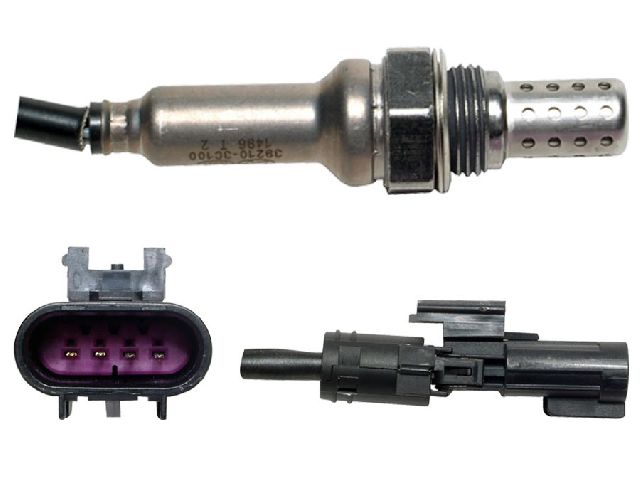
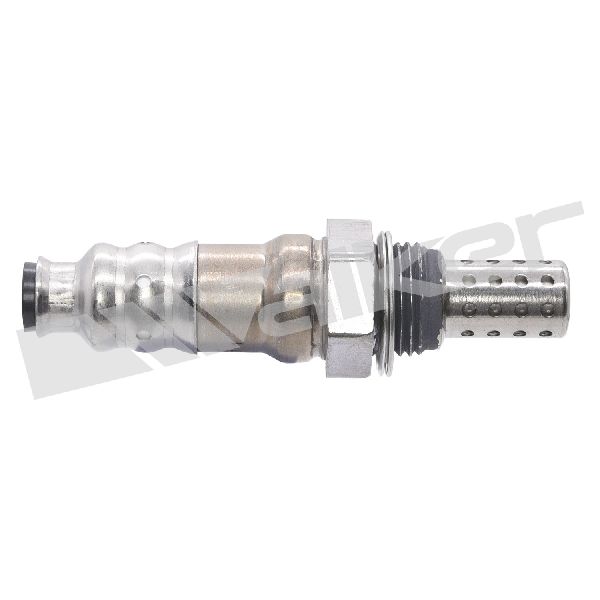
- Downstream Oxygen Sensor (Bank 1, Sensor 2)
(OEM #39210-2G200, 39210-2G550, 39210-23910 (Disclaimer: Multiple part numbers exist. Always verify with VIN before purchase))— This is the component that the code directly identifies as inactive. It is a common wear-and-tear part that fails with age and exposure to exhaust gases.
Trusted brands: Denso, NGK, Bosch, Walker Products, Delphi
OEM price range: $120-$180
Aftermarket price range: $40-$90
Related Codes That Often Appear With This One
- P2271 - O2 Sensor Signal Stuck Rich (Bank 1 Sensor 2) —
Technical Service Bulletins (TSBs) & Recalls
- Hyundai TSB #11-01-007: Mentions an ECM software update for O2 sensor monitoring on the 2011 Sonata, indicating Hyundai has refined the system. While not for the NF generation, it shows a history of software adjustments related to O2 sensors.
Platform-Specific Known Issues
- On the 3.3L V6 model, the Bank 1 Sensor 2 (downstream rear) uses a unique part number due to a much longer wire harness. The other three sensors are often interchangeable, so it is critical to order the correct 🎬 Watch: How to replace the Bank 1 Sensor 2 on a V6. part for this specific location.
- The wiring harness for the downstream sensor is susceptible to melting if it comes loose and makes contact with the hot exhaust pipe.
Mechanic-Grade Diagnostic Values
- O2 Sensor Heater Element Resistance — expected: 3 to 25 Ohms. Failure: An open circuit (infinite resistance) or a reading outside the specified range indicates a failed heater element.
- B1S2 Voltage during Fuel Cut-Off (Deceleration) — expected: Near 0V. Failure: If the voltage is too high during deceleration, the ECM may set the code.
- B1S2 Voltage immediately after Fuel Cut-Off ends — expected: Should rise above 0.6V. Failure: If the signal remains at or below 0.6V for more than 5 seconds after leaving fuel cut-off, the code may be set.
- O2 Sensor Signal Wire Voltage with Open Reference Ground — expected: Normal signal is 0.1V - 0.9V. Failure: A reading of 2.4V or higher can indicate an open in the sensor's reference ground wire, not necessarily a faulty sensor.
- KOEO (Key On, Engine Off) O2 Sensor Bias Voltage — expected: Approximately 0.425V - 0.5V. Failure: A flatlined or absent bias voltage before startup can indicate a circuit issue. This voltage should begin to change once the heater activates.
Scan Tool Commands That Help
- Hyundai GDS (Global Diagnostic System): Actuator Test — Can be used to command the O2 sensor heater circuit on/off to verify the ECM driver, relay, and fuse are functioning, helping to isolate the fault to the sensor itself or its wiring.
- Hyundai GDS (Global Diagnostic System): Resetting Adaptive Values — After replacing an O2 sensor or repairing a related circuit, this function should be used to clear the old learned values from the ECM, ensuring it uses data from the new component correctly.
Wiring & Ground Locations
- ECM Ground Circuit — At the ECM harness connector (C230-1), test pins 1, 2, and 3 to the chassis ground.. A poor ground connection for the ECM can cause a variety of incorrect sensor readings, including a P0140. Resistance should be 1Ω or less.
- O2 Sensor Reference Ground Wire — One of the four wires in the O2 sensor harness connector.. An open circuit on this specific ground wire can cause the signal voltage to read abnormally high (e.g., >2.4V), leading to a misdiagnosis of a bad sensor when the fault is in the wiring.
- Main Engine Grounds — There are typically three main engine-to-chassis ground straps. One is often near the transmission mount, another from the engine block to the firewall or strut tower.. A corroded or loose main engine ground can create electrical noise and voltage offsets that interfere with sensitive sensor signals like those from the O2 sensors.
OEM Part Supersession History
39210-2G200→N/A— This part number appears to be stable and covers a wide range of model years.
Heads up: This part is used on many Hyundai and Kia models from roughly 2007-2015, including the Sonata, Santa Fe, Optima, and Sorento, primarily with the 2.4L engine. Always verify with VIN, but it is a widely used sensor.
Model Year Variations Within This Range
- 2006-2010: No significant variations related to the P0140 code were found between the pre-facelift (2006-2008) and post-facelift (2009-2010) NF Sonata models. The primary difference remains the engine (2.4L I4 vs. 3.3L V6), which dictates the number and location of sensors.
Diagnostic Flowchart
Real Owner Stories
Aggregated from forums and TSBs cited above. Mileages and costs reflect what owners reported in those sources.
Hyundai Sonata
Symptoms: Owner had both P0140 and P2271 codes. When logging live data from their scan tool, the B1S2 voltage climbed to and froze at 1.25V.
What fixed it: Confirmed the sensor was bad via live data and replaced it.
Source hint: r/MechanicAdvice - 'Trying to Confirm if O2 Sensor is Actually Bad and Cause of Error Codes'
Hyundai Sonata Hybrid
Symptoms: The P0140 code appeared immediately after the car's 12V battery died and the vehicle required a jump-start.
What fixed it: Identified as a voltage-sensitive electronics glitch caused by the dead battery and jump-start.
Source hint: CarKiller.com - 'HYUNDAI SONATA P0140 Code'
Documented NHTSA Reports
Hyundai Santa Fe (Cross-Manufacturer Reference)
Symptoms: An owner reported the check engine light was continuously on and blinking, signaling the vehicle was unsafe to drive. Diagnostic codes retrieved included P0140 (O2 Circuit), P0172 (System Too Rich), and P0126 (Knock Sensor Circuit).
Source: NHTSA ODI #11618243
Related OBD-II Codes
Frequently Asked Questions
I have a 2006-2010 Sonata 3.3L V6. Can I use any downstream O2 sensor for Bank 1 Sensor 2?
Why does the wiring for the B1S2 sensor fail so often on this generation Sonata?
Which fuse should I check for the O2 sensor heater circuit on my Sonata?
Does Hyundai TSB #11-01-007 apply to my 2006-2010 Sonata NF?
Can a dead battery cause a P0140 code on my Sonata?
How can I test if the B1S2 sensor itself is dead on my 2.4L Sonata?
Helpful Videos

We Have This Part in Stock



The information in this article is provided for general reference and educational purposes only. Vehicle specifications, procedures, and part compatibility can vary by production date, trim level, and region. Always consult your vehicle's factory service manual and verify part numbers before purchasing or performing repairs. Safety-critical components such as airbags, seat belts, and braking systems should be installed by a qualified professional.
- Hyundai Sonata:
- 🎬 Helpful Videos
- 🛍️ Shop This Part
- What's Unique About the 2006-2010 Hyundai Sonata
- Symptoms You May Notice
- Most Likely Causes
- Rare But Worth Checking
- Diagnosis Steps
- Parts You'll Likely Need
- Related Codes That Often Appear With This One
- Technical Service Bulletins (TSBs) & Recalls
- Platform-Specific Known Issues
- Mechanic-Grade Diagnostic Values
- Scan Tool Commands That Help
- Wiring & Ground Locations
- OEM Part Supersession History
- Model Year Variations Within This Range
- Diagnostic Flowchart
- Real Owner Stories
- Hyundai Sonata
- Hyundai Sonata Hybrid
- Documented NHTSA Reports
- Hyundai Santa Fe (Cross-Manufacturer Reference)
- Related OBD-II Codes
- Frequently Asked Questions
- 🎟️ Get 5% Off