

P0139 on 2013-2016 Dodge Dart 1.4L Turbo: Causes and Fixes for Slow O2 Sensor Response
This code almost always points to a failing downstream oxygen sensor (Bank 1, Sensor 2). Replacing this sensor is the most common fix. Expect to pay around $130 for an OEM sensor and between $50-$90 for an aftermarket one. It's a straightforward DIY job for many. Before replacing, check for exhaust leaks between the turbo and the sensor.
- P0139 on your Dart 1.4L Turbo almost always means the downstream O2 sensor (after the catalytic converter) is old and needs to be replaced.
- Before replacing the sensor, perform a quick visual check of the exhaust for leaks, especially around the flex pipe and turbo connection.
- Use a quality OEM (Mopar) or OE-equivalent (NTK, Denso) sensor for the replacement; cheap aftermarket sensors are known to cause persistent issues.
- Be aware that this car has several other well-known, expensive potential problems like MultiAir actuator and DDCT automatic transmission failures, which can sometimes present with related engine codes.
What's Unique About the 2013-2016 Dodge Dart
The 1.4L MultiAir Turbo engine is shared across several Fiat-Chrysler (FCA) vehicles, including the Fiat 500 Abarth and Jeep Renegade, which also report this code. On this platform, while the P0139 code is common across many vehicles, owners should be particularly aware of potential exhaust leaks near the turbocharger's V-band clamp or the downpipe's flex pipe, which can alter sensor readings and trigger this code. Additionally, some owners and technicians recommend replacing both the upstream and downstream oxygen sensors at the same time, even if only one has failed, to prevent issues caused by mismatched sensor switching speeds between a new and an old sensor.
Symptoms You May Notice
- Check Engine Light is illuminated
- Reduced fuel economy
- Vehicle may fail an emissions test
- In rare cases, slight hesitation or rough running during deceleration
- Strong exhaust odor due to a potentially rich fuel mixture
- Replacing the catalytic converter. A P0139 code indicates a problem with the sensor's response time, not necessarily the converter's efficiency. A bad converter usually triggers a P0420 code.
Most Likely Causes
- Failing Downstream Oxygen Sensor (Bank 1, Sensor 2) 🔴 High Probability Oxygen sensors are wear items that degrade over time due to constant exposure to high heat and exhaust gases. Contamination from oil or coolant can also accelerate failure. Many owners report this as the definitive fix.
How to confirm: Use a scan tool to graph the voltage of the B1S2 sensor. A healthy downstream sensor's voltage should fluctuate slowly and stay relatively stable (e.g., 0.6-0.8V) at steady RPM. If the voltage is stuck, flat, or responds very sluggishly to sharp throttle changes, the sensor is likely bad.
Typical fix: Replace the downstream oxygen sensor. It is located under the car, after the catalytic converter. Using an O2 sensor socket is highly recommended.
Est. part cost: $50-$135 - Exhaust Leak 🟡 Medium Probability The 1.4L Turbo platform has documented owner complaints of exhaust leaks, particularly from the V-band clamp between the turbo and downpipe or the woven flex pipe section. An exhaust leak before the sensor can introduce outside air, causing incorrect readings and triggering a slow response code.
How to confirm: Visually inspect the exhaust system from the engine to the downstream O2 sensor for soot marks, cracks, or loose connections. Listen for audible hissing or ticking sounds, especially when the engine is cold. A shop can perform a smoke test to pinpoint hard-to-see leaks.
Typical fix: Repair the leak by replacing the faulty gasket, tightening clamps, or having a muffler shop weld in a new flex pipe section.
Est. part cost: $10-$300 - Damaged Wiring or Connector ⚪ Low Probability The sensor wiring runs under the vehicle and is exposed to heat, road debris, and moisture, which can cause corrosion, melting, or physical damage over time.
How to confirm: Visually inspect the wiring harness and connector for the downstream O2 sensor. Look for any signs of melting, chafing, corrosion in the pins, or broken wires. Check for pushed-back terminals inside the connector.
Typical fix: Repair the damaged section of the wiring harness or replace the connector pigtail. Ensure the wiring is properly secured away from hot exhaust components.
Est. part cost: $15-$50
Rare But Worth Checking
- Leaking Fuel Injectors: If the engine is running excessively rich due to a leaking injector, it can foul the O2 sensor and affect its readings. This would typically be accompanied by other codes like P0172 (System Too Rich).
- Failing Powertrain Control Module (PCM): In very rare instances, the fault may lie with the PCM's internal circuitry for processing the sensor's signal. This should only be considered after all other possibilities have been exhaustively ruled out. Software updates may be required to fix overly sensitive diagnostic thresholds.
Diagnosis Steps
- Scan for Codes: Use an OBD-II scanner to confirm P0139 is the only code present. If other codes exist (e.g., for misfires, fuel trim, or heater circuits), address them first as they can be the root cause.
- Check for Exhaust Leaks: With the engine running (and cool enough to work around), carefully check for leaks between the engine and the downstream sensor. Listen for unusual sounds and look for black soot trails that indicate a leak. Pay close attention to the turbo downpipe connection and flex pipe.
- Visual Inspection of Wiring: Inspect the downstream O2 sensor's wiring harness and connector for any obvious damage, such as melting, chafing, or corrosion. Ensure the connector is securely plugged in.
- Analyze Live Data: Use a scanner with live data capabilities to monitor the Bank 1 Sensor 2 voltage. At a steady 2500 RPM, the voltage should be relatively stable. During deceleration (fuel cut-off), the voltage should drop quickly towards 0V. If it responds very slowly or remains flat, the sensor is the primary suspect.
- Test the Sensor: If the wiring and exhaust are confirmed to be good, the most likely cause is the sensor itself. Replacement is the next logical step.
- Final Check: After replacing the sensor, clear the codes and perform a drive cycle to ensure the code does not return.
Parts You'll Likely Need
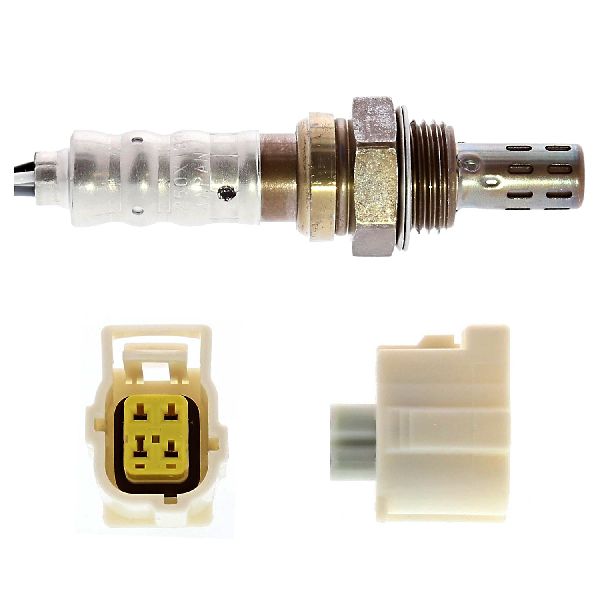
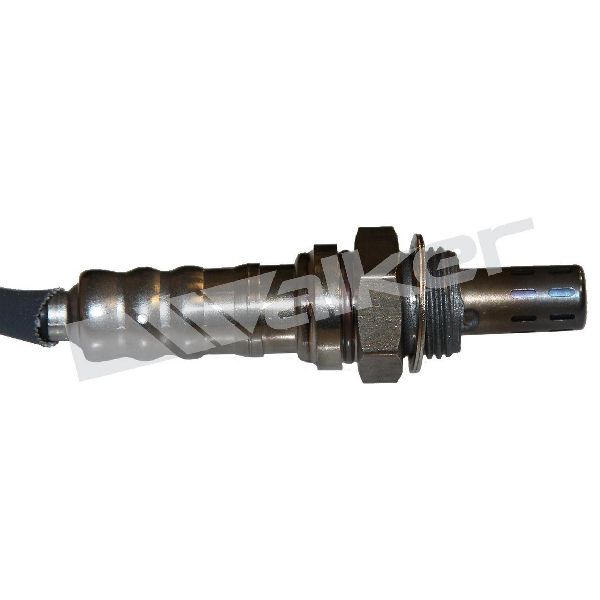
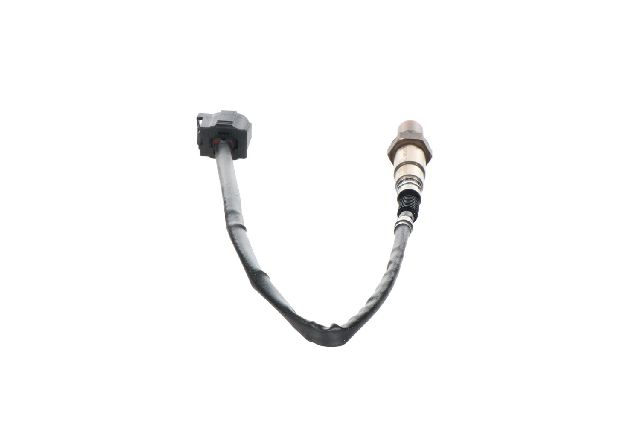
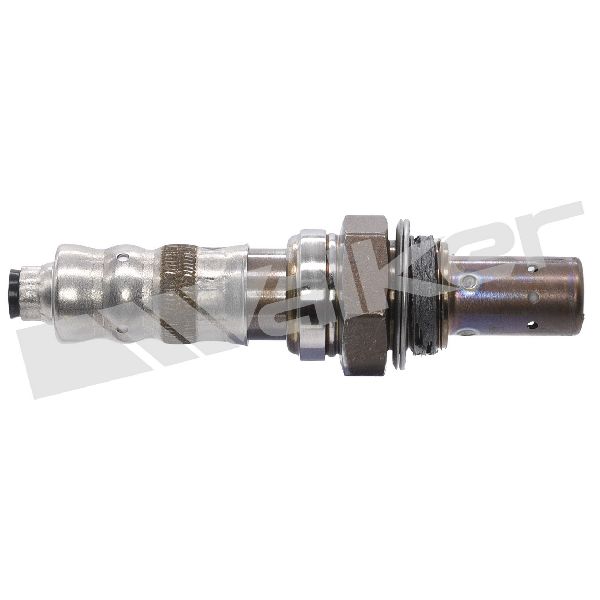
- Downstream Oxygen Sensor (Bank 1, Sensor 2)
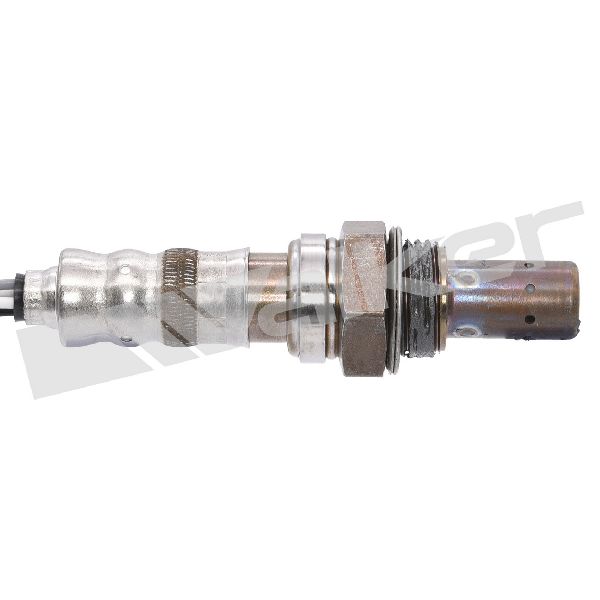
(OEM #68142340AA)— This is the most common failure point for a P0139 code. The sensor degrades over time and loses its ability to respond quickly. Community consensus strongly favors OEM (Mopar) or OE-supplier (NTK/NGK, Denso) parts for reliability.
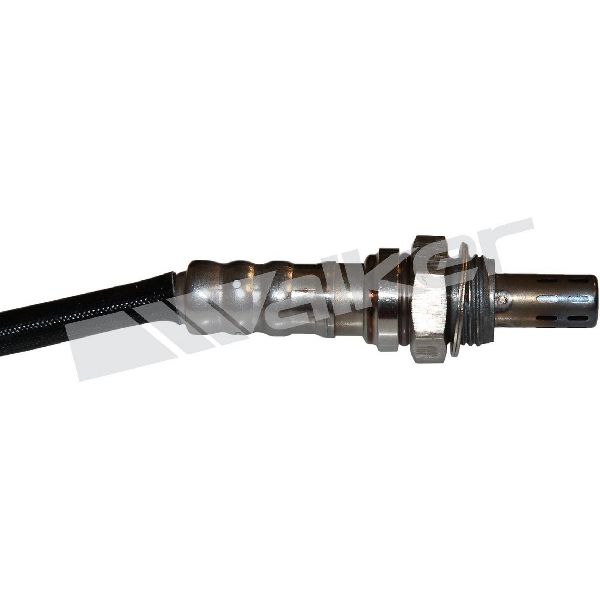
Trusted brands: Mopar, NTK, Denso, Bosch, Walker Products
OEM price range: $130-$150
Aftermarket price range: $50-$90
Related Codes That Often Appear With This One
- P0140 — P0140 (O2 Sensor Circuit No Activity Detected) can appear with P0139 if the sensor becomes completely unresponsive.
- P0141 — P0141 (O2 Sensor Heater Circuit Malfunction) often accompanies sensor performance codes, as a faulty heater can cause the slow response.
Technical Service Bulletins (TSBs) & Recalls
- No specific TSB directly addresses the P0139 code for the 2013-2016 Dodge Dart 1.4L. However, FCA has issued TSBs for other models (e.g., TSB 18-059-16 for 2011 Chrysler/Dodge vans) that involve PCM software updates to correct various O2 sensor heater circuit codes, indicating that software can be a factor in related faults. TSB 18-009-15 Rev. G also calls for a PCM reflash on 1.4L Darts for other O2 sensor codes like P0141, reinforcing that software updates are a valid repair step for this system.
Platform-Specific Known Issues
- Some owners on forums like dodge-dart.org report that replacing only the downstream sensor can sometimes lead to a P0420 (Catalyst Efficiency) code, because the new sensor's switching rate is much faster than the old, tired upstream sensor. For this reason, replacing both sensors at once is sometimes recommended.
Mechanic-Grade Diagnostic Values
- Downstream O2 Sensor Signal Voltage (PCM Biased) — expected: Fluctuating between 2.5 volts and 3.5 volts.. Failure: Voltage is stuck, flat, or responds very slowly to throttle changes.
- Downstream O2 Sensor Heater Resistance — expected: Approximately 9 Ohms at 20°C (68°F).. Failure: Resistance is significantly higher (e.g., >40 Ohms) or shows an open circuit (infinite resistance).
- O2 Sensor Circuit-to-PCM Resistance — expected: Below 5.0 Ohms.. Failure: Resistance is above 5.0 Ohms, indicating corrosion or a damaged wire in the harness.
Hidden / Shadow Codes Worth Checking
- Mode $06 Data: While not a 'shadow code,' Mode $06 provides the raw results of the PCM's self-tests before a DTC is set. A technician can view the test results for the 'O2 Sensor Response Rate' monitor. This data will show the actual measured response time, a minimum threshold, and a maximum threshold. Seeing a value that is close to the failure threshold can confirm a degrading sensor even if the Check Engine Light is not yet on. (see via A professional scan tool with Mode $06 capability is required. The specific Test ID (TID) and Component ID (CID) vary by manufacturer but will be labeled related to O2 sensor performance.)
Scan Tool Commands That Help
- wiTECH (Chrysler/FCA Dealer Tool): PCM Reprogramming / Flash — Use when TSB 18-009-15 applies. This software update addresses multiple drivability issues and diagnostic trouble codes, including those for O2 sensor circuits (like P0141). An outdated PCM calibration may have thresholds that are too sensitive, causing a P0139 code to be set erroneously. Always check for the latest software before replacing hardware.
- wiTECH: Cruise Control Learn Procedure — This procedure is required after reprogramming the PCM, as per FCA service bulletins. Failing to perform this can leave unrelated DTCs or system faults.
Wiring & Ground Locations
- PCM Location — Right rear corner of the engine compartment.. This is the termination point for the O2 sensor wiring. When checking for continuity or shorts, testing will be done between the sensor connector and the PCM connector.
- Engine Ground Strap — A braided or ribbon cable connecting the engine block to the chassis, often located on the passenger side of the engine bay connecting to the strut tower or frame rail.. A corroded or loose engine ground can cause a host of electrical issues, including erratic sensor readings. The PCM relies on a stable ground reference for all its sensors; a poor ground can create a voltage offset that makes the O2 sensor signal appear slow or incorrect.
- O2 Sensor 1/2 Connector (C104) — Underneath the vehicle, on the exhaust pipe after the catalytic converter. The connector is part of the sensor's pigtail.. This is the primary point of inspection for physical damage, corrosion, or pushed-back pins. The pinout includes power for the heater, ground, and the signal return wire.
Real Owner Repair Stories
- dodge-dart.org user 'alpinegreenneon' (2013 Dodge Dart 1.4L Turbo) — A sequence of codes appeared. First a misfire, then P0137 (O2 Sensor Circuit Low Voltage B1S2) after replacing plugs/coil. After replacing the B1S2 sensor, a new code P2096 (Downstream Fuel Trim System 1 Lean) appeared.
❌ Tried (didn't work) Replacing the downstream O2 sensor did not fully resolve the check engine light, as a new, related code appeared immediately after.
✅ What actually fixed it The crucial advice given was that these engines are notoriously picky about O2 sensor brands. The user was warned, 'Hope you didn't buy a Bosch sensor. These engines only like Mopar or NTK O2 sensors.' The implication is that using an incompatible aftermarket sensor caused the subsequent P2096 code, and the fix is to use the correct OEM or OE-equivalent brand.
"I Checked Everything" — The Actual Cause
- A common scenario for a recurring P0139 on this vehicle involves a technician performing an exhaust smoke test and finding no leaks. The technician then replaces the downstream O2 sensor, but the code returns. The actual root cause is often one of two things missed by standard procedure: 1) The use of an incompatible aftermarket O2 sensor brand (e.g., Bosch instead of Mopar/NTK) which has a different response characteristic, or 2) The need for a PCM software update per TSB 18-009-15 to adjust the sensitivity of the O2 sensor monitoring logic.
OEM Part Supersession History
68142340AA→No supersession found.— N/A
Heads up: This part number appears to be consistent for the 2013-2016 Dart 1.4L and is also used on other FCA vehicles with the same engine, such as the Fiat 500L.
Model Year Variations Within This Range
- 2014-2016: Starting in model year 2014, the 1.4L Turbo engine was no longer the primary engine for most trims. It was relegated mainly to the fuel-economy-focused 'Aero' model. Most SXT, Limited, and GT trims received the 2.4L engine instead. This is critical for diagnosis, as the 2.4L engine has its own set of common issues and TSBs.
- 2014, 2015, 2016: FCA TSB 18-009-15, which involves a PCM reflash, lists different symptoms and addressed DTCs for different model years. For example, 'P113D - O2 Sensor 1/1 Slow Response' was a condition specifically listed for the 2015 model year, indicating software logic and monitoring thresholds evolved during the production run.
Diagnostic Flowchart
Other Known Issues on This Vehicle
Issues unrelated to this code that are worth knowing about as an owner of this generation:
- MultiAir Actuator ('Brick') Failure 🔴 High — Common as mileage exceeds 60,000-80,000 miles. Often preceded by misfire codes (P030x) and specific actuator codes (e.g., P1067, P106B).
- DDCT (Dual Dry Clutch Transmission) Failure 🔴 High — Affects automatic models. Issues range from faulty hydraulic actuators and solenoids to complete transmission failure. Symptoms include 'Service Transmission' warnings and 'Gear Unavailable' messages.
- Excessive Oil Consumption 🟠 Medium — Many owners report consuming a quart of oil every 1,000-3,000 miles. Requires frequent oil level checks to prevent engine damage.
- Turbocharger Failure 🔴 High — Less common than other issues, but some owners have required turbo replacement, sometimes under powertrain warranty around 50,000 miles.
- Bluetooth/Hands-Free Module Failure 🟡 Low — A very common annoyance where the Uconnect system gets stuck on 'Loading Hands-Free' and becomes unresponsive.
- Sticking/Seized Rear Brake Calipers 🟠 Medium — The parking brake mechanism on the rear calipers is prone to seizing, causing the rear brakes to drag.
Used vs. New Parts: Buying Guide for This Vehicle
When a used part is the smart pick: For this repair, a used part is almost never a smart choice for the oxygen sensor itself, as it is a wear-and-tear component with a finite lifespan. However, sourcing a used wiring harness connector pigtail from a junkyard is a viable and cost-effective option if the original connector is melted, corroded, or physically broken.
Donor-vehicle mileage cap: roughly under 120000 miles for the part to have meaningful remaining life.
What to inspect on the donor part:
- For a connector pigtail, inspect for plastic that is not brittle or cracked.
- Ensure the locking tab is intact.
- Check for clean, corrosion-free electrical pins inside the connector.
- Verify the attached wires are flexible and the insulation is not cracked or melted.
OEM-only on this vehicle (don't cheap out):
- Oxygen Sensor: Due to the PCM's sensitivity, it is highly recommended to use either the OEM Mopar sensor or the original equipment supplier, which is NTK (also known as NGK).
Aftermarket brands forum-validated for this vehicle:
- NTK
- Denso
Brands owners have reported issues with on this vehicle:
- Bosch: Forum members have specifically reported issues with Bosch sensors on this platform, where replacing a faulty sensor with a Bosch unit led to different but related trouble codes.
Real Owner Stories
Aggregated from forums and TSBs cited above. Mileages and costs reflect what owners reported in those sources.
2013-2016 Dodge Dart 1.4L MultiAir Turbo
Symptoms: P0139, P0140, P0141 and sometimes P0171 & P0172 codes appearing together.
What fixed it: Replacing the downstream O2 sensor with an OEM Mopar or NTK sensor.
Source hint: dodge-dart.org thread titled 'P0139, P0140, P0141 and sometimes P0171 & P0172'
2013-2016 Dodge Dart 1.4L MultiAir Turbo — ~70000 miles
Symptoms: Misfire codes (P030x) and specific actuator codes like P1067 or P106B.
What fixed it: Replacement of the MultiAir Actuator ('Brick').
Source hint: Reddit r/dodgedart thread 'My MultiAir Actuator is bad, I need advice.'
2013-2016 Dodge Dart 1.4L MultiAir Turbo
Symptoms: Service Transmission warnings, Gear Unavailable messages, and issues with hydraulic actuators.
What fixed it: Diagnosing and repairing the Dual Dry Clutch Transmission (DDCT) hydraulic actuators or solenoids.
Source hint: dodge-dart.org thread 'DDCT Issues/Diagnosis, No Luck Searching'
Related OBD-II Codes
Frequently Asked Questions
Does TSB 18-009-15 Rev. G apply to my 1.4L Dodge Dart if I have O2 sensor codes?
Should I replace both oxygen sensors if I only have a P0139 code?
Which brand of oxygen sensor should I use for my 1.4L Turbo Dart?
Can an exhaust leak cause a P0139 code on the Dodge Dart?
Where is the sensor responsible for P0139 located on my Dart?
Helpful Videos

We Have This Part in Stock

The information in this article is provided for general reference and educational purposes only. Vehicle specifications, procedures, and part compatibility can vary by production date, trim level, and region. Always consult your vehicle's factory service manual and verify part numbers before purchasing or performing repairs. Safety-critical components such as airbags, seat belts, and braking systems should be installed by a qualified professional.
- Dodge Dart:
- 🎬 Helpful Videos
- 🛍️ Shop This Part
- What's Unique About the 2013-2016 Dodge Dart
- Symptoms You May Notice
- Most Likely Causes
- Rare But Worth Checking
- Diagnosis Steps
- Parts You'll Likely Need
- Related Codes That Often Appear With This One
- Technical Service Bulletins (TSBs) & Recalls
- Platform-Specific Known Issues
- Mechanic-Grade Diagnostic Values
- Hidden / Shadow Codes Worth Checking
- Scan Tool Commands That Help
- Wiring & Ground Locations
- Real Owner Repair Stories
- "I Checked Everything" — The Actual Cause
- OEM Part Supersession History
- Model Year Variations Within This Range
- Diagnostic Flowchart
- Other Known Issues on This Vehicle
- Used vs. New Parts: Buying Guide for This Vehicle
- Real Owner Stories
- 2013-2016 Dodge Dart 1.4L MultiAir Turbo
- 2013-2016 Dodge Dart 1.4L MultiAir Turbo — ~70000 miles
- 2013-2016 Dodge Dart 1.4L MultiAir Turbo
- Related OBD-II Codes
- Frequently Asked Questions
- 🎟️ Get 5% Off