

P0138 on 2005-2009 Ford Mustang GT 4.6L: High Voltage O2 Sensor Causes and Fixes
On a 2005-2009 Mustang GT, code P0138 almost always points to a faulty downstream oxygen sensor on the passenger side (Bank 1, Sensor 2) or a wiring issue. The most likely fix is replacing the sensor. Expect to pay ~$50-$90 for an aftermarket sensor (e.g., NTK, Bosch) and ~$90-$120 for an OEM Motorcraft part (GU2Z-9G444-A / DY-1401). It's a DIY-friendly job with a 22mm or 7/8" O2 sensor socket. Before replacing, inspect the wiring harness for melting or chafing near the exhaust.
- P0138 on your Mustang GT points to the downstream O2 sensor on the passenger side.
- The most likely cause is simply a bad O2 sensor that has worn out over time.
- Before replacing the sensor, always inspect the wiring harness for melting or damage, as this is another common cause.
- If you also have a 'rich condition' code (like P0172), you may have a fuel delivery issue, not a sensor problem.
- This is a manageable DIY repair with an O2 sensor socket, but the sensor can be very tight if it's old and rusted.
What's Unique About the 2005-2009 Ford Mustang GT
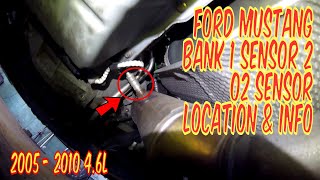
For the S197 Mustang GT, this code is straightforward. The 4.6L 3V V8 engine's architecture is well-documented, making sensor location easy. Bank 1 is the passenger side. 🎬 Watch: Locate your Bank 1 Sensor 2 and see common symptoms. Unlike some complex emissions issues, P0138 on this platform is most often a simple component failure—either the sensor itself has aged out or its wiring has been damaged by heat from the nearby exhaust. A common scenario involves the wiring harness coming into contact with the exhaust or driveshaft, especially after installing aftermarket components like long tube headers. While a rich running condition can trigger it, this is less common than a direct sensor or circuit failure on these cars.
Symptoms You May Notice
- Check Engine Light is on
- Failing an emissions test
- Potential decrease in fuel economy (though often not noticeable)
- Rough idle or poor performance (uncommon for a Sensor 2 failure, but possible if the root cause is a severe rich condition)
- Black smoke from exhaust (rare, indicates a severe rich condition)
- Immediately replacing the O2 sensor without checking the wiring. A shorted wire will cause the new sensor to report the same P0138 code.
- Replacing the wrong sensor (e.g., the upstream sensor (Sensor 1) or the sensor on the driver's side (Bank 2)).
- Using a 'non-fouler' or spacer to pull the sensor out of the exhaust stream. While this might extinguish the light, it masks the underlying problem and is illegal for emissions compliance.
Most Likely Causes
- Faulty Bank 1, Sensor 2 Oxygen Sensor 🔴 High Probability Oxygen sensors are wear items and typically fail after 100,000 miles due to heat, contamination, and age. The internal heater circuit can also fail, causing incorrect readings, often triggering a P0141 code alongside P0138.
How to confirm: After checking wiring, test the sensor's voltage output with a multimeter or OBD-II scanner. A healthy downstream sensor should show a relatively stable voltage (typically 0.5V-0.8V). If it's stuck high (above 0.9V) or not responding, it has likely failed. Another method is to swap the downstream sensors from Bank 1 and Bank 2. If the code changes to P0158 (Bank 2, Sensor 2), the sensor is confirmed bad.
Typical fix: Replace the Bank 1, Sensor 2 (passenger side, downstream) oxygen sensor. It is highly recommended to use a special 22mm or 7/8" O2 sensor socket for removal. Apply anti-seize to the threads if not pre-applied. Torque to approximately 26-33 ft-lbs. 🎬 See this walkthrough for replacing O2 sensors on your Mustang.
Est. part cost: $50-$150 - Damaged or Shorted O2 Sensor Wiring 🟡 Medium Probability The sensor wiring is routed near the hot exhaust system and can become brittle, melt, or chafe over time, leading to a short circuit. A short between the signal wire and a power source will cause a constant high voltage reading. This is also common after installing aftermarket headers or exhaust, where wires can be pulled or make contact with the driveshaft.
How to confirm: Visually inspect the entire wiring harness from the O2 sensor connector to the main engine harness. Look for melted plastic, exposed wires, or corrosion in the connector. Use a multimeter to check for continuity and for shorts to power or ground. A user on The Mustang Source forums reported that after replacing a sensor to no effect, they found a chafed wire as the root cause. 🎬 Watch: How to find common wiring harness issues on these cars.
Typical fix: Repair the damaged section of the wiring harness or clean/replace the connector. Use high-temperature wire loom and secure the harness away from heat sources and moving parts like the driveshaft.
Est. part cost: $5-$50 - Engine Running Rich ⚪ Low Probability While less common to only trigger P0138, a rich condition from a leaking fuel injector, faulty fuel pressure regulator, or dirty Mass Airflow (MAF) sensor can overwhelm the catalytic converter, causing a genuinely high voltage reading from the downstream O2 sensor.
How to confirm: Check for other trouble codes (like P0172 - Rich Condition). Use an OBD-II scanner to check long-term fuel trims. High negative fuel trims indicate the PCM is trying to correct a rich condition. A fuel pressure test can also identify issues.
Typical fix: Diagnose and repair the root cause of the rich condition, such as replacing a leaking fuel injector or cleaning the MAF sensor.
Est. part cost: $50-$400
Rare But Worth Checking
- Failing Catalytic Converter: A physically damaged or internally melted catalytic converter can disrupt exhaust flow and chemistry, sometimes leading to abnormal readings from the downstream sensor. This is more likely to be accompanied by other codes like P0420 (Catalyst Efficiency Below Threshold).
- Exhaust Leak: While an exhaust leak before the sensor typically introduces oxygen and causes a low voltage code (P0137), a leak very close to the sensor could potentially interfere with the sensor's heater or ground circuit, leading to anomalous high voltage readings.
- Faulty Powertrain Control Module (PCM): This is extremely rare. The PCM itself can fail, but all other potential causes should be exhaustively ruled out before considering PCM replacement. A bad PCM driver circuit for the sensor could be a cause.
Diagnosis Steps
- Verify the Code: Use an OBD-II scanner to confirm P0138 is the active code. Note any other codes present, such as P0141 or P0172.
- Visual Inspection: Safely raise the vehicle. Locate the Bank 1, Sensor 2 O2 sensor on the passenger side exhaust pipe, after the catalytic converter. Inspect the sensor's wiring harness for any signs of melting, chafing, or physical damage. Check that the connector is secure and free of corrosion. Pay close attention to where the harness passes near the exhaust manifold and driveshaft.
- Check Live Data: With the engine running, use an OBD-II scanner to observe the voltage for 'O2S12' (Bank 1, Sensor 2). If the voltage is stuck above 0.9V and does not fluctuate, it confirms the high voltage condition. A healthy downstream sensor will have a relatively steady voltage, unlike the rapidly fluctuating upstream sensor.
- Test the Wiring: Disconnect the sensor. With the key on and engine off, check the harness connector for proper reference voltage (around 0.45V) and a good ground. Check the signal wire for any shorts to a power source.
- Test the Sensor: If the wiring is confirmed to be good, the oxygen sensor itself is the most likely culprit. You can confirm by swapping it with the Bank 2 sensor and seeing if the code follows.
- Investigate Rich Condition: If codes like P0172 are also present, or if fuel trims are highly negative, investigate potential causes of a rich fuel mixture (e.g., fuel pressure, injector issues, dirty MAF) before replacing the O2 sensor.
Parts You'll Likely Need
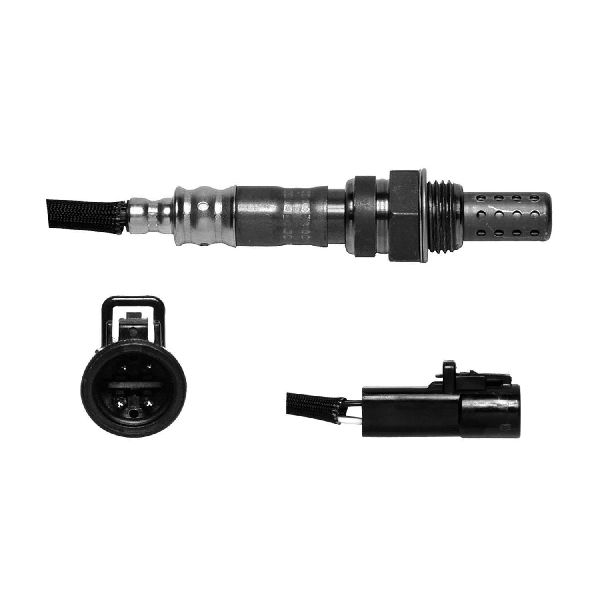
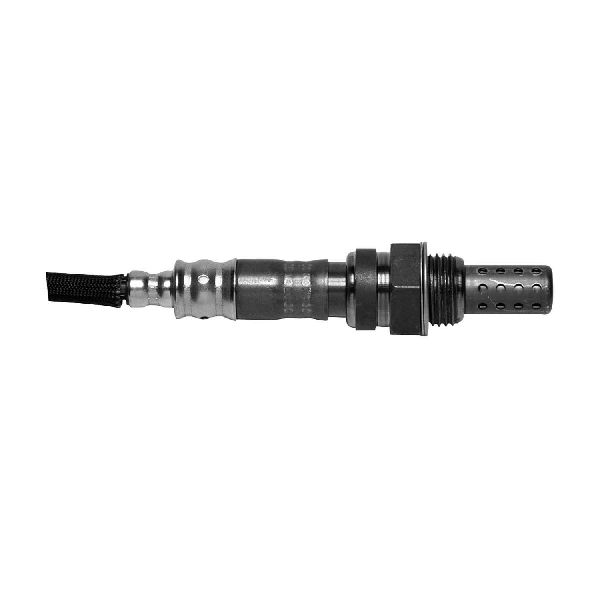
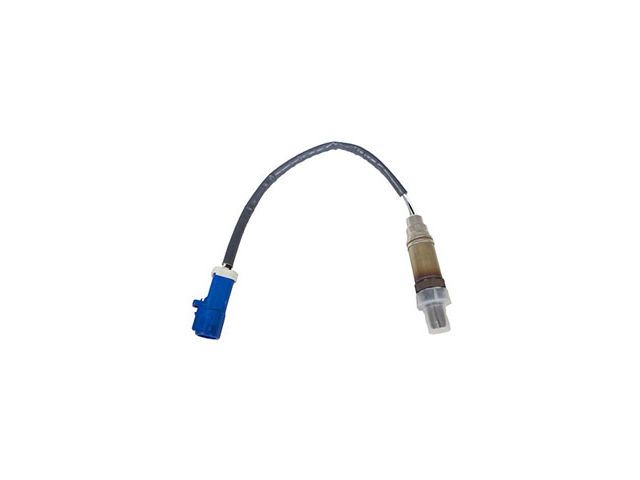
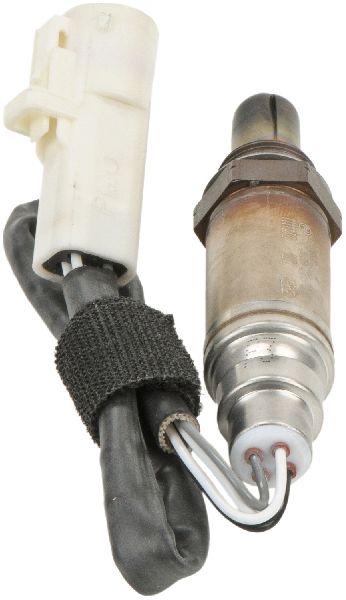
- Oxygen Sensor (Bank 1, Sensor 2)
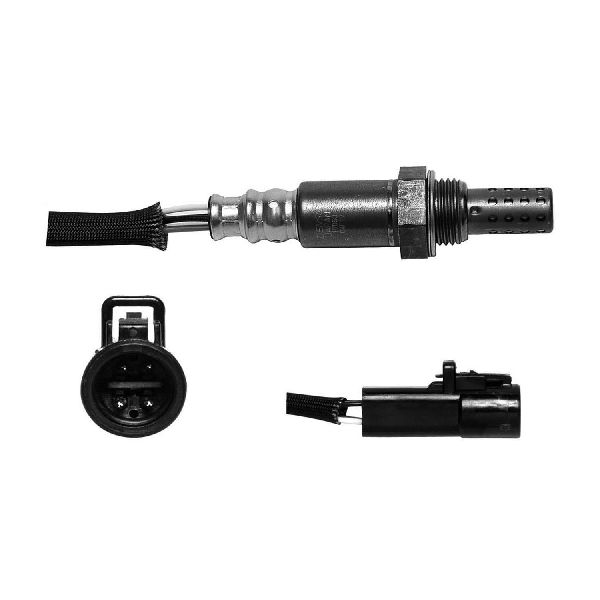
(OEM #GU2Z-9G444-A)— This is the most common failure point for code P0138. It is a standard wear-and-tear component. The Motorcraft part number is DY-1401, which corresponds to Ford part number GU2Z-9G444-A.
Trusted brands: Motorcraft (OEM), NTK, Bosch, Denso
OEM price range: $90-$120
Aftermarket price range: $50-$90
Related Codes That Often Appear With This One
- P0141 — This code indicates a fault in the heater circuit of the same sensor (Bank 1, Sensor 2). They often appear together when the sensor fails internally.
- P0172 — This code means 'System Too Rich (Bank 1)'. If you see P0138 and P0172 together, it strongly suggests the high voltage reading is accurate and is being caused by a fuel delivery problem, not a faulty sensor.
- P0161 — This code indicates a fault in the heater circuit for Bank 2, Sensor 2. A user on The Mustang Source forums reported getting P0138 and P0161 together, which pointed to a wiring issue after a new sensor didn't fix the problem.
Platform-Specific Known Issues
- Wiring Damage After Header Installation: Owners who install long tube headers sometimes encounter this code. A thread on StangNet forums described a user getting P0138 and other O2 codes after an install, which was traced back to the sensor wire getting ripped into the driveshaft. Proper routing and securing of O2 sensor extension harnesses are critical during such modifications.
Mechanic-Grade Diagnostic Values
- Downstream O2 Sensor (B1S2) Signal Voltage — expected: Relatively stable voltage between 0.5V and 0.8V on a warm engine at steady RPM.. Failure: Voltage is stuck consistently high, above 0.9V and often above 1.1V.
- O2 Sensor Heater Circuit Resistance — expected: Between 3 and 30 Ohms when measured across the two heater pins (often same-colored wires) on a disconnected, cold sensor.. Failure: Infinite resistance (open circuit) or near-zero resistance (short circuit). A healthy sensor for this vehicle typically reads around 7-10 Ohms.
- PCM Reference Voltage (at sensor harness connector) — expected: Approximately 0.45V on the signal return or reference wire with the sensor disconnected and Key On, Engine Off (KOEO).. Failure: Significantly higher or lower voltage, which may indicate a PCM or wiring issue.
Hidden / Shadow Codes Worth Checking
- Mode $06: $TID:$81, $CID:$12: This is not a DTC, but a specific test within the PCM's self-diagnostics viewable with an advanced scan tool. Test ID $81 with Component ID $12 corresponds to the 'HO2S Monitor Bank 1 - Sensor 2' test. It checks the sensor's signal for expected characteristics. (see via Use a scan tool that supports Ford's Mode $06 data. The tool will display the test value, a minimum limit, and a maximum limit. A failing test (value outside limits) can point to a sensor issue even before a DTC is set.)
Scan Tool Commands That Help
- Ford IDS (Integrated Diagnostic System) or FORScan: HO2S Heater Test & PID Monitoring — To actively test the sensor's heater circuit and observe live data. Using a bidirectional tool like IDS or FORScan, a technician can command the heater circuit on and off to verify the wiring, relay, and PCM driver are functioning. Simultaneously, monitoring the 'O2S12' PID confirms if the voltage is stuck high, as indicated by the P0138 code.
Wiring & Ground Locations
- B1S2 Connector (C1669) — On the passenger side of the vehicle, connecting to the O2 sensor located in the exhaust pipe just after the catalytic converter.. This is the primary connection point. The pins for the signal (WH/BK wire), signal return (RD/LG wire), heater power (RD/YE wire), and heater control (GY/RD wire) can be tested here for voltage, ground, and shorts.
- G103 — On the right (passenger) front of the engine compartment, near the hood prop rod area.. This is a major engine compartment ground point. While not the primary ground for the O2 sensor signal itself, poor grounding here can introduce electrical noise and voltage offsets that affect various sensors controlled by the PCM.
- G104 — On the left (driver) front fender apron, located behind the battery.. This is a critical ground for the Powertrain Control Module (PCM). A corroded or loose G104 can cause a wide array of bizarre sensor readings and codes, including P0138, as it can affect the PCM's reference voltage.
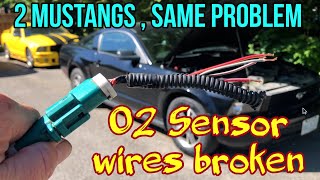
- Harness Chafe Point — On top of the transmission bell housing, where the main engine harness passes over from the passenger side to the driver side.. There is a known issue where the O2 sensor wiring in this harness is too tight. Engine and transmission movement can cause the wires to stretch and break over time, leading to intermittent or permanent O2 sensor codes. This is a commonly missed failure location.
Real Owner Repair Stories
- YouTube video by user '05' -09' Mustang O2 Sensor Codes and Wiring Harness Location' (2005 Ford Mustang V6 (demonstrates issue common to V8 as well)) — Persistent O2 sensor codes (P0130, P0131, P0132 shown, but principle applies to P0138) even after replacing sensors.
❌ Tried (didn't work) Replacing the oxygen sensors.
✅ What actually fixed it The wiring for the O2 sensor had broken inside the main harness where it stretches over the top of the transmission bell housing. The wire was too short from the factory, and engine movement caused it to fatigue and break. The fix was to repair the broken wire and add a little slack to prevent it from happening again.
When the Usual Fixes Don't Work
- While Pass 2 correctly identifies a faulty sensor or wiring as the most common causes, it's crucial to not underestimate the possibility of a wiring break far from the sensor itself. A significant number of forum and video reports for the S197 platform point to a specific harness stress point on top of the transmission bell housing as the true culprit, which is often discovered only after a new sensor fails to fix the code.
OEM Part Supersession History
NTK Sensor (e.g., #22500 for downstream)→Motorcraft GU2Z-9G444-A / DY-1401 (Bosch-manufactured)— Ford changed suppliers for its service replacement parts from NTK to Bosch.
Heads up: While the Motorcraft/Bosch part is the official service replacement, some owners and tuners report that the original NTK sensors provide more stable readings. If chasing a persistent, subtle issue after replacing a sensor, some mechanics suggest sourcing an aftermarket NTK-branded sensor to match the original equipment.
Model Year Variations Within This Range
- 2007-2009: Wiring harnesses were updated starting in the 2007 model year. While the O2 sensor function is the same, connector types or wire routing for other components in the same harness (like the A/C compressor clutch) may differ from 2005-2006 models. This is important for anyone considering a harness swap or repair using a donor harness.
- Mid-2008 and newer: The 4.6L 3V engine received a cylinder head revision to accommodate a one-piece spark plug design, resolving a common issue where the older two-piece plugs would break on removal. While not directly related to P0138, it's a critical variation to be aware of when servicing these engines.
Diagnostic Flowchart
Other Known Issues on This Vehicle
Issues unrelated to this code that are worth knowing about as an owner of this generation:
- Two-Piece Spark Plug Breakage 🔴 High — Very common on engines built before 11/30/2007 during the first spark plug change (around 100k miles). The carbon buildup seizes the lower portion of the plug in the head. (Ref: TSB 08-7-6 outlines a specific removal procedure to minimize breakage.)
- Water Leaks into Passenger Footwell 🟠 Medium — Commonly occurs due to clogged cowl drain plugs under the windshield wipers, allowing rainwater to overflow into the cabin's HVAC intake and onto the floor, potentially damaging the Smart Junction Box (SJB). (Ref: TSB 08-26-7 addresses difficult-to-diagnose water leaks in the front floor area.)
- Premature Alternator Failure 🟠 Medium — The stock alternator on 2005-2008 models is known to be a weak point, with many owners reporting failures well under 100k miles. Some owners report grounding issues may contribute. (Ref: TSB 06-19-12 notes that DTCs P0340/P0349 can be caused by a malfunctioning alternator.)
- Engine Ticking / Cam Phaser Noise 🟠 Medium — The 3V engine can develop a characteristic ticking noise, often related to the variable cam timing (VCT) solenoids, cam phasers, or lash adjusters. It's more common on higher-mileage engines. (Ref: TSB 06-19-8 discusses diagnosing ticking/knocking noises.)
- Aluminum Hood Corrosion 🟡 Low — Bubbling or blistering paint, typically along the leading edge of the hood, is a common cosmetic issue caused by iron contamination of the aluminum panel during manufacturing. (Ref: TSB 19-2026 addresses this corrosion issue.)
Used vs. New Parts: Buying Guide for This Vehicle
When a used part is the smart pick: For the wiring connector pigtail ONLY. If the original connector is damaged or corroded, a used pigtail cut from a junkyard harness is a cost-effective and reliable repair method.
Donor-vehicle mileage cap: roughly under 150000 miles for the part to have meaningful remaining life.
What to inspect on the donor part:
- Check that the plastic connector body is not brittle or cracked.
- Ensure the locking tab clicks firmly into place.
- Inspect the wire leads for flexibility; avoid any that are stiff, cracked, or have exposed copper.
- Look inside the connector for any green or white corrosion on the pins.
Aftermarket brands forum-validated for this vehicle:
- NTK (Original equipment supplier, often preferred by enthusiasts)
- Denso
- Bosch (OEM service part supplier)
Brands owners have reported issues with on this vehicle:
- Unbranded, 'no-name' sensors from online marketplaces are frequently cited as having high failure rates or causing incorrect readings.
Real Owner Stories
Aggregated from forums and TSBs cited above. Mileages and costs reflect what owners reported in those sources.
2005 Ford Mustang GT 4.6L 3V
Symptoms: The owner had codes P0138 and P0161. Replacing the sensor did not resolve the issue.
What fixed it: The problem was identified as being in the wiring, grounds, or connector pins, requiring a wiring diagram to trace the fault.
Source hint: The Mustang Source - "Code p0138 and p0161"
2005-2009 Ford Mustang GT 4.6L 3V
Symptoms: P0138 and other O2 codes appeared immediately after installing long tube headers.
What fixed it: The sensor wire had been ripped into the driveshaft; the fix involved proper routing and securing of the O2 sensor extension harnesses.
Source hint: StangNet forums
2005-2009 Ford Mustang GT 4.6L 3V
Symptoms: Check engine light for P0138; replacing the sensor initially didn't work.
What fixed it: A visual inspection revealed a chafed wire in the harness as the root cause.
Source hint: The Mustang Source forums
Related OBD-II Codes
Frequently Asked Questions
Where is the Bank 1, Sensor 2 oxygen sensor located on my 2005-2009 Mustang GT?
Can I just swap parts to see if the sensor is actually bad?
I just installed long tube headers and now have P0138. What should I check?
What tools do I need to replace the O2 sensor on my 4.6L 3V V8?
Could my Mustang's alternator issues be related to O2 sensor codes?
Is there a TSB for the water leak in my passenger footwell that might affect electronics?
Helpful Videos
We Have This Part in Stock


The information in this article is provided for general reference and educational purposes only. Vehicle specifications, procedures, and part compatibility can vary by production date, trim level, and region. Always consult your vehicle's factory service manual and verify part numbers before purchasing or performing repairs. Safety-critical components such as airbags, seat belts, and braking systems should be installed by a qualified professional.
- Ford Mustang GT:
- 🎬 Helpful Videos
- 🛍️ Shop This Part
- What's Unique About the 2005-2009 Ford Mustang GT
- Symptoms You May Notice
- Most Likely Causes
- Rare But Worth Checking
- Diagnosis Steps
- Parts You'll Likely Need
- Related Codes That Often Appear With This One
- Platform-Specific Known Issues
- Mechanic-Grade Diagnostic Values
- Hidden / Shadow Codes Worth Checking
- Scan Tool Commands That Help
- Wiring & Ground Locations
- Real Owner Repair Stories
- When the Usual Fixes Don't Work
- OEM Part Supersession History
- Model Year Variations Within This Range
- Diagnostic Flowchart
- Other Known Issues on This Vehicle
- Used vs. New Parts: Buying Guide for This Vehicle
- Real Owner Stories
- 2005 Ford Mustang GT 4.6L 3V
- 2005-2009 Ford Mustang GT 4.6L 3V
- 2005-2009 Ford Mustang GT 4.6L 3V
- Related OBD-II Codes
- Frequently Asked Questions
- 🎟️ Get 5% Off