

P0137 on 2013-2020 Ford Fusion 2.0L EcoBoost: O2 Sensor Circuit Low Voltage Causes and Fixes
This code almost always points to a failed downstream oxygen sensor (Bank 1, Sensor 2). It's a common wear-and-tear item with a typical lifespan of 60,000 to 100,000 miles. Expect to pay around $60-$120 for a quality replacement part and an hour of labor if you don't do it yourself. Before replacing, always check the wiring for damage and the exhaust for leaks.
- P0137 on your 2.0L EcoBoost Fusion almost certainly means the downstream O2 sensor (after the catalytic converter) has failed.
- Before buying a new sensor, perform a quick visual inspection of the wiring for melting or damage and check for exhaust leaks, as these can also cause the code.
- This is a common DIY repair that can be done with an O2 sensor socket and basic tools.
- Use a quality replacement sensor from brands like Motorcraft, Bosch, or Denso to avoid premature failure and compatibility issues.
What's Unique About the 2013-2020 Ford Fusion
For the 2.0L EcoBoost Fusion, the P0137 code is a straightforward fault, most often caused by a worn-out sensor. While some other Ford models and different Fusion engines (like the Hybrid) have Technical Service Bulletins (TSBs) related to software glitches causing similar codes, the EcoBoost model's issue is typically mechanical. The downstream sensor is relatively easy to access from underneath the vehicle, making it a common DIY repair. The most critical check before replacing the sensor is a thorough inspection of the wiring harness for heat damage from the exhaust and for any exhaust leaks between the catalytic converter and the sensor itself.
Symptoms You May Notice
- Check Engine Light is on.
- Reduced fuel efficiency.
- Failure to pass an emissions inspection.
- Rough or unstable idle in some cases.
- Noticeable odor of exhaust fumes if a leak is the cause.
- Replacing the upstream (Sensor 1) oxygen sensor instead of the downstream (Sensor 2) sensor.
- Replacing the catalytic converter when the issue is only a faulty downstream sensor or an exhaust leak.
- Replacing the O2 sensor without first checking for exhaust leaks or wiring damage, leading to the code returning.
Most Likely Causes
- Failed Downstream Oxygen Sensor (Bank 1, Sensor 2) 🔴 High Probability Oxygen sensors are wear-and-tear items that operate in a harsh exhaust environment. They have a finite lifespan, typically 60,000 to 100,000 miles, and failure from heat and contamination is common across all vehicles, including the Fusion.
How to confirm: Use a scan tool to monitor live data for the B1S2 O2 sensor. With the engine warm, the voltage should be relatively stable between 0.5V and 0.9V. If the voltage is stuck low (e.g., below 0.2V) and doesn't fluctuate, the sensor has likely failed. You can also test the sensor's internal heater circuit resistance with a multimeter; an open circuit confirms failure.
Typical fix: Replace the Bank 1, Sensor 2 oxygen sensor. This requires a specialized O2 sensor socket (often 22mm or 7/8") and access from underneath the vehicle.
Est. part cost: $60-$120 - Damaged Wiring or Connector 🟡 Medium Probability The sensor's wiring is located under the vehicle and is exposed to road debris, moisture, and extreme heat from the exhaust, which can cause corrosion, melted insulation, or physical damage over time.
How to confirm: Visually inspect the entire wiring harness from the O2 sensor to its connection point. Look for frayed wires, melting near the exhaust pipe, corrosion in the connector pins, or animal damage. A multimeter can be used to check for continuity (no open circuits) and to ensure the signal wire isn't shorted to ground.
Typical fix: Repair the damaged section of the wire or replace the connector pigtail. Use heat-shrink butt connectors for a durable, moisture-resistant repair.
Est. part cost: $15-$40 - Exhaust Leak ⚪ Low Probability Rust can cause leaks at exhaust pipe flanges or flex pipes, especially in regions that use road salt. Cracks can also form from vibration.
How to confirm: Listen for hissing or ticking sounds from the exhaust system, especially when the engine is cold. A visual inspection may reveal black soot marks around a flange or crack. A shop can perform a smoke test to definitively pinpoint a leak. The leak must be upstream of Sensor 2 for it to draw in outside air and cause the low voltage reading.
Typical fix: Repair the leak by replacing the gasket, tightening bolts, or welding the leaking section. In some cases, a section of pipe or the flex pipe may need replacement.
Est. part cost: $10-$300
Rare But Worth Checking
- Powertrain Control Module (PCM) Fault: This is very rare. Before condemning the PCM, all other possibilities (sensor, wiring, exhaust leaks) must be exhaustively ruled out. Sometimes a PCM software update from a dealer can resolve unexpected sensor readings, though this is more common on the Fusion Hybrid platform.
Diagnosis Steps
- Read the code with an OBD-II scanner to confirm P0137 is present and note any other codes.
- Visually inspect the Bank 1, Sensor 2 (downstream) O2 sensor, its connector, and wiring harness. Look for any signs of melting, chafing, corrosion, or loose connections.
- Check for exhaust leaks between the catalytic converter and the downstream sensor. Listen for unusual noises and look for soot trails. A professional smoke test is the most reliable method.
- Use a scan tool with live data capability to observe the voltage of Bank 1 Sensor 2. With the engine warm and at a steady RPM, the voltage should be relatively stable, ideally above 0.5V. If it is stuck below 0.2V, it confirms the low voltage condition.
- If the voltage is stuck low, test the circuit. Unplug the sensor and check for reference voltage and a good ground on the vehicle-side harness. Check the signal wire for any shorts to ground using a multimeter.
- If the wiring and exhaust system are confirmed to be good, the oxygen sensor itself is faulty and should be replaced. Use a proper O2 sensor socket to avoid damaging the new sensor during installation.
Parts You'll Likely Need
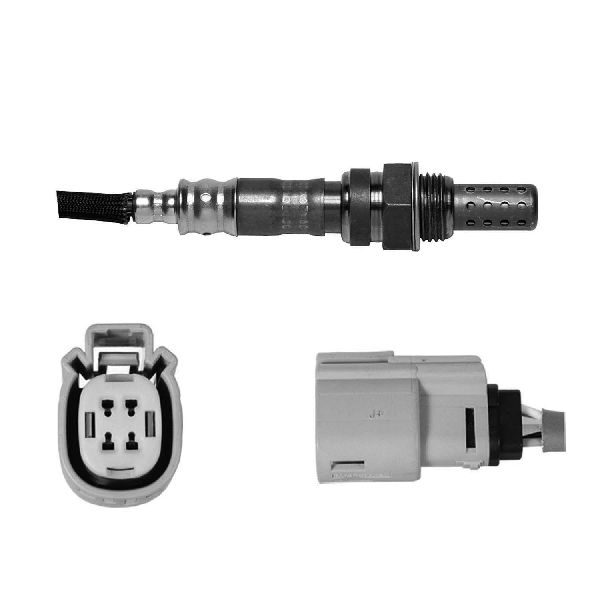
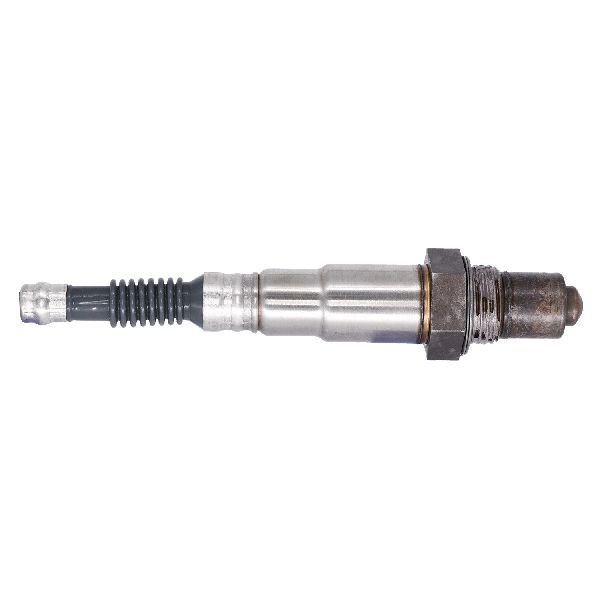
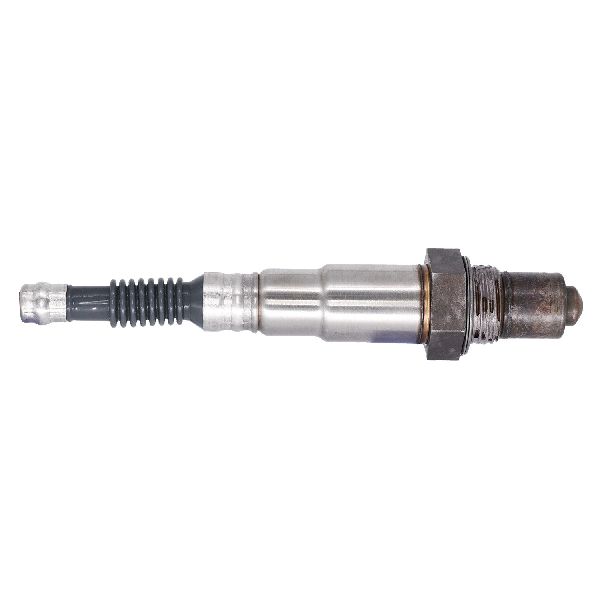
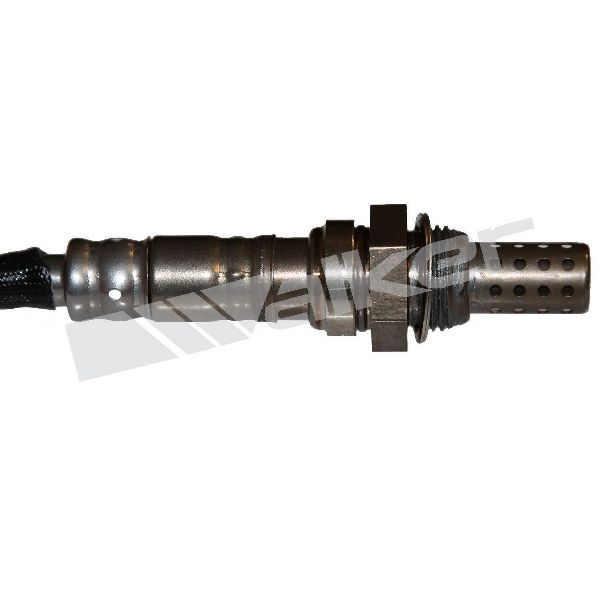
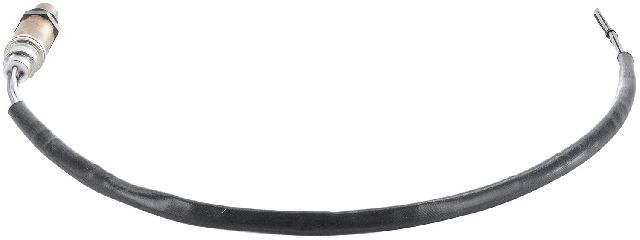
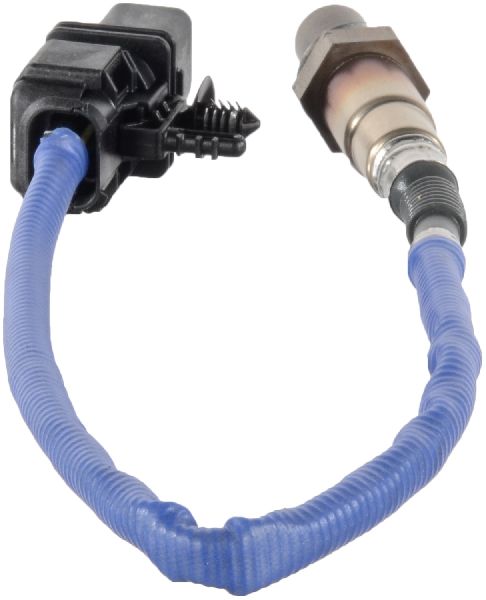
- Downstream Oxygen Sensor (Bank 1, Sensor 2)
(OEM #CV6Z-9G444-B)— This is the most common failure point for code P0137. The sensor is a wear item and fails over time from heat and contamination.
Trusted brands: Motorcraft, Bosch (e.g., 17099), Denso (e.g., 234-4567), NGK/NTK
OEM price range: $90-$140
Aftermarket price range: $60-$100
Related Codes That Often Appear With This One
- P0141 — P0141 indicates a fault in the heater circuit of the same oxygen sensor (Bank 1, Sensor 2). These codes often appear together if the sensor has an internal failure affecting both its signal and heater element.
- P0420 — While P0137 points to a sensor circuit issue, it can sometimes be triggered alongside P0420 (Catalyst System Efficiency Below Threshold) if the sensor's incorrect low reading is interpreted by the PCM as a sign of a failing catalytic converter.
- P2096 — P2096 (Post Catalyst Fuel Trim System Too Lean) is a related code that can be caused by the same underlying issues, such as an exhaust leak or a failing O2 sensor providing an inaccurate low reading.
Technical Service Bulletins (TSBs) & Recalls
- SSM 46076: Mentions P0137 on 2.0L Hybrid models, possibly related to battery voltage codes.
- 19-2005: While for the EcoSport 2.0L, it shows a precedent for Ford addressing P0137 with a combination of sensor replacement and a PCM software update.
Platform-Specific Known Issues
- The provided TSB #SSM 46076 specifically mentions P0137 on 2.0L Hybrid models, linking it to a battery voltage code (U3003). While this TSB is for the HEV, it highlights that electrical system issues can sometimes trigger O2 sensor codes on the Fusion platform.
- Another TSB, #19-2005, applies to some 2018-2019 EcoSport models with a 2.0L engine (different platform, but related engine family) and notes that P0137 can be caused by a faulty catalyst monitor sensor combined with a need for a PCM software update.
Mechanic-Grade Diagnostic Values
- Downstream O2 Sensor (B1S2) Voltage at Idle (Warm Engine) — expected: Relatively steady 0.6V - 0.8V. Failure: Stuck below 0.2V - 0.3V for more than 20 seconds
- PCM Trigger Condition for P0137 — expected: N/A. Failure: PCM detects sensor voltage below 400mV (0.4V) for more than 20 seconds
- Wiring Harness Continuity Check — expected: Less than 1 Ω. Failure: Resistance above 1 Ω indicates a compromised circuit (corrosion, damage)
Hidden / Shadow Codes Worth Checking
- Mode $06, TID $05: This is not a DTC, but a non-continuous monitor test result for the O2 sensor. It allows a technician to see if the sensor's performance is degrading and approaching the PCM's failure threshold before a hard code like P0137 is set. (see via An advanced scan tool capable of reading Mode $06 data, such as FORScan or a professional-grade scanner.)
Scan Tool Commands That Help
- FORScan: Live Data PID: O2S12 — Use this to monitor the real-time voltage of the Bank 1, Sensor 2 (downstream) oxygen sensor. This is the primary method to confirm if the sensor is stuck in a low voltage state.
- Professional Scan Tool (e.g., Ford IDS, Autel, Thinkdiag): O2 Sensor Heater Test — This bidirectional test commands the O2 sensor's internal heater on and off to verify the heater circuit is functioning. This is useful when P0137 is accompanied by a heater circuit code like P0141.
Wiring & Ground Locations
- G104 — Right side of the engine compartment.. This is a primary ground point for the engine harness on the 2.0L EcoBoost. A corroded or loose G104 can cause erratic voltage readings for various engine sensors, including the oxygen sensors.
- G100 / G102 — Left front of the engine compartment, near the battery junction box (BJB).. These are other key engine compartment grounds. While G104 is more directly related to the 2.0L, checking all major grounds in the area is good practice when diagnosing electrical faults.
- HO2S12 Connector (C134) — The electrical connector for the downstream O2 sensor, located on the vehicle's underbody, attached to the transmission or a nearby bracket.. This is the direct connection point for the sensor. It should be inspected for corrosion, moisture intrusion, or damaged pins, which can directly cause a P0137 low voltage reading.
Real Owner Repair Stories
- fordfusionforum.com user (2013 Ford Fusion 2.0L EcoBoost) — Check Engine Light with code P0137.
❌ Tried (didn't work) Initial diagnosis pointed to the sensor.
✅ What actually fixed it The owner replaced the downstream (Bank 1, Sensor 2) oxygen sensor, which resolved the code.
"I Checked Everything" — The Actual Cause
- In some cases across Ford platforms, a smoke test may show no leaks at idle, but a microscopic crack in the exhaust manifold or a flange gasket only opens up when the metal expands under the heat of normal operation. This can allow air to be drawn in, causing a P0137, but is very difficult to detect with a cold smoke test.
OEM Part Supersession History
CV6Z-9G444-B→No direct supersession found, this part number remains current for the specified model years.— N/A
Heads up: This part number (CV6Z-9G444-B) is specified for the 1.6L and 2.0L non-hybrid engines. It is also listed as compatible with some 2.3L applications. Ensure you are not using a part intended for the Hybrid model, which may have different calibration.
Model Year Variations Within This Range
- 2013-2016: The OEM part number CV6Z-9G444-B is explicitly listed for model years 2013-2016. While it likely fits later models up to 2020, it's crucial to verify the part number with a VIN for 2017-2020 vehicles as minor wiring or connector changes can occur after a model refresh.
Diagnostic Flowchart
Other Known Issues on This Vehicle
Issues unrelated to this code that are worth knowing about as an owner of this generation:
- Engine Coolant Intrusion 🔴 High — Affects some 2017-2019 models with the 2.0L EcoBoost. A design flaw in the engine block can cause cracks, leading to coolant leaking into the cylinders. Symptoms include coolant loss with no visible leak, white exhaust smoke, and misfires (P0316). (Ref: TSB 19-2346, TSB 22-2229.)
- Transmission Shifter Cable Bushing Failure 🔴 High — Common on 2013-2016 models. The bushing degrades and detaches, preventing the vehicle from shifting into the selected gear. This can lead to a rollaway risk if the vehicle is not actually in Park. (Ref: Ford Recalls 18S20 (NHTSA 18V471) and 22S43 (NHTSA 22V413).)
- Steering Gear Bolt Corrosion 🔴 High — Affects 2013-2016 models, primarily in regions using road salt. Bolts securing the power steering motor can corrode and fracture, causing a loss of power steering assist. (Ref: Ford Recall 19S26.)
- Steering Wheel Detachment 🔴 High — A concern for 2014-2018 models where the steering wheel retaining bolt can loosen over time, potentially allowing the steering wheel to detach. (Ref: Ford Recall 18S08.)
- Faulty Brake Vacuum Pump 🟠 Medium — Some 2.0L EcoBoost models may experience an intermittent or complete failure of the mechanical vacuum pump, resulting in a hard brake pedal and increased stopping effort.
- Failed EVAP Purge Valve 🟡 Low — A common failure on the 2.0L EcoBoost. When the valve sticks open, it can cause difficulty starting the engine after refueling and trigger EVAP-related check engine light codes.
Used vs. New Parts: Buying Guide for This Vehicle
When a used part is the smart pick: Buying a used part is NOT recommended for this repair. The oxygen sensor is a wear-and-tear item with a finite lifespan. A used sensor from a junkyard has unknown remaining life and may fail shortly after installation, causing the code to return.
What to inspect on the donor part:
- N/A - Do not buy this part used.
OEM-only on this vehicle (don't cheap out):
- While not strictly OEM-only, using a reputable brand is critical. Cheap, unbranded sensors are known to have high failure rates and may not be calibrated correctly for the vehicle's ECU, leading to persistent codes.
Aftermarket brands forum-validated for this vehicle:
- Motorcraft (OEM)
- Bosch
- Denso
- NTK (a brand of NGK)
Brands owners have reported issues with on this vehicle:
- Unnamed or generic 'white-box' brands from online marketplaces are a significant gamble and often fail prematurely.
Real Owner Stories
Aggregated from forums and TSBs cited above. Mileages and costs reflect what owners reported in those sources.
2013 Ford Fusion 2.0L EcoBoost
Symptoms: Owner experienced the Check Engine Light coming on with code P0137.
What fixed it: Replacement of the downstream O2 sensor resolved the code.
Source hint: FordFusionForum.com thread titled '2013 Fusion 2.0L Ecoboost P0137'
2013-2020 Ford Fusion (2G)
Symptoms: Code P0137 O2 Sensor Circuit Low Voltage Bank 1 Sensor 2.
What fixed it: Replacing the post-catalyst sensor, which members identified as a common failure item.
Source hint: 2GFusions.net thread titled 'P0137 O2 Sensor Circuit Low Voltage Bank 1 Sensor 2'
Related OBD-II Codes
Frequently Asked Questions
I have a 2013 Fusion 2.0L EcoBoost with P0137; is this a known common failure for this specific car?
Could my P0137 code be related to the battery voltage issues mentioned in Ford technical documents?
Is there a specific TSB for the 2.0L engine regarding P0137 and software updates?
What specific tool do I need to replace the Bank 1, Sensor 2 oxygen sensor on my Fusion?
My Fusion has a noticeable exhaust odor along with the P0137 code; what should I check?
Can the 'Engine Coolant Intrusion' issue on 2017-2019 models cause codes like P0137?
Helpful Videos
We Have This Part in Stock

The information in this article is provided for general reference and educational purposes only. Vehicle specifications, procedures, and part compatibility can vary by production date, trim level, and region. Always consult your vehicle's factory service manual and verify part numbers before purchasing or performing repairs. Safety-critical components such as airbags, seat belts, and braking systems should be installed by a qualified professional.
- Ford Fusion:
- 🎬 Helpful Videos
- 🛍️ Shop This Part
- What's Unique About the 2013-2020 Ford Fusion
- Symptoms You May Notice
- Most Likely Causes
- Rare But Worth Checking
- Diagnosis Steps
- Parts You'll Likely Need
- Related Codes That Often Appear With This One
- Technical Service Bulletins (TSBs) & Recalls
- Platform-Specific Known Issues
- Mechanic-Grade Diagnostic Values
- Hidden / Shadow Codes Worth Checking
- Scan Tool Commands That Help
- Wiring & Ground Locations
- Real Owner Repair Stories
- "I Checked Everything" — The Actual Cause
- OEM Part Supersession History
- Model Year Variations Within This Range
- Diagnostic Flowchart
- Other Known Issues on This Vehicle
- Used vs. New Parts: Buying Guide for This Vehicle
- Real Owner Stories
- 2013 Ford Fusion 2.0L EcoBoost
- 2013-2020 Ford Fusion (2G)
- Related OBD-II Codes
- Frequently Asked Questions
- 🎟️ Get 5% Off